
Advice c/i what to do and what are the disease manifestation occured after oophorectomy
Reading File
Finding Sources
Finding Sources
Finding Sources
Reading File
Reading File
Reading File
Reading File
Searching PubMed
"oophorectomy" AND "long-term outcomes"
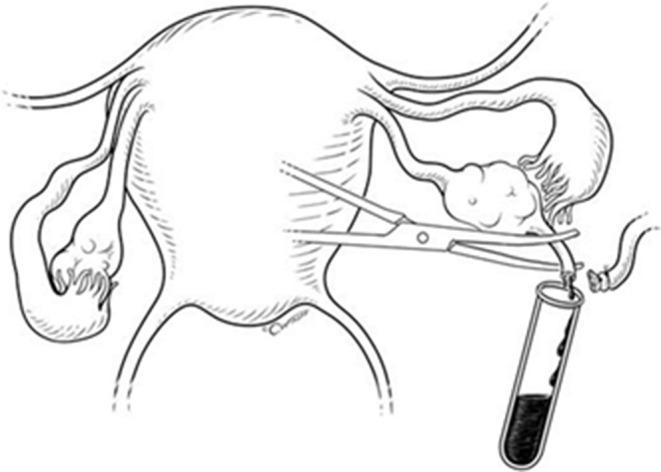
Oophorectomy: Indications, Contraindications, and Post-Surgical Disease Manifestations
What is it
Oophorectomy is surgical removal of the ovary(ies) - unilateral or bilateral - often combined with salpingectomy (salpingo-oophorectomy). It can be done alone, at the time of hysterectomy, laparoscopically, or via laparotomy - Sabiston Textbook of Surgery, p. 2806.
Indications (C - "when to do it")
- Benign ovarian mass involving the entire ovary - the most common indication (Sabiston, p. 2806).
- Risk-reducing (prophylactic) salpingo-oophorectomy in BRCA1/2 mutation carriers or strong family history of ovarian/breast cancer - reduces but does not eliminate cancer risk (peritoneal carcinoma still occurs in 2-3% even after prophylactic BSO) - Berek & Novak's Gynecology, p. 2318.
- Malignant ovarian neoplasm (primary ovarian, tubal, or metastatic cancer) - as part of staging/debulking surgery.
- Chronic pelvic pain with severe endometriosis or dense adhesive disease unresponsive to conservative therapy.
- Ovarian torsion with non-viable ovary (after failed detorsion).
- Tubo-ovarian abscess unresponsive to antibiotics.
- At the time of hysterectomy for benign disease - elective/incidental BSO, historically done to eliminate future ovarian cancer risk, but this indication has narrowed substantially (see below).
- Gender-affirming surgery in transgender masculine patients (Kaplan & Sadock's Comprehensive Textbook of Psychiatry).
- Severe perimenstrual anaphylaxis/mastocytosis refractory to medical therapy (rare) - Goldman-Cecil Medicine.
Contraindications / Cautions ("what NOT to do")
- Elective bilateral oophorectomy in premenopausal women without cancer risk factors is now generally discouraged. Current guidance favors ovarian conservation until age 51 or later in women having hysterectomy for benign disease, because of accumulating evidence of long-term harm (below) - Kaplan & Sadock's, p. 7893; Berek & Novak's, p. 2318.
- Not recommended as routine treatment for menstrual migraine - evidence does not support benefit and surgical menopause can worsen migraine - Bradley and Daroff's Neurology in Clinical Practice, p. 568.
- Avoid in women who do not carry a germline mutation (BRCA/Lynch) and lack a significant family history - the ovaries' protective effects on cardiovascular and bone health may outweigh cancer-risk reduction at population risk levels - Berek & Novak's Gynecology, p. 2318.
- Use caution in patients with extensive prior pelvic surgery or dense adhesive disease - laparotomy (not laparoscopy) is preferred to avoid ureteral/bowel injury.
- Screening-driven prophylactic oophorectomy is not supported by CA-125/transvaginal ultrasound alone, since these have not been shown to reduce ovarian cancer mortality in average-risk women (USPSTF) - Berek & Novak's Gynecology, p. 2318-2319.
Disease Manifestations After Oophorectomy (especially bilateral, premenopausal)
Bilateral oophorectomy causes surgical menopause - an abrupt drop in estrogen and rise in FSH (unlike the gradual fluctuation of natural menopause), because the ovaries stop producing androgens (testosterone, androstenedione) that would otherwise be peripherally converted to estrone - Kaplan & Sadock's Comprehensive Textbook of Psychiatry, p. 7893.
Documented long-term consequences of elective oophorectomy include:
| System | Manifestation |
|---|---|
| Cardiovascular | Increased risk of cardiovascular disease (loss of ovarian protective effect) |
| Renal | Increased chronic kidney disease risk |
| Skeletal | Rapid bone turnover/resorption in the first year post-op, accelerated bone loss, osteoporosis and fracture risk (Rheumatology, 2-Vol Set, p. 4276-4279) |
| Neuropsychiatric | Cognitive impairment, dementia/parkinsonism risk, depression, anxiety |
| Ophthalmologic | Increased glaucoma risk |
| Sexual/reproductive | Sexual dysfunction, vaginal dryness, loss of fertility |
| Vasomotor | Hot flashes/night sweats (sudden perspiration, flushing, chills - occur daily in >85% of women) |
| Mortality | Increased all-cause mortality |
Some of these adverse effects are mitigated by hormone replacement therapy (HT) started at the time of surgical oophorectomy - Kaplan & Sadock's, p. 7893; Creasy & Resnik's Maternal-Fetal Medicine, p. 2195-2196.
Even after prophylactic bilateral salpingo-oophorectomy for cancer risk reduction, primary peritoneal carcinoma can still occur in 2-3% of women because the entire peritoneum (of Müllerian origin) remains at risk - Berek & Novak's Gynecology, p. 2318.
Recent evidence (2024-2025 systematic reviews/meta-analyses) - worth flagging
Recent literature reinforces and quantifies these findings, which may refine (not contradict) the textbook summary above:
- Hassan et al. 2024, AJOG - long-term outcomes of hysterectomy with BSO show increased cardiovascular disease and diabetes risk (PMID: 37364803).
- Attachaipanich et al. 2025 - systematic review/meta-analysis specifically quantifying cardiovascular outcomes after bilateral oophorectomy (PMID: 40812682).
- Shariful Islam et al. 2025, European J Endocrinology - systematic review/meta-analysis on hysterectomy, oophorectomy, and bone health/osteoporosis/fracture risk (PMID: 40845177).
These support individualized counseling: weigh cancer-risk reduction against cardiovascular, bone, cognitive, and mortality risks, and consider HT to offset consequences in women undergoing oophorectomy before natural menopause age.
Future effect of child age 20 age years old after u/l oophorectomy
Finding Sources
Finding Sources
Searching PubMed
"unilateral oophorectomy" AND "young women" AND outcomes
Reading Article
PMID: 39389913
Reading Article
PMID: 33692594
Reading Article
PMID: 39230242
Long-Term Effects of Unilateral Oophorectomy (U/L Oophorectomy) in a 20-Year-Old
At age 20, the remaining ovary generally compensates well, but there are documented risks to monitor over her lifetime.
1. Ovarian reserve and hormonal function
- Immediate drop, then recovery: AMH (anti-Mullerian hormone) levels fall significantly in the first 3 months after unilateral oophorectomy in all age groups, but in patients in the pubertal/early reproductive age range (16-30 years), AMH typically recovers to near-baseline within 1 year, unlike in women over 30 where recovery is incomplete (Dzotsenidze et al. 2024, PMID: 39230242).
- Compensatory hypertrophy: the remaining ovary tends to enlarge and take over follicular output, largely preserving overall reproductive hormonal balance - Berek & Novak's Gynecology, p. 3566.
- Elevated basal FSH can occur compared to women with two intact ovaries, though usually not to menopausal levels at this age - Berek & Novak's Gynecology, p. 2527.
2. Fertility
- Spontaneous conception rates and clinical pregnancy rates (including after IVF) in women with one ovary are similar to women with two ovaries - the ovarian pool is reduced in quantity, but oocyte quality is not affected (Gasparri et al. 2021, PMID: 33692594).
- Fertility-sparing intent is a key reason unilateral (rather than bilateral) oophorectomy is chosen in young women with borderline tumors, dysgerminoma, or immature teratoma - Berek & Novak's Gynecology, p. 1279-1406; Bailey & Love's Short Practice of Surgery, p. 3427.
3. Age at menopause
- A large longitudinal cohort study found unilateral oophorectomy is associated with earlier natural menopause, and this effect is strongest when surgery occurs in early adulthood (age ~20-40). Compared with unilateral oophorectomy at age 55, having it at age 30 carried an adjusted hazard ratio of 2.32 for earlier menopause; overall, any unilateral oophorectomy raised the odds of early menopause (<45 years, OR 1.90) and premature ovarian insufficiency (<40 years, OR 3.75) (Brennand et al. 2025, PMID: 39389913).
- Practically: a 20-year-old should be counseled that she may reach natural menopause somewhat earlier than average, though most still remain within a normal reproductive timeframe with one functioning ovary.
4. Remaining ovary risks
- Functional cysts (follicular, corpus luteum) develop in the remaining ovary in roughly 70% of patients after unilateral oophorectomy, so periodic pelvic ultrasound follow-up is recommended (PMID: 39230242).
5. Systemic/long-term health risks
- Some observational data suggest an increased risk of neurological disease and even mortality in women with only one ovary compared to those with two, though the mechanism is unclear and needs further confirmation (PMID: 33692594).
- This contrasts with bilateral oophorectomy, where cardiovascular disease, osteoporosis, cognitive decline, and mortality risks are far better established and more severe (as discussed for surgical menopause) - Rheumatology 2-Volume Set, p. 4276; Kaplan & Sadock's, p. 7893. A single retained, hormonally active ovary is thought to substantially mitigate these risks compared to bilateral removal.
6. Practical counseling points for this patient
- Reassure her that reproductive potential and age at menopause are only modestly affected, not eliminated.
- Recommend routine gynecologic follow-up with pelvic ultrasound to monitor the remaining ovary for functional cysts.
- Discuss family planning proactively given the modestly earlier expected menopause; if she has cancer-related risk factors or a strong family history, genetic counseling (BRCA testing) should be considered.
- No routine hormone replacement is needed with one functioning ovary, unlike after bilateral oophorectomy.
Recent evidence note: The two most relevant recent studies (Brennand 2025, PMID 39389913 - earlier menopause risk; Dzotsenidze 2024, PMID 39230242 - AMH recovery pattern by age) are population/cohort level, not tier-1 systematic reviews, so they refine rather than overturn the general reassuring picture from Gasparri's 2021 review (PMID 33692594). Long-term systemic risk (mortality, neurological disease) after unilateral oophorectomy remains based on limited data and needs confirmation in larger studies.
This is a shared conversation. Sign in to Orris to start your own chat.