
Iceberg phenomenon
Reading File
The "iceberg phenomenon" in medicine refers to the concept that the diagnosed/visible cases of a disease represent only the tip of a much larger mass of undiagnosed, subclinical, or hidden cases in the community - just like a floating iceberg where 90% is underwater.
Searching sources...
Finding Sources
Searching the Web
iceberg phenomenon in medicine epidemiology concept explained
Reading File
Loading Image
Reading File
Here is a detailed explanation of the Iceberg Phenomenon in medicine/epidemiology, drawn from Park's Textbook of Preventive and Social Medicine:
The Iceberg Phenomenon of Disease
The Core Concept
Disease in a community can be compared to an iceberg floating in the sea:
- The visible tip (above the waterline) = Symptomatic/clinical cases - what the physician sees in practice
- The vast submerged portion (below the waterline) = Hidden mass of disease - what the physician does NOT see
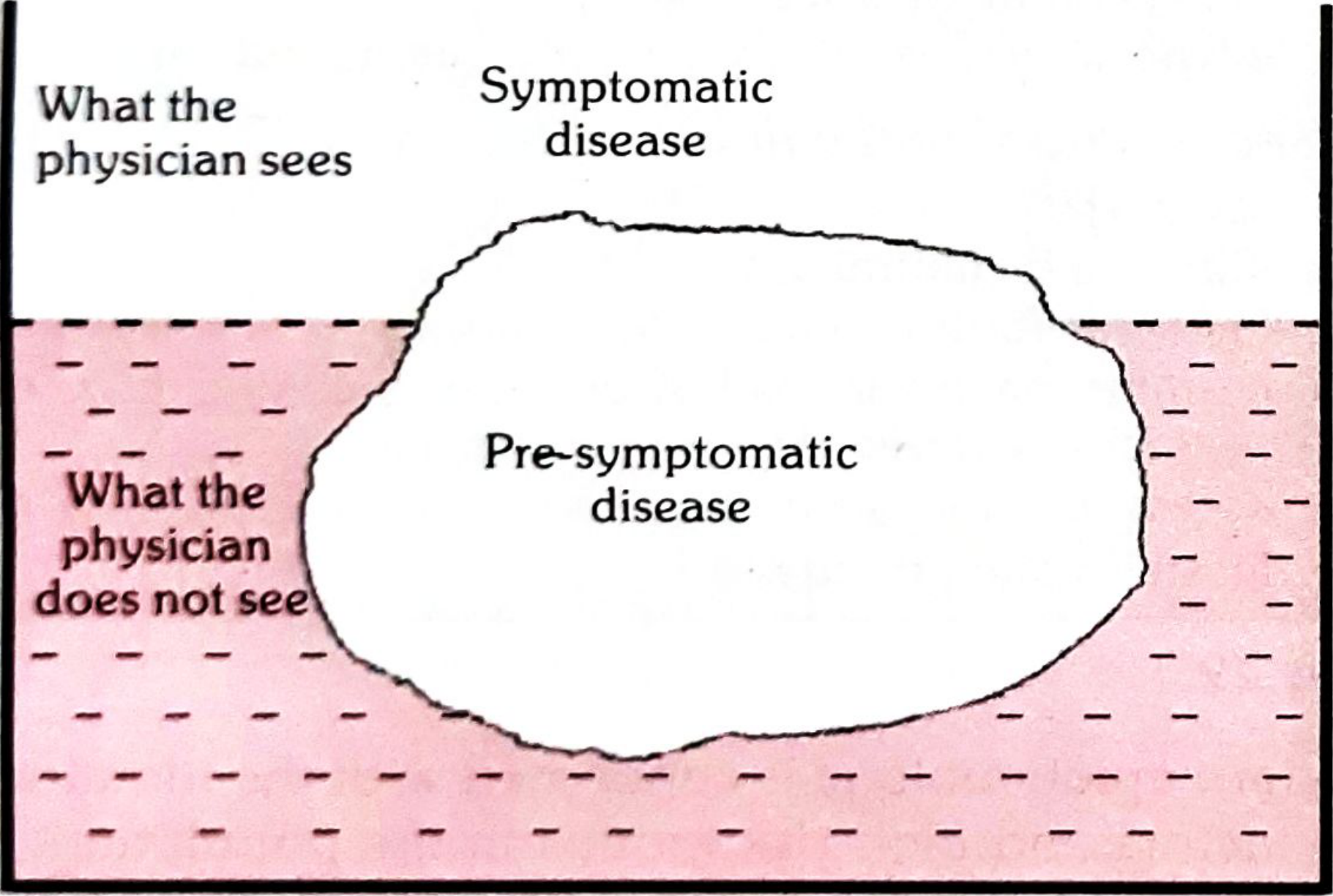
Fig. 10 - The Iceberg of Disease (Park's Textbook of Preventive and Social Medicine)
The "Waterline"
The waterline is the demarcation between:
- Apparent disease (above) - clinically diagnosed, symptomatic cases
- Inapparent disease (below) - the hidden reservoir
Components of the Submerged Portion
The hidden (submerged) part of the iceberg includes:
| Category | Description |
|---|---|
| Latent cases | Infection present but not yet causing symptoms |
| Inapparent/subclinical cases | Infection without any recognizable symptoms |
| Presymptomatic cases | Disease is developing but symptoms haven't appeared yet |
| Undiagnosed cases | Symptomatic but never presented to healthcare |
| Carriers | Harboring the pathogen without clinical illness |
Relationship to Spectrum of Disease
The iceberg concept is closely related to the spectrum of disease. It describes the progression of a disease from sub-clinical stages to overt/apparent disease better than the simple spectrum analogy alone. The pattern of disease seen in hospitals is quite different from what exists in the community - a far larger proportion of disease is hidden from view.
Examples of Diseases with Large Submerged Portions
- Hypertension - millions undiagnosed in communities
- Diabetes mellitus - large proportion undetected
- Anaemia - wide subclinical prevalence
- Malnutrition - significant hidden burden
- Mental illness - majorly underreported
- HIV infection - for every AIDS case, many more asymptomatic HIV carriers
- Tuberculosis - many subclinical/latent infections
- Polio - ~1 paralytic case per 200 inapparent infections
Significance and Utility
- Public health planning - Disease burden is far greater than official statistics suggest; resources must account for the hidden portion
- Understanding pathogenesis - Studying the submerged portion reveals how disease progresses and spreads in a community
- Screening programs - The concept is the intellectual basis for mass screening; uncovering subclinical disease allows earlier intervention and better control
- Epidemiological surveillance - Reported cases (tip) are an underestimate; true incidence requires population surveys
- Control programs - The hidden reservoir (carriers, subclinical cases) drives ongoing transmission; control requires targeting this submerged mass, not just treating visible cases
Factors Determining the Shape of the Iceberg
The relative size of the visible tip vs. the submerged mass depends on:
- Agent factors - Virulence, pathogenicity, dose
- Host factors - Immunity, genetic susceptibility, age
- Environmental factors - Sanitation, nutrition, access to healthcare
- Healthcare access - Availability of diagnostic services
The Challenge
One of the major obstacles in studying the iceberg, especially for chronic diseases of unknown aetiology, is the absence of methods to detect the subclinical state - the bottom of the iceberg. Developing sensitive screening tools to bring these hidden cases into view is a central goal of preventive medicine.
- Park's Textbook of Preventive and Social Medicine, Section: Iceberg of Disease / Iceberg Phenomenon of Disease
This is a shared conversation. Sign in to Orris to start your own chat.