
Gait difference between different r
Asking for Preferences
What would you like to compare gait differences between?
Gait in cerebral palsy (CP) varies significantly by type - spastic CP shows scissor gait or toe walking, dyskinetic CP has irregular, writhing movements, and ataxic CP shows wide-based unsteady gait. Let me get you the full detailed picture from authoritative sources.
Searching sources...
Reading File
Finding Sources
Finding Sources
Searching Images
cerebral palsy gait types spastic dyskinetic ataxic
Finding Sources
Finding Sources
Reading File
Reading File
Finding Sources
Reading File
Finding Sources
Finding Sources
Finding Sources
Reading File
Finding Sources
Reading File
Searching the Web
cerebral palsy types gait patterns spastic hemiplegia diplegia dyskinetic ataxic comparison
Reading Web Page
https://www.physio-pedia.com/Cerebral_Palsy_Introduction
Loading Image
Here is a comprehensive comparison of gait patterns across the different types of cerebral palsy (CP):
Gait Differences Across Types of Cerebral Palsy
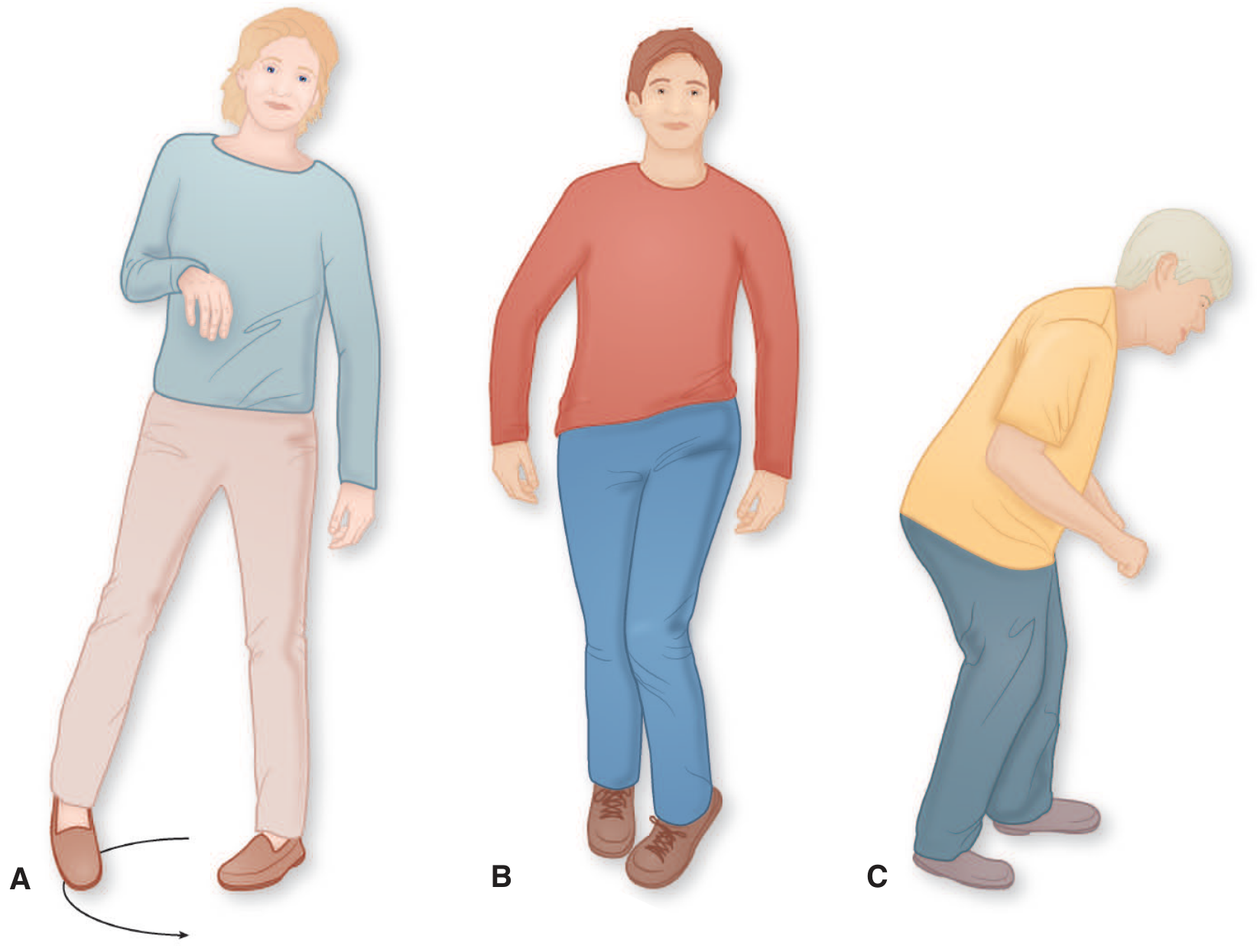
CP Classification Overview
CP is classified by tone type and distribution (site of involvement):
| Tone Type | Brain Region Damaged | Key Feature |
|---|---|---|
| Spastic | Motor cortex / pyramidal | Velocity-dependent increased tone, hyperreflexia |
| Dyskinetic (dystonic/choreoathetoid) | Basal ganglia / extrapyramidal | Involuntary, uncoordinated movements |
| Ataxic | Cerebellum | Low tone, loss of coordination |
| Mixed | Multiple regions | Combination, often spasticity + dystonia |
1. Spastic CP (Most Common ~80%)
A. Spastic Hemiplegia (Unilateral CP)
Damage to the motor cortex on one side; arm more affected than leg. The Winters et al. (1987) classification, still the gold standard, describes four sequential gait types:
| Type | Key Feature | Description |
|---|---|---|
| Type 1 | Drop foot | Weak/silent dorsiflexors - foot drops during swing phase |
| Type 2 | True equinus | Type 1 + triceps surae contracture - plantarflexed throughout |
| Type 3 | Equinus + jump knee | Type 2 + hamstring/rectus femoris spasticity causing knee flexion/stiffness |
| Type 4 | Full stiff gait | Type 3 + hip flexor and adductor spasticity, pelvic rotation involved |
Classic hemiplegic features:
- Arm held flexed, pronated, adducted (arm does not swing)
- Affected leg: hip circumduction (the leg swings out in an arc to clear the ground)
- Toe-walking or foot drop on affected side
- Shortened stride on affected side
B. Spastic Diplegia (Bilateral CP, legs > arms)
Most commonly associated with periventricular leukomalacia (PVL) from prematurity. Also uses a four-type Rodda/Graham classification:
| Type | Key Feature | Description |
|---|---|---|
| Type 1 | True equinus | Plantarflexion at ankle, relatively normal knee and hip |
| Type 2 | Jump knee | Equinus + excessive knee flexion in stance |
| Type 3 | Apparent equinus | Ankle dorsiflexed but knee and hip excessively flexed (crouch-like with apparent equinus) |
| Type 4 | Crouch gait | Significant flexion at hip and knee, excessive dorsiflexion - most severe |
Classic diplegic features:
- Scissor gait - thighs strongly adducted, legs cross as patient walks
- Bilateral toe-walking (equinus)
- Short, stiff steps, restricted hip and knee motion
- Arms relatively spared but may show mild involvement
- As described in Adams and Victor's Principles of Neurology: "Each leg is advanced slowly and stiffly... the thighs may be strongly adducted, causing the legs almost to cross... as though wading waist-deep in water"
C. Spastic Quadriplegia (Total Body Involvement)
All four limbs involved; most severe form. Typically non-ambulant or very limited ambulation. Primary orthopedic concerns are hip subluxation and spinal deformity rather than gait management.
2. Dyskinetic CP (~15%)
Brain region: Basal ganglia / extrapyramidal system damage (commonly from kernicterus or hypoxic-ischemic injury)
Two sub-types with distinct gait features:
Dystonic
- Sustained or repetitive muscle contractions causing twisting, repetitive movements and abnormal postures
- Gait is slow, labored, with torsional movements of the trunk and limbs
- Muscle tone fluctuates (sometimes rigidly increased, sometimes low)
- Movements worsen with voluntary effort, emotion, or stress
Choreoathetoid
- Chaotic, jerky, uncontrolled movements (chorea) combined with slow, writhing movements (athetosis)
- Gait appears unpredictable and uncontrolled; sudden jerks of the legs, arms, and trunk
- Movements affect all four limbs
- No hyperreflexia or pyramidal signs (distinguishes from spastic CP)
- Balance and postural control are severely impaired
Key difference from spastic CP: Tone is variable rather than consistently increased; movements are involuntary and purposeless; scissor gait is NOT characteristic.
3. Ataxic CP (Least Common ~5-10%)
Brain region: Cerebellar damage or malformation
| Feature | Description |
|---|---|
| Base of support | Wide-based gait (legs spread wide for stability) |
| Balance | Severely impaired; frequent falls |
| Coordination | Movements performed with abnormal force and rhythm |
| Tremor | Intention tremor (worsens as limb approaches target) |
| Tone | Generalized hypotonia (low tone) |
| Steps | Irregular, unsteady, lurching (trunk ataxia) |
| Upper limbs | Past-pointing, over/undershooting |
The gait is often described as "drunken" - unsteady and staggering, quite distinct from the stiff, predictable pattern of spastic CP.
4. Mixed CP
Commonly a combination of spasticity and dystonia. "Spastic Ataxic Diplegia" is a recognized mixed subtype often associated with hydrocephalus. Gait features overlap between types; the predominant component usually dictates the clinical presentation.
Summary Comparison Table
| Feature | Spastic Hemiplegia | Spastic Diplegia | Dyskinetic | Ataxic |
|---|---|---|---|---|
| Limbs affected | One side (arm > leg) | Both legs | All four | All four |
| Tone | High (unilateral) | High (bilateral, legs) | Variable | Low |
| Gait pattern | Circumduction, arm flexed | Scissor, toe-walk, crouch | Jerky/writhing/twisting | Wide-based, unsteady |
| Foot strike | Toe-walking or drop foot | Bilateral toe-walking | Variable | Flat/irregular |
| Balance | Mildly impaired | Moderately impaired | Severely impaired | Severely impaired |
| Reflexes | Hyperreflexic | Hyperreflexic | Normal/absent pyramidal signs | Hyporeflexic |
| Brain lesion | Unilateral cortex | Periventricular (PVL) | Basal ganglia | Cerebellum |
| Ambulation | Usually independent | Usually independent | Variable | Independent but falls |
| Arm swing | Absent on affected side | Usually present | Involuntary movements | Dyscoordinated |
Sources: - Bailey and Love's Short Practice of Surgery 28th Ed, p. 653 | Adams and Victor's Principles of Neurology 12th Ed, p. 138 | Tintinalli's Emergency Medicine | Physio-pedia CP Introduction | CP Resource Gait Fact Sheet
This is a shared conversation. Sign in to Orris to start your own chat.