
mastering All different types urinary system clinical cases with proper diagnosis pathway with tips tricks ,proper guidelines, correct drug of choice with drug dose frequency duration.All medicines used in urology treatment.proper cheatcoded clinical use.
urology clinical cases diagnosis treatment guidelines 2024 2025 UTI kidney stones BPH prostate drug doses
urology drugs doses cheat sheet alpha blocker 5-ARI anticholinergic kidney stone treatment tamsulosin nitrofurantoin TMP-SMX doses 2025
"urinary tract infection" AND treatment AND guidelines
🏥 MASTERING URINARY SYSTEM CLINICAL CASES
The Complete Urologist's Cheat Sheet — Diagnosis, Drugs & Doses
PART 1 - UTI SPECTRUM (Diagnosis Pathway + Drugs)
1A. UNCOMPLICATED CYSTITIS (Lower UTI)
Symptoms (dysuria + frequency) → Dipstick urinalysis
  ↓
Nitrites (+) or Leukocyte esterase (+) → Treat empirically
  ↓
Urine culture (only if recurrent, treatment failure, or pregnancy)
  ↓
Threshold: ≥10² CFU/mL if symptomatic + pyuria (NOT ≥10⁵ for cystitis)
| Drug | Dose | Frequency | Duration |
|---|---|---|---|
| Nitrofurantoin macrocrystals (1st line) | 100 mg | BID | 5 days |
| TMP-SMX (if resistance <20%) | 160/800 mg | BID | 3 days |
| Fosfomycin trometamol | 3 g sachet | Single dose | 1 day |
| Pivmecillinam (where available) | 400 mg | BID | 3-5 days |
| Ciprofloxacin (only if above unavailable) | 250 mg | BID | 3 days |
1B. ACUTE PYELONEPHRITIS (Upper UTI)
Fever + flank pain + CVA tenderness → Urine dipstick + culture (MANDATORY)
  ↓
Urine culture: ≥10⁵ CFU/mL + pyuria → Diagnosis confirmed
  ↓
Blood cultures if sepsis signs (T >38.5, HR >100, RR >20)
  ↓
CBC, CMP, CRP
  ↓
Renal ultrasound (to rule out obstruction, abscess, stone)
  CT abdomen with contrast if US inconclusive or not improving in 72 hrs
| Severity | Features | Management |
|---|---|---|
| Mild-Moderate | Fever, tolerating PO, no sepsis | Outpatient PO |
| Severe | Vomiting, unable PO, sepsis signs | IV in hospital |
| Complicated | Obstruction, abscess, pregnancy, diabetes, immunosuppressed | Inpatient IV |
| Drug | Dose | Frequency | Duration | Route |
|---|---|---|---|---|
| Ciprofloxacin (outpatient DOC) | 500 mg | BID | 7 days | PO |
| TMP-SMX (if susceptible) | 160/800 mg | BID | 14 days | PO |
| Ceftriaxone (inpatient) | 1-2 g | Once daily | Until PO | IV |
| Cefazolin (mild inpatient) | 1 g | Q8h | Until PO | IV |
| Piperacillin-tazobactam (severe/ESBL risk) | 4.5 g | Q6-8h | 10-14 days | IV |
| Ertapenem (ESBL confirmed) | 1 g | Once daily | 10-14 days | IV |
| Meropenem (MDR/sepsis) | 1 g | Q8h | Variable | IV |
1C. COMPLICATED UTI (cUTI)
| Severity | Drug | Dose | Duration |
|---|---|---|---|
| Moderate (PO) | Ciprofloxacin 500 mg BID | PO | 10-14 days |
| Severe (IV) | Piperacillin-tazobactam 4.5 g Q6h | IV | Until improved, then PO |
| ESBL risk | Ertapenem 1 g Q24h IV | IV | 10-14 days |
| Pseudomonas risk | Cefepime 2 g Q8h IV | IV | 10-14 days |
1D. CATHETER-ASSOCIATED UTI (CAUTI)
- Remove or replace catheter first
- Urine culture from new catheter
- Treat 7 days (shorter if prompt clinical response)
- Same drugs as complicated UTI
1E. RECURRENT UTI
- Relapse = same organism within 2 weeks (inadequate treatment)
- Reinfection = different organism or >2 weeks later
| Strategy | Regimen |
|---|---|
| Continuous prophylaxis | Nitrofurantoin 50-100 mg QHS × 6-12 months |
| Post-coital prophylaxis | TMP-SMX 40/200 mg single dose or Nitrofurantoin 50 mg |
| Patient-initiated therapy | TMP-SMX or Nitrofurantoin × 3 days at symptom onset |
| Cranberry products | Evidence weak but safe |
| Vaginal estrogen (postmenopausal) | Estriol cream 0.5 mg vaginally nightly × 2 weeks, then 2×/week |
| Immunostimulation (2025 EAU new) | Uro-Vaxom (E. coli extract) 1 capsule/day × 90 days |
| Methenamine hippurate | 1 g BID (reduces UTI frequency in non-catheterized patients) |
PART 2 - KIDNEY STONES (Urolithiasis)
2A. DIAGNOSIS PATHWAY
Severe flank pain → CTKUB (Non-contrast CT KUB) ← GOLD STANDARD
  ↓
Also: Urinalysis (hematuria in 85%), urine pH
  ↓
Serum: Creatinine, calcium, uric acid, phosphate, bicarbonate
  ↓
Stone passed → STONE ANALYSIS (XRD or infrared spectroscopy)
  ↓
First stone: Basic metabolic workup
Recurrent stone: 24-hour urine × 2 (calcium, oxalate, citrate, uric acid, pH, volume)
- CT KUB = best sensitivity/specificity (>95%/98%), detects all stone types
- Ultrasound = first-line in pregnancy, children, radiation concern; misses ureteral stones
- KUB X-ray = only detects calcium stones (70%); useful for follow-up
| Stone Type | % | Urine pH | X-ray | Special Clue |
|---|---|---|---|---|
| Calcium oxalate | 70-80% | Any | Radio-opaque | Most common; sharp spicules |
| Calcium phosphate (brushite/hydroxyapatite) | 5-10% | >6.5 | Radio-opaque | Hypercalciuria, RTA, hyperPTH |
| Struvite (triple phosphate) | 5-10% | >7 | Radio-opaque | Staghorn! Urease-producing bugs (Proteus, Klebsiella) |
| Uric acid | 5-10% | <5.5 | Radiolucent! | Gout, hyperuricosuria, metabolic syndrome |
| Cystine | 1-3% | Acidic | Faintly opaque | Young patients, family history, cyanide-nitroprusside test (+) |
2B. MANAGEMENT BY STONE SIZE
- Stones ≤4 mm: 80% pass spontaneously - analgesia + hydration
- Stones 5-7 mm: 50-60% pass - MET (medical expulsive therapy)
- Stones >10 mm: Unlikely to pass - intervention needed
| Drug | Dose | Frequency | Duration |
|---|---|---|---|
| Tamsulosin (DOC) | 0.4 mg | Once daily | Up to 30 days |
| Silodosin | 8 mg | Once daily | 4-6 weeks |
| Nifedipine (alternative) | 30 mg extended release | Once daily | 4-6 weeks |
| Drug | Dose | Route | Notes |
|---|---|---|---|
| Diclofenac (DOC) | 75 mg | IM/IV or 50 mg PO | NSAID = best for renal colic; reduces ureteral spasm |
| Ketorolac | 30 mg IV/IM or 10 mg PO | IV/IM/PO | 5 days max |
| Morphine | 0.1 mg/kg | IV | When NSAIDs contraindicated |
| Tramadol | 50-100 mg | PO/IV | Moderate pain |
| Desmopressin | 40 mcg | Intranasal | Adjunct - reduces intrapelvic pressure |
| Hyoscine (buscopan) | 20 mg | IV/IM | Smooth muscle antispasmodic |
2C. STONE PREVENTION (Metabolic Treatment)
| Stone Type | Prevention Drug | Dose | Mechanism |
|---|---|---|---|
| Calcium oxalate | Hydrochlorothiazide | 25-50 mg/day | Reduces urine calcium |
| Potassium citrate | 20-30 mEq BID | Raises urine pH, inhibits crystal aggregation | |
| Allopurinol | 100-300 mg/day | If hyperuricosuria | |
| Uric acid | Potassium citrate | 40-60 mEq/day divided | Alkalinizes urine to pH 6-7 → dissolves stones |
| Allopurinol | 100-300 mg/day | Reduces uric acid production | |
| Struvite | Acetohydroxamic acid | 250 mg TID | Urease inhibitor |
| + definitive surgery | - | Stones must be surgically removed | |
| Cystine | Potassium citrate | 40-80 mEq/day | Alkalinize urine to pH >7 |
| D-Penicillamine | 250-2000 mg/day | Chelates cystine (toxic - 2nd line) | |
| Tiopronin (alpha-MPG) | 800-1200 mg/day | Better tolerated than D-Pen |
2D. SURGICAL OPTIONS (AUA 2026)
| Procedure | Indication | Stone Size |
|---|---|---|
| SWL (ESWL) | Renal + proximal ureteral stones | <2 cm renal; <1 cm ureteral |
| URS (Ureteroscopy + laser) | Ureteral stones (any), renal stones <2 cm | Any |
| PCNL (Percutaneous nephrolithotomy) | Renal stones >2 cm, staghorn, SWL failure | >2 cm |
| Laparoscopic pyelolithotomy | Complex/large renal pelvis stones | Rare |
PART 3 - BENIGN PROSTATIC HYPERPLASIA (BPH)
3A. DIAGNOSIS PATHWAY
History + IPSS Score → IPSS 0-7 mild | 8-19 moderate | 20-35 severe
  ↓
DRE (enlarged, smooth, rubbery prostate)
  ↓
Urinalysis (rule out UTI, hematuria)
  ↓
PSA (if >50 yrs, or if cancer changes management)
  ↓
Post-void residual (PVR) by US - >100 mL significant
  ↓
Uroflowmetry: Qmax < 10 mL/s = BOO, 10-15 borderline, >15 normal
  ↓
TRUS (transrectal ultrasound) if surgery planned - measure prostate volume
3B. MEDICAL TREATMENT (BPH Drugs)
| Drug | Dose | Frequency | Notes |
|---|---|---|---|
| Tamsulosin (DOC) | 0.4 mg | Once daily (30 min after meal) | Most uro-selective; minimal orthostatic hypotension |
| Silodosin | 8 mg | Once daily with meal | Highly uro-selective; retrograde ejaculation |
| Alfuzosin | 10 mg XR | Once daily | Less sexual SE |
| Doxazosin | 1-8 mg | Once daily (titrate) | Also treats hypertension |
| Terazosin | 1-10 mg | Once daily (titrate) | Also treats hypertension |
| Drug | Dose | Frequency | Notes |
|---|---|---|---|
| Finasteride | 5 mg | Once daily | Inhibits type 2 5-AR only |
| Dutasteride | 0.5 mg | Once daily | Inhibits type 1 AND 2 (greater PSA reduction) |
| Drug | Dose | Notes |
|---|---|---|
| Tadalafil | 5 mg daily | For LUTS + ED (dual benefit); approved regardless of ED status - 2025 AUA |
| Drug | Dose | Caution |
|---|---|---|
| Solifenacin | 5-10 mg/day | Avoid if PVR >200 mL; risk of retention |
| Tolterodine | 2-4 mg/day | Lower CNS side effects |
| Oxybutynin | 5-10 mg BID | High anticholinergic SE |
| Darifenacin | 7.5-15 mg/day | M3 selective |
| Drug | Dose | Advantage |
|---|---|---|
| Mirabegron | 25-50 mg/day | No urinary retention risk; preferred in high PVR - 2025 AUA |
| Vibegron | 75 mg/day | Similar to mirabegron |
- Alpha blocker + 5-ARI (e.g., tamsulosin + dutasteride = "Combodart 0.5/0.4 mg") - reduces progression, retention, need for surgery (MTOPS, CombAT trials)
- Alpha blocker + tadalafil - LUTS + ED
- Alpha blocker + mirabegron - voiding + storage symptoms
3C. SURGICAL OPTIONS (BPH)
| Procedure | Indication |
|---|---|
| TURP (gold standard) | Prostate 30-80 cc, failed medical therapy |
| HoLEP (Holmium laser enucleation) | Any prostate size, especially >80 cc |
| TUIP | Small prostate <30 cc with BOO |
| Open/robotic simple prostatectomy | Very large prostate >100 cc |
| UroLift (prostatic urethral lift) | Moderate LUTS, preserve sexual function |
| Rezum (water vapor therapy) | Prostate <80 cc |
| PAE (prostatic artery embolization) | High surgical risk patients |
PART 4 - ACUTE KIDNEY INJURY (AKI)
4A. DIAGNOSIS PATHWAY
Elevated creatinine → Rule out CKD (check baseline Cr)
  ↓
Classify: PRE-RENAL vs INTRINSIC vs POST-RENAL
  ↓
FeNa (Fractional excretion of sodium):
  FeNa = (UNa × PCr)/(PNa × UCr) × 100
  <1% = Pre-renal | >2% = Intrinsic | Varies in obstruction
  ↓
FeUrea <35% = Pre-renal (useful if on diuretics)
  ↓
Urine microscopy: RBC casts = GN | Granular "muddy brown" casts = ATN | WBC casts = Pyelonephritis/interstitial
  ↓
Renal ultrasound: Hydronephrosis = post-renal obstruction
| Stage | Creatinine | Urine Output |
|---|---|---|
| 1 | ×1.5-1.9 baseline OR +0.3 mg/dL | <0.5 mL/kg/h × 6-12h |
| 2 | ×2.0-2.9 baseline | <0.5 mL/kg/h × ≥12h |
| 3 | ×3.0 baseline OR ≥4.0 mg/dL | <0.3 mL/kg/h × ≥24h OR anuria ×12h |
- Pre-renal: Dehydration, hemorrhage, sepsis, heart failure, NSAIDs, ACEi/ARB (in bilateral RAS)
- Intrinsic renal: ATN (most common - ischemia or nephrotoxins), GN, AIN, contrast nephropathy
- Post-renal: BPH, stones, tumor, stricture (catheter fixes this instantly)
4B. MANAGEMENT
- Acidosis (pH <7.1)
- Electrolytes (K >6.5 or refractory)
- Ingestion (toxins)
- Overload (volume unresponsive to diuretics)
- Uremia (uremic pericarditis, encephalopathy, platelets dysfunction)
| Drug | Dose | Use |
|---|---|---|
| Furosemide | 40-200 mg IV | Convert oliguric to non-oliguric, volume overload |
| Torsemide | 10-40 mg PO | Better oral bioavailability than furosemide |
PART 5 - GLOMERULAR DISEASES (Nephrology Side)
5A. NEPHROTIC vs NEPHRITIC SYNDROME - KEY DIFFERENTIATOR
| Feature | Nephrotic | Nephritic |
|---|---|---|
| Proteinuria | >3.5 g/day | <3.5 g/day |
| Hematuria | Minimal | Present (cola/brown urine) |
| RBC casts | Absent | PRESENT ← pathognomonic |
| Edema | Massive (pitting, periorbital, ascites) | Mild-moderate |
| Blood pressure | Often normal or low | Hypertension |
| Serum albumin | Low (<3 g/dL) | Near normal |
| Mechanism | Loss of charge barrier | Inflammation, proliferation |
5B. NEPHROTIC SYNDROME
| Age | Most Common Cause |
|---|---|
| Child (<16 yrs) | Minimal Change Disease (MCD) |
| Young adult | Focal Segmental Glomerulosclerosis (FSGS) |
| 40-60 yrs | Membranous Nephropathy |
| Diabetic | Diabetic Nephropathy |
| SLE patient | Lupus Nephritis (Class V) |
| Condition | Drug | Dose | Duration |
|---|---|---|---|
| MCD (children) | Prednisolone | 60 mg/m²/day → taper | 8-12 weeks initial |
| MCD (adults) | Prednisolone | 1 mg/kg/day (max 80 mg) | 4-16 weeks |
| Frequently relapsing MCD | Cyclophosphamide | 2-3 mg/kg/day × 8-12 weeks | Or CNI |
| Steroid-resistant MCD | Cyclosporine A | 3-5 mg/kg/day | 12-24 months |
| Membranous nephropathy | RITUXIMAB (preferred 2024) | 375 mg/m² × 4 doses OR 1g × 2 doses | 6 monthly |
| FSGS primary | Prednisolone | 1 mg/kg/day (max 80 mg) × 4-8 weeks then taper | |
| Lupus nephritis V | Mycophenolate | 2-3 g/day | Long term |
- Edema: Furosemide 40-120 mg/day + dietary Na restriction <2 g/day
- Proteinuria reduction: ACEi (Enalapril/Ramipril) or ARB (Losartan/Irbesartan) - reduce GFR-related proteinuria
- Dyslipidemia: Statin (Atorvastatin 10-40 mg/day)
- Thrombosis prophylaxis: Anticoagulation if albumin <2.5 g/dL, especially membranous nephropathy
5C. NEPHRITIC SYNDROME
| Disease | Key Clue | Complement | Treatment |
|---|---|---|---|
| Post-streptococcal GN | Child, 2-3 weeks post-pharyngitis/skin infection, low C3 | C3 low, C4 normal | Supportive; penicillin if active infection |
| IgA nephropathy (Berger disease) | Young male, synpharyngitic hematuria (within 1-3 days of URTI), normal complement | Normal C3/C4 | ACEi/ARB; fish oil; steroids if persistent proteinuria >1g/day |
| Goodpasture syndrome | Hemoptysis + hematuria, anti-GBM Ab (+) | Normal | Plasmapheresis + cyclophosphamide + prednisolone (emergency!) |
| Lupus nephritis | Young female, butterfly rash, ANA/anti-dsDNA (+), low C3+C4 | C3+C4 LOW | Mycophenolate + hydroxychloroquine ± steroids |
| ANCA vasculitis (GPA/MPA) | Saddle nose, hemoptysis, c-ANCA or p-ANCA | Normal | Rituximab (preferred) OR cyclophosphamide + prednisolone |
| Rapidly progressive GN (RPGN) | Crescent formation on biopsy | Variable | Pulse methylprednisolone 500 mg-1 g IV × 3 days → oral prednisolone + cyclophosphamide |
PART 6 - PROSTATE CANCER
6A. DIAGNOSIS PATHWAY
PSA screening (≥50 yrs; ≥40 yrs if high risk)
  ↓
PSA >4 ng/mL → TRUS/MRI (multiparametric MRI preferred)
  ↓
PI-RADS score on mpMRI: ≥3 → systematic + targeted biopsy
  ↓
TRUS-guided biopsy OR MRI-US fusion biopsy (preferred)
  ↓
Gleason score / ISUP grade group
  ↓
Staging: CT chest/abdomen/pelvis + bone scan
    (PSMA-PET scan preferred if locally advanced)
- Low risk: PSA <10, Gleason ≤6 (ISUP 1), T1-T2a
- Intermediate: PSA 10-20 OR Gleason 7 (ISUP 2-3) OR T2b-c
- High risk: PSA >20 OR Gleason 8-10 (ISUP 4-5) OR T3-T4
6B. TREATMENT (Prostate Cancer)
| Stage | Treatment Options |
|---|---|
| Low-risk | Active surveillance (preferred) OR radical prostatectomy OR RT |
| Intermediate | Radical prostatectomy OR RT + short-term ADT |
| High-risk | RT + long-term ADT (18-36 months) OR radical prostatectomy + RT |
| Metastatic hormone-sensitive | ADT + docetaxel OR ADT + ARPI (abiraterone/enzalutamide) |
| Castration-resistant (mCRPC) | Abiraterone + prednisone OR enzalutamide OR docetaxel OR cabazitaxel |
| Drug | Class | Dose | Frequency |
|---|---|---|---|
| Leuprolide (Lupron) | GnRH agonist | 7.5 mg IM monthly OR 22.5 mg Q3M | |
| Degarelix | GnRH antagonist | 240 mg SC loading → 80 mg SC monthly | No testosterone flare |
| Relugolix | Oral GnRH antagonist | 120 mg loading → 40 mg daily | Oral; rapid testosterone recovery |
| Bicalutamide | Antiandrogen | 50 mg/day (combination) OR 150 mg/day (monotherapy) | Daily |
| Enzalutamide | Next-gen antiandrogen | 160 mg | Once daily |
| Abiraterone + Prednisone | CYP17 inhibitor | 1000 mg + 5 mg prednisone BID | Daily with prednisolone |
| Darolutamide | Next-gen antiandrogen | 600 mg | BID with food |
PART 7 - BLADDER CANCER
7A. DIAGNOSIS PATHWAY
Painless hematuria → CT urogram (GOLD STANDARD for upper tract)
  ↓
Urine cytology (high grade, CIS detection)
  ↓
CYSTOSCOPY (mandatory) + biopsy ← Definitive diagnosis
  ↓
TURBT (transurethral resection) - diagnostic AND therapeutic
  ↓
Pathology: depth of invasion → Ta, T1, CIS (NMIBC) vs T2+ (MIBC)
7B. TREATMENT
| Risk | Treatment |
|---|---|
| Low-risk (Ta, low grade) | TURBT + single intravesical mitomycin C (immediate post-op) |
| Intermediate | TURBT + intravesical chemotherapy course |
| High-risk (T1 high grade, CIS) | TURBT + BCG (bacillus Calmette-Guérin) instillation |
| Drug | Dose | Use |
|---|---|---|
| Mitomycin C | 40 mg in 40 mL NS | Immediately post-TURBT; induction/maintenance |
| BCG | 81 mg (1 vial) in 50 mL NS | High-risk NMIBC; best intravesical agent |
| Epirubicin | 50-80 mg | Alternative to MMC |
| Gemcitabine | 2 g in 100 mL NS | BCG-naive or BCG-unresponsive |
| Docetaxel | 75 mg/m² | BCG-unresponsive (combination with gemcitabine) |
- Neoadjuvant cisplatin-based chemo (MVAC or GC) + radical cystectomy (gold standard)
- Or concurrent chemoradiation (bladder preservation)
PART 8 - OVERACTIVE BLADDER (OAB)
8A. DIAGNOSIS
OAB symptoms → Urinalysis (rule out UTI)
  ↓
Voiding diary (3-day frequency/volume chart)
  ↓
Post-void residual (rule out BOO/retention)
  ↓
Urodynamics if diagnosis uncertain or failed initial treatment
8B. TREATMENT (Stepwise)
- Bladder training (gradually increase voiding intervals)
- Fluid management (reduce caffeine, alcohol; 1.5-2L/day fluid)
- Pelvic floor exercises
| Drug | Class | Dose | Frequency | Notes |
|---|---|---|---|---|
| Mirabegron | Beta-3 agonist | 25-50 mg | Once daily | Preferred over antimuscarinics (no dry mouth/cognition) |
| Vibegron | Beta-3 agonist | 75 mg | Once daily | Similar to mirabegron |
| Solifenacin | Antimuscarinic | 5-10 mg | Once daily | Good efficacy, low side effects |
| Tolterodine | Antimuscarinic | 2-4 mg | Once daily (ER) | Long-acting, less dry mouth |
| Darifenacin | M3-selective | 7.5-15 mg | Once daily | M3 selective = less cognitive SE |
| Oxybutynin IR | Antimuscarinic | 5-10 mg | TID | High SE; patch/gel form better tolerated |
| Fesoterodine | Antimuscarinic | 4-8 mg | Once daily | Prodrug of fesoterodine |
| Mirabegron + Solifenacin | Combination | 25 mg + 5 mg | Once daily (Orbis/Vesicare Solifenacin+Mirabegron combo) | Better than either alone |
- Botulinum toxin A (Botox) - 100 units intravesical injection (cystoscopy); repeat Q6-12 months
- Percutaneous tibial nerve stimulation (PTNS) - weekly × 12 sessions, then monthly
- Sacral neuromodulation (InterStim) - implanted device
PART 9 - URINARY INCONTINENCE
9A. TYPES AND DRUG TREATMENT
| Type | Mechanism | Drug | Dose |
|---|---|---|---|
| Urge incontinence | Detrusor overactivity | Mirabegron/Antimuscarinics | As above |
| Stress incontinence | Sphincter/pelvic floor weakness | Duloxetine 40 mg BID | 12 weeks |
| Pelvic floor therapy (1st line) | |||
| Overflow incontinence | BOO or detrusor failure | Alpha blocker (BPH) OR CIC | |
| Mixed | Combination | Treat predominant type first |
PART 10 - HEMATURIA EVALUATION
10A. HEMATURIA PATHWAY
Hematuria
  ↓
Dysmorphic RBCs, RBC casts, proteinuria → GLOMERULAR (nephrology)
  ↓
Isomorphic RBCs, no casts, no/minimal proteinuria → UROLOGICAL
  ↓
CT urogram → Cystoscopy → Consider urine cytology
| Age | Most likely cause |
|---|---|
| Child <20 | IgA nephropathy, GN, Alport syndrome, UTI |
| 20-50 | IgA nephropathy, kidney stone, UTI |
| >50 | Bladder cancer, prostate pathology, kidney cancer, stone |
COMPLETE UROLOGY DRUG REFERENCE TABLE
| Drug | Class | Dose | Use |
|---|---|---|---|
| Tamsulosin | Alpha-1 blocker | 0.4 mg OD after meal | BPH, ureterolithiasis MET |
| Silodosin | Alpha-1 blocker | 8 mg OD with meal | BPH |
| Alfuzosin | Alpha-1 blocker | 10 mg OD XR | BPH |
| Doxazosin | Alpha-1 blocker | 1-8 mg OD | BPH + HTN |
| Terazosin | Alpha-1 blocker | 1-10 mg OD | BPH + HTN |
| Finasteride | 5-ARI | 5 mg OD | BPH prostate >30cc |
| Dutasteride | 5-ARI | 0.5 mg OD | BPH (dual 5-AR inhibitor) |
| Tadalafil | PDE5-I | 5 mg OD | BPH + LUTS (± ED) |
| Mirabegron | Beta-3 agonist | 25-50 mg OD | OAB, BPH storage |
| Vibegron | Beta-3 agonist | 75 mg OD | OAB |
| Solifenacin | Antimuscarinic | 5-10 mg OD | OAB |
| Tolterodine | Antimuscarinic | 2-4 mg OD (ER) | OAB |
| Oxybutynin | Antimuscarinic | 5-10 mg BID-TID | OAB |
| Darifenacin | M3-antimuscarinic | 7.5-15 mg OD | OAB |
| Duloxetine | SNRI | 40 mg BID | Stress incontinence |
| Nitrofurantoin | Antibiotic | 100 mg BID × 5d | Cystitis (not UTI >CrCl<30) |
| TMP-SMX | Antibiotic | 160/800 mg BID × 3-14d | Cystitis 3d; pyelo 14d |
| Fosfomycin | Antibiotic | 3 g sachet single dose | Cystitis uncomplicated |
| Ciprofloxacin | Antibiotic | 250-500 mg BID | Cystitis 3d; pyelo 7d |
| Ceftriaxone | Antibiotic | 1-2 g IV OD | Pyelo/cUTI IV |
| Pip-tazo | Antibiotic | 4.5 g IV Q6-8h | Severe/complicated UTI |
| Ertapenem | Antibiotic | 1 g IV OD | ESBL-producing organisms |
| Potassium citrate | Alkalinizer | 20-60 mEq/day divided | Uric acid/cystine stones |
| Allopurinol | Xanthine oxidase inhibitor | 100-300 mg OD | Uric acid/calcium oxalate stones |
| Hydrochlorothiazide | Thiazide diuretic | 25-50 mg OD | Hypercalciuric calcium stones |
| Furosemide | Loop diuretic | 20-120 mg OD-BID | Nephrotic edema, AKI volume overload |
| Leuprolide | GnRH agonist | 7.5 mg IM monthly | Prostate cancer ADT |
| Degarelix | GnRH antagonist | 240→80 mg SC | Prostate cancer ADT (no flare) |
| Bicalutamide | Antiandrogen | 50 mg OD | Prostate cancer |
| Enzalutamide | Next-gen antiandrogen | 160 mg OD | mCRPC |
| Abiraterone | CYP17 inhibitor | 1000 mg OD + prednisone 5 mg BID | mCRPC / mHSPC |
| BCG instillation | Immunotherapy | 81 mg intravesical weekly × 6w | NMIBC high-risk |
| Mitomycin C | Chemo instillation | 40 mg intravesical | NMIBC (immediate post-TURBT) |
| Botulinum toxin A | Neurotoxin | 100 U intravesical | Refractory OAB |
| Desmopressin | ADH analog | 0.1-0.4 mg OD at night (oral) | Nocturia, nocturnal polyuria, enuresis |
| Diclofenac | NSAID | 50-75 mg PO/IM/IV | Renal colic analgesia |
| D-Penicillamine | Chelator | 250-2000 mg/day | Cystinuria |
| Acetohydroxamic acid | Urease inhibitor | 250 mg TID | Struvite stones |
CHEAT CODES SUMMARY - QUICK RECALL
🔑 UTI Cheat Codes:
- Nitrofurantoin = BLADDER only (not pyelonephritis, not CrCl<30)
- Fosfomycin = single dose only (highest adherence)
- Ciprofloxacin = pyelo outpatient; 7 days = same as 14 days
- Treat asymptomatic bacteriuria ONLY in: Pregnancy + Pre-urology procedure
- CAUTI: Do NOT treat unless symptomatic

🔑 Stone Cheat Codes:
- Tamsulosin 0.4 mg = MET for distal ureteral stone ≤10 mm (AUA 2026)
- NSAIDs > Opioids for renal colic (diclofenac = morphine equivalent)
- Radiolucent stone on XRay = URIC ACID → alkalinize with K-citrate
- Staghorn calculus = Struvite (urease bugs) → PCNL + antibiotics
- Cystine stone: young patient, family history, cyanide-nitroprusside test (+)
- Urine pH: <5.5 = uric acid; >7 = struvite; 6-6.5 = calcium phosphate

🔑 BPH Cheat Codes:
- Alpha blockers = quick onset (24-48h); 5-ARI = slow onset (3-6 months)
- Tamsulosin = no titration needed (uroselective)
- Finasteride/dutasteride = reduce PSA by 50% (double PSA to adjust)
- Mirabegron > antimuscarinics for OAB in elderly (no retention/cognitive risk)
- Tadalafil 5 mg daily = BPH + LUTS benefit (regardless of ED)
- 5-ARI + alpha blocker combo = if prostate >30 cc + moderate-severe LUTS

🔑 Hematuria Cheat Codes:
- RBC casts + proteinuria + dysmorphic RBCs = GLOMERULAR → nephrology
- Painless gross hematuria in >50-yr male = BLADDER CANCER until proven otherwise
- Synpharyngitic hematuria (within 24-72h of URTI) = IgA nephropathy
- Post-infectious hematuria (2-3 weeks after strep throat) = PSGN

🔑 Nephrology Cheat Codes:
- FeNa <1% = pre-renal; but NOT valid if diuretics → use FeUrea <35%
- MCD in children → responds to steroids in 2-4 weeks (good prognosis)
- Membranous nephropathy → anti-PLA2R antibody test; rituximab (2024)
- Goodpasture = EMERGENCY → plasmapheresis + cyclophosphamide immediately
- ANCA vasculitis = rituximab preferred over cyclophosphamide (2024 RAVE)
- Lupus nephritis: ANA, anti-dsDNA, LOW C3+C4 (both), anti-Sm

🔑 ADT Cheat Codes:
- Leuprolide = testosterone flare for 2 weeks → add antiandrogen first
- Degarelix = NO testosterone flare → preferred in spinal cord compression
- Relugolix = oral GnRH antagonist → rapid testosterone recovery on stopping
- CRPC + bone mets → add radium-223 (bone-targeting alpha emitter)
medicine mastery
What area of medicine do you want to master? · What format works best for you? · What is your level / purpose?
internal medicine clinical guidelines 2025 2026 cardiology endocrinology pulmonology GI drug doses resident cheat sheet
Harrison's internal medicine 2025 key updates cardiology heart failure ACS atrial fibrillation hypertension guidelines changes
2025 ACC AHA hypertension guideline drug treatment algorithm RAAS beta blocker CCB thiazide first line
sepsis surviving campaign 2025 antibiotics vasopressors bundle management protocol
MEDICINE MASTERY - THE COMPLETE RESIDENT CHEAT SHEET
System-by-System: Diagnosis Pathways + Drug Tables + Clinical Cases + 2025-2026 Guidelines
SECTION 1 - CARDIOLOGY
1.1 HYPERTENSION
Diagnosis & Staging (2025 ACC/AHA - NEW Guideline)
| Category | SBP | DBP |
|---|---|---|
| Normal | <120 | <80 |
| Elevated | 120-129 | <80 |
| Stage 1 | 130-139 | 80-89 |
| Stage 2 | ≥140 | ≥90 |
| Hypertensive crisis | ≥180 | ≥120 |
Treatment Algorithm (2025 ACC/AHA)
Stage 1 HTN + CVD risk <7.5%:
  → Lifestyle × 3-6 months → if still ≥130/80 → start 1 drug

Stage 1 HTN + CVD risk ≥7.5% OR diabetes OR CKD:
  → Start 1 drug + lifestyle now

Stage 2 HTN (≥140/90):
  → Start 2 drugs from different classes simultaneously
Compelling Indication Drug Matching
| Condition | Preferred Drug |
|---|---|
| Heart failure (HFrEF) | ACEi/ARB/ARNI + BB + MRA + SGLT2i |
| Post-MI | ACEi + Beta-blocker |
| Diabetes + CKD | ACEi or ARB (nephroprotection) |
| Diabetes + ASCVD | SGLT2i or GLP-1RA |
| Angina | Beta-blocker ± CCB (amlodipine) |
| Atrial fibrillation | Beta-blocker or Diltiazem/Verapamil (rate) |
| Pregnancy | Labetalol (1st line) OR Nifedipine XR; NEVER ACEi/ARB |
| Resistant HTN | Add MRA (spironolactone 25-50 mg) if eGFR ≥45 |
| Black patients | CCB or Thiazide preferred; ACEi less effective monotherapy |
Antihypertensive Drug Reference
| Class | Drug | Starting Dose | Max Dose | Notes |
|---|---|---|---|---|
| ACEi | Ramipril | 2.5 mg OD | 10 mg OD | Cough SE; angioedema |
| Lisinopril | 10 mg OD | 40 mg OD | Check K+, Cr | |
| Enalapril | 5 mg BID | 20 mg BID | ||
| Perindopril | 4 mg OD | 8 mg OD | Post-MI proven | |
| ARB | Losartan | 50 mg OD | 100 mg OD | No cough; safe |
| Valsartan | 80 mg OD | 320 mg OD | HF indication | |
| Irbesartan | 150 mg OD | 300 mg OD | Renal protective DM | |
| Telmisartan | 40 mg OD | 80 mg OD | Longest half-life | |
| Candesartan | 8 mg OD | 32 mg OD | HF indication | |
| ARNI | Sacubitril/Valsartan | 49/51 mg BID | 97/103 mg BID | HFrEF only; 36h washout from ACEi |
| DHP-CCB | Amlodipine | 5 mg OD | 10 mg OD | Ankle edema SE |
| Nifedipine XR | 30 mg OD | 90 mg OD | Angina, pregnancy HTN | |
| Felodipine | 5 mg OD | 10 mg OD | ||
| Non-DHP CCB | Diltiazem | 60 mg TID | 360 mg/day | Rate control AF; NOT in HFrEF |
| Verapamil | 80 mg TID | 480 mg/day | Constipation; NOT in HFrEF | |
| Thiazide-like | Chlorthalidone | 12.5 mg OD | 25 mg OD | Preferred over HCTZ (longer action) |
| Indapamide | 1.25 mg OD | 2.5 mg OD | ||
| Hydrochlorothiazide | 12.5 mg OD | 50 mg OD | ||
| Loop | Furosemide | 20-40 mg OD | 240 mg/day | Edema, HF, CKD |
| Torsemide | 5-10 mg OD | 200 mg/day | Better PO absorption | |
| Bumetanide | 0.5-1 mg OD | 10 mg/day | ||
| MRA | Spironolactone | 25 mg OD | 50 mg OD | Resistant HTN, HFrEF |
| Eplerenone | 25 mg OD | 50 mg OD | Selective (no gynecomastia) | |
| Finerenone | 10-20 mg OD | 20 mg OD | DM + CKD, cardiorenal | |
| Beta-blockers | Metoprolol succinate | 25 mg OD | 200 mg OD | HFrEF proven (titrate slowly) |
| Carvedilol | 3.125 mg BID | 25 mg BID | Alpha + non-select BB; HFrEF | |
| Bisoprolol | 1.25 mg OD | 10 mg OD | HFrEF proven | |
| Atenolol | 25 mg OD | 100 mg OD | HTN, angina | |
| Nebivolol | 5 mg OD | 40 mg OD | Nitric oxide-releasing | |
| Alpha-blockers | Doxazosin | 1 mg OD | 8 mg OD | Resistant HTN, BPH |
| Central | Clonidine | 0.1 mg BID | 1.2 mg/day | Rebound if stopped abruptly |
| Methyldopa | 250 mg TID | 3 g/day | Pregnancy safe | |
| Vasodilators | Hydralazine | 10-25 mg TID | 200 mg/day | With nitrates in HFrEF (Black pts) |
| Minoxidil | 5 mg OD | 100 mg/day | Resistant HTN only |
- ACEi + ARB = NEVER combine (bilateral AKI risk)
- ACEi + Aliskiren (DRI) = NEVER in DM or CKD
- Verapamil/Diltiazem + Beta-blocker = HIGH risk complete heart block
- ACEi/ARB: hold before contrast, hold in pregnancy, check K+/Cr at 1 week
1.2 HEART FAILURE
FOUR PILLARS OF HFrEF (EF <40%) - 2022 AHA/ESC / Confirmed 2025
ALL patients with HFrEF should receive (if tolerated):
1. ARNI (Sacubitril/Valsartan) -- or ACEi/ARB if ARNI not available
2. Beta-blocker (Carvedilol / Bisoprolol / Metoprolol succinate)
3. MRA (Spironolactone / Eplerenone)
4. SGLT2 inhibitor (Dapagliflozin / Empagliflozin)
HF Drug Table
| Drug | Class | Dose | Key Rule |
|---|---|---|---|
| Sacubitril/Valsartan | ARNI | Start: 49/51 mg BID → Target: 97/103 mg BID | 36h washout from ACEi; SBP must be >95 |
| Carvedilol | Alpha+BB | 3.125 mg BID → 25 mg BID | Start in STABLE, euvolemic HF only |
| Bisoprolol | Selective BB | 1.25 mg OD → 10 mg OD | CIBIS-II proven |
| Metoprolol succinate | Selective BB | 12.5-25 mg OD → 200 mg OD | MERIT-HF proven |
| Spironolactone | MRA | 25 mg OD → 50 mg OD | K+ <5.0, eGFR >30 |
| Eplerenone | MRA | 25 mg OD → 50 mg OD | Selective; post-MI HFrEF |
| Dapagliflozin | SGLT2i | 10 mg OD | DAPA-HF; HFrEF AND HFpEF |
| Empagliflozin | SGLT2i | 10 mg OD | EMPEROR-Reduced/Preserved |
| Furosemide | Loop diuretic | 20-120 mg OD/BID | Symptom relief; titrate to dry weight |
| Hydralazine + ISDN | Vasodilators | 37.5 mg + 20 mg TID | If ACEi/ARB not tolerated; Black pts |
| Ivabradine | If-channel | 5 mg BID → 7.5 mg BID | HR >70 in sinus rhythm, on max BB |
| Digoxin | Cardiac glycoside | 0.125-0.25 mg OD | AF rate control in HF; narrow TW |
| Vericiguat | sGC stimulator | 2.5 mg OD → 10 mg OD | Worsening HFrEF |
| Omecamtiv mecarbil | Myosin activator | 25-50 mg BID | Investigational; mildly approved |
LMNOP:
L - Lasix (furosemide IV 40-80 mg)
M - Morphine 2-4 mg IV (dyspnea, venodilation - controversial, use cautiously)
N - Nitrates (SL nitroglycerine OR IV nitroglyceride if SBP >90)
O - Oxygen (target SpO2 >94%)
P - Position (sit up, legs down)
- Dobutamine: 2-20 mcg/kg/min IV (beta-1 agonist)
- Milrinone: 0.375-0.75 mcg/kg/min (PDE-3 inhibitor; avoid in CAD)
- Dopamine: 2-20 mcg/kg/min (dose-dependent effects)
- Levosimendan: 0.1 mcg/kg/min × 24h (calcium sensitizer; if starting BB)
1.3 ACUTE CORONARY SYNDROME (ACS)
2025 ACC/AHA ACS Guidelines - KEY UPDATES
Chest pain → ECG within 10 minutes (first medical contact)
  ↓
STEMI (ST elevation ≥1mm in ≥2 contiguous leads, or LBBB):
  → Primary PCI within 90 min (door-to-balloon)
  → Fibrinolysis if PCI unavailable AND <12h onset

NSTE-ACS (NSTEMI/UA) → hs-cTn at 0h + 1h (or 0h + 2h)
  → Risk stratify: GRACE score OR TIMI score
  → High risk: invasive strategy within 2-24h
  → Low risk: can discharge with outpatient workup
| Drug | Dose | Notes |
|---|---|---|
| Aspirin | 325 mg loading → 75-100 mg daily maintenance | Give IMMEDIATELY, all ACS |
| Ticagrelor (preferred) | 180 mg loading → 90 mg BID × 12 months | 2025: preferred P2Y12; lower dose 60 mg BID after 12 months if continued |
| Prasugrel | 60 mg loading → 10 mg OD × 12 months | Avoid >75 yrs, <60 kg, prior stroke/TIA |
| Clopidogrel | 300-600 mg loading → 75 mg OD | If ticagrelor/prasugrel not available; CYP2C19 variability |
| Heparin (UFH) | 60-70 u/kg bolus (max 5000u) → 12-15 u/kg/hr infusion | ACS anticoagulation |
| Enoxaparin | 1 mg/kg SC Q12h OR 30 mg IV bolus + 1 mg/kg SC | NSTE-ACS preferred |
| Fondaparinux | 2.5 mg SC daily | Preferred in NSTEMI if low bleed risk |
| Bivalirudin | 0.75 mg/kg bolus → 1.75 mg/kg/hr | PCI anticoagulant; less HIT |
| Beta-blocker | Metoprolol 25-50 mg PO within 24h (if HR/BP OK) | Start early in NSTEMI; hold in acute HF |
| ACEi | Ramipril 2.5 mg → 10 mg OD | Start within 24h all STEMI |
| Statin | Atorvastatin 80 mg OD OR Rosuvastatin 40 mg OD | High-intensity, START NOW |
| Nitrates | SL nitroglycerine 0.4 mg Q5min × 3 | Chest pain relief; hold if sildenafil in 48h |
| GP IIb/IIIa inhibitors | Eptifibatide / Tirofiban | In PCI if high thrombus burden |
- DAPT duration: 1-3 months then drop aspirin + continue ticagrelor (TWILIGHT strategy, Class I)
- Patient on OAC + ACS: Triple therapy 1-4 weeks → OAC + P2Y12 (drop aspirin)
- Prasugrel now generic - cost similar to clopidogrel; viable alternative
- hs-cTn 0h/1h rule-out algorithm standard of care
- Posterior MI: ST depression in V1-V3 → do posterior leads
- de Winter T-waves: LAD occlusion without ST elevation → treat as STEMI
- Wellens syndrome: T-wave changes in V2-V3 → LAD critical stenosis → CATH URGENTLY
1.4 ATRIAL FIBRILLATION
Diagnosis + Management Framework
New onset AF:
1. Rate control vs Rhythm control decision
2. CHA₂DS₂-VASc score → anticoagulation decision
3. HAS-BLED score → bleeding risk assessment
| Factor | Points |
|---|---|
| CHF/HFrEF | 1 |
| Hypertension | 1 |
| Age ≥75 | 2 |
| Diabetes | 1 |
| Prior Stroke/TIA | 2 |
| Vascular disease (MI, PAD) | 1 |
| Age 65-74 | 1 |
| Sex category (female) | 1 |
| Drug | Class | Dose | Notes |
|---|---|---|---|
| Apixaban (preferred) | Factor Xa inhibitor | 5 mg BID (2.5 mg BID if ≥2 of: age ≥80, weight ≤60 kg, Cr ≥1.5) | Lowest bleeding risk in trials |
| Rivaroxaban | Factor Xa inhibitor | 20 mg OD with evening meal | Once daily; good adherence |
| Dabigatran | Direct thrombin inhibitor | 150 mg BID (110 mg BID if ≥80 yrs or high bleed risk) | Reversal: Idarucizumab |
| Edoxaban | Factor Xa inhibitor | 60 mg OD (30 mg if CrCl 15-50, weight ≤60 kg, VKA inhibitors) | |
| Warfarin | VKA | INR target 2-3 | 2nd line; use in mechanical valves, severe MS, renal failure |
- Dabigatran: Idarucizumab 5 g IV
- Factor Xa inhibitors: Andexanet alfa (apixaban/rivaroxaban) or Ciraparantag
- Warfarin: Vitamin K + 4-factor PCC
| Drug | Dose | Notes |
|---|---|---|
| Metoprolol | 25-200 mg OD | HFrEF + AF |
| Bisoprolol | 2.5-10 mg OD | HFrEF + AF |
| Digoxin | 0.125-0.25 mg OD | Sedentary patients; narrow therapeutic |
| Diltiazem | 60-360 mg/day | NOT in HFrEF |
| Verapamil | 80-480 mg/day | NOT in HFrEF |
| Drug | Use | Dose | Notes |
|---|---|---|---|
| Amiodarone | Any structural heart disease, HF | 200 mg OD (maintenance) | Thyroid, lung, liver toxicity; most effective |
| Flecainide | No structural heart disease | 50-150 mg BID | Structurally normal heart only |
| Propafenone | No structural heart disease | 150-300 mg TID | Same contraindications as flecainide |
| Sotalol | No severe LVH, QTc must be normal | 80-160 mg BID | Check QTc before use |
| Dronedarone | Paroxysmal/persistent AF, non-HF | 400 mg BID | AVOID in permanent AF, HF |
| Dofetilide | Hospitalise to load (QTc monitoring) | 125-500 mcg BID |
- Lenient: resting HR <110 (RACE-II trial equivalent outcomes)
- Strict: resting HR <80, exercise <110
- For most stable patients: lenient rate control is acceptable
1.5 DYSLIPIDEMIA
2022 AHA/ACC (current) LDL Targets:
| Risk Category | LDL Target |
|---|---|
| Very high risk (ASCVD) | <55 mg/dL (<1.4 mmol/L) |
| High risk (10-yr risk ≥7.5%, DM) | <70 mg/dL (<1.8 mmol/L) |
| Moderate risk (10-yr risk 5-7.5%) | <100 mg/dL |
| Primary prevention, low risk | <130 mg/dL |
| FH (familial hypercholesterolemia) | <70 mg/dL or >50% reduction |
| Drug | Class | Dose | LDL Reduction |
|---|---|---|---|
| Atorvastatin 40-80 mg | High-intensity statin | OD | 45-55% |
| Rosuvastatin 20-40 mg | High-intensity statin | OD | 45-55% |
| Simvastatin 20-40 mg | Moderate-intensity | OD | 30-40% |
| Pravastatin 40-80 mg | Moderate-intensity | OD | 30-40% |
| Ezetimibe | Cholesterol absorption inhibitor | 10 mg OD | Additional 15-20% |
| Inclisiran | siRNA PCSK9 inhibitor | 284 mg SC Q6M | 50% additional |
| Evolocumab | PCSK9 inhibitor mAb | 140 mg SC Q2W or 420 mg SC QM | 60% additional |
| Alirocumab | PCSK9 inhibitor mAb | 75-150 mg SC Q2W | 60% additional |
| Bempedoic acid | ACL inhibitor | 180 mg OD | 20-25%; for statin-intolerant |
| Fenofibrate | Fibrate | 145 mg OD | TG ↓↓; HDL ↑ |
| Omega-3 FA (icosapent ethyl) | Omega-3 | 4 g OD | TG ↓ + ASCVD benefit (REDUCE-IT) |
| Niacin | 1-3 g OD | No CV outcome benefit; rarely used |
- CK <10x ULN: continue statin, monitor
- CK >10x ULN: STOP statin immediately
- Switch to every-other-day rosuvastatin or pravastatin (least myotoxic)
- CYP3A4 interaction: Avoid high-dose simvastatin with amlodipine, verapamil, diltiazem, azole antifungals
SECTION 2 - ENDOCRINOLOGY
2.1 DIABETES MELLITUS TYPE 2
Diagnosis Criteria (ADA)
- FPG ≥126 mg/dL (×2 tests on separate days)
- 2-hour OGTT ≥200 mg/dL
- HbA1c ≥6.5% (×2 or with symptoms)
- Random glucose ≥200 mg/dL + symptoms
- Most patients: <7.0% (53 mmol/mol)
- Young/healthy: <6.5%
- Elderly/frail/multiple comorbidities: <8.0%
- Established CVD or high CV risk: <7.0% with SGLT2i/GLP-1RA regardless
T2DM Treatment Algorithm (Harrison's 22E 2025 + ADA 2025)
Start: Lifestyle (Diet + Exercise)
  ↓
Add Metformin (unless contraindicated)
  ↓
HbA1c still above target after 3 months?
  ↓
If CVD/HF: Add SGLT2i (preferred) OR GLP-1RA
If CKD + albuminuria: Add SGLT2i + Finerenone
If weight loss needed: Add GLP-1RA
If cost is concern: Add sulfonylurea
  ↓
Triple therapy or add insulin if targets not met
Antidiabetic Drug Master Table
| Drug | Class | Dose | HbA1c ↓ | Weight | Key Points |
|---|---|---|---|---|---|
| Metformin | Biguanide | 500 mg OD-BID → 1000 mg BID (max 2550 mg) | 1-1.5% | Neutral/↓ | Stop if eGFR <30; hold pre-contrast |
| Empagliflozin | SGLT2i | 10-25 mg OD | 0.5-1% | ↓↓ | CV+renal protection; DKA risk |
| Dapagliflozin | SGLT2i | 10 mg OD | 0.5-1% | ↓↓ | HFrEF + HFpEF indication |
| Canagliflozin | SGLT2i | 100-300 mg OD | 0.5-1% | ↓↓ | Renal protection; fracture risk |
| Semaglutide SC | GLP-1RA | 0.25 mg weekly → 1 mg weekly (→ 2 mg) | 1.2-1.8% | ↓↓↓ | SUSTAIN CV benefit; nausea |
| Semaglutide PO | GLP-1RA | 3 mg OD → 7 mg → 14 mg | 1.0-1.5% | ↓↓ | Take on empty stomach |
| Dulaglutide | GLP-1RA | 0.75 mg weekly → 1.5 mg → 4.5 mg | 1.0-1.5% | ↓↓ | REWIND CV benefit |
| Liraglutide | GLP-1RA | 0.6 → 1.2 → 1.8 mg SC daily | 1.0-1.5% | ↓↓ | LEADER CV benefit |
| Tirzepatide | GIP+GLP-1RA | 5 → 10 → 15 mg weekly SC | 2.0-2.4% | ↓↓↓↓ | Highest weight loss; SURPASS |
| Glipizide | Sulfonylurea | 5-40 mg OD | 1-1.5% | ↑ | Hypoglycemia risk; cheap |
| Glibenclamide (Glyburide) | SU | 2.5-20 mg OD | 1-1.5% | ↑ | Avoid elderly (long-acting; hypoglycemia) |
| Gliclazide MR | SU | 30-120 mg OD | 1-1.5% | ↑ | Safer than glyburide |
| Glimepiride | SU | 1-8 mg OD | 1-1.5% | ↑ | Once daily |
| Sitagliptin | DPP-4i | 100 mg OD (50 mg if eGFR 30-50; 25 mg <30) | 0.5-0.8% | Neutral | Safe in CKD; no hypoglycemia |
| Saxagliptin | DPP-4i | 5 mg OD | 0.5-0.8% | Neutral | Avoid in HF (HHF risk) |
| Alogliptin | DPP-4i | 25 mg OD | 0.5-0.8% | Neutral | Safe |
| Pioglitazone | TZD | 15-45 mg OD | 0.8-1.0% | ↑↑ | NAFLD benefit; bladder cancer risk; edema; HF CI |
| Acarbose | Alpha-glucosidase inhibitor | 25 mg TID → 50-100 mg TID | 0.5-0.8% | Neutral | GI SE; postprandial glucose |
| Insulin glargine | Basal insulin | 10 units bedtime (titrate by 2u Q3d) | Variable | ↑ | Peakless; OD |
| Insulin detemir | Basal insulin | 10 units OD-BID | Variable | ↑ | Can be OD or BID |
| Insulin degludec | Basal insulin | 10 units OD | Variable | ↑ | Ultra-long; flexible timing |
| Insulin aspart | Rapid-acting | 4-10 units premeal | Variable | ↑ | Onset 10-15 min |
| Insulin lispro | Rapid-acting | 4-10 units premeal | Variable | ↑ | |
| Insulin glulisine | Rapid-acting | 4-10 units premeal | Variable | ↑ | |
| Insulin 70/30 | Mixed | 10-20 units BID | Variable | ↑ | Convenient but less flexible |
- SGLT2i = cardiorenal drug first, glucose-lowering second
- GLP-1RA = weight + CV drug; MUST in T2DM + ASCVD
- DPP-4i = SAFE in CKD; weight neutral
- SAXAGLIPTIN = avoid in HF (SAVOR-TIMI trial: ↑ HHF)
- ALL SGLT2i: Stop 3-4 days before surgery (euglycemic DKA risk)
- Tirzepatide = most potent for weight loss (GIP+GLP-1)
2.2 DIABETIC KETOACIDOSIS (DKA) vs HHS
| Feature | DKA | HHS |
|---|---|---|
| Glucose | Usually 250-600 mg/dL | >600 mg/dL |
| pH | <7.3 | Normal or mild |
| Bicarbonate | <18 mEq/L | >15 mEq/L |
| Anion gap | >12 (elevated) | Normal |
| Ketones | Positive (urine + serum) | Trace or absent |
| Osmolality | <320 mOsm/kg | >320 mOsm/kg |
| Consciousness | Usually alert | Often obtunded |
| Type | Mostly T1DM (T2DM possible) | Almost exclusively T2DM |
DKA Protocol:
1. IV Fluids: NS 1 L/h × 1-2h → 500 mL/h × 2h → 250 mL/h
   Switch to D5-0.45NS when glucose <200 mg/dL
2. Insulin: Regular insulin 0.1 u/kg/h IV infusion (no bolus if K+ <3.5!)
   Check glucose hourly → target drop 50-70 mg/dL/h
3. Potassium: 20-40 mEq/h if K+ 3.5-5.0; HOLD insulin if K+ <3.3
4. Phosphate: Replace if <1.0 mg/dL
5. Bicarbonate: ONLY if pH <6.9 (100 mEq NaHCO3 over 2h)
6. Transition to SC insulin: When glucose <200, anion gap closed, bicarbonate ≥18, pH >7.3
2.3 THYROID DISEASE
| Drug | Dose | Notes |
|---|---|---|
| Levothyroxine (T4) | 1.6 mcg/kg/day OD on empty stomach | Start 25-50 mcg in elderly/CAD; increase Q4-6 weeks |
| Liothyronine (T3) | 5-25 mcg BID | Adjunct; myxedema coma |
| Drug | Dose | Notes |
|---|---|---|
| Methimazole (preferred) | 10-40 mg OD | Not 1st trimester (teratogen - aplasia cutis) |
| Propylthiouracil (PTU) | 100-200 mg TID | 1st trimester preferred; hepatotoxic |
| Propranolol | 20-80 mg TID-QID | Symptom control; blocks T4→T3 conversion |
| Radioactive iodine (I-131) | Single dose | Definitive; avoid in pregnancy |
| Potassium iodide (Lugol's) | 5-7 drops TID | Pre-thyroidectomy; thyroid storm |
2.4 ADRENAL DISORDERS
| Scenario | Drug | Dose |
|---|---|---|
| Chronic (primary/Addison's) | Hydrocortisone | 15-20 mg/day split (10 mg AM, 5 mg PM) |
| Fludrocortisone (primary AI only) | 0.05-0.2 mg OD | |
| Adrenal crisis | Hydrocortisone 100 mg IV bolus | → 50 mg Q8h IV + 2L NS stat |
- Metyrapone: 250-6000 mg/day (blocks 11-beta-hydroxylase)
- Ketoconazole: 200-400 mg TID (blocks multiple steroid synthesis steps)
- Osilodrostat: 2-30 mg BID (new agent, EMA 2020)
- Mifepristone: 300-1200 mg OD (GR antagonist; ectopic ACTH/non-surgical)
SECTION 3 - PULMONOLOGY
3.1 COMMUNITY-ACQUIRED PNEUMONIA (CAP)
| CURB-65 Factor | Points |
|---|---|
| Confusion | 1 |
| Urea >7 mmol/L (BUN >20 mg/dL) | 1 |
| Respiratory rate ≥30/min | 1 |
| BP <90 systolic or ≤60 diastolic | 1 |
| 65 years or older | 1 |
- Score 0-1: Outpatient
- Score 2: Consider hospital
- Score 3-5: Hospital (ICU if ≥4)
| Setting | Regimen | Alternative |
|---|---|---|
| Outpatient, healthy, no comorbidities | Amoxicillin 1 g TID × 5 days | Doxycycline 100 mg BID × 5 days |
| Outpatient, comorbidities | Amoxicillin-clavulanate 875/125 mg BID + Azithromycin 500 mg OD × 5 days | Levofloxacin 750 mg OD × 5 days |
| Inpatient, non-ICU | Amoxicillin-clavulanate IV + Azithromycin PO/IV | Ceftriaxone 1g IV + Azithromycin |
| Inpatient, ICU | Beta-lactam (ceftriaxone/piperacillin-tazobactam) + Azithromycin IV OR Beta-lactam + Respiratory FQ | |
| ICU + Pseudomonas risk | Antipseudomonal beta-lactam (piperacillin-tazo OR cefepime) + ciprofloxacin | |
| ICU + MRSA risk | Above + Vancomycin OR Linezolid | |
| Aspiration pneumonia | Amoxicillin-clavulanate OR Piperacillin-tazobactam | Clindamycin + cephalosporin |
3.2 ASTHMA
Step 1: PRN low-dose ICS-formoterol (NOT SABA alone - 2024 GINA change)
Step 2: Low-dose ICS + PRN SABA (or low-dose ICS-formoterol)
Step 3: Low-dose ICS-LABA (e.g., budesonide-formoterol, fluticasone-salmeterol)
Step 4: Medium-high dose ICS-LABA
Step 5: High-dose ICS-LABA + biologics OR add-on tiotropium
| Drug | Class | Dose | Notes |
|---|---|---|---|
| Salbutamol (Albuterol) | SABA | 100-200 mcg MDI PRN | Max 4-8 puffs/day before stepping up |
| Budesonide-formoterol | ICS-LABA (SMART therapy) | 1-2 puffs OD + PRN | SMART = maintenance AND reliever |
| Fluticasone-salmeterol | ICS-LABA | 250/50 - 500/50 BID | Salmeterol cannot be used as PRN |
| Beclometasone | ICS | 100-200 mcg BID | |
| Fluticasone propionate | ICS | 100-500 mcg BID | |
| Montelukast | LTRA | 10 mg OD at night | Add-on; allergic rhinitis too |
| Tiotropium | LAMA | 5 mcg OD | Step 4-5 add-on |
| Theophylline | Methylxanthine | 200-400 mg BID | Monitor levels; drug interactions |
| Omalizumab | Anti-IgE | 75-600 mg SC Q2-4W | Allergic asthma, IgE 30-1500 |
| Mepolizumab | Anti-IL-5 | 100 mg SC Q4W | Eosinophilic asthma (EOS ≥150) |
| Benralizumab | Anti-IL-5Ra | 30 mg SC Q4W × 3 → Q8W | Eosinophilic; EOS ≥150 |
| Dupilumab | Anti-IL-4Ra | 400 mg loading → 200 mg Q2W SC | T2 asthma + atopic |
| Tezepelumab | Anti-TSLP | 210 mg SC Q4W | Broadest indication; all phenotypes |
1. High-flow O2 → target SpO2 94-98%
2. Salbutamol nebulization 5 mg Q20min × 3 (continuous if severe)
3. Ipratropium bromide 500 mcg Q20min × 3 (add-on)
4. Systemic corticosteroids: Prednisolone 40-50 mg PO or Hydrocortisone 100 mg IV Q6h
5. IV Magnesium sulfate: 2 g IV over 20 min (if severe, not responding)
6. IV Aminophylline: Loading 5 mg/kg over 30 min → 0.5 mg/kg/hr (rarely used now)
7. Intubation: Last resort - use ketamine for induction
3.3 COPD
- GOLD 1: FEV1 ≥80% predicted (mild)
- GOLD 2: FEV1 50-79% (moderate)
- GOLD 3: FEV1 30-49% (severe)
- GOLD 4: FEV1 <30% (very severe)
- Group A: Few symptoms, low risk → LABA or LAMA
- Group B: More symptoms, low risk → LABA + LAMA
- Group E: High exacerbation risk → LABA + LAMA ± ICS (if EOS ≥300)
| Drug | Class | Dose | Notes |
|---|---|---|---|
| Tiotropium | LAMA | 18 mcg OD (HandiHaler) or 5 mcg OD (Respimat) | DOC for COPD; reduces exacerbations |
| Umeclidinium | LAMA | 62.5 mcg OD | |
| Aclidinium | LAMA | 400 mcg BID | |
| Glycopyrronium | LAMA | 50 mcg OD | |
| Salmeterol | LABA | 50 mcg BID | |
| Formoterol | LABA | 12 mcg BID | |
| Indacaterol | LABA | 75-300 mcg OD | Ultra-LABA; once daily |
| Olodaterol | LABA | 5 mcg OD | |
| Umeclidinium-vilanterol | LAMA+LABA | 62.5/25 mcg OD | Anoro - combined |
| Tiotropium-olodaterol | LAMA+LABA | 5/5 mcg OD | Spiolto |
| Glycopyrronium-formoterol | LAMA+LABA | 14.4/9.6 mcg BID | Duaklir |
| Fluticasone-salmeterol | ICS+LABA | 500/50 BID | Only add ICS if EOS ≥300 or ≥2 exacerbations/year |
| Budesonide-formoterol | ICS+LABA | 320/9 BID | |
| Roflumilast | PDE-4 inhibitor | 500 mcg OD | Chronic bronchitis + severe COPD + frequent exacerbations; GI SE |
| N-acetylcysteine | Mucolytic | 200 mg TID | Reduces exacerbations; antioxidant |
| Azithromycin | Antibiotic (prophylaxis) | 250 mg OD or 500 mg 3×/week | Frequent exacerbators; hearing check |
1. Controlled O2 → SpO2 88-92% (AVOID high-flow O2 - CO2 retainer)
2. SABA + SAMA: Salbutamol + Ipratropium nebulized Q4-6h
3. Steroids: Prednisolone 40 mg OD × 5 days (same as 14 days - REDUCE trial)
4. Antibiotics: If purulent sputum or CRP elevated → Amoxicillin 500 mg TID OR Doxycycline 200 mg loading → 100 mg OD × 5-7 days
5. NIV (BiPAP): pH 7.25-7.35, PaCO2 >6 kPa (45 mmHg) - PREVENTS intubation
6. Intubation: If pH <7.25, exhausted, NIV failing
3.4 PULMONARY EMBOLISM (PE)
| Criteria | Points |
|---|---|
| Clinical signs of DVT | 3 |
| Alternative diagnosis less likely than PE | 3 |
| Heart rate >100 | 1.5 |
| Immobilization >3 days or surgery in past 4 weeks | 1.5 |
| Prior DVT/PE | 1.5 |
| Hemoptysis | 1 |
| Malignancy | 1 |
-
4 = PE likely → CT-PA
- ≤4 = PE unlikely → D-dimer first
Massive PE (SBP <90, shock/arrest):
→ Systemic thrombolysis: Alteplase 100 mg IV over 2h
→ If contraindicated: Catheter-directed thrombolysis or embolectomy

Submassive PE (RV dysfunction on echo, troponin/BNP elevated):
→ Anticoagulation + close monitoring
→ Consider thrombolysis if deteriorating

Non-massive (hemodynamically stable):
→ DOAC (oral) - start immediately
| Drug | Dose (VTE/PE) | Duration | Notes |
|---|---|---|---|
| Rivaroxaban (preferred) | 15 mg BID × 3 weeks → 20 mg OD | 3-6 months (provoked); indefinite (unprovoked/cancer) | No parenteral lead-in needed |
| Apixaban | 10 mg BID × 7 days → 5 mg BID | No parenteral lead-in | |
| Dabigatran | 150 mg BID (after 5-10 days LMWH) | Need initial LMWH | |
| Edoxaban | 60 mg OD (after 5-10 days LMWH) | Need initial LMWH | |
| Enoxaparin | 1 mg/kg SC Q12h OR 1.5 mg/kg OD | Bridge/initial or long-term (cancer) | Use in pregnancy, cancer |
| Warfarin | INR 2-3 | With LMWH bridge until INR ≥2 ×2 days |
SECTION 4 - GASTROENTEROLOGY
4.1 PEPTIC ULCER DISEASE (PUD)
| Regimen | Drugs | Duration |
|---|---|---|
| Bismuth quadruple (preferred) | Bismuth + PPI + Metronidazole 500 mg TID + Tetracycline 500 mg QID | 14 days |
| Concomitant therapy | PPI + Amoxicillin 1g BID + Clarithromycin 500 mg BID + Metronidazole 500 mg BID | 14 days |
| Clarithromycin triple (if <15% local resistance) | PPI BID + Amoxicillin 1g BID + Clarithromycin 500 mg BID | 14 days |
| Levofloxacin triple | PPI BID + Amoxicillin 1g BID + Levofloxacin 500 mg OD | 14 days |
| Rifabutin triple | PPI + Amoxicillin + Rifabutin | 10 days |
| Drug | Dose | Notes |
|---|---|---|
| Omeprazole | 20-40 mg OD/BID | Generic; CYP2C19 interaction with clopidogrel |
| Pantoprazole | 40 mg OD/BID | Least CYP interaction; IV available |
| Esomeprazole | 20-40 mg OD | S-isomer of omeprazole; more potent |
| Lansoprazole | 30 mg OD | |
| Rabeprazole | 20 mg OD | Less CYP2C19 dependent |
| Vonoprazan | 20 mg OD | Potassium-competitive acid blocker; more potent; H. pylori eradication |
4.2 INFLAMMATORY BOWEL DISEASE (IBD)
Ulcerative Colitis Drug Table
| Drug | Class | Dose | Use |
|---|---|---|---|
| Mesalamine (5-ASA) | Aminosalicylate | 2.4-4.8 g/day PO + enema/suppository | Mild-moderate UC; maintenance |
| Prednisolone | Corticosteroid | 40-60 mg OD × 4 weeks → taper | Moderate-severe flare; not maintenance |
| Azathioprine | Immunomodulator | 1.5-2.5 mg/kg/day | Maintenance; steroid-sparing; check TPMT |
| 6-Mercaptopurine | Immunomodulator | 0.75-1.5 mg/kg/day | Alternative to AZA |
| Infliximab | Anti-TNF | 5 mg/kg IV at 0, 2, 6 weeks → Q8 weeks | Moderate-severe UC; fistulizing CD |
| Adalimumab | Anti-TNF | 160 mg → 80 mg → 40 mg Q2W | SC; convenient |
| Golimumab | Anti-TNF SC | 200 mg → 100 mg → 50 mg Q4W | UC only |
| Vedolizumab | Anti-integrin | 300 mg IV at 0, 2, 6 wks → Q8W | Gut-selective; UC + CD; safer |
| Ustekinumab | Anti-IL-12/23 | IV loading dose → 90 mg SC Q8-12W | UC + CD; psoriasis comorbidity |
| Tofacitinib | JAK1/3 inhibitor | 10 mg BID × 8 weeks → 5 mg BID | UC (not CD); faster onset; thrombosis risk |
| Filgotinib | JAK1 inhibitor | 200 mg OD | UC |
| Ozanimod | S1P modulator | 0.92 mg OD | UC; cardiac monitoring needed |
| Etrasimod | S1P modulator | 2 mg OD | UC |
| Risankizumab | Anti-IL-23 | 600 mg IV × 3 → 360 mg SC Q8W | CD (newer for UC) |
| Mirikizumab | Anti-IL-23 | 300 mg IV Q4W × 3 → 200 mg SC Q4W | UC - approved 2023 |
1. IV Hydrocortisone 100 mg Q6h × 5 days
2. If no response day 3 → Rescue therapy:
   - Infliximab 5 mg/kg IV (can repeat day 4-7)
   - OR Cyclosporine 2-4 mg/kg/day IV
3. If rescue fails → Colectomy
4.3 LIVER DISEASE
| Parameter | 1 | 2 | 3 |
|---|---|---|---|
| Bilirubin (mg/dL) | <2 | 2-3 | >3 |
| Albumin (g/dL) | >3.5 | 2.8-3.5 | <2.8 |
| INR | <1.7 | 1.7-2.3 | >2.3 |
| Ascites | None | Mild | Moderate |
| Encephalopathy | None | Grade 1-2 | Grade 3-4 |
- Child A: 5-6 (good function)
- Child B: 7-9 (moderate)
- Child C: 10-15 (poor; transplant consideration)
| Drug | Dose | Notes |
|---|---|---|
| Lactulose | 20-30 mL TID-QID (2-3 stools/day) | First-line; reduces NH3 production |
| Rifaximin | 550 mg BID | Non-absorbable antibiotic; prevent recurrence |
| Zinc sulfate | 220 mg BID | Adjunct; zinc often deficient |
| L-ornithine L-aspartate (LOLA) | 9 g BID | NH3 detoxification |
- Diuretics: Spironolactone 100 mg + Furosemide 40 mg OD (ratio 100:40 maintained)
- Terlipressin: Hepatorenal syndrome type 1 (1-2 mg IV Q4-6h)
- Midodrine + Octreotide: Alternative for HRS
- SBP (spontaneous bacterial peritonitis): Cefotaxime 2 g IV Q8h × 5 days; secondary prophylaxis = Norfloxacin 400 mg OD or TMP-SMX DS thrice weekly
SECTION 5 - INFECTIOUS DISEASE
5.1 SEPSIS MANAGEMENT (SSC 2026 - LATEST)
- Sepsis: Life-threatening organ dysfunction due to dysregulated host response to infection (SOFA ≥2)
- Septic shock: Sepsis + vasopressors to maintain MAP ≥65 + lactate >2 mmol/L
Within 1 HOUR:
1. Blood cultures × 2 (before antibiotics, if possible)
2. Measure lactate (if >2 mmol/L = sepsis; >4 = septic shock)
3. IV broad-spectrum antibiotics (within 1h of recognition)
4. 30 mL/kg IV crystalloid if hypotension or lactate ≥4
5. Norepinephrine if MAP <65 despite fluids
| Drug | Dose | Mechanism | Notes |
|---|---|---|---|
| Norepinephrine (1st line) | 0.01-3 mcg/kg/min IV | Alpha-1 > beta-1 | DOC; MAP target ≥65 |
| Vasopressin (2nd line add-on) | 0.01-0.04 units/min | V1 receptor | Add-on to NE; NOT as sole agent |
| Epinephrine | 0.01-1 mcg/kg/min | Alpha + Beta | Septic shock refractory to NE+vasopressin |
| Dopamine | 5-20 mcg/kg/min | DA/Beta/Alpha dose-dependent | AVOID in sepsis if possible (higher mortality vs NE) |
| Phenylephrine | 0.5-9 mcg/kg/min | Pure Alpha-1 | Sepsis + tachycardia; no cardiac output effect |
| Dobutamine | 2-20 mcg/kg/min | Beta-1+2 | Add to NE if cardiac dysfunction/low CO |
| Methylene blue | 2 mg/kg IV then 0.5-2 mg/kg/h | NO pathway inhibitor | Vasoplegic shock refractory; off-label |
5.2 ANTIBIOTIC MASTER TABLE
Penicillins
| Drug | Spectrum | Dose | Use |
|---|---|---|---|
| Amoxicillin | Broad-spectrum PO | 500 mg TID | RTI, UTI, H. pylori |
| Amoxicillin-clavulanate | + beta-lactamase | 875/125 mg BID | CAP outpatient, skin infections, UTI |
| Piperacillin-tazobactam | Anti-Pseudomonal | 4.5 g IV Q6-8h (or 3.375 g Q4h) | HAP, severe sepsis, Gram-negative coverage |
| Ampicillin | Gram-positive + some GNR | 1-2 g IV Q6h | Listeria, Enterococcus |
| Flucloxacillin/Nafcillin | Anti-staphylococcal | 500 mg QID PO or 1-2 g IV Q4-6h | MSSA skin, endocarditis |
Cephalosporins
| Generation | Example | Dose | Notes |
|---|---|---|---|
| 1st | Cefalexin | 500 mg QID | Skin/soft tissue (MSSA) |
| Cefazolin | 1-2 g IV Q8h | Surgical prophylaxis | |
| 2nd | Cefuroxime | 250-500 mg BID PO | RTI, UTI |
| 3rd | Ceftriaxone | 1-2 g IV OD | Meningitis, CAP, sepsis |
| Cefotaxime | 1-2 g IV Q8h | Meningitis | |
| Ceftazidime | 1-2 g IV Q8h | Pseudomonal coverage | |
| 4th | Cefepime | 1-2 g IV Q8-12h | Pseudomonal + Gram-positive |
| 5th | Ceftaroline | 600 mg IV Q12h | MRSA coverage |
| Ceftolozane-tazobactam | 1.5 g IV Q8h | MDR Pseudomonas | |
| Ceftazidime-avibactam | 2.5 g IV Q8h | KPC + carbapenem-resistant Enterobacterales |
Carbapenems
| Drug | Dose | Notes |
|---|---|---|
| Meropenem | 0.5-2 g IV Q8h | Broadest; CNS penetration |
| Imipenem-cilastatin | 500 mg IV Q6h | Seizure risk |
| Ertapenem | 1 g IV OD | No Pseudomonas; once daily |
| Doripenem | 500 mg IV Q8h | Pseudomonal |
Glycopeptides (anti-MRSA)
| Drug | Dose | Target Level | Notes |
|---|---|---|---|
| Vancomycin | 25-30 mg/kg loading → 15-20 mg/kg Q8-12h | AUC/MIC 400-600 | Monitor AUC (not trough in 2020+ guidelines); VANC nephrotoxic + ototoxic |
| Teicoplanin | 6 mg/kg IV Q12h × 3 → Q24h | Trough >20 (serious) | Less nephrotoxic than vancomycin |
| Daptomycin | 4-6 mg/kg IV OD (skin); 8-10 mg/kg OD (bacteremia) | CK monitoring | NOT for pneumonia (inactivated by surfactant); MRSA bacteremia/endocarditis |
| Linezolid | 600 mg IV/PO Q12h | MRSA pneumonia; bone/joint; thrombocytopenia; serotonin syndrome |
Fluoroquinolones
| Drug | Dose | Spectrum | Notes |
|---|---|---|---|
| Ciprofloxacin | 400 mg IV Q8-12h / 500 mg PO BID | Gram-negative; Pseudomonas | UTI, pyelonephritis, GI |
| Levofloxacin | 500-750 mg OD IV/PO | Respiratory + GN | CAP, HAP |
| Moxifloxacin | 400 mg OD IV/PO | Respiratory; no urinary | CAP, TB adjunct |
| Delafloxacin | 300 mg IV Q12h | Gram-positive + MRSA | Skin infections |
Macrolides
| Drug | Dose | Notes |
|---|---|---|
| Azithromycin | 500 mg OD × 3-5 days (RTI) | Atypical coverage; long tissue half-life |
| Clarithromycin | 500 mg BID | H. pylori; CYP3A4 inhibitor (drug interactions!) |
| Erythromycin | 250-500 mg QID | GI motility agent at low dose |
Anti-MRSA Agents Summary
| Drug | Use | Dose |
|---|---|---|
| Vancomycin IV | Serious MRSA (bacteremia, endocarditis, meningitis) | Weight-based, AUC-guided |
| Daptomycin | MRSA bacteremia, endocarditis (NOT pneumonia) | 6-10 mg/kg IV OD |
| Linezolid | MRSA pneumonia, bone/joint, skin | 600 mg IV/PO Q12h |
| Ceftaroline | MRSA skin, bacteremia | 600 mg IV Q12h |
| Telavancin | MRSA skin, HAP | 10 mg/kg IV OD |
| Trimethoprim-sulfamethoxazole DS | MRSA skin, UTI | 1-2 DS BID |
| Doxycycline | MRSA skin | 100 mg BID |
| Clindamycin | MRSA skin (if D-test negative) | 300-450 mg TID |
5.3 TUBERCULOSIS (TB)
| Phase | Drugs | Duration | Mnemonic |
|---|---|---|---|
| Intensive | Isoniazid (H) + Rifampicin (R) + Pyrazinamide (Z) + Ethambutol (E) | 2 months | 2HRZE |
| Continuation | Isoniazid (H) + Rifampicin (R) | 4 months | 4HR |
| Drug | Dose | Side Effects | Monitoring |
|---|---|---|---|
| Isoniazid | 5 mg/kg/day (max 300 mg) | Peripheral neuropathy, hepatitis | Give pyridoxine (B6) 25 mg/day |
| Rifampicin | 10 mg/kg/day (max 600 mg) | Orange urine/secretions, hepatitis, CYP inducer | LFTs; drug interactions |
| Pyrazinamide | 25 mg/kg/day | Hyperuricemia, hepatitis, arthralgia | Uric acid, LFTs |
| Ethambutol | 15-25 mg/kg/day | Optic neuritis | Monthly visual acuity + color vision |
| Streptomycin | 15 mg/kg IM | Ototoxicity, nephrotoxicity | Hearing test; creatinine |
SECTION 6 - HEMATOLOGY
6.1 ANEMIA
Diagnosis Pathway
Low Hb → MCV (mean cell volume)
  ↓
MCV <80 (Microcytic)     MCV 80-100 (Normocytic)     MCV >100 (Macrocytic)
  ↓                          ↓                              ↓
Iron def, Thalassemia,    ACD, AKI/CKD, Hemolytic,     B12/Folate def,
Sideroblastic, lead       Hemorrhage, Mixed              Hypothyroid, Liver,
                                                          Drugs (MTX, hydroxyurea)
| Drug | Dose | Duration | Notes |
|---|---|---|---|
| Ferrous sulfate | 200 mg TID (65 mg elemental Fe) | 3-6 months after Hb normalizes | Take on empty stomach; vitamin C enhances absorption |
| Ferrous gluconate | 300 mg TID | Less GI SE | |
| Ferrous fumarate | 200 mg BID-TID | ||
| IV Iron sucrose | 200-300 mg over 30 min, repeated doses | IV when PO not tolerated or malabsorption | |
| Ferric carboxymaltose | 500-1000 mg IV over 15 min (single dose) | Most convenient; CrCl >30 | |
| Ferumoxytol | 510 mg IV × 2 doses (3-8 days apart) | Rapid; MRI interference |
- B12 deficiency: Hydroxocobalamin 1 mg IM OD × 7 days → weekly × 4 weeks → monthly (indefinite if pernicious anemia)
- Folate deficiency: Folic acid 5 mg OD × 4 months (give B12 first if both deficient!)
6.2 ANTICOAGULANTS - COMPLETE REFERENCE
| Drug | Class | Mechanism | Dose | Reversal |
|---|---|---|---|---|
| UFH | Heparin | Anti-Xa + IIa | 60-80 u/kg bolus → 18 u/kg/hr infusion (target aPTT 60-100) | Protamine sulfate 1 mg per 100 u UFH |
| Enoxaparin | LMWH | Anti-Xa | 1 mg/kg Q12h (therapeutic); 40 mg OD (prophylaxis) | Protamine (partial); Andexanet alfa |
| Fondaparinux | Anti-Xa | Anti-Xa only | 2.5 mg OD (prophylaxis); 5-10 mg OD (treatment) | No direct reversal (Andexanet off-label) |
| Argatroban | DTI | Anti-IIa (thrombin) | 2 mcg/kg/min IV (target aPTT 1.5-3×) | Stop infusion (short half-life) |
| Bivalirudin | DTI | Anti-IIa | 0.75 mg/kg bolus → 1.75 mg/kg/hr PCI | Stop infusion |
| Warfarin | VKA | Vit K antagonist | Individualized (INR 2-3 most, 2.5-3.5 mechanical valve) | Vitamin K + 4-factor PCC |
| Dabigatran | DOAC (DTI) | Anti-IIa | 150 mg BID | Idarucizumab 5 g IV |
| Rivaroxaban | DOAC (Xa-i) | Anti-Xa | 20 mg OD with meal | Andexanet alfa |
| Apixaban | DOAC (Xa-i) | Anti-Xa | 5 mg BID | Andexanet alfa |
| Edoxaban | DOAC (Xa-i) | Anti-Xa | 60 mg OD | Andexanet alfa (or 4-factor PCC) |
- DOAC preferred over warfarin in NVAF and VTE (except mechanical valves, severe MS, APLS, and pregnancy)
- Dabigatran: only DOAC with specific reversal agent available in emergency → idarucizumab
- Andexanet alfa reverses apixaban and rivaroxaban (but very expensive)
- Hold DOACs preoperatively: Apixaban/Rivaroxaban 24h (low bleed risk), 48h (high); Dabigatran 48-96h depending on CrCl
- LMWH in CKD (CrCl <30): use UFH instead; or reduce enoxaparin dose with anti-Xa monitoring
6.3 ANTIPLATELET DRUGS
| Drug | Class | Dose | Mechanism | Indication |
|---|---|---|---|---|
| Aspirin | COX-1 inhibitor | 75-325 mg OD | TXA2 inhibition | CAD, CVA (2ndary prev), ACS |
| Clopidogrel | P2Y12 (prodrug) | 75 mg OD (300-600 mg loading) | ADP receptor | ACS, PCI, PAD |
| Ticagrelor | P2Y12 (reversible) | 90 mg BID (180 mg loading) | ADP receptor | ACS preferred; dyspnea SE |
| Prasugrel | P2Y12 (prodrug) | 10 mg OD (60 mg loading) | ADP receptor | ACS + PCI; avoid >75y, <60 kg, prior stroke |
| Cangrelor | IV P2Y12 | 30 mcg/kg bolus → 4 mcg/kg/min | Rapid on/off | Periprocedural (PCI) |
| Dipyridamole | PDE inhibitor + adenosine | 200 mg BID (modified release) | Platelet aggregation inhibition | Stroke prevention (with ASA) |
| Cilostazol | PDE-3 inhibitor | 100 mg BID | Vasodilation + anti-platelet | Peripheral arterial disease, claudication |
| Vorapaxar | PAR-1 antagonist | 2.08 mg OD | Thrombin receptor inhibition | Secondary prevention after MI (not stroke) |
| Eptifibatide | GP IIb/IIIa | 180 mcg/kg bolus → 2 mcg/kg/min | Platelet aggregation | High-risk PCI |
| Tirofiban | GP IIb/IIIa | 25 mcg/kg bolus → 0.15 mcg/kg/min | Platelet aggregation | High-risk NSTEMI |
SECTION 7 - NEUROLOGY
7.1 STROKE
Sudden neurological deficit → FAST (Face, Arm, Speech, Time)
  ↓
Non-contrast CT head IMMEDIATELY (rule out hemorrhage)
  ↓
CT shows:
  No bleed → ISCHEMIC stroke → Is patient within 4.5h of onset?
    YES → IV tPA (Alteplase) 0.9 mg/kg (max 90 mg, 10% bolus, rest over 60 min)
    ALSO: If large vessel occlusion → Mechanical thrombectomy up to 24h (if viable penumbra)

  Bleed → HEMORRHAGIC stroke
    - STOP anticoagulants
    - Reverse anticoagulation
    - BP control: Labetalol/Nicardipine/Clevidipine target SBP 140-160
    - Neurosurgery consultation
- Ischemic (non-cardioembolic): Aspirin 75-100 mg OD OR Clopidogrel 75 mg OD. Dual antiplatelet (Aspirin + Clopidogrel) for 21 days only (high-risk TIA/minor stroke - POINT/CHANCE)
- Cardioembolic (AF): DOAC (apixaban preferred)
- BP control: ACEi + thiazide combination (PROGRESS trial)
- Statin: Atorvastatin 80 mg (SPARCL trial - even without baseline high lipids)
7.2 EPILEPSY
| Drug | Type | Dose | Mechanism | Key Points |
|---|---|---|---|---|
| Levetiracetam | Broad spectrum | 500-3000 mg BID | SV2A binding | 1st line most seizures; behavioral SE |
| Sodium valproate | Broad spectrum | 500-1500 mg BID | Multiple | CONTRAINDICATED pregnancy; best for generalized |
| Lamotrigine | Broad spectrum | 25-400 mg BID (titrate slowly with VPA) | Na channel | Pregnancy preferred; rash risk (titrate slowly) |
| Carbamazepine | Focal | 200-1200 mg BID | Na channel | Focal seizures; trigeminal neuralgia; enzyme inducer; SJS risk (HLA-B*1502 in Asian) |
| Oxcarbazepine | Focal | 300-2400 mg BID | Na channel | Fewer interactions than carbamazepine |
| Phenytoin | Focal | Loading 20 mg/kg IV; maintenance 300 mg OD | Na channel | Zero-order kinetics; gingival hypertrophy; narrow TW |
| Topiramate | Broad | 25-400 mg BID | Multiple | Weight loss SE; kidney stones; cognitive SE |
| Zonisamide | Broad | 100-600 mg OD | Multiple | Weight neutral; kidney stones |
| Ethosuximide | Absence only | 250-1500 mg BID | T-Ca channel | ONLY for absence seizures |
| Perampanel | Focal+GTC | 2-12 mg OD at night | AMPA antagonist | Aggression SE |
0-5 min:   ABC, O2, glucose, IV access
5-20 min:  Lorazepam 0.1 mg/kg IV (max 4 mg) or Diazepam 0.15 mg/kg IV
20-40 min: Levetiracetam 60 mg/kg IV (max 4500 mg) over 10 min
           OR Sodium valproate 40 mg/kg IV (max 3000 mg) over 10 min
           OR Phenytoin 20 mg/kg IV at <50 mg/min
40-60 min: REFRACTORY SE → Propofol / Midazolam infusion → ICU
           Or Ketamine infusion (alternative)
7.3 HEADACHE
| Drug | Dose | Notes |
|---|---|---|
| Triptans (DOC) | Sumatriptan 50-100 mg PO (or 6 mg SC) | Use early in attack; 5-HT1B/1D agonist |
| Naratriptan | 2.5 mg PO | Slower onset; good for menstrual migraine |
| Rizatriptan | 10 mg PO (MLT dissolving) | Fast onset |
| Eletriptan | 40-80 mg PO | Most potent triptan |
| Zolmitriptan | 2.5-5 mg PO or nasal | Nasal spray option |
| Lasmiditan | 50-200 mg PO | 5-HT1F agonist; no CV contraindication |
| CGRP antagonists (gepants) | Ubrogepant 50-100 mg OR Rimegepant 75 mg | Can use with triptans; no MOH |
| NSAIDs | Ibuprofen 400-800 mg | Mild-moderate attacks |
| Antiemetics | Metoclopramide 10 mg PO/IV + aspirin 900 mg | Effective combination |
| Drug | Dose | Notes |
|---|---|---|
| Propranolol | 40-160 mg OD | 1st line; avoid asthma |
| Topiramate | 25-100 mg OD | 1st line; teratogenic |
| Amitriptyline | 10-75 mg at night | Depression comorbidity |
| Candesartan | 16 mg OD | Good tolerability |
| Valproate | 500-1500 mg OD | Effective; teratogenic |
| Erenumab | 70-140 mg SC monthly | Anti-CGRPR mAb |
| Fremanezumab | 225 mg SC monthly or 675 mg quarterly | Anti-CGRP mAb |
| Galcanezumab | 120 mg SC monthly | Anti-CGRP mAb |
| Eptinezumab | 100-300 mg IV Q3M | IV anti-CGRP mAb |
| Botulinum toxin A | 155-195 units IM Q12W | Chronic migraine (≥15 days/month) |
SECTION 8 - RHEUMATOLOGY
8.1 RHEUMATOID ARTHRITIS (RA)
Diagnosis → Start MTX immediately (treat-to-target strategy)
  ↓
Target: DAS28 remission (<2.6) or low disease activity (<3.2)
  ↓
Inadequate response to MTX in 3-6 months →
  Add conventional DMARDs (LEF, SSZ) OR
  Add bDMARD/tsDMARD if poor prognostic factors
| Drug | Class | Dose | Monitoring | Key SE |
|---|---|---|---|---|
| Methotrexate (MTX) | cDMARD | 7.5-25 mg weekly (with folic acid 5 mg) | LFT, CBC Q3M | Hepatotoxicity, bone marrow suppression, pneumonitis; give folic acid |
| Leflunomide | cDMARD | 20 mg OD (or 10 mg if tolerability issues) | LFT, BP | Hepatotoxic; long half-life; washout with cholestyramine |
| Sulfasalazine | cDMARD | 500 mg OD → 1000 mg BID-TID | CBC | GI SE; sulfa allergy |
| Hydroxychloroquine | Antimalarial | 200-400 mg OD (≤5 mg/kg/day) | Annual retinal exam | Retinal toxicity; safe in pregnancy |
| Infliximab | Anti-TNF | 3-10 mg/kg IV at 0, 2, 6 weeks → Q8W | TB screening | IV; TB reactivation risk; demyelinating disease |
| Adalimumab | Anti-TNF | 40 mg SC Q2W | TB screening | SC; most commonly used |
| Etanercept | Anti-TNF | 50 mg SC weekly or 25 mg SC BIW | Soluble TNF receptor; NOT for IBD | |
| Certolizumab pegol | Anti-TNF | 400 mg SC Q2W × 3 → 200 mg Q2W | SAFE in pregnancy (no placental transfer) | |
| Golimumab | Anti-TNF | 50 mg SC QM (or 2 mg/kg IV) | ||
| Abatacept | T-cell costimulation blocker | 125 mg SC weekly | CTLA4-Ig; lower infection than anti-TNF | |
| Rituximab | Anti-CD20 | 1000 mg IV × 2 (2 weeks apart), repeat Q6M | Immunoglobulins | B-cell depletion; seronegative RA less effective |
| Tocilizumab | Anti-IL-6R | 162 mg SC weekly or 4-8 mg/kg IV Q4W | LFT, lipids, CBC | Mask fever; GI perforation risk |
| Sarilumab | Anti-IL-6R | 200 mg SC Q2W | ||
| Tofacitinib | JAK1/3 inhibitor | 5 mg BID or 11 mg XR OD | Lipids, CBC | VTE risk; BB warning DVT/PE/MACE |
| Baricitinib | JAK1/2 inhibitor | 4 mg OD (2 mg if age >75, risk factors) | Lipids, CBC | VTE risk; used in COVID-19 |
| Upadacitinib | JAK1 selective | 15 mg OD | Possibly better efficacy; SELECT-COMPARE | |
| Filgotinib | JAK1 selective | 200 mg OD | Lower VTE risk than tofacitinib |
- TB (Mantoux/IGRA) - if positive → treat latent TB
- Hepatitis B and C
- HIV
- Live vaccines (give BEFORE starting)
- Varicella status
8.2 GOUT
| Drug | Dose | Duration | Notes |
|---|---|---|---|
| Naproxen (preferred NSAID) | 500 mg BID | 5-7 days | DOC if no contraindications |
| Indomethacin | 50 mg TID | 5-7 days | Most potent NSAID for gout |
| Colchicine (if NSAID contraindicated) | 1 mg → 0.5 mg after 1h (LOW DOSE) | Low dose same efficacy as high dose; less GI SE; MIGACT trial | |
| Prednisolone | 30-35 mg OD × 5 days | Monoarticular or CKD/GI bleed |
| Drug | Dose | Target | Notes |
|---|---|---|---|
| Allopurinol (1st line) | 50-100 mg OD → titrate to 300-900 mg OD | SUA <6 mg/dL (or <5 in tophaceous gout) | Start LOW (especially CKD); SJS risk (HLA-B*5801 - screen Asian patients) |
| Febuxostat | 40-120 mg OD | <6 mg/dL | CV safety concern (higher MACE than allopurinol - APEX trial) |
| Probenecid | 250 mg BID → 2 g/day | Uricosuric; avoid CrCl <50; contraindicated uric acid nephropathy | |
| Pegloticase | 8 mg IV Q2W | Refractory tophaceous gout; anti-drug antibodies limit use | |
| Benzbromarone | 50-200 mg OD | Uricosuric; hepatotoxicity |
SECTION 9 - CLINICAL PHARMACOLOGY MASTER TABLES
9.1 COMMON DRUG ANTIDOTES
| Toxin/Drug | Antidote | Dose |
|---|---|---|
| Opioids | Naloxone | 0.4-2 mg IV/IM/IN Q2-3min |
| Benzodiazepines | Flumazenil | 0.2 mg IV Q60sec (max 1 mg) |
| Organophosphates | Atropine + Pralidoxime | Atropine 2-4 mg IV Q5-10min (until secretions dry); 2-PAM 1-2 g IV |
| Paracetamol/Acetaminophen | N-Acetylcysteine (NAC) | 150 mg/kg IV over 1h → 50 mg/kg over 4h → 100 mg/kg over 16h |
| Warfarin | Vitamin K + 4-factor PCC | K1: 5-10 mg IV; PCC 25-50 u/kg |
| Dabigatran | Idarucizumab | 5 g IV (2.5 g × 2) |
| Apixaban/Rivaroxaban | Andexanet alfa | 400-800 mg IV bolus + infusion |
| Heparin | Protamine sulfate | 1 mg per 100 units UFH given |
| Beta-blockers (toxicity) | Glucagon | 3-10 mg IV → infusion |
| Calcium channel blockers | Calcium gluconate + Glucagon + Insulin+Dextrose (HIE) | High-dose insulin 1 u/kg/h + dextrose |
| TCA overdose | Sodium bicarbonate | 1-2 mEq/kg IV (target pH 7.45-7.55) |
| Digoxin toxicity | Digoxin-specific Fab (DigiFab) | 10-20 vials IV (each vial neutralizes 0.5 mg digoxin) |
| Cyanide | Hydroxocobalamin | 5 g IV over 15 min |
| Carbon monoxide | 100% O2 (or hyperbaric) | High-flow O2 × 4-6h; COHb >25% → hyperbaric |
| Methanol/Ethylene glycol | Fomepizole | 15 mg/kg IV loading → 10 mg/kg Q12h |
| Iron overdose | Deferoxamine | 15 mg/kg/hr IV |
| Lead | DMSA (succimer) | 10 mg/kg PO Q8h × 5 days → Q12h × 14 days |
| Methemoglobinemia | Methylene blue | 1-2 mg/kg IV over 5 min |
9.2 DRUG INTERACTIONS - HIGH YIELD
| Drug | Interacts With | Effect | Action |
|---|---|---|---|
| Warfarin | Many CYP2C9 inhibitors/inducers | INR change | Monitor INR closely |
| Clopidogrel | Omeprazole, fluoxetine | ↓ antiplatelet effect (CYP2C19 inhibition) | Use pantoprazole instead |
| Metformin | Iodinated contrast | Lactic acidosis | Hold 48h before/after contrast |
| Clarithromycin | Statins (simvastatin, atorvastatin), colchicine, amiodarone | ↑ drug levels (CYP3A4 inhibitor) | Dose reduce or hold statin |
| Rifampicin | Warfarin, oral contraceptives, DOACs, calcineurin inhibitors | ↓ drug levels (potent CYP inducer) | Double warfarin dose; OCP contraception change |
| ACEi/ARB + NSAID + Diuretic | "Triple Whammy" | Acute kidney injury | AVOID combination |
| Metronidazole + Alcohol | Disulfiram-like reaction | Flushing, nausea, vomiting | Warn patients |
| Linezolid + SSRIs/SNRIs | Serotonin syndrome | Avoid; washout period | |
| Sotalol/Amiodarone + Fluoroquinolones/Macrolides | QT prolongation | Torsades de Pointes | Monitor ECG; avoid or reduce dose |
| Potassium-sparing diuretics + ACEi | Hyperkalemia | Monitor K+ | |
| MAOIs + Sympathomimetics/Opioids/SSRIs | Hypertensive crisis/serotonin syndrome | 14-day washout |
9.3 RENAL DOSE ADJUSTMENTS (High-Yield)
| Drug | Action | CrCl Threshold |
|---|---|---|
| Metformin | Stop | CrCl <30; reduce dose 30-45 |
| Sitagliptin | Reduce to 50 mg | CrCl 30-50; reduce to 25 mg if <30 |
| Dabigatran | AVOID | CrCl <30 |
| Apixaban | Reduce if ≥2 criteria | Age ≥80, weight ≤60 kg, Cr ≥1.5 |
| Rivaroxaban | Reduce to 15 mg OD | CrCl 15-50 for AF; avoid <15 |
| Enoxaparin | Use UFH instead | CrCl <30 |
| Fondaparinux | AVOID | CrCl <30 |
| Nitrofurantoin | AVOID | CrCl <30 |
| NSAIDS | AVOID | CrCl <30 (AKI risk) |
| Gabapentin/Pregabalin | Reduce dose | CrCl <60 |
| Digoxin | Reduce dose | CrCl <60 (narrow therapeutic window) |
| Allopurinol | Start 50 mg OD | CrCl <30 (titrate slowly) |
| Trimethoprim-SMX | Reduce or avoid | CrCl <30 |
SECTION 10 - EMERGENCY MEDICINE RAPID PROTOCOLS
10.1 RAPID SEQUENCE INTUBATION (RSI)
Pre-oxygenation (3 min NRB mask or BVM)
  ↓
CRICOID PRESSURE (controversial) + POSITION
  ↓
PREMEDICATION (optional): Fentanyl 3 mcg/kg IV (attenuate laryngospasm)
  ↓
INDUCTION agents:
  - Ketamine 1.5-2 mg/kg IV (hemodynamically unstable, asthma, bronchospasm)
  - Propofol 1-2 mg/kg IV (hemodynamically STABLE)
  - Etomidate 0.3 mg/kg IV (hemodynamic instability, but adrenal suppression)
  - Midazolam 0.3 mg/kg IV (amnesia, long-acting, avoid in shock)
  ↓
PARALYSIS:
  - Succinylcholine 1.5 mg/kg IV (fast onset/offset, SE: hyperkalemia, malignant hyperthermia)
  - Rocuronium 1.2 mg/kg IV (if succinylcholine contraindicated - reversal: Sugammadex 16 mg/kg)
  ↓
INTUBATE (confirm with capnography + chest rise)
  ↓
POST-INTUBATION: Fentanyl + Propofol/Midazolam infusion + Vecuronium/rocuronium if needed
10.2 ANAPHYLAXIS PROTOCOL
IMMEDIATE:
1. Epinephrine (adrenaline) 0.3-0.5 mg IM (1:1000 solution) into anterolateral thigh - FIRST AND IMMEDIATE
   (Children: 0.01 mg/kg, max 0.3 mg)
   Repeat Q5-15min if needed
2. Position: Supine + legs elevated (if no respiratory distress)
3. High-flow O2
4. IV access + fluid bolus (NS 500 mL-1L)

SECOND-LINE (after epi):
5. Diphenhydramine 25-50 mg IV (H1 blocker)
6. Ranitidine 50 mg IV OR Famotidine 20 mg IV (H2 blocker)
7. Methylprednisolone 125 mg IV (prevent biphasic)
8. Salbutamol nebulization (bronchospasm)
9. Epinephrine IV infusion if refractory: 2-10 mcg/min

Beta-blocker patients: Glucagon 1-5 mg IV (overcomes beta-blockade)
10.3 HYPERKALEMIA
| K+ | ECG Changes | Management |
|---|---|---|
| 5.5-6.0 | Peaked T waves | Dietary restriction; Kayexalate/Patiromer |
| 6.0-6.5 | Peaked T + PR prolongation | + Calcium resonium + loop diuretic |
| >6.5 | Wide QRS, sine wave | EMERGENCY treatment |
1. Calcium gluconate 1-3 g IV over 2-3 min (MEMBRANE STABILIZATION - immediate)
   OR Calcium chloride 500 mg-1 g IV
2. Glucose 50 mL 50% + Insulin 10 units IV (shift K+ into cells - onset 20-30 min)
3. Salbutamol 10-20 mg nebulized (shift K+ into cells)
4. Sodium bicarbonate 50-100 mEq IV (if metabolic acidosis)
5. Furosemide 40-80 mg IV (if adequate renal function)
6. Kayexalate (sodium polystyrene) 15-30 g PO/PR
7. Patiromer (Veltassa) 8.4 g OD (preferred new agent - fewer GI SE)
8. Sodium zirconium cyclosilicate (Lokelma) 10 g TID × 48h → 5 g OD maintenance
9. DIALYSIS if all above fail or severe AKI
GRAND CHEAT CODE SUMMARY
CARDIOLOGY CODES:
● HFrEF = 4 pillars: ARNI + BB + MRA + SGLT2i (think "A Beautiful Marriage Saves")
● STEMI = primary PCI within 90 min; fibrinolysis if PCI >120 min
● ACS DAPT 2025: 1-3 months DAPT then drop ASA, keep P2Y12 (TWILIGHT)
● AF + OAC + ACS: triple → dual (drop ASA, keep OAC + P2Y12) after 4 weeks
● BP target 2025: <130/80 ALL patients; PREVENT calculator (not PCE)
● Resistant HTN: Add spironolactone (PATHWAY-2 trial)

ENDOCRINOLOGY CODES:
● T2DM + CVD: SGLT2i or GLP-1RA always (not just HbA1c control)
● T2DM + HF/CKD: SGLT2i first
● DKA: K+ first - if K+ <3.3, HOLD insulin, replace K+ first
● Thyroid storm: Block synthesis (PTU) → block release (iodine, wait 1h) → block conversion (propranolol) → block peripheral effects

PULMONOLOGY CODES:
● Asthma 2024: ICS-formoterol as RELIEVER (SMART therapy) - NOT SABA alone
● COPD O2: Target SpO2 88-92% (NOT high flow - CO2 retention)
● PE massive: Alteplase 100 mg IV over 2h
● COPD steroids: Prednisolone 40 mg × 5 days = 14 days (REDUCE trial)

GI CODES:
● H. pylori: Bismuth quadruple × 14 days preferred in areas with high clarithromycin resistance
● Confirm eradication: Urea breath test ≥4 weeks after antibiotics (not serology)
● UC severe: IV hydrocortisone → if no response day 3 → infliximab or cyclosporine

INFECTIOUS DISEASE CODES:
● Sepsis 1h bundle: Cultures → Antibiotics → Fluids → Vasopressors
● Empiric MRSA coverage: Vancomycin IV (AUC-guided) or Linezolid (pneumonia)
● NEVER use daptomycin for pneumonia (lung surfactant inactivates it)
● TB 2-HRZE/4HR rule: Pyridoxine with INH; Ethambutol = check eyes

HEMATOLOGY CODES:
● B12 deficiency: ALWAYS replace B12 before folate (folate masks neuro worsening)
● Dabigatran reversal: Idarucizumab (Praxbind)
● Heparin reversal: Protamine 1 mg per 100 units UFH
● Factor Xa reversal: Andexanet alfa (expensive); 4-factor PCC alternative

NEUROLOGY CODES:
● Ischemic stroke: IV tPA within 4.5h; thrombectomy up to 24h (select patients)
● Status epilepticus: Benzo → Levetiracetam/Valproate IV → Propofol/Midazolam ICU
● TIA + minor stroke: DAPT (ASA + Clopidogrel) × 21 days ONLY (POINT/CHANCE)

EMERGENCY CODES:
● Anaphylaxis: EPINEPHRINE IM FIRST - everything else second
● Hyperkalemia >6.5: Calcium IV first (membrane stabilization), then insulin+glucose
● Succinylcholine CI: Hyperkalemia, burns >24h, crush injury >72h, denervation injury
● RSI in asthma/shock: Use Ketamine (bronchodilator + vasopressor preserving)
Create a interactive case-based learning document with 20 challenging resident-level scenarios
mkdir -p /home/daytona/workspace/case-based-learning && echo "Directory ready"
mastering General practice as mbbs doctor complete guide
MBBS general practice essential guide common conditions prescribing procedures 2025 primary care clinical skills
MBBS general practice guide 2025 common presentations red flags referral criteria drug prescribing primary care India UK
general practice common conditions management 2025 NICE guidelines antibiotics dosing cough fever skin infections GP referral
https://elearning.rcgp.org.uk/pluginfile.php/199275/mod_book…
general practitioner clinical skills consultation model SOAP note referral criteria chronic disease management screening immunization schedule 2025
MASTERING GENERAL PRACTICE AS AN MBBS DOCTOR
The Complete Field Guide for Every Day in the Clinic
PART 1 - THE FOUNDATION: HOW TO THINK AND WORK AS A GP
1.1 THE GP MINDSET - WHAT MAKES IT DIFFERENT FROM HOSPITAL MEDICINE
- Undifferentiated presentations - Patients present with symptoms, not diagnoses
- Continuity of care - You know the whole person, not just today's problem
- Whole-person medicine - Biological + Psychological + Social (biopsychosocial model)
- Opportunistic care - Every visit is a chance for prevention
- Safe uncertainty - Not every problem needs a diagnosis on day one; know when to safety-net
1.2 THE CONSULTATION FRAMEWORK (CALGARY-CAMBRIDGE MODEL)
INITIATING THE SESSION
  → Welcome; establish rapport; identify all reasons for attendance
  ↓
GATHERING INFORMATION
  → Chief complaint (open questions first)
  → SOCRATES for pain: Site, Onset, Character, Radiation, Associations, Time, Exacerbating/Relieving, Severity
  → ICE: Patient's Ideas, Concerns, Expectations
  → Past Medical History, Drug History, Family History, Social History
  ↓
PHYSICAL EXAMINATION (targeted, not head-to-toe)
  ↓
EXPLANATION AND PLANNING
  → Share findings; give diagnosis/differential
  → Discuss management options; shared decision-making
  ↓
CLOSING THE SESSION
  → Safety-netting: "If X happens, come back / call 999"
  → Follow-up plan
- Ideas: "What do you think is causing this?"
- Concerns: "What worries you most about it?"
- Expectations: "What were you hoping we might do today?"
S - Subjective: Chief complaint + HPI (OLDCART) + PMH/Meds/Allergies/FH/SH/ROS
O - Objective: Vitals + Physical exam findings + Labs/imaging results
A - Assessment: Diagnosis / Differential Diagnosis
P - Plan: Investigations / Treatment / Referral / Safety-net / Follow-up
1.3 VITAL SIGNS - NORMAL VALUES AND WHEN TO ACT
| Parameter | Normal | Action Threshold |
|---|---|---|
| Temperature | 36.1-37.2°C | ≥38°C = fever; ≥39°C = high fever; ≥40°C = DANGER |
| HR | 60-100 bpm | <50 or >120 → investigate/urgent |
| BP | <120/80 mmHg | ≥180/120 = hypertensive emergency |
| RR | 12-20/min | ≥22 = sepsis concern (qSOFA); ≥30 = critical |
| SpO2 | ≥95% | <92% = urgent intervention; <88% COPD target 88-92% |
| GCS | 15/15 | ≤13 = altered consciousness; ≤8 = secure airway |
| Blood glucose | 4-7 mmol/L fasting | <3.5 = treat hypoglycemia; >14 = consider DKA |
1.4 THE NEWS2 SCORE (National Early Warning Score 2) - YOUR TRIAGE TOOL
| Parameter | 3 | 2 | 1 | 0 | 1 | 2 | 3 |
|---|---|---|---|---|---|---|---|
| Resp rate | ≤8 | 9-11 | 12-20 | 21-24 | ≥25 | ||
| SpO2 (Scale 1) | ≤91 | 92-93 | 94-95 | ≥96 | |||
| Systolic BP | ≤90 | 91-100 | 101-110 | 111-219 | ≥220 | ||
| HR | ≤40 | 41-50 | 51-90 | 91-110 | 111-130 | ≥131 | |
| Consciousness | Alert | CVPU | |||||
| Temperature | ≤35 | 35.1-36 | 36.1-38 | 38.1-39 | ≥39.1 |
- 0-4: Monitor routinely
- 5-6 or 3 in any single parameter: Urgent review needed
- ≥7: Emergency - call 999 / immediate escalation
PART 2 - THE 30 MOST COMMON GP PRESENTATIONS
2.1 UPPER RESPIRATORY TRACT INFECTIONS (URTI)
Common Cold / Viral URTI
✓ Paracetamol 500-1000 mg QID PRN (max 4g/day) - fever/pain
✓ Ibuprofen 400 mg TID with food PRN - inflammation/pain
✓ Saline nasal spray - congestion
✓ Steam inhalation, honey + lemon (pharyngitis)
✗ Antibiotics NOT indicated - viral cause
✗ Antihistamines no proven benefit for URTI
Sore Throat / Acute Pharyngitis / Tonsillitis
| Criterion | Points |
|---|---|
| Tonsillar exudate | +1 |
| Tender anterior cervical nodes | +1 |
| Absence of cough | +1 |
| Fever >38°C | +1 |
| Age 3-14 years | +1 |
| Age ≥45 years | -1 |
- Score ≤1: No antibiotic (viral likely) → symptomatic treatment
- Score 2-3: Consider rapid strep test / backup prescription
- Score ≥4: Antibiotic appropriate
| Drug | Dose | Duration |
|---|---|---|
| Phenoxymethylpenicillin (DOC) | 500 mg QDS or 1000 mg BD | 5-10 days |
| Amoxicillin | 500 mg TDS | 5-10 days (avoid if glandular fever suspected - rash!) |
| Clarithromycin (penicillin allergy) | 250-500 mg BD | 5 days |
| Erythromycin (pregnancy) | 250-500 mg QDS | 5 days |
Acute Otitis Media (AOM)
1. Analgesia: Paracetamol ± Ibuprofen (adequate dosing - first priority)
2. Antibiotics ONLY if:
   - Child <2 years with bilateral AOM
   - Otorrhoea (perforated) regardless of age
   - Severe systemic illness
   - No improvement after 72 hours of analgesia
3. Watchful waiting 72h appropriate for most mild-moderate AOM
| Drug | Adult Dose | Child Dose | Duration |
|---|---|---|---|
| Amoxicillin (1st line) | 500 mg TDS | 40-90 mg/kg/day in 3 divided doses | 5 days (child <2 = 10 days) |
| Co-amoxiclav (2nd line) | 500/125 mg TDS | Age appropriate | 5 days |
| Clarithromycin (penicillin allergy) | 250-500 mg BD | 7.5 mg/kg BD | 5 days |
Acute Sinusitis
1st line: Saline nasal irrigation + intranasal corticosteroid (mometasone/budesonide) + analgesia
Decongestants: Xylometazoline nasal spray (max 7 days; rhinitis medicamentosa risk)
Antibiotic (if indicated): Amoxicillin 500 mg TDS × 5 days
Penicillin allergy: Doxycycline 200 mg day 1 → 100 mg OD × 5 days
2.2 LOWER RESPIRATORY TRACT INFECTIONS
Acute Bronchitis
✗ Antibiotics NOT routinely indicated
✓ Paracetamol/Ibuprofen - symptomatic
✓ Honey (evidence for cough suppression)
✓ Short-acting bronchodilator if wheeze (salbutamol 100 mcg 2 puffs QID PRN)
✓ Give backup/delayed prescription for 5 days if no improvement
- Amoxicillin 500 mg TDS × 5 days OR Doxycycline 200 mg day 1 → 100 mg OD × 5 days
Community-Acquired Pneumonia (CAP)
- Confusion, Urea >7 mmol/L, RR ≥30, BP <90/60, Age ≥65
- 0-1: Outpatient; 2: Hospital; ≥3: Severe/ICU
- Confusion, RR ≥30, BP <90/60, Age ≥65
- Score 0: Home treatment; 1-2: Hospital assessment; 3-4: Urgent admission
| Patient | Drug | Dose | Duration |
|---|---|---|---|
| Previously healthy, no comorbidities | Amoxicillin | 500 mg TDS | 5 days |
| Penicillin allergy or atypical cover needed | Doxycycline | 200 mg loading → 100 mg OD | 5 days |
| If macrolide preferred | Clarithromycin | 500 mg BD | 5 days |
| More severe outpatient | Co-amoxiclav + clarithromycin | 500/125 mg TDS + 500 mg BD | 5 days |
2.3 FEVER
Approach to Fever in Adults
- Duration and pattern (continuous, remitting, intermittent, Pel-Ebstein)
- Travel history (malaria, dengue, typhoid, enteric fever)
- Exposure history (animals, sick contacts, food, water)
- Sexual history, IV drug use
- Immunocompromised status
- Recent medications (drug fever)
- Localizing symptoms
| Pattern | Think of |
|---|---|
| Daily spikes (quotidian) | Gram-negative bacteremia, adult Still's disease |
| Tertian (every 48h) | Plasmodium vivax / P. ovale malaria |
| Quartan (every 72h) | Plasmodium malariae |
| Pel-Ebstein (cyclic) | Hodgkin's lymphoma |
| Continuous plateau | Typhoid (Salmonella typhi), Brucella |
| Relative bradycardia with high fever | Typhoid, Legionella, brucellosis |
Fever of unknown origin (FUO >38.3°C × >3 weeks, no diagnosis after 1 week assessment):
CBC with differential → ESR/CRP → Blood cultures × 3 (different sites, different times)
→ LFT, Urea, Creatinine, Glucose
→ Urine dipstick + culture
→ CXR
→ Peripheral blood smear (if travel history)
→ HIV, monospot (EBV), CMV, hepatitis panel
→ ANA, RF (if autoimmune suspected)
→ CT chest/abdomen/pelvis (if initial workup negative)
→ Bone marrow biopsy (if still undiagnosed - rule out lymphoma, TB, leishmaniasis)
| Feature | Details |
|---|---|
| Presentation | Fever + rigors + headache + myalgia + history of travel to endemic area |
| Test | Thick and thin peripheral blood smear × 3 OR Rapid antigen test (RDT) |
| Drug | P. falciparum: Artemether-lumefantrine (Coartem) 4 tabs BD × 3 days |
| P. vivax/ovale: Chloroquine + Primaquine (check G6PD before primaquine) | |
| Severe malaria: IV artesunate 2.4 mg/kg at 0, 12, 24h then daily |
- Presentation: Prolonged fever (>7 days) + relative bradycardia + rose spots + constipation/diarrhea + hepatosplenomegaly
- Test: Blood culture (gold standard - positive weeks 1-2); Widal test (less reliable)
- Treatment: Ceftriaxone 1-2 g IV OD × 10-14 days; or Azithromycin 1 g OD × 5 days (mild, ambulatory)
- Ciprofloxacin no longer reliable (high resistance in South Asia)
2.4 CHEST PAIN
Differential Diagnosis Framework
Chest pain → FIRST: Rule out life-threatening causes
  ↓
HEART: ACS, Aortic dissection, Pericarditis
LUNG: PE, Pneumothorax, Pneumonia, Pleuritis
GI: GERD, esophageal spasm, peptic ulcer
MUSCULOSKELETAL: Costochondritis (Tietze), rib fracture
SKIN: Shingles (pre-rash)
ANXIETY/PANIC: Hyperventilation, Da Costa's syndrome
- Chest pain + radiation to arm/jaw + sweating + nausea = ACS
- Sudden tearing/ripping pain to back = Aortic dissection
- Sudden onset pleuritic pain + dyspnoea + haemoptysis + risk factors = PE
- Sudden unilateral chest pain + absent breath sounds = Pneumothorax
| Feature | ACS | PE | Dissection | Costochondritis | GERD |
|---|---|---|---|---|---|
| Character | Pressure/tightness | Pleuritic/sharp | Tearing, severe | Sharp, localized | Burning |
| Radiation | Arm, jaw, back | None | To back | None | To throat |
| Onset | Minutes | Sudden | Sudden, maximal | Gradual | After meals |
| Worse with | Exertion | Breathing | Movement | Palpation | Lying flat |
| ECG | ST changes | Sinus tach/S1Q3T3 | Mostly normal | Normal | Normal |
| Troponin | Rises | May rise (RV strain) | Normal | Normal | Normal |
- Reproducible tenderness on palpation of costochondral junction (2nd-5th ribs most common)
- Treatment: NSAIDs + reassurance + warm compresses
- Burning, retrosternal, worse after meals/lying flat, relieved by antacids
- Treatment: Lifestyle changes + PPI (Omeprazole 20 mg OD before breakfast × 4-8 weeks)
2.5 HEADACHE
The "SNNOOP10" Red Flags (DANGER = REFER URGENTLY)
| Letter | Red Flag |
|---|---|
| S | Systemic symptoms (fever, weight loss) |
| N | Neoplasm history |
| N | Neurological deficit |
| O | Onset sudden (thunderclap = "worst headache of life" → SAH!) |
| O | Older age (>50, new headache → giant cell arteritis) |
| P | Pattern change / progressive |
| P | Postural aggravation |
| P | Precipitated by Valsalva (cough, sneeze, strain) |
| P | Papilloedema |
| P | Pregnancy / postpartum |
| 10 | Positional (orthostatic) |
| Type | Key Features | Treatment |
|---|---|---|
| Tension-type (most common) | Bilateral, band-like, pressing, mild-moderate, no nausea/vomiting, no aura | Paracetamol 1g OR Ibuprofen 400 mg; amitriptyline 10-75 mg OD (prophylaxis) |
| Migraine | Unilateral, pulsating, moderate-severe, nausea/vomiting/photophobia, aura in 30%, lasts 4-72h | Triptan (sumatriptan 50 mg PO) + NSAID + metoclopramide 10 mg; prophylaxis: propranolol 40-160 mg OD |
| Cluster headache | Severe unilateral periorbital/temporal, lacrimation, rhinorrhea, autonomic features, episodic, 15-180 min, male | 100% O2 15L/min × 15 min + sumatriptan 6 mg SC; verapamil 240-480 mg/day prophylaxis |
| Giant cell arteritis | Age >50, temporal headache + scalp tenderness + jaw claudication + visual symptoms, ESR >50 | Prednisolone 40-60 mg OD IMMEDIATELY (start before biopsy to save vision!); refer urgently |
| Medication overuse headache | >15 days/month, history of frequent analgesic/triptan use (≥10 days/month) | Withdraw offending analgesic; bridge with naproxen 500 mg BD × 2-4 weeks |
2.6 BACK PAIN
Red Flags (TUNA FISH mnemonic - serious cause)
| Flag | Concern |
|---|---|
| Trauma | Vertebral fracture |
| Under 20 / over 50 (new onset) | Malignancy, infection |
| Night pain / systemic symptoms | Malignancy, infection |
| Ankylosis / morning stiffness >1h | Ankylosing spondylitis/inflammatory |
| Fever / weight loss | Infection, malignancy |
| Immunossuppression / IV drugs | Spinal abscess |
| Spinal cord signs (bilateral leg weakness, incontinence, saddle anaesthesia) | Cauda equina - EMERGENCY |
| History of cancer | Malignancy |
✓ Reassurance: 90% improve within 6 weeks
✓ Stay active (bed rest is harmful)
✓ Paracetamol 500-1000 mg QID + Ibuprofen 400 mg TID with food
✓ Diclofenac gel topical (if mild, avoid systemic NSAIDs in elderly)
✓ Muscle relaxant: Diazepam 2-5 mg TDS × 5 days (short-term acute spasm)
   OR Methocarbamol 750 mg QID
✓ If not improving at 4-6 weeks: Physiotherapy referral
✓ If >12 weeks: Chronic pain pathway, consider duloxetine
✗ Bed rest - makes it worse
✗ Opioids - avoid (dependence, rarely helpful for back pain)
2.7 ABDOMINAL PAIN
Approach by Location
| Location | Consider |
|---|---|
| Epigastric | Peptic ulcer, GERD, gastritis, pancreatitis, MI (inferior) |
| RUQ | Cholecystitis, biliary colic, hepatitis, right lower lobe pneumonia |
| LUQ | Splenomegaly, pancreatitis (tail), gastric ulcer |
| RIF | Appendicitis, ovarian cyst/torsion, ectopic pregnancy, Crohn's, mesenteric adenitis |
| LIF | Diverticulitis, ovarian cyst, sigmoid colon cancer, constipation |
| Central/periumbilical | Small bowel obstruction, early appendicitis, aortic aneurysm |
| Diffuse | Peritonitis, IBS, IBD, constipation |
| Loin | Renal colic, pyelonephritis, musculoskeletal |
| Criterion | Points |
|---|---|
| Migration of pain to RIF | 1 |
| Anorexia | 1 |
| Nausea/vomiting | 1 |
| RIF tenderness | 2 |
| Rebound tenderness | 1 |
| Elevated temperature | 1 |
| Leukocytosis | 2 |
| Left shift | 1 |
- <4: Unlikely appendicitis, discharge with safety-net
- 5-6: Possible, observe
- ≥7: Probable/definite - surgical referral
- Peritonism (rigid abdomen, guarding, rebound tenderness)
- Suspected ruptured ectopic pregnancy (female of reproductive age + RIF pain + amenorrhoea)
- Suspected aortic aneurysm (>60 yrs + pulsatile abdominal mass + back pain)
- Obstruction signs (distension + vomiting + absolute constipation)
2.8 DIARRHEA AND VOMITING
Assessment:
- Signs of dehydration: dry mucosa, sunken eyes, reduced skin turgor, oliguria
- Red flags: bloody diarrhea, high fever, severe abdominal pain, dehydration, elderly/immunocompromised

Mild-Moderate (outpatient):
1. Oral rehydration: ORS (Dioralyte) or fluids + salt + sugar
   OR fluids + rice/crackers + bananas
2. NO routine antibiotics for gastroenteritis
3. Loperamide 4 mg loading → 2 mg after each loose stool (max 16 mg/day) - NOT in bloody diarrhea or <12 years
4. Antiemetic: Ondansetron 4-8 mg PO/ODT Q8h OR Metoclopramide 10 mg TID
5. Paracetamol for fever

Antibiotics ONLY if:
- Bloody diarrhea + fever = Shigella/Campylobacter: Azithromycin 500 mg OD × 3-5 days
- Suspected Giardia: Metronidazole 400 mg TDS × 5-7 days
- C. difficile (watery, antibiotic-associated): Fidaxomicin 200 mg BD × 10 days (1st line NICE 2025) OR Vancomycin 125 mg QDS × 10 days
- Traveller's diarrhea (empiric): Azithromycin 500 mg OD × 3 days (preferred in South/SE Asia)
  OR Ciprofloxacin 500 mg BD × 3 days (if not South Asia - resistance)

Admit if: Dehydration moderate-severe, unable to tolerate oral fluids, elderly, immunocompromised, bloody diarrhea with systemic illness
2.9 URINARY TRACT INFECTIONS
| Presentation | First-Line | Duration |
|---|---|---|
| Uncomplicated cystitis (woman) | Nitrofurantoin 100 mg MR BD | 5 days |
| OR Trimethoprim 200 mg BD | 7 days | |
| OR Fosfomycin 3g single dose | Single dose | |
| UTI in pregnancy | Cephalexin 500 mg QID | 7 days (avoid nitrofurantoin at term) |
| Asymptomatic bacteriuria | NO treatment except in PREGNANCY and pre-urological procedure | - |
| Male UTI (all are complicated) | Trimethoprim 200 mg BD | 14 days |
| Recurrent UTI (≥3/year) | Prophylaxis: Nitrofurantoin 50 mg ON | 6-12 months |
| Pyelonephritis (outpatient) | Ciprofloxacin 500 mg BD | 7 days |
| Pyelonephritis (inpatient) | Ceftriaxone 1g IV OD | Until PO tolerated |
2.10 SKIN CONDITIONS IN GP
Common Skin Diagnoses
- Honey-colored crusting lesions, face/hands, highly contagious, Staph/Strep
- Mild/Localized: Topical fusidic acid 2% TDS × 5 days (NICE 2025)
- Widespread/Severe: Flucloxacillin 500 mg QDS × 5-7 days
- Penicillin allergy: Clarithromycin 250-500 mg BD × 5 days
- Red, warm, swollen, tender spreading skin infection; systemic features (fever)
- Non-severe: Flucloxacillin 500 mg QDS × 5-7 days (MSSA)
- Penicillin allergy: Clarithromycin 500 mg BD × 5 days OR Co-trimoxazole DS BID
- Facial/periorbital: Requires IV treatment / hospital admission
- Lower limb recurrent: Rule out tinea pedis (treat with topical antifungal as source control)
| Site | Name | Treatment |
|---|---|---|
| Body/groin (tinea corporis/cruris) | Ringworm / jock itch | Topical clotrimazole 1% BD × 2-4 weeks |
| Foot (tinea pedis) | Athlete's foot | Topical terbinafine 1% BD × 1-2 weeks |
| Nail (tinea unguium) | Onychomycosis | Oral terbinafine 250 mg OD × 6w (fingernail), 12w (toenail) after confirmed with nail clipping |
| Scalp (tinea capitis) | Ringworm of scalp | Griseofulvin or oral terbinafine (children); adjunct selenium sulfide shampoo |
Stepwise Treatment:
1. Emollients: Apply generously QID minimum (cornerstone of treatment)
   Options: Epaderm / Cetraben / Diprobase / Emulsifying ointment
2. Mild flare: Hydrocortisone 1% BD × 7 days (face, flexures)
3. Moderate flare: Clobetasone 0.05% (Eumovate) BD × 7-14 days
4. Severe/resistant: Betamethasone 0.1% BD × 7-14 days (not face)
5. Scalp: Betamethasone scalp application or coal tar shampoo
6. Infected eczema (impetiginized): Add flucloxacillin 500 mg QDS × 5-7 days
7. Systemic options: Dupilumab SC (specialist), Cyclosporine, Azathioprine
- Mild: Hydrocortisone 0.5-2.5% → face, flexures, children
- Moderate: Clobetasone 0.05% (Eumovate)
- Potent: Betamethasone 0.1% (Betnovate), Mometasone 0.1%
- Very potent: Clobetasol propionate 0.05% (Dermovate) → max 4 weeks, avoid face
- Plaques: silvery scales on extensor surfaces, scalp, nails (pitting/onycholysis)
- Treatment: Coal tar or dithranol (mild) → Vitamin D analogues (calcipotriol BD) → Potent topical steroids → Phototherapy (PUVA/NB-UVB) → Biologics (adalimumab, ustekinumab, secukinumab)
| Severity | Treatment | Regimen |
|---|---|---|
| Mild comedonal | Topical benzoyl peroxide 5% | OD/BD |
| Mild inflammatory | Benzoyl peroxide + topical clindamycin | OD combined |
| Moderate | Adapalene 0.1% + benzoyl peroxide | OD (evening) + oral doxycycline 100 mg OD (12 weeks) |
| Severe | Oral isotretinoin (dermatology referral) | 0.5-1 mg/kg/day × 4-6 months |
- Isotretinoin: PREGNANCY TEST before prescribing; contraception mandatory; monthly monitoring (LFT, lipids)
- All topical antibiotics for acne: use with BPO to prevent resistance
- Duration of oral antibiotics for acne: MAX 3 months; always combine with BPO
2.11 DIABETES MELLITUS IN GP
EVERY VISIT:
□ HbA1c (target <7% general; <8% elderly/frail; <6.5% young healthy)
□ Blood pressure (target <130/80 in DM)
□ Weight/BMI
□ Foot examination: sensation (10g monofilament) + pulses + inspection
□ Medication review and adherence
□ Hypoglycemia episodes
□ Smoking status

ANNUALLY:
□ Urine albumin:creatinine ratio (ACR) - target <3 mg/mmol
□ eGFR/creatinine
□ Fasting lipids (LDL target <1.8 mmol/L in DM + CVD; <2.5 mmol/L otherwise)
□ Retinal screening (annual for all T2DM)
□ Neuropathy screen (VPT/monofilament/ankle reflexes)
□ Vaccination review (influenza annual; pneumococcal)
□ Foot review with podiatry if risk factors
- Starting new medication or changing dose: 3 months
- Stable on treatment: Every 3-6 months
- Well-controlled and stable: Every 6 months
Mild-Moderate (conscious, able to swallow):
→ 15-20g fast-acting carbohydrate:
   • 150-200 mL orange juice / Lucozade
   • 3-4 glucose tablets
   • 5-6 jelly babies
→ Check BG after 15 minutes → repeat if still <4 mmol/L
→ Follow with long-acting carbohydrate (biscuit, slice of bread)

Severe (unconscious / unable to swallow):
→ Glucagon 1 mg IM/SC (Glucagen Hypokit) - someone else administers
→ OR IV Dextrose 50% 50 mL IV (hospital setting)
→ If no IV access + no glucagon: Buccal dextrose gel
→ Once conscious: oral carbohydrate
2.12 HYPERTENSION IN GP
Diagnosis: 2 readings ≥140/90 on 2 separate occasions
OR ambulatory/home BP monitoring ≥135/85 (24h average)

STAGE 1 (130-139/80-89 + CVD risk ≥7.5% OR DM OR CKD):
→ 1 drug: ACEi OR ARB OR CCB OR Thiazide-like diuretic

STAGE 2 (≥140/90):
→ Start 2 drugs simultaneously

STEP 1: ACEi/ARB + CCB
STEP 2: ACEi/ARB + CCB + Thiazide-like diuretic
STEP 3: Above + consider increasing doses
STEP 4 (Resistant ≥4 drugs): Add Spironolactone 25-50 mg OR alpha-blocker (doxazosin) OR beta-blocker

Target: <130/80 mmHg (2025 ACC/AHA)
- 1 week: Check BP response, renal function (if ACEi/ARB)
- Acceptable rise in creatinine after ACEi/ARB: Up to 30% (if >30% → investigate, possibly stop)
- Hyperkalaemia check: K+ after ACEi/ARB/MRA initiation (at 1 week)
2.13 MENTAL HEALTH IN GP
Depression Screening (PHQ-9)
- Over the past 2 weeks, how often have you been bothered by little interest or pleasure in doing things?
- Over the past 2 weeks, how often have you been bothered by feeling down, depressed, or hopeless?
- 0-4: None; 5-9: Mild; 10-14: Moderate; 15-19: Moderately severe; 20-27: Severe
| Severity | Treatment |
|---|---|
| Mild | Watchful waiting + lifestyle advice (exercise, sleep hygiene) + self-help resources |
| Mild-Moderate | Psychological therapy (CBT) first-line; consider antidepressant if therapy declined |
| Moderate-Severe | Antidepressant + referral for psychological therapy |
| Drug | Class | Starting Dose | Therapeutic Dose | Notes |
|---|---|---|---|---|
| Sertraline (1st line) | SSRI | 50 mg OD | 50-200 mg OD | Best evidence; good tolerability |
| Fluoxetine | SSRI | 20 mg OD | 20-60 mg OD | Long half-life; fewer discontinuation symptoms |
| Citalopram | SSRI | 20 mg OD | 20-40 mg OD (max 20 mg elderly/hepatic) | QTc prolongation at high doses |
| Escitalopram | SSRI | 10 mg OD | 10-20 mg OD | Most selective; fewer interactions |
| Venlafaxine | SNRI | 37.5 mg OD | 75-225 mg OD | More effective in severe; BP monitoring |
| Mirtazapine | NaSSA | 15 mg ON | 15-45 mg ON | Sedating; good for insomnia + poor appetite |
| Amitriptyline | TCA | 25 mg ON | 50-150 mg ON | Pain, sleep; toxic in OD - avoid if risk |
| Duloxetine | SNRI | 30 mg OD | 60-120 mg OD | Depression + neuropathic pain + stress incontinence |
- Warn patient: 2-4 weeks for antidepressant effect; side effects often precede benefit
- Review at 2 weeks (especially if under 30 years - increased suicidality risk in first 2 weeks)
- Continue for minimum 6 months after remission to prevent relapse
- Taper off (never abrupt stop) - discontinuation syndrome
- First episode: 6-9 months; Second episode: 12 months; Third+ episode: consider lifelong
Anxiety Disorders
- GAD-7 score ≥10 = significant anxiety
- 1st line: CBT + Sertraline or Citalopram
- 2nd line: Duloxetine or Venlafaxine; Pregabalin 150-600 mg/day (last resort - addiction potential)
- Short-term anxiolytic: Diazepam 2-5 mg TDS × MAX 2-4 weeks (dependence risk)
2.14 ASTHMA IN GP
□ Symptom frequency (day + night)
□ Activity limitation
□ Reliever use (>2 puffs/week = poorly controlled)
□ Exacerbations in past year
□ Inhaler technique check (EVERY visit)
□ Trigger identification and avoidance
□ Smoking cessation counselling
□ Written Asthma Action Plan
| Well-controlled | Partly controlled | Uncontrolled | |
|---|---|---|---|
| Daytime symptoms | ≤2/week | >2/week | Multiple daily |
| Night waking | None | Any | Frequent |
| Reliever use | ≤2/week | >2/week | Daily |
| Activity limitation | None | Any | Severe |
| Severity | Features | Management |
|---|---|---|
| Mild-Moderate | PEFR 50-75%, SpO2 ≥92%, able to talk | Salbutamol 2.5-5 mg neb Q20min × 3; Prednisolone 40 mg OD × 5 days |
| Acute severe | PEFR 33-50%, SpO2 <92%, or unable to complete sentence | Above + Ipratropium 500 mcg neb Q4h + O2 + transfer to hospital |
| Life-threatening | PEFR <33%, silent chest, cyanosis, exhaustion, confusion | 999 - immediate transfer; IV Mg 2g over 20 min; ICU |
2.15 CHRONIC OBSTRUCTIVE PULMONARY DISEASE (COPD) IN GP
□ CAT score (COPD Assessment Test) - symptom burden
□ Exacerbation frequency and severity
□ Exercise tolerance (MRC dyspnoea scale)
□ Inhaler technique
□ Smoking cessation (MOST important intervention)
□ Vaccination: Influenza annual; Pneumococcal; COVID-19
□ Pulmonary rehabilitation referral (if MRC ≥3)
□ Nutrition assessment
□ Long-term O2 assessment if SpO2 ≤92% at rest (LTOT criteria: PaO2 <7.3 kPa or <55 mmHg)
Ask: Ask about tobacco use at every visit
Advise: Strongly advise to quit
Assess: Willingness to quit
Assist: Medication + counselling
Arrange: Follow-up
| Drug | Dose | Duration | Notes |
|---|---|---|---|
| Varenicline (Champix) | 0.5 mg OD × 3 days → 0.5 mg BD × 4 days → 1 mg BD | 12 weeks | Most effective; nausea; psychiatric monitoring |
| Bupropion (Zyban) | 150 mg OD × 6 days → 150 mg BD | 7-9 weeks | Contraindicated: seizure disorder, eating disorder |
| Nicotine Replacement | Patch + gum/lozenge combination | ≥8 weeks | Combination more effective than single NRT |
PART 3 - CHRONIC DISEASE MANAGEMENT IN GP
3.1 THE CHRONIC DISEASE REVIEW TEMPLATE
REVIEW FRAMEWORK (USE FOR EVERY CONDITION):
1. Symptom control - is the condition controlled?
2. Medication adherence and tolerability
3. Side effect monitoring (condition-specific bloods/exams)
4. Target achievement (HbA1c, BP, LDL, peak flow, etc.)
5. Complications screening
6. Preventive care (vaccines, lifestyle, screening)
7. Education and self-management
8. Referral if specialist input needed
9. Follow-up interval
3.2 COMMON CHRONIC CONDITIONS - ANNUAL REVIEW CHECKLIST
Diabetes (Annual)
- HbA1c, BP, lipids (LDL, TG, HDL)
- eGFR + urine ACR (proteinuria screen)
- Retinal screening
- Foot exam (monofilament, pulses, ABI if PAD)
- Neuropathy screen
- BMI + waist circumference
- Smoking + alcohol history
- Immunizations: Influenza, Pneumococcal
- Statin for all T2DM >40 yrs with CVD risk
Hypertension (Annual)
- BP measurement (aim <130/80)
- Weight/BMI
- Fasting lipids
- Urine dipstick (ACR if DM/CKD)
- Creatinine, electrolytes (K+ monitoring if ACEi/ARB/MRA)
- ECG (LVH assessment)
- Smoking/alcohol/lifestyle
CKD (Interval depends on stage)
| CKD Stage | eGFR | Monitoring Frequency |
|---|---|---|
| G1-G2 | >60 | Annual |
| G3a | 45-59 | Annual (more frequent if proteinuria) |
| G3b | 30-44 | 6-monthly |
| G4 | 15-29 | 3-monthly + nephrology referral |
| G5 | <15 | Monthly + dialysis planning |
- BP (target <130/80 or <120/80 if high proteinuria)
- ACEi/ARB for all CKD + proteinuria (unless bilateral RAS)
- Fasting lipids + statin if CVD risk
- Bicarbonate (metabolic acidosis - sodium bicarbonate if <22 mEq/L)
- PTH, calcium, phosphate (renal bone disease)
- Anaemia screen (Hb, iron, B12, folate - erythropoietin if Hb <10 in CKD)
- Avoid NSAIDs, nephrotoxins, high contrast loads
3.3 DRUG MONITORING REFERENCE TABLE FOR GP
| Drug | What to Monitor | When | Action |
|---|---|---|---|
| ACEi/ARB | Creatinine + K+ | 1 week after starting/dose change; then 6-monthly | Stop if K+ >6.0; creatinine rise >30% = investigate |
| Metformin | eGFR | At baseline; 6-monthly in CKD | Stop if eGFR <30 mL/min |
| Statins | CK, LFT | Baseline; if myopathy symptoms | Stop if CK >10x ULN |
| Methotrexate | FBC, LFT, Creatinine | Monthly until stable; then every 3 months | Stop if WBC <3, Plts <100k, LFT >2x ULN |
| Warfarin | INR | Initially weekly → when stable monthly | Target INR 2-3 |
| Lithium | Lithium level, TFT, Cr | Every 3-6 months | Target level 0.4-1.0 mmol/L |
| Amiodarone | TFT, LFT, CXR | Every 6 months | Thyroid dysfunction, pulmonary toxicity |
| Clozapine | WBC, differential | Weekly × 18 wks; fortnightly × 1 year; monthly ongoing | STOP if ANC <2000; EMERGENCY if <1000 |
| Anti-epileptics | Drug levels, FBC, LFT | Every 6-12 months | Check if toxicity suspected or seizure breakthrough |
| Digoxin | Digoxin level, K+, Cr | At steady state (6-8h post-dose); when toxicity suspected | Target 0.5-0.9 ng/mL; toxic >2 ng/mL |
| SGLT2 inhibitors | eGFR, ketones | Baseline; if sick (sick-day rules) | Hold if GFR <20; hold 3-4 days pre-surgery |
| NSAIDs | BP, Cr, K+, GI symptoms | After initiation; elderly especially | Use lowest dose, shortest duration; add PPI |
PART 4 - PRESCRIBING IN GP
4.1 THE RATIONAL PRESCRIBING FRAMEWORK (WHO 6-Step)
Step 1: Define the patient's problem
Step 2: Specify the therapeutic objective (what do you want to achieve?)
Step 3: Choose a treatment (drug + non-drug)
Step 4: Start the treatment with appropriate information
Step 5: Give information, instructions, and warnings
Step 6: Monitor the treatment (schedule follow-up; consider stopping)
4.2 GP ANTIBIOTIC CHEAT SHEET (NICE/UKHSA April 2025)
Upper Respiratory Tract
| Infection | Drug of Choice | Dose | Duration |
|---|---|---|---|
| Sore throat (bacterial) | Phenoxymethylpenicillin | 500 mg QDS or 1g BD | 5-10 days |
| Sore throat (pen allergy) | Clarithromycin | 250-500 mg BD | 5 days |
| AOM (antibiotic indicated) | Amoxicillin | 500 mg TDS | 5 days (child <2 = 10 days) |
| Sinusitis (antibiotic indicated) | Amoxicillin | 500 mg TDS | 5 days |
| Sinusitis (alt/not improving) | Co-amoxiclav | 500/125 mg TDS | 5 days |
| Scarlet fever (group A Strep) | Phenoxymethylpenicillin | 500 mg QDS | 10 days |
| Epiglottitis | ADMIT + IV ceftriaxone | 2g IV OD | Specialist |
Lower Respiratory Tract
| Infection | Drug of Choice | Dose | Duration |
|---|---|---|---|
| Acute bronchitis (if Abx indicated) | Amoxicillin | 500 mg TDS | 5 days |
| OR Doxycycline | 200 mg day 1, 100 mg OD | 5 days | |
| CAP (outpatient) | Amoxicillin | 500 mg TDS | 5 days |
| CAP (pen allergy) | Doxycycline | 200 mg day 1, 100 mg OD | 5 days |
| CAP (higher risk/failed 1st line) | Co-amoxiclav + clarithromycin | 500/125 TDS + 500 mg BD | 5 days |
| COPD exacerbation (Abx indicated) | Amoxicillin | 500 mg TDS | 5 days |
| COPD exacerbation (alt) | Doxycycline OR Clarithromycin | 200/100 mg OD or 500 mg BD | 5 days |
| Whooping cough (pertussis) | Azithromycin | 500 mg OD | 3 days (or clarithromycin 7 days) |
Urinary Tract
| Infection | Drug | Dose | Duration |
|---|---|---|---|
| Cystitis (women) | Nitrofurantoin MR | 100 mg BD | 5 days |
| OR Trimethoprim | 200 mg BD | 7 days | |
| OR Fosfomycin | 3g sachet | Single dose | |
| UTI in pregnancy | Cephalexin | 500 mg QID | 7 days |
| Pyelonephritis (mild outpatient) | Ciprofloxacin | 500 mg BD | 7 days |
Skin
| Infection | Drug | Dose | Duration |
|---|---|---|---|
| Impetigo (widespread) | Flucloxacillin | 500 mg QDS | 5-7 days |
| Cellulitis (non-severe) | Flucloxacillin | 500 mg QDS | 5-7 days |
| Cellulitis (penicillin allergy) | Clarithromycin | 500 mg BD | 5-7 days |
| Erysipelas | Flucloxacillin or amoxicillin | 500 mg QDS | 5-7 days |
| Diabetic foot (mild-moderate) | Co-amoxiclav | 500/125 mg TDS | 7-14 days |
| Infected eczema | Flucloxacillin | 500 mg QDS | 5 days |
Other Common Infections
| Infection | Drug | Dose | Duration |
|---|---|---|---|
| H. pylori (bismuth quadruple) | Bismuth + PPI + Metronidazole + Tetracycline | Standard dosing | 14 days |
| H. pylori (clarithromycin triple) | PPI + Amoxicillin + Clarithromycin | OD + 1g BD + 500 mg BD | 7-14 days |
| Genital chlamydia | Doxycycline | 100 mg BD | 7 days (first line) |
| OR Azithromycin | 1g single dose | Single dose (if compliance concern) | |
| Gonorrhoea | Ceftriaxone 1g IM | Single dose + refer GUM | Single dose |
| Shingles (VZV) | Aciclovir OR Valaciclovir | 800 mg 5x/day OR 1000 mg TDS | 7 days (start within 72h of rash) |
| Tinea pedis | Topical terbinafine 1% | BD | 1-2 weeks |
| Tinea nail (confirmed) | Oral terbinafine | 250 mg OD | 6 weeks (fingernail) / 12 weeks (toenail) |
| C. difficile (1st episode) | Fidaxomicin | 200 mg BD | 10 days |
4.3 COMMON ANALGESIC LADDER (WHO) + DOSING
Step 1 (Mild pain):
→ Paracetamol 500-1000 mg QID (max 4g/day; 2g/day in elderly/liver disease)
→ Ibuprofen 400 mg TID with food (max 2.4g/day)
→ Naproxen 250-500 mg BD (max 1g/day)
→ Diclofenac 25-50 mg TID (max 150 mg/day)
→ Add PPI if NSAID for >2 weeks or GI risk factors (omeprazole 20 mg OD)

Step 2 (Mild-Moderate pain):
→ Co-codamol (codeine/paracetamol): 30/500 mg 2 tabs QID (max 8 tabs/day)
→ Tramadol: 50-100 mg QID (max 400 mg/day); seizure risk, serotonin risk
→ Codeine 30-60 mg QID (max 240 mg/day)

Step 3 (Moderate-Severe pain - cancer/palliative):
→ Morphine: 5-10 mg PO Q4h (start low in opioid-naive)
→ Oxycodone: 5-10 mg Q4h
→ Always co-prescribe laxative (senna/lactulose) with opioids
→ Always co-prescribe antiemetic for first 2 weeks

NEUROPATHIC PAIN (does NOT respond to standard analgesics):
→ Amitriptyline 10-25 mg ON (start low, titrate slowly)
→ Pregabalin 75 mg BD → 150-300 mg BD
→ Gabapentin 300 mg OD → 300 mg TID (titrate over 1-2 weeks)
→ Duloxetine 30 mg OD → 60 mg OD
4.4 SICK DAY RULES (High-Yield for GP)
| Drug | Action |
|---|---|
| ACEi/ARB | HOLD (acute kidney injury risk from dehydration) |
| SGLT2i | HOLD 3-4 days (euglycemic DKA risk) |
| Metformin | HOLD (lactic acidosis risk in dehydration) |
| NSAIDs | HOLD (nephrotoxic when dehydrated; "triple whammy" risk) |
| Diuretics | HOLD or reduce (dehydration worsens) |
| Restart all when well and eating/drinking normally for 24-48h |
PART 5 - PREVENTIVE MEDICINE IN GP
5.1 CANCER SCREENING (2025 Recommendations)
| Cancer | Test | Population | Frequency |
|---|---|---|---|
| Cervical | Cervical smear / HPV test | Women 25-64 (UK: 25-49 = 3 yearly; 50-64 = 5 yearly) | See above |
| Breast | Mammogram | Women 50-70 | Every 3 years (UK NHS) |
| Colorectal | FIT (Faecal Immunochemical Test) | Age 50-74 | Every 2 years (biennial) |
| Prostate (PSA) | PSA blood test | Men ≥50 (≥45 if Black/family history) | Shared decision-making |
| Lung | Low-dose CT chest | Heavy smokers age 50-80 with significant pack-year history | Annual (if eligible) |
| Abdominal Aortic Aneurysm | Abdominal USS | Men aged 65 | Once |
| Diabetic retinopathy | Dilated fundoscopy / retinal photography | All diabetics | Annual |
| Symptom | Action |
|---|---|
| Painless gross haematuria (any age) | 2WW bladder/kidney cancer |
| Post-menopausal bleeding | 2WW endometrial cancer |
| Haemoptysis (no clear cause) | 2WW lung cancer |
| Dysphagia + weight loss | 2WW oesophageal/gastric |
| Upper GI bleed + iron deficiency | Urgent gastroscopy |
| Breast lump (any age) + skin changes | 2WW breast |
| Unexplained weight loss + cough + age >40 + smoker | 2WW lung |
| Rectal mass + change in bowel habit >age 40 | 2WW colorectal |
| New back pain + age >60 + constitutional symptoms | Rule out myeloma/metastases |
| Lymphadenopathy >3 weeks unexplained | 2WW lymphoma |
5.2 VACCINATION SCHEDULE (GP REFERENCE - UK / WHO)
Childhood Immunization (UK Schedule 2025)
| Age | Vaccines |
|---|---|
| 8 weeks | 6-in-1 (DTaP/IPV/Hib/HepB) + Rotavirus + MenB |
| 12 weeks | 6-in-1 (2nd) + Rotavirus (2nd) + PCV (Pneumococcal) |
| 16 weeks | 6-in-1 (3rd) + MenB (2nd) |
| 1 year | MMR + PCV booster + MenB booster + Hib/MenC |
| 2-10 years | Annual Flu vaccine (nasal spray) |
| 3 yrs 4 months | 4-in-1 pre-school booster (DTaP/IPV) + MMR (2nd) |
| 12-13 years | HPV (2 doses, 6-12 months apart) |
| 14 years | Td/IPV (3-in-1 booster) + MenACWY |
Adult / Travel Vaccination
| Vaccine | Who | Schedule | Notes |
|---|---|---|---|
| Influenza | Everyone >6 months; HIGH priority: >65, pregnant, comorbidities | Annual (autumn) | Live attenuated nasal (2-17 yrs); inactivated IM (adults) |
| Pneumococcal (PCV15/20) | All >65; comorbidities | Once (PCV20) then if needed PPV23 at 8 weeks | |
| COVID-19 | All; priority: >65, immunocompromised | Annual booster | mRNA vaccines |
| Shingles (RZV - Shingrix) | ≥50 yrs (UK: ≥70 yrs NHS) | 2 doses 2-6 months apart | Preferred over ZVL; include immunocompromised |
| Td/IPV booster | Unvaccinated adults; wound prophylaxis | Every 10 years | |
| Hepatitis B | Unvaccinated adults; healthcare workers; at-risk groups | 0, 1, 6 months | |
| HPV | Unvaccinated up to age 26 (some to age 45) | 2-3 doses | Gardasil-9 |
| Meningococcal ACWY | Students entering university; travellers to meningitis belt | Single dose | |
| Typhoid | Travel to endemic area | Oral (Vivotif) 3 doses on alternate days; or single IM (Vi antigen) | Every 3 years |
| Hepatitis A | Travel; MSM; liver disease | 2 doses 6-12 months apart | |
| Yellow fever | Travel to endemic areas | Single dose (lifetime in most) | Licensed centre only |
| Rabies (pre-exposure) | Veterinary, lab workers, certain travellers | 0, 7, 21-28 days |
5.3 LIFESTYLE MEDICINE - THE GP'S MOST POWERFUL TOOL
PHYSICAL ACTIVITY PRESCRIPTION (2025 WHO Guidelines)
| Population | Recommendation |
|---|---|
| Adults 18-64 | ≥150 min moderate activity/week OR ≥75 min vigorous/week + strength training ×2/week |
| Older adults ≥65 | Same + balance training (fall prevention) |
| Children 5-17 | ≥60 min moderate-vigorous activity daily |
| Pregnant women | ≥150 min moderate activity/week (swimming, walking, yoga) |
ALCOHOL BRIEF INTERVENTION (AUDIT-C)
- How often do you have a drink containing alcohol? (0-4)
- How many drinks containing alcohol do you have on a typical day when drinking? (0-4)
- How often do you have 6 or more drinks on one occasion? (0-4)
- Score ≥4 (men) or ≥3 (women) = possible harmful drinking
- Safe limits: ≤14 units/week (UK); spread across ≥3 days; 2 alcohol-free days/week
- Feedback, Responsibility, Advice, Menu of options, Empathy, Self-efficacy
- Chlordiazepoxide or Diazepam - alcohol withdrawal (CIWA protocol)
- Acamprosate 666 mg TDS - reduces craving (start after 5 days abstinence)
- Naltrexone 50 mg OD - reduces reinforcement
- Disulfiram 200-500 mg OD - aversion therapy (supervised)
PART 6 - EMERGENCY SITUATIONS IN GP / CLINIC
6.1 MEDICAL EMERGENCIES - IMMEDIATE ACTIONS
Anaphylaxis
1. IM Epinephrine (adrenaline) 0.5 mg (1:1000 solution) into anterolateral thigh IMMEDIATELY
   (0.3 mg for children 6-12 yrs; 0.15 mg for children <6 yrs)
2. Lay flat + legs raised (unless respiratory distress)
3. O2 high flow 15 L/min
4. Call 999
5. Second dose epinephrine if no improvement after 5 minutes
6. IV/IO access + 500-1000 mL NS bolus
7. Antihistamine (chlorphenamine 10 mg IV/IM) + hydrocortisone 200 mg IV (AFTER epinephrine)
8. Admit for 6-12h monitoring (biphasic reaction)
Hypoglycemia
Conscious: 15-20g fast-acting glucose → recheck 15 min → repeat if <4 mmol/L → starchy snack
Unconscious: Glucagon 1 mg IM → recovery position → 999 → IV dextrose when available
If on sulfonylurea: prolonged monitoring, may need glucose infusion
Acute Asthma (in GP clinic)
SpO2 <92% or PEFR <33% = LIFE-THREATENING:
1. 999 immediately
2. Salbutamol 5 mg via nebulizer (or 4-8 puffs via spacer, 1 puff every 30-60 sec)
3. O2 to keep SpO2 94-98%
4. Ipratropium 500 mcg nebulizer
5. Oral prednisolone 40-50 mg immediately
6. IV magnesium 2g over 20 min if available
Chest Pain (Possible ACS in Clinic)
1. Aspirin 300 mg PO (chew, not swallow)
2. GTN (glyceryl trinitrate) spray 400 mcg SL - repeat every 5 min × 3
3. ECG immediately
4. 999 / Blue light transfer
5. Pain relief: Morphine 5-10 mg IV titrated
6. O2 only if SpO2 <94%
DO NOT delay calling 999 for any investigation
Acute Severe Hypertension (>180/120 + target organ damage = Emergency)
Hypertensive emergency (with target organ damage - AKI, encephalopathy, pulmonary oedema):
→ 999 + IV labetalol or sodium nitroprusside (hospital only)

Hypertensive urgency (>180/120, asymptomatic):
→ Review in 24-48h; oral medication intensification
→ Amlodipine 10 mg OD or Ramipril 10 mg OD or increase current medications
→ Do NOT reduce BP too rapidly (stroke risk)
Status Epilepticus
<5 min: Lay safe, time seizure, O2
5 min: Diazepam 10-20 mg PR (adults) OR Lorazepam 4 mg buccal/IV
10-15 min: 999; second benzo dose
20 min: Pre-alert hospital
Ongoing: IV phenobarbital or levetiracetam in hospital
PART 7 - REFERRAL GUIDE FOR GP
7.1 WHEN TO REFER - URGENCY LEVELS
- ACS / Stroke / Ruptured aneurysm / Anaphylaxis
- Cauda equina syndrome
- Tension pneumothorax
- Ruptured ectopic pregnancy
- Meningococcal disease (rash + meningism)
- Status epilepticus
- Altered consciousness (GCS ≤13)
- Pulmonary embolism (suspected, stable)
- DVT (first episode)
- Acute severe asthma (stable, after initial treatment)
- Diabetic foot infection (spreading)
- Pyelonephritis with systemic sepsis
- New significant neurological deficit
- Hypertensive emergency with symptoms
- First psychotic episode
- Painless haematuria
- Rectal bleeding age >40 + iron deficiency
- Post-menopausal bleeding
- Haemoptysis with weight loss
- Dysphagia + weight loss
- Breast lump
- New suspicious skin lesion (melanoma features: ABCDEs)
- Unexplained weight loss + constitutional symptoms
- Uncontrolled hypertension / diabetes / asthma on optimized treatment
- New diagnosis requiring specialist confirmation
- CKD stage 4+ → Nephrology
- Osteoporosis / low trauma fracture → DEXA + specialist
- Complex mental health
7.2 REFERRAL LETTER STRUCTURE
To: Dr [Specialist Name], [Department], [Hospital]
From: Dr [Your Name], GP, [Practice Address]
Date: [Date]
Patient: [Name, DOB, NHS/ID Number, Address, Phone]

REASON FOR REFERRAL:
[Clear one-line reason - "I would be grateful for your assessment of [patient]
who presents with..."]

HISTORY:
[Brief relevant history: onset, duration, symptoms, what you've done]

EXAMINATION:
[Relevant examination findings: vital signs, specific system findings]

INVESTIGATIONS:
[Results: blood tests, imaging, ECG, peak flow etc.]

CURRENT MEDICATIONS:
[Full medication list + allergies]

PAST MEDICAL HISTORY:
[Relevant conditions]

SOCIAL HISTORY:
[Relevant: employment, support, smoking, alcohol]

IMPRESSION:
[Your differential diagnosis or working diagnosis]

ACTION TAKEN:
[What you've already done: started medication, given safety-net advice, etc.]

URGENCY:
[Routine / Soon / Urgent / Emergency]

Thank you for seeing this patient.
Yours sincerely,
Dr [Your Name]
[GMC/Medical Council Number]
PART 8 - CLINICAL SKILLS IN GP
8.1 COMMON GP PROCEDURES
Cervical Smear (Pap Smear)
- Position: Lithotomy
- Equipment: Cervex brush or Aylesbury spatula + endocervical brush, Thin-Prep or conventional slide
- Technique: Open speculum → identify cervix → rotate brush 360° × 5 (ecto + endocervix) → liquid-based cytology or direct smear
- Inadequate smear: Repeat in 3 months; if repeatedly inadequate → colposcopy
Ear Syringing / Microsuction
- Soften wax first: olive oil drops × 5-7 days
- Syringe (traditional): Warm water, angled posterosuperiorly, avoid direct pressure on drum
- Contraindications: Perforation, grommet, history of mastoidectomy, URTI in past 6 weeks
- Preferred method: Microsuction (safer, immediate)
Wound Management / Suturing
Closure options:
- Primary closure: Clean wounds <6h old (face <24h)
- Steri-strips: Small superficial lacerations
- Dermabond/skin glue: Linear scalp wounds, face
- Sutures: Larger, deeper wounds requiring tension

Cleaning: Saline irrigation (not hydrogen peroxide/iodine routinely)
Anaesthesia: Lidocaine 1% without adrenaline (fingers, toes, penis, nose, ears)
            Lidocaine 1% with adrenaline elsewhere (reduces bleeding)

Suture Material:
- Face: 5-0 or 6-0 Prolene (monofilament nylon); remove 5-7 days
- Scalp: 3-0 or 4-0 Nylon; remove 7-10 days
- Body/extremity: 3-0 or 4-0 Nylon; remove 10-14 days
- Deep subcutaneous: 3-0 Vicryl (absorbable)

Tetanus prophylaxis:
- Clean wound, fully vaccinated: No action
- Clean wound, incomplete vaccination: Booster Td/IPV
- Dirty/high-risk wound, incomplete vaccination: Td/IPV + immunoglobulin
Injections
- Deltoid: 1-3 mL max (vaccines, most injections)
- Vastus lateralis (thigh): Infants/toddlers; > volume in adults
- Ventrogluteal: Preferred for ≥3 mL; safest (no major nerves/vessels)
- Dorsogluteal: AVOID (sciatic nerve risk)
- Adults: 23G × 25mm (deltoid); 21G × 40mm (gluteus)
- Obese: Longer needle (40mm minimum for deltoid)
Inhaler Technique Teaching
1. Remove cap; shake well × 5 shakes
2. Breathe out gently
3. Seal lips around mouthpiece
4. Start to breathe in SLOWLY and DEEPLY
5. Actuate (press) once at START of slow deep breath
6. Continue breathing in slowly for 3-5 seconds
7. Hold breath for 10 seconds
8. Breathe out slowly
9. Wait 30-60 seconds before second puff
10. Rinse mouth after ICS (prevent oral candidiasis)
PART 9 - SPECIAL POPULATIONS IN GP
9.1 PAEDIATRICS IN GP
Child Development Milestones (Red Flags)
| Age | NOT doing → Refer |
|---|---|
| 6 weeks | Not fixing and following (gaze); no social smile |
| 6 months | No head control; not reaching for objects |
| 12 months | Not babbling; not pulling to stand |
| 18 months | Not walking; no single words |
| 2 years | No 2-word phrases; not following 2-step commands |
| 3 years | Speech not intelligible to strangers; not combining 3 words |
| 5 years | Not reading simple words; behaviour concerns |
Fever in Children
| Age | Action |
|---|---|
| <1 month | ANY fever = emergency admission (sepsis until proven otherwise) |
| 1-3 months | Fever with no clear source = urgent bloods + urine + consider LP |
| 3-6 months | If temperature ≥39°C + unwell = bloods + urine |
| >6 months | Traffic light system (NICE): Green = routine; Amber = close monitoring; Red = admit |
- Paracetamol: 15 mg/kg every 4-6 hours (max 4 doses/24h)
- Ibuprofen: 5-10 mg/kg every 6-8 hours (avoid <3 months; use from 5 kg)
- Do NOT give both simultaneously; can alternate if needed
- Do NOT give aspirin to children <16 years (Reye syndrome)
Otitis Media in Children
- <2 years: Amoxicillin 40-90 mg/kg/day in 3 divided doses × 10 days
-
2 years: Watchful waiting 48-72h → amoxicillin if not improving
9.2 WOMEN'S HEALTH IN GP
Contraception Quick Reference
| Method | Efficacy (perfect use) | Notes |
|---|---|---|
| Combined oral contraceptive pill (COCP) | 99.7% | Check UKMEC; risk assessment (DVT, migraine with aura, smoker >35, HTN); take at same time daily; 7-day rule |
| Progestogen-only pill (POP) | 99.7% | 3-hour rule (Noriday) or 12-hour rule (Cerazette/desogestrel); safe in breastfeeding, DVT history |
| Levonorgestrel IUS (Mirena) | >99.9% | 5 years; heavy periods + contraception (ideal dual use); works within 7 days of cycle day 1-5 |
| Copper IUD (non-hormonal) | >99.9% | 5-10 years; no hormones; heavier periods; emergency contraception if fitted within 5 days |
| Depot medroxyprogesterone (DMPA/Depo-Provera) | >99.9% | 12-weekly IM injection; amenorrhoea common; 1-year delay in return of fertility |
| Etonogestrel implant (Nexplanon) | >99.9% | 3 years subdermal; irregular bleeding |
| Condom (male) | 98% | STI protection; only barrier method |
| Emergency contraception: Levonorgestrel | 95% within 24h; 58% by 72h | Levonorgestrel 1.5 mg single dose (Levonelle) within 72h |
| Emergency contraception: Ulipristal (ellaOne) | 65% within 120h | Within 5 days (120h); more effective than Levo after 72h; avoid if breast feeding |
| Emergency contraception: Copper IUD | >99% | Most effective; within 5 days of UPSI OR 5 days of expected ovulation |
- Migraine with aura
- DVT/PE history (current or history)
- Stroke / ischaemic heart disease
- SBP ≥160 or DBP ≥100
- Smoking + age ≥35 (UKMEC 3-4)
- Breast cancer current
- Breastfeeding <6 weeks postpartum
Menopause Management (2024-2025 NICE/BMS)
Women with UTERUS: Estrogen + Progesterone (combined HRT)
Women WITHOUT uterus: Estrogen alone

Estrogen options:
- Transdermal (patch/gel) preferred (lower VTE/stroke risk than oral):
  Estradiol gel (Oestrogel) 0.75 mg per pump, 1-2 pumps OD
  Estradiol patch (Evorel) 25-100 mcg twice weekly
- Oral: Estradiol 1-2 mg OD

Progestogen (for uterine protection):
- Micronised progesterone (Utrogestan) 100 mg OD continuous OR 200 mg OD for 12 days/month
- Levonorgestrel IUS (Mirena) = local progesterone (excellent option)
- Dydrogesterone, medroxyprogesterone options

Genitourinary syndrome of menopause (vaginal dryness/atrophy):
- Topical estrogen: Estriol 0.1% cream (Ovestin) - NO systemic effects; safe even in most breast cancer survivors
- Prasterone (Intrarosa) vaginal insert - local DHEA

Duration: NICE 2015 updated 2024: No arbitrary time limit. Reassess annually.
Annual review: BP; breast exam; mammogram; symptoms; concerns
9.3 ELDERLY PATIENTS IN GP
- Start low, go slow - reduced renal/hepatic function, altered pharmacokinetics
- Polypharmacy review: STOPP criteria (drugs to STOP) + START criteria (drugs to consider)
- Beers List: Drugs potentially inappropriate in older adults
- Deprescribing: Regularly review all medications; stop drugs without clear indication
- Long-acting sulfonylureas (glyburide) - prolonged hypoglycemia
- NSAIDs - AKI + GI bleed + cardiac risk
- Long-acting benzodiazepines - falls, confusion
- Anticholinergic drugs (oxybutynin, TCAs, antihistamines) - confusion, falls, urinary retention
- Alpha-blockers (doxazosin) as antihypertensive alone (unless BPH) - orthostatic hypotension
- PPIs long-term without indication - C. difficile, osteoporosis
- Aspirin for primary prevention in >70 years - bleeding > benefit
- Timed Up and Go (TUG) test: >12 seconds = high fall risk
- Assess: Vision, medications, orthostatic hypotension, environment, footwear, hearing
- Refer: Community physiotherapy / falls prevention programme
PART 10 - THE GP CHEAT CODE MASTER SUMMARY
CONSULTATION CHEAT CODES:
● ICE = Ideas + Concerns + Expectations - ASK AT EVERY CONSULTATION
● Safety-net EVERY patient: "If X, Y, Z happens → call 999/come back"
● NEWS2 ≥7 = Emergency; 5-6 = Urgent same-day assessment
● SNNOOP10 headache red flags = urgent neuroimaging/admission

INFECTIONS CHEAT CODES:
● VIRAL URTI = NO antibiotics (common cold, viral sore throat, viral bronchitis)
● CURB-65 score ≥3 = ADMIT for pneumonia
● Green sputum ≠ bacterial infection (irrelevant for antibiotic decision)
● Centor ≥4 = streptococcal tonsillitis → phenoxymethylpenicillin × 10 days
● H. pylori: Bismuth quadruple × 14 days (preferred 2025); confirm eradication with UBT ≥4 weeks later
● Malaria in returning traveller: THICK AND THIN FILM × 3 before excluding
● Chlamydia first line = doxycycline 100 mg BD × 7 days (NOT azithromycin single dose)
● C. difficile: fidaxomicin preferred 2025 (NOT oral metronidazole for primary treatment)

PRESCRIBING CHEAT CODES:
● Sick-day rules: HOLD ACEi/ARB/SGLT2i/metformin/NSAIDs when acutely unwell/dehydrated
● Warfarin + clarithromycin = INR will RISE sharply → reduce warfarin dose, check INR 3 days
● NSAIDs + ACEi/ARB + diuretic = "Triple Whammy" AKI - AVOID combination
● Methotrexate + NSAIDs = increased MTX toxicity - AVOID
● Never aspirin under 16 years (Reye syndrome risk)
● Opioids = ALWAYS co-prescribe laxative (senna 15 mg ON + lactulose if needed)
● ICS inhaler = ALWAYS rinse mouth after (oral candidiasis prevention)

EMERGENCIES CHEAT CODES:
● Anaphylaxis = EPINEPHRINE IM FIRST, everything else after
● Suspected meningococcal (rash + meningism) = Benzylpenicillin 1.2g IM NOW before anything else
● Cauda equina (saddle anaesthesia + bilateral leg weakness) = same-day MRI + surgical referral
● Thunderclap headache ("worst of my life") = CT head urgently (SAH)
● PE Wells score >4 = CT-PA (do NOT wait for D-dimer)

REFERRAL CHEAT CODES:
● Painless gross haematuria = 2WW bladder/kidney cancer (ALL ages)
● Post-menopausal bleeding = 2WW endometrial cancer
● Haemoptysis + weight loss + smoker = 2WW lung cancer
● DRE: Hard, nodular prostate = 2WW prostate cancer
● Melanoma features (ABCDE) = 2WW skin cancer
● Giant cell arteritis suspected = PREDNISOLONE NOW + same-day/next-day ESR + referral

CHRONIC DISEASE CHEAT CODES:
● HbA1c target <7% general DM; <6.5% young healthy; <8% elderly/frail
● BP target 2025: <130/80 for ALL patients with HTN
● Statin for all T2DM >40 yrs: Atorvastatin 20 mg OD (primary prevention)
● ACEi/ARB for all DM + proteinuria (ACR ≥3 mg/mmol)
● SGLT2i for DM + CVD or HF or CKD - cardiorenal protection (not just glucose)
● Smoking cessation: Varenicline most effective + combination NRT
● Annual flu vaccine: all patients with DM, CKD, asthma, COPD, cardiac disease, >65 yrs

WOMEN'S HEALTH CHEAT CODES:
● Migraine with aura = ABSOLUTE contraindication to COCP (thrombotic risk)
● Emergency contraception: Copper IUD most effective (within 5 days)
● HRT 2025: Transdermal estrogen preferred (lower VTE); no arbitrary time limit
● Local vaginal estrogen safe in most circumstances including breast cancer survivors
● Cervical smear: HPV-based screening → 3-yearly 25-49 yrs; 5-yearly 50-64 yrs

PAEDIATRIC CHEAT CODES:
● Fever <1 month = ALWAYS admit (neonatal sepsis)
● Never aspirin in <16 yrs (Reye syndrome)
● GI bleeding paediatric = Meckel's diverticulum (painless rectal bleeding); technetium scan
● Febrile convulsion: Diazepam PR 5-10 mg; reassure parents - does NOT cause epilepsy
● Intussusception: Colicky pain + "redcurrant jelly" stool + sausage mass RIF → USS + air enema
What This Guide Contains (10 Parts)
| Part | Content |
|---|---|
| 1 - Foundation | GP mindset, Calgary-Cambridge consultation model, SOAP notes, vital signs, NEWS2 score |
| 2 - 30 Common Presentations | URTI, pharyngitis, AOM, sinusitis, bronchitis, CAP, fever/malaria/typhoid, chest pain, headache, back pain, abdominal pain, D+V, UTI, skin conditions, diabetes, hypertension, depression, asthma, COPD |
| 3 - Chronic Disease | Review templates for DM/HTN/CKD, drug monitoring intervals and thresholds |
| 4 - Prescribing | Rational prescribing (WHO 6-step), full antibiotic cheat sheet (NICE/UKHSA April 2025), analgesic ladder, sick-day rules |
| 5 - Preventive Medicine | Cancer screening, 2WW referral criteria, full vaccination schedule (child + adult + travel), lifestyle prescribing, alcohol AUDIT-C, smoking cessation drugs |
| 6 - Emergencies in GP | Anaphylaxis, hypoglycemia, acute asthma, ACS, hypertensive emergency, status epilepticus - full protocols |
| 7 - Referral Guide | Urgency levels (999, 24h, 2WW, routine), referral letter structure |
| 8 - Clinical Skills | Cervical smear, ear syringing, wound closure + suturing, IM injections, inhaler technique teaching |
| 9 - Special Populations | Paediatrics (milestones, fever, AOM), Women's health (contraception, menopause/HRT), Elderly (STOPP/START, falls, deprescribing) |
| 10 - Master Cheat Codes | Instant recall summaries for every category |
health care system in india from village to national level psm master guide with tips tricks mnemonics neet pg oriented
India health care system village to national level PSM NEET PG 2024 2025 PHC CHC district hospital subcentre staffing functions Park's textbook
India health system 2024 2025 NHM NRHM NHPM Ayushman Bharat HWC health wellness centre ASHA staffing NEET PG PSM community medicine important MCQ
India health system NEET PG PSM 2025 important topics district hospital FRU IPHS norms Ayushman Bharat PM-JAY HWC sub-centre functions mnemonics
India health system 2025 Park's PSM health infrastructure population norms subcentre PHC CHC district hospital bed norms NEET PG high yield
https://pmc.ncbi.nlm.nih.gov/articles/PMC5144115
🇮🇳 INDIA HEALTH CARE SYSTEM - PSM MASTER GUIDE
NEET PG / INICET Oriented | Village to National Level | Tips + Tricks + Mnemonics
OVERVIEW - THE BIG PICTURE
INDIA'S HEALTH SYSTEM = 3-TIER STRUCTURE

TIER 1 - PRIMARY CARE (Preventive + Promotive + Basic Curative)
   Village Level → Sub-centre (SC) / Ayushman Arogya Mandir (AAM-SC)
   Block Level → PHC / Ayushman Arogya Mandir (AAM-PHC)

TIER 2 - SECONDARY CARE (Referral + Specialist)
   Block Level → CHC (First Referral Unit / FRU)
   District Level → Sub-district Hospital + District Hospital (DH)

TIER 3 - TERTIARY CARE (Super-specialist + Teaching)
   State Level → Medical College Hospitals, AIIMS, PGI, Specialty Institutes

GOVERNING BODIES:
   Central → Ministry of Health & Family Welfare (MoHFW)
   State → State Health Department / Directorate of Health Services
   District → CMHO / District Health Officer
SECTION 1 - RURAL HEALTH CARE INFRASTRUCTURE
THE MASTER TABLE - POPULATION NORMS (MOST ASKED IN NEET PG)
| Facility | Plain Area | Hilly/Tribal/Difficult Area | Beds | Old Name | New Name (2022) |
|---|---|---|---|---|---|
| Sub-Centre (SC) | 5,000 | 3,000 | 0 | Sub-Centre | Ayushman Arogya Mandir - SC (AAM-SC) |
| PHC | 30,000 | 20,000 | 6 (observation) | Primary Health Centre | Ayushman Arogya Mandir - PHC (AAM-PHC) |
| CHC | 1,20,000 | 80,000 | 30 | Community Health Centre | CHC / FRU |
| Sub-District Hospital | 1,00,000-5,00,000 | - | 31-100 | - | Sub-District/Taluka Hospital |
| District Hospital | Up to 30,00,000 | - | 101-500 | - | District Hospital |
SC = 5,000
PHC = 30,000 (= 6 SCs)
CHC = 1,20,000 (= 4 PHCs = 24 SCs)
SC = 3,000
PHC = 20,000
CHC = 80,000
- Plain SC = 5000 → Hill SC = 3000 (not exactly half but lower)
- Plain PHC = 30,000 → Hill PHC = 20,000 (2/3rd)
- Plain CHC = 1,20,000 → Hill CHC = 80,000 (2/3rd)
1.1 SUB-CENTRE (SC) - NOW AAM-SC
Staffing (IPHS 2022):
| Staff | Number | Notes |
|---|---|---|
| ANM / Health Worker Female (HWF) | 1 regular + 1 contractual | ANM = backbone of SC |
| Male Health Worker (MPW-M) | 1 | Multi-purpose worker male |
| Voluntary Worker | 1 (honorarium ₹100/month) | Village Health Guide |
- MLHP (Mid-Level Health Provider) = Community Health Officer (CHO) - BSc Community Health / Nurse trained via IGNOU
- CHO is the NEW leader at SHC-HWC level (not ANM) - IMPORTANT CHANGE
Functions of Sub-Centre:
- S - Safe delivery / MCH services
- A - Antenatal care + ANC registration
- F - Family planning counselling
- E - Education and health promotion
- H - Home visits by ANM (at least 4-5 per day)
- O - ORS distribution; oral contraceptives
- M - Malaria blood smear; MH surveys
- E - Essential drug kit provision (Kit A and Kit B)
- Kit A = Emergency obstetric care drugs (oxytocin, magnesium sulphate, misoprostol, etc.)
- Kit B = Routine drugs (ORS, IFA tablets, chloroquine, condoms, OCPs, etc.)
1.2 PRIMARY HEALTH CENTRE (PHC) - NOW AAM-PHC
Staffing Pattern (IPHS 2022):
| Staff | Number |
|---|---|
| Medical Officer (MBBS) | 1 (in-charge; can have 2nd MO) |
| Staff Nurse | 3 (1 per shift) |
| ANM / LHV | 1 LHV + 1 ANM |
| Pharmacist | 1 |
| Laboratory Technician | 1 |
| Health Assistant Male (HAM) | 1 |
| Health Assistant Female (LHV) | 1 |
| Registration Clerk cum DEO | 1 |
| Ward Boy / Attendant | 2 |
| Sweeper | 2 |
| Total | 14 paramedical + MO |
PHC Functions:
- C - Curative: OPD + 6 beds inpatient
- I - Immunization programs
- N - National Health Programs implementation
- E - Environmental sanitation, safe water
- M - MCH (Maternal and Child Health) services
- A - Antenatal + Family Planning services
- S - Statistical data collection + reporting
- Reproductive, maternal, newborn, child and adolescent health (RMNCH+A)
- Communicable diseases (TB, malaria, etc.)
- Non-communicable diseases (DM, HTN, cancer screening)
- Mental health + neurological disorders
- Oral health
- Eye, ENT care
- Common dermatological conditions
- Emergency/trauma care
- Palliative/geriatric care
- General OPD
- Nutrition services
- Telemedicine / eSanjeevani
1.3 COMMUNITY HEALTH CENTRE (CHC) / FRU
Staffing (IPHS 2022):
| Staff | Number |
|---|---|
| Surgeons | 1 |
| Obstetrician/Gynaecologist | 1 |
| Physicians | 1 |
| Paediatricians | 1 |
| Total Specialists = 4 | |
| Nurse Midwife | 7 |
| Dresser | 1 |
| Pharmacist | 1 |
| Laboratory Technician | 1 |
| Radiographer | 1 |
| Ward Boy | 2 |
| Dhobi/Mali/Sweeper | Others |
| Total paramedical | 21 |
- S - Surgeon
- O - Obstetrician
- U - (ph)Ysician → internally remembered as 'U' for sPecialisation
- P - Paediatrician
- Operating Theatre (24x7 for emergency obstetrics)
- X-ray facility
- Laboratory
- 30-bed ward
- Blood storage unit (essential for FRU designation)
- Neonatal stabilisation unit
- Caesarean section (24x7)
- Blood transfusion
- Newborn care
- Specialists available
1.4 DISTRICT HOSPITAL (DH)
Services at District Hospital:
- All specialties: Surgery, Medicine, Obstetrics, Paediatrics, Orthopaedics
- ICU, Emergency, Blood bank
- Imaging: X-ray, USG, CT
- All National Health Programs
- Medical education (sometimes attached medical college)
SECTION 2 - URBAN HEALTH CARE INFRASTRUCTURE
Urban Health System (NUHM - National Urban Health Mission)
| Facility | Population Norm | Notes |
|---|---|---|
| USHA (Urban Social Health Activist) | 1,000-2,500 (200-500 households) | Urban ASHA equivalent |
| ANM centre | 10,000 | |
| Urban PHC (UPHC) | 50,000 | |
| Urban CHC (UCHC) | 2,50,000 (cities) | 4-5 UPHCs per UCHC |
| 5,00,000 (metro cities) | Mumbai, Delhi norms | |
| District Hospital | Every district |
- USHA:ANM :: 1000:10,000 = ratio of 1:10
- ASHA (rural) per 1000; USHA per 1000-2500 (slightly different)
SECTION 3 - COMMUNITY HEALTH WORKERS (GRASSROOTS WORKERS)
3.1 ASHA (Accredited Social Health Activist)
- Married / widowed / divorced woman
- Usually aged 25-45 years
- Resident of the village
- 8th class pass minimum
- S - Service delivery (ORS, IFA, contraceptives, condoms)
- M - Mobilize community for health programmes
- A - Antenatal care registration + facilitation
- R - Referral (escort sick/pregnant to facility; 108 ambulance linkage)
- T - Transport + translate (Janani Suraksha Yojana escort)
- A - Awareness generation (SBCC)
- S - SNCU linkage; newborn care
- H - Home-Based Newborn Care (HBNC)
- A - Accompaniment for institutional delivery
| Visit | Day | NEET PG Tip |
|---|---|---|
| 1st | Day 1 (within 24h of home delivery) | |
| 2nd | Day 3 | |
| 3rd | Day 7 | |
| 4th | Day 14 | |
| 5th | Day 21 | |
| 6th | Day 28 | |
| 7th | Day 42 | Last visit |
| Activity | Incentive |
|---|---|
| JSY (institutional delivery - BPL, rural) | ₹600 rural |
| HBNC completion (7 visits) | ₹300 per newborn |
| Bringing new ANC registration | ₹50 |
| Reporting birth/death | ₹50 |
| Motivating sterilization (male) | ₹300 |
| Motivating sterilization (female) | ₹150 |
| RSBY/AB-PMJAY enrollment | ₹100 |
- IFA tablets, ORS sachets, Oral contraceptive pills, Condoms
- Chloroquine, DDT for malaria
- Thermometer, weighing scale, torch
3.2 ANGANWADI WORKER (AWW)
- Nutrition supplementation (supplementary feeding)
- Non-formal pre-school education
- Nutrition & health education (for mothers)
- Ummunization (I = Immunization)
- Supplementary feeding (health check-up)
- Referral services
- S - Supplementary nutrition
- N - Non-formal pre-school education
- E - Early childhood care
- H - Health check-up
- I - Immunization
- N - Nutrition & health education
3.3 VILLAGE HEALTH & NUTRITION DAY (VHND)
- Immunization
- ANC check-up
- Growth monitoring of children
- Vitamin A supplementation
- IFA distribution
- ASHA incentive distribution
3.4 VILLAGE HEALTH, SANITATION AND NUTRITION COMMITTEE (VHSNC)
- Village-level body for community participation
- 15 members including elected representatives, ANM, AWW, ASHA, SHG members, Panchayat members
- Gets Untied Fund of ₹10,000 per year (most of it ₹10,000 for activities like cleanliness drives, toilet construction, etc.)
SECTION 4 - SUPERVISION AND ADMINISTRATIVE HIERARCHY
Rural Health Supervision Structure
NATIONAL LEVEL
  Ministry of Health & Family Welfare (MoHFW)
  Director General of Health Services (DGHS)
        ↓
STATE LEVEL
  State Health Department
  Director of Health Services (DHS)
        ↓
DIVISIONAL LEVEL
  Deputy Director / Joint Director
        ↓
DISTRICT LEVEL
  Chief Medical & Health Officer (CMHO) / District Medical Officer (DMO)
        ↓
BLOCK / TALUKA LEVEL
  Medical Officer PHC (MO-PHC) / Block Medical Officer
        ↓
SUB-BLOCK LEVEL
  Health Assistant Male (HAM) / LHV (Lady Health Visitor)
  [Supervises 6 Sub-centres each]
        ↓
SUB-CENTRE LEVEL
  ANM / Multi-Purpose Worker Female
        ↓
VILLAGE LEVEL
  ASHA + AWW
- Immediate supervisor: LHV (Lady Health Visitor) / Health Assistant Female
- 1 LHV supervises 6 ANMs (one ANM per sub-centre × 6 sub-centres per PHC)
- Direct supervisor: ANM
- Indirect: LHV at PHC level
SECTION 5 - NATIONAL HEALTH MISSION (NHM)
5.1 NHM Structure
- RMNCH+A - Reproductive, Maternal, Neonatal, Child and Adolescent Health
- Community processes (ASHA, VHSNC)
- Linkage with private sector
- Equity and inclusiveness
- Accountability (PRI involvement - Rogi Kalyan Samiti)
- Norm-based planning (IPHS)
5.2 Rogi Kalyan Samiti (RKS) / Hospital Management Committee
- Body for community ownership and participatory management of health facilities
- At PHC, CHC and District Hospital level
- Receives funds: ₹5 lakh/year (for District Hospital) ; varies by level
- Untied Funds:
- SC: ₹10,000/year
- PHC: ₹25,000/year (maintenance + essential drugs)
- CHC: ₹50,000/year
SECTION 6 - AYUSHMAN BHARAT (2018 onwards)
Two Pillars of Ayushman Bharat
AYUSHMAN BHARAT
       ├─── Pillar 1: PM-JAY (Pradhan Mantri Jan Arogya Yojana)
       │          Health Insurance for secondary/tertiary care
       │
       └─── Pillar 2: HWC (Health and Wellness Centres)
                   Comprehensive Primary Health Care
6.1 PM-JAY (AB-PMJAY) - Health Insurance Scheme
- Extended AB-PMJAY to ALL senior citizens ≥70 years regardless of income
- Coverage: ₹5 lakh per year for each senior citizen
- J - Jan Arogya (people's health)
- A - ₹5 lakh Annual coverage
- Y - Yojana (scheme)
- "JAY" → 5 lakh per year, 50 crore beneficiaries
- AB-PMJAY = largest health assurance scheme in the world
- Does NOT cover: OPD services, medicines as outpatient, diagnostics outside admission
- Portable across India - can use in any empanelled hospital any state
6.2 Health and Wellness Centres (HWC) - Now Renamed
- AAM-SHC (Sub-Health Centre level)
- AAM-PHC (Primary Health Centre level)
- 6 service domains + 6 facilities + 6 hours open per day
- BSc Community Health (3-year course) OR qualified Nurse trained via IGNOU
- Placed at SHC-HWC (AAM-SC) level
- MLHP (Mid-Level Health Provider)
- Can prescribe from limited drug formulary
SECTION 7 - NATIONAL HEALTH PROGRAMS (NEET PG HIGH YIELD)
7.1 REPRODUCTIVE HEALTH PROGRAMS
Janani Suraksha Yojana (JSY)
| Category | Rural (High-performing states) | Rural (Low-performing states) | Urban |
|---|---|---|---|
| Mother | ₹700 | ₹1400 | ₹600 |
| ASHA | ₹600 | ₹600 | ₹200 |
- All BPL pregnant women
- All pregnant women ≥19 years in LPS (regardless of BPL status)
- SC/ST women regardless of age or BPL
PMSMA (Pradhan Mantri Surakshit Matritva Abhiyan)
Janani-Shishu Suraksha Karyakram (JSSK)
- Normal and caesarean delivery
- Lab tests, medicines, diet
- Blood transfusion
- Transport (referral + return)
- FREE for 0-30 days sick newborn also
7.2 IMMUNIZATION PROGRAMS
Universal Immunization Programme (UIP) - 2025
| Age | Vaccine | Route |
|---|---|---|
| Birth | BCG | Intradermal (ID) |
| OPV 0 | Oral | |
| Hepatitis B - 0 | Intramuscular (IM) | |
| 6 weeks | Pentavalent 1 (DPT+Hep B+Hib) | IM |
| OPV 1 | Oral | |
| IPV 1 | IM | |
| Rota 1 | Oral | |
| PCV 1 | IM | |
| 10 weeks | Pentavalent 2 | IM |
| OPV 2 | Oral | |
| Rota 2 | Oral | |
| IPV 2 | IM | |
| 14 weeks | Pentavalent 3 | IM |
| OPV 3 | Oral | |
| IPV 3 | IM | |
| Rota 3 | Oral | |
| PCV 2 | IM | |
| 9-12 months | MR 1 (Measles-Rubella) | SC |
| PCV Booster | IM | |
| Vitamin A 1st dose | Oral | |
| 16-24 months | MR 2 | SC |
| DPT Booster 1 | IM | |
| OPV Booster | Oral | |
| Vitamin A 2nd dose | Oral | |
| 5-6 years | DPT Booster 2 | IM |
| 10 years | TT / Td | IM |
| 16 years | TT / Td | IM |
| Pregnant women | TT1 + TT2 (or TT Booster) | IM |
- Girls 9-14 years: 2 doses (0 and 6 months)
- Girls 15+ years: 3 doses (0, 1-2, 6 months)
- India's HPV vaccine = Cervavac (Quadrivalent: 6, 11, 16, 18)
- Cervavac contains L1 protein of HPV (VLP = Virus-Like Particle)
- Launched: December 2014
- Target: Children 0-2 years + pregnant women missed/partially vaccinated
- IMI 5.0 (Intensified): 2023 onwards
- Target districts: 250 high-risk districts per phase
7.3 NUTRITION PROGRAMS
Anaemia Mukt Bharat (AMB) - 2018
- Children 6-59 months
- Children 5-9 years
- Adolescent girls 10-19 years
- Adolescent boys 10-19 years
- Pregnant women
- Non-pregnant non-lactating (NPNL) women of reproductive age
| Group | Dose | Frequency |
|---|---|---|
| 6-59 months | 1 ml syrup (20 mg elemental Fe) | Daily × 5 days/week |
| 5-9 years | 45 mg (1 tablet) | Weekly |
| 10-19 years (adolescents) | 60 mg + 500 mcg folic acid | Weekly (WIFS - Weekly Iron Folic Acid Supplementation) |
| Pregnant women | 60 mg + 500 mcg FA (1 IFA tab) | Daily (minimum 180 days) |
| NPNL women | 60 mg elemental Fe | Weekly |
- 10th February and 10th August (biannual)
- Drug: Albendazole (400 mg single dose; 200 mg for 1-2 years)
- Target: All children 1-19 years
7.4 PM POSHAN (Formerly Mid-Day Meal Scheme)
- Free cooked meals to students in government schools
- Classes 1-8 (primary + upper primary)
- Under: Ministry of Education
- Hot cooked meal on all school days
7.5 NATIONAL PROGRAMMES (Quick Reference)
| Programme | Year Launched | Target | Key Drug/Intervention |
|---|---|---|---|
| RNTCP/NTP (TB) | 1962 / NTEP 2020 | Elimination by 2025 | DOTS; Bedaquiline-based regimen |
| NVBDCP (Malaria, Dengue, Filaria) | Integrated 2005 | Eliminate malaria 2027 | ACT; LLIN |
| NLEP (Leprosy) | 1983 | Elimination | MDT (Rifampicin+Dapsone+Clofazimine) |
| NPCDCS (NCD) | 2010 | Cancer, DM, HTN screening | Screen at HWC/PHC |
| RBSK (Child Health Screening) | 2013 | 0-18 yrs, 4D: Defects, Deficiencies, Diseases, Developmental delays | Mobile Health Teams |
| ICDS | 1975 | Children <6 + pregnant/lactating | 6 services |
| NMHP (Mental Health) | 1982 | Community mental health | DMHP (District) |
| NPPCF (Fluorosis) | - | Fluorosis prevention | |
| NPHED (Hearing) | 2006 | Hearing loss prevention | |
| NPCB (Blindness) | 1976 | Blindness control | Cataract surgery |
| PKVY (Swachh Bharat) | 2014 | ODF (Open Defecation Free) | Toilet construction |
SECTION 8 - HEALTH PLANNING IN INDIA
8.1 National Health Policy Timeline (NEET PG Must Know)
| Year | Policy / Report |
|---|---|
| 1946 | Bhore Committee Report - "Father of Health Planning in India" |
| 1961 | Mudaliar Committee (review of Bhore) |
| 1963 | Chadha Committee (Malaria) |
| 1966 | Jungalwalla Committee (Integration of health services) |
| 1977 | Srivastava Committee (Community health workers) |
| 1983 | First National Health Policy (NHP 1983) |
| 2002 | Second National Health Policy (NHP 2002) |
| 2017 | Third National Health Policy (NHP 2017) - Current |
8.2 NHP 2017 Key Targets (NEET PG High Yield)
| Indicator | NHP 2017 Target |
|---|---|
| Life Expectancy | 70 years by 2025 |
| Infant Mortality Rate (IMR) | <28 per 1000 LB by 2019; Single digit (<10) by 2030 |
| Maternal Mortality Ratio (MMR) | <100 per 1,00,000 LB by 2020; <70 by 2030 |
| Under-5 Mortality Rate (U5MR) | <23 by 2025 |
| Total Fertility Rate (TFR) | 2.1 (replacement level) by 2025 |
| Neonatal Mortality Rate (NMR) | <16 by 2025 |
| Government health expenditure | 2.5% of GDP by 2025 (currently ~1.8%) |
- MMR <70 per 1,00,000 LB
- IMR <12 per 1000 LB
- U5MR <25 per 1000 LB
- NMR ≤12 per 1000 LB
- End TB epidemic (90% reduction by 2030)
8.3 Bhore Committee 1946 (Most asked in NEET PG)
- PrimaryUnit for 10,000-20,000 people (Primary Health Unit)
- Laboratories + preventive + curative integrated
- Auxiliary workers training
- National Health Service (socialized medicine concept)
- Integrate preventive and curative services
- 1 doctor per 2000 population (goal)
- 1 nurse per 1000 population (goal)
- Training of midwives at peripheral level
- Primary Health Centre concept (originated with Bhore)
SECTION 9 - IMPORTANT COMMITTEES & THEIR ROLES
| Committee | Year | Focus | Key Output |
|---|---|---|---|
| Bhore Committee | 1946 | Overall health planning | PHC concept; integrated health services |
| Mudaliar Committee | 1961 | Review of Bhore | Strengthening CHCs; RHC = 30-bed hospital |
| Jungalwalla Committee | 1967 | Integration of services | Multi-purpose workers concept |
| Kartar Singh Committee | 1973 | Multi-purpose workers | MPW (Male & Female) concept |
| Chadha Committee | 1963 | Malaria eradication | NMEP re-organization |
| Shrivastava Committee | 1975 | Community health worker | Village Health Guide concept |
| Bajaj Committee | 1986 | Review of NHP 1983 | 20-point Health Program |
| Kasturirangan Report | 2017 | New Education Policy related |
SECTION 10 - HEALTH INDICES & VITAL STATISTICS
10.1 Current India Health Statistics (2024-25)
| Indicator | Current Figure | Source |
|---|---|---|
| IMR | 28 per 1000 LB | SRS 2020 |
| NMR | 20 per 1000 LB | SRS 2020 |
| MMR | 97 per 1,00,000 LB | SRS 2018-20 |
| TFR | 2.0 (achieved replacement!) | NFHS-5 (2019-21) |
| Life Expectancy | 70.19 years (M: 68.2, F: 70.7) | SRS 2016-20 |
| CBR | 19.5 per 1000 | SRS 2020 |
| CDR | 6.0 per 1000 | SRS 2020 |
| Infant Mortality | Rural: 32, Urban: 19 | SRS 2020 |
| Under-5 Mortality | 32 per 1000 LB | NFHS-5 |
| Sex Ratio at birth | 903 (F per 1000 M) | NFHS-5 |
| Full immunization | 76.4% | NFHS-5 |
| Institutional delivery | 88.6% | NFHS-5 |
| Unmet need for FP | 9.4% | NFHS-5 |
- Highest IMR: Madhya Pradesh (42), Uttar Pradesh (38), Odisha (36)
- Lowest IMR: Kerala (7), Nagaland (4) - varies by source; Kerala consistently lowest
10.2 Types of Health Indicators
- P - Positive indicators (life expectancy, literacy)
- R - Rates and Ratios (IMR, MMR, CBR, CDR)
- O - Others (nutritional, health service utilization)
- M - Morbidity indicators (disease prevalence/incidence)
- HDI (Human Development Index) = Education + Income + Life expectancy
- PQLI (Physical Quality of Life Index) = IMR + Life expectancy at age 1 + Literacy rate
- DALYs = Years of life lost (YLL) + Years lived with disability (YLD)
SECTION 11 - AYUSHMAN BHARAT DIGITAL MISSION (ABDM)
- ABHA (Ayushman Bharat Health Account) = 14-digit unique health ID for every citizen
- HIU (Health Information User) = Doctor/Hospital accessing records
- HIP (Health Information Provider) = Hospital providing records
- HFR (Health Facility Registry) = Directory of all health facilities
- HPR (Healthcare Professionals Registry) = Directory of all health workers
SECTION 12 - SPECIAL SCHEMES (NEET PG HIGH YIELD)
Quick Reference Table
| Scheme | Ministry | Target | Key Fact |
|---|---|---|---|
| PM-JAY / AB-PMJAY | Health (NHA) | Bottom 40% | ₹5 lakh/family/year hospitalisation; 50 crore |
| Vayo Vandana Yojana | Health | ≥70 years ALL | ₹5 lakh/year separate card |
| JSSK | Health (NHM) | Pregnant women + newborns | Zero out-of-pocket at govt facility |
| JSY | Health (NHM) | BPL pregnant (institutional delivery) | Cash incentive to mother + ASHA |
| PMSMA | Health | All pregnant (2nd/3rd trimester) | 9th of every month |
| PMMVY | WCD | Pregnant lactating women | ₹6000 (3 installments: ₹3000+₹2000+₹1000) |
| Mission Shakti | WCD | Women safety/empowerment | Sambal (safety) + Samarthya (empowerment) |
| Poshan 2.0 | WCD | Child nutrition (0-6 yrs), mothers | Integrated nutrition |
| NDD | Health | Children 1-19 yrs | 10th Feb & 10th Aug; Albendazole |
| WIFS | Health | Adolescents 10-19 yrs | Weekly IFA + deworming |
| PM Jan Aushadhi | Pharma | Generic medicines | 1,500+ drugs at 90% lower price |
| PMJAY = Modicare | Health | Secondary/tertiary hospitalisation | 10 crore + families |
| Rashtriya Kishor Swasthya Karyakram (RKSK) | Health | 10-19 yrs adolescents | 6 strategic components: nutrition, MH, injuries, SRH, substance abuse, NCDs |
| RBSK | Health | 0-18 yrs | 4Ds: Defects, Deficiencies, Diseases, Developmental delays |
| NIKSHAY POSHAN YOJANA | Health (TB) | TB patients | ₹500/month during treatment |
PART 13 - MNEMONICS MASTER LIST FOR NEET PG
POPULATION NORMS MNEMONICS
🔢 "FIVE - THIRTY - ONE TWENTY" (Plain Area Rule)
   SC = 5,000
   PHC = 30,000
   CHC = 1,20,000

🔢 "THREE - TWENTY - EIGHTY" (Hilly Area Rule)
   SC = 3,000
   PHC = 20,000
   CHC = 80,000

🔢 "ONE-TEN-FIFTY-TWO FIFTY" (Urban Rule)
   USHA = 1,000
   ANM Centre = 10,000
   U-PHC = 50,000
   U-CHC = 2,50,000
STAFF MNEMONICS
🧑⚕️ PHC Staff = "1 MO + 14 Paramedics"
🧑⚕️ CHC Specialists = "SOUP"
Surgeon + Obstetrician + Physician + Paediatrician
🧑⚕️ CHC Staff = "4 Specialists + 21 Paramedics + 30 Beds"
🧑⚕️ ANM Supervision: "1 LHV supervises 6 ANMs"
(because 1 PHC = 6 sub-centres = 6 ANMs)
ASHA MNEMONICS
👩 ASHA Selection = "8th class, 25-45 years, married woman, resident"
   Trick: "8 = 8th class pass (minimum)"

👩 ASHA-HBNC Visits = "1-3-7-14-21-28-42" (7 total)
   Trick: Count the days: 1, 3, 7, 14, 21, 28, 42

👩 ASHA Drug Kit = "ORS + IFA + OCP + Chloroquine + Condoms"
COMMITTEE MNEMONICS
📋 "Bhore Most → Mudaliar Next → Kartar Singh → Srivastava"
   (Frequency in NEET PG: Bhore most asked)

📋 "Bhore 1946 - Father of Health Planning"
   Trick: "Bhore = Core (foundation) of health planning"

📋 Kartar Singh Committee = MPW concept
   "Kartar Singh = Multipurpose Worker"

📋 Srivastava = Community Health Worker (Village Health Guide)
   "Shrivastava → SHR = Society Health Representatives"
NHP MNEMONICS
📅 3 National Health Policies: "1983 - 2002 - 2017"
   Trick: "19 years gap" (1983+19=2002; 2002+15=2017 approximately)

📅 Bhore Report = 1946 = "1946 → Post-independence planning began"

📅 NRHM launched: "2005 = April"
   Trick: "NRHM = April 2005" (began April, election year?)
SCHEME MNEMONICS
💉 PMSMA = 9th of every month
   Trick: "9 months of pregnancy → 9th of every month"

💉 NDD = 10th February + 10th August
   Trick: "10 + 10 = Feb + Aug (both 10th)"

💉 JSY = Janani Suraksha Yojana
   LPS vs HPS: "LOW → MORE incentive" (LPS gives ₹1400 vs HPS ₹700)

💉 JSSK = Zero out-of-pocket (J for Jana = people's free delivery)

💉 PMMVY = ₹6000 in 3 parts (3000+2000+1000)
   Trick: "6 thousand → 6 letters in 'PMMVY' = ₹6000"

💉 WIFS = Weekly Iron Folic acid Supplementation
   = Every Monday for adolescents in school
ICDS MNEMONICS
🍎 ICDS 6 Services = "SNEHIN" (Hindi: close friend)
   Supplementary nutrition
   Non-formal pre-school education
   Early child care
   Health check-up
   Immunization
   Nutrition & health education

🍎 ICDS Under = WCD Ministry (NOT Health Ministry)
   Trick: "W comes before H → WCD before Health in ICDS"
IMMUNIZATION MNEMONICS
💉 BCG = ID (Intradermal) - Left arm
   DPT = IM - Right anterolateral thigh
   Hepatitis B = IM - Right thigh (birth dose)
   IPV = IM
   OPV = Oral (O for Oral)
   MR = SC (Subcutaneous) - Right arm

💉 Birth vaccines = "BHO" (BCG + Hep B + OPV 0)

💉 Cold chain temperature: +2°C to +8°C (fridge)
   Freeze: OPV only (-15°C to -25°C at national level)
   "OPV = Only Vaccine Frozen" at peripheral level
NEET PG MCQ CHEAT CODES
🎯 MOST PERIPHERAL contact point = Sub-centre (NOT ASHA - ASHA is grassroots worker, not facility)

🎯 FIRST CONTACT with Medical Officer = PHC (Sub-centre has ANM, not MO)

🎯 FIRST REFERRAL UNIT (FRU) = CHC (if meets criteria: C-section, blood transfusion)

🎯 ANM's supervisor = LHV / Health Assistant Female (at PHC level)

🎯 ASHA's supervisor = ANM (immediate) → LHV (indirect)

🎯 AWW reports to = CDPO (not health department)

🎯 ICDS launched = 1975 (Year trick: "ICDS = 1+9+7+5 = 22nd program of India")

🎯 NRHM launched = April 2005

🎯 Mission Indradhanush launched = December 2014

🎯 Bhore Committee = 1946 (Post-WWII, pre-independence)

🎯 NHP 2017 target TFR = 2.1; India already achieved TFR 2.0 (NFHS-5)

🎯 Vayo Vandana = AB-PMJAY extended to ≥70 years (ALL elderly, not just BPL)

🎯 ABHA number = 14-digit health ID (NOT 12-digit Aadhaar)

🎯 PHC beds = 6 (not 4, not 10)

🎯 CHC beds = 30

🎯 MPW-Female salary = Central Government since April 2002
🎯 MPW-Male salary = State Government

🎯 JSY: Low performing states (UP, Bihar, etc.) give MORE money to mother (₹1400) than high performing states (₹700)
   Trick: "Poorer states → MORE incentive to encourage institutional delivery"

🎯 NDD drug = Albendazole (400 mg for ≥2 yrs; 200 mg for 1-2 yrs)

🎯 WIFS = Weekly Iron Folic Acid; given on MONDAYS in school

🎯 Cold chain: OPV frozen at national/state level; at PHC/SC level = +2°C to +8°C only

🎯 Village Health Guide (VHG) = Srivastava Committee; now ASHA is de facto VHG

🎯 Multi-purpose Worker concept = Kartar Singh Committee 1973

🎯 CHO = Community Health Officer (new cadre under Ayushman Bharat) placed at SHC-HWC

🎯 MLHP = Mid-Level Health Provider = same as CHO (different terminology)

🎯 HWC / AAM = formerly HWC, renamed "Ayushman Arogya Mandir" in 2022

🎯 PM-JAY covers HOSPITALIZATION only - NOT OPD - NOT medicines as outpatient

🎯 RSBY = Rashtriya Swasthya Bima Yojana (old; replaced by AB-PMJAY)

🎯 ESI = Employees' State Insurance (for workers in organised sector earning <₹21,000/month)

🎯 CGHS = Central Government Health Scheme (for central govt employees + pensioners)

🎯 ESIS + CGHS + ECHS + ABPMJAY = four main health financing schemes in India

🎯 Alma-Ata Declaration 1978 = Primary Health Care (PHC concept globally);
   "Health for All by 2000" → not achieved → extended as HFA goals

🎯 Astana Declaration 2018 = Renewed commitment to PHC (40 years after Alma-Ata)

🎯 NCDs cause >60% of deaths in India now

🎯 Leading cause of death India = Cardiovascular diseases (ischaemic heart disease)

🎯 Most common cancer in Indian women = Cervical cancer (rural); Breast cancer (urban)
   Overall India = Breast cancer now overtaking cervical

🎯 Most common cancer in Indian men = Lip/oral cancer (tobacco related)

🎯 NIKSHAY POSHAN YOJANA = ₹500/month to TB patients during treatment
SECTION 14 - HEALTH SYSTEM: ADMINISTRATIVE STRUCTURE
Ministry Level
| Ministry | Key Programs |
|---|---|
| Ministry of Health & Family Welfare (MoHFW) | NHM, UIP, TB, Malaria, NPCDCS, NHPM/PMJAY |
| Ministry of Women & Child Development (WCD) | ICDS, PMMVY, Mission Shakti, Poshan 2.0 |
| Ministry of Education | PM Poshan (mid-day meal), school health |
| Ministry of Ayush | AYUSH hospitals, Yoga and Naturopathy |
| Ministry of Science & Technology | ICMR (research) |
| National Health Authority (NHA) | Implements AB-PMJAY |
ICMR (Indian Council of Medical Research)
- Apex body for biomedical research in India
- Under MoHFW
- HQ: New Delhi (Ansari Nagar)
- Funds medical research through national institutes
FINAL MASTER SUMMARY TABLE
| Level | Facility | Pop Norm (Plain) | Pop Norm (Hill) | Beds | Key Staff |
|---|---|---|---|---|---|
| Village | ASHA | 1,000 | 1,000 | - | 1 ASHA |
| Village | Anganwadi | 400-800 | - | - | 1 AWW + helper |
| Sub-village | Sub-Centre (AAM-SC) | 5,000 | 3,000 | 0 | 1 ANM + 1 MPW(M); + CHO (under HWC) |
| Block | PHC (AAM-PHC) | 30,000 | 20,000 | 6 | 1 MO + 14 paramedics |
| Block | CHC/FRU | 1,20,000 | 80,000 | 30 | 4 specialists + 21 paramedics |
| Subdivision | Sub-District Hospital | 1-5 lakh | - | 31-100 | Specialists |
| District | District Hospital | Up to 30 lakh | - | 101-500 | All specialties |
| State/National | Medical College/AIIMS | Tertiary | - | 500+ | Superspecialists |
patho ultraeasy guide for neet pg
pathology NEET PG 2025 high yield topics Robbins important chapters MCQ cell injury inflammation neoplasia immunopathology
🧬 PATHOLOGY ULTRA-EASY GUIDE FOR NEET PG
Robbins-Based | Pattern Recognition | Mnemonics | MCQ Cheat Codes
NEET PG PATHOLOGY WEIGHTAGE (10-Year PYQ Analysis)
| Topic | Weightage | Questions/Paper | Priority |
|---|---|---|---|
| General Pathology | 30% | 8-9 | ⭐⭐⭐ ULTRA HIGH |
| Neoplasia | 20% | 5-7 | ⭐⭐⭐ ULTRA HIGH |
| Hematopathology | 8-10% | 6-8 | ⭐⭐⭐ HIGH |
| Cardiovascular | 15% | 4-5 | ⭐⭐ HIGH |
| Respiratory | 10% | 3 | ⭐⭐ HIGH |
| GI / Liver | 7% | 2 | ⭐ MEDIUM |
| Renal | 5% | 1-2 | ⭐ MEDIUM |
| CNS | 5% | 1-2 | ⭐ MEDIUM |
PART 1 - GENERAL PATHOLOGY (30% Weightage)
CHAPTER 1: CELL INJURY
The Big Picture (From Robbins Basic Pathology)
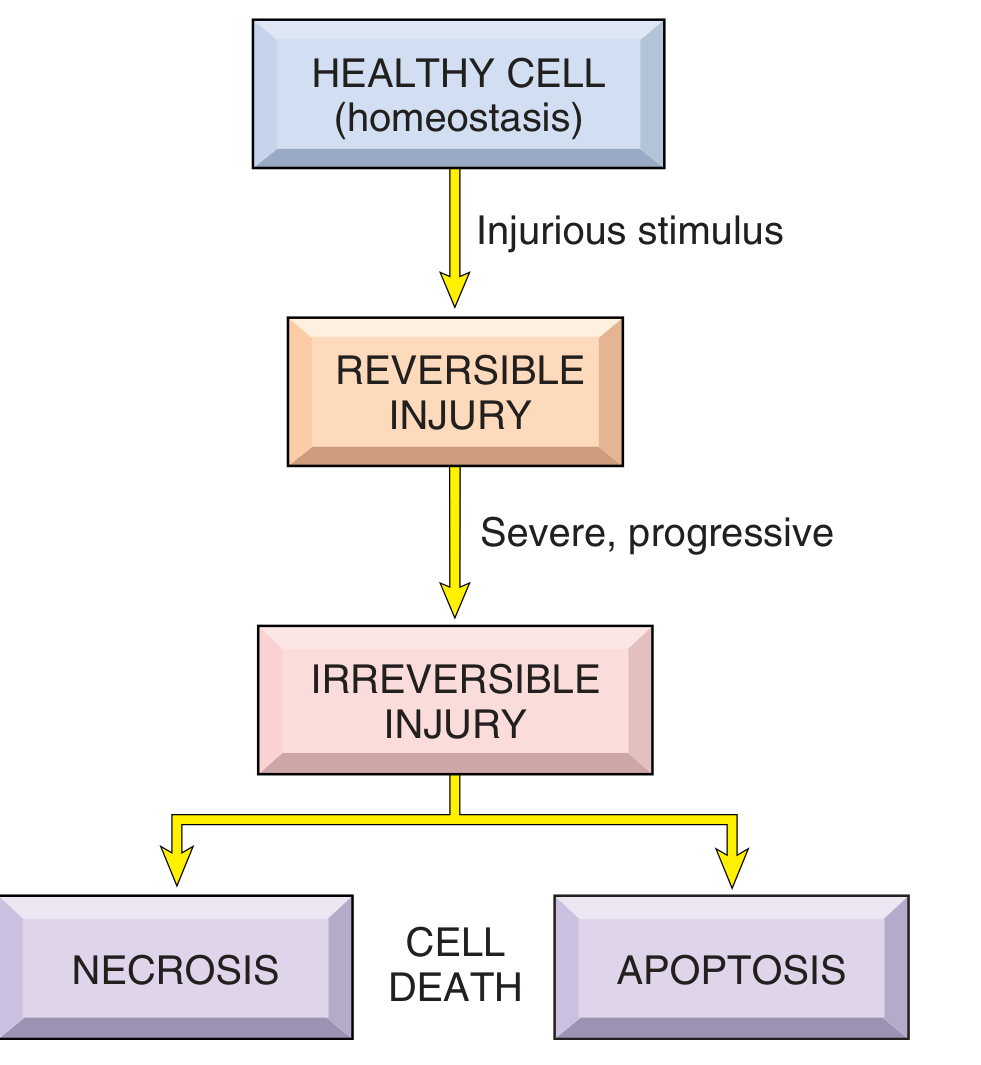
Reversible vs Irreversible Injury
| Feature | Reversible Injury | Irreversible Injury |
|---|---|---|
| ATP | Reduced | Severely depleted |
| Na/K pump | Failing | Failed |
| Mitochondria | Swollen, recoverable | Cannot restore oxidative phosphorylation |
| Cell membrane | Blebbing, distorted | Structural loss |
| Nucleus | Chromatin clumping | Pyknosis/Karyorrhexis/Karyolysis |
| Morphology | Cellular swelling, fatty change | Necrosis |
| Reversibility | YES | NO |
- Cellular swelling (= hydropic change / vacuolar degeneration) - most common
- Fatty change (lipid vacuoles in cytoplasm - mainly liver)
- Increased eosinophilia of cytoplasm
- Surface blebs on plasma membrane
- ER dilation, ribosome detachment
- Swelling (cellular)
- Fatty change
- Eosinophilia (increased)
NECROSIS - Types (NEET PG Highest Yield)
- Coagulative
- Liquefactive
- Fat (enzymatic/traumatic)
- Fibrinoid
- Special = Caseous
- Gangrenous
- Atypical = Wet gangrene
- Neuronal (special)
Necrosis Type Comparison Table (MOST ASKED)
| Type | Organ/Site | Cause | Microscopy | Gross |
|---|---|---|---|---|
| Coagulative | Heart, kidney, spleen | Ischemia/infarction | Ghost outline of cells preserved; nucleus gone | Firm, pale area |
| Liquefactive | Brain, abscess | Ischemia (brain) / bacterial infection | Liquefied mass, inflammatory cells | Cystic, creamy |
| Caseous | TB lymph nodes, Lung | M. tuberculosis | Amorphous, cheese-like; no cell structure; GRANULOMA around it | "Cheese-like" soft |
| Fat necrosis | Pancreas, breast | Lipase release (pancreatitis) / trauma (breast) | Fat cells with ghostly outlines; saponification (Ca soaps) | Chalky-white areas |
| Fibrinoid | Blood vessel walls | Immune complex / malignant HTN | Smudgy pink fibrin-like material in vessel walls | - |
| Gangrenous | Limb (extremities) | Vascular occlusion | Coagulative + secondary changes | Dry or wet gangrene |
Q: Brain infarction → LIQUEFACTIVE (not coagulative) - Brain is exception!
Q: TB node → CASEOUS necrosis
Q: Acute pancreatitis → FAT necrosis (enzymatic; lipase)
Q: Fibrinoid necrosis seen in → malignant HTN, polyarteritis nodosa, SLE vessels
Q: Coagulative is the most common type of necrosis overall
Q: "Ghost outline of cells" = Coagulative necrosis
Q: "No architecture preserved" = Caseous necrosis
Q: Chalky white deposits in fat = Ca soaps = Fat necrosis
Nuclear Changes in Necrosis (NEET PG Classic)
- Pyknosis → nuclear condensation (shrinkage, dark)
- Karyorrhexis → nuclear fragmentation
- Karyolysis → nuclear dissolution (fade away)
APOPTOSIS vs NECROSIS (Tabular - Very High Yield)
| Feature | Apoptosis | Necrosis |
|---|---|---|
| Type | Programmed cell death | Pathological cell death |
| Cause | Physiological or pathological | Always pathological (injury) |
| Cell size | Shrinkage | Swelling |
| Membrane | Intact (blebbing) | Disrupted |
| Nuclear | Pyknosis + karyorrhexis | Pyknosis → karyolysis |
| DNA | Ladder pattern (180 bp fragments) | Random degradation |
| Inflammation | NONE (anti-inflammatory) | YES (always) |
| Lysosomes | Intact | Released |
| Cell content | Packaged into apoptotic bodies | Leaked out |
| Phagocytosis | By macrophages + adjacent cells | By neutrophils mainly |
| Energy | ATP-dependent | Does NOT require ATP |
- Bcl-2 = Anti-apoptotic (pro-survival; overexpressed in follicular lymphoma)
- Bax, Bak = Pro-apoptotic
- Cytochrome C = Released from mitochondria → activates caspases
- Caspases = Executioners of apoptosis (cysteine proteases)
- p53 = Guardian of genome → induces apoptosis when DNA damaged
- Fas-FasL = Extrinsic pathway (receptor-ligand)
NEET PG Tip: Bcl-2 overexpression → follicular lymphoma (t(14;18))
NEET PG Tip: Cytochrome C + Apaf-1 → apoptosome → activates caspase-9 (intrinsic)
NEET PG Tip: TNF + Fas → caspase-8 activation (extrinsic pathway)
FREE RADICAL INJURY (High Yield)
- Reperfusion after ischemia (most important clinically)
- Radiation
- Drugs/chemicals (CCl4 → liver)
- Normal cellular respiration (mitochondrial leakage)
- ROS = Reactive Oxygen Species
- Superoxide (O2-) → most common
- Hydrogen peroxide (H2O2)
- Hydroxyl radical (•OH) → most toxic/reactive
- Nitric oxide (NO•)
- Superoxide dismutase (SOD) → converts O2- to H2O2
- Catalase → breaks H2O2 → H2O + O2
- Glutathione peroxidase → uses GSH to neutralize H2O2
- Vitamin E (tocopherol) → lipid antioxidant
- Vitamin C (ascorbic acid) → aqueous antioxidant
- Ceruloplasmin, transferrin → bind free iron (prevent Fenton reaction)
Mnemonic for antioxidants: "SoCAGE"
Superoxide dismutase
Catalase
Ascorbic acid (Vit C)
Glutathione peroxidase
Vitamin E (tocopherol)
CHAPTER 2: INFLAMMATION
Acute Inflammation - Cardinal Signs
- Pain (Dolor)
- Redness (Rubor) - vasodilation
- Induration/swelling (Tumor)
- Swelling (Tumor) - edema
- Heat (Calor) - vasodilation
Vascular Events in Acute Inflammation
1. Transient vasoconstriction (seconds)
2. Vasodilation (histamine, PGE2, PGI2, NO)
3. Increased vascular permeability → edema
4. Slowing of blood flow (stasis)
5. Leukocyte margination → rolling → adhesion → transmigration → chemotaxis
- Histamine (mast cells) = immediate, transient
- Bradykinin = immediate, sustained
- Leukotrienes (LTC4, LTD4, LTE4) = slow, sustained
- PAF (platelet activating factor)
- Substance P
Chemical Mediators of Inflammation (MASTER TABLE - Very High Yield)
| Mediator | Source | Main Action | Notes |
|---|---|---|---|
| Histamine | Mast cells, basophils, platelets | Vasodilation, ↑ permeability | First mediator; immediate |
| Serotonin (5-HT) | Mast cells, platelets | Vasodilation, ↑ permeability | Similar to histamine |
| PGE2, PGI2 | Arachidonic acid (COX) | Vasodilation, fever, pain | Inhibited by NSAIDs |
| TXA2 | Platelets (COX) | Vasoconstriction, platelet aggregation | Aspirin blocks this |
| LTB4 | Arachidonic acid (LOX) | Potent chemotaxis for neutrophils | Most potent chemoattractant |
| LTC4, LTD4, LTE4 | Mast cells (LOX) | Bronchoconstriction, ↑ permeability | "Slow-reacting substance of anaphylaxis (SRS-A)" |
| PAF | Multiple cells | ↑ Permeability, platelet aggregation, bronchoconstriction | 1000x more potent than histamine |
| IL-1, TNF | Macrophages | Fever, acute phase response, endothelial activation | Systemic effects |
| IL-6 | Macrophages | Fever, acute phase proteins (CRP, fibrinogen) | |
| IL-8 (CXCL8) | Macrophages, endothelium | Neutrophil chemotaxis (most potent) | |
| C5a | Complement | Chemotaxis, mast cell activation | |
| C3a, C4a | Complement | Anaphylatoxins (mast cell degranulation) | |
| Bradykinin | Kinin system | Pain, vasodilation, ↑ permeability, fever | Inhibited by ACE inhibitors |
| NO | Endothelium, macrophages | Vasodilation, kills microbes | |
| Oxygen free radicals | Leukocytes | Tissue damage, kills microbes |
Leukocyte Recruitment (Step-by-Step)
-
Selectin-mediated rolling
- E-selectin + P-selectin on endothelium
- L-selectin on leukocytes
- Ligand: sialyl-Lewis X
-
Molecule upregulation (TNF, IL-1 activate endothelium)
-
Adhesion (firm) - Integrins
- LFA-1 (CD11a/CD18) + ICAM-1
- Mac-1 (CD11b/CD18) + ICAM-1
- VLA-4 + VCAM-1
-
Roll → Activate → Adhere firmly
-
Transmigration (diapedesis) through vessel wall
- PECAM-1 (CD31) - helps crossing
-
PMN chemotaxis to site
- Chemokines, C5a, LTB4, bacterial peptides (fMLP)
NEET PG TRAP: LAD (Leukocyte Adhesion Deficiency) = Defect in CD18 (integrin β2)
→ No firm adhesion → no transmigration → recurrent bacterial infections
→ Delayed umbilical cord separation
→ NO PUS (neutrophils cannot reach tissue!)
Types of Exudate
| Type | Contents | Condition |
|---|---|---|
| Serous | Fluid, few proteins, few cells | Early inflammation, viral pleuritis |
| Fibrinous | Fibrin-rich; "bread and butter" pericarditis | Rheumatic fever pericarditis, uremic pericarditis |
| Suppurative/Purulent | Neutrophils ++ (pus) | Bacterial infections, abscess |
| Hemorrhagic | RBCs ++ | Anthrax, plague, rickettsial infections |
| Pseudomembranous | Fibrin + necrotic epithelium | Diphtheria (throat), C. diff (colon) |
Chronic Inflammation
- Mononuclear cells: lymphocytes, macrophages, plasma cells
- Tissue destruction + repair occurring simultaneously
- Duration: weeks to months
- Macrophages = Key cells of chronic inflammation
- Activated by IFN-γ (from T cells) → M1 macrophages (pro-inflammatory)
- IL-4, IL-13 → M2 macrophages (anti-inflammatory, repair)
- Lymphocytes (T cells, B cells/plasma cells)
- Eosinophils (in parasitic, allergic conditions)
- Mast cells
GRANULOMATOUS INFLAMMATION (Very High Yield - Classic NEET PG)
- Epithelioid cells = Activated macrophages (elongated, pink cytoplasm, resembles epithelium)
- Multinucleated giant cells (Langerhans type or foreign body type)
- Rim of lymphocytes
- Central necrosis (caseous) or no necrosis (non-caseous)
Granulomatous Disease Table (NEET PG Master Table)
| Disease | Type of Granuloma | Organism/Cause | Special Feature |
|---|---|---|---|
| Tuberculosis | Caseating | M. tuberculosis | Langerhans giant cells; central caseous necrosis |
| Sarcoidosis | Non-caseating | Unknown (immune) | Asteroid bodies, Schaumann bodies; elevated ACE |
| Leprosy | Lepromatous: non-caseating; Tuberculoid: similar to TB | M. leprae | Foam cells (lepromatous) |
| Crohn's disease | Non-caseating (only in 50%) | Unknown (immune) | Skip lesions, transmural |
| Cat scratch disease | Suppurative → granuloma | Bartonella henselae | Stellate necrosis |
| Histoplasmosis | Caseating | Histoplasma capsulatum | Cannot distinguish from TB on gross |
| Syphilis | Gumma (obliterative endarteritis) | T. pallidum | Plasma cells ++ |
| Foreign body | Foreign body type granuloma | Suture, talc, silica | Foreign body giant cells |
| Berylliosis | Non-caseating | Beryllium | Mimics sarcoidosis |
| PAN (Polyarteritis nodosa) | Necrotizing (fibrinoid) | Immune complex | Medium vessel vasculitis |
NEET PG Cheat Codes:
✓ Asteroid bodies + Schaumann bodies = Sarcoidosis (NOT TB)
✓ "Naked granuloma" (no lymphocyte rim) = Sarcoidosis
✓ Caseating granuloma = TB until proven otherwise
✓ ACE elevated = Sarcoidosis
✓ Elevated Ca2+ = Sarcoidosis (macrophages activate Vit D)
✓ Non-caseating + skip lesions = Crohn's disease
WOUND HEALING
Primary vs Secondary Intention
| Feature | Primary (1st Intention) | Secondary (2nd Intention) |
|---|---|---|
| Wound | Clean, apposed edges | Large, gaping, contaminated |
| Granulation tissue | Minimal | Abundant |
| Scar | Thin, minimal | Large, prominent |
| Time | Faster | Slower |
| Contraction | Minimal | Significant (myofibroblasts) |
| Example | Surgical incision | Large ulcer, abscess cavity |
- Hemostasis (0-24h): Platelet plug + clot (fibrin matrix)
- Inflammation (1-3 days): Neutrophils → Macrophages (Day 2-3)
- Proliferation (3-14 days):
- Angiogenesis (VEGF, FGF)
- Fibroblast proliferation → collagen synthesis
- Epithelialization
- Remodeling (weeks-months): Collagen remodeling (type III → type I)
- Day 1-2: Neutrophils predominate
- Day 3-5: Macrophages predominate (most important cell in healing)
- Day 5-14: Fibroblasts → collagen
- Tensile strength: maximum by 3 months (80% of original)
- VEGF = most important for angiogenesis
- TGF-β = most important for fibrosis/scar
- Collagen type III = first deposited (young scar); replaced by type I later
Mnemonic: "Neat Macrophages Fix wounds"
N = Neutrophils (Day 1-2)
M = Macrophages (Day 3+) - most important
F = Fibroblasts (proliferative phase)
- Malnutrition (Vitamin C deficiency = scurvy → poor collagen)
- Diabetes mellitus
- Glucocorticoids (inhibit inflammation and collagen)
- Infection
- Poor blood supply (ischemia)
- Foreign body, necrotic tissue
CHAPTER 3: HEMODYNAMIC DISORDERS
Edema
- Transudate: Low protein, low cells, gravity-dependent
- Causes: CHF, cirrhosis, nephrotic syndrome (↓ oncotic pressure, ↑ hydrostatic pressure)
- Exudate: High protein, high cells (inflammatory)
- Causes: Infection, malignancy
- ↑ Hydrostatic pressure → Transudate (CHF, venous obstruction)
- ↓ Oncotic pressure → Transudate (hypoalbuminemia: nephrotic, cirrhosis, malnutrition)
- ↑ Vascular permeability → Exudate (inflammation)
- Lymphatic obstruction → Lymphedema (pitting or non-pitting)
Thrombosis
VIRCHOW'S TRIAD:
1. Endothelial injury  → MOST IMPORTANT (arterial thrombosis)
2. Stasis / turbulence → MOST IMPORTANT (venous thrombosis)
3. Hypercoagulability  → Inherited/acquired
| Feature | Thrombus | Postmortem clot |
|---|---|---|
| Lines of Zahn | Present | Absent |
| Attachment | Attached to vessel wall | Free, rubbery |
| Texture | Firm, dry, granular | Jelly-like |
| Layers | Laminated | Uniform |
Embolism (NEET PG Tricks)
| Type | Source | Destination | Clinical |
|---|---|---|---|
| Pulmonary embolism | DVT (leg) → right heart | Pulmonary artery | Dyspnea, pleuritic chest pain, hemoptysis |
| Systemic embolism | Left heart (AF, MI, valvular disease) | Brain/limbs/viscera | Stroke, limb ischemia |
| Fat embolism | Long bone fractures | Lungs → brain | Triad: respiratory distress + neurological + petechiae |
| Air embolism | IV lines, neck veins injury | Right heart | "Mill-wheel" murmur; >150 mL fatal |
| Amniotic fluid embolism | Labor/delivery | Lungs | Sudden dyspnea + DIC; highly fatal |
| Septic embolism | Infective endocarditis | Multiple | Metastatic abscesses |
| Paradoxical embolism | Venous → arterial (via PFO/ASD) | Systemic circulation | DVT → stroke |
NEET PG:
✓ Most common embolism = Pulmonary (from DVT)
✓ Fat embolism triad = respiratory + neurological + petechiae (axilla, conjunctiva)
✓ Amniotic fluid embolism → DIC (amniotic fluid activates coagulation)
✓ Caisson disease = nitrogen bubble embolism in divers (bends)
SHOCK
| Type | Mechanism | Cause | Classic Hemodynamics |
|---|---|---|---|
| Hypovolemic | ↓ Preload | Hemorrhage, burns, dehydration | ↓CO, ↑SVR, ↓CVP |
| Cardiogenic | ↓ Pump function | MI, arrhythmia, tamponade | ↓CO, ↑SVR, ↑CVP |
| Distributive/Septic | Vasodilation | Sepsis (early: warm; late: cold) | ↑CO (early), ↓SVR |
| Anaphylactic | Vasodilation + ↓ preload | IgE-mediated allergy | ↓CO, ↓SVR |
| Neurogenic | Loss of vasomotor tone | Spinal cord injury | ↓CO, ↓SVR |
- Compensated - Neural, hormonal mechanisms maintain BP (tachycardia, vasoconstriction)
- Progressive - Tissue hypoperfusion, lactic acidosis, organ dysfunction
- Irreversible - Multiple organ failure, brain + cardiac injury, death
NEET PG Shock Mnemonics:
✓ Septic shock = "warm and pink" early (vasodilation)
✓ Cardiogenic shock = "cold, clammy, pale" (high SVR)
✓ SIADH occurs in shock → water retention
✓ Most common cause of death in shock = Multiple organ dysfunction (MODS)
✓ Lung in shock = "Shock lung" = ARDS (diffuse alveolar damage)
CHAPTER 4: AMYLOIDOSIS (Classic NEET PG)
- Congo red → Apple-green birefringence under polarized light (PATHOGNOMONIC)
- H&E → amorphous eosinophilic material
- Crystal violet → metachromasia (turns purple)
- Thioflavin T/S → fluorescence
| Protein | Type | Associated Disease |
|---|---|---|
| AL (light chain) | Primary amyloidosis | Multiple myeloma, plasma cell dyscrasia |
| AA (serum amyloid A) | Secondary/Reactive amyloidosis | Chronic infections (TB, RA, Crohn's, bronchiectasis) |
| Aβ (amyloid beta) | CNS | Alzheimer disease (senile plaques) |
| ATTR (transthyretin) | Familial/Senile | Familial amyloid polyneuropathy; senile cardiac |
| Aβ2M | Dialysis-associated | Long-term hemodialysis (β2 microglobulin) |
| AIAPP (islet amyloid polypeptide) | Pancreatic | Type 2 DM (islet deposits) |
| Procalcitonin-related | Medullary thyroid carcinoma | MTC (amyloid stroma) |
NEET PG Cheat Codes:
✓ Congo red + polarized light → Apple green birefringence = GOLD STANDARD for amyloid
✓ Primary amyloid (AL) = myeloma related
✓ Secondary amyloid (AA) = Reactive (TB, RA, Crohn's, osteomyelitis)
✓ Alzheimer = Aβ in plaques (extracellular) + tau (intracellular neurofibrillary tangles)
✓ Type 2 DM = IAPP amyloid in pancreatic islets
✓ Medullary thyroid carcinoma = amyloid stroma (calcitonin-derived)
PART 2 - NEOPLASIA (20% Weightage)
Benign vs Malignant - The Core Table
| Feature | Benign | Malignant |
|---|---|---|
| Differentiation | Well-differentiated | Poorly/undifferentiated |
| Growth rate | Slow | Fast |
| Mitoses | Few, normal | Many, atypical |
| Nuclear:cytoplasmic ratio | Normal | Increased |
| Invasion | No | Yes |
| Metastasis | NO | YES |
| Necrosis | Uncommon | Common (central) |
| Capsule | Often present | Often absent |
| Recurrence after excision | Rare | Common |
| Prognosis | Good | Variable to poor |
- Big nuclear:cytoplasmic ratio
- Invasion of basement membrane
- Growth: rapid, uncontrolled
- Metastasis
- Irregular nuclear outline
- Necrosis centrally
- Dedifferentiation (poorly differentiated)
Naming of Tumors
| Cell of Origin | Benign | Malignant |
|---|---|---|
| Epithelium (glandular) | Adenoma | Adenocarcinoma |
| Epithelium (squamous) | Squamous papilloma | Squamous cell carcinoma |
| Epithelium (transitional) | Transitional cell papilloma | Transitional/urothelial carcinoma |
| Mesenchyme (fat) | Lipoma | Liposarcoma |
| Mesenchyme (smooth muscle) | Leiomyoma | Leiomyosarcoma |
| Mesenchyme (striated muscle) | Rhabdomyoma | Rhabdomyosarcoma |
| Mesenchyme (bone) | Osteoma | Osteosarcoma |
| Mesenchyme (cartilage) | Chondroma | Chondrosarcoma |
| Mesenchyme (blood vessel) | Hemangioma | Angiosarcoma |
| Mesenchyme (fibrous tissue) | Fibroma | Fibrosarcoma |
| Lymphoid | - | Lymphoma/Leukemia |
| Glial cells | - | Glioma (Glioblastoma) |
| Melanocytes | Melanocytic nevus | Melanoma |
| Mixed (2 germ layers) | Teratoma (benign) | Malignant teratoma |
✓ Seminoma = malignant (despite "-oma" suffix)
✓ Melanoma = malignant
✓ Mesothelioma = malignant
✓ Lymphoma = malignant
✓ Hepatoma = malignant (= HCC)
✓ Glioblastoma = malignant
✓ Choristoma = normal tissue in wrong place (NOT neoplastic)
✓ Hamartoma = disorganized normal tissue (NOT neoplastic)
ONCOGENES & TUMOR SUPPRESSOR GENES (NEET PG HIGH YIELD)
Proto-oncogenes / Oncogenes
| Gene | Function | Tumor |
|---|---|---|
| RAS | GTP-binding signal protein | Most common oncogene; Pancreatic CA (KRAS 90%), CRC, lung |
| MYC (c-myc) | Transcription factor | Burkitt lymphoma (t(8;14)); amplified in many cancers |
| N-MYC | Transcription factor | Neuroblastoma (amplification = poor prognosis) |
| L-MYC | Transcription factor | Lung cancer (SCLC) |
| HER2/neu (ERBB2) | Growth factor receptor | Breast cancer (amplification → poor prognosis; target of trastuzumab) |
| BCR-ABL | Tyrosine kinase (fusion) | CML (t(9;22) Philadelphia chromosome) |
| BCL-2 | Anti-apoptotic | Follicular lymphoma (t(14;18)) |
| RET | Tyrosine kinase | MEN 2A, 2B; medullary thyroid carcinoma; papillary thyroid carcinoma |
| EGFR | Growth factor receptor | Lung adenocarcinoma (target of erlotinib/gefitinib) |
| CDK4 | Cell cycle kinase | Melanoma, various |
| MDM2 | p53 antagonist | Liposarcoma (amplification) |
Tumor Suppressor Genes
| Gene | Function | Tumor |
|---|---|---|
| RB1 | Cell cycle arrest (G1 checkpoint) | Retinoblastoma; osteosarcoma |
| TP53 | Guardian of genome; apoptosis | Most common mutated gene in human cancer; Li-Fraumeni syndrome |
| BRCA1, BRCA2 | DNA repair | Breast + ovarian cancer (familial) |
| APC | Wnt signaling | Familial adenomatous polyposis (FAP); CRC |
| PTEN | PI3K/Akt inhibitor | Breast, endometrium, prostate; Cowden syndrome |
| VHL | HIF degradation | Renal cell carcinoma (clear cell); Von Hippel-Lindau |
| NF1, NF2 | RAS regulation / merlin | Neurofibromatosis |
| WT1 | Transcription factor | Wilms tumor (nephroblastoma) |
| DCC, SMAD2/4 | TGF-β signaling | Colorectal carcinoma |
| CDKN2A (p16/p14ARF) | CDK inhibitor / p53 stabilizer | Melanoma, pancreatic cancer |
| MEN1 | Transcription factor | MEN type 1 |
NEET PG Cheat Codes:
✓ p53 = Most commonly mutated gene in human cancer (>50% of all cancers)
✓ RB = First tumor suppressor gene discovered
✓ Philadelphia chromosome t(9;22) = BCR-ABL = CML (target: imatinib/gleevec)
✓ BRCA1/2 = DNA repair; breast + ovarian cancer
✓ APC mutation → FAP → CRC
✓ VHL mutation → RCC (clear cell type)
✓ HER2 amplification = breast CA → trastuzumab (Herceptin)
✓ RET mutation = MEN 2A (medullary thyroid + pheo + hyperparathyroid)
✓ N-MYC amplification in neuroblastoma = poor prognosis
TUMOR MARKERS (NEET PG Absolute Must)
| Marker | Normal | Elevated In | Notes |
|---|---|---|---|
| AFP (Alpha-fetoprotein) | <20 ng/mL | HCC; Non-seminoma germ cell tumor (testicular) | Also elevated in pregnancy (neural tube defects) |
| CEA (Carcinoembryonic Ag) | <5 ng/mL | CRC; also gastric, pancreatic, breast, lung | Non-specific; used for monitoring, not screening |
| CA 19-9 | <37 U/mL | Pancreatic cancer | Best marker for pancreatic CA; also cholangioCA |
| CA 125 | <35 U/mL | Ovarian cancer (epithelial) | Also elevated in endometriosis, PID |
| CA 15-3 | <30 U/mL | Breast cancer | Used for monitoring, not diagnosis |
| PSA (Prostate specific Ag) | <4 ng/mL | Prostate cancer; BPH | Organ-specific, not cancer-specific |
| β-hCG | Near 0 | Choriocarcinoma; testicular cancer (non-seminoma) | Also elevated in ALL normal pregnancies |
| LDH | 140-280 U/L | Lymphoma, testicular (seminoma), widespread mets | Non-specific; tumor burden marker |
| NSE (Neuron-specific enolase) | <12 ng/mL | Neuroblastoma; SCLC | |
| VMA/HVA | Varies | Neuroblastoma (urine); Pheochromocytoma (urine) | VMA = vanillylmandelic acid |
| Chromogranin A | - | Neuroendocrine tumors (carcinoid, pheo, etc.) | Best general NET marker |
| Calcitonin | <10 pg/mL | Medullary thyroid carcinoma (MTC) | Pathognomonic for MTC |
| Thyroglobulin | Varies | Follicular + papillary thyroid CA (post-thyroidectomy) | Monitoring recurrence |
| S100 | - | Melanoma; nerve tumors; Langerhans cell histiocytosis | |
| PLAP (Placental Alk Phos) | - | Seminoma | |
| Inhibin | - | Granulosa cell tumor (ovary) |
- Young = testicular non-seminoma
- Old = HCC (hepatocellular carcinoma)
- Pregnant = normal (but very elevated = neural tube defect)
PART 3 - HEMATOPATHOLOGY (8-10% Weightage = 6-8 Qs)
ANEMIA - Classification
By MCV (Most Useful Clinical Classification)
| Type | MCV | Causes | Key Associations |
|---|---|---|---|
| Microcytic (MCV <80) | ↓ | Iron deficiency, Thalassemia, Sideroblastic, Lead poisoning, ACD | RDW: high in IDA, normal in thalassemia |
| Normocytic (MCV 80-100) | Normal | ACD, AKI/CKD, acute hemorrhage, hemolytic, aplastic | Most common type |
| Macrocytic (MCV >100) | ↑ | B12/Folate deficiency, hypothyroidism, liver disease, drugs (methotrexate, hydroxyurea, AZT) | Megaloblastic: B12/Folate |
IRON DEFICIENCY ANEMIA vs THALASSEMIA TRAIT vs ACD
| Feature | IDA | Thal Trait | ACD |
|---|---|---|---|
| MCV | Low | Very low | Low-normal |
| RDW | High | Normal | Normal |
| Serum iron | Low | Normal | Low |
| TIBC | High | Normal | Low |
| Ferritin | Low | Normal | High |
| Serum transferrin saturation | Low | Normal | Low |
| Hb electrophoresis | Normal | HbA2 elevated (β-thal trait) | Normal |
- RDW high + low ferritin = Iron deficiency anemia
- RDW normal + low MCV = Thalassemia trait
- Ferritin high + low TIBC = ACD (anemia of chronic disease)
MEGALOBLASTIC ANEMIA (B12 vs Folate)
- Macrocytic anemia (MCV >100)
- Hypersegmented neutrophils (≥5 lobes = pathognomonic)
- Megaloblasts in bone marrow
- Pancytopenia in severe cases
- Elevated LDH + bilirubin (ineffective erythropoiesis)
| Feature | B12 Deficiency | Folate Deficiency |
|---|---|---|
| Neurological | YES - subacute combined degeneration (SCD) of spinal cord | NO neurological changes |
| Cause | Pernicious anemia (IF deficiency), veganism, Crohn's, terminal ileum disease | Poor intake, alcoholism, pregnancy, methotrexate |
| Serum B12 | Low | Normal |
| Serum Folate | Normal | Low |
| Methylmalonic acid | Elevated | Normal |
| Homocysteine | Elevated | Elevated |
HEMOLYTIC ANEMIA
| Feature | Intravascular | Extravascular |
|---|---|---|
| Site | Blood vessels | Spleen/macrophages |
| Hemoglobinemia | YES | No |
| Hemoglobinuria | YES (pink/red urine) | No |
| Hemosiderinuria | YES (late) | No |
| Splenomegaly | Mild | Significant |
| Haptoglobin | Very low | Low |
| LDH | Very high | Elevated |
| Causes | G6PD deficiency, ABO mismatch, PNH, TTP/HUS | Hereditary spherocytosis, SCA, thalassemia, autoimmune |
SICKLE CELL ANEMIA (High Yield)
- Vaso-occlusive crisis (pain crisis) - most common
- Aplastic crisis - Parvovirus B19 (attacks erythroid precursors)
- Sequestration crisis - spleen sequesters RBCs → acute anemia
- Hemolytic crisis
- Dactylitis (hand-foot syndrome) - first manifestation in infants
- Autosplenectomy → risk of encapsulated bacteria (Strep pneumo, H. flu, Neisseria)
- Avascular necrosis (femoral head most common)
- Stroke (children - most common cause of stroke in child)
- Priapism (veno-occlusion)
NEET PG TRICKS:
✓ Parvovirus B19 → aplastic crisis in SCA (also in hereditary spherocytosis)
✓ HbF protects against sickling → Hydroxyurea increases HbF
✓ Sickle trait → protects against Plasmodium falciparum malaria
✓ Howell-Jolly bodies → functional asplenia (SCA, post-splenectomy)
G6PD DEFICIENCY
NEET PG:
✓ Heinz bodies = G6PD deficiency (denatured Hb)
✓ Bite cells = G6PD (macrophages bite out Heinz bodies)
✓ Glucose 6 phosphate = "Glucose 6 Protection Deficiency"
LEUKEMIAS - Quick Reference (Very High Yield)
| Leukemia | Peak Age | Key Features | Marker | Genetics |
|---|---|---|---|---|
| ALL | Children (2-5 yr) | Lymphadenopathy, hepatosplenomegaly; mediastinal mass (T-ALL) | TdT+, CD10+ (pre-B ALL), CD19/CD22 | t(12;21) = good prognosis; t(9;22) = poor prognosis |
| AML-M3 (APL) | Adults | DIC, Auer rods, promyelocytes | MPO+, CD13, CD33 | t(15;17) = PML-RARα; treated with ATRA + arsenic |
| CML | Adults 50-60s | Massive splenomegaly, ↑ basophils, accelerates to blast crisis | Philadelphia chromosome | t(9;22) BCR-ABL; imatinib |
| CLL | Elderly (>60) | Most common leukemia in Western adults; "smudge cells" | CD5+, CD19+, CD23+ | Del 13q (good), del 17p (bad) |
| AML-M2 | Adults | Auer rods; most common adult AML subtype | MPO+, CD13, CD33 | t(8;21) |
| Hairy cell | Middle aged men | Splenomegaly, "hairy" cells; dry tap on BM | CD11c, CD25, CD103; TRAP+ | BRAF V600E mutation |
✓ TdT+ = ALL (immature lymphoid cells)
✓ Auer rods = AML (NOT ALL) - rod-shaped crystalline inclusions of MPO
✓ Smudge cells = CLL
✓ Philadelphia chromosome t(9;22) → BCR-ABL tyrosine kinase → CML (adults) and ALL (poor prognosis in children)
✓ Imatinib (Gleevec) = BCR-ABL inhibitor → first-line CML
✓ ATRA (all-trans retinoic acid) = treats APL/AML-M3 (differentiation therapy)
✓ t(15;17) = AML-M3 (APL) - PATHOGNOMONIC
✓ Hairy cell leukemia = BRAF V600E = vemurafenib responsive
✓ Ringed sideroblasts = Sideroblastic anemia (iron in mitochondria around nucleus)
LYMPHOMAS - Quick Reference
Hodgkin Lymphoma vs Non-Hodgkin Lymphoma
| Feature | Hodgkin Lymphoma | Non-Hodgkin Lymphoma |
|---|---|---|
| Age | Bimodal: 15-35 + >55 | Any age; increases with age |
| Cell | Reed-Sternberg (RS) cells | No RS cells |
| Spread | Contiguous (orderly, via lymphatics) | Non-contiguous (random) |
| Extranodal | Rare | Common |
| Bone marrow | Rarely involved | Often involved |
| B symptoms | Common (fever, night sweats, weight loss) | Less common |
| Treatment | Highly curable (80-90%) | Variable |
| Genetics | EBV association | Specific translocations |
- Owl-eye appearance = large binucleated cell with prominent eosinophilic nucleoli
- CD15+, CD30+ (characteristic)
- CD45- (pan-leukocyte marker negative - unique!)
- EBV+ in mixed cellularity subtype
| Subtype | Frequency | RS Cells | Background | Prognosis |
|---|---|---|---|---|
| Nodular sclerosis | Most common (60-70%) | Lacunar cells | Collagen bands | Good |
| Mixed cellularity | 20-25% | Classic RS ++ | Mixed infiltrate; EBV+ | Intermediate |
| Lymphocyte rich | 5% | Few | Lymphocytes | Best |
| Lymphocyte depleted | Rare | Many | Few lymphocytes | Worst |
| Nodular lymphocyte predominant | 5% | "Popcorn cells" (LP cells) | Nodular; CD20+, CD15- | Good |
Key Non-Hodgkin Lymphomas
| Lymphoma | Key Feature | Genetics | Notes |
|---|---|---|---|
| Burkitt lymphoma | "Starry sky" pattern; jaw mass (African); "touch football" cells | t(8;14) c-myc/IgH | EBV+; most aggressive; associated with malaria |
| Diffuse large B cell (DLBCL) | Most common NHL overall | BCL-6 mutations | Aggressive but curable with R-CHOP |
| Follicular lymphoma | Follicular pattern; indolent | t(14;18) BCL-2/IgH | BCL-2 overexpression = anti-apoptotic |
| Mantle cell lymphoma | "Mantle zone" pattern; CD5+ | t(11;14) Cyclin D1/IgH | Aggressive; CD5+ CD23- (unlike CLL) |
| Marginal zone lymphoma | MALT type; stomach | H. pylori association (gastric) | Treat H. pylori → lymphoma regresses! |
| Mycosis fungoides | Skin; T-cell | - | Pautrier microabscesses; Sezary cells in blood |
| Adult T cell leukemia/lymphoma | HTLV-1+ | - | Hypercalcemia, skin lesions |
NEET PG Cheat Codes:
✓ t(8;14) = Burkitt (c-MYC) - most common translocation in Burkitt
✓ t(14;18) = Follicular lymphoma (BCL-2) - BCL-2 prevents apoptosis
✓ t(11;14) = Mantle cell lymphoma (Cyclin D1)
✓ t(9;22) = CML (BCR-ABL)
✓ t(15;17) = APL/AML-M3 (PML-RARα)
✓ Starry sky = Burkitt lymphoma (macrophages eating apoptotic cells = "stars")
✓ Owl eye = Reed-Sternberg cell = Hodgkin lymphoma
✓ Popcorn cells = NLPHL (nodular lymphocyte predominant HL)
✓ Gastric MALT lymphoma + H. pylori → treat infection first (lymphoma regresses in 70-80%)
✓ CD15+ CD30+ = Hodgkin RS cell
✓ TdT+ = ALL (not lymphoma)
PART 4 - CARDIOVASCULAR PATHOLOGY (15%)
ATHEROSCLEROSIS
- Endothelial injury (hypertension, smoking, dyslipidemia, diabetes, homocysteine)
- LDL enters intima → oxidized LDL (ox-LDL)
- Monocytes → macrophages → engulf ox-LDL → Foam cells
- Fatty streak (earliest visible lesion) = foam cells in intima
- PDGF, TGF-β → smooth muscle cell migration + proliferation
- Fibrous plaque formation
- Advanced atherosclerotic plaque = Fibrous cap + lipid core + foam cells + necrotic center
MYOCARDIAL INFARCTION - Morphology Timeline (NEET PG Classic)
| Time | Gross | Microscopy | Enzyme |
|---|---|---|---|
| 0-30 min | None visible | None (EM: mitochondrial changes) | None |
| 1-4 hours | None / slight pallor | Beginning coagulative necrosis | None (too early) |
| 4-12 hours | Pallor visible | Wavy fibers; eosinophilic; edema | Troponin begins rising |
| 12-24 hours | Pallor, mottling | Pyknosis; coagulative necrosis | Troponin ↑↑; CK-MB peaks 24h |
| 1-3 days | Hyperemia (red rim) | Neutrophilic infiltration | Troponin ↑↑ |
| 3-7 days | Pallor + hyperemia rim | Granulation tissue starts; macrophages | |
| 1-2 weeks | Yellow-gray necrosis | Granulation tissue; fibroblasts | |
| 2-8 weeks | Progressive fibrosis | Fibrosis replacing necrosis | |
| >2 months | White fibrous scar | Dense fibrous scar |
| Marker | Rises | Peaks | Normalizes | Note |
|---|---|---|---|---|
| Troponin I/T | 3-6h | 24-48h | 7-14 days | Gold standard; most sensitive + specific |
| CK-MB | 4-8h | 18-24h | 3-4 days | Useful for reinfarction detection |
| Myoglobin | 1-4h | 4-8h | 24h | Earliest; NOT cardiac-specific |
| LDH | 24-48h | 3-6 days | 10-14 days | Late marker |
MI COMPLICATIONS
| Complication | Timing | Mechanism |
|---|---|---|
| Arrhythmia | 0-48h | Most common overall; ventricular fibrillation = most common cause of sudden death in first 24h |
| Cardiogenic shock | 1-7 days | >40% myocardium lost |
| Cardiac rupture (free wall) | 3-7 days | Softening of necrotic muscle (neutrophils liquefy) |
| Papillary muscle rupture | 3-7 days | Acute mitral regurgitation; posterior papillary muscle most common |
| Ventricular septal defect | 3-7 days | Rupture of interventricular septum → L→R shunt |
| Pericarditis (fibrinous) | 1-3 days | Epicardial spread of necrosis |
| Dressler syndrome | 2-10 weeks | Autoimmune pericarditis |
| Mural thrombus | 1-2 weeks | Stagnant blood over akinetic wall |
| True ventricular aneurysm | Weeks-months | Fibrous scar bulges outward |
NEET PG:
✓ Earliest enzyme = Myoglobin
✓ Gold standard = Troponin
✓ CK-MB useful for reinfarction (shorter window than troponin)
✓ Papillary muscle rupture → acute MR → posterior papillary (single blood supply from RCA)
✓ Free wall rupture → cardiac tamponade → Day 3-7 → "second MI look-alike"
✓ Dressler syndrome = 2-10 weeks post-MI = autoimmune = steroids
PART 5 - RESPIRATORY PATHOLOGY (10%)
PNEUMOCONIOSES
| Disease | Exposure | Key Microscopy | Complication |
|---|---|---|---|
| Silicosis | Quartz/silica (mining, sandblasting) | "Eggshell calcification" of hilar nodes; silicotic nodules (whorled hyaline collagen) | TB (most common complication) |
| Asbestosis | Asbestos (insulation, shipbuilding) | Asbestos (ferruginous) bodies = golden-brown dumbbell/beaded rods | Mesothelioma (pleural); bronchogenic carcinoma (with smoking = 50-90x risk) |
| Coal workers' pneumoconiosis | Coal dust | Black macules; progressive massive fibrosis | Caplan syndrome (PMF + RA) |
| Berylliosis | Beryllium (aerospace) | Non-caseating granulomas (mimics sarcoidosis) | Systemic disease |
NEET PG Tricks:
✓ Asbestos → mesothelioma (best association)
✓ Asbestos + smoking → synergistic → 50-90x bronchogenic CA risk
✓ Silicosis → TB (not mesothelioma!)
✓ Eggshell calcification = Silicosis
✓ Asbestos bodies = golden dumbbell shapes on iron stain
✓ Caplan syndrome = RA + PMF (Coal workers)
LUNG CANCER
| Type | Location | Histology | Association | Key Feature |
|---|---|---|---|---|
| Squamous cell | Central | Keratin pearls; intercellular bridges | Smoking (strong) | PTHrP → hypercalcemia |
| Adenocarcinoma | Peripheral (most common overall) | Glands; mucin; Clara cells | Least related to smoking; EGFR mutations | Most common in non-smokers |
| SCLC (Small cell) | Central | Small cells, high N:C ratio; neuroendocrine | Smoking (strongest) | ACTH → Cushing; ADH → SIADH; Lambert-Eaton; most aggressive |
| Large cell | Peripheral | No squamous/gland features | Smoking | Diagnosis of exclusion |
| Carcinoid | Central or peripheral | Neuroendocrine cells; chromogranin+ | Not related to smoking | Carcinoid syndrome (5-HT, flushing, diarrhea) |
NEET PG Tricks:
✓ Most common lung CA = Adenocarcinoma (overall); SCC = most common in smokers
✓ SCLC = most aggressive; EBER; neuroendocrine markers NSE, chromogranin
✓ SCLC paraneoplastic: SIADH (ADH), Cushing (ACTH), Lambert-Eaton (Ca-channel Ab)
✓ SCC paraneoplastic: PTHrP → hypercalcemia
✓ Pancoast tumor = superior sulcus = Horner syndrome (ptosis, miosis, anhidrosis) + brachial plexus
✓ EGFR mutation = adenocarcinoma → erlotinib/gefitinib
✓ EML4-ALK fusion = adenocarcinoma → crizotinib
PART 6 - RENAL PATHOLOGY (5%)
GLOMERULAR DISEASE - Classification
Nephrotic Syndrome
| Disease | Age | LM | EM | IF | Notes |
|---|---|---|---|---|---|
| Minimal change disease (MCD) | Children | NORMAL LM | Foot process effacement | Negative | MCC of NS in children; steroid-responsive; loss of (-) charge |
| FSGS | Adults (AA, HIV, obese) | Focal segmental sclerosis | Foot process effacement | IgM, C3 in affected segments | MCC of NS in adults (overall) |
| Membranous nephropathy | Adults | GBM thickening; "spike and dome" | Subepithelial deposits | Granular IgG + C3 | Anti-PLA2R antibody; associated with HBV, SLE, drugs, malignancy |
| MPGN | Children + young adults | Lobular glomeruli; "tram track" (double contour) | Subendothelial / mesangial deposits | Granular C3, IgG | Type I: subendothelial; Type II (dense deposit disease): intramembranous |
Nephritic Syndrome
| Disease | Age | LM | EM | IF | Notes |
|---|---|---|---|---|---|
| Post-streptococcal GN (PSGN) | Children (6-10 yr) | Hypercellular glomeruli; neutrophils | Subepithelial "humps" | Granular IgG + C3 | 2-4 weeks after Strep throat; complement ↓; self-limiting |
| IgA nephropathy (Berger) | Young adults | Mesangial expansion/proliferation | Mesangial deposits | IgA in mesangium | MCC of GN worldwide; episodes after URTI; GROSS hematuria |
| RPGN (Crescentic GN) | Varies | Crescents (parietal cells + macrophages) in Bowman space | Varies | Linear (Type I), granular (Type II), pauci-immune (Type III) | Most aggressive; Anti-GBM (Type I = Goodpasture); ANCA (Type III) |
| Goodpasture syndrome | Young men | Crescents | - | Linear IgG | Anti-GBM Ab; lung hemorrhage + nephritis |
NEET PG KEY FACTS:
✓ MCC NS in children = MCD (Minimal Change Disease)
✓ MCC NS in adults = FSGS
✓ MCC GN worldwide = IgA nephropathy (Berger disease)
✓ Goodpasture = Linear IgG = anti-GBM = Type II hypersensitivity
✓ "Wire loop" lesion in kidney = Lupus nephritis (Class IV)
✓ PSGN = "humps" on EM = subepithelial = immune complex
✓ Anti-GBM = Goodpasture; ANCA = microscopic polyangitis, Wegener
PART 7 - GI / LIVER PATHOLOGY (7%)
Key GI Facts
| Condition | Histology | Gross | Notes |
|---|---|---|---|
| Barrett esophagus | Intestinal metaplasia (goblet cells) in esophagus | Salmon-pink mucosa (columnar replacing squamous) | GERD → Barrett → Dysplasia → EAC |
| Crohn's disease | Non-caseating granulomas (50%); transmural inflammation; skip lesions | "Cobblestone" mucosa; "string sign" on barium; creeping fat; fistulas | Any GI from mouth to anus |
| Ulcerative colitis | Mucosal/submucosal only; crypt abscesses; pseudopolyps | Starts rectum → extends proximally; continuous | Only colon; higher cancer risk than Crohn's |
| Celiac disease | Villous atrophy; crypt hyperplasia; intraepithelial lymphocytes | Flat mucosa | Anti-TTG IgA (best test); HLA-DQ2/DQ8; respond to gluten-free diet |
| Whipple disease | PAS+ macrophages in lamina propria | - | Tropheryma whipplei; malabsorption + CNS + arthritis |
| H. pylori gastritis | Chronic active gastritis; pyloric gland | Antrum > body | CLO test/urease test; associated with MALT lymphoma + gastric adenocarcinoma |
LIVER PATHOLOGY
| Condition | Histology | Key Association |
|---|---|---|
| Alcoholic liver disease | Macrovesicular steatosis → alcoholic hepatitis (Mallory-Denk bodies + neutrophils) → cirrhosis | Mallory-Denk bodies (cytokeratin aggregates) |
| NAFLD/NASH | Same histology as alcoholic, but no alcohol | Metabolic syndrome; insulin resistance |
| Viral hepatitis | "Ground glass" hepatocytes (HBV surface Ag); councilman bodies (apoptotic hepatocytes) | HBV e antigen = active replication |
| Wilson disease | Copper accumulation; Mallory-like bodies | Kayser-Fleischer rings; ceruloplasmin low; ATP7B mutation |
| Hemochromatosis | Iron in hepatocytes (Prussian blue+) | HFE mutation; bronze skin, DM, cirrhosis, cardiomyopathy |
| Primary biliary cholangitis (PBC) | Non-suppurative granulomatous cholangitis | AMA (anti-mitochondrial Ab); middle-aged women; pruritus |
| HCC | AFP ↑↑; vascular invasion; satellite nodules | HBV, HCV, cirrhosis, aflatoxin |
NEET PG Tricks:
✓ Councilman bodies = apoptotic hepatocytes = Viral hepatitis
✓ Mallory-Denk bodies = alcoholic hepatitis (also NASH)
✓ Wilson + Hemochromatosis = autosomal recessive
✓ Hemochromatosis = HFE gene (C282Y mutation) = most common hereditary iron overload
✓ Aflatoxin B1 (Aspergillus) → HCC (p53 mutation R249S)
✓ Wilson disease = ↓ ceruloplasmin + ↑ urine copper + KF rings
✓ PBC = AMA positive + intrahepatic bile duct destruction
✓ PSC = P-ANCA+ + IBD (especially UC); "beaded" bile ducts on ERCP/MRCP
PART 8 - CNS PATHOLOGY (5%)
Brain Tumors
| Tumor | Origin | Age | Grade | Key Feature |
|---|---|---|---|---|
| Glioblastoma multiforme (GBM) | Astrocyte | Adults >50 | Grade IV (WHO) | "Pseudopalisading necrosis"; butterfly pattern crossing corpus callosum; EGFR amp; IDH wild-type = poor |
| Astrocytoma (low grade) | Astrocyte | Any | Grade II | IDH1/2 mutation = better prognosis |
| Oligodendroglioma | Oligodendrocyte | Adults | Grade II-III | "Fried egg" cells; calcification; 1p/19q codeletion = good prognosis |
| Ependymoma | Ependymal cells | Children (4th ventricle) | Grade II | "Perivascular pseudorosettes"; ependymal rosettes |
| Meningioma | Meningothelial cells | Adults (women) | Usually Grade I | Psammoma bodies (calcification); NF2 mutation; attached to dura |
| Schwannoma | Schwann cells | Adults | Grade I | Bilateral = NF2; CN VIII (acoustic); Antoni A + B areas; Verocay bodies |
| Medulloblastoma | Granular cell precursors | Children (cerebellum) | Grade IV | "Homer-Wright rosettes"; PNET; highly malignant; radiosensitive |
| Craniopharyngioma | Rathke's pouch | Children + elderly | Grade I | Calcification + cholesterol crystals (motor oil fluid); adamantinomatous type; bitemporal hemianopia |
NEET PG Tricks:
✓ Most common primary brain tumor in adults = GBM
✓ Most common brain tumor overall = Metastases (Lung > Breast > Melanoma > Kidney > Colon)
✓ Pseudopalisading necrosis = GBM
✓ "Fried egg" cells + 1p/19q codeletion = Oligodendroglioma (good prognosis)
✓ Psammoma bodies = Meningioma (also papillary thyroid CA, serous papillary ovarian CA, mesothelioma)
✓ Homer-Wright rosettes = Medulloblastoma (also Neuroblastoma, Pineoblastoma)
✓ Bilateral acoustic neuromas = NF2
✓ Craniopharyngioma = "motor oil" cyst fluid (cholesterol + blood) + calcification
✓ IDH mutation = better prognosis in gliomas
PATHOLOGY MCQ CHEAT CODE - MASTER STAINING GUIDE
| Stain | What it Stains | Disease |
|---|---|---|
| H&E | Routine (nucleus blue, cytoplasm pink) | All |
| PAS (Periodic Acid-Schiff) | Glycogen, mucin, fungi, basement membrane | Whipple (PAS+ macrophages); GBM, glycogen storage diseases |
| Congo Red | Amyloid | Amyloidosis → apple-green birefringence under polarized light |
| Prussian Blue | Iron (hemosiderin) | Hemochromatosis; hemosiderosis |
| Oil Red O | Lipid/fat | Fat embolism; lipid-laden macrophages |
| Masson Trichrome | Collagen (blue/green) | Fibrosis; cirrhosis staging |
| Reticulin | Reticular fibers | Liver architecture; lymphoma |
| Ziehl-Neelsen (ZN) | Acid-fast organisms | Tuberculosis (M. tuberculosis = red rods) |
| Giemsa | Bacteria, parasites (Plasmodium, Leishmania) | Malaria, leishmaniasis |
| Silver stain (GMS) | Fungi (Pneumocystis, Aspergillus, Histoplasma) | Fungal infections |
| India Ink | Cryptococcus capsule (halo) | Cryptococcal meningitis |
| Alcian Blue | Mucin (acid mucopolysaccharides) | Goblet cells; mesothelioma |
| Von Kossa | Calcium deposits | Dystrophic calcification |
| Toluidine blue | Mast cells; metachromatically stains amyloid | Mastocytosis |
| Warthin-Starry | Spirochetes; Bartonella | Cat scratch disease; syphilis |
| Mucicarmine | Mucin (red) | Mucin-secreting carcinomas; Cryptococcus capsule |
NEET PG STAIN TRICKS:
✓ Congo Red = AMYLOID (apple-green birefringence = pathognomonic)
✓ ZN = TB (acid-fast bacilli = red rods)
✓ PAS = Whipple disease (PAS-positive foamy macrophages)
✓ India Ink = Cryptococcus (halo around yeast)
✓ Prussian Blue = iron (hemochromatosis, ring sideroblasts)
✓ GMS Silver = fungi
✓ Oil Red O = fat (needs FRESH unfixed tissue; cannot use formalin-fixed paraffin embedded tissue!)
FINAL REVISION - NEET PG MOST ASKED ONE-LINERS
🎯 First mediator of inflammation = Histamine
🎯 Most potent chemotactic agent = LTB4 (also C5a, IL-8/CXCL8, fMLP)
🎯 Most common type of necrosis = Coagulative
🎯 Brain infarct type of necrosis = LIQUEFACTIVE (exception!)
🎯 Most common cause of cell injury = Hypoxia/Ischemia
🎯 First morphologic change in reversible injury = Cellular swelling
🎯 "Ghost cells" = Coagulative necrosis
🎯 Apple-green birefringence = Amyloid + Congo red + polarized light
🎯 Ladder pattern of DNA = Apoptosis
🎯 No inflammation = Apoptosis
🎯 Scurvy → wound healing impaired → Vitamin C needed for collagen hydroxylation
🎯 Keloid = Excess collagen BEYOND wound margins (overactive fibrosis)
🎯 Hypertrophic scar = Excess collagen WITHIN wound margins (stays within)
🎯 p53 = most commonly mutated gene in human cancer
🎯 RAS = most commonly mutated oncogene in human cancer
🎯 Philadelphia chromosome t(9;22) = CML
🎯 t(14;18) BCL-2 = Follicular lymphoma
🎯 t(8;14) c-MYC = Burkitt lymphoma
🎯 t(11;14) Cyclin D1 = Mantle cell lymphoma
🎯 t(15;17) PML-RARα = AML-M3 (APL) → ATRA treatment
🎯 Owl eye cell = Reed-Sternberg cell = Hodgkin lymphoma (CD15+, CD30+)
🎯 Starry sky = Burkitt lymphoma
🎯 Smudge cells = CLL
🎯 Auer rods = AML (NOT ALL)
🎯 TdT+ = ALL
🎯 Hairy cells + BRAF V600E = Hairy cell leukemia
🎯 MCC NS children = Minimal change disease
🎯 MCC NS adults = FSGS
🎯 Goodpasture = linear IgG = anti-GBM + pulmonary hemorrhage
🎯 IgA nephropathy = MCC glomerulonephritis worldwide
🎯 Pseudopalisading necrosis = GBM
🎯 Psammoma bodies = Meningioma, papillary thyroid CA, serous ovarian CA, mesothelioma
🎯 Fried egg cells = Oligodendroglioma
🎯 Most common cancer in Indian women = Cervical (rural) / Breast (urban)
🎯 AFP elevated = HCC + non-seminoma testicular CA + neural tube defects (prenatal)
🎯 PSA = prostate; CEA = colorectal; CA19-9 = pancreas; CA125 = ovary
🎯 Calcitonin = medullary thyroid carcinoma (pathognomonic marker)
HERPIS VIRUS INFECTION DIFFRENTIAL DIAGNOSIS WITH Proper treatment & drugs with dose & frequency, per kg dose regimen proper guide