
Carbolic acid in fmt
Carbolic acid (phenol) in forensic medicine and toxicology - quick answer:
Carbolic acid is phenol (C6H5OH), a corrosive poison used historically as an antiseptic. In forensic medicine (FMT), it is relevant as a cause of both accidental and suicidal poisoning. Key features include a characteristic phenolic odor, whitish/brownish burns at the site of contact, and systemic toxicity affecting the CNS, kidneys, and cardiovascular system. Urine turns dark (olive-green to dark brown) on exposure to air - a classic postmortem finding.
Searching sources...
Reading File
Finding Sources
Finding Sources
Good - I have 4 textbook sources. Let me read the most comprehensive ones in parallel - Parikh's and the Essentials of FMT (2026 edition).
Reading File
Reading File
Let me get more content from both sources, especially postmortem findings and medicolegal aspects.
Reading File
Reading File
Let me get the remaining content - postmortem appearances, treatment, and medicolegal aspects:
Reading File
Reading File
I now have comprehensive content from both major sources. Let me also get the medicolegal aspects from Essentials of FMT and the last bit from Parikh's:
Reading File
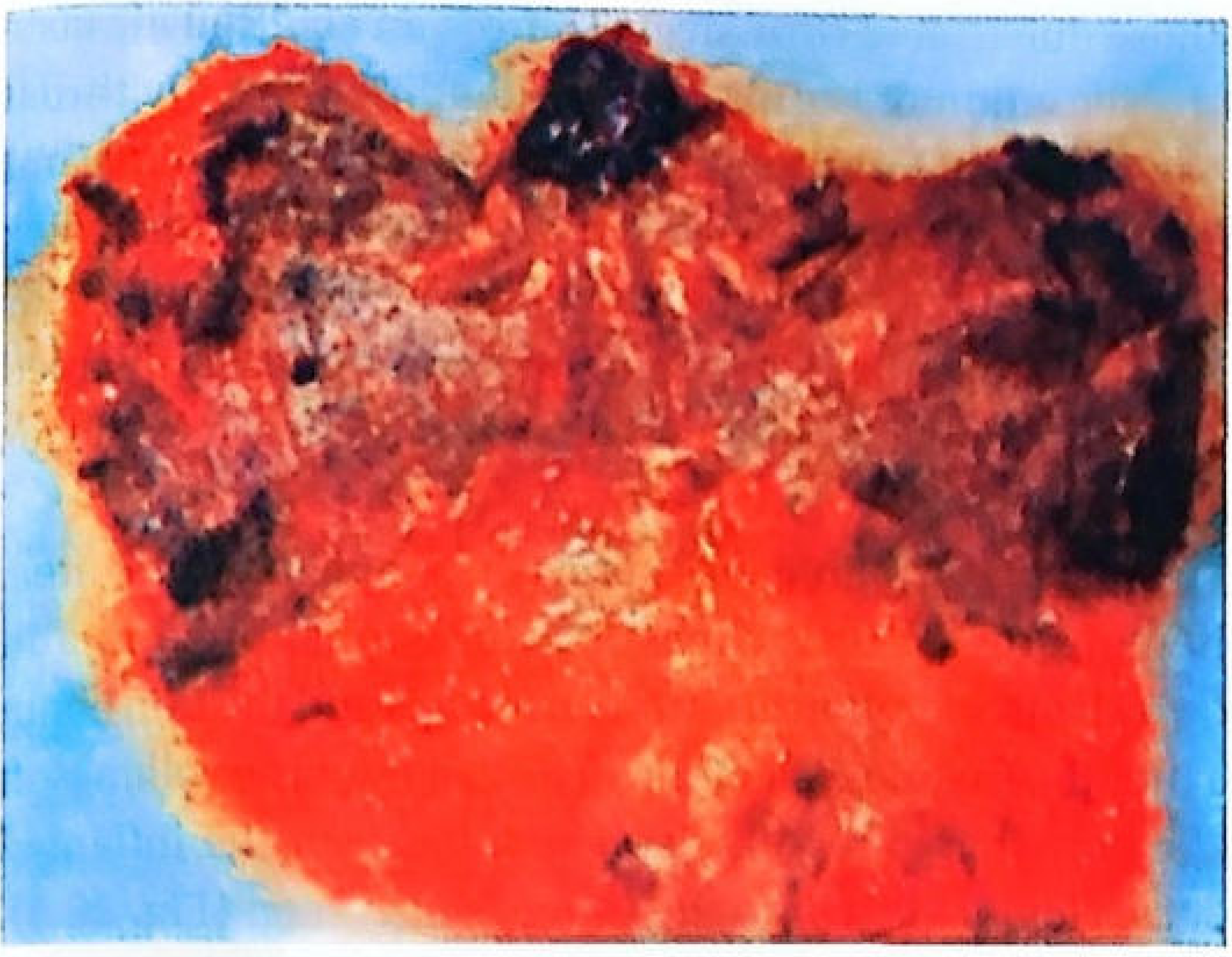
I now have all the information needed. Let me fetch the image from the textbook (Fig. 26.3 stomach in lysol poisoning) which was found at that URL:
Loading Image
I now have all the information needed for a comprehensive answer. Here is the full write-up on Carbolic Acid in Forensic Medicine and Toxicology:
Carbolic Acid (Phenol) in Forensic Medicine and Toxicology
Synonyms: Phenol, Hydroxybenzene, Phenic acid
Chemical formula: C₆H₅OH (or C₆H₄OH as often written)
Classification: Organic acid; Corrosive poison
1. Physical Characters
| Property | Details |
|---|---|
| Pure form | Short, colorless, prismatic needle-like crystals |
| Taste | Sweetish, burning |
| Smell | Characteristic "carbolic" or phenolic odor |
| Exposure to air | Turns pink and liquefies |
| Commercial form | Dark-brown liquid with impurities (mainly cresol) |
| Solubility | Slightly soluble in water; freely soluble in glycerine, ether, alcohol, benzene |
| Litmus | Does NOT turn blue litmus red (despite being called an acid) |
| Called "acid" because | It forms carbolates (salts) when acted on by strong bases |
Note: Though called an acid, carbolic acid has no acid reaction on litmus. It is classified among organic acids in FMT.
2. Common Preparations/Derivatives
- Lysol - 50% solution of cresol in saponified vegetable oil. Phenol is ~8 times more toxic than Lysol.
- Dettol - Chlorinated phenol with terpineol
- Other derivatives: Cresol, Creosote (coal tar), Thymol, Menthol, Tannic acid
3. Absorption and Excretion
- Absorption: Rapidly absorbed from the alimentary tract, respiratory tract, rectum, vagina, serous cavities, wounds, and even through intact skin.
- Metabolism: Phenol is converted to hydroquinone and pyrocatechol in the body. A trace is excreted by the lungs, salivary glands, skin and stomach.
- Excretion: Excreted in urine (partly free, partly combined with sulfuric and glucuronic acids). About 36 hours required for complete excretion.
- Detoxification: Partly detoxicated by the liver.
4. Fatal Dose and Fatal Period
| Fatal Dose | 10-15 g (pure phenol); 25-50 mL of household phenol |
| Fatal Period | 3-4 hours |
5. Mechanism of Action
Carbolic acid has a dual action:
- Local action - Corrosive (coagulates protein, but does not enter into firm combination with it). This gives it remarkable penetrating power.
- Systemic/Remote action - CNS depressant, especially the respiratory center. Acts as narcotic, inducing sleep and drowsiness.
6. Signs and Symptoms (Carbolism)
Poisoning by carbolic acid is known as carbolism.
Local Effects
Skin:
- Burning and numbness (damages nerve endings)
- Precipitates and coagulates cell contents → hard, cracked, whitish surfaces
- White opaque eschar, painless, falls off in a few days leaving a brown stain
- Deep burns appear black
- Necrosis and gangrene: tissue becomes green-white or brown-white; dead tissue sloughs readily
- Lysol specifically discolors tissues brownish-purple
Alimentary Tract:
- Hot burning pain from mouth to stomach → tingling → anesthesia
- Swallowing and speech become painful and difficult
- Vomiting may NOT occur (due to anesthetic action on the stomach)
- Lips, mouth, tongue corroded; white, bleached, hardened burns that later turn brown with rapid sloughing
- Chin and cheeks may be burned
Respiratory tract:
- Pulmonary and laryngeal edema due to irritation
- Slow, labored breathing → respiratory failure
- Aspiration of vomitus can cause bronchitis and bronchopneumonia
Systemic Effects
- Headache, giddiness, unconsciousness, coma
- Pupils contracted/pinpoint (classic sign)
- Temperature subnormal
- Skin cold and clammy, face covered with cold sweat
- Pulse rapid, feeble and irregular
- Breathing stertorous
- Dusky cyanosis
- Respiratory alkalosis and metabolic acidosis
- Liver damage
- Hemolysis and methemoglobinemia (in severe cases)
- Strong odor of phenol in breath
- Convulsions and lockjaw (sometimes)
Urine (Carboluria - Classic Finding)
- Scanty, contains albumin and free hemoglobin
- Suppression (oliguria/anuria) may follow
- Colorless or slightly green at first, turns green or even BLACK on exposure to air - this is the classic forensic finding called carboluria
- Mechanism: Hydroquinone and pyrocatechol are oxidized in urine causing green/dark coloration
Test: Add a few drops of 10% ferric chloride solution to 1 mL urine → bluish color (positive). Note: Salicylates also give a positive result.
7. Cause of Death
- Syncope
- Asphyxia due to:
- Failure of respiration (CNS depression)
- Edema of glottis
- Complications (bronchopneumonia)
8. Treatment
- Emesis often fails (anesthetic effect on stomach)
- Gastric lavage - repeated, with plenty of lukewarm water containing activated charcoal, olive oil, castor oil, sodium sulphate, or saccharated lime (these combine with phenol to form harmless products). Soap solution or 10% glycerin may also be used. Continue until washings are clear and odorless.
- After lavage, leave 30 g magnesium sulphate or medicinal liquid paraffin in the stomach
- Demulcents
- IV saline with sodium bicarbonate (7 g/L) - combats circulatory depression, dilutes carbolic acid in blood, promotes diuresis
- Hemodialysis if renal failure develops
- Methylene blue IV for severe methemoglobinemia
- If phenol falls on skin: remove contaminated clothing immediately; wash skin with undiluted polyethylene glycol; if unavailable, wash with soap and water for at least 15 minutes. Olive oil, methylated spirit, or 10% ethyl alcohol act as solvents.
9. Chronic Poisoning (Phenol Marasmus)
- Anorexia, weight loss, headache, vertigo
- Dark urine
- Pigmentation of skin and sclera
- Ochronosis - pigmentation in cornea and various cartilages caused by hydroquinone and pyrocatechol deposits
10. Postmortem Appearances
External
- Grayish-white or brownish stains at angles of mouth and on chin
- Characteristic phenol odor
- Tongue white and swollen
- Mucous membranes of lips, mouth, throat: corrugated, sodden, whitened or ash-gray, partially detached with numerous small submucous hemorrhages
Internal
| Organ | Findings |
|---|---|
| Esophagus | Mucosa tough, white/gray, corrugated, arranged in longitudinal folds |
| Stomach | Mucosal folds swollen; mucosa opaque, coagulated, gray/brown, leathery (thickened). Contents reddish fluid with mucus and epithelial shreds, phenolic smell |
| Duodenum/Upper small intestine | Similar but milder corrosive changes |
| Liver and Spleen | Whitish, hardened patch where stomach was in contact, due to transudation of phenol |
| Kidneys | Hemorrhagic nephritis (delayed death); parenchymal degenerative changes |
| Lungs | Congested (may show coagulation necrosis if aspiration occurred) |
| Brain | Congested, may be edematous |
| Blood | Dark and semifluid, only partially coagulated |
Important: Viscera must be preserved in saturated solution of sodium chloride (NOT rectified spirit). Rectified spirit is used to preserve viscera in other corrosive poisonings, but NOT carbolic acid.
11. Medicolegal Aspects
- Suicide - was the most common mode in the past; now largely displaced by soporifics
- Accidental poisoning - from indiscriminate medicinal use (antiseptic use, etc.)
- Homicide - rare, because of the distinctive smell and taste that makes it difficult to disguise
- Criminal abortion - sometimes injected into the vagina and uterus to procure abortion
- Carbolic acid and its derivatives (Lysol, Dettol) are widely available as disinfectants/antiseptics, increasing accidental exposure risk
Summary of Key Forensic Points
| Feature | Detail |
|---|---|
| Classification | Organic corrosive poison |
| Smell | Characteristic phenolic/carbolic odor |
| Burns | White → brown, hardened eschar |
| Pupils | Contracted/pinpoint |
| Urine finding | Dark green/black on exposure to air (carboluria) |
| Urine test | Ferric chloride → blue color |
| Stomach PM | Leathery, thickened, coagulated mucosa |
| Preservation of viscera | Saturated NaCl solution (NOT spirit) |
| Fatal dose | 10-15 g |
| Fatal period | 3-4 hours |
| Poisoning term | Carbolism |
| Chronic poisoning | Phenol marasmus |
Sources: The Essentials of Forensic Medicine and Toxicology, 36th edition (2026), p. 505-506 | Parikh's Textbook of Medical Jurisprudence Forensic Medicine and Toxicology, p. 580-582 | P.C. Dikshit Textbook of Forensic Medicine and Toxicology
This is a shared conversation. Sign in to Orris to start your own chat.