
Get above the swelling in hernia
The phrase "get above the swelling in hernia" is a classic clinical examination maneuver. In a groin/inguinal region swelling, being able to "get above the swelling" means you can place your fingers between the swelling and the inguinal ligament - distinguishing a femoral or inguinal hernia from a scrotal/labial swelling. If you cannot get above a swelling, it suggests the swelling is descending from the abdomen (i.e., a hernia).
Searching sources...
Reading File
Finding Sources
Finding Sources
Reading File
Reading File
Loading Image
Loading Image
Here is a complete, textbook-based explanation of the "get above the swelling" sign in hernia examination:
"Get Above the Swelling" - Clinical Sign in Hernia Examination
What it means
"Getting above the swelling" is a clinical palpation maneuver performed when examining a groin or scrotal swelling. The examiner places the thumb in front and the fingers behind the root of the scrotum and attempts to reach/palpate above (proximal to) the upper limit of the swelling.
The Key Rule
| Finding | Interpretation |
|---|---|
| Cannot get above the swelling | Swelling communicates with the inguinal canal / abdomen = Inguinal hernia |
| Can get above the swelling | Swelling is confined to scrotum = Pure scrotal swelling (e.g., hydrocele, varicocele, epididymal cyst) |
Why you CANNOT get above an inguinal hernia
An inguinal hernia descends from the abdominal cavity through the inguinal canal into the scrotum. Because the hernial sac has its neck at the deep inguinal ring (above and medial to the pubic tubercle), the swelling is continuous with the inguinal canal. When you attempt to place your fingers above the swelling, the swelling still extends upward - you cannot get past it.
As stated in [S. Das - Manual on Clinical Surgery](textbook reference):
"The root of the scrotum is held between the thumb in front and other fingers behind in an attempt to reach above the swelling. In case of inguinal hernia one cannot get above the swelling, whereas in case of the pure scrotal swelling one can feel nothing between the fingers except the structures within the spermatic cord."
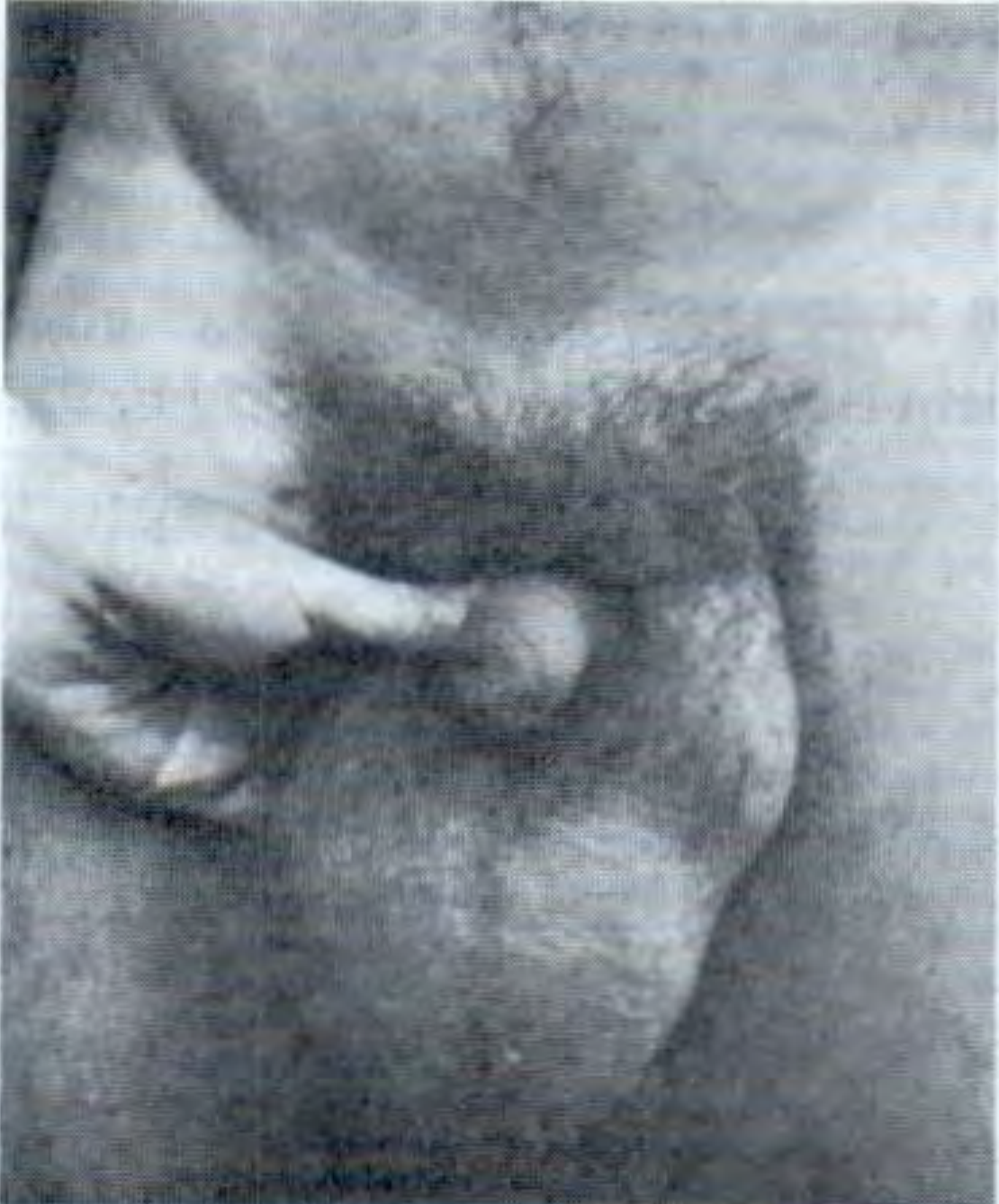
Comparison with scrotal swellings where you CAN get above
- Hydrocele: You can get above a hydrocele and palpate a normal spermatic cord above it. Additionally, a hydrocele transilluminates.
- Hydrocele of the cord: A smooth, oval swelling near the spermatic cord above the testis - you can get above it.
- Varicocele: Feels like a "bag of worms," does not transilluminate. You can get above it.
- Epididymal cyst / Epididymo-orchitis: Confined to the scrotum, so you can get above these.
As described in [Mulholland & Greenfield's Surgery - 7e](textbook reference):
"The distinguishing features are that the examining hand can get above a hydrocele but not above a hernia, and that a hydrocele transilluminates very clearly."
Anatomical basis (diagram)
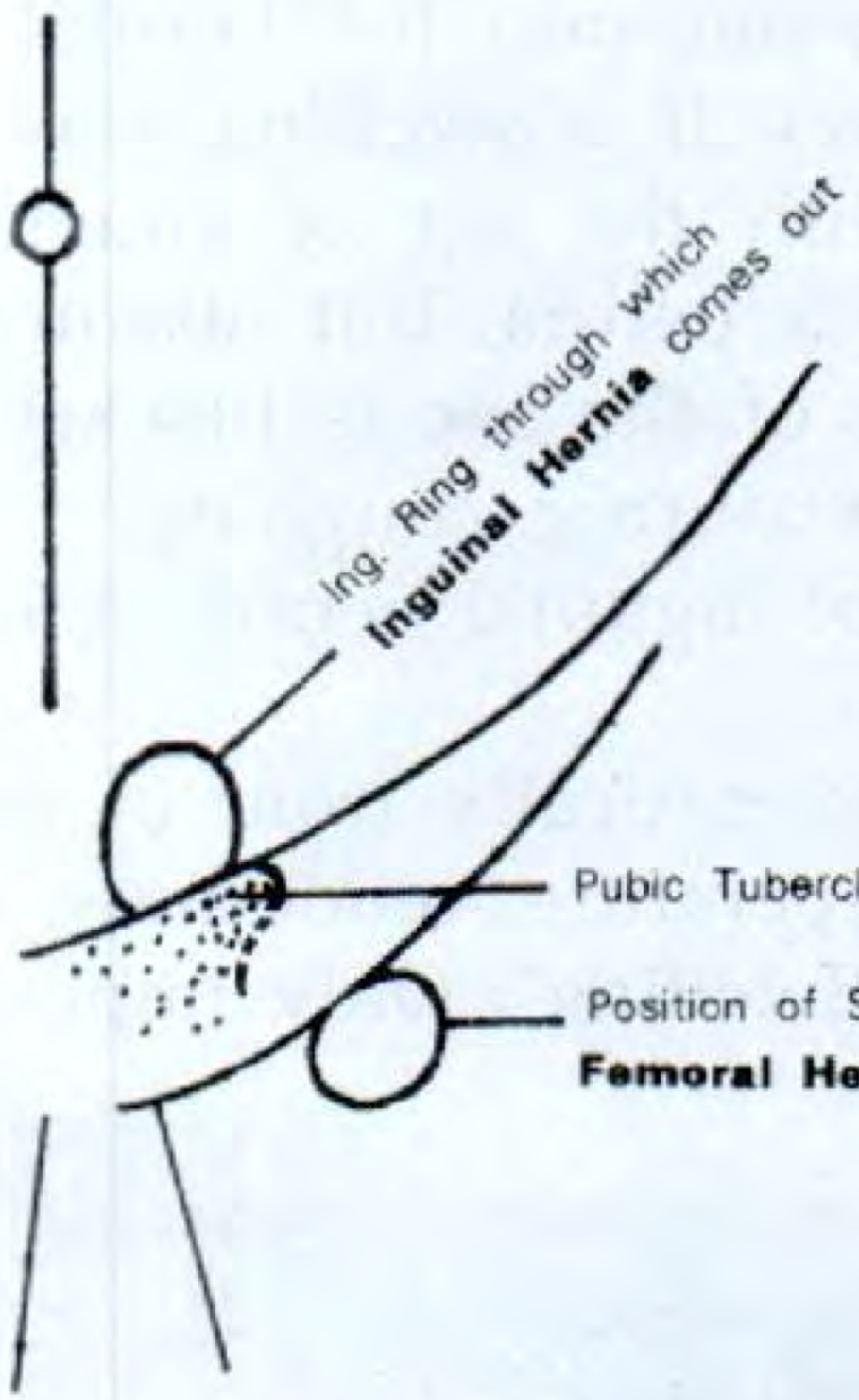
- Inguinal hernia: Above the inguinal ligament, medial to the pubic tubercle - cannot get above swelling
- Femoral hernia: Below the inguinal ligament, lateral to the pubic tubercle - if it enlarges, it may travel upward superficial to the ligament, but its base remains below
Step-by-step Examination Technique (Bailey & Love, 28th Ed.)
When examining a scrotal swelling, ask in sequence:
- Can you get above the swelling? - If NO → likely inguinal hernia descended into scrotum
- Is the testis palpable separate from the swelling? - If NO, the swelling may enclose the testis (e.g., hydrocele)
- Does the swelling transilluminate? - YES in hydrocele, NO in hernia, varicocele, solid tumors
Summary
The inability to "get above the swelling" is the single most important clinical sign distinguishing an inguinoscrotal hernia from a primary scrotal swelling. It indicates the swelling has continuity with the inguinal canal and ultimately the peritoneal cavity above.
This is a shared conversation. Sign in to Orris to start your own chat.