
Classification of hormones biochemistry
Reading File
This is a broad topic. I'll search the medical library using parallel queries to find comprehensive coverage.
Finding Sources
Finding Sources
Reading File
Reading File
Reading File
Reading File
I now have excellent content from the Tietz Textbook and Kaplan & Sadock's. Here is the comprehensive answer:
Classification of Hormones - Biochemistry
Definition
Hormones are chemical messengers synthesized and secreted by endocrine glands, organs, or isolated cells that have specific regulatory effects on the activity of target cells. They are produced at one site in the body and, in general, exert their actions at distant sites. They circulate in body fluids at very low but variable concentrations.
- Tietz Textbook of Laboratory Medicine, 7th Ed.
Classification 1 - By Chemical Structure
Hormones are classified into three major groups based on their chemical structure:
1. Polypeptide / Protein Hormones
Examples: ACTH, Insulin, PTH, Growth Hormone, FSH, LH, TRH, glucagon, oxytocin, ADH
Biochemical properties:
- Water-soluble; circulate freely in plasma
- Stored in secretory vesicles (pre-formed storage)
- NOT lipid-soluble - cannot cross the cell membrane
- Relatively short plasma half-life (10-30 minutes)
- Act via cell surface receptors (GPCRs or enzyme-coupled receptors)
- Activate intracellular second messenger signal-transduction pathways (e.g., cAMP, IP3/DAG, Ca2+)
2. Amino Acid-Derived Hormones
These are further divided into two subgroups:
a) Catecholamines (derived from Tyrosine)
Examples: Epinephrine (Adrenaline), Norepinephrine, Dopamine
- Water-soluble; circulate freely in plasma
- Very short plasma half-life (~1 minute)
- Act via cell surface G-protein-coupled receptors (9 closely related adrenoceptors)
- Activate second messenger systems
b) Thyroid Hormones (derived from Tyrosine)
Examples: Thyroxine (T4), Triiodothyronine (T3)
- Water-soluble but circulate bound to specific transport proteins:
- Thyroid-Binding Globulin (TBG)
- Transthyretin (prealbumin)
- Albumin
- Long plasma half-life (~7-10 days for T4)
- Move freely across the cell membrane
- Act via intracellular nuclear receptors (NR): thyroid hormone receptors TRα and TRβ
- Directly regulate gene transcription
c) Indoleamines (derived from Tryptophan)
Examples: Serotonin, Melatonin
3. Steroid and Other Lipid-Derived Hormones
Examples: Cortisol, Estrogens, Testosterone, Progesterone, Aldosterone, DHEA, Vitamin D, Calcitriol
Biochemical properties:
- Synthesized from cholesterol (except Vitamin D which comes from cholesterol via skin photolysis)
- Hydrophobic (lipid-soluble); insoluble in water
- NOT stored in vesicles - diffuse out of the cell immediately after synthesis
- Circulate bound to specific transport proteins (cortisol-binding globulin, sex hormone-binding globulin, albumin); only a small free fraction is biologically active
- Plasma half-life: 30-90 minutes
- Enter target cells by passive diffusion due to hydrophobicity
- Act via intracellular nuclear receptors (NR superfamily) in cytoplasm or nucleus
- Regulate gene transcription directly
Classification 2 - By Location of Function (Mode of Action)
| Classification | Mode of Action | Example |
|---|---|---|
| Endocrine | Travel through bloodstream to act on a distant target organ | Insulin, cortisol, thyroxine |
| Paracrine | Act on adjacent/neighboring cells locally | Prostaglandins, somatostatin (in gut) |
| Autocrine | Act on the same cell that secreted them (self-regulatory) | Certain growth factors stimulating their own synthesis |
- Kaplan & Sadock's Comprehensive Textbook of Psychiatry
Comparison Table - Key Biochemical Differences
| Property | Polypeptide | Catecholamines | Thyroid Hormones | Steroids |
|---|---|---|---|---|
| Precursor | Amino acids | Tyrosine | Tyrosine + Iodine | Cholesterol |
| Solubility | Water-soluble | Water-soluble | Water-soluble | Lipid-soluble |
| Storage | Secretory vesicles | Chromaffin granules | Thyroglobulin (follicles) | Not stored (diffuse out) |
| Plasma transport | Free | Free | Bound (TBG, transthyretin) | Bound (CBG, SHBG) |
| Half-life | Short (mins) | Very short (~1 min) | Long (T4: 7-10 days) | Intermediate (30-90 min) |
| Receptor location | Cell surface | Cell surface | Intracellular (nucleus) | Intracellular (cytoplasm/nucleus) |
| Mechanism | 2nd messenger (cAMP, IP3) | 2nd messenger | Direct gene transcription | Direct gene transcription |
Receptor Families (Biochemistry)
| Receptor Type | Hormone Class | Signal Pathway |
|---|---|---|
| G-protein coupled receptors (GPCRs) | Polypeptides, catecholamines | cAMP, IP3/DAG, Ca2+ |
| Enzyme-coupled receptors (e.g., Receptor Tyrosine Kinases) | Insulin, growth factors | Phosphorylation cascades |
| Nuclear receptor (NR) superfamily | Steroids, thyroid hormones, Vitamin D | Gene transcription |
Biosynthesis Summary
- Polypeptide hormones: Synthesized as preprohormones on ribosomes → processed via RER and Golgi → stored in secretory vesicles → released by exocytosis
- Catecholamines: Tyrosine → DOPA → Dopamine → Norepinephrine → Epinephrine (via sequential enzymatic steps)
- Thyroid hormones: Tyrosine residues in thyroglobulin are iodinated by TSH-regulated thyroid peroxidase → T3 and T4 released on demand
- Steroid hormones: Cholesterol → Pregnenolone (rate-limiting step via StAR protein and P450scc) → various steroids via tissue-specific enzymatic pathways
Sources:
- Tietz Textbook of Laboratory Medicine, 7th Ed. - Classification of Hormones (Chapter 38)
- Kaplan & Sadock's Comprehensive Textbook of Psychiatry - Hormone Classification by Structure and Location (Table 1.12-1 & 1.12-2)
Can you satyanarain as a reference for this topic
The user is asking about "Satyanaraian" as a reference - this likely refers to U. Satyanarayana's Biochemistry textbook, a popular Indian medical biochemistry textbook. Let me search the library for it.
Searching sources...
Finding Sources
Finding Sources
Unfortunately, U. Satyanarayana's Biochemistry is not available in the medical textbook library. The biochemistry books currently available are:
- Basic Medical Biochemistry - A Clinical Approach, 6th Ed (Lieberman & Marks)
- Biochemistry, 8th Ed - Lippincott Illustrated Reviews
- Harper's Illustrated Biochemistry, 32nd Ed
Satyanarayana's Biochemistry is a widely used Indian medical textbook, but it is not in this library's collection. I can instead cover the classification of hormones using any of the three biochemistry books above - particularly Lippincott and Harper's, which are among the most comprehensive biochemistry references used globally and cover the same content with similar depth.
Would you like me to pull the hormone classification content from Lippincott or Harper's instead?
Diagrams of mechanism of hormones from harpers latest edition
Finding Sources
Finding Sources
Finding Sources
Finding Sources
Finding Sources
Finding Sources
Finding Sources
Now I can see the key sections. Let me read the relevant blocks that contain diagrams on hormone mechanisms.
Reading File
Finding Sources
Now let me read the key hormone mechanism sections - specifically around line 2962 (HORMONE RECEPTORS) and the Ca2+/second messenger sections:
Reading File
Reading File
I have several image URLs. Let me now fetch all the key diagrams in parallel:
Loading Image
Loading Image
Reading File
Excellent! Now let me fetch more key mechanism diagrams - the cAMP/G-protein pathway and steroid receptor diagrams:
Reading File
Reading File
Now I have the image URLs. Let me fetch the key mechanism diagrams - the hormone chemical diversity figure (41-2) and find the cAMP/G-protein and steroid receptor mechanism diagrams:
Loading Image
Loading Image
Reading File
Now let me get the key cAMP/G-protein mechanism diagram and the steroid/nuclear receptor mechanism sections:
Reading File
Reading File
Loading Image
Reading File
Loading Image
Reading File
Loading Image
Reading File
Reading File
Loading Image
I now have all the key diagrams from Harper's. Here is the complete response with all diagrams:
Mechanisms of Hormone Action - Harper's Illustrated Biochemistry, 32nd Ed.
Harper's classifies hormones into two groups based on their mechanism of action:
FIGURE 42-1: Overall Framework - Group I vs Group II Hormones
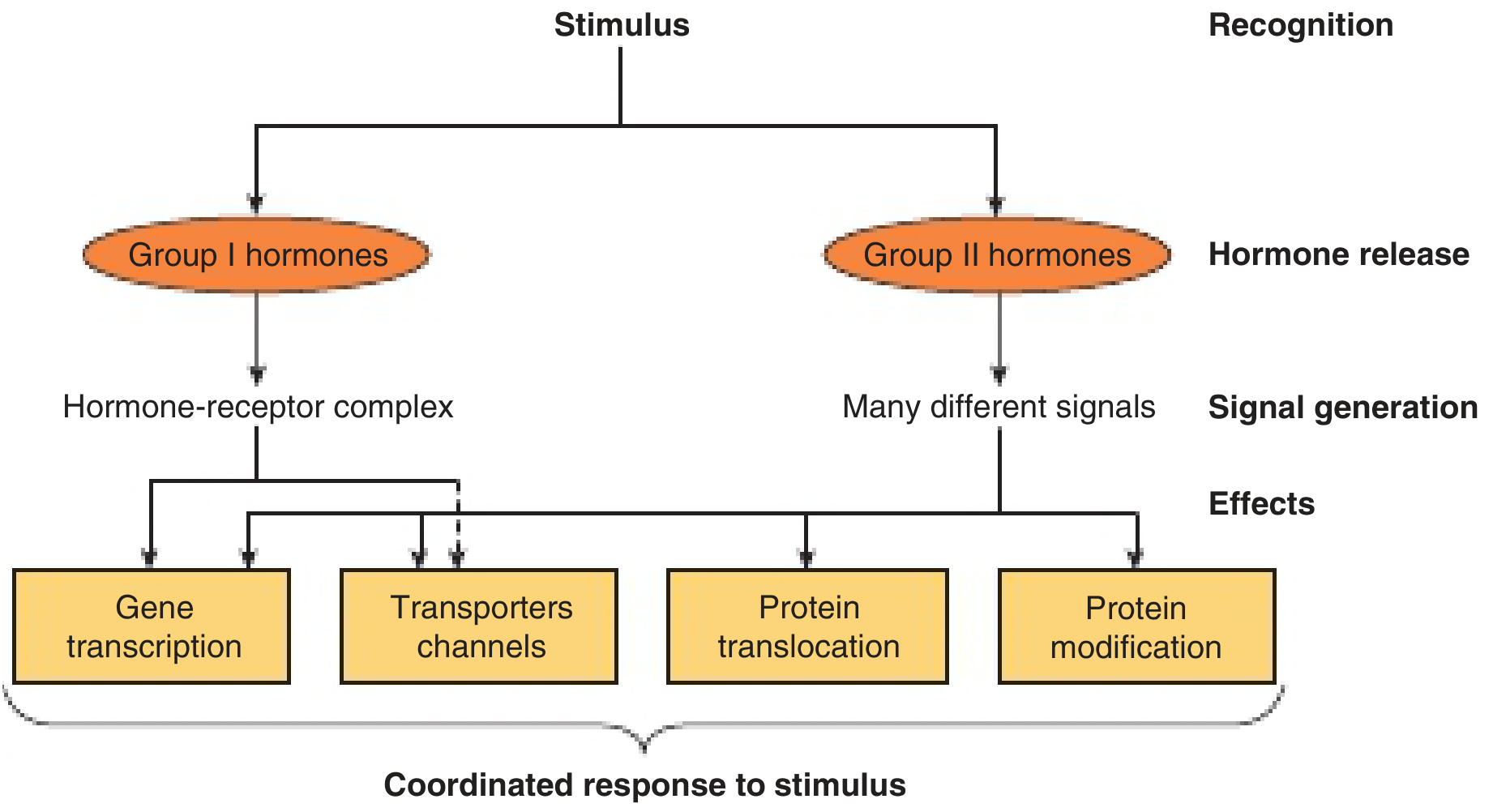
Group I hormones (steroids, thyroid hormones, Vitamin D, retinoic acid) - interact with intracellular receptors → form hormone-receptor complex → regulate gene transcription
Group II hormones (peptides, catecholamines) - interact with cell surface membrane receptors → generate second messengers → many different cellular effects
FIGURE 41-2A: Chemical Structure - Cholesterol Derivatives (Steroid Hormones)
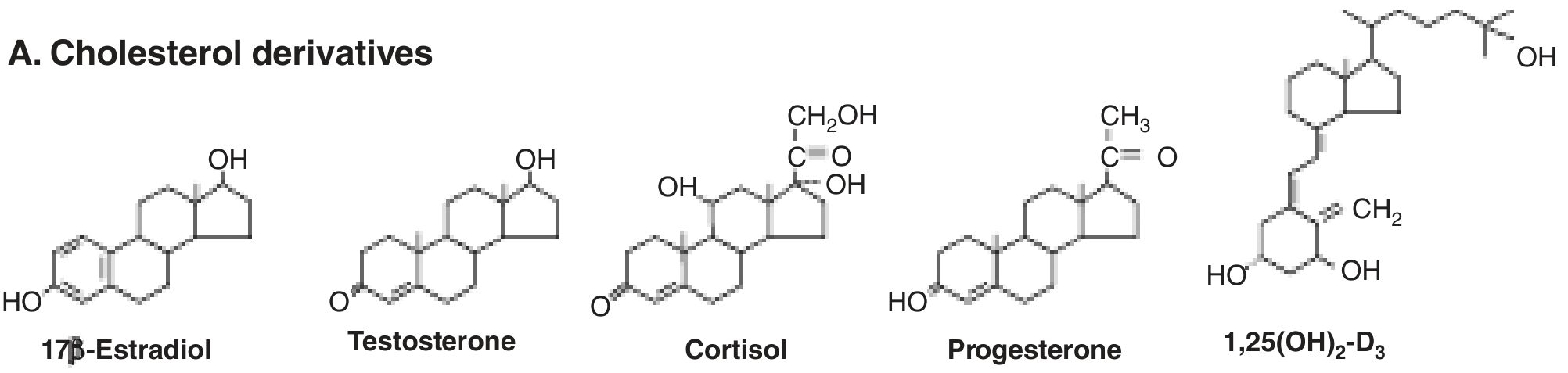
Steroid hormones (17β-Estradiol, Testosterone, Cortisol, Progesterone) and 1,25(OH)₂-D₃ are all derived from cholesterol via the steroidogenic pathway.
FIGURE 41-2B: Chemical Structure - Tyrosine Derivatives (Amino Acid-derived Hormones)
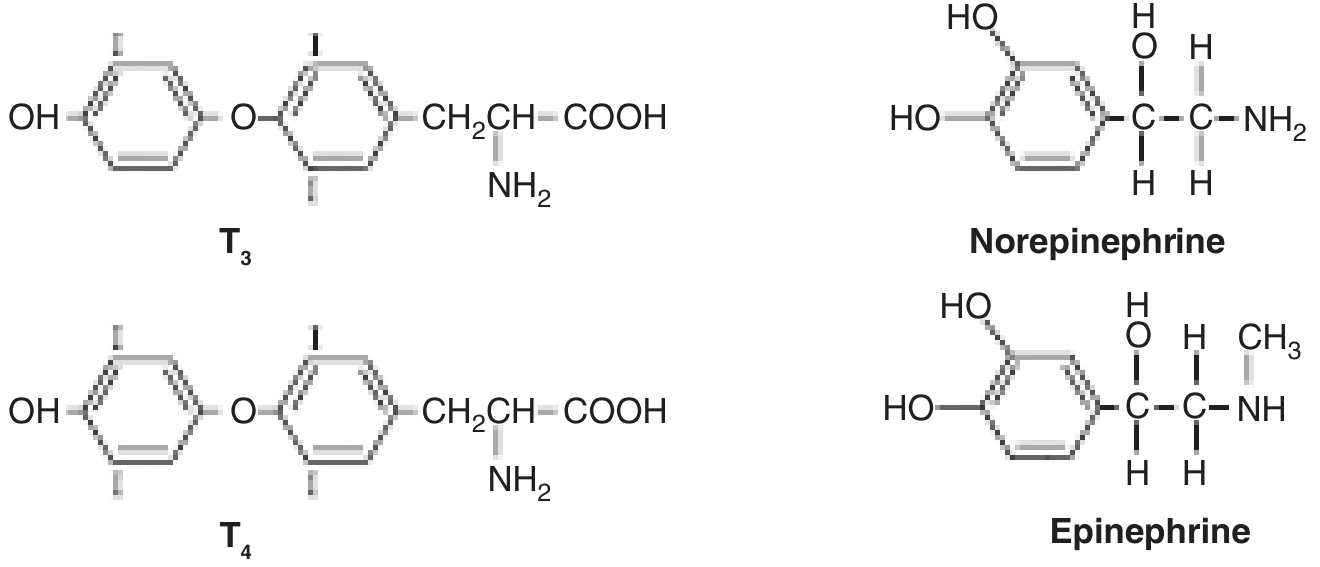
T3 and T4 (thyroid hormones) and catecholamines (Norepinephrine, Epinephrine) are all derived from the amino acid Tyrosine. Thyroid hormones additionally require iodination.
FIGURE 42-3: The "Information Pathway" - How Group I Hormones (Steroids) Work
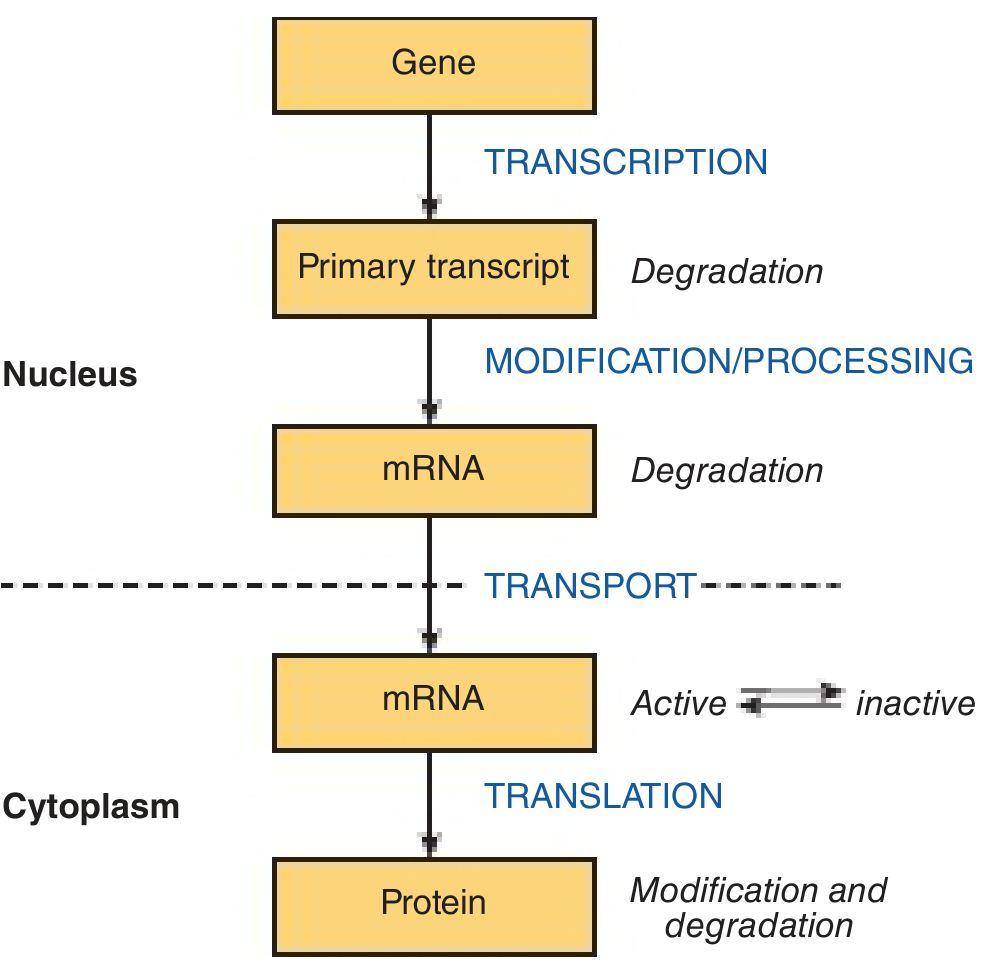
Mechanism of Group I (Steroid/Nuclear) Hormones:
- The lipid-soluble hormone diffuses across the cell membrane
- Binds to intracellular nuclear receptor (NR superfamily)
- The hormone-receptor complex binds to specific Hormone Response Elements (HREs) in DNA
- Regulates transcription of specific genes
- Hormones can act at any step: transcription, mRNA processing, mRNA transport, translation, or protein modification
Key HREs from Harper's:
| Hormone | Response Element | DNA Sequence |
|---|---|---|
| Glucocorticoids | GRE | GGTACA NNN TGTCT |
| Estrogens | ERE | AGG TCA - TGACCT |
| Thyroid hormone | TRE | AGG TCA N(1-5) AGG TCA |
| Vitamin D | VDRE | Direct repeats (N=3) |
| cAMP-mediated | CRE | TGACGTCA |
FIGURE 42-4: G-Protein Coupled Receptor (GPCR) Mechanism - Group II Hormones
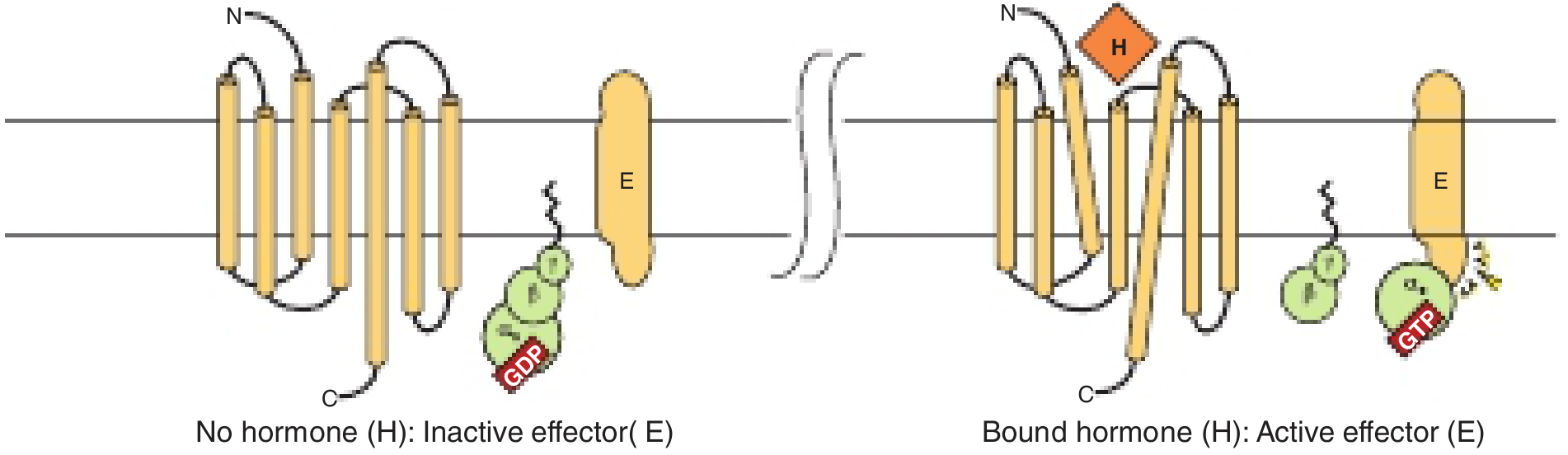
Mechanism:
- GPCRs have 7 transmembrane alpha-helical domains
- Without hormone (left): G-protein (αβγ) is in inactive GDP-bound form
- Hormone (H) binds receptor → conformational change → G-protein associates with receptor
- GDP exchanges for GTP on the α subunit → α and βγ dissociate
- α subunit activates the effector (E): adenylyl cyclase, phospholipase C, or ion channels
- Generates second messengers: cAMP, IP₃, DAG, Ca²⁺
FIGURE 42-5: cAMP → Protein Kinase A (PKA) Pathway
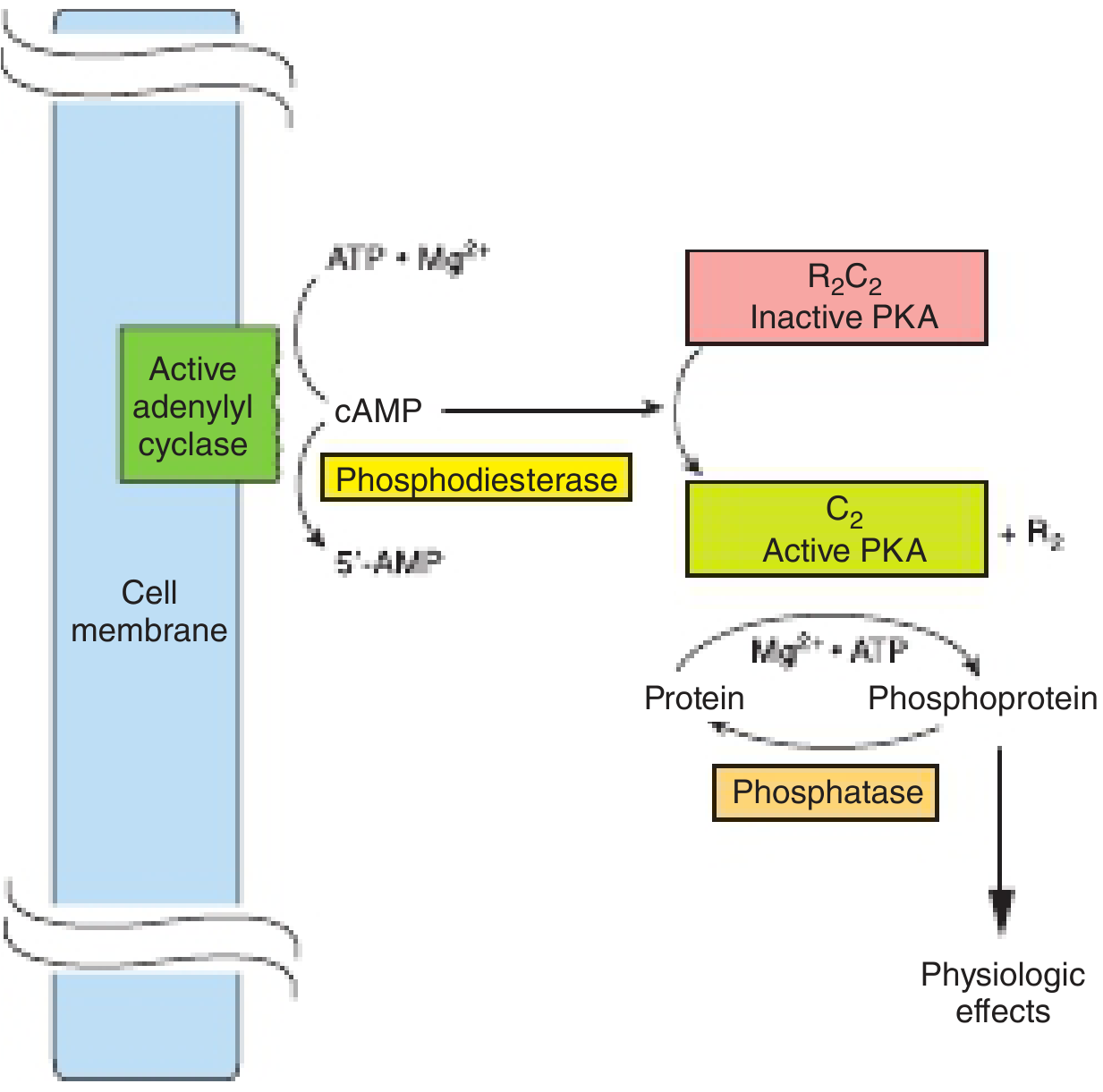
cAMP Second Messenger Pathway (step by step):
- Hormone binds GPCR → activates Gs protein → activates adenylyl cyclase
- Adenylyl cyclase converts ATP → cAMP (requires Mg²⁺)
- cAMP binds to R₂C₂ inactive PKA → regulatory (R) and catalytic (C) subunits dissociate
- Active C₂ (PKA) phosphorylates target proteins on Ser/Thr residues
- Phosphatase removes the phosphate to terminate the response
- Phosphodiesterase degrades cAMP → 5'-AMP (also terminates signal)
Hormones stimulating adenylyl cyclase (via Gs): ACTH, ADH, β-adrenergics, FSH, glucagon, LH, PTH, TSH, calcitonin, CRH
Hormones inhibiting adenylyl cyclase (via Gi): Acetylcholine, α₂-adrenergics, angiotensin II, somatostatin
FIGURE 42-6: Phosphatidylinositol / Ca²⁺ / PKC Pathway
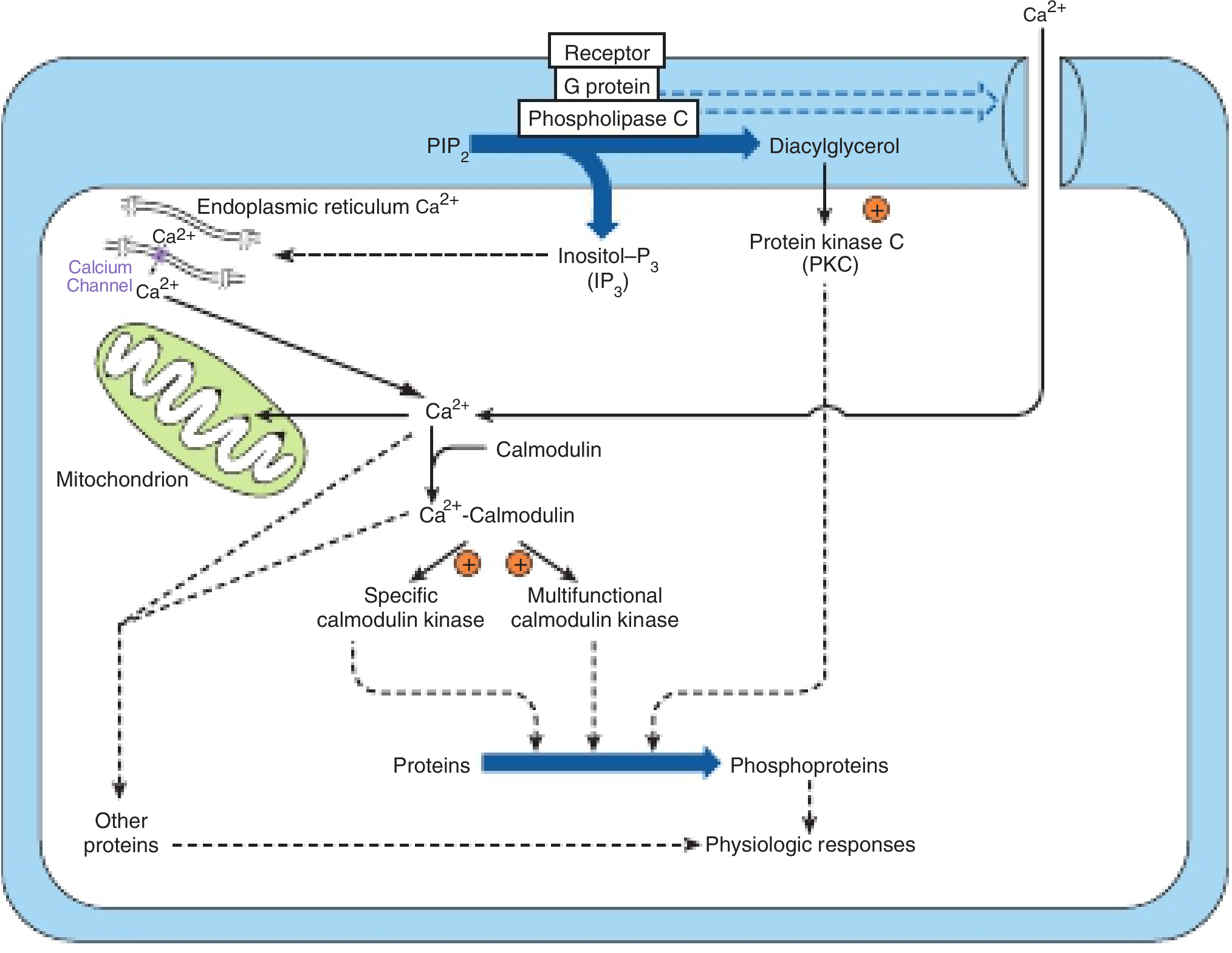
IP₃ / DAG / Ca²⁺ Second Messenger Pathway:
- Hormone binds receptor → via Gq protein → activates Phospholipase C (PLC)
- PLC cleaves PIP₂ (phosphatidylinositol 4,5-bisphosphate) into:
- IP₃ (inositol trisphosphate) - releases Ca²⁺ from endoplasmic reticulum
- DAG (diacylglycerol) - activates Protein Kinase C (PKC)
- Elevated cytosolic Ca²⁺ binds calmodulin
- Ca²⁺-calmodulin activates specific and multifunctional calmodulin kinases
- Kinases phosphorylate target proteins → Physiologic responses
Hormones using this pathway: Acetylcholine, ADH (vasopressin), α₁-adrenergic catecholamines
Summary Table - Harper's Classification of Hormone Mechanisms
| Feature | Group I (Steroid/Nuclear) | Group II-A (cAMP) | Group II-B (Ca²⁺/IP₃) |
|---|---|---|---|
| Examples | Cortisol, T3/T4, Estrogen, Vit D | ACTH, TSH, FSH, Glucagon | Acetylcholine, ADH, α₁-agonists |
| Receptor location | Intracellular (nucleus/cytoplasm) | Cell surface (GPCR 7-TM) | Cell surface (GPCR 7-TM) |
| 2nd messenger | None (direct gene action) | cAMP → PKA | IP₃ + DAG → Ca²⁺ + PKC |
| Final effect | Gene transcription | Protein phosphorylation | Protein phosphorylation |
| Onset | Slow (hours) | Fast (minutes) | Fast (seconds-minutes) |
Source: Harper's Illustrated Biochemistry, 32nd Ed., Chapter 41 & 42
This is a shared conversation. Sign in to Orris to start your own chat.