
Pneumonia
Reading File
The query "Pneumonia" is broad. Let me clarify before diving in.
Asking for Preferences
What aspect of pneumonia are you interested in? · What level of detail do you need?
Searching sources...
Finding Sources
Searching PubMed
"community-acquired pneumonia" AND management
Searching the Web
pneumonia clinical overview types diagnosis management 2025
Now let me pull the core content from the best textbook sources in parallel.
Reading File
Reading File
Reading File
The initial file offsets did not land on the pneumonia content. Let me search more specifically in the textbooks.
Finding Sources
Finding Sources
Reading File
Reading File
Excellent - I found the core pneumonia chapter. Let me read more of this Goldman-Cecil content and also look for severity scoring and treatment specifics.
Reading File
Finding Sources
Reading File
Reading File
Excellent - I now have the key data. Let me fetch the diagnostic flowchart image and get the HAP/VAP section plus the Harrison's severity scoring.
Loading Image
Reading File
Reading File
I now have comprehensive content. Let me get the HAP/VAP section and ICU criteria from Harrison's to complete the clinical picture.
Reading File
Reading File
I now have comprehensive, clinician-level content from multiple authoritative textbooks plus the 2026 ATS guideline reference. Here is the full clinical overview:
Pneumonia: A Clinician's Overview
Definition
Pneumonia is an acute infection of the lung parenchyma associated with at least one respiratory symptom (cough, dyspnea, chest pain) and new opacities on lung imaging, with or without fever, in the absence of an alternative diagnosis. - Goldman-Cecil Medicine, Ch. 85
Classification
| Type | Definition | Key Pathogens |
|---|---|---|
| CAP (Community-Acquired) | Acquired outside hospital / within 48h of admission | S. pneumoniae, H. influenzae, Mycoplasma, Chlamydia, Legionella, respiratory viruses |
| HAP (Hospital-Acquired) | Develops ≥48h after admission | S. aureus (including MRSA), gram-negative bacilli (Pseudomonas, Klebsiella, Acinetobacter) |
| VAP (Ventilator-Associated) | Develops ≥48-72h after endotracheal intubation | Same gram-negatives + MRSA |
| Aspiration pneumonia | Aspiration of oropharyngeal/gastric contents | Anaerobes (Peptostreptococcus, Bacteroides, Fusobacterium), gram-negatives |
| Immunocompromised host | HIV, transplant, neutropenia, immunosuppressants | All of the above + PCP (P. jiroveci), Cryptococcus, Aspergillus, CMV, NTM |
Typical vs. Atypical Presentation
| Feature | Typical | Atypical |
|---|---|---|
| Onset | Sudden | Gradual |
| Cough | Productive | Dry |
| CXR | Lobar consolidation | Diffuse bilateral / interstitial infiltrates |
| Leukocytosis | Prominent | Often modest |
| Pathogens | S. pneumoniae, H. influenzae | Mycoplasma, Chlamydia, Legionella, viruses |
Pathology (Lobar Pneumococcal Pattern)
Four stages: edema (proteinaceous exudate + bacteria in alveoli) → red hepatization (erythrocytes fill alveoli) → gray hepatization (neutrophil predominance, fibrin deposition, bacterial clearance) → resolution (macrophages clear debris). - Harrison's 22e
Epidemiology
CAP is the most common infectious cause of hospitalization and death in the US. Hospitalization rates increase exponentially with age: ~1-2/1000 in young adults vs. ~40/1000 in adults ≥85. Mortality is ~6% during hospitalization and ~15% at 1 month for hospitalized patients. Acute cardiac events (new AF, heart failure, MI) occur in 20-25% of hospitalized CAP patients. Empyema complicates 3-5% of cases. - Goldman-Cecil Medicine
Etiology by Setting
| Setting | Key Pathogens |
|---|---|
| Outpatient | S. pneumoniae, Mycoplasma, H. influenzae, Chlamydia pneumoniae, respiratory viruses |
| Inpatient (non-ICU) | S. pneumoniae, Mycoplasma, C. pneumoniae, H. influenzae, Legionella, viruses |
| ICU | S. pneumoniae, S. aureus, Legionella spp., gram-negative bacilli, H. influenzae |
In >50% of cases, no clear pathogen is confirmed. Respiratory viruses account for 20-30% of CAP; this rose significantly during the COVID-19 pandemic. - Goldman-Cecil, Harrison's
Epidemiological Clues to Pathogen (Selected)
| Exposure / Condition | Suspect Pathogen |
|---|---|
| Aspiration / poor dentition | Anaerobes, Candida |
| SW United States travel | Coccidioides immitis |
| Mississippi River basin / bats | Histoplasma capsulatum |
| Farm animals | Coxiella burnetii (Q fever) |
| Psittacine bird exposure | Chlamydia psittaci |
| Rabbit exposure | Francisella tularensis |
| Active influenza in community | Influenza, S. aureus, S. pneumoniae |
| Bronchiectasis / CF | Pseudomonas, MRSA, Aspergillus |
| HIV early | S. pneumoniae, H. influenzae, TB |
| HIV/AIDS (CD4 low) | All above + PCP, Cryptococcus, MAI, CMV |
Clinical Features & Diagnosis
Symptoms: Fever, cough (productive in typical; dry in atypical), purulent sputum, pleuritic chest pain, dyspnea, rigors.
Signs: Tachypnea, tachycardia, fever, dullness to percussion, bronchial breath sounds, crackles, egophony ("e" sounds like "a" over consolidation), whispered pectoriloquy.
Workup:
- Chest imaging - CXR is standard; lung ultrasound now accepted as an alternative (2025 ATS guideline update)
- Sputum gram stain + culture - before antibiotics if possible; sensitivity is limited
- Blood cultures - in all hospitalized patients; yield is low but important for bacteremia detection
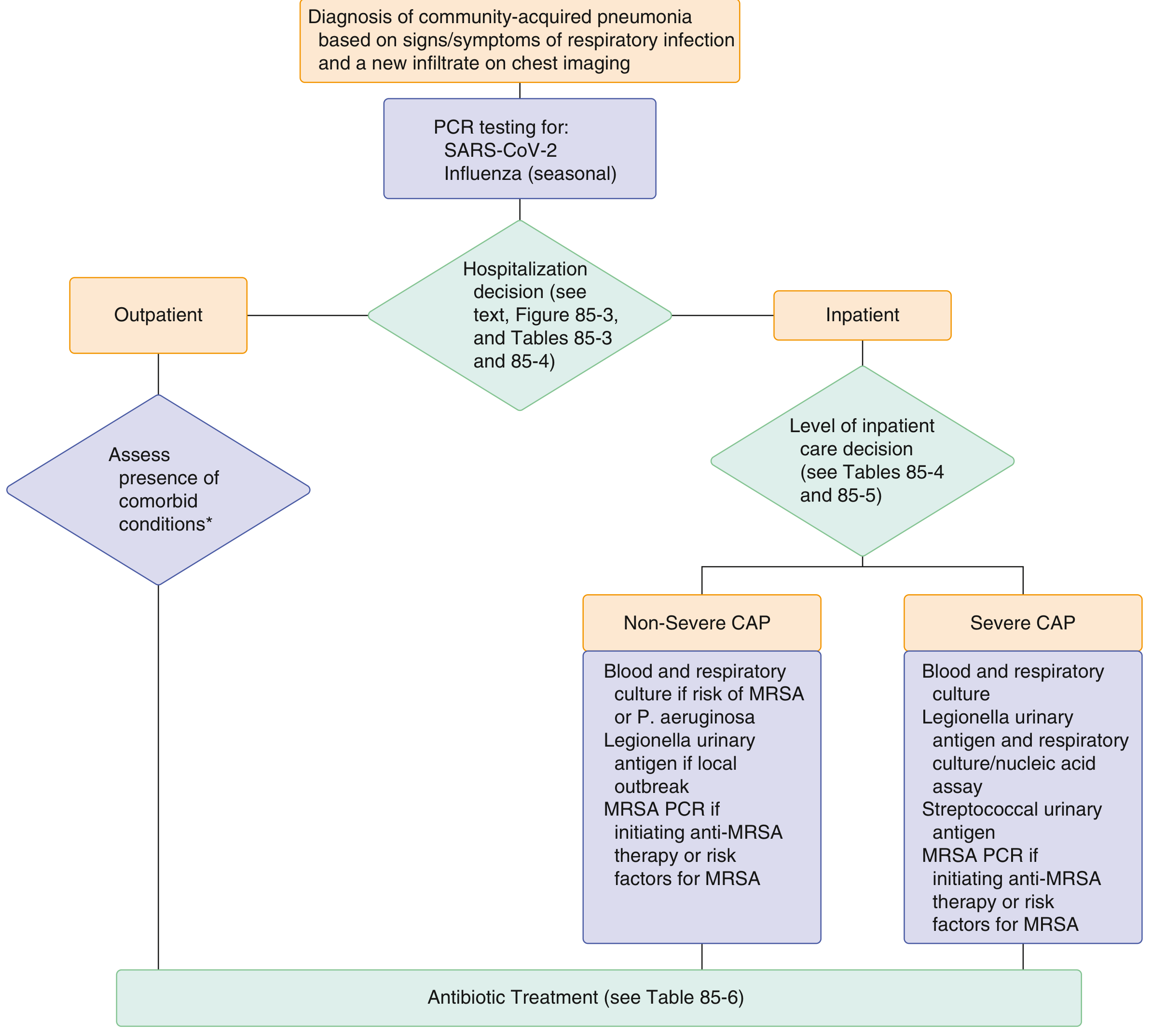
- Urinary antigens - Legionella urinary antigen (in severe CAP or local outbreak); Streptococcal urinary antigen (in severe CAP)
- PCR - for SARS-CoV-2 and influenza routinely; MRSA nasal PCR to guide anti-MRSA therapy; respiratory multiplex PCR panels now include Mycoplasma, Chlamydia
- Procalcitonin / CRP - adjunctive; helps distinguish bacterial from viral; guides antibiotic de-escalation
- ABG - to assess severity and oxygenation
Severity Assessment & Site of Care
CURB-65 (Practical Bedside Tool)
| Criterion | Points |
|---|---|
| Confusion | 1 |
| Urea >7 mmol/L (BUN >19 mg/dL) | 1 |
| Respiratory rate ≥30/min | 1 |
| Blood pressure - systolic ≤90 or diastolic ≤60 mmHg | 1 |
| Age ≥65 | 1 |
- Score 0: Outpatient (30-day mortality 1.5%)
- Score 1-2: Hospitalize (consider outpatient if score 1 is solely age ≥65)
- Score ≥3: ICU admission may be needed (30-day mortality ~22%)
PSI (Pneumonia Severity Index)
Uses 20 variables. Assigns patients to 5 classes with mortality: Class 1 (0.1%) → Class 5 (29.2%). Better validated than CURB-65 but requires a calculator. PSI is superior for identifying low-risk patients; CURB-65 is faster.
Severe CAP Criteria (IDSA/ATS) - ICU Admission
Major criteria (any 1 = direct ICU):
- Septic shock requiring vasopressors
- Invasive mechanical ventilation
Minor criteria (≥3 = ICU/high monitoring):
-
RR ≥30/min
-
PaO2/FiO2 ≤250
-
Multilobar infiltrates
-
Confusion/disorientation
-
Uremia (BUN ≥20 mg/dL)
-
Leukopenia (WBC <4,000/µL)
-
Thrombocytopenia (<100,000/µL)
-
Hypothermia (<36°C)
-
Hypotension requiring aggressive fluid resuscitation
-
Harrison's 22e
Diagnostic Pathway (CAP)
Treatment
Antibiotic Regimens (per Goldman-Cecil / 2025 ATS Guidelines)
Outpatient - No Comorbidities (Healthy Adult):
- Amoxicillin 1 g TID, OR
- Doxycycline 100 mg BID, OR
- Macrolide (azithromycin, clarithromycin) - only if local resistance <25%
Outpatient - With Comorbidities (chronic heart/lung/liver/renal disease, diabetes, alcoholism, malignancy, asplenia):
- Beta-lactam + macrolide combination, OR
- Respiratory fluoroquinolone (levofloxacin 750 mg daily, moxifloxacin 400 mg daily, or gemifloxacin)
Inpatient - Non-Severe CAP, No MRSA/Pseudomonas Risk:
- Beta-lactam (ampicillin, cefotaxime, ceftriaxone) + macrolide (azithromycin or clarithromycin), OR
- Respiratory fluoroquinolone monotherapy (levofloxacin, moxifloxacin), OR
- If macrolide + fluoroquinolone both contraindicated: beta-lactam + doxycycline
Inpatient - Severe CAP, No MRSA/Pseudomonas Risk:
- Beta-lactam + macrolide, OR beta-lactam + respiratory fluoroquinolone
With MRSA Risk/Confirmed:
- Vancomycin 15 mg/kg q12h (adjust by levels), OR linezolid 600 mg q12h (preferred by some for better lung penetration + exotoxin inhibition)
With Pseudomonas Risk:
- Piperacillin-tazobactam 4.5 g q6h, cefepime 2 g q8h, ceftazidime, aztreonam, meropenem, or imipenem
Viral Pneumonia:
- SARS-CoV-2: per current COVID-19 protocols
- Influenza: oseltamivir 75 mg BID x 5 days + cover bacterial coinfection
Newer Agents:
- Omadacycline and lefamulin (pleuromutilins) are options when beta-lactams are contraindicated.
Antibiotic Duration
The 2025/2026 ATS update emphasizes shorter courses: stable patients can be treated for 5 days (vs. traditional 7-10), with de-escalation based on clinical response and procalcitonin trends. A new 2026 ATS Practice Guideline (PMID 40679934) updates recommendations on imaging, antibiotic selection, treatment duration, and corticosteroid use.
Corticosteroids
The 2025 ATS update limits adjunctive corticosteroids to severe inpatient CAP only - not recommended routinely for non-severe disease.
Supportive Care
- Supplemental O2 to target SpO2 ≥92-94%; high-flow nasal cannula or NIV for hypoxic respiratory failure
- IV fluids for dehydration/sepsis
- Antipyretics, DVT prophylaxis, early mobilization
HAP & VAP Management
HAP/VAP is more frequently caused by S. aureus (including MRSA) and gram-negative bacilli. Empirical coverage targets these organisms based on local antibiogram data. De-escalation upon culture results is standard. - Goldman-Cecil Medicine
Complications
| Complication | Notes |
|---|---|
| Parapneumonic effusion / Empyema | 3-5% of CAP; requires pleural drainage if exudative/loculated |
| Lung abscess | Especially with anaerobes, S. aureus, aspiration |
| Sepsis / Septic shock | Warrants ICU admission |
| ARDS | Most common with Legionella, gram-negatives, viral |
| Acute cardiac events | AF, new HF, myocardial ischemia - 20-25% of hospitalized cases |
| Multi-organ failure | In severe cases |
Prevention
- Pneumococcal vaccine: PCV15 or PCV20 for all adults ≥65 and high-risk adults 19-64 (chronic heart/lung/liver/renal disease, DM, alcohol use disorder, smokers, asplenia, immunocompromised)
- Influenza vaccine: annually for all ≥6 months; especially important in elderly, pregnant women, chronic disease
- COVID-19 vaccine: recommended for all adults and children ≥6 months
- Lifestyle: smoking cessation; caution with opioids, PPIs, and corticosteroids (all increase pneumonia risk); good hand hygiene and masking when symptomatic
2026 ATS Guideline Update (Key Changes)
A new official ATS Clinical Practice Guideline (Jan 2026, PMID 40679934) updates the previous 2019 ATS/IDSA guidelines with four focus areas:
- Imaging: Lung ultrasound is now an accepted alternative to CXR for diagnosis
- Antibiotics: More selective empiric prescribing; antibiotics not needed when viral etiology is confirmed without bacterial coinfection
- Duration: Shorter antibiotic courses for stable patients (5 days)
- Corticosteroids: Adjunctive corticosteroids only for severe inpatient CAP, not routine use
Primary sources: Goldman-Cecil Medicine International Edition; Harrison's Principles of Internal Medicine 22e (2025); Murray & Nadel's Textbook of Respiratory Medicine; Fishman's Pulmonary Diseases and Disorders; Frameworks for Internal Medicine. Guidelines: 2026 ATS/IDSA CAP Guideline (PMID 40679934).
For medical student notes purpose
Here are clean, exam-ready medical student notes on pneumonia:
🫁 PNEUMONIA - Medical Student Notes
DEFINITION
Acute infection of the lung parenchyma causing:
- Respiratory symptoms (cough, dyspnea, chest pain)
- New infiltrate on chest imaging
- ± Fever
CLASSIFICATION
By Acquisition
| Type | Definition |
|---|---|
| CAP | Outside hospital OR <48h of admission |
| HAP | ≥48h after hospital admission |
| VAP | ≥48-72h after intubation |
| Aspiration | Inhalation of oropharyngeal/gastric contents |
By Pattern
| Typical | Atypical | |
|---|---|---|
| Onset | Sudden | Gradual |
| Cough | Productive | Dry |
| CXR | Lobar consolidation | Diffuse/interstitial infiltrates |
| WBC | High (neutrophilia) | Normal/mildly elevated |
| Pathogens | S. pneumoniae, H. influenzae | Mycoplasma, Chlamydia, Legionella, viruses |
ETIOLOGY (HIGH YIELD)
CAP - Most Common Organisms
| Setting | Top Pathogens |
|---|---|
| Outpatient | S. pneumoniae #1, Mycoplasma, H. influenzae, Chlamydia, viruses |
| Inpatient (non-ICU) | S. pneumoniae, Mycoplasma, Legionella, H. influenzae |
| ICU | S. pneumoniae, S. aureus, Legionella, gram-negatives |
⚠️ In >50% of CAP cases, no pathogen is ever identified
HAP/VAP
- S. aureus (MRSA), Pseudomonas aeruginosa, Klebsiella, Acinetobacter
Aspiration
- Anaerobes (Peptostreptococcus, Bacteroides, Fusobacterium) → lung abscess, empyema
- Gram-negatives in hospitalized patients → fulminant course
Special Associations (MEMORIZE)
| Clue | Pathogen |
|---|---|
| Birds (parrots/parakeets) | Chlamydia psittaci |
| Farm animals | Coxiella burnetii (Q fever) |
| Bats / Mississippi River basin | Histoplasma capsulatum |
| SW United States desert | Coccidioides immitis |
| Rabbits | Francisella tularensis |
| Post-influenza | S. aureus, S. pneumoniae |
| Bronchiectasis/CF | Pseudomonas, MRSA, Aspergillus |
| HIV (early, CD4 >200) | S. pneumoniae, H. influenzae, TB |
| HIV/AIDS (CD4 <200) | PCP (P. jiroveci), Cryptococcus, Aspergillus, CMV |
PATHOLOGY (Lobar Pneumococcal - 4 Stages)
- Congestion/Edema - Protein exudate + bacteria fill alveoli
- Red Hepatization - RBCs + neutrophils fill alveoli; lung is red, firm, liver-like
- Gray Hepatization - RBCs lysed; neutrophils + fibrin dominate; bacteria cleared
- Resolution - Macrophages clear debris; normal architecture restored
CLINICAL FEATURES
Symptoms
- Fever, rigors, malaise
- Cough (productive or dry)
- Purulent/rust-colored sputum (pneumococcal)
- Pleuritic chest pain
- Dyspnea
Signs
| Sign | Mechanism |
|---|---|
| Dullness to percussion | Alveolar consolidation |
| Bronchial breath sounds | Sound conducted through consolidated lung |
| Crackles (crepitations) | Alveolar fluid |
| Egophony | "E" → "A" over consolidation |
| Whispered pectoriloquy | Whispered sounds heard clearly over consolidation |
| Reduced chest expansion | Ipsilateral side |
INVESTIGATIONS
Bedside / Basic
- CXR - lobar consolidation (typical) vs. interstitial/bilateral (atypical/viral)
- Pulse oximetry - SpO2 <92% = hospitalize
- ABG - assess hypoxia and hypercapnia in severe disease
Bloods
- FBC - leukocytosis (bacterial), lymphopenia (viral)
- U&E - urea used in CURB-65
- CRP / Procalcitonin - guide antibiotic start/stop
- Blood cultures - 2 sets before antibiotics
Microbiology
- Sputum gram stain + culture (before antibiotics)
- Legionella urinary antigen (severe CAP or local outbreak)
- Pneumococcal urinary antigen (severe CAP)
- Influenza + SARS-CoV-2 PCR (routine)
- MRSA nasal PCR (if considering anti-MRSA therapy)
Imaging
- CXR standard; lung ultrasound now accepted as alternative (2026 ATS guideline)
- CT chest: if CXR unclear, suspected complication, or immunocompromised
SEVERITY SCORING
CURB-65 (Quick Bedside Tool)
| Letter | Criterion | Points |
|---|---|---|
| C | Confusion (new) | 1 |
| U | Urea >7 mmol/L | 1 |
| R | Respiratory rate ≥30/min | 1 |
| B | BP - systolic <90 or diastolic <60 mmHg | 1 |
| 65 | Age ≥65 years | 1 |
| Score | Action | 30-day Mortality |
|---|---|---|
| 0 | Outpatient | 1.5% |
| 1-2 | Hospitalize | ~9% |
| ≥3 | Consider ICU | ~22% |
ICU Criteria (IDSA/ATS) - Severe CAP
Major (any 1 = ICU):
- Septic shock requiring vasopressors
- Mechanical ventilation required
Minor (≥3 of 9 = ICU):
- RR ≥30/min
- PaO2/FiO2 ≤250
- Multilobar infiltrates
- Confusion
- BUN ≥20 mg/dL
- WBC <4,000/µL
- Platelets <100,000/µL
- Temp <36°C
- Hypotension needing aggressive fluids
TREATMENT
Antibiotic Selection
Outpatient - Healthy, No Comorbidities:
- Amoxicillin 1 g TID, OR
- Doxycycline 100 mg BD, OR
- Macrolide (only if local resistance <25%)
Outpatient - With Comorbidities:
- Beta-lactam + macrolide, OR
- Respiratory fluoroquinolone (levofloxacin, moxifloxacin)
Inpatient - Non-Severe:
- Beta-lactam (ceftriaxone/ampicillin) + macrolide (azithromycin), OR
- Respiratory fluoroquinolone monotherapy
Inpatient - Severe:
- Beta-lactam + macrolide, OR
- Beta-lactam + respiratory fluoroquinolone
Add for MRSA:
- Vancomycin 15 mg/kg q12h, OR
- Linezolid 600 mg q12h (preferred - better lung penetration, inhibits exotoxin)
Add for Pseudomonas:
- Pip-tazo, cefepime, ceftazidime, aztreonam, meropenem, or imipenem
Influenza: Oseltamivir 75 mg BD x 5 days + cover bacterial coinfection
Duration (2026 ATS Update)
- 5 days for stable patients responding to treatment
- Traditional 7-10 days for severe/complicated disease
- De-escalate based on clinical response + procalcitonin
Corticosteroids (2026 ATS Update)
- Adjunctive steroids: severe inpatient CAP only
- NOT recommended routinely for non-severe disease
Supportive
- O2 to SpO2 ≥92-94%
- HFNC or NIV for hypoxic respiratory failure
- IV fluids (sepsis protocol if shocked)
- Antipyretics, DVT prophylaxis, early mobilization
COMPLICATIONS
| Complication | Key Points |
|---|---|
| Parapneumonic effusion / Empyema | 3-5% of CAP; drain if exudative or loculated |
| Lung abscess | Anaerobes, S. aureus, aspiration; prolonged antibiotics |
| Sepsis / Septic shock | ICU; vasopressors |
| ARDS | Legionella, gram-negatives, viral; mechanical ventilation |
| Acute cardiac events | New AF, heart failure, MI - occurs in 20-25% of hospitalised CAP |
| Pleural effusion | Light's criteria to distinguish exudate vs. transudate |
PREVENTION
| Vaccine | Target Population |
|---|---|
| Pneumococcal (PCV15 / PCV20) | All adults ≥65; high-risk adults 19-64 (DM, CLD, CKD, CHD, smokers, asplenia, immunocompromised) |
| Influenza | Annual for all ≥6 months; especially elderly, pregnant, chronic disease |
| COVID-19 | All adults and children ≥6 months |
Other: smoking cessation; avoid unnecessary opioids, PPIs, and steroids (all increase pneumonia risk)
HIGH-YIELD EXAM POINTS ⭐
- Most common cause of CAP: S. pneumoniae
- Most common cause of atypical CAP in young adults: Mycoplasma pneumoniae
- Rust-colored sputum: S. pneumoniae
- "Currant jelly" sputum: Klebsiella pneumoniae (alcoholics, diabetics)
- Pneumatoceles on CXR in infants/young: S. aureus
- "Atypical" CAP + hyponatremia + high fever + GI symptoms + Legionnaire's disease history: Legionella - treat with respiratory fluoroquinolone or azithromycin; urinary antigen test
- Walking pneumonia (mild, treated outpatient): Mycoplasma
- Post-influenza superinfection: S. aureus (MRSA especially)
- Pneumonia + diarrhea + hyponatremia + elevated LFTs + no response to beta-lactams: Legionella
- Egophony: "E" → "A" sound over consolidation (whispered pectoriloquy also positive over consolidation)
- No pathogen found in: >50% of CAP
Sources: Goldman-Cecil Medicine; Harrison's Principles 22e (2025); Murray & Nadel's Respiratory Medicine; 2026 ATS CAP Clinical Practice Guideline (PMID 40679934)
Give treatment topic in detail
Searching sources...
Finding Sources
Finding Sources
Searching the Web
pneumonia treatment guidelines 2025 2026 ATS IDSA antibiotics corticosteroids duration
Reading File
Reading File
Reading File
Reading File
Reading File
Reading Web Page
https://www.contagionlive.com/view/2025-american-thoracic-so…
Reading File
Finding Sources
Reading File
Reading File
I now have everything needed. Here are the detailed treatment notes:
💊 PNEUMONIA TREATMENT - Detailed Medical Student Notes
GENERAL PRINCIPLES
- Start antibiotics promptly - delay increases mortality in bacterial pneumonia
- Empiric first, targeted later - initial choice based on severity + setting + risk factors
- De-escalate when culture/PCR results return
- Antibiotic choice guided by:
- Site of acquisition (CAP vs. HAP/VAP)
- Severity (outpatient / inpatient non-severe / inpatient severe / ICU)
- Comorbidities
- Risk factors for MRSA or Pseudomonas
- Local antibiogram data
PART 1: CAP TREATMENT
Step 1 - Rule Out Viral Cause First
| Finding | Action |
|---|---|
| PCR positive for SARS-CoV-2 | No antibacterials unless bacterial coinfection suspected; give antivirals per COVID-19 protocol |
| PCR positive for influenza | Oseltamivir + empiric antibacterials (bacterial coinfection rate 2-65%, mainly S. pneumoniae and S. aureus) |
| Viral etiology confirmed, no coinfection | Antibiotics NOT required (2025 ATS update) |
Step 2 - Empiric Antibiotic Regimens by Setting
A. OUTPATIENT - Healthy Adult, No Comorbidities
Choose ONE:
| Drug | Dose |
|---|---|
| Amoxicillin | 1 g TID orally |
| Doxycycline | 100 mg BD orally |
| Macrolide (azithromycin / clarithromycin) | Only if local macrolide resistance <25% |
⚠️ Macrolide resistance in S. pneumoniae is ~40% in the USA. Use macrolide monotherapy cautiously.
B. OUTPATIENT - With Comorbidities
(Chronic heart/lung/liver/renal disease, DM, alcoholism, malignancy, asplenia)
Choose ONE:
| Regimen | Drugs |
|---|---|
| Combination | Beta-lactam + macrolide |
| Monotherapy | Respiratory fluoroquinolone (levofloxacin 750 mg daily OR moxifloxacin 400 mg daily OR gemifloxacin 320 mg daily) |
C. INPATIENT - Non-Severe CAP (No MRSA / No Pseudomonas Risk)
Choose ONE:
| Regimen | Drugs |
|---|---|
| Combination (preferred) | IV beta-lactam (ceftriaxone 1-2g daily OR ampicillin 1.5-3g q6h OR cefotaxime 1-2g q8h) + macrolide (azithromycin 500mg daily OR clarithromycin 500mg BD) |
| Fluoroquinolone monotherapy | Levofloxacin 750 mg IV daily OR moxifloxacin 400 mg IV daily |
| If macrolide AND fluoroquinolone contraindicated | Beta-lactam + doxycycline 100 mg BD |
⭐ Beta-lactam + macrolide combination OR fluoroquinolone alone → lower mortality than beta-lactam alone
D. INPATIENT - Severe CAP (ICU-level)
(2 major OR ≥3 minor IDSA/ATS criteria)
Base regimen - Choose ONE:
| Regimen | Drugs |
|---|---|
| Combination (1st line) | IV beta-lactam + macrolide |
| Alternative | IV beta-lactam + respiratory fluoroquinolone |
Observational evidence suggests beta-lactam + macrolide may be preferable to beta-lactam + fluoroquinolone in severe CAP
E. When to ADD Anti-MRSA Coverage
Risk factors for MRSA:
- Prior isolation of MRSA (especially from respiratory tract within previous year) - strongest risk factor
- Recent hospitalization + IV antibiotics
- Skin lesions / IV drug use
Drugs:
| Drug | Dose | Notes |
|---|---|---|
| Linezolid | 600 mg q12h IV/oral | Preferred by many - better lung penetration, inhibits exotoxin production |
| Vancomycin | 15 mg/kg q12h IV | Adjust by trough levels / AUC-guided dosing |
Do NOT start anti-MRSA empirically just for "hospitalization" alone. Use MRSA nasal PCR to guide - if negative, de-escalate. - Harrison's 22e
F. When to ADD Anti-Pseudomonas Coverage
Risk factors for Pseudomonas:
- Prior isolation of Pseudomonas from respiratory tract
- Bronchiectasis or severe COPD
- Recent IV antibiotics
- Structural lung disease
Anti-pseudomonal agents:
| Drug | Dose |
|---|---|
| Piperacillin-tazobactam | 4.5 g q6h IV |
| Cefepime | 2 g q8h IV |
| Ceftazidime | 2 g q8h IV |
| Aztreonam | 2 g q8h IV (if PCN allergic) |
| Meropenem | 1 g q8h IV |
| Imipenem-cilastatin | 500 mg q6h IV |
For Pseudomonas: consider double coverage initially; de-escalate to monotherapy once susceptibilities known.
G. Newer Agents (Alternative Options)
| Drug | Class | Use |
|---|---|---|
| Omadacycline | Next-gen tetracycline | Inpatient CAP; 100 mg IV q12h x2 doses, then 100 mg daily → switch to 300 mg oral |
| Lefamulin | Pleuromutilin | Inpatient CAP; 150 mg IV q12h → switch to 600 mg oral BD |
Both are options when beta-lactams are contraindicated or patient is unable to take fluoroquinolones.
Summary Table - CAP Antibiotic Selection at a Glance
| Setting | First Choice | Alternative |
|---|---|---|
| Outpatient, no comorbidities | Amoxicillin or doxycycline | Macrolide (if low resistance) |
| Outpatient, comorbidities | Beta-lactam + macrolide | Resp. fluoroquinolone |
| Inpatient, non-severe | Ceftriaxone + azithromycin | Levofloxacin monotherapy |
| Inpatient, severe | Ceftriaxone + azithromycin | Ceftriaxone + levofloxacin |
| + MRSA risk | Add linezolid or vancomycin | - |
| + Pseudomonas risk | Replace with pip-tazo / cefepime | Meropenem |
PART 2: TREATMENT DURATION (2025 ATS UPDATE - HIGH YIELD ⭐)
"Clinical Stability" Definition (must achieve before stopping):
- Afebrile
- HR <100 bpm
- RR <24/min
- SpO2 ≥90% or PaO2 ≥60 mmHg on room air
- SBP ≥90 mmHg
- Normal mental status
| Setting | Duration |
|---|---|
| Outpatient (non-severe) | <5 days (minimum 3 days) once clinically stable - NEW 2025 recommendation |
| Inpatient, non-severe | <5 days once clinically stable (conditional, low-quality evidence) |
| Inpatient, severe CAP | ≥5 days even after stability reached |
| Complex/MDR pathogens | Extend as clinically indicated |
📌 Previously (2019 guidelines): minimum 5 days for all. Now: stable outpatients and non-severe inpatients can stop at 3-5 days. This reduces antibiotic resistance and C. difficile risk.
Procalcitonin guidance: Resolution of inflammatory markers (CRP, procalcitonin) can support stopping antibiotics earlier.
PART 3: CORTICOSTEROIDS IN CAP (2025 ATS UPDATE ⭐)
| CAP Severity | Corticosteroid Recommendation |
|---|---|
| Non-severe (inpatient) | STRONGLY AGAINST (strong recommendation, low-quality evidence) |
| Severe (inpatient, ICU) | Conditional recommendation FOR in selected patients (low-quality evidence) |
| Influenza-associated | AGAINST - associated with increased mortality |
| COVID-19 (critical) | Dexamethasone reduces mortality (separate COVID-19 protocol) |
| Refractory septic shock | Hydrocortisone 200 mg/day IV (Surviving Sepsis Campaign) |
Factors that strengthen the case for steroids in severe CAP:
- Short interval between symptom onset and presentation
- Steroids given within 24h of meeting severe CAP criteria
- ICU admission
- Respiratory failure
- Elevated inflammatory markers (CRP, IL-6)
Evidence:
- Cochrane meta-analysis (13 RCTs): steroids reduced mortality in severe CAP (RR 0.58, 95% CI 0.40-0.84), but not in non-severe pneumonia
- Concern: increased GI bleeding risk (2.2% vs 0.7% in one trial)
- Large VA study in severe CAP showed no mortality benefit with steroids - debate ongoing
Fishman's Pulmonary Diseases and Disorders
PART 4: HAP / VAP TREATMENT
Key Principle
Start appropriate antibiotics EARLY. Every 24h delay in appropriate coverage is an independent risk factor for in-hospital mortality.
Organisms to Cover in Empiric HAP/VAP Regimen
Always include:
- Gram-negative enteric bacilli (Klebsiella, E. coli, Enterobacter)
- Pseudomonas aeruginosa
- MSSA (methicillin-sensitive S. aureus)
Add MRSA coverage if risk factors present (see below)
Risk Factors for MDR Pathogens in HAP/VAP
| Risk Factor |
|---|
| Prior antibiotic therapy |
| Hospitalization ≥5 days (late-onset HAP/VAP) |
| High local MDR prevalence (check antibiogram!) |
| IV antibiotic use in past 90 days |
| Septic shock at time of VAP |
| ARDS preceding VAP |
| Acute renal replacement therapy before VAP onset |
| Known colonization with MDR organism |
Empiric Regimens for HAP/VAP
| Risk | Regimen |
|---|---|
| No MDR risk, no MRSA risk | Monotherapy: piperacillin-tazobactam OR cefepime OR ceftriaxone |
| MDR gram-negative risk | Two anti-pseudomonal agents from different classes (e.g., pip-tazo + aminoglycoside) |
| MRSA risk | Add vancomycin OR linezolid |
| Carbapenem-resistant organisms | Ceftazidime-avibactam, ceftolozane-tazobactam, or polymyxins (specialist input) |
HAP/VAP Duration
- 7 days for most VAP (irrespective of organism)
- Shorter courses acceptable if good clinical response; de-escalate on culture results
- Longer courses for MDR organisms or inadequate initial therapy
PART 5: ASPIRATION PNEUMONIA TREATMENT
| Situation | Coverage |
|---|---|
| Community setting | Amoxicillin-clavulanate, OR clindamycin + cephalosporin |
| Hospital / ICU | Pip-tazo OR imipenem (covers anaerobes + gram-negatives) |
| Confirmed anaerobic (lung abscess, empyema) | Prolonged therapy (4-6 weeks), drainage if empyema |
PART 6: SUPPORTIVE TREATMENT
| Intervention | Details |
|---|---|
| Oxygen | Target SpO2 ≥92-94% (94-98% in most; 88-92% in COPD) |
| High-flow nasal cannula (HFNC) | Preferred for moderate hypoxic respiratory failure before intubation |
| NIV (BiPAP) | COPD + pneumonia; use cautiously in pure CAP |
| Intubation / MV | If RR >30 and failing above, or PaO2/FiO2 <150 |
| IV fluids | For dehydration; sepsis bundle if shocked (30 mL/kg crystalloid bolus) |
| Vasopressors | Noradrenaline first-line in septic shock |
| Antipyretics | Paracetamol; NSAIDs with caution |
| DVT prophylaxis | LMWH + compression stockings in all hospitalised patients |
| Early mobilization | Reduces hospital-acquired complications |
| Nutrition | Early enteral feeding in ventilated patients |
PART 7: IV-TO-ORAL SWITCH
Switch from IV to oral when:
- Clinically stable (see criteria above)
- Tolerating oral intake
- GI function intact
Equivalent oral options: amoxicillin-clavulanate, doxycycline, levofloxacin, moxifloxacin, azithromycin
PART 8: FOLLOW-UP
| Situation | Recommendation |
|---|---|
| Outpatient - improved, non-smoker | Routine CXR NOT needed if symptoms resolved in 5-7 days |
| Hospitalized patient | Follow-up CXR at 4-6 weeks after discharge |
| Recurrence in same segment | Investigate for underlying malignancy or bronchiectasis |
| Fever + leukocytosis resolution | Within 2-4 days in healthy patients |
| CXR clearance | 4-12 weeks (slowest to normalize) |
PART 9: TREATMENT OF SPECIAL CAP PATHOGENS
| Pathogen | Drug of Choice | Notes |
|---|---|---|
| S. pneumoniae | Amoxicillin / ceftriaxone | Fluoroquinolone if penicillin-resistant |
| Mycoplasma / Chlamydia | Doxycycline or azithromycin | Beta-lactams don't work (no cell wall) |
| Legionella | Levofloxacin or azithromycin | Urinary antigen test; fluoroquinolone preferred in severe disease |
| S. aureus (MSSA) | Flucloxacillin / nafcillin | 14-21 days |
| MRSA | Linezolid or vancomycin | Linezolid preferred (lung penetration, exotoxin inhibition) |
| Pseudomonas | Anti-pseudomonal beta-lactam ± aminoglycoside | Double cover initially |
| PCP (HIV/AIDS) | Co-trimoxazole (TMP-SMX) high dose | Add steroids if PaO2 <70 mmHg |
| Aspergillus | Voriconazole | In immunocompromised |
| Influenza | Oseltamivir 75 mg BD x 5 days | Start within 48h of symptoms ideally |
| COVID-19 | Per current protocol (dexamethasone + antivirals) | - |
HIGH-YIELD EXAM SUMMARY ⭐
| Key Point | Answer |
|---|---|
| First-line outpatient CAP, no comorbidities | Amoxicillin or doxycycline |
| "Walking pneumonia" treatment | Doxycycline or azithromycin (Mycoplasma) |
| Legionella treatment | Levofloxacin or azithromycin |
| Preferred anti-MRSA agent for pneumonia | Linezolid (better lung penetration) |
| Corticosteroids in non-severe CAP | CONTRAINDICATED (strong recommendation) |
| Corticosteroids in severe CAP | Conditionally recommended |
| Steroids in influenza pneumonia | Harmful - do NOT use |
| Minimum antibiotic duration, stable outpatient | 3 days (2025 ATS) |
| Duration for severe CAP | ≥5 days minimum |
| HAP/VAP antibiotic duration | 7 days (most cases) |
| PCP treatment | High-dose TMP-SMX + steroids if PaO2 <70 |
| When to do follow-up CXR | 4-6 weeks post-discharge (hospitalized patients) |
| Macrolide resistance threshold for monotherapy | Do not use if local resistance >25% |
Sources: Goldman-Cecil Medicine International Edition; Harrison's Principles of Internal Medicine 22e (2025); Fishman's Pulmonary Diseases and Disorders; Frameworks for Internal Medicine; 2025 ATS Clinical Practice Guideline Update (PMID 40679934)
This is a shared conversation. Sign in to Orris to start your own chat.