
Give me a best ayurvedic prescription for diabetis
I'll look up the medical library for Ayurvedic approaches to diabetes right away.
Searching sources...
Reading File
Finding Sources
Finding Sources
Searching the Web
best ayurvedic prescription treatment for diabetes herbs formulations 2024
Finding Sources
Searching PubMed
ayurvedic herbs diabetes mellitus clinical trial
Searching PubMed
Gymnema sylvestre OR bitter melon OR fenugreek diabetes glycemic control
Reading Web Page
https://www.researchprotocols.org/2026/1/e63574
Here is a well-rounded Ayurvedic prescription framework for diabetes (called Madhumeha in Ayurveda), drawing from classical texts, clinical evidence, and recent research:
Ayurvedic Prescription for Diabetes (Madhumeha)
Important disclaimer: Ayurveda should complement - not replace - conventional diabetes care. Always monitor blood sugar and consult both your physician and a qualified Vaidya (Ayurvedic doctor) before starting any herbal regimen, especially if you are on insulin or oral hypoglycemics (risk of hypoglycemia).
1. Ayurvedic Understanding
Diabetes maps to Madhumeha (sweet urine disease), a subtype of Prameha. It involves vitiation of Kapha and Vata doshas, impaired Agni (digestive fire), and accumulation of Ama (metabolic toxins). Treatment targets these root imbalances.
2. Core Herbal Prescriptions
A. Single Herb (Aushadhi) Protocol
| Herb | Sanskrit Name | Action | Dose |
|---|---|---|---|
| Gymnema sylvestre | Meshashringi / Madhunashini | "Sugar destroyer" - stimulates insulin secretion, blocks sugar absorption in the gut | 400-600 mg extract twice daily |
| Bitter Gourd | Karela (Momordica charantia) | Insulin-like action, improves beta-cell function | 50-100 ml fresh juice or 500 mg capsule twice daily |
| Fenugreek | Methi (Trigonella foenum-graecum) | Slows glucose absorption, improves insulin sensitivity | 5-10 g seeds soaked overnight, taken on empty stomach |
| Turmeric | Haridra (Curcuma longa) | Best hypoglycemic herb per Ayurveda - reduces insulin resistance, protects beta cells via curcumin | 500 mg twice daily with black pepper |
| Indian Kino Tree | Vijaysar (Pterocarpus marsupium) | May regenerate pancreatic beta cells; water stored in wooden tumbler taken in morning | 1-2 g powder or "Vijaysar water" |
| Indian Gooseberry | Amalaki (Emblica officinalis) | Rich in Vitamin C + polyphenols; stimulates pancreas, reduces oxidative stress | 3-6 g powder or 20 ml juice daily |
| Neem | Nimba (Azadirachta indica) | Improves glucose tolerance, prevents neuropathy | 250-500 mg leaf extract daily |
| Indian Barberry | Daruharidra / Rasanjana (Berberis aristata) | Contains berberine - a powerful hypoglycemic compound | 500 mg twice daily |
| Jamun | Jambu (Eugenia jambolana) | Seed powder stimulates insulin secretion | 3-5 g seed powder twice daily |
B. Classical Compound Formulations
These are time-tested multi-herb combinations used in Ayurvedic clinical practice:
| Formulation | Key Ingredients | Action |
|---|---|---|
| Nishamalaki Churna | Haridra (turmeric) + Amalaki in 1:1 ratio | Flagship anti-diabetic combination; controls blood sugar + lipids |
| Chandraprabha Vati | 37+ ingredients including Shilajit, Guggulu | Improves urinary symptoms, insulin resistance |
| Arogyavardhini Vati | Triphala, Shilajit, Guggulu | Liver detox, improves fat metabolism |
| Vasant Kusumakar Ras | Gold, Silver + herbs | Neuroprotective, controls blood sugar; used in classical Madhumeha |
| Nisakathakadi Kwath | Nisha (turmeric), Kataka, and others | Decoction that lowers blood glucose |
| Nimba-Amalakyadi Powder | Nimba, Amalaki, Haridra, Kutaj, Vijaysar, Pippali, Marich | Being compared vs. Metformin in a 2026 clinical trial |
3. Diet (Pathya-Apathya)
Eat (Pathya):
- Barley (Yava) - top recommended grain in Ayurveda for Madhumeha
- Bitter vegetables: karela, methi leaves, neem leaves
- Old rice, whole grains, lentils
- Turmeric-spiced warm foods
- Triphala water (morning detox)
Avoid (Apathya):
- Sweet, heavy, oily, cold foods
- White rice, refined flour, sugar, dairy excess
- Daytime sleeping (worsens Kapha)
- Sedentary lifestyle
4. Lifestyle & Panchakarma
- Yoga daily: Surya Namaskar, Mandukasana (frog pose), Dhanurasana (bow pose) - directly stimulate the pancreas
- Exercise: Brisk walk 30-45 min/day (called Vyayama - specifically prescribed for Prameha)
- Panchakarma: Virechana (therapeutic purgation) is the primary Shodhana (purification) therapy for Prameha - best done under a qualified Vaidya
5. What the Evidence Says
Recent peer-reviewed studies support several of these herbs:
- Gymnema sylvestre - A 2021 systematic review + meta-analysis (PMID 34467577) confirmed significant HbA1c and fasting glucose reduction in Type 2 diabetics
- Fenugreek - Two 2023 meta-analyses (PMID 36837450, PMID 37762302) confirmed meaningful reductions in fasting blood glucose and HbA1c
- Bitter Melon (Karela) - A 2024 meta-analysis (PMID 39079610) showed benefit on anthropometric indices
- A 2023 network meta-analysis (PMID 37451111) comparing 6 herbs for glycemic control found herbal regimens can meaningfully reduce blood sugar
6. Practical Sample Prescription (Daily Routine)
| Time | Prescription |
|---|---|
| Early morning (empty stomach) | Vijaysar water (overnight soaked) + 5 g soaked fenugreek seeds |
| Before breakfast | Nishamalaki Churna 3 g with warm water |
| After breakfast | Gymnema extract 400 mg capsule |
| Before lunch | Karela juice 50 ml or capsule |
| Evening | Amalaki (Amla) juice 20 ml |
| Before bed | Chandraprabha Vati 2 tablets + Triphala Churna 3 g with warm water |
Key Caution Points
- Gymnema + insulin/sulfonylureas can cause hypoglycemia - reduce dose with medical supervision
- Vijaysar and Karela are potent - blood sugar monitoring is essential
- Avoid self-prescribing Bhasmas (metal-based formulations like Vasant Kusumakar Ras) - they require a certified Ayurvedic physician
- Ayurvedic herbs can interact with conventional drugs - always disclose to your doctor
Search for clinical images showing Ayurvedic herb preparation methods
Searching sources...
Searching the Web
Ayurvedic herb preparation methods clinical images churna kwath
Searching the Web
Ayurvedic medicine preparation kadha decoction herbal formulation photos
Now let me fetch the most relevant clinical/scientific images:
Loading Image
Loading Image
Loading Image
Loading Image
Searching the Web
Ayurvedic Panchakarma Shodhana procedure clinical images kwath decoction boiling herbs
Loading Image
Loading Image
Loading Image
Here are the clinical and scientific images showing Ayurvedic herb preparation methods, sourced from peer-reviewed publications and Ayurvedic institutions:
Ayurvedic Herb Preparation Methods - Clinical Images
1. Churna (Herbal Powder) Preparation - GMP Pharmaceutical Process
This image from a 2026 Springer Nature study shows the complete, standardized GMP-certified Kwatha Churna preparation process:
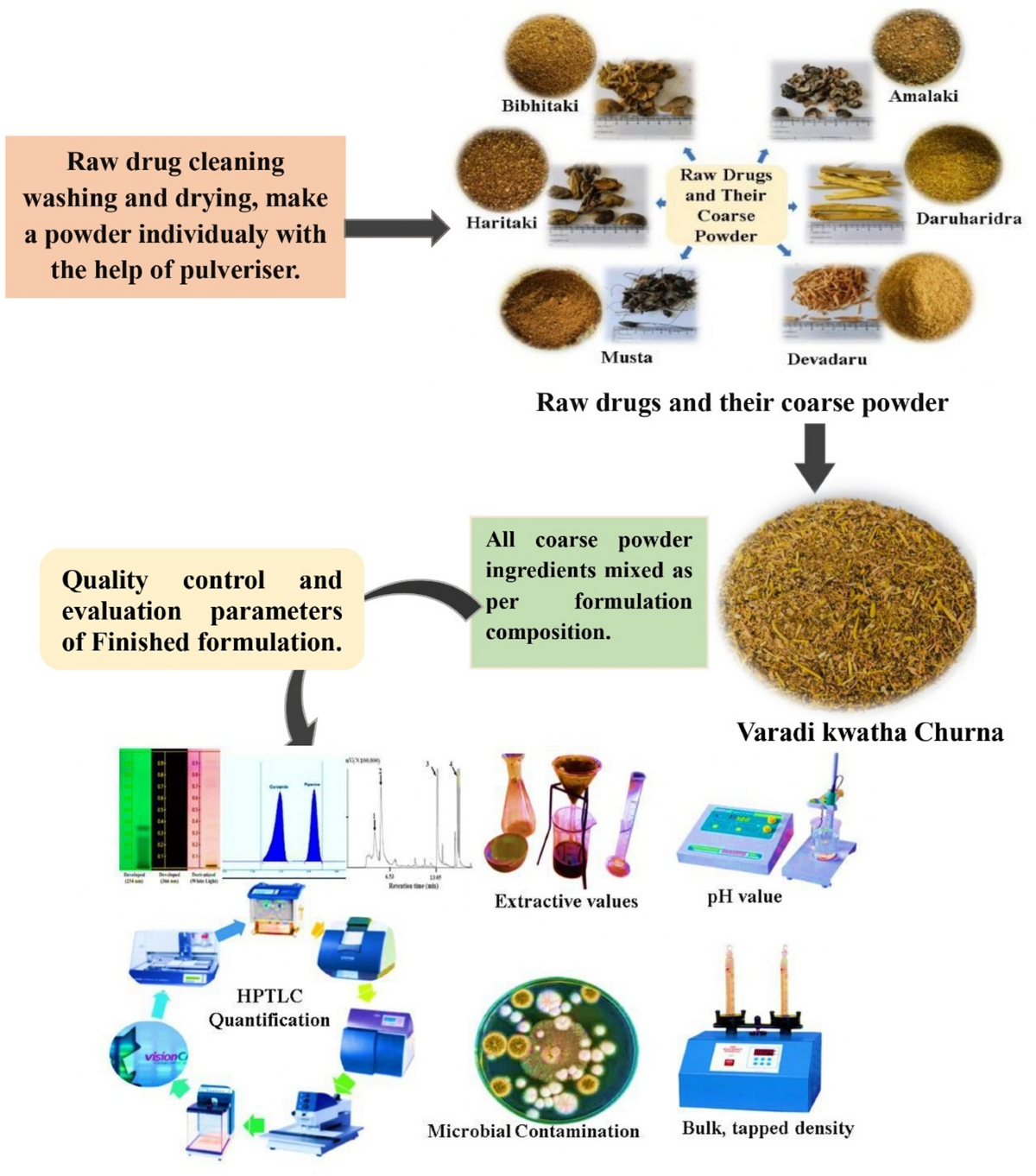
What it shows:
- Top panel: Raw herbs individually cleaned, washed, dried, and pulverised - showing Bibhitaki, Haritaki, Amalaki, Daruharidra, Musta, and Devadaru alongside their coarse powders
- Middle panel: All coarse powders blended into the final Varadi Kwatha Churna (polyherbal powder)
- Bottom panel: Quality control testing - HPTLC quantification, extractive values, pH measurement, microbial contamination testing, and bulk/tapped density measurements
2. Polyherbal Decoction (Gandush Kwath) - Anti-microbial Clinical Application
This image from a published Elsevier clinical study shows the preparation and clinical use of an Ayurvedic decoction:

What it shows:
- Herbs used: Terminalia chebula, Phyllanthus emblica (Amalaki), Terminalia bellirica, Curcuma longa (Haridra/Turmeric)
- The Kwath (decoction) prepared from these four herbs
- In-vitro anti-microbial testing against E. coli, Proteus mirabilis, and Candida albicans
- Clinical use: gargling the decoction for 7-14 days in oral cavity cancer patients undergoing radiotherapy
3. Kashayam (Kwath) - Practical Uses, Safety & Storage Guide
This infographic covers the real-world clinical usage of Kashayam/Kwatha preparations:
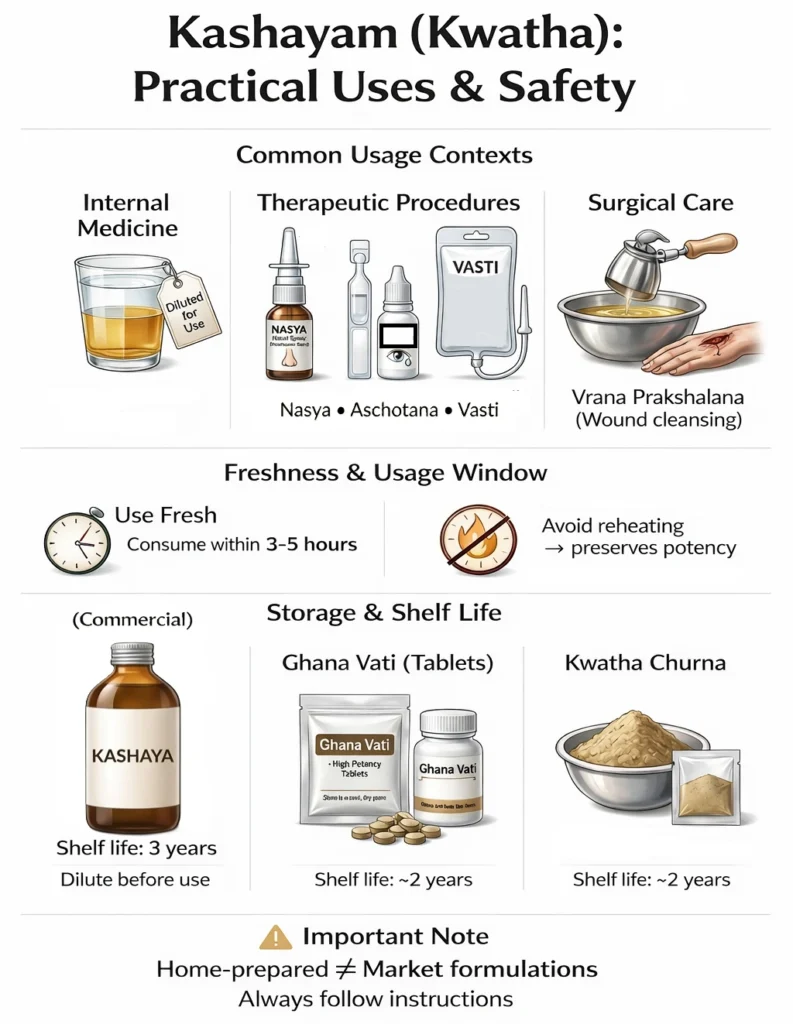
What it shows:
- Clinical usage contexts: internal medicine (diluted oral dose), therapeutic procedures (Nasya nasal drops, Aschotana eye drops, Vasti enema), and wound cleansing (Vrana Prakshalana)
- Freshness window: consume within 3-5 hours; do not reheat
- Storage formats: commercial Kashaya liquid (3-year shelf life), Ghana Vati tablets (~2 years), Kwatha Churna powder (~2 years)
- Key safety note: home-prepared decoctions differ from market formulations
4. Panchakarma Detoxification Setup - Clinical Herb Preparation

What it shows:
- Left: Traditional brass vessel with a cloth-bound herbal bundle (Pinda Sweda pouch) - used in Panchakarma; multiple bowls of individual powdered and raw herbs (sesame, barley, white salt, ginger root, etc.) arranged for formulation
- Right: Shirodhara - medicated oil being poured in a continuous stream over the forehead, a Panchakarma procedure used in Vata-predominant conditions
The 5 Classical Preparation Methods Illustrated
| Method | Classical Name | Key Step | When Used |
|---|---|---|---|
| Fresh juice | Swarasa | Direct extraction, no heat | Karela, Amla, Neem for immediate potency |
| Powder | Churna | Dry, pulverise, sieve (710 μm) | Nishamalaki, Triphala - stable, flexible dosing |
| Decoction | Kwatha / Kashayam | 1:16 herb:water, boil to 1/4 volume | Roots, barks, tough materials like Vijaysar |
| Cold infusion | Sheeta Kashaya | Soak overnight, no heat | Volatile, heat-sensitive herbs |
| Hot infusion | Phanta | 1:8 herb:boiling water, steep warm | Aromatic herbs like cinnamon |
The easyayurveda.com Kashayam preparation guide provides step-by-step home instructions for making decoctions.
This is a shared conversation. Sign in to Orris to start your own chat.