
Explain me 10common heart diseases with ECG. Changes and ECG image of those diseases.
Reading File
Finding Sources
Searching Images
ECG electrocardiogram myocardial infarction ST elevation
Finding Sources
Searching Images
atrial fibrillation ECG irregular rhythm absent P waves
Searching Images
heart block complete AV block ECG third degree
Searching Images
ventricular tachycardia ECG wide complex tachycardia
Searching Images
left ventricular hypertrophy ECG voltage criteria
Searching Images
Wolff-Parkinson-White syndrome ECG delta wave short PR interval
Searching Images
pericarditis ECG saddle shaped ST elevation diffuse
Searching Images
pulmonary embolism ECG S1Q3T3 right heart strain sinus tachycardia
Searching Images
hypertrophic cardiomyopathy ECG deep Q waves LVH pattern
Searching Images
dilated cardiomyopathy ECG left bundle branch block poor R wave progression
Here is a comprehensive guide to 10 common heart diseases with their characteristic ECG changes and representative ECG images.
10 Common Heart Diseases: ECG Changes & Images
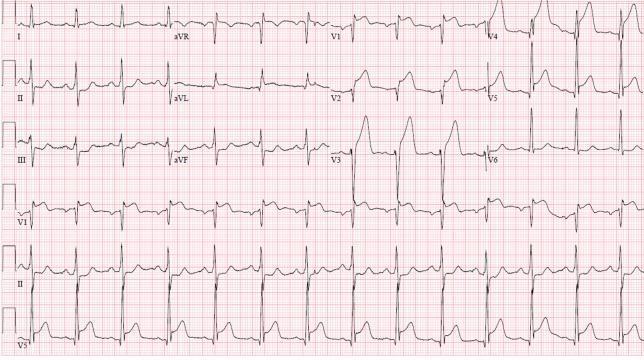
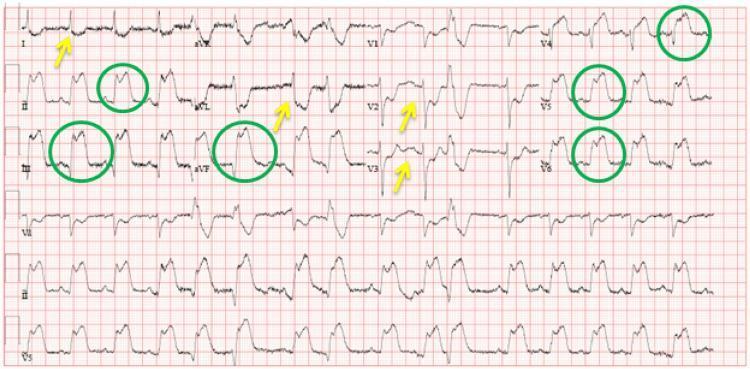
1. 🫀 ST-Elevation Myocardial Infarction (STEMI)
ECG Changes
| Phase | Changes |
|---|---|
| Hyperacute | Tall, peaked (hyperacute) T waves |
| Acute | Convex ("tombstone") ST elevation ≥ 1 mm in ≥ 2 contiguous leads |
| Evolving | Pathological Q waves (>40 ms wide, >25% of R-wave height), T-wave inversion |
| Old | Persistent Q waves, normalized ST segments |
Reciprocal ST depression in opposite leads (e.g., inferior STEMI → ST depression in I, aVL).
Localization:
- Anterior (V1–V4) → LAD occlusion
- Inferior (II, III, aVF) → RCA or LCx occlusion
- Lateral (I, aVL, V5–V6) → LCx occlusion
2. 🫀 Atrial Fibrillation (AF)
ECG Changes
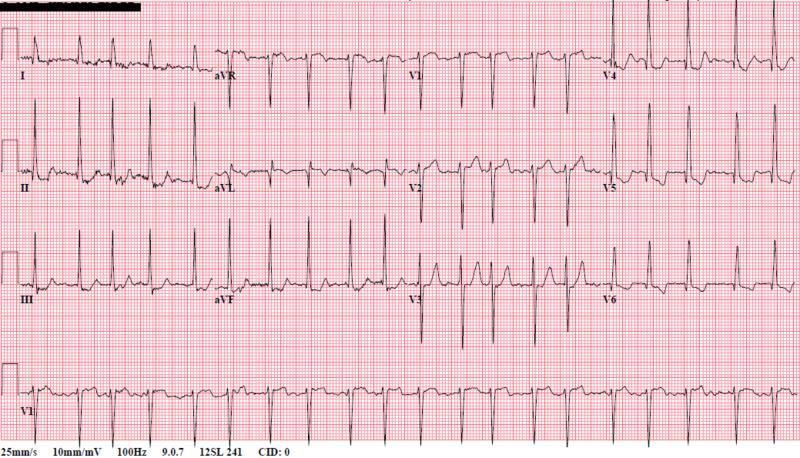
- Absent P waves — replaced by irregular fibrillatory baseline (best seen in V1)
- Irregularly irregular RR intervals — the hallmark finding
- Rapid ventricular response when uncontrolled (HR > 100 bpm)
- Narrow QRS (unless aberrant conduction or accessory pathway)
- No fixed PR interval
Key distinction from atrial flutter: AF has chaotic baseline, flutter has organized "sawtooth" pattern at ~300 bpm
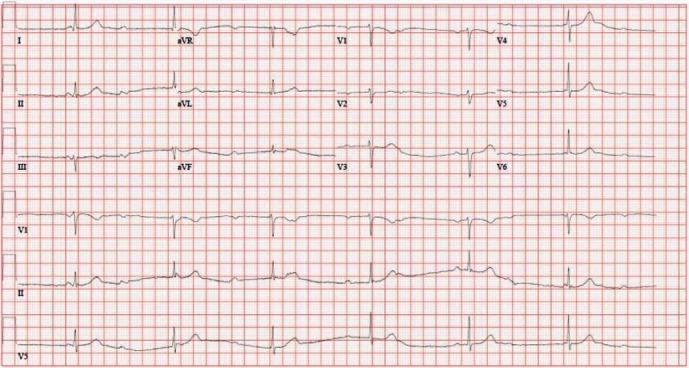
3. 🫀 Complete (Third-Degree) AV Block
ECG Changes
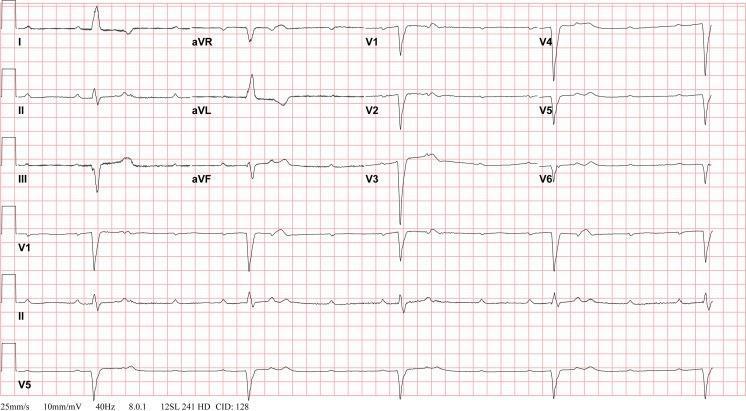
- Complete AV dissociation — P waves and QRS complexes are independent
- Regular P-P intervals; regular R-R intervals — but at different rates
- Atrial rate > Ventricular rate (atria ~60–100 bpm; ventricles ~20–40 bpm)
- Escape rhythm:
- Junctional escape → narrow QRS (~40–60 bpm)
- Ventricular escape → wide QRS (>120 ms), ~20–40 bpm
- No consistent PR interval — P waves "march through" QRS complexes
4. 🫀 Ventricular Tachycardia (VT)
ECG Changes
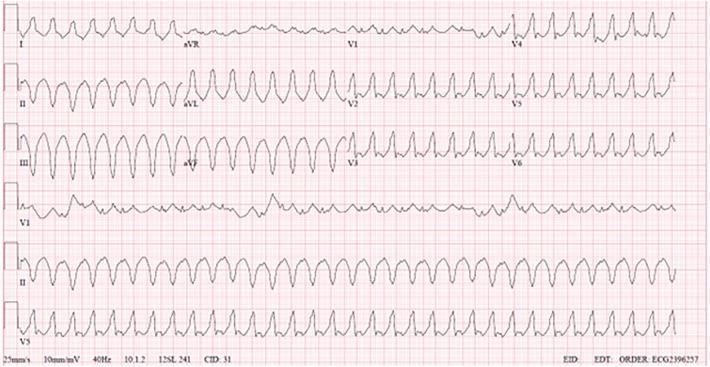
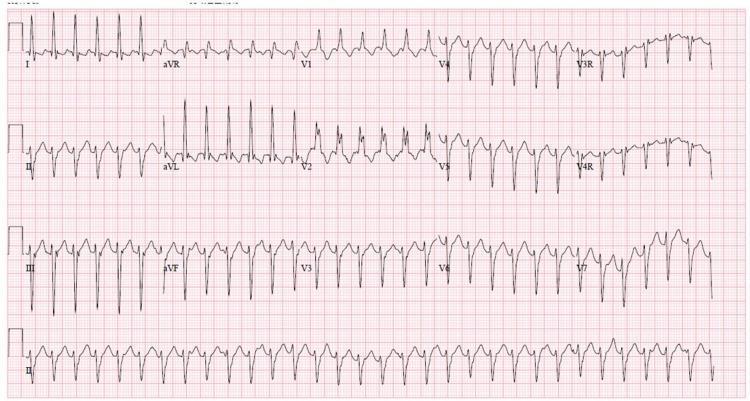
- Wide QRS tachycardia (QRS > 120 ms) at rate > 100 bpm
- Monomorphic: uniform QRS morphology beat-to-beat
- AV dissociation — P waves independent of QRS (pathognomonic when visible)
- Fusion beats and capture beats — diagnostic
- Positive or negative concordance across all precordial leads
- Axis deviation (commonly superior axis/extreme left axis)
Brugada criteria help differentiate VT from SVT with aberrancy
5. 🫀 Acute Pericarditis
ECG Changes (4 Stages)
| Stage | Timing | ECG Finding |
|---|---|---|
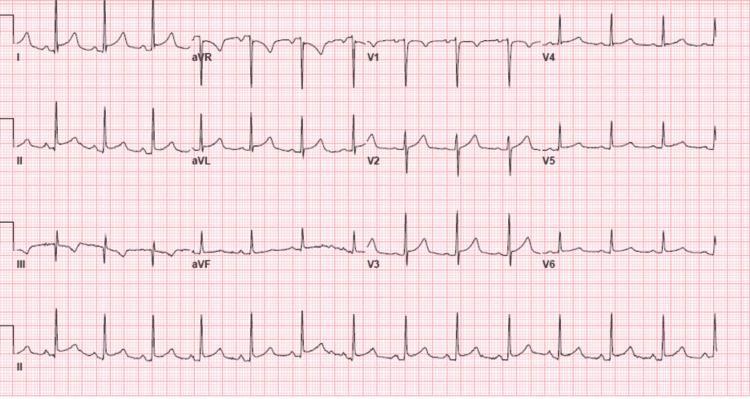
| I | Days 1–2 | Diffuse concave ("saddle-shaped") ST elevation in almost all leads; PR depression (II, V5); PR elevation in aVR |
| II | Days 3–7 | ST normalizes; T waves flatten |
| III | Week 2 | T-wave inversions (generalized) |
| IV | Weeks later | Normalization |
Key differentiator from STEMI:
- ST elevation is diffuse (not localised to one territory)
- ST is concave up (not convex/tombstone)
- PR segment depression — highly specific
- No reciprocal changes (except aVR)
- Spodick's sign — downsloping TP segment
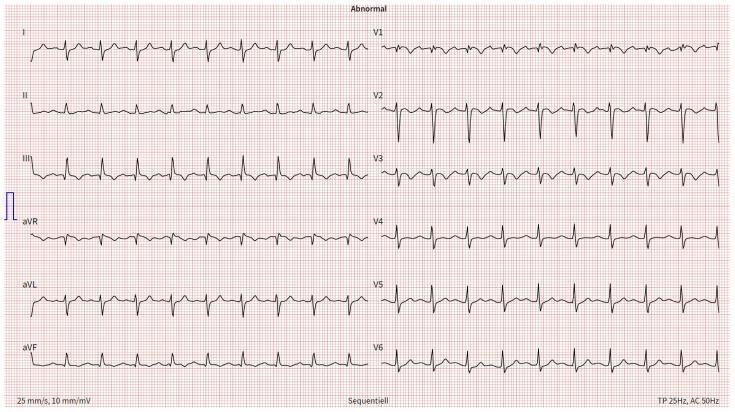
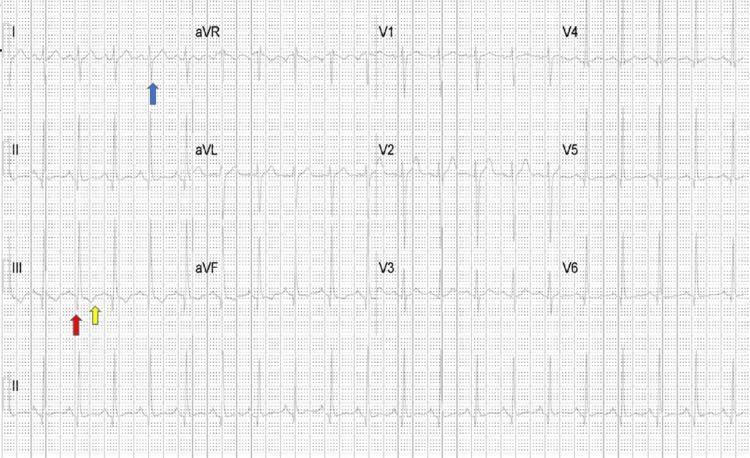
6. 🫀 Pulmonary Embolism (PE)
ECG Changes
Most common finding is sinus tachycardia (seen in >40%). Classic but less common:
| Finding | Description |
|---|---|
| S1Q3T3 | Deep S wave in I, Q wave in III, T-wave inversion in III |
| Right heart strain | T-wave inversions in V1–V4 |
| Incomplete/complete RBBB | rSR' in V1 |
| Right axis deviation | QRS axis >+90° |
| P pulmonale | Tall peaked P waves in II (right atrial enlargement) |
| Sinus tachycardia | Most common (>100 bpm) |
7. 🫀 Wolff-Parkinson-White (WPW) Syndrome
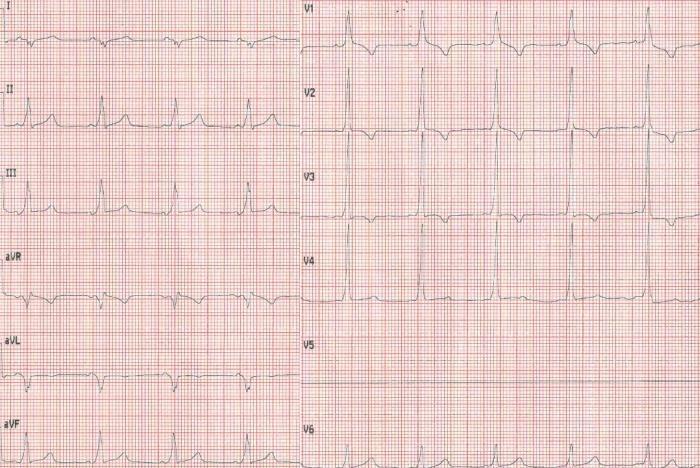
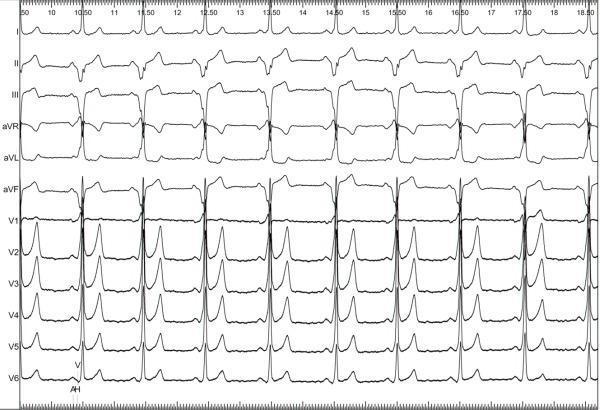
ECG Changes (Classic Triad)
- Short PR interval (< 120 ms) — due to accessory pathway bypassing AV node
- Delta wave — slurred initial upstroke of QRS (ventricular pre-excitation)
- Wide QRS complex (> 120 ms) — secondary to delta wave
- Secondary ST-T changes — discordant, not ischemic
Pathway localization by delta wave polarity:
- Positive delta in V1 → left-sided pathway
- Negative delta in inferior leads → posteroseptal pathway
- "Pseudo-infarction" Q waves can occur (mimics MI)
Risk: WPW + AF → very rapid ventricular response (antidromic conduction) → VF
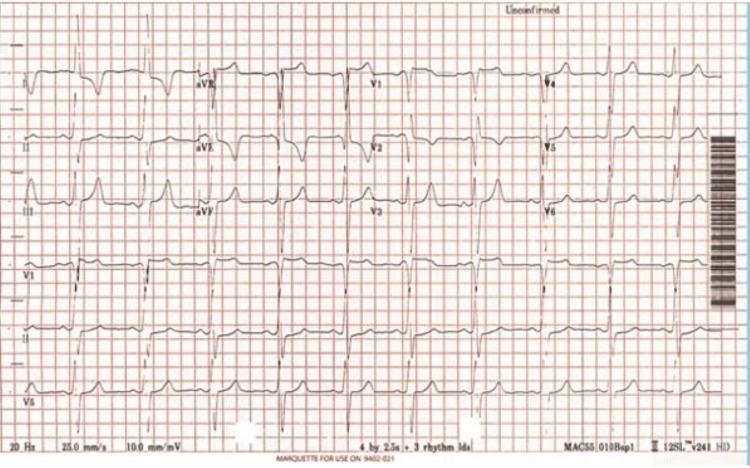
8. 🫀 Left Ventricular Hypertrophy (LVH)
ECG Changes
Voltage criteria (increased QRS amplitude):
- Sokolow-Lyon: S in V1 + R in V5 or V6 > 35 mm
- Cornell: R in aVL + S in V3 > 28 mm (men) / > 20 mm (women)
- R in aVL > 11–12 mm
Strain pattern (repolarization abnormality):
- ST depression and T-wave inversion in lateral leads (I, aVL, V5–V6)
- Downsloping ST segment
Additional findings:
- Left axis deviation
- Prolonged QRS (borderline wide)
- Left atrial enlargement (notched P waves, prolonged P duration)
9. 🫀 Hypertrophic Cardiomyopathy (HCM)
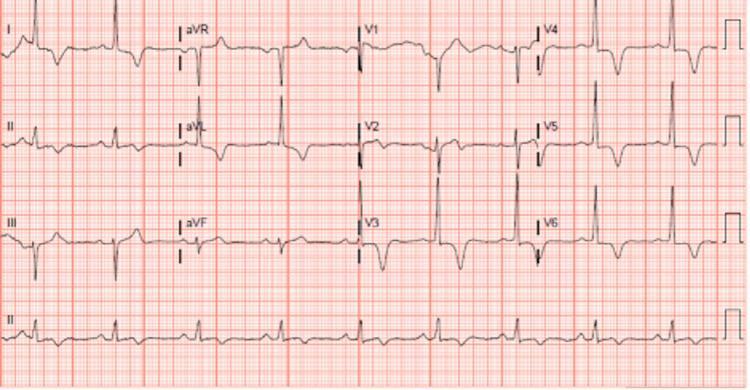
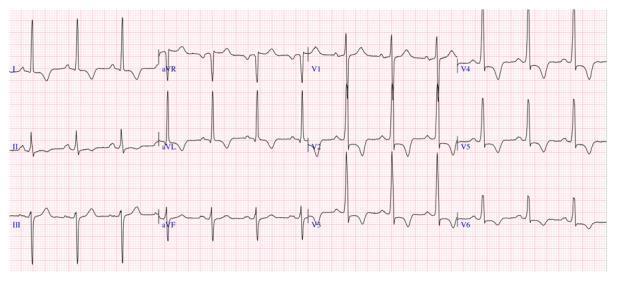
ECG Changes
- LVH voltage criteria (high QRS voltages, especially precordial)
- Deep narrow Q waves (septal hypertrophy) in I, aVL, V4–V6 — "dagger Q waves"
- Giant T-wave inversions in precordial leads — especially prominent in apical HCM (Yamaguchi syndrome) reaching >10 mm depth in V3–V4
- ST-segment depression (strain pattern)
- Left axis deviation
- Atrial fibrillation or flutter (common complication)
- Prolonged QTc may occur
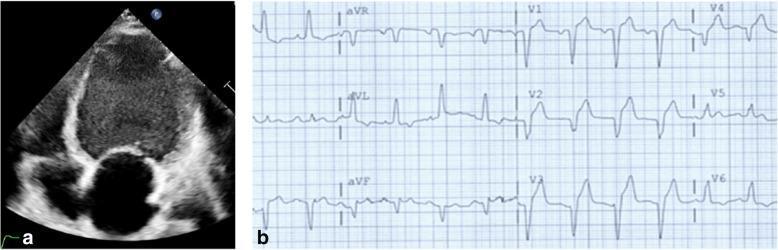
10. 🫀 Dilated Cardiomyopathy (DCM)
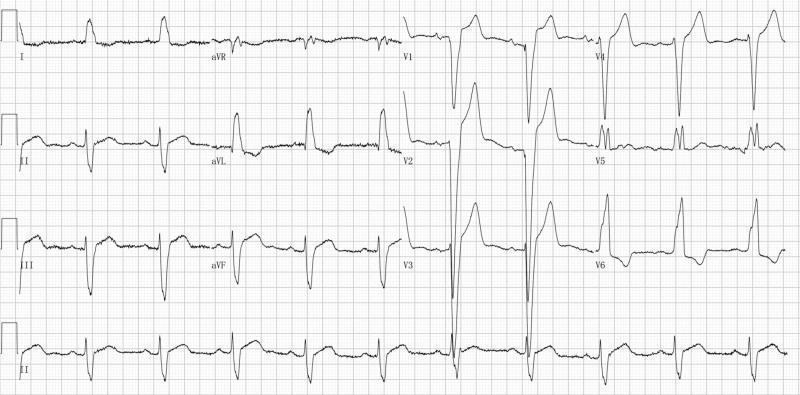
ECG Changes
- Left Bundle Branch Block (LBBB) — most characteristic finding
- Wide QRS (> 120 ms)
- Broad, notched "M-shaped" R waves in I, aVL, V5–V6
- Deep QS in V1–V3
- Discordant ST-T changes
- Poor R-wave progression in precordial leads (V1–V4)
- Left axis deviation
- Sinus tachycardia with compensatory tachycardia in heart failure
- Atrial fibrillation (common)
- Low QRS voltage (if diffuse myocardial involvement)
- Prolonged QRS predicts worse prognosis; indication for CRT if LBBB + EF ≤ 35%
Quick Reference Summary Table
| Disease | Rate | Rhythm | P Wave | PR | QRS | ST-T Changes |
|---|---|---|---|---|---|---|
| STEMI | Variable | Sinus | Normal | Normal | Normal → Q waves | ST elevation (convex) + reciprocal depression |
| Atrial Fibrillation | Variable | Irregular | Absent (fibrillatory) | None | Narrow | Non-specific |
| 3° AV Block | Atria fast, ventricles slow | Dissociated | Present, regular | No relationship | Wide (ventricular) or narrow (junctional) | Secondary changes |
| Ventricular Tachycardia | >100 | Regular | Dissociated | AV dissociation | Wide (>120 ms) | Discordant |
| Pericarditis | Normal/fast | Sinus | Normal | PR depression | Normal | Diffuse concave ST elevation |
| Pulmonary Embolism | Fast | Sinus tach | P pulmonale | Normal | Normal/RBBB | S1Q3T3, T inv V1–V4 |
| WPW Syndrome | Variable | Sinus/SVT | Normal | Short (<120 ms) | Wide + delta wave | Secondary |
| LVH | Normal | Sinus | Left atrial pattern | Normal | High voltage | Lateral strain |
| HCM | Normal | Sinus/AF | Enlarged | Normal | High voltage, Q waves | Giant T inversions |
| DCM | Fast/variable | Sinus/AF | Enlarged | Normal | LBBB, wide | Discordant ST-T |
Clinical Note: ECG changes must always be interpreted in clinical context. A single ECG finding rarely diagnoses disease alone — always correlate with symptoms, history, and other investigations (echo, troponins, CT-PA, etc.).
This is a shared conversation. Sign in to Orris to start your own chat.