
Paracetamol levocetrizine montelukast and sildenafil if any adverse drug reaction
Reading File
Now let me search for ADR information on all four drugs in parallel.
Finding Sources
Finding Sources
Finding Sources
Finding Sources
Now let me read the relevant sections for detailed ADR content:
Reading File
Reading File
Reading File
Reading File
Let me get the paracetamol ADR section and the levocetirizine table details:
Finding Sources
Finding Sources
I now have sufficient data to give a thorough, well-sourced answer. Here is the complete breakdown of adverse drug reactions (ADRs) for all four drugs:
Adverse Drug Reactions: Paracetamol, Levocetirizine, Montelukast, and Sildenafil
1. Paracetamol (Acetaminophen)
At therapeutic doses, paracetamol is remarkably well tolerated with very few ADRs. Most problems arise with overdose or chronic excessive use.
| System | ADR |
|---|---|
| Hepatic | Hepatotoxicity / acute liver failure (most serious ADR) - caused by toxic metabolite NAPQI accumulating when glutathione stores are depleted |
| Renal | Acute tubular necrosis (in overdose) |
| Hematologic | Rare: thrombocytopenia, leukopenia |
| Skin | Rare: rash, urticaria |
| Hypersensitivity | Rare anaphylaxis |
Key points:
- Hepatotoxicity is the #1 concern, especially with overdose, chronic alcohol use, or fasting (which depletes glutathione). Treatment of overdose is with N-acetylcysteine (NAC).
- Even at recommended doses, prolonged use has been linked to hepatotoxicity in susceptible individuals - the so-called "staggered overdose" pattern.
- It does NOT carry anti-inflammatory activity, so COX-related GI ulceration seen with NSAIDs is largely absent.
- Firestein & Kelley's Textbook of Rheumatology; Goodman & Gilman's The Pharmacological Basis of Therapeutics
2. Levocetirizine (Second-Generation H1 Antihistamine)
Levocetirizine is the active R-enantiomer of cetirizine, and belongs to the second-generation antihistamines, which are much better tolerated than first-generation agents.
| System | ADR |
|---|---|
| CNS | Mild sedation (less than 1st-generation), fatigue, somnolence |
| CNS | Avoid in children <2 years and with sedatives/alcohol (potentiated sedation) |
| GI | Dry mouth, nausea (mild) |
| Anticholinergic | Minimal compared to 1st-generation; use caution in elderly |
| Driving/machinery | Caution required - residual sedation possible |
Key points:
- Second-generation agents like levocetirizine are peripherally selective for H1 receptors and cross the blood-brain barrier poorly, which minimizes sedation relative to diphenhydramine or chlorpheniramine.
- No significant anticholinergic effects (no urinary retention, blurred vision, constipation) at therapeutic doses.
- Avoid combining with other CNS depressants or alcohol.
- Katzung's Basic and Clinical Pharmacology, 16th Ed; Lippincott Illustrated Reviews: Pharmacology; Goodman & Gilman's
3. Montelukast (Leukotriene Receptor Antagonist)
Montelukast blocks the cysteinyl leukotriene-1 (CysLT1) receptor and is used in asthma and allergic rhinitis. It carries a Black Box Warning from the FDA.
| System | ADR |
|---|---|
| Neuropsychiatric ⚠️ BLACK BOX WARNING | Agitation, aggressive behavior, anxiety, depression, sleep disturbances (insomnia, abnormal dreams), hallucinations, suicidal ideation/behavior |
| Hepatic | Elevated liver enzymes (less common than with zileuton, but possible) |
| Immunologic (rare) | Eosinophilic Granulomatosis with Polyangiitis (EGPA / Churg-Strauss syndrome): eosinophilia, vasculitis, rash, neuropathy, worsening respiratory symptoms |
| GI | Headache, dyspepsia, abdominal pain |
Key points:
- The neuropsychiatric boxed warning is especially important in children and adolescents. Prescribers must counsel patients and caregivers.
- EGPA is rare and may emerge when oral corticosteroids are being tapered (unmasking of underlying eosinophilic disease).
- Montelukast should NOT be used to abort an acute asthma attack.
- Lippincott Illustrated Reviews: Pharmacology; Katzung's Basic and Clinical Pharmacology, 16th Ed; Murray & Nadel's Textbook of Respiratory Medicine
4. Sildenafil (PDE5 Inhibitor)
Sildenafil inhibits phosphodiesterase type 5 (PDE5), elevating cGMP in vascular smooth muscle. Used for erectile dysfunction (ED) and pulmonary arterial hypertension (PAH).
| System | ADR |
|---|---|
| Cardiovascular | Hypotension (especially with nitrates - absolute contraindication), flushing, palpitations |
| CNS | Headache (most common), dizziness |
| GI | Dyspepsia, nausea, epistaxis |
| Ophthalmologic | Color vision disturbance (blue-green tinges), blurred vision; rare: non-arteritic ischemic optic neuropathy (NAION) - permanent vision loss |
| Auditory | Rare: sudden sensorineural hearing loss |
| Genitourinary | Priapism (prolonged erection >4 hours - urological emergency) |
| Pediatric | NOT recommended for chronic use in children - associated with increased mortality |
Critical Drug Interaction:
- Nitrates (any form) + Sildenafil = ABSOLUTE CONTRAINDICATION - can cause severe, potentially fatal hypotension. This is the most important interaction to remember.
- Alpha-adrenergic blockers (e.g., tamsulosin) can also potentiate hypotension.
- CYP3A4 inhibitors (protease inhibitors, erythromycin, cimetidine) increase sildenafil levels and toxicity.
- Goodman & Gilman's The Pharmacological Basis of Therapeutics; Murray & Nadel's Textbook of Respiratory Medicine; Lippincott Illustrated Reviews: Pharmacology
Quick Comparison Summary
| Drug | Most Important ADR | Critical Interaction |
|---|---|---|
| Paracetamol | Hepatotoxicity (overdose) | Alcohol, warfarin (at high doses) |
| Levocetirizine | Sedation (mild) | Alcohol, CNS depressants |
| Montelukast | Neuropsychiatric effects (boxed warning), EGPA | Minimal major interactions |
| Sildenafil | Severe hypotension, vision/hearing loss, priapism | Nitrates (absolutely contraindicated) |
Note: If these four drugs are being prescribed together, the combination itself does not carry a well-known direct pharmacokinetic interaction between them. However, each drug carries its own individual risk profile as outlined above, and the clinical scenario (e.g., a patient with cardiovascular disease on nitrates receiving sildenafil) must be carefully assessed.
Paracetamol levocetrizine montelukast and sildenafil if combined any problem?
Based on my existing knowledge, this combination doesn't have a single catastrophic direct interaction, but there are several overlapping concerns worth examining carefully - particularly around hepatic metabolism (CYP450), CNS sedation additive effects, and cardiovascular effects. Let me search the textbooks for the specific interaction data.
Searching sources...
Finding Sources
Finding Sources
Finding Sources
Finding Sources
Finding Sources
Finding Sources
Finding Sources
Finding Sources
Finding Sources
Searching the Web
paracetamol levocetirizine montelukast sildenafil drug interaction combined
Now I have enough data to give a thorough, well-structured answer on the drug-drug interactions when all four are combined.
Drug Interactions When Paracetamol + Levocetirizine + Montelukast + Sildenafil Are Combined
The short answer: this combination is generally used in clinical practice and does not carry a single catastrophic interaction between these four drugs themselves - but there are several important concerns you need to know, especially around shared hepatic load, additive CNS sedation, and sildenafil's potentiation of hypotension if any cardiovascular drugs are also in the picture.
Interaction Map: All Four Together
| Drug Pair | Interaction? | Severity | Mechanism |
|---|---|---|---|
| Paracetamol + Levocetirizine | Minor | Low | Mild additive CNS sedation (alcohol context); no PK interaction |
| Paracetamol + Montelukast | Minor | Low | Possible additive hepatic stress at high doses; no direct PK interaction |
| Paracetamol + Sildenafil | ⚠️ Moderate | Moderate | Sildenafil may increase the hepatotoxic activity of acetaminophen (Level 1 evidence, Drugs.com/PrescriberPoint) |
| Levocetirizine + Montelukast | Minor | Low | Mild additive sedation; clinically this combination is often co-prescribed and studied |
| Levocetirizine + Sildenafil | Minor | Low | Additive sedation/dizziness possible |
| Montelukast + Sildenafil | Minor | Low | Both metabolized via CYP3A4/2C9 - mild competition possible |
The Most Important Concern: Sildenafil + Paracetamol (Hepatotoxicity Risk)
This is the most clinically significant pairwise interaction in this combination:
- Sildenafil may potentiate the hepatotoxic activity of acetaminophen - documented at Level 1 evidence.
- Both drugs undergo significant hepatic metabolism:
- Paracetamol: primarily glucuronidation/sulfation, with ~5-10% via CYP2E1/CYP3A4 forming the toxic metabolite NAPQI.
- Sildenafil: metabolized by CYP3A4 (major) and CYP2C9 (minor).
- Competition at CYP3A4 could increase NAPQI formation or reduce paracetamol clearance, tipping the balance toward hepatotoxicity.
- Risk is greatest at high or prolonged doses of paracetamol, or in patients with pre-existing liver disease, alcohol use, or fasting state.
Practical advice: Keep paracetamol at the lowest effective dose (max 2g/day in at-risk patients, not the standard 4g/day) when sildenafil is co-prescribed. Monitor liver function with prolonged use.
Shared Hepatic Load: All Four Together
All four drugs undergo hepatic metabolism:
| Drug | Primary Hepatic Pathway |
|---|---|
| Paracetamol | Glucuronidation, sulfation, CYP2E1/CYP3A4 (toxic pathway) |
| Levocetirizine | Minimal hepatic metabolism (mostly renal excretion - relatively safe) |
| Montelukast | CYP3A4, CYP2C8, CYP2C9 - biliary excretion |
| Sildenafil | CYP3A4 (major), CYP2C9 (minor) |
- Montelukast + Sildenafil share CYP3A4/2C9 metabolism - combined use could slightly raise plasma levels of both. Not usually clinically significant at standard doses, but in hepatic impairment, levels may accumulate.
- Total hepatic burden from all four simultaneously is a concern in patients with liver disease. Avoid this combination in moderate-to-severe hepatic impairment.
Additive CNS Sedation: Levocetirizine + Montelukast + Sildenafil
- Levocetirizine causes mild sedation even as a second-generation antihistamine.
- Montelukast can cause dizziness, somnolence, and in some patients - significant neuropsychiatric effects.
- Sildenafil causes dizziness (due to vasodilation and drop in cerebral perfusion pressure).
- Together, these three can produce additive CNS effects - drowsiness, dizziness, impaired concentration, and psychomotor slowing.
Practical advice: Warn patients not to drive or operate machinery, especially after first doses. Avoid alcohol entirely with this combination - it potentiates all three CNS/sedation effects.
Blood Pressure / Hemodynamic Risk
- Sildenafil causes systemic vasodilation and blood pressure lowering.
- If the patient is on any of the following (even occasionally), the combination becomes dangerous:
- Nitrates (nitroglycerin, isosorbide) - absolutely contraindicated with sildenafil; fatal hypotension risk.
- Alpha-blockers (tamsulosin, doxazosin) - additive hypotension.
- Antihypertensives - potentiated BP lowering.
- Paracetamol, levocetirizine, and montelukast themselves do not meaningfully affect blood pressure, so they don't add to sildenafil's hemodynamic effects directly.
Summary: Is This Combination Safe?
| Concern | Verdict |
|---|---|
| Direct major interaction between the four | ❌ None at standard doses |
| Sildenafil + Paracetamol hepatotoxicity risk | ⚠️ Moderate - monitor liver function, limit paracetamol dose |
| Additive CNS sedation/dizziness | ⚠️ Mild - counsel patient, avoid alcohol and driving |
| Shared CYP3A4 load (montelukast + sildenafil) | ⚠️ Minor - monitor in hepatic impairment |
| Combined hepatic stress in liver disease | ⚠️ Use with caution - reduce doses or avoid |
| Cardiovascular risk (if nitrates also used) | 🚨 Sildenafil + nitrates = ABSOLUTE contraindication |
Bottom line: At standard therapeutic doses in a healthy individual, this four-drug combination is clinically manageable, but is not free of risk. The sildenafil-paracetamol hepatotoxicity interaction is the most important concern to monitor. Always review the full medication list for nitrates or antihypertensives before prescribing sildenafil alongside the others.
- Goodman & Gilman's The Pharmacological Basis of Therapeutics; Lippincott Illustrated Reviews: Pharmacology; Katzung's Basic and Clinical Pharmacology 16th Ed; PrescriberPoint Sildenafil Interactions
What are the signs and symptoms of paracetamol-sildenafil hepatotoxicity to watch for?
Hepatotoxicity from paracetamol follows a well-known 4-stage clinical progression. Let me pull the detailed textbook content on this.
Searching sources...
Finding Sources
Finding Sources
Finding Sources
Reading File
Reading File
Reading File
Excellent - rich data from three authoritative textbooks. Let me fetch the acetaminophen metabolism diagram and the liver necrosis image as they will add strong visual clarity.
Loading Image
Loading Image
Finding Sources
I now have everything needed for a comprehensive, image-supported answer.
Signs & Symptoms of Paracetamol-Sildenafil Hepatotoxicity
Why This Combination Increases Hepatotoxic Risk
Before covering the clinical features, it's important to understand the mechanism of the interaction:
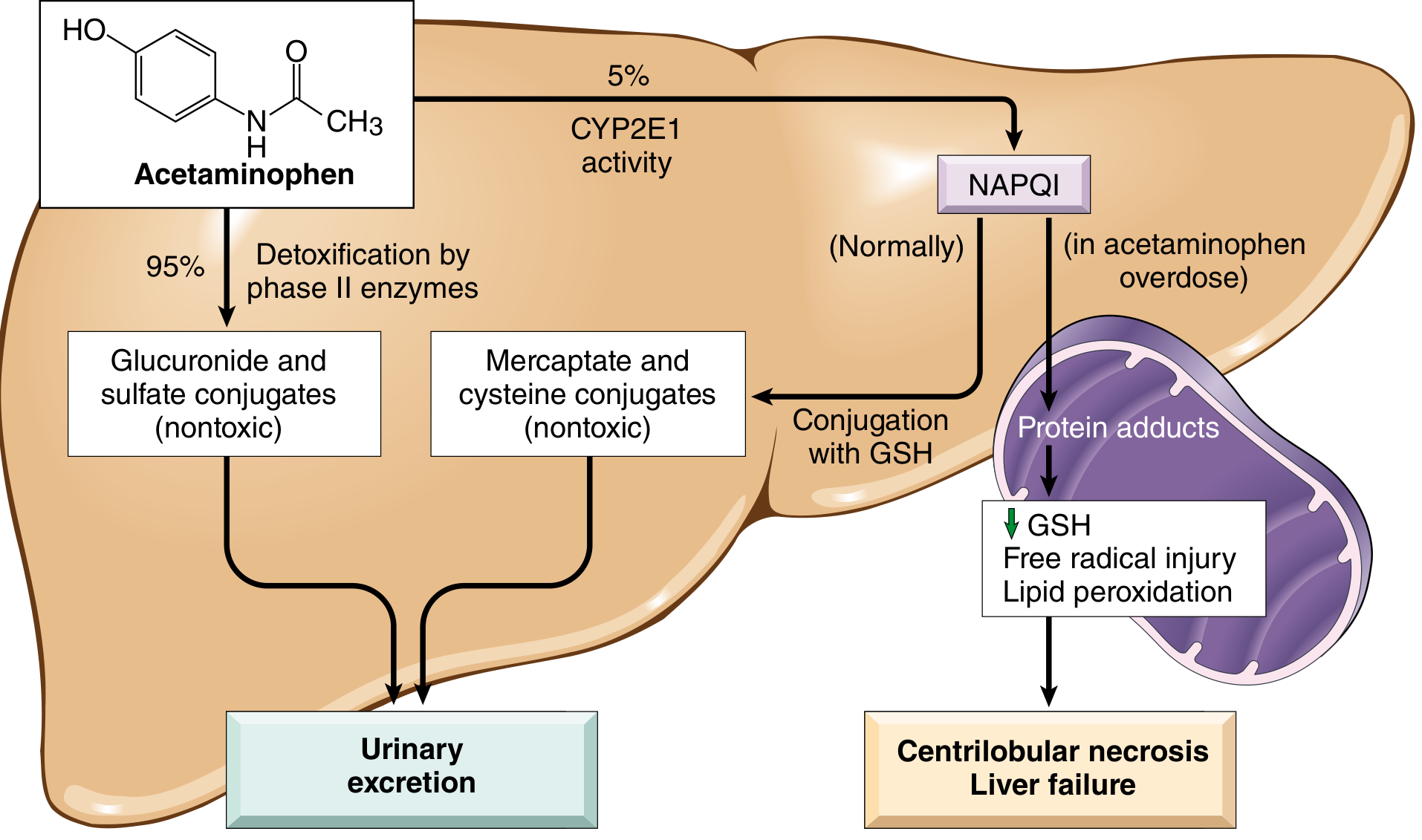
- 95% of paracetamol is safely detoxified via glucuronidation/sulfation.
- The remaining ~5% is converted by CYP2E1/CYP3A4 into NAPQI - a highly reactive, toxic metabolite.
- NAPQI is normally quenched by glutathione (GSH).
- Sildenafil competes at CYP3A4, potentially shifting more paracetamol down the toxic NAPQI pathway AND reducing GSH availability, leading to centrilobular hepatocyte necrosis.
The 4 Stages of Paracetamol Hepatotoxicity
Stage 1: 0-24 Hours - Early Symptoms (Often Subtle or Absent)
| Symptom | Detail |
|---|---|
| Nausea & vomiting | May be the only early signs; easily mistaken for a viral illness |
| Anorexia | Loss of appetite |
| Malaise | General sense of feeling unwell |
| Pallor, diaphoresis | In high-dose exposure |
| Liver injury NOT yet detectable | LFTs often still normal; do NOT wait for abnormal labs |
⚠️ Critical point: The patient may appear well or mildly unwell. This "silent window" is dangerous - it creates false reassurance. If hepatotoxicity is suspected, act immediately (NAC treatment is most effective within 8-12 hours).
Stage 2: 24-72 Hours - Hepatocellular Injury Developing
| Symptom/Sign | Detail |
|---|---|
| Right upper quadrant (RUQ) pain | Hepatic pain - often pronounced, a key warning sign |
| Tender, enlarged liver | Hepatomegaly due to hepatocyte swelling and edema |
| Nausea, vomiting worsen | Repeated vomiting is a red flag |
| Rising ALT/AST | Serum ALT begins climbing; can reach 2,000-10,000 U/L in severe cases |
| Fatigue, malaise intensify | |
| Early jaundice | Yellowing of skin/sclera as bilirubin rises |
Stage 3: 72-96 Hours - Peak Hepatotoxicity (Most Dangerous)
This is the critical window when acute liver failure (ALF) can set in:
| Symptom/Sign | Detail |
|---|---|
| Jaundice | Deep yellowing of skin and eyes (scleral icterus) |
| Coagulopathy | Easy bruising, prolonged bleeding, elevated PT/INR - reflects loss of clotting factor synthesis |
| Hypoglycemia | Liver can no longer maintain glucose homeostasis |
| Hepatic encephalopathy | Confusion, disorientation, personality change; progresses to stupor and coma |
| Asterixis ("liver flap") | Non-rhythmic rapid extension-flexion of the wrists when arms held outstretched - a characteristic sign of encephalopathy |
| Dark urine | Bilirubinuria |
| Pale/clay-colored stools | Obstructed bile flow |
| Renal failure | Acute tubular necrosis OR hepatorenal syndrome - oliguria, rising creatinine |
| Falling liver size | Liver shrinks as massive necrosis proceeds - a grave sign |
| Falling transaminases + worsening jaundice/coagulopathy | Paradoxically falling ALT/AST in this setting is NOT improvement - it means most hepatocytes are already dead |
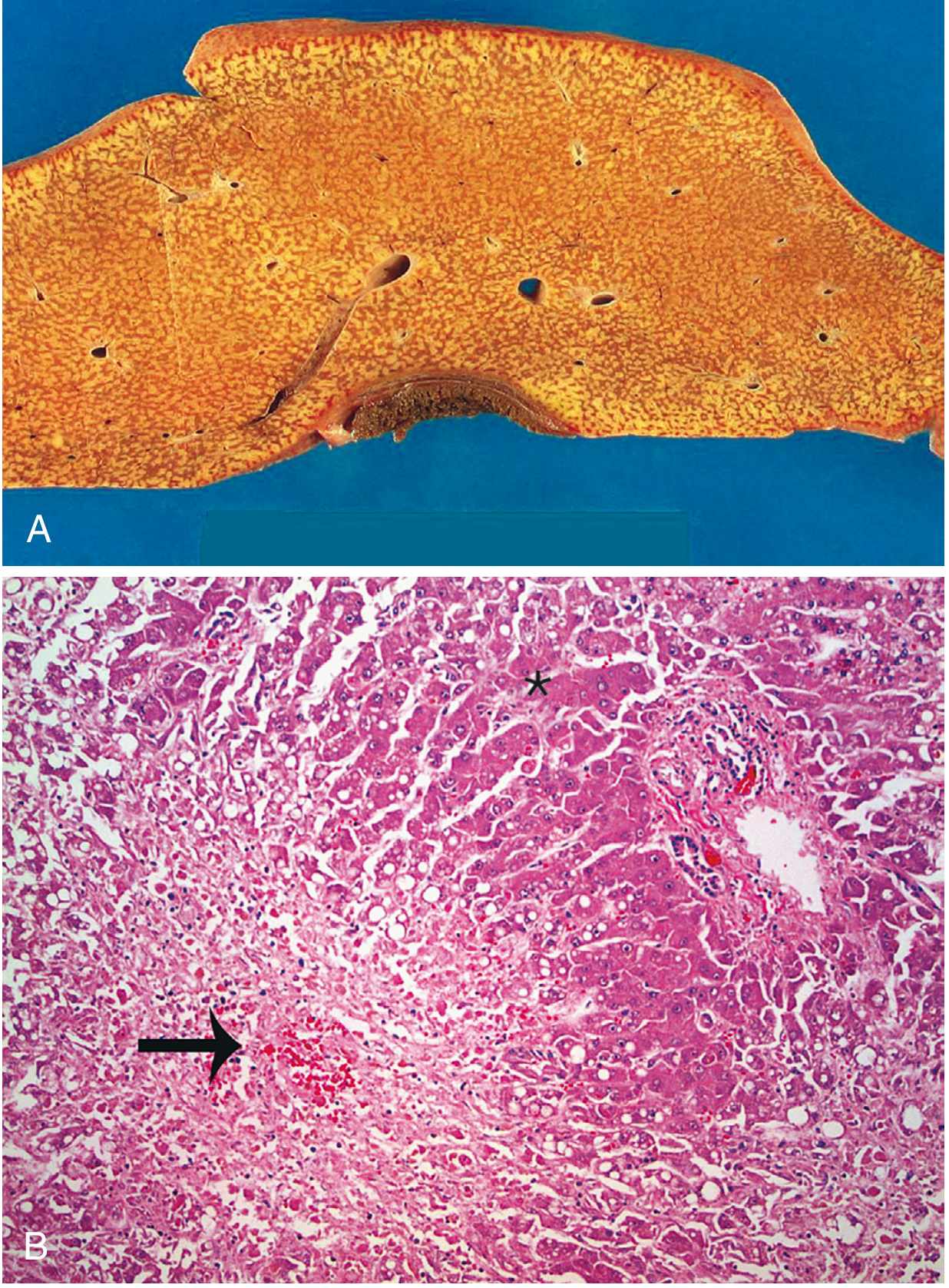
Stage 4: Day 4-18 - Recovery or Death
- With mild-moderate injury: gradual recovery, LFTs normalize, inflammation resolves without fibrosis.
- With severe injury: multiorgan failure - cerebral edema, sepsis, cardiovascular collapse.
- Death occurs between Day 4 and 18 after the toxic insult.
- Survivors with severe disease may require liver transplantation.
Key Lab Red Flags to Monitor
| Lab Test | What to Watch For |
|---|---|
| ALT / AST | Levels >2,000 U/L indicate significant hepatocellular damage |
| PT / INR | Prolonged PT = impaired clotting factor synthesis - a severity marker |
| Bilirubin (total) | Rising = active liver damage / cholestasis |
| Serum glucose | Hypoglycemia = hepatic gluconeogenesis failing |
| Creatinine / Urea | Rising = renal involvement (ATN or hepatorenal syndrome) |
| Ammonia | Elevated = hepatic encephalopathy risk |
| pH / lactate (arterial) | Acidosis (pH <7.30) = poor prognostic sign |
| Paracetamol blood level | Use Rumack-Matthew nomogram after 4 hours of ingestion to assess risk |
Poor Prognostic Indicators ("King's College Criteria" for ALF)
- Grade 4 hepatic encephalopathy (coma)
- Arterial pH < 7.30
- Severe, sustained coagulopathy (PT >100 seconds / INR >6.5)
- Renal failure (creatinine >300 µmol/L)
- Falling ALT with worsening PT/bilirubin - indicates massive necrosis with few viable hepatocytes remaining
When to Seek Emergency Help Immediately
Seek emergency care NOW if any of the following appear in a patient on paracetamol + sildenafil:
- Jaundice (yellow eyes or skin)
- Confusion, drowsiness, or personality changes
- Wrist flap (asterixis)
- Right upper quadrant pain or tender abdomen
- Dark cola-colored urine
- Uncontrolled or unusual bleeding
- Persistent vomiting
- Low blood glucose symptoms (sweating, tremor, confusion)
Treatment window: N-acetylcysteine (NAC) is effective if given within 8-12 hours of ingestion. After 24 hours, treatment is still given but less effective. Never delay for labs if clinical suspicion is high.
- Robbins Cotran & Kumar Pathologic Basis of Disease; Sleisenger and Fordtran's Gastrointestinal and Liver Disease; Goodman & Gilman's The Pharmacological Basis of Therapeutics
Can 500mg paracetamol and 50mg sildenafil cause hepatotoxicity
At standard single doses, this combination is very unlikely to cause hepatotoxicity in a healthy person. Let me verify this with the textbooks and current evidence.
Verifying details...
Finding Sources
Finding Sources
Searching PubMed
sildenafil acetaminophen hepatotoxicity interaction
Finding Sources
Searching PubMed
sildenafil acetaminophen liver toxicity
Searching the Web
500mg paracetamol 50mg sildenafil hepatotoxicity risk standard dose safe
Reading Article
PMID: 23425627
Reading Web Page
https://www.europeanreview.org/wp/wp-content/uploads/17-22-S…
This is a very important and nuanced question. Now I have the full picture - including a fascinating PubMed study that actually shows the opposite of what might be feared. Here is the complete, evidence-based answer:
Can 500mg Paracetamol + 50mg Sildenafil Cause Hepatotoxicity?
Direct Answer: No - at these standard doses in a healthy person, hepatotoxicity is extremely unlikely.
However, the complete picture is more nuanced than a simple yes/no.
Understanding the Doses in Question
| Drug | Your Dose | Standard Therapeutic Dose | Maximum Daily Dose |
|---|---|---|---|
| Paracetamol | 500 mg | 500 mg - 1g per dose | 4g/day (healthy adult) |
| Sildenafil | 50 mg | 25-100mg (ED); 20mg TDS (PAH) | 100mg/day (ED) |
- 500mg paracetamol is a single standard dose - at the lower end of the therapeutic range.
- The toxic threshold for paracetamol in a healthy adult is approximately 15-25g - that is 30-50 times a single 500mg tablet.
- The safety window between a therapeutic dose and a toxic dose is described in Robbins Pathologic Basis of Disease as "large, and the drug is ordinarily very safe."
- 50mg sildenafil is a standard single dose for erectile dysfunction.
The Surprising Science: Sildenafil May Actually PROTECT Against Paracetamol Toxicity
This is counterintuitive but backed by direct published research. A 2013 rat study (PMID: 23425627) specifically investigated this exact combination:
- Rats were given paracetamol at 250 mg/kg (a dose designed to cause liver toxicity in rats) alongside sildenafil (10 mg/kg).
- Result: Sildenafil reduced paracetamol-induced hepatotoxicity:
- AST reduced by 49.6%
- Lipid peroxidation reduced by 30.7%
- Glutathione (GSH) levels increased
- Centrilobular necrosis was attenuated
- The proposed mechanism: sildenafil, by inhibiting PDE-5 and raising cGMP levels, may have a hepatoprotective effect through the NO-cGMP signaling pathway.
Important caveat: This was an animal study using artificially high paracetamol doses to deliberately induce toxicity. It does NOT mean you can take more paracetamol just because sildenafil is present. But it strongly argues that at standard therapeutic doses, sildenafil does not make paracetamol more dangerous - and may even be mildly protective.
What About Sildenafil's Own Hepatotoxicity?
A literature review in European Review found:
- Sildenafil-associated hepatotoxicity is a "rare but not impossible event."
- A case was reported with 50mg sildenafil (Viagra) causing acute hepatitis in a 49-year-old man - however, this was sildenafil alone, not in combination with paracetamol.
- In those rare cases, liver enzymes normalized within days to weeks after stopping sildenafil.
- The mechanism in these rare cases appeared to be either immune-allergic or ischemic - not metabolic/NAPQI-related.
- Most cases occurred in people with other risk factors (cardiac disease, diabetes, concurrent medications).
When Could This Combination Become a Problem?
Risk elevates significantly in specific circumstances:
| Risk Factor | Why it Matters |
|---|---|
| Repeated daily use of both | Accumulated hepatic load over time, not a single dose |
| High doses of paracetamol (>2-3g/day) | Saturates safe pathways, forces more through toxic NAPQI route |
| Chronic alcohol use | CYP2E1 is induced, generating more NAPQI; GSH is depleted |
| Fasting / malnutrition | Depletes glutathione stores |
| Pre-existing liver disease | Reduced hepatic reserve |
| Low body weight (<50 kg) | Standard doses become relatively higher; max paracetamol = 3g/day |
| Elderly patients | Reduced hepatic metabolism and GSH stores |
| Other hepatotoxic drugs | Montelukast (mild), statins, antifungals, etc. |
| Counterfeit sildenafil | Herbal or unregulated products may contain unknown hepatotoxins |
Practical Bottom Line
| Scenario | Risk | Recommendation |
|---|---|---|
| Single 500mg paracetamol + single 50mg sildenafil in healthy adult | 🟢 Negligible | Safe to use as directed |
| Occasional combined use (e.g., twice a week) | 🟢 Very low | No special precautions needed |
| Daily long-term use of both | 🟡 Low-moderate | Monitor LFTs periodically; keep paracetamol ≤2g/day |
| Any of the risk factors above present | 🟠 Moderate | Reduce paracetamol dose; monitor liver function; consult doctor |
| Pre-existing liver disease + both drugs | 🔴 Avoid or use with strict monitoring | Specialist guidance needed |
The takeaway: A single 500mg paracetamol tablet with a single 50mg sildenafil dose is not going to cause hepatotoxicity in an otherwise healthy adult. The previous mention of "sildenafil may increase acetaminophen hepatotoxic activity" is a theoretical pharmacological flag from drug databases - it reflects a possible interaction, not a clinically proven harm at standard doses. The only published research directly studying this pair in fact showed sildenafil was protective, not harmful.
- Robbins Cotran & Kumar Pathologic Basis of Disease; Sleisenger and Fordtran's GI and Liver Disease; Ekor et al., J Basic Clin Physiol Pharmacol 2013 [PMID: 23425627]; European Review - Sildenafil Hepatotoxicity Literature Review; Queensland Health Safe Paracetamol Guidelines 2023
This is a shared conversation. Sign in to Orris to start your own chat.