
Explain me about tonilitis from ent textbook of ದಿನದ in detal
Reading File
Finding Sources
Finding Sources
Searching PubMed
"tonsillitis"[MeSH Terms]
Reading File
Reading File
Reading File
Reading File
Reading File
Searching Images
acute tonsillitis exudate on tonsils
Reading File
Reading File
Reading File
Reading File
You asked for Dhingra's ENT textbook, but it isn't in my library, so I can't quote it. The ENT books I do have are K J Lee's Essential Otolaryngology, Scott-Brown's Otorhinolaryngology and Cummings Otolaryngology. The notes below come from those three. Where I added classic teaching from my own knowledge, I've marked it.
Tonsillitis
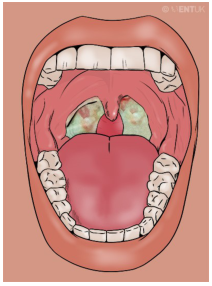
1. Definition and classification
Tonsillitis is inflammation of the palatine tonsils. It is usually classified as:
- Acute tonsillitis, which may be viral or bacterial. Some textbooks subdivide it into catarrhal, follicular, parenchymatous and membranous types (my addition, not from the books above).
- Recurrent acute tonsillitis
- Chronic tonsillitis
2. Aetiology
- Viral (the majority): adenovirus, rhinovirus, echovirus, coxsackie, RSV, influenza and parainfluenza. Epstein-Barr virus (EBV) causes infectious mononucleosis. - K J Lee's Essential Otolaryngology
- Bacterial: Group A beta-hemolytic Streptococcus (GABHS, S. pyogenes) is the most common cause. Anaerobes and other organisms can also be involved. - K J Lee's; Scott-Brown's Vol 2
- Acute tonsillitis can be a localized episode, part of an upper respiratory illness, or part of a generalized systemic infection such as infectious mononucleosis. - Scott-Brown's Vol 2
- Scott-Brown's notes there is no evidence that viral tonsillitis is more or less severe than bacterial tonsillitis. Most episodes of either kind resolve quickly without treatment.
3. Clinical features of acute tonsillitis
Symptoms: a short history of sore throat, fever and odynophagia (pain on swallowing). - Scott-Brown's Vol 2
In my own teaching notes I'd add otalgia (referred pain), malaise, headache, and a muffled voice.
Signs:
- Erythema of the tonsils and posterior pharyngeal wall, sometimes with obvious exudates.
- Tender jugulodigastric (upper deep cervical) lymph node enlargement.
Comparing the common causes (Cummings, Table 201.1):
| Viral | Infectious mononucleosis | GABHS | Diphtheria | |
|---|---|---|---|---|
| Onset | Slow | Variable | Rapid | Rapid |
| Fever | None or low-grade | High | High | High |
| Sore throat | Mild to moderate | Moderate to severe | Severe | Severe |
| Examination | Erythema, no exudate | Palatal petechiae, exudate, large tender nodes, splenomegaly, hepatomegaly | Palatal petechiae, exudate, tender nodes, scarlatiniform rash, strawberry tongue | Thick exudate and pharyngeal membrane |
| Test | None | Heterophile or EBV titers | Rapid strep test or culture | Culture on tellurite media |
| Treatment | Supportive | Supportive, steroids if airway threatened | Penicillin or amoxicillin | Antitoxin plus penicillin |
Source: Cummings Otolaryngology Head and Neck Surgery, Ch. 201.
Infectious mononucleosis (EBV):
- High fever, malaise and a grayish-white coating on the tonsils.
- Petechiae at the hard-soft palate junction, and hepatosplenomegaly.
- A rash after amoxicillin or ampicillin. - K J Lee's
4. Investigations
GABHS (K J Lee's; Cummings):
- Clinical criteria: sore throat plus one of exudate, adenopathy, a positive rapid antigen test or culture, or temperature above 38.3°C.
- Rapid antigen detection test (RADT): about 95% specific but only about 86% sensitive. If it is negative in a child or adolescent, do a throat culture.
- Throat culture: the test of choice, 90-97% sensitive and 90% specific. Results take 18-48 hours.
- ASO titres: not recommended, because they only show past infection.
- Carriers: cultures cannot tell acute infection from the carrier state. About 20% of school-age children are chronic GABHS carriers.
Infectious mononucleosis:
- The CBC shows about 50% lymphocytes, with about 10% atypical.
- Monospot is about 85% sensitive and 100% specific per K J Lee's. Scott-Brown's quotes under 50% sensitivity in children and 70-90% in adults. It is less reliable in the first 2 weeks, so repeat it weekly for up to 6 weeks if negative.
- Use EBV serology if the Monospot stays negative, and in children under 4.
5. Management of acute tonsillitis
- Supportive care: analgesia (paracetamol or NSAIDs) and hydration. Avoid aspirin. - Scott-Brown's; Cummings
- Antibiotics:
- They shorten the illness and may reduce sequelae. Scott-Brown's suggests starting them if there is no improvement within 48-72 hours, or earlier if the illness looks severe at the start. Benzylpenicillin is the drug of choice.
- Cummings advises a 10-day course of penicillin or amoxicillin for GABHS.
- For penicillin allergy, use a first-generation cephalosporin, clindamycin, clarithromycin or azithromycin.
- Penicillin fails in 7-37% of cases. Cephalosporins, clindamycin or amoxicillin-clavulanate are preferred then.
- Corticosteroids: Scott-Brown's says they add pain relief to antibiotics, especially in severe cases. Cummings says steroids are not indicated for routine GABHS pharyngitis, so the two books differ on this.
- Infectious mononucleosis:
- Management is supportive.
- Avoid ampicillin: about 90% of patients can develop a rash, and about 30% with amoxicillin.
- Give a short course of steroids if the tonsils are swollen enough to threaten the airway or swallowing.
- Rarely, airway obstruction needs a nasopharyngeal airway, intubation or tracheostomy.
- Acyclovir is only debatable, for severe cases.
6. Complications
Suppurative (local):
- Peritonsillar abscess (quinsy)
- Parapharyngeal abscess
- Retropharyngeal abscess
- Cervical lymphadenitis
- Septicaemia
- Lemierre's syndrome, a rare and potentially fatal septic thrombophlebitis of the internal jugular vein, often with metastatic abscesses. It is usually caused by Fusobacterium. Treat with antibiotics for about 6 weeks. - Scott-Brown's
Quinsy:
- Presents with severe, usually unilateral sore throat, odynophagia, trismus and lymphadenopathy.
- The preferred initial treatment is wide-bore needle aspiration plus IV high-dose penicillin or a cephalosporin. Incision and drainage is the alternative.
- Acute ("hot") tonsillectomy is unpopular because of the aspiration risk.
- Consider interval tonsillectomy if there is a history of tonsillitis or more than one quinsy on the same side. - Scott-Brown's
Retropharyngeal abscess:
- Mainly occurs in children under 5.
- Diagnose with CT. Treat with IV antibiotics, and urgent drainage under general anaesthesia if pus is collected.
Parapharyngeal abscess:
- Causes severe trismus and possibly airway compromise.
- Treat with broad-spectrum IV antibiotics and drainage. Delay risks mediastinitis.
Non-suppurative (post-streptococcal):
- Rheumatic fever: polyarthritis, carditis, Sydenham chorea and a truncal rash. It is now rare in non-endemic countries. Secondary prevention is penicillin prophylaxis. - Cummings
- Post-streptococcal glomerulonephritis: nephritic syndrome 1-2 weeks after infection. Antibiotics do not alter its course. - Cummings
- PANDAS: obsessive-compulsive or tic disorder after GABHS infection.
- PFAPA: periodic fever, aphthous ulcers, pharyngitis and adenitis. Episodes last about 3 days and recur about every 3 weeks, with symptom-free gaps. Rule out cyclical neutropenia. Tonsillectomy can be considered when the pharyngitis is severe, though relapse is documented. - K J Lee's; Cummings
- Psoriasis: GABHS tonsillitis may exacerbate it, but there is no good evidence that tonsillectomy helps. - Scott-Brown's
7. Recurrent tonsillitis
- Episodes may settle gradually or continue for years. Treat each episode on its severity.
- There is no evidence of benefit from long-term antibiotics. - Scott-Brown's
Indications for tonsillectomy (Paradise-type criteria):
- Well-documented episodes, each with sore throat plus fever above 38.3°C, cervical lymphadenopathy, tonsillar exudate, or a positive GABHS test.
- Frequency of 7 or more in 1 year, 5 or more per year for 2 years, or 3 or more per year for 3 years. - K J Lee's; Cummings
- Other factors that support surgery:
- Poor response to medical treatment
- Quality of life, such as missed school or work
- Multiple antibiotic allergies or intolerance
- PFAPA
- A history of peritonsillar abscess
- Tonsillectomy is associated with an increased risk of postoperative haemorrhage. - Cummings
8. Chronic tonsillitis
- Patients have chronic throat discomfort, halitosis, and smelly white debris from the tonsillar crypts.
- The debris can become inspissated and calcify into a tonsillolith.
- Scott-Brown's finds no proven relationship to identifiable tonsillar pathology.
- From my own knowledge, the classic examination findings are:
- Persistently enlarged jugulodigastric nodes
- Pus expressible from the crypts
- Congested anterior pillars (the "flushed" pillars)
9. Differential diagnosis
- Infectious mononucleosis
- Diphtheria
- Herpangina (coxsackie)
- Vincent's angina
- Agranulocytosis and leukaemia
- Syphilis and tuberculosis of the tonsil. These have variable appearances, such as a punched-out ulcer, and need biopsy to exclude neoplasm. - Scott-Brown's
Recent evidence check
A quick PubMed search for recent systematic reviews found nothing that contradicts the textbook indications. The recent reviews I found are on:
- Laser versus cold steel tonsillectomy in recurrent acute tonsillitis (PMID 40851448)
- Tonsillectomy versus tonsillotomy in children with sleep-disordered breathing (PMID 39295458)
I can also summarise tonsillectomy (technique and complications), peritonsillar abscess, or tonsil anatomy. For an exact Dhingra reference you would need the book itself.
This is a shared conversation. Sign in to Orris to start your own chat.