Image based scientist question for microbiology quiz mbbs level 2nd prof

Asking for Preferences

Everything

Reading File
Finding Sources
Finding Sources
Finding Sources
Finding Sources
Finding Sources
Reading File
Reading File
Reading File
Loading Image
Finding Sources
Finding Sources
Reading File
Reading File
Loading Image
Loading Image
Loading Image
Reading File
Finding Sources
Loading Image
Finding Sources
I now have excellent images and content from authoritative microbiology textbooks. Let me compile a comprehensive, high-quality image-based microbiology quiz for MBBS 2nd Prof level.

🔬 Image-Based Microbiology Quiz

MBBS 2nd Professional Level | Mixed Topics


QUESTION 1 — Mycology (Fungal Infection)
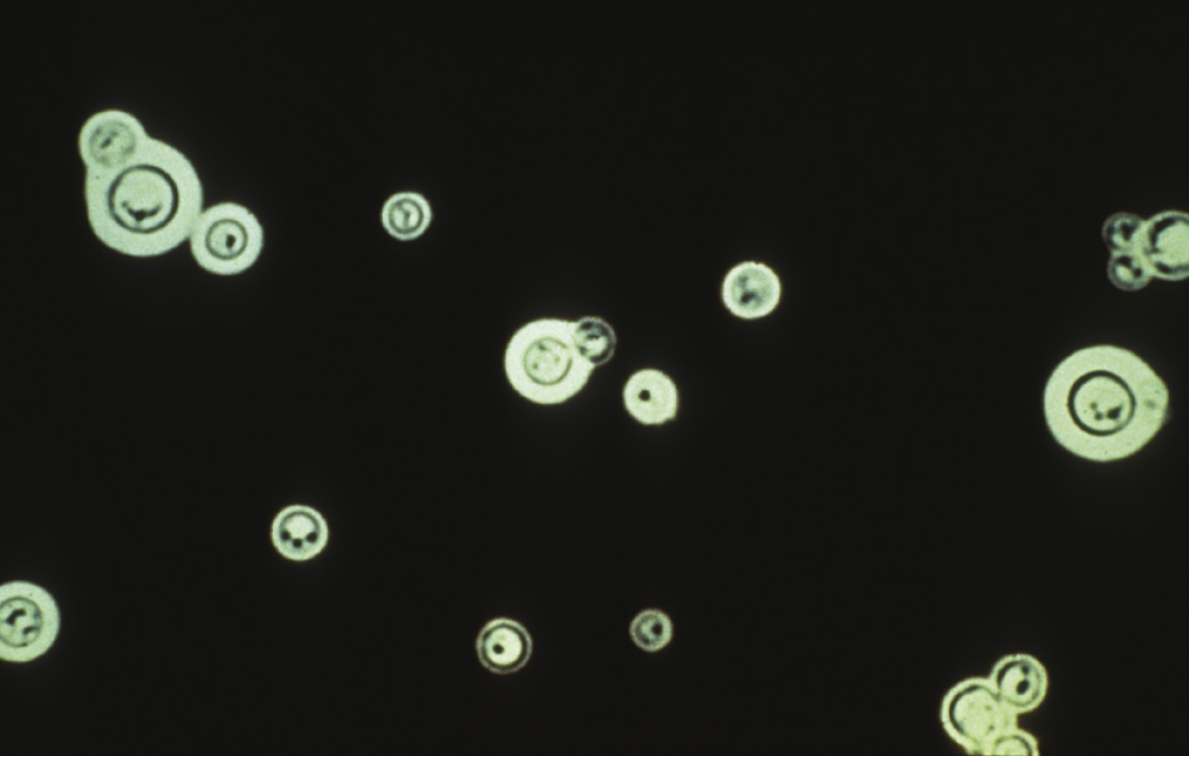
Look at this image from a CSF specimen:
Cryptococcus India ink preparation - budding yeast cells with large polysaccharide capsules visible against dark background
A 35-year-old HIV-positive male presents with severe headache, fever, and neck stiffness for 3 weeks. CSF is collected and the above preparation is made by mixing CSF with India ink.
Q1. What is the MOST LIKELY organism?
A. Candida albicans B. Cryptococcus neoformans ✅ C. Aspergillus fumigatus D. Histoplasma capsulatum
Q2. What specific feature allows identification of this organism in this preparation?
A. Pseudohyphae with blastoconidia B. Large polysaccharide capsule excluding ink particles ✅ C. Metachromatic granules D. Septate hyphae with fruiting bodies
Q3. What alternative stain (also seen with this organism) stains the capsule RED/PINK?
A. Gram stain B. Periodic acid-Schiff C. Mucicarmine ✅ D. Gomori methenamine silver
Explanation: The India ink preparation reveals encapsulated budding yeast cells with a large clear halo (the polysaccharide capsule, 4-6 µm yeast body, total diameter up to 25 µm). This is pathognomonic for Cryptococcus neoformans, the most common cause of fungal meningitis, especially in HIV patients (CD4 <100). The capsule is composed of glucuronoxylomannan (GXM) and stains red with mucicarmine, which is highly specific. (Source: Sherris & Ryan's Medical Microbiology, 8th ed.)

QUESTION 2 — Mycology (Tissue Section)
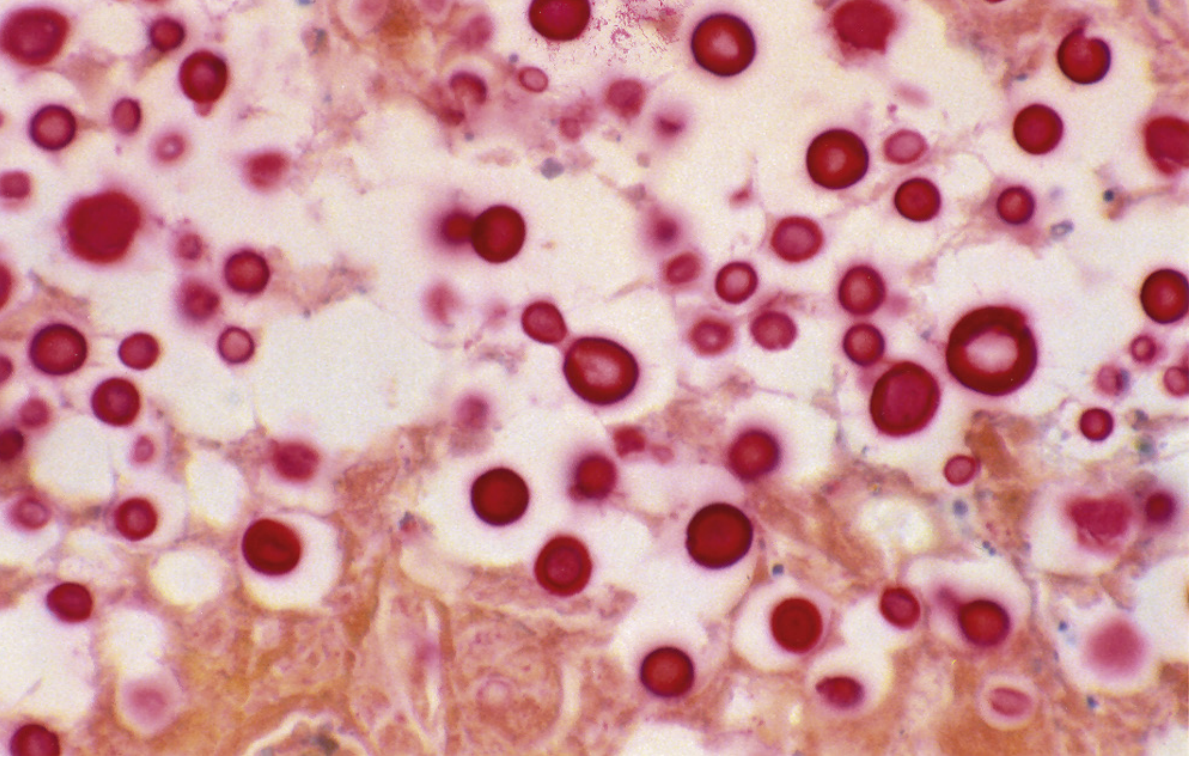
Examine this tissue biopsy stained with mucicarmine (×1000):
Mucicarmine stain showing Cryptococcus - red circular yeast cells with clear halos in tissue
A 28-year-old pigeon breeder presents with chronic meningitis. Brain biopsy is performed.
Q4. The MOST CHARACTERISTIC feature of this organism that is highlighted by this stain is:
A. Beta-glucan in cell wall B. Polysaccharide capsule ✅ C. Ergosterol in membrane D. Chitin in cell wall
Q5. The primary environmental reservoir of Cryptococcus neoformans is:
A. Decaying vegetation B. Bat guano C. Soil contaminated with avian (pigeon) excreta ✅ D. Cat feces
Q6. Which immune defect most strongly predisposes to Cryptococcal meningitis?
A. Neutropenia B. Complement deficiency C. Defective cellular immunity (T-cell defect) ✅ D. IgA deficiency
Explanation: Mucicarmine stains the polysaccharide capsule deep red/pink. The clear halos around each yeast cell in tissue sections are diagnostic. C. neoformans is found in soil contaminated with pigeon droppings worldwide. Defective cellular immunity (HIV, organ transplants, corticosteroid therapy) is the key predisposing factor. (Source: Medical Microbiology 9e)

QUESTION 3 — Bacteriology (Mycobacteriology)
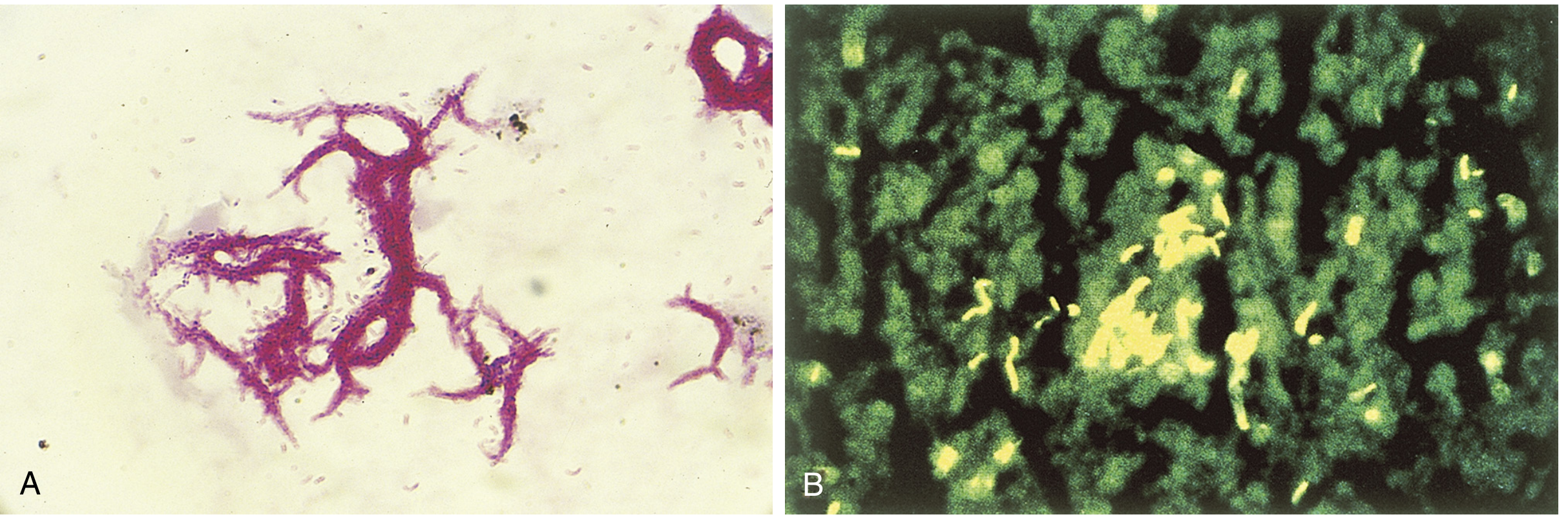
Study this dual microscopy image carefully:
Acid-fast stain of Mycobacterium tuberculosis - A: Kinyoun carbolfuchsin method showing pink rods, B: Truant fluorochrome (auramine-rhodamine) method showing yellow-white glowing rods on green background
Panel A uses carbolfuchsin (Kinyoun method). Panel B uses auramine and rhodamine fluorescent dyes.
A 45-year-old male with 3 months of productive cough, weight loss, and night sweats. Sputum sent for microscopy.
Q7. Why do Mycobacteria retain the carbolfuchsin dye (appear RED) after acid-alcohol decolorization?
A. They have a thick peptidoglycan layer B. They have a lipid-rich cell wall (mycolic acids) that resists decolorization ✅ C. They are gram-positive organisms D. They produce a special binding protein
Q8. Which acid-fast staining method is depicted in Panel B, and what is its ADVANTAGE over Panel A?
A. Ziehl-Neelsen; easier to perform B. Kinyoun; no heat required C. Truant fluorochrome; higher sensitivity, can scan at low magnification ✅ D. Wade-Fite; detects M. leprae
Q9. On Löwenstein-Jensen (LJ) medium, M. tuberculosis typically grows:
A. Within 24-48 hours as smooth white colonies B. In 4-8 weeks as rough, dry, buff/cream-colored colonies ✅ C. In 2 weeks as mucoid colonies D. Does not grow on egg-based media
Q10. The RIPE regimen for drug-sensitive TB uses 4 drugs for the first 2 months. Which drug is NOT included in the initial intensive phase?
A. Rifampicin B. Isoniazid C. Pyrazinamide D. Ciprofloxacin ✅
Explanation: Mycobacteria are "acid-fast" because their cell wall is rich in mycolic acids (long-chain fatty acids, C60-C90) which bind carbolfuchsin tenaciously and resist decolorization by acid-alcohol. The Truant fluorochrome method (auramine-rhodamine) is more sensitive than Ziehl-Neelsen or Kinyoun because slides can be scanned under low-power magnification - glowing yellow organisms are easily spotted. M. tuberculosis grows slowly (doubling time ~24 hours) requiring 4-8 weeks on LJ medium. First-line treatment uses Rifampicin, Isoniazid, Pyrazinamide, and Ethambutol (RIPE). (Source: Medical Microbiology 9e)

QUESTION 4 — Parasitology (Life Cycle Diagram)
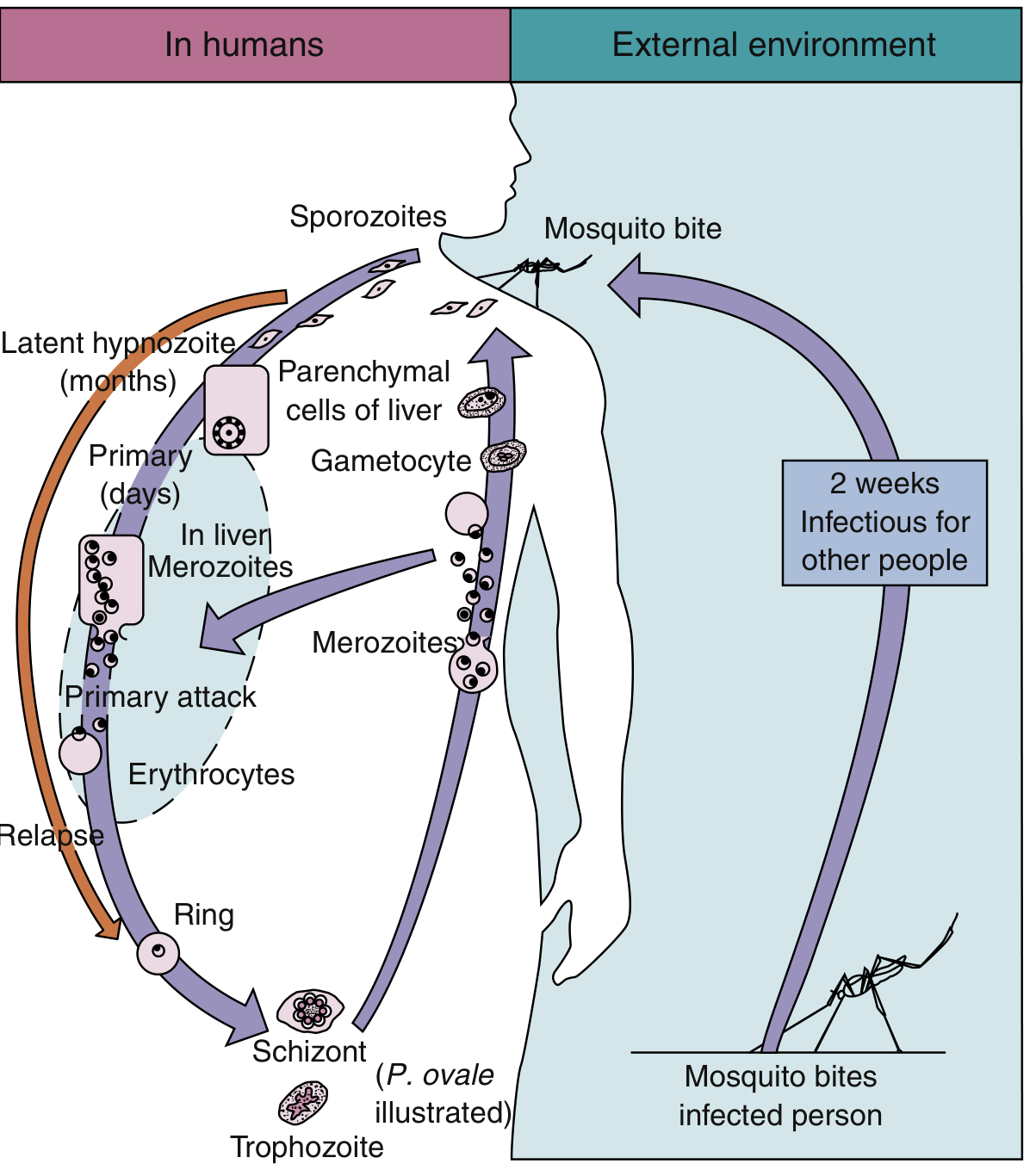
Study this life cycle diagram carefully:
Plasmodium life cycle - showing sporozoites introduced by mosquito bite, exoerythrocytic cycle in liver (with latent hypnozoites), then erythrocytic cycle with ring → trophozoite → schizont stages; gametocytes released for mosquito
A 22-year-old student returns from Southeast Asia with 48-hour periodic fever, chills, and rigors.
Q11. The stage labeled "Latent hypnozoite (months)" in the diagram is associated with which TWO Plasmodium species?
A. P. falciparum and P. malariae B. P. vivax and P. ovale ✅ C. P. knowlesi and P. vivax D. P. malariae and P. ovale
Q12. Which Plasmodium species does this diagram primarily illustrate, and how do you know?
A. P. falciparum - has multiple ring forms B. P. malariae - quartan periodicity C. P. ovale - latent hypnozoite stage is shown ✅ D. P. knowlesi - daily fever
Q13. The patient has 48-hour periodicity (tertian). Which drug is additionally needed BEYOND chloroquine to eliminate hypnozoites and prevent relapse?
A. Artesunate B. Doxycycline C. Primaquine ✅ D. Quinine
Q14. The SEXUAL reproductive cycle of Plasmodium (sporogony) occurs in:
A. Human erythrocytes B. Human hepatocytes C. The Anopheles mosquito ✅ D. The Culex mosquito
Explanation: P. vivax and P. ovale form dormant hypnozoites in hepatocytes that can reactivate months to years later, causing relapse. The diagram labels "P. ovale illustrated" which has the 48-hour tertian pattern and hypnozoite stage. Primaquine is essential to eliminate hepatic hypnozoites and prevent relapse (check G6PD status first!). Sexual reproduction (sporogony) occurs exclusively in the female Anopheles mosquito - after ingesting gametocytes, sporozoites develop over ~2 weeks. (Source: Medical Microbiology 9e)

QUESTION 5 — Mycology (Staining Comparison)
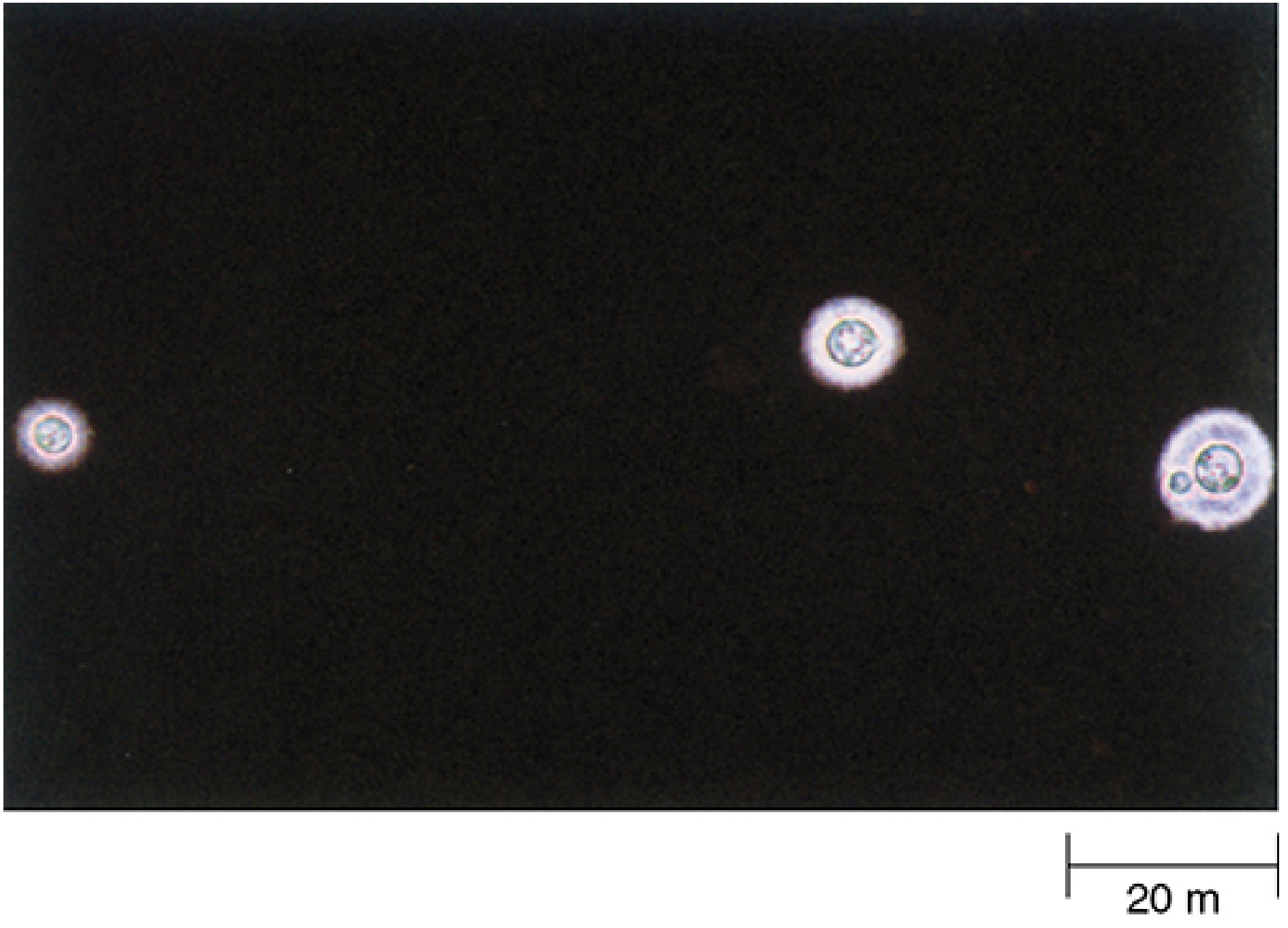
Look at this image - CSF mixed with India ink, 1000× magnification:
India ink CSF preparation - Cryptococcus neoformans - budding yeast cells with clear polysaccharide capsule halos against black India ink background
Q15. The "halo" seen around yeast cells in India ink preparation represents:
A. Degenerating nucleus B. The polysaccharide capsule EXCLUDING ink particles (negative staining) ✅ C. Lipid-filled vacuole D. A thick chitin wall
Q16. A latex agglutination test on CSF is positive. What antigen does this test detect?
A. Beta-1,3-glucan B. Cryptococcal polysaccharide antigen (GXM) ✅ C. Mannan antigen D. Galactomannan
Q17. First-line treatment for Cryptococcal meningitis in HIV patients (induction phase) is:
A. Fluconazole alone B. Itraconazole + flucytosine C. Amphotericin B + flucytosine ✅ D. Voriconazole + caspofungin
Explanation: India ink is a "negative stain" - the ink particles are excluded by the capsule, creating a clear halo around the yeast body. The latex agglutination test (or lateral flow assay) detects cryptococcal capsular polysaccharide (GXM) in CSF with >95% sensitivity - it is now the preferred rapid diagnostic test. Induction therapy is Amphotericin B deoxycholate (or liposomal) + flucytosine for 2 weeks, followed by fluconazole consolidation and maintenance. (Source: Sherris & Ryan's Medical Microbiology, 8th ed.)

📊 QUICK SUMMARY TABLE

Q#TopicKey ConceptAnswer
1MycologyIndia ink + CSFB - C. neoformans
2MycologyIndia ink mechanismB - Capsule
3MycologyAlternative stainC - Mucicarmine
4MycologyMucicarmine stainB - Polysaccharide capsule
5MycologyReservoirC - Pigeon excreta
6MycologyImmune defectC - T-cell defect
7BacteriologyAcid-fastness mechanismB - Mycolic acids
8BacteriologyFluorochrome advantageC - Higher sensitivity
9BacteriologyTB cultureB - 4-8 weeks, LJ
10BacteriologyRIPE regimenD - Ciprofloxacin
11ParasitologyHypnozoite speciesB - P. vivax + P. ovale
12ParasitologyDiagram identificationC - P. ovale
13ParasitologyAnti-relapse drugC - Primaquine
14ParasitologySporogony locationC - Anopheles mosquito
15MycologyIndia ink haloB - Negative staining
16MycologyAntigen detectionB - GXM (cryptococcal Ag)
17MycologyTreatmentC - Ampho B + flucytosine

Sources: Sherris & Ryan's Medical Microbiology (8th ed.) | Medical Microbiology 9e (Murray) | Jawetz, Melnick & Adelberg's Medical Microbiology (28th ed.)

Scientists and their pictures

Asking for Preferences
Searching the Web

famous scientists portraits photos Wikipedia commons Newton Darwin Einstein Curie Newton Fleming

Loading Image
Loading Image
Loading Image
Loading Image
Searching the Web

famous scientists Wikipedia portrait image URL Isaac Newton Albert Einstein Marie Curie Darwin Fleming

Generating Image

A quiz card layout showing 10 famous scientists portraits arranged in a grid: Isaac Newton, Albert Einstein, Marie Curie, Charles Darwin, Alexander Fleming, Louis Pasteur, Nikola Tesla, Galileo Galilei, Stephen Hawking, and Gregor Mendel. Each portrait is labeled with just a number (1-10) and no name. Clean educational quiz style, black and white portrait illustrations, on white background with grid layout.

Loading Image
Generating Image

A quiz card layout showing 10 famous scientists portraits arranged in a grid: Michael Faraday, Rosalind Franklin, James Watson and Francis Crick together, Dmitri Mendeleev, Isaac Asimov, Edward Jenner, Robert Koch, Antonie van Leeuwenhoek, William Harvey, and Carl Linnaeus. Each portrait is labeled with just a number (11-20) and no name. Clean educational quiz style, black and white portrait illustrations, on white background with grid layout.

Loading Image
Both quiz cards look great. Now here is the full quiz:

🧪 Famous Scientists Quiz

Name → Match Discovery/Contribution | 20 Questions


🖼️ CARD 1 - Scientists 1 to 10
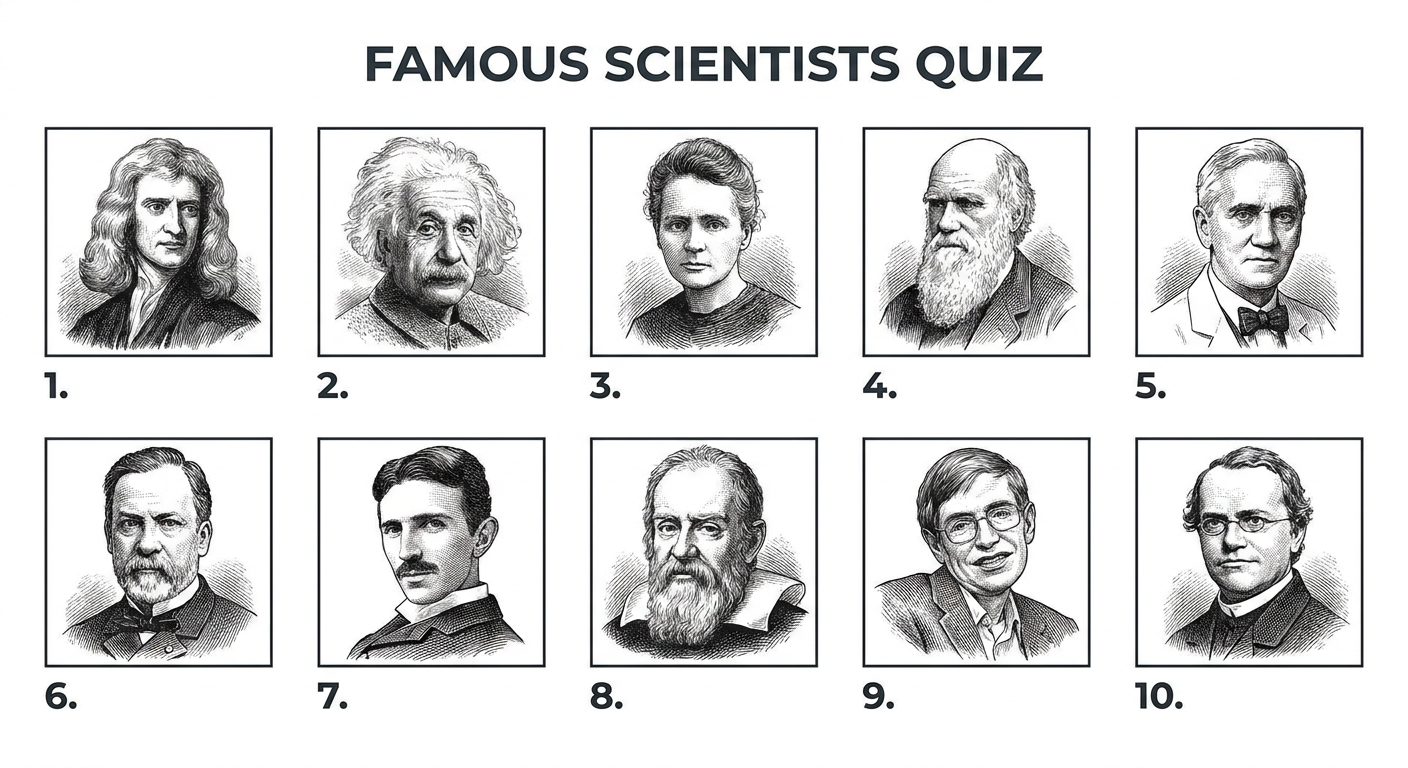
Famous Scientists Quiz Card 1 - numbered portraits 1 to 10

🖼️ CARD 2 - Scientists 11 to 20
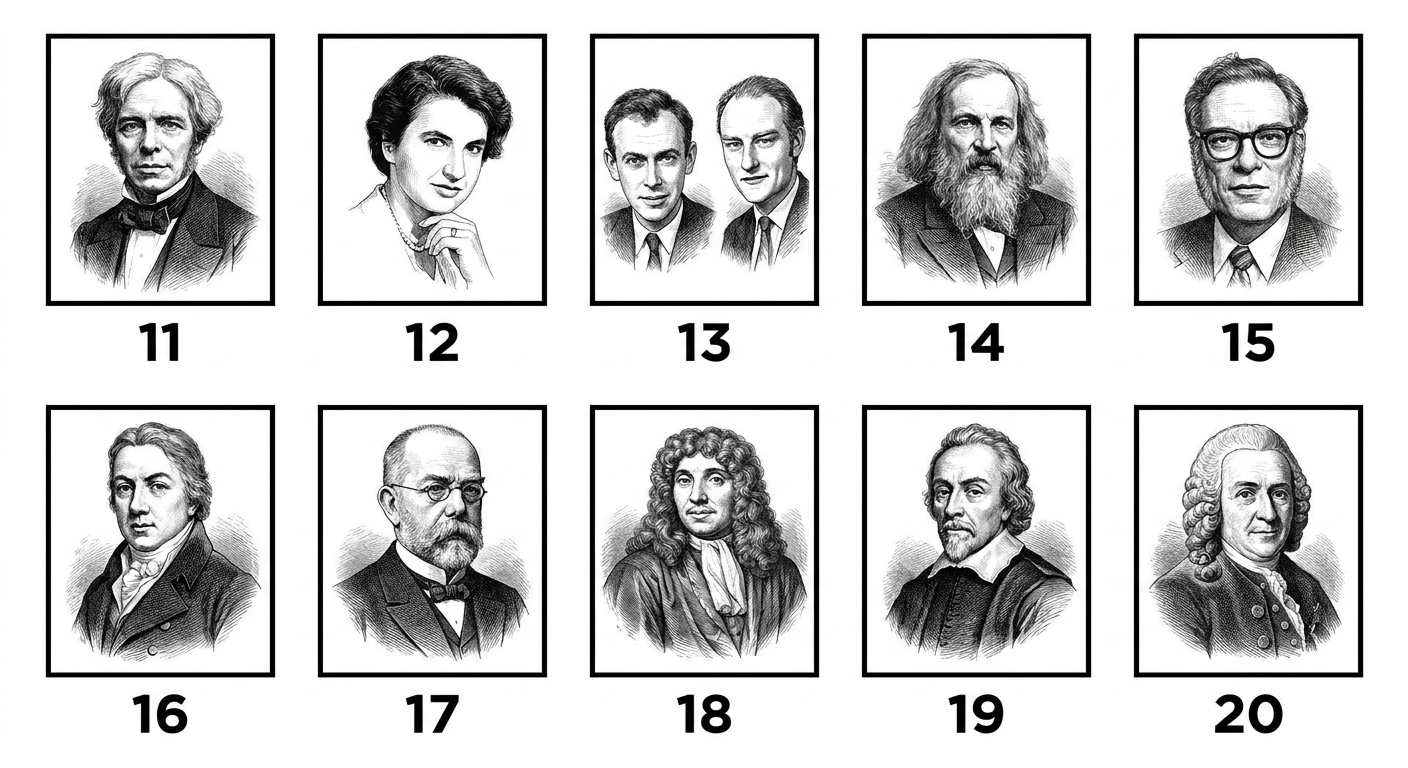
Famous Scientists Quiz Card 2 - numbered portraits 11 to 20

📝 QUIZ QUESTIONS

Match each scientist (1-20) to their most famous discovery or contribution. Choose ONE answer per question.

Scientist 1

Which of the following is this scientist's most famous contribution?
A. Discovered penicillin accidentally from mold contamination B. Described laws of motion and universal gravitation; invented calculus C. Proposed the double helix structure of DNA D. Developed the germ theory of disease

Scientist 2

This scientist is known for:
A. Laws of thermodynamics and entropy B. The theory of evolution by natural selection C. Special and general relativity; mass-energy equivalence (E=mc²) D. Discovery of radioactivity

Scientist 3

This scientist was the first person to:
A. Develop the smallpox vaccine B. Win two Nobel Prizes (Physics 1903, Chemistry 1911) C. Describe blood circulation D. Classify living organisms using binomial nomenclature

Scientist 4

This scientist proposed:
A. The Periodic Table of Elements B. That the Sun is the center of the solar system C. Evolution by natural selection in On the Origin of Species (1859) D. The structure of the atom with orbiting electrons

Scientist 5

This scientist is famous for:
A. Discovering X-rays B. Accidentally discovering penicillin in 1928 from Penicillium notatum mold C. Developing the rabies vaccine D. Describing laws of electricity (Faraday's law)

Scientist 6

This scientist is credited with:
A. First describing microorganisms under a microscope B. Developing the germ theory of disease; pasteurization; rabies and anthrax vaccines C. Discovering electromagnetic induction D. Formulating Mendel's laws of inheritance

Scientist 7

This scientist's greatest contributions include:
A. Alternating current (AC) electricity system; Tesla coil; induction motor B. The light bulb and the phonograph C. The telephone D. Radio waves and wireless communication

Scientist 8

This scientist is known for:
A. Proposing the heliocentric model in 1543 B. Supporting heliocentrism with telescopic observations; law of falling bodies; pendulum C. Discovering the laws of planetary motion D. Formulating the theory of gravity

Scientist 9

This scientist's major work includes:
A. The unified field theory of electromagnetism B. A Brief History of Time; Hawking radiation; work on black holes and cosmology C. Discovery of the Higgs boson D. Quantum chromodynamics and quark theory

Scientist 10

This scientist discovered:
A. That cells arise only from pre-existing cells B. Laws of heredity (dominant/recessive traits) through pea plant experiments C. The structure of chromosomes D. The role of ribosomes in protein synthesis

Scientist 11

This scientist's key contributions include:
A. Discovering oxygen and naming it B. Electromagnetic induction, Faraday cage, laws of electrolysis C. Maxwell's equations for electromagnetism D. Inventing the battery (voltaic pile)

Scientist 12

This scientist:
A. Won the Nobel Prize for discovering DNA structure B. Produced X-ray crystallography (Photo 51) that was essential for discovering DNA's double helix - but was largely uncredited in her lifetime C. Discovered RNA polymerase D. First sequenced the human genome

Scientist 13

This pair of scientists:
A. Discovered the electron and the proton B. Proposed the double helix structure of DNA in 1953, using X-ray data C. Developed the first working vaccine D. Formulated quantum mechanics

Scientist 14

This scientist created:
A. The first system of biological classification B. The Periodic Table of Elements (1869), arranging elements by atomic weight C. The law of conservation of mass D. The concept of atomic number

Scientist 15

This scientist is famous for:
A. Quantum physics and Schrödinger's cat thought experiment B. Writing science fiction (Foundation series, I, Robot) and popularizing science C. The structure of proteins using X-ray crystallography D. Discovering the neutron

Scientist 16

This scientist:
A. Developed the cowpox-based smallpox vaccine in 1796 B. Proved spontaneous generation was impossible C. First isolated bacteria in pure culture D. Discovered the circulatory system

Scientist 17

This scientist is known for:
A. Discovering the cholera bacterium and the tuberculosis bacillus; Koch's postulates B. Developing pasteurization C. Discovering viruses D. First using antiseptic techniques in surgery

Scientist 18

This 17th-century scientist:
A. Developed the compound microscope and was first to observe living microorganisms (protozoa, bacteria) B. Classified plants and animals using binomial nomenclature C. Described blood circulation D. Discovered cells using a cork slice

Scientist 19

This scientist:
A. Discovered oxygen B. Described the circulation of blood through the body in De Motu Cordis (1628) C. Invented the thermometer D. Discovered the lymphatic system

Scientist 20

This scientist is the founder of:
A. Modern genetics B. Modern taxonomy - introduced binomial nomenclature (Homo sapiens, Felis catus) C. Microbiology D. Evolutionary theory

✅ ANSWER KEY

#ScientistFieldAnswer
1Isaac Newton (1643-1727)Physics/MathB - Laws of motion & gravity, calculus
2Albert Einstein (1879-1955)PhysicsC - Special/general relativity, E=mc²
3Marie Curie (1867-1934)Chemistry/PhysicsB - First person to win 2 Nobel Prizes
4Charles Darwin (1809-1882)BiologyC - Evolution by natural selection
5Alexander Fleming (1881-1955)MicrobiologyB - Discovered penicillin 1928
6Louis Pasteur (1822-1895)MicrobiologyB - Germ theory, pasteurization, vaccines
7Nikola Tesla (1856-1943)Electrical EngineeringA - AC electricity, Tesla coil
8Galileo Galilei (1564-1642)Astronomy/PhysicsB - Telescopic observations, laws of motion
9Stephen Hawking (1942-2018)CosmologyB - Hawking radiation, black holes
10Gregor Mendel (1822-1884)GeneticsB - Laws of heredity (pea plant experiments)
11Michael Faraday (1791-1867)Physics/ChemistryB - Electromagnetic induction, Faraday cage
12Rosalind Franklin (1920-1958)X-ray CrystallographyB - Photo 51 and the DNA structure
13Watson & Crick (1953)Molecular BiologyB - Double helix structure of DNA
14Dmitri Mendeleev (1834-1907)ChemistryB - Periodic Table of Elements
15Isaac Asimov (1920-1992)Science communicationB - Science fiction & popularizing science
16Edward Jenner (1749-1823)ImmunologyA - Smallpox vaccine (1796)
17Robert Koch (1843-1910)BacteriologyA - TB bacillus, cholera, Koch's postulates
18Antonie van Leeuwenhoek (1632-1723)MicrobiologyA - First to observe microorganisms
19William Harvey (1578-1657)PhysiologyB - Blood circulation (De Motu Cordis)
20Carl Linnaeus (1707-1778)Taxonomy/BiologyB - Binomial nomenclature, modern taxonomy

🧠 KEY FACTS REFERENCE

Scientist"One-liner" Memory Hook
NewtonApple → gravity → F=ma
EinsteinE = mc² → bent spacetime
CuriePolonium + Radium → 2 Nobels
DarwinGalapagos finches → survival of fittest
FlemingMoldy petri dish → penicillin
Pasteur"Germs cause disease" - disproved spontaneous generation
TeslaAC > DC (vs Edison)
Galileo"And yet it moves" - heliocentrism
HawkingBlack holes emit radiation (named after him)
MendelPeas → dominant/recessive genes
FaradayMoving magnet → electric current
R. FranklinHer X-ray was the key - Watson & Crick got the Nobel
Watson & CrickDouble helix - 1953 - Nobel 1962
MendeleevLeft gaps in his table - predicted undiscovered elements
JennerCowpox protects against smallpox - first vaccine ever
R. Koch"Koch's postulates" - 4 rules to prove a germ causes disease
Leeuwenhoek"Father of microbiology" - first microscope observations
HarveyHeart pumps blood in a circle - revolutionary in 1628
Linnaeus"Father of modern taxonomy" - named >12,000 species
This is a shared conversation. Sign in to Orris to start your own chat.