
Give me a deep insight notes about the topic opp i have to write it in my notes book from basics
Asking for Preferences
Which topic do you want deep notes on? You wrote 'opp' - did you mean:
Opp means organophosphate poisoning
This is a medical topic - let me read the medical library skill first, then pull comprehensive notes for you.
Reading File
Now let me search the library and PubMed in parallel for comprehensive OPP content.
Finding Sources
Finding Sources
Searching PubMed
"organophosphate poisoning"[MeSH Terms] AND management
Excellent finds. Now let me read the detailed content from the best sources in parallel.
Reading File
Reading File
Reading File
Let me now get the detailed Tintinalli and Rosen's sections on OPP management + treatment, plus Goldman Cecil's content and search for images.
Reading File
Reading File
Searching Images
organophosphate poisoning cholinergic toxidrome mechanism acetylcholinesterase
I have rich content. Let me now get the management section from Rosen's and the Tintinalli treatment table, then compile everything.
Reading File
Reading File
Let me now fetch the nervous system diagram from the textbook, and also grab the detailed treatment sections.
Loading Image
Reading File
I now have all the information needed to write comprehensive, notebook-style notes on OPP. Let me compile everything.
📝 ORGANOPHOSPHATE POISONING (OPP) - Deep Insight Notes
1. INTRODUCTION & BACKGROUND
- Organophosphates (OPs) are a class of insecticides (and chemical warfare agents) that work by inhibiting cholinesterase enzymes.
- Since 1945, approximately 15,000 individual OP compounds have come into use.
- Common agents: parathion, malathion, diazinon, chlorpyrifos, acephate, dichlorvos
- Chemical warfare nerve agents (sarin, VX, Novichok) share the same mechanism.
- Most common cause of OPP worldwide = deliberate self-poisoning (suicide attempts)
- Accidental exposures: agricultural/industrial sprays, food contamination, pet flea-dip products
-
150,000 pesticide poisoning deaths occur per year globally; insecticides account for the majority.
2. MECHANISM OF TOXICITY (Pathophysiology)
Key Enzyme: Acetylcholinesterase (AChE)
- AChE normally breaks down acetylcholine (ACh) at nerve synapses.
- OPs irreversibly bind and phosphorylate AChE → AChE is inactivated → ACh accumulates.
- Two forms of cholinesterase are affected:
- True/RBC AChE - found in erythrocytes, nerve tissue, skeletal muscle
- Plasma cholinesterase (pseudocholinesterase/BuChE) - found in serum, liver, pancreas, heart
"AGING" - The Critical Concept
- After OP binds to AChE, a process called aging occurs = a permanent, irreversible conformational change where OP becomes covalently locked to the enzyme.
- Time to aging varies: minutes to >24 hours depending on the agent.
- Once aging occurs, no antidote (oxime) can restore the enzyme - new enzyme must be synthesized (takes weeks).
- Antidotes are ONLY effective BEFORE aging!
ACh Accumulation → Receptor Overstimulation
ACh builds up at ALL cholinergic synapses:
| Location | Receptor Type | Effect |
|---|---|---|
| Postganglionic parasympathetic nerve endings | Muscarinic (M) | SLUDGE/Killer B's |
| Autonomic ganglia (sympathetic + parasympathetic) | Nicotinic (N) | HTN, tachycardia |
| Neuromuscular junction | Nicotinic (N) | Fasciculations → paralysis |
| CNS | Both M + N | Seizures, coma |
3. CLINICAL FEATURES - The Cholinergic Toxidrome
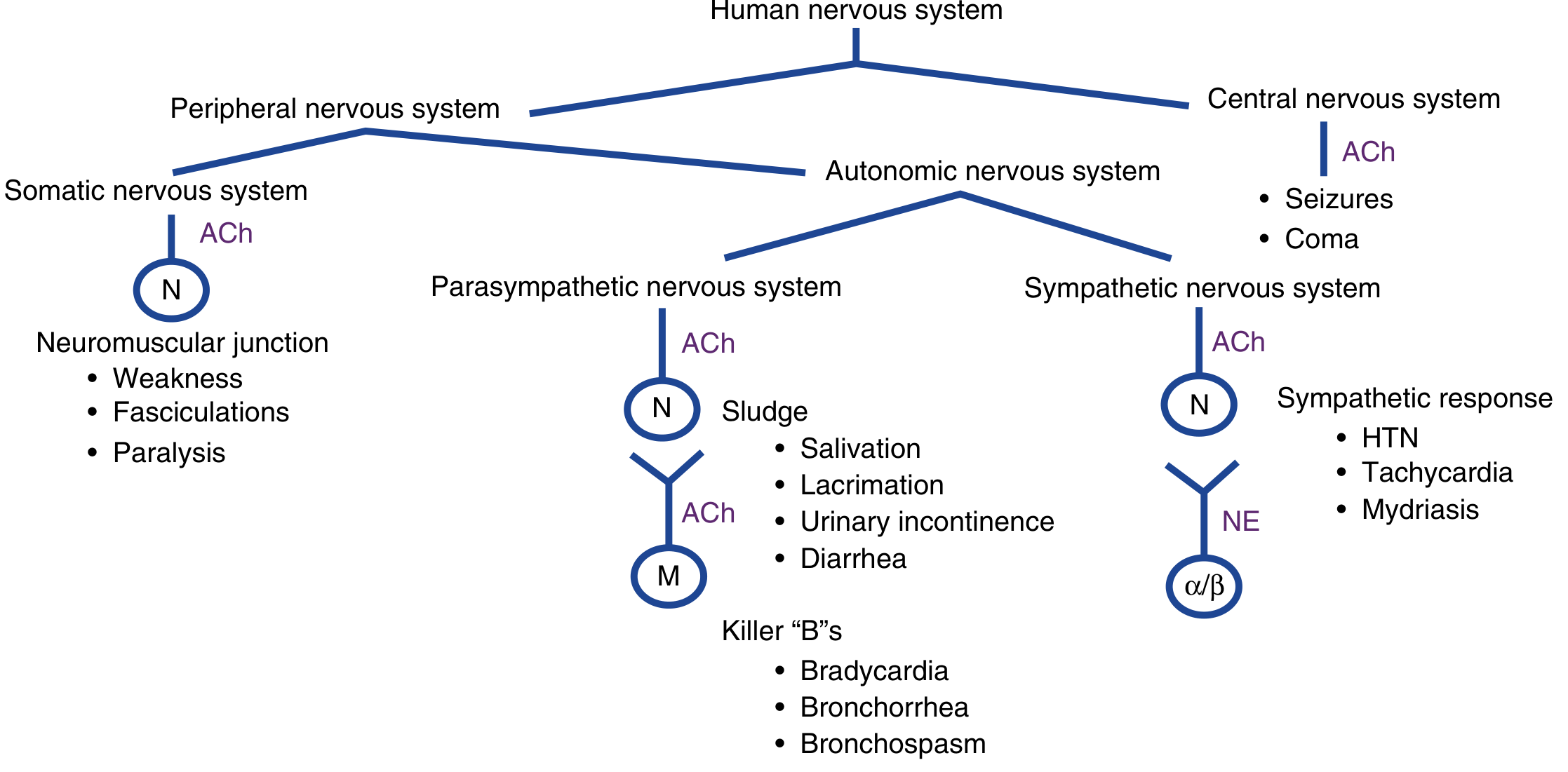
Mnemonic 1: SLUDGE (Muscarinic effects)
| Letter | Symptom |
|---|---|
| S | Salivation |
| L | Lacrimation |
| U | Urination |
| D | Defecation / Diarrhea |
| G | GI cramps |
| E | Emesis |
Mnemonic 2: DUMBELS (Muscarinic - complete version)
D - Diarrhea/Diaphoresis | U - Urination | M - Miosis | B - Bradycardia/Bronchorrhea/Bronchospasm (the "Killer B's") | E - Emesis | L - Lacrimation | S - Salivation
Nicotinic Effects (NMJ + Sympathetic ganglia):
- Muscle: Fasciculations, weakness, flaccid paralysis (diaphragm → respiratory arrest)
- Sympathetic: Tachycardia, hypertension, mydriasis, sweating
⚠️ Note: The heart rate in OPP can be VARIABLE - bradycardia (muscarinic dominance) OR tachycardia (nicotinic/sympathetic dominance). Miosis is the classic finding but mydriasis can occur.
CNS Effects:
- Anxiety, restlessness, delirium
- Seizures (benzodiazepine-responsive)
- Coma
- Respiratory center depression
The "Killer B's" = Primary cause of death:
- Bradycardia → cardiac arrest
- Bronchorrhea → airway flooding
- Bronchospasm → airflow obstruction
Pulmonary edema (separate from bronchorrhea!):
- Results from inflammatory mediators + increased vascular permeability
- Do NOT confuse with bronchorrhea/bronchospasm
4. THREE CLINICAL SYNDROMES IN OPP
| Syndrome | Timing | Features | Atropine/2-PAM response |
|---|---|---|---|
| Acute cholinergic crisis | 0-24 h of exposure | Classic SLUDGE/DUMBELS | Yes - responds well |
| Intermediate Syndrome (IMS) | 24-96 h after acute phase | Proximal limb weakness, neck flexors, cranial nerve motor palsies, respiratory paralysis | ❌ Does NOT respond |
| OPIDN (Organophosphate-Induced Delayed Neuropathy) | 2-5 weeks later | Distal symmetrical sensorimotor polyneuropathy (predominantly motor), muscle atrophy, then upper motor neuron signs | ❌ Does NOT respond |
⚠️ Intermediate Syndrome is a major killer - respiratory paralysis can be fatal; requires mechanical ventilation. The agent most associated with OPIDN is TOCP (triorthocresyl phosphate).
5. DIAGNOSIS
Clinical Diagnosis
- Most important: history of OP exposure + signs of cholinergic toxidrome
- Most symptomatic within first 8 hours; almost all within 24 hours
- Classic presentation: miosis + bradycardia + bronchospasm + muscle fasciculations
Laboratory Tests
| Test | What it shows | Timing of change |
|---|---|---|
| Plasma cholinesterase (BuChE) | Decreases FIRST in acute poisoning | Recovers in 4-6 weeks |
| RBC/Erythrocyte AChE | More specific; decreases in chronic exposure even when plasma is normal | Recovers in up to 12 weeks |
| ABG / acid-base | Metabolic acidosis = poor prognosis | - |
| Blood glucose | Both hyper- and hypoglycemia = increased mortality | - |
| ECG | QTc prolongation, arrhythmias | - |
⚠️ Do NOT wait for lab confirmation before treating if clinical toxidrome is present.
Differential Diagnosis
- Carbamates (same mechanism, but reversible, no aging - generally milder)
- Nicotine poisoning
- Cholinomimetics (pilocarpine, rivastigmine)
- Bacterial/viral gastroenteritis (early)
- Inferior MI with pulmonary edema (vagal response)
- Myasthenia gravis
- Thyroid storm / Phaeochromocytoma (sympathomimetic mimicry)
6. MANAGEMENT (ABCDE + Antidotes)
Step 1: DECONTAMINATION (First priority before anything else!)
- Remove all clothing and destroy it (dermal absorption is common and significant)
- Flush skin with copious water (providers must wear PPE - risk of secondary contamination from clothing/splashes)
- Dry decontamination alternatives: flour, sand, bentonite, military resins
- Eyes: irrigate with normal saline
- GI: activated charcoal if ingested, airway is secure, within 1 hour
Step 2: AIRWAY & SUPPORTIVE CARE
- Highest priority - bronchospasm + bronchorrhea + respiratory muscle paralysis = LETHAL combination
- Early intubation if respiratory failure
- Suction secretions aggressively
- Avoid succinylcholine (AChE inhibited → prolonged paralysis; use rocuronium instead)
- Benzodiazepines for seizures (first line)
Step 3: ANTIDOTE 1 - ATROPINE (Muscarinic blocker)
| Feature | Details |
|---|---|
| Mechanism | Competitive antagonist at muscarinic receptors - dries secretions, reverses bradycardia |
| DOES NOT act at nicotinic receptors | Will NOT reverse muscle fasciculations or paralysis |
| Dose (adults) | 2-4 mg IV bolus; repeat every 5-10 min |
| Dose (severe) | 10-20 mg in first hour; escalate rapidly |
| Pediatric dose | 0.02-0.05 mg/kg IV |
| Endpoint of atropinization | Drying of respiratory secretions + ease of breathing + normal respiratory rate |
| NOT the endpoint | Heart rate, pupil size, or skin dryness (overcorrection leads to anticholinergic toxidrome) |
| Maintenance | 10-20% of total cumulative dose per hour as infusion |
⚠️ Tachycardia and mydriasis during atropine therapy are NOT reasons to stop. Doses may exhaust hospital supplies - plan ahead!
Step 4: ANTIDOTE 2 - PRALIDOXIME (2-PAM) - Oxime
| Feature | Details |
|---|---|
| Mechanism | Binds to the OP-AChE complex → displaces OP → AChE resumes function |
| Only effective BEFORE aging | Must be given EARLY |
| Indications | Respiratory depression/failure, fasciculations, seizures, dysrhythmias, hemodynamic instability, or large/repeated atropine doses needed |
| Dose (adult) | 1-2 g IV (25-50 mg/kg in children) over 30 min; can repeat hourly based on response |
| Alternative dosing | 2 g bolus → 500 mg/h infusion for up to 7 days |
| Route | IV preferred; IM available (military autoinjectors) |
| Endpoint | Improved mental status, respiratory rate, heart rate, decreased secretions |
Other available oximes worldwide: TMB-4, Toxogonin, methoxime, HI-6 (pralidoxime is US standard).
Step 5: BENZODIAZEPINES for seizures
- Diazepam or lorazepam IV - first-line for OP-induced seizures
- Phenobarbital second line
- Phenytoin is ineffective for OP-induced seizures
No role for:
- Hemodialysis or other enhanced elimination - OPs are highly lipid-soluble and tissue-bound; no benefit from extracorporeal removal.
7. DISPOSITION
| Clinical severity | Disposition |
|---|---|
| Asymptomatic/minimally symptomatic, normal or mildly decreased ChE, tolerating orally | Observe 6 hours, discharge with close follow-up |
| Significant symptoms (seizures, respiratory compromise, depressed ChE) | ICU admission |
| Moderate poisoning | Monitored ward |
- Most respond within 48 hours with pralidoxime (AChE levels rise).
- Fat-soluble OPs may cause toxicity for weeks (prolonged pralidoxime infusion needed).
- Recovery (if no anoxic brain injury + early treatment) typically in ~10 days.
- Patients may have rebound toxicity days after apparent recovery - watch closely.
8. CARBAMATES vs ORGANOPHOSPHATES (Key comparison)
| Feature | Organophosphates | Carbamates |
|---|---|---|
| Enzyme binding | Irreversible (phosphorylation + aging) | Reversible (spontaneous hydrolysis in hours) |
| Severity | Generally more severe | Generally milder, self-limiting |
| Duration | Days to weeks | Hours |
| Pralidoxime (2-PAM) | Required | Generally not needed (some say avoid in carbamates) |
| Atropine | Required | Required |
| Aging | Yes - once aged, no antidote works | No aging |
9. QUICK MEMORY SUMMARY TABLE
| Topic | Key Point |
|---|---|
| MOA | OP inhibits AChE irreversibly → ACh accumulates |
| Toxidrome | Cholinergic crisis (SLUDGE/DUMBELS + Killer B's) |
| Primary cause of death | Respiratory failure (bronchorrhea + bronchospasm + diaphragm paralysis) |
| Miosis | Most consistent sign (but can have mydriasis in nicotinic dominance) |
| Aging | Irreversible binding - limits oxime efficacy |
| Antidote 1 | Atropine - blocks muscarinic effects ONLY |
| Antidote 2 | Pralidoxime (2-PAM) - regenerates AChE (before aging!) |
| Seizure drug | Benzodiazepines (phenytoin is INEFFECTIVE) |
| Succinylcholine | AVOID (prolonged paralysis) |
| Intermediate Syndrome | 24-96 h; proximal weakness + respiratory paralysis; no response to atropine |
| Delayed neuropathy (OPIDN) | 2-5 weeks; motor > sensory polyneuropathy; no antidote |
| Lab markers | Plasma ChE (falls first), RBC AChE (more specific) |
10. CLINICAL PEARL BOX
Pearl 1: The "endpoint of atropinization" is DRY SECRETIONS, NOT a heart rate target.
Pearl 2: Give atropine FAST and in BIG doses in severe OPP. Clinicians often under-dose. Start at 2-4 mg IV and double every 5 min if no response.
Pearl 3: Pralidoxime must be given EARLY - before aging locks the OP-enzyme bond permanently.
Pearl 4: In OPP, tachycardia does NOT mean stop atropine - it may be from nicotinic stimulation, not anticholinergic overdose.
Pearl 5: Pulmonary edema in OPP is NOT the same as bronchorrhea - they require different treatment approaches.
Pearl 6: Succinylcholine is contraindicated for RSI in OPP. Use rocuronium instead.
Sources:
- [Rosen's Emergency Medicine, 9th Ed.](Rosen's Emergency Medicine - Concepts and Clinical Practice, Chapter 152)
- [Tintinalli's Emergency Medicine, A Comprehensive Study Guide](Tintinalli's Emergency Medicine, Chapter 201 - Pesticides)
- [Adams and Victor's Principles of Neurology, 12th Ed.](Chapter: Phosphorus and Organophosphate Poisoning)
- Recent reviews: Advances in Detection and Management of OPP (2025) and OPP: Review of Prognosis and Management (2024)
This is a shared conversation. Sign in to Orris to start your own chat.