
Brain stroke treatment when my patient is known case of Hypertension since 15yrs and now my patient landed in icu and is his sbp is 200 mmHg
Reading File
Now let me search the medical library and PubMed in parallel for this clinical scenario.
Finding Sources
Finding Sources
Searching PubMed
"ischemic stroke" AND "blood pressure" AND "hypertension" AND management
Good hits. Now let me read the textbook content in parallel.
Reading File
Reading File
Finding Sources
Excellent. Now let me pull the Tintinalli emergency medicine section and Goldman-Cecil section for specific drug protocols and targets.
Reading File
Reading File
I now have comprehensive textbook content. Let me also quickly get the Goldman-Cecil table on specific drug agents and targets for stroke + hypertension emergencies.
Reading File
Finding Sources
I also spotted a flowchart image. Let me fetch that while compiling the answer.
Loading Image
I now have all the information needed for a thorough, clinically structured answer. Here it is:
ICU Management: Acute Brain Stroke + SBP 200 mmHg in a Known Hypertensive
Your patient is a hypertensive emergency with stroke - the first and most important step is to determine the stroke type, as BP management differs fundamentally between ischemic and hemorrhagic stroke.
STEP 1: Immediate Workup (Do First)
| Action | Why |
|---|---|
| Urgent non-contrast CT head | Distinguish ischemic vs. hemorrhagic - cannot treat without this |
| Neurological assessment (GCS, NIHSS) | Establish severity baseline |
| Glucose, CBC, coagulation screen, metabolic panel | Rule out contraindications, identify complications |
| 12-lead ECG | AF is a common cause of cardioembolic stroke |
| Continuous cardiac/BP monitoring | Guide titration |
SCENARIO A: ACUTE ISCHEMIC STROKE (SBP 200 mmHg)
Key Principle: Permissive Hypertension
In a chronic hypertensive patient, the cerebral autoregulation curve is shifted rightward - the ischemic penumbra depends entirely on systemic pressure to maintain perfusion. Aggressive BP lowering can extend the infarct.
"Permissive hypertension allows for maximal cerebral perfusion. Systolic blood pressure >180 mmHg may require treatment, but the optimal MAP goal is between 100 and 140 mmHg."
- Schwartz's Principles of Surgery, 11th Ed.
If Patient IS Eligible for IV tPA (within 4.5 hours of onset):
SBP must be brought below 185 mmHg before tPA can be given (SBP >185 is a contraindication to thrombolysis).
Target: SBP <185 / DBP <110 mmHg
Preferred agents:
- Labetalol 10-20 mg IV over 1-2 min; may repeat or double every 10 min (max 300 mg total)
- Nicardipine IV infusion 5 mg/hr, titrate up by 2.5 mg/hr every 5-15 min (max 15 mg/hr)
After tPA is given, maintain SBP <180 mmHg for 24 hours to reduce hemorrhagic transformation risk.
If Patient is NOT Eligible for tPA:
Only treat if SBP >220 mmHg (AHA/ASA threshold for non-thrombolysis ischemic stroke).
At SBP 200 with no thrombolysis planned: do not aggressively lower BP - allow permissive hypertension. If you do treat, reduce MAP by no more than 15% over the first hour.
Preferred agents (same):
- Labetalol or Nicardipine IV infusion (titratable, predictable)
- Clevidipine IV (ultra-short-acting calcium channel blocker) is an alternative
Avoid:
- Sublingual nifedipine (precipitous uncontrolled drops)
- Nitroprusside (increases ICP via cerebral vasodilation)
- Aggressive diuretics
IV Fluids:
- Use normal saline (0.9% NaCl), not dextrose-containing solutions - glucose worsens neuronal injury in the ischemic penumbra via osmotic shift.
- Target normovolemia.
SCENARIO B: ACUTE HEMORRHAGIC STROKE / ICH (SBP 200 mmHg)
In intracerebral hemorrhage, hematoma expansion occurs in up to 73% within 24 hours - high BP drives this expansion and worsens outcome. BP lowering is more actively indicated here.
"For acute hemorrhagic stroke with SBP >180 mmHg - target: systolic BP 130-180 mmHg. Preferred: Labetalol OR Nicardipine. Timeline: immediate."
- Goldman-Cecil Medicine, International Ed.
Target: SBP 130-180 mmHg (do not drop below 130 - risk of perihematomal ischemia)
Preferred agents:
- Labetalol or Nicardipine IV infusion (as above)
Caveat: If there is elevated ICP (large hematoma, hydrocephalus), CPP = MAP - ICP. Over-lowering BP may critically reduce CPP. In that case, ICP monitoring is essential before setting BP targets.
- Comprehensive Clinical Nephrology, 7th Ed.
BP TARGET SUMMARY TABLE (Goldman-Cecil / ESC)
| Stroke Type | Trigger | Timeline | Target | Preferred Drug |
|---|---|---|---|---|
| Ischemic (no tPA) | SBP >220 | 1 hour | MAP -15% | Labetalol or Nicardipine |
| Ischemic (pre-tPA) | SBP >185 | 1 hour | SBP <185/DBP <110 | Labetalol or Nicardipine |
| Hemorrhagic ICH | SBP >180 | Immediate | SBP 130-180 | Labetalol or Nicardipine |
ICU Algorithm for This Patient (Hypertensive + Stroke, SBP 200)
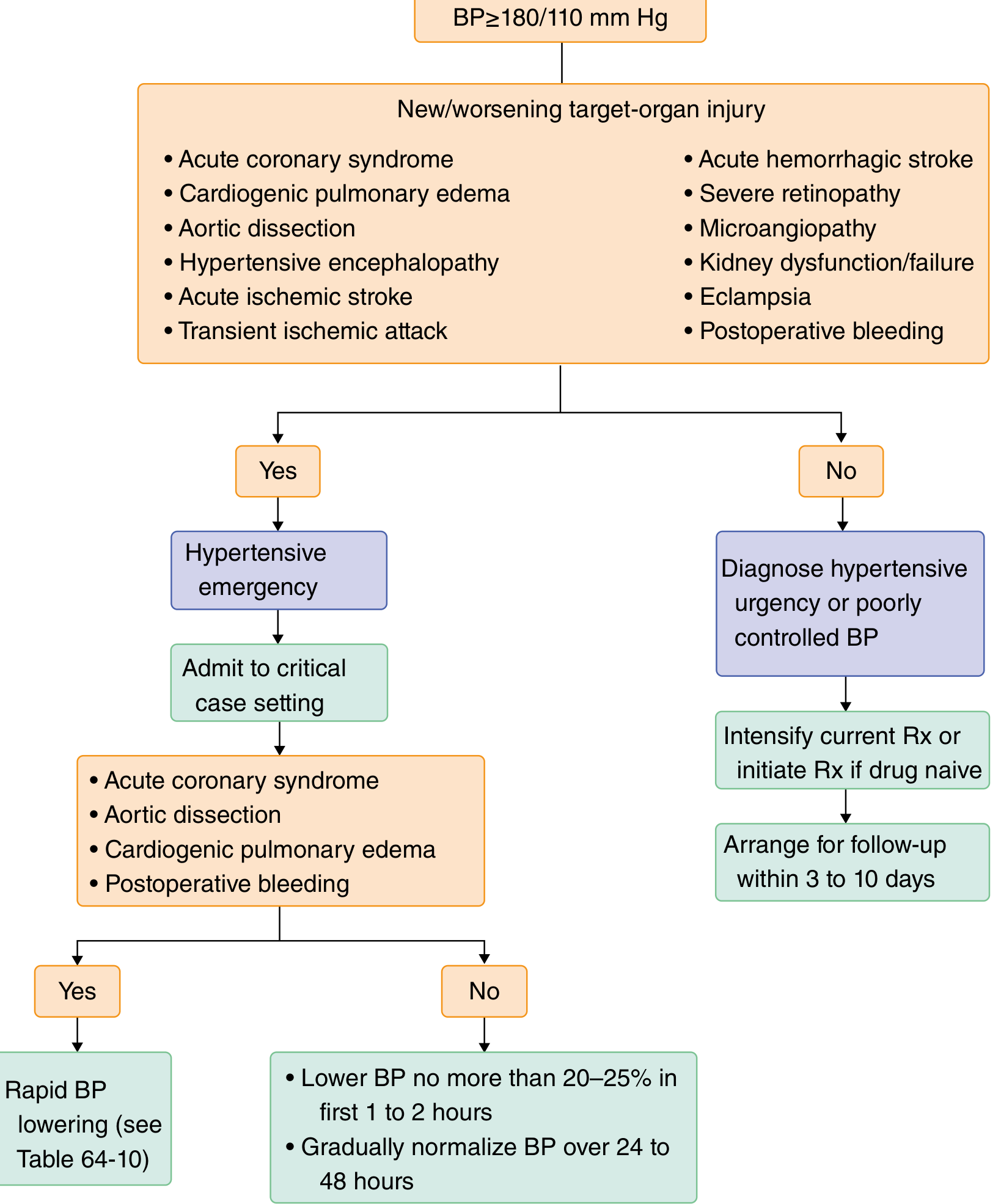
Additional ICU Management Points
1. Glucose control
- Target euglycemia (140-180 mg/dL in ICU). Both hypoglycemia and hyperglycemia worsen stroke outcomes.
2. Temperature
- Treat fever aggressively (fever increases metabolic demand of penumbra tissue).
3. Antiplatelet / Anticoagulation
- Ischemic (non-tPA): Aspirin 325 mg within 24-48 hrs of CT confirmation of ischemia
- Hemorrhagic: Reverse any anticoagulants immediately (Vitamin K, PCC for warfarin; idarucizumab for dabigatran, andexanet alfa for Xa inhibitors)
4. Airway
- GCS <8 - intubate for airway protection; target PaCO2 35-40 mmHg (avoid hyperventilation unless herniation imminent)
5. Thrombolysis/Thrombectomy
- If ischemic, large vessel occlusion (LVO) confirmed on CTA: mechanical thrombectomy is preferred within 6 hours of onset (up to 24 hrs in selected cases)
- tPA window: 4.5 hours from symptom onset (3 hrs for patients >80, prior stroke + diabetes, anticoagulated, or NIHSS >25)
6. Cerebral edema
- Peaks at days 3-5 post-ischemic stroke. Large MCA or cerebellar infarcts may require decompressive hemicraniectomy.
7. DVT prophylaxis
- Mechanical (compression stockings) immediately; pharmacological prophylaxis with careful risk-benefit in hemorrhagic stroke.
Important Caveat for Your Patient (15-Year Hypertensive)
Long-standing hypertension shifts the autoregulatory curve rightward. This patient's "normal" autoregulation range is higher than a normotensive individual. A BP that looks dangerously elevated at 200 may actually be maintaining adequate cerebral perfusion. Err on the side of caution - avoid rapid drops. Reduce slowly, watch for neurological deterioration with every BP step.
Sources: Schwartz's Principles of Surgery 11e; Goldman-Cecil Medicine International Ed.; Comprehensive Clinical Nephrology 7e; Tintinalli's Emergency Medicine; Plum and Posner's Diagnosis and Treatment of Stupor and Coma. Recent meta-analysis (PMID 38767590) on intensive BP-lowering post-endovascular therapy supports cautious targets.
This patient whom I have told you is 68 year old male and was brought to emergency by their relatives and then after ct he was diagnosed with brain stroke. I want a detail explanation of causes and symptoms and management plan since he's a hypertensive patient. Now currently he's in ICU and now we r discussing with the Consultant MD Medicine whether to shift them to Medical College Hospital in Mumbai or not if he doesn't have a chance
Reading File
This is a broad clinical scenario + special population (68M, elderly, chronic hypertensive). Launching parallel searches now.
Finding Sources
Finding Sources
Finding Sources
Searching PubMed
"stroke" AND "prognosis" AND "hypertension" AND "elderly"
Heading FTS had no results - let me try paragraph FTS with broader terms and also search for stroke sections directly.
Finding Sources
Finding Sources
Finding Sources
FTS seems restricted. Let me try simpler single-term queries and also find what books are available.
Finding Sources
Finding Sources
Good - found key neurology and cardiology textbooks with stroke content. Let me read the most relevant sections in parallel.
Reading File
Reading File
Reading File
Excellent - rich content. Let me get the Goldman-Cecil vascular territory table and the Bradley neurology section on stroke pathophysiology in hypertension.
Reading File
Reading File
I now have rich, authoritative textbook content across multiple sources. Let me also get the Goldman-Cecil section on stroke causes/etiology and management for completeness.
Reading File
I now have comprehensive content. Let me update todos and compile the full, detailed clinical answer.---
Brain Stroke - Detailed Clinical Overview
Patient: 68-Year-Old Male | Known Hypertensive x 15 Years | SBP 200 mmHg | Currently in ICU
SECTION 1: WHAT IS A STROKE?
A stroke (cerebrovascular accident, CVA) is defined as an acute neurological deficit with signs and symptoms persisting more than 24 hours, resulting from malperfusion of a focal brain area. There are two major types:
| Type | Frequency | Mechanism |
|---|---|---|
| Ischemic stroke | ~88% of all strokes | Arterial occlusion - thrombotic or embolic |
| Hemorrhagic stroke | ~12% | Rupture of a vessel - intracerebral or subarachnoid |
In India, ischemic stroke accounts for ~80% of all strokes. Given this patient's 15-year hypertension history, both types are possible - hypertension is the single most important risk factor for both.
SECTION 2: CAUSES OF STROKE IN A 68-YEAR-OLD HYPERTENSIVE MALE
2A. Why Hypertension Causes Stroke
Long-standing hypertension causes a cascade of vascular injury:
- Endothelial damage - chronic high pressure damages the inner lining of blood vessels
- Accelerated atherosclerosis - lipid plaques form at damaged endothelial sites, especially in the carotid arteries, aortic arch, and intracranial vessels
- Arteriolar lipohyalinosis - small penetrating arteries (lenticulostriate, thalamoperforators) undergo fibrinoid necrosis of the vessel wall - the direct mechanism of lacunar infarcts
- Left ventricular hypertrophy (LVH) - hypertensive heart disease leads to LV dysfunction, which predisposes to atrial fibrillation (AF) and cardioembolic stroke
- Increased vessel stiffness - loss of autoregulation, making the brain vulnerable to sudden BP fluctuations
- Bradley and Daroff's Neurology in Clinical Practice
2B. Complete Risk Factor Table for This Patient
| Risk Factor Category | This Patient's Factors |
|---|---|
| Non-modifiable | Age 68 (stroke risk doubles every decade after 55), Male gender |
| Modifiable - present | Hypertension x 15 years (PRIMARY), likely dyslipidemia, diabetes (check), obesity |
| Cardiac | Atrial fibrillation (must rule out - accounts for >40% of strokes in >60yrs), LVH |
| Vascular | Carotid artery disease/stenosis, intracranial atherosclerosis |
| Lifestyle | Smoking history, sedentary lifestyle, poor diet |
- Fischer's Mastery of Surgery, 8th Ed.; Fuster and Hurst's The Heart, 15th Ed.
Key fact: Among persons over age 60, greater than 40% of strokes are due to cardioembolism (Fuster & Hurst's The Heart). Atrial fibrillation must be ruled out in this patient with a 12-lead ECG and continuous cardiac monitoring.
2C. Stroke Subtypes Relevant to This Patient
| Stroke Subtype | Mechanism | Relation to Hypertension |
|---|---|---|
| Lacunar infarct | Small penetrating vessel occlusion (lipohyalinosis) | Directly caused by hypertension - most common in chronic hypertensives |
| Large artery atherothrombotic | Carotid/intracranial plaque rupture + thrombosis | Hypertension accelerates atherosclerosis |
| Cardioembolic | Embolus from heart (AF, LVH, mural thrombus) | Hypertension causes AF and cardiomyopathy |
| Hypertensive ICH | Rupture of arterioles (basal ganglia, thalamus, pons, cerebellum) | Directly caused by uncontrolled hypertension |
SECTION 3: SYMPTOMS AND CLINICAL PRESENTATION
Symptoms depend entirely on which artery is occluded. The classic sudden onset of the deficit is the hallmark.
3A. FAST Screening (Emergency Recognition)
| Letter | Sign |
|---|---|
| F - Face | Facial droop, asymmetry, unilateral weakness |
| A - Arms | Arm drift or weakness, inability to raise both arms equally |
| S - Speech | Slurred speech, aphasia, inability to speak or understand |
| T - Time | Time of onset is critical - determines eligibility for treatment |
3B. Symptoms by Vascular Territory (Goldman-Cecil Medicine)
| Occluded Artery | Clinical Manifestations |
|---|---|
| Middle Cerebral Artery (MCA) - most common | Contralateral hemiparesis (face > arm > leg), hemisensory loss, aphasia (dominant hemisphere), hemispatial neglect, conjugate eye deviation toward lesion |
| Internal Carotid Artery | Profound contralateral motor + sensory loss (face, arm, leg), ipsilateral monocular blindness (amaurosis fugax) |
| Anterior Cerebral Artery (ACA) | Contralateral leg > arm weakness and sensory loss, personality changes, urinary incontinence |
| Posterior Cerebral Artery (PCA) | Contralateral homonymous hemianopia, thalamic sensory deficits, confusion |
| Basilar Artery | Ipsilateral cranial nerve deficits, contralateral hemiparesis, coordination deficit, "locked-in" syndrome in complete occlusion |
| Lacunar (small vessel) | Pure motor hemiplegia, pure sensory stroke, ataxic hemiparesis, dysarthria-clumsy hand (classic lacunar syndromes) - NO cortical features like aphasia |
| Cerebellar | Severe gait ataxia, limb ataxia, nausea/vomiting, nystagmus - can cause fatal herniation |
3C. General Symptoms in This Patient (Likely Presentation)
Given his age and hypertension history, the most common presentation would be:
- Sudden onset weakness or paralysis of one side of the body (hemiplegia/hemiparesis)
- Facial drooping on one side
- Slurred speech or inability to speak (dysarthria or aphasia)
- Sudden confusion or altered consciousness
- Possible headache (more prominent in hemorrhagic stroke)
- Sudden visual disturbance (field cut or monocular blindness)
- Possible vomiting (especially in posterior circulation or hemorrhagic stroke)
- Loss of balance or coordination
- Reduced GCS if large territory affected or hemorrhagic
3D. Embolic vs. Thrombotic Onset Pattern
| Feature | Embolic (Cardioembolic) | Thrombotic (Atherosclerotic) |
|---|---|---|
| Onset | Sudden, maximal at onset | Gradual or stuttering |
| Time of day | Often during activity | Often on waking (morning) |
| TIA history | Less common | Prior TIAs frequent |
| AF/cardiac disease | Often present | Carotid disease present |
- Goldman-Cecil Medicine, International Ed.
SECTION 4: COMPLETE ICU MANAGEMENT PLAN
4A. IMMEDIATE PRIORITIES (First 30-60 Minutes)
1. CONFIRM STROKE TYPE via Non-contrast CT Head (already done)
2. Establish IV access x2, continuous cardiac monitor, pulse oximetry
3. Neurological assessment - GCS, NIHSS score
4. Check glucose STAT (hypoglycemia mimics stroke)
5. Bloods: CBC, coagulation (PT/INR/aPTT), metabolic panel, troponin, lipid profile
6. 12-lead ECG (look for AF, ST changes)
7. Chest X-ray
8. Airway assessment - GCS <8 requires intubation
4B. BLOOD PRESSURE MANAGEMENT (Critical in This Patient)
Since this patient has SBP 200 mmHg and 15-year hypertension:
IF ISCHEMIC STROKE:
| Scenario | BP Threshold | Target | Drug |
|---|---|---|---|
| Eligible for tPA | >185/110 | <185/110 before tPA | Labetalol IV or Nicardipine IV |
| Not eligible for tPA | >220 systolic | MAP reduction ≤15% over 1 hr | Labetalol or Nicardipine |
| After tPA given | >180 | <180/105 for 24 hrs | Labetalol or Nicardipine |
At SBP 200 with no tPA planned: permissive hypertension - do NOT aggressively lower BP. The ischemic penumbra depends on systemic pressure for perfusion. The chronically hypertensive brain has a rightward-shifted autoregulation curve.
IF HEMORRHAGIC STROKE (ICH):
- Target SBP: 130-180 mmHg - treat immediately
- Drug: Labetalol IV or Nicardipine IV infusion
- Monitor ICP - if elevated, avoid lowering MAP below what sustains CPP
- Comprehensive Clinical Nephrology, 7th Ed.; Goldman-Cecil Medicine
4C. THROMBOLYSIS AND THROMBECTOMY
For Ischemic Stroke:
| Treatment | Criteria | Time Window |
|---|---|---|
| IV tPA (Alteplase) | No contraindications, SBP brought to <185 | Within 4.5 hours of symptom onset |
| Mechanical Thrombectomy | Large vessel occlusion (MCA, ICA) on CTA, NIHSS ≥6 | Within 6-24 hours depending on imaging (DAWN/DEFUSE criteria) |
Contraindications to tPA (relevant here):
- SBP >185 (must treat first)
- Active bleeding, coagulopathy
- Recent major surgery (within 2 weeks)
- Prior ICH
- Platelet <100,000
For mechanical thrombectomy - this is exactly why transfer to a comprehensive stroke center (like Mumbai Medical College) may be justified, as this capability requires interventional neuroradiology.
4D. NEUROPROTECTIVE AND SUPPORTIVE CARE
| Parameter | Target | Reason |
|---|---|---|
| Blood glucose | 140-180 mg/dL in ICU | Hypo and hyperglycemia both worsen penumbral injury |
| Temperature | Normothermia (<37.5°C) | Fever increases metabolic demand of ischemic tissue |
| Oxygen saturation | >94% | Prevent hypoxic injury to penumbra |
| PaCO2 | 35-40 mmHg | Avoid hyperventilation (causes vasoconstriction) |
| IV Fluids | Normal saline, normovolemia | NO dextrose-containing fluids - worsens neuronal injury |
| Head positioning | 30° head elevation | Reduces ICP, prevent aspiration |
| Seizure | Treat if occurs | Levetiracetam preferred; prophylaxis not indicated |
4E. ANTIPLATELET AND ANTICOAGULATION
Ischemic Stroke:
- Aspirin 300 mg loading, then 75-150 mg/day - start within 24-48 hours of CT confirming ischemia (not before tPA if given)
- If AF is confirmed on ECG: anticoagulation (DOAC preferred - apixaban, rivaroxaban) should be started at 4-14 days after ischemic stroke (not acutely due to hemorrhagic transformation risk)
- Statin therapy: High-intensity statin (Atorvastatin 80 mg) - start early
Hemorrhagic Stroke:
- Reverse any anticoagulants immediately
- Warfarin: Vitamin K + 4-factor PCC
- Dabigatran: Idarucizumab
- Xa inhibitors: Andexanet alfa
- Hold all antiplatelets
- Surgical evacuation if GCS declining and accessible hematoma location
4F. COMPLICATION PREVENTION (ICU)
| Complication | Prevention |
|---|---|
| Aspiration pneumonia | Head-up 30°, swallowing assessment before oral intake, NGT feeding if dysphagia |
| DVT/PE | Compression stockings immediately; LMWH after 24-48hrs (ischemic stroke) |
| Pressure sores | 2-hourly repositioning, pressure-relieving mattress |
| UTI | Minimize catheterization duration; strict asepsis |
| Malignant cerebral edema | Peaks at days 3-5; monitor for signs (worsening GCS, Cushing reflex) |
| Stress ulcer | Proton pump inhibitor (Pantoprazole IV) in ventilated or high-risk patients |
| Hyponatremia | Monitor sodium daily - common post-stroke (SIADH or cerebral salt wasting) |
SECTION 5: PROGNOSIS ASSESSMENT
5A. Poor Prognostic Indicators (When to Consider "No Chance")
These are the features that guide the critical discussion you are having:
| Indicator | Significance |
|---|---|
| GCS ≤8 at presentation | High mortality, especially combined with large infarct |
| NIHSS >20 | Severe deficit; poor functional outcome likely |
| Age >65 | Independently worsens functional outcome |
| Large territory infarct (>1/3 MCA territory) | Malignant MCA syndrome - herniation risk |
| Early CT hypodensity >1/3 MCA territory | Indicates completed large infarct - contraindication to tPA |
| Hemorrhagic ICH score ≥4 | >90% 30-day mortality in ICH |
| Brainstem or bilateral hemispheric involvement | Very poor prognosis |
| Midline shift on CT | Indicates significant mass effect, imminent herniation |
| Hyperglycemia + large infarct | Synergistically worsens outcome |
| Uncontrolled BP despite treatment | Organ at maximum risk |
| 30-day ischemic stroke mortality | ~8-12% overall; rises sharply with above factors |
5B. ICH Grading Score (for Hemorrhagic Stroke)
| Factor | Score |
|---|---|
| GCS 3-4 | +2 |
| GCS 5-12 | +1 |
| GCS 13-15 | 0 |
| ICH volume >30 mL | +1 |
| Intraventricular hemorrhage | +1 |
| Infratentorial origin | +1 |
| Age >80 | +1 |
30-day mortality: Score 0-1 = ~13%; Score 2 = ~26%; Score 3 = ~72%; Score 4-6 = ~97%
SECTION 6: TRANSFER DECISION - CURRENT HOSPITAL vs. MUMBAI MEDICAL COLLEGE
This is likely the most pressing clinical decision right now. Here is a structured framework:
Transfer IS Indicated if:
| Indication | Reason |
|---|---|
| Large vessel occlusion (MCA/ICA) on CTA | Mechanical thrombectomy not available at your center |
| Patient within 24-hour window and NIHSS ≥6 | Thrombectomy can still be performed; time is brain |
| Hemorrhagic stroke needing neurosurgery | Accessible hematoma + declining GCS = surgical evacuation candidate |
| Cerebellar stroke with herniation risk | Needs urgent posterior fossa decompression |
| Hydrocephalus | Needs external ventricular drain |
| Patient is salvageable (GCS 9-15, no extensive infarct) | Higher-level care can change outcome |
Transfer is NOT Appropriate (or Should be Deferred) if:
| Situation | Reason |
|---|---|
| GCS ≤6 with massive infarct or large ICH (ICH score ≥4) | Transfer carries risk with negligible benefit; focus on comfort care |
| Haemodynamically unstable for transport | Risk of deterioration and death en route |
| Beyond reperfusion window AND no surgical indication | Transfer adds no benefit |
| Advanced directives or family wishes for conservative care | Ethical obligation |
| Active herniation (blown pupil, Cushing reflex) | Transport would likely be fatal |
Practical Checklist Before Transfer:
- Airway secured (intubated if GCS <8)
- BP stabilized to safe range (not normalized, but not dangerously high)
- Glucose corrected
- IV access x2 patent, fluids running
- CT images available (physical copy or digital)
- Summary letter with drug chart, time of onset, CT findings, NIHSS
- Receiving unit pre-notified and bed arranged (call ahead - "stroke transfer")
- Adequate monitoring and drugs for the ambulance journey
- Relatives counseled and consent obtained
SECTION 7: CONVERSATION WITH FAMILY (Prognosis Discussion)
If the prognosis is poor and the team is considering that the patient does not have a realistic chance:
- Be honest but compassionate. Use phrases like: "We are doing everything possible, but the brain injury is very extensive."
- Discuss goals of care - curative vs. comfort-focused
- Explain what "no chance" means in concrete terms: inability to breathe independently, persistent unconsciousness, no meaningful neurological recovery
- Ask about the patient's prior wishes if known
- Document all discussions in the medical record
- Involve palliative care team if available
- A patient and family that understand the prognosis are better able to make informed decisions about transfer, resuscitation, and end-of-life care
QUICK REFERENCE SUMMARY CARD
PATIENT: 68M | HTN x15yrs | SBP 200 | ICU | Post-CT Brain Stroke

IMMEDIATE:
✓ CT done - confirm ischemic vs. hemorrhagic
✓ GCS + NIHSS score now
✓ ECG - rule out AF
✓ Glucose STAT
✓ Bloods: CBC, coag, metabolic, troponin

BP (SBP 200):
- Ischemic + tPA eligible: bring to <185 with Labetalol IV
- Ischemic + no tPA: permissive HTN, treat only if >220
- Hemorrhagic: immediate, target 130-180 SBP

REPERFUSION:
- tPA: within 4.5hrs, SBP<185, no contraindications
- Thrombectomy: LVO, within 6-24hrs → TRANSFER if not available here

SUPPORTIVE:
- NS (not dextrose), normovolemia
- Glucose 140-180, normothermia
- Head 30°, aspiration precautions

TRANSFER TO MUMBAI:
- YES if: LVO + within window + GCS ≥8 + salvageable
- NO if: massive infarct + GCS ≤6 + ICH score ≥4 + unstable
*Sources: Bradley and Daroff's Neurology in Clinical Practice; Goldman-Cecil Medicine International Ed.; Fischer's Mastery of Surgery 8e; Fuster and Hurst's The Heart 15e; Schwartz's Principles of Surgery 11e; Comprehensive Clinical Nephrology 7e; Tintinalli's Emergency Medicine.*This covers the full clinical picture. A few key points to flag directly for your bedside discussion:
On the transfer question specifically: The single most important factor is whether this is a large vessel occlusion (LVO) - if CTA shows MCA or ICA occlusion and the patient is still within the thrombectomy window (up to 24 hours in selected cases based on DAWN/DEFUSE criteria), transfer to a comprehensive stroke center that can perform mechanical thrombectomy is absolutely justified and can be life-saving, even in elderly patients. However, if CT already shows a massive completed infarct, ICH with a score ≥4, or the patient is in active herniation - the risk-benefit of transport does not favor transfer.
On prognosis in plain terms: The question "does he have a chance" is best answered by three things: (1) his current GCS, (2) the NIHSS score, and (3) what the CT shows in terms of infarct size and location. A 68-year-old hypertensive with a moderate stroke (GCS 10-14, NIHSS 6-16) absolutely has a chance with aggressive management. The same patient with GCS 3-6 and a massive MCA infarct with midline shift has a very limited prognosis regardless of where he is managed.
Important disclaimer: This clinical information is for educational and decision-support purposes. All treatment decisions must be made by the attending physician team based on direct patient examination, imaging findings, and real-time clinical status.
This is a shared conversation. Sign in to Orris to start your own chat.