
explain pharangitis
I'll read the medical library skill first, then search for pharyngitis content.
Reading File
Now I'll search the library and PubMed in parallel.
Finding Sources
Searching PubMed
pharyngitis diagnosis treatment
Good results. Now I'll read the most comprehensive sources in parallel - Goldman-Cecil Medicine and Tintinalli's Emergency Medicine sections on pharyngitis.
Reading File
Reading File
Excellent content retrieved. Let me also read the Tintinalli section continuing for the bacterial pharyngitis and treatment details, and fetch the clinical image.
Reading File
Loading Image
I now have comprehensive information from authoritative sources. Let me compile the full explanation.
Pharyngitis
Pharyngitis is inflammation of the pharynx (the back of the throat), most commonly presenting as a sore throat. It is one of the most frequent reasons for medical visits - accounting for over 7 million pediatric primary care visits annually in the US alone.
Clinical Appearance
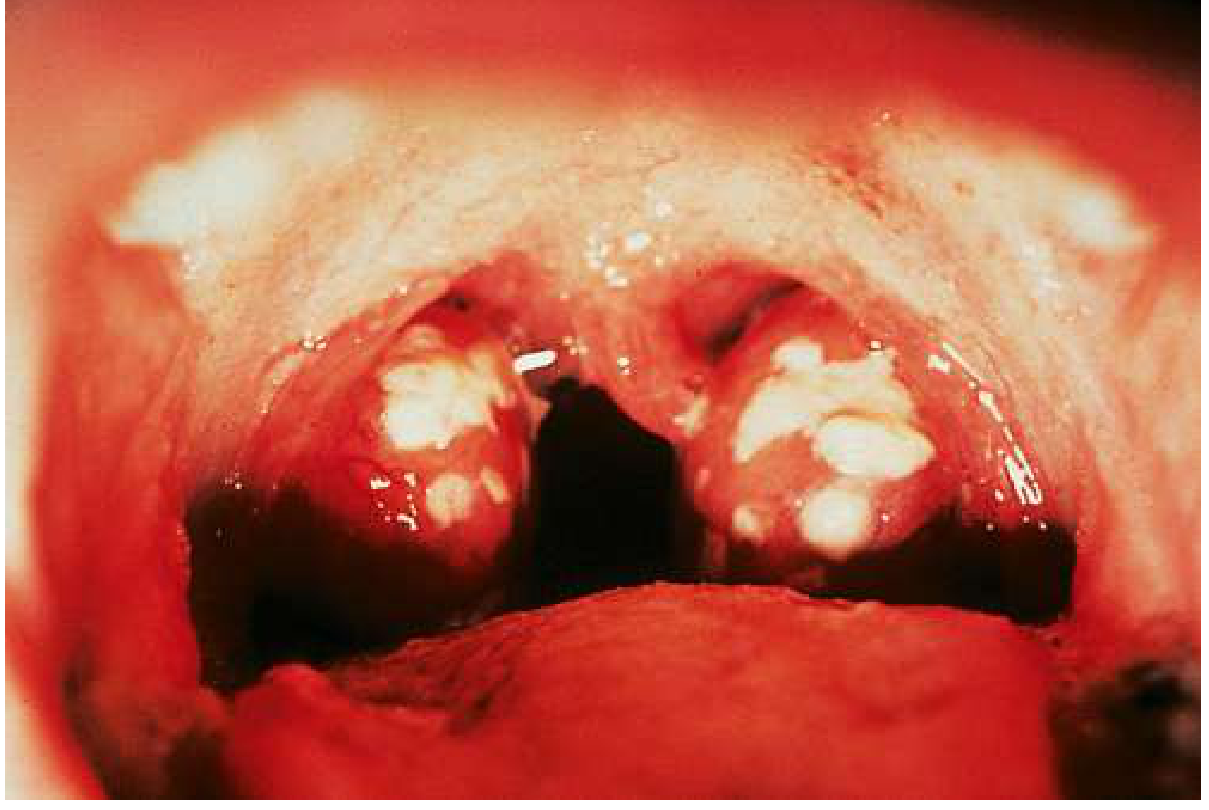
Typical appearance of bacterial (streptococcal) pharyngitis: erythematous, swollen tonsils with confluent white exudates.
Etiology (Causes)
Viral (50-80% of cases)
Viral causes dominate, especially in children. Common culprits include:
| Virus | Notes |
|---|---|
| Adenovirus | Very common |
| Epstein-Barr virus (EBV) | Causes infectious mononucleosis |
| Rhinovirus | Most frequent URI agent |
| Influenza A & B | Seasonal |
| Enterovirus (Coxsackievirus) | Hand-foot-mouth disease |
| Coronavirus, RSV, Parainfluenza | Various respiratory illnesses |
| Herpes simplex virus 1 & 2 | Can cause ulcerative pharyngitis |
| HIV | Acute retroviral syndrome |
| Cytomegalovirus | Mimics EBV mono |
Bacterial (20-40% in children, 5-15% in adults)
- Group A beta-hemolytic Streptococcus (GABHS) / Streptococcus pyogenes - the most important and most common bacterial cause
- Neisseria gonorrhoeae (in sexually active individuals)
- Corynebacterium diphtheriae (rare, but serious - diphtheria)
- Mycoplasma pneumoniae, Chlamydophila pneumoniae
- Fusobacterium necrophorum (can cause Lemierre's syndrome)
Symptoms
- Sore throat (dominant complaint)
- Odynophagia (pain on swallowing)
- Fever
- Headache
- Nausea, vomiting, abdominal pain (more common in children)
- Cough, hoarseness, coryza (suggest viral etiology)
- Myalgias, arthralgias, lethargy
- Chilliness (frank rigors are unusual in strep)
Physical Examination Findings
- Tonsillopharyngeal erythema and/or exudates
- Soft palate petechiae
- Uvular edema
- Hypertrophied tonsils
- Anterior cervical lymphadenopathy (submandibular)
- Rash (in scarlet fever)
- Conjunctivitis (suggests viral/adenovirus)
- Discrete oral ulcers/vesicles (suggest viral)
Key point: Tonsillar exudate does NOT reliably distinguish bacterial from viral etiology. Cough, rhinorrhea, oral ulcers, and conjunctivitis point strongly toward a viral cause.
Streptococcal Pharyngitis - the Clinically Most Important Type
S. pyogenes pharyngitis peaks in children aged 5-15 years, typically in winter and early spring. Classic presentation: abrupt onset of fever, sore throat, and submandibular adenopathy WITHOUT cough.
The infection triggers antibodies against M protein, streptolysin O, DNase, hyaluronidase, and pyrogenic exotoxins.
Even without treatment, symptoms typically resolve in 3-6 days - but untreated strep carries risks of serious complications.
The Centor/McIsaac Score (Modified Centor Score)
Used to predict likelihood of GABHS and guide testing/treatment:
| Criterion | Points |
|---|---|
| Tonsillar exudates | +1 |
| Tender anterior cervical lymphadenopathy | +1 |
| Absence of cough | +1 |
| Fever (>38°C) | +1 |
| Age 3-14 years | +1 |
| Age 15-44 years | 0 |
| Age ≥45 years | -1 |
- Score 0-1: GABHS unlikely - no testing or antibiotics needed
- Score 2-3: Test with rapid antigen or culture
- Score 4-5: High likelihood; consider empiric treatment
Diagnosis
Gold Standard
Throat culture - sensitivity 90-95%, but requires 18-48 hours for results.
Rapid Tests
- Rapid antigen detection test (RADT): sensitivity 80-90%, results in minutes
- Rapid nucleic acid test: sensitivity 97.5%, specificity 95% - preferred over antigen tests
- If RADT is negative in children/adolescents, a follow-up culture is recommended
- In adults, backup culture is usually not needed given the low incidence of GABHS and low rheumatic fever risk
Infectious Mononucleosis (EBV)
- Monospot (heterophile antibody) test - relatively insensitive in young children (only 25% positive in 10-24 months age)
- EBV IgM/IgG is more sensitive and specific but slower
- Atypical lymphocytes on CBC
- A telltale sign: amoxicillin or ampicillin given for presumed bacterial pharyngitis triggers a characteristic pruritic maculopapular rash
Complications of Untreated Streptococcal Pharyngitis
These are the main reason to diagnose and treat GABHS:
- Suppurative complications: peritonsillar abscess, retropharyngeal abscess, mastoiditis, otitis media, sinusitis
- Scarlet fever: strep infection + fever + characteristic sandpaper rash from pyrogenic exotoxins
- Acute rheumatic fever (ARF): autoimmune sequel affecting heart, joints, CNS; prevented by antibiotics
- Post-streptococcal glomerulonephritis (PSGN): immune complex nephritis; antibiotics do NOT prevent this
- Bacteremia
- Streptococcal toxic shock syndrome (uncommon)
Treatment
Viral Pharyngitis
- Supportive care only: analgesics (acetaminophen, NSAIDs), hydration, throat lozenges, warm saltwater gargles
- 85% resolve spontaneously within 1 week
- No antibiotics indicated
- For EBV/mono with severe tonsillar enlargement: a short course of corticosteroids may be considered to reduce swelling (though evidence is limited)
- EBV patients with splenomegaly: avoid contact sports until cleared by a physician
Bacterial (GABHS) Pharyngitis
Antibiotic of choice:
- Penicillin V (oral) or Amoxicillin - 10 days - first line
- Benzathine penicillin G - single IM injection - for compliance concerns
- Penicillin allergy: Azithromycin or clindamycin
Key points:
- Antibiotics shorten illness duration by ~1 day and prevent rheumatic fever
- Antibiotics do NOT prevent PSGN regardless of timing
- Delaying treatment by a few days is acceptable - still achieves the goal of preventing rheumatic fever while reducing unnecessary antibiotic use
- Patient satisfaction is most influenced by physician concern and reassurance - not antibiotic prescription
Special Considerations
Immunocompromised Patients
Consider opportunistic organisms: Candida albicans (thrush/pharyngitis), Mycobacterium avium.
Adolescents with Pharyngitis + High-Risk Behaviors
Acute HIV (acute retroviral syndrome) can mimic EBV pharyngitis in 50-70% of patients. Distinguishing features: no prominent exudates or tonsillar hypertrophy, mucocutaneous ulceration, rash.
Children Under 3 Years
Routine streptococcal testing is not recommended - low rates of strep and very low complication risk in this age group.
Summary Table
| Feature | Viral | Streptococcal (GABHS) |
|---|---|---|
| Cough | Common | Absent |
| Rhinorrhea | Present | Absent |
| Exudate | Possible | Common |
| Fever | Variable | Abrupt, high |
| Adenopathy | Posterior > anterior | Anterior cervical |
| Treatment | Supportive | Penicillin/Amoxicillin |
| Complications | Usually none | ARF, abscess, scarlet fever |
Sources:
- Goldman-Cecil Medicine, International Edition (Block 44)
- Tintinalli's Emergency Medicine: A Comprehensive Study (Block 10)
- Goldman-Cecil Medicine - S. pyogenes section
This is a shared conversation. Sign in to Orris to start your own chat.