
Drug induced liver injury management according to seildsinger
I'll look this up in the medical library first before answering.
Searching sources...
Reading File
Now searching the medical library for DILI management. The user mentions "Seildsinger" which likely refers to Schiff's Diseases of the Liver or a similar hepatology textbook - I'll search broadly.
Finding Sources
Finding Sources
Finding Sources
I can see Sleisenger and Fordtran's Gastrointestinal and Liver Disease is in the library (isbn 9780323609623) - that's what the user means by "Seildsinger." Let me search specifically in that book.
Finding Sources
Finding Sources
Block 22 of Sleisenger is clearly the chapter on drug-induced liver disease. Let me read that section along with searching for DILI management content.
Finding Sources
Finding Sources
Finding Sources
Finding Sources
Finding Sources
I've found the key section "Prevention and Management" at line 1230. Now let me read the critical content sections.
Reading File
Reading File
Excellent content retrieved. Let me now read the continuation of the management section and also the acetaminophen treatment section.
Reading File
Reading File
I have comprehensive content. Let me also quickly read the continuation from line 1242 to capture the full management section.
Reading File
I now have comprehensive information from Sleisenger and Fordtran's. Let me compile the full answer.
Drug-Induced Liver Injury (DILI) - Management According to Sleisenger and Fordtran's Gastrointestinal and Liver Disease
1. Core Principle: Prevention Over Treatment
Sleisenger emphasizes that with the exception of acetaminophen hepatotoxicity, little effective treatment for drug-induced liver disease exists beyond liver transplantation (LT) for fulminant failure. The pillars are therefore:
- Prevention and early detection
- Prompt withdrawal of the offending agent
- Safe use of OTC agents (acetaminophen, NSAIDs, complementary and alternative medicine [CAM] preparations)
2. Prevention Strategies
A. Idiosyncratic Hepatotoxins
- Avoid overuse - e.g., amoxicillin-clavulanic acid, flucloxacillin
- Avoid polypharmacy when possible
- Post-marketing surveillance and adverse effect reporting to monitoring agencies is mandatory
B. Dose-Dependent Hepatotoxins
- Adhere to dosage guidelines or monitor blood levels
- This approach has virtually abolished certain forms of DILI:
- Tetracycline-induced fatty liver
- Aspirin hepatitis
- Methotrexate-induced hepatic fibrosis
- Specific contraindications:
- Avoid valproic acid with other drugs in children < 3 years
- Avoid methotrexate in excess alcohol consumers
- Moderate acetaminophen doses are contraindicated in heavy drinkers and after prolonged fasting
- Halothane should NOT be readministered within 28 days or in patients with suspected prior sensitivity to a haloalkane anesthetic
3. Early Detection
- Warn patients to report: unexplained nausea, malaise, right hypochondrial pain, lethargy, or fever - these may represent the prodrome of drug-induced hepatitis
- These symptoms are an indication for liver biochemical testing
- If liver tests suggest injury - stop the drug
Protocol Screening Recommendations:
- Routine (protocol) screening is NOT generally recommended, as:
- Liver injury onset can be rapid, making monthly screening futile
- Up to 7.5% of placebo-treated patients have persistently raised ALT
- Exceptions where protocol screening IS recommended:
- Methotrexate (with biopsy/noninvasive fibrosis assessment)
- Valproic acid, isoniazid, pyrazinamide, ketoconazole, dantrolene, thiazolidinediones, synthetic retinoids
Threshold for Stopping a Drug (using isoniazid as the model):
- Stop if serum ALT > 250 U/L or > 5x ULN
- Clearer indications to stop: elevated serum bilirubin, decreased albumin, prolonged prothrombin time, or any pertinent symptoms
- Note: Rise in serum GGTP or minor elevation of alkaline phosphatase usually indicates hepatic adaptation, not injury
4. General Management of Established DILI
Step 1 - Remove the drug:
"Failure to discontinue the offending drug is the single most important factor leading to poor outcomes, such as ALF and chronic liver disease."
Step 2 - Remove unabsorbed toxin (ingested toxins only):
- Aspiration of stomach contents (metals, acetaminophen)
- Methods to remove absorbed toxins: charcoal hemoperfusion, hemodialysis (limited efficacy)
Step 3 - Beyond discontinuation: Management is symptomatic and supportive:
- NAC (N-acetylcysteine): Can be used in acute liver failure (ALF) from DILI (not just acetaminophen)
- UDCA (ursodeoxycholic acid): May help in managing drug-induced cholestasis
- Glucocorticoids: Generally ineffective in drug-induced liver disease
- Reserved for atypical/refractory cases - occasional effectiveness reported with etretinate, allopurinol, diclofenac, or ketoconazole
- Should be reserved especially for cases associated with vasculitis
- Early referral for liver transplantation in ALF
5. Specific Management - Acetaminophen (Paracetamol) Hepatotoxicity
This is the one form of DILI with a specific proven treatment algorithm.
Initial Steps:
| Time of Presentation | Action |
|---|---|
| Within 4 hours of overdose | Empty stomach via wide-bore NG tube |
| Within 1-2 hours | Oral activated charcoal (most effective) |
| Up to 4 hours | Charcoal acceptable (large overdose, sustained-release, co-ingested drugs impairing gastric emptying) |
| Airway compromise | Activated charcoal contraindicated |
Risk Assessment:
- Measure serum acetaminophen levels (wait until >4 hours post-ingestion for reliable interpretation)
- Use the Rumack-Matthew nomogram (blood level vs. time after ingestion) to estimate hepatotoxicity risk
- Indications for antidote therapy:
- Reliable history of major poisoning (>10 g)
- Blood levels in moderate- or high-risk bands on nomogram
Antidote - N-Acetylcysteine (NAC):
NAC works by donating cysteine to replenish hepatic glutathione, preventing NAPQI-mediated liver injury.
| Route | Regimen |
|---|---|
| Oral (USA preferred) | Loading dose 140 mg/kg, then 70 mg/kg every 4 hours for 72 hours |
| IV (Europe/Australia; FDA-approved) | 150 mg/kg over 15 min in 200 mL 5% dextrose; then 50 mg/kg over 4 hours; total 300 mg/kg over 24 hours |
- IV route: higher rate of hypersensitivity reactions (rash, angioedema, shock) - must be administered under close supervision
- In NAC-sensitized patients: methionine is an alternative (not commercially available; causes vomiting)
- Timing is critical: outcomes worsen with presentation > 16 hours after ingestion
Prognosis / LT Criteria:
- Assess candidacy for LT in established severe hepatic injury
- King's College Criteria are used (pH < 7.30 regardless of grade of encephalopathy; or PT > 100s + creatinine > 300 µmol/L + grade III-IV encephalopathy)
6. Valproic Acid - Specific Management
- Treatment is supportive
- IV L-carnitine supplementation can reduce hyperammonemia and improve survival in severe cases (small nonrandomized studies)
- Also useful for hyperammonemic encephalopathy without overt liver disease (psychiatric patients)
- LT has been performed but poor outcomes reported in children; may be good in selected adults
- Prevention: Avoid in children < 3 years with polypharmacy; screen high-risk groups for POLG mutations
Summary Table
| Management Component | Recommendation (Sleisenger) |
|---|---|
| Primary intervention | Withdraw the offending drug immediately |
| Symptomatic/supportive | Yes - cornerstone of management |
| NAC | For acetaminophen overdose (specific); also in DILI-related ALF |
| UDCA | Drug-induced cholestasis |
| Glucocorticoids | Generally not recommended; reserved for refractory/vasculitis cases |
| Liver transplantation | For ALF - early referral |
| Protocol screening | Only for methotrexate routinely; others selectively |
Source: Sleisenger and Fordtran's Gastrointestinal and Liver Disease, Chapter 88 - "Liver Disease Caused by Drugs" (ISBN 9780323609623), pp. 1660-1680
Hepamerz in renal failure
Quick answer: Hepamerz (L-ornithine L-aspartate, LOLA) is used to treat hepatic encephalopathy by reducing blood ammonia. In renal failure, caution is needed because aspartate is renally excreted - accumulation can worsen uremic symptoms. The IV formulation is generally avoided or dose-reduced in significant renal impairment (eGFR <30), while the oral sachet form carries a lower risk.
Searching sources...
Finding Sources
Finding Sources
Searching PubMed
ornithine aspartate renal failure hepatic encephalopathy
Finding Sources
Searching PubMed
"ornithine aspartate" renal impairment safety
Searching the Web
Hepamerz LOLA ornithine aspartate renal failure dose adjustment contraindication
I now have clear official prescribing information directly from Merz Pharma. Let me also check the medical library for additional pharmacology context.
Finding Sources
Searching PubMed
"L-ornithine L-aspartate" hepatic encephalopathy cirrhosis
I have all the information needed. Here is the complete, well-sourced answer.
Hepamerz (LOLA) in Renal Failure
What is Hepamerz?
Hepamerz is the brand name for L-Ornithine L-Aspartate (LOLA) - a stable salt of two amino acids. It is used for the treatment of latent and manifest hepatic encephalopathy (HE) in cirrhosis. It works by:
- Stimulating the urea cycle in periportal hepatocytes (ornithine activates carbamoyl phosphate synthetase and ornithine transcarbamylase)
- Stimulating glutamine synthesis in perivenous hepatocytes and skeletal muscle - providing an alternative route for ammonia detoxification
- Net result: reduction in blood ammonia levels
Renal Failure - Official Contraindication
The official Hepa-Merz prescribing information from Merz Pharma states:
Absolute Contraindication: Severely impaired renal function (renal failure). A serum creatinine level in excess of 3 mg/100 ml (3 mg/dL) can be taken as a guide.
This applies to both formulations:
- Hepa-Merz Infusion concentrate (IV, 5g LOLA per 10ml ampoule)
- Hepa-Merz Granules/Sachets (oral, 3g LOLA per sachet)
Why is LOLA Contraindicated in Renal Failure?
| Reason | Explanation |
|---|---|
| Aspartate accumulation | L-aspartate and its metabolites are renally excreted. In renal failure, these accumulate and can worsen uremic symptoms |
| Ornithine accumulation | Ornithine is also renally cleared; accumulation causes amino acid toxicity |
| Glutamine load | LOLA drives glutamine synthesis; glutaminase in the kidney (and gut) can hydrolyze this back to glutamate + ammonia - in renal failure this recycling is impaired, potentially worsening hyperammonemia paradoxically |
| No dose-adjustment data | No pharmacokinetic studies exist for dose reduction in CKD/AKI |
| Hepatorenal syndrome complexity | Many cirrhotic patients with HE have concurrent renal impairment (hepatorenal syndrome); this group requires careful individual risk-benefit assessment |
Practical Guide by Renal Function
| Creatinine | eGFR (approximate) | Recommendation |
|---|---|---|
| < 1.5 mg/dL | > 60 mL/min | Use normally |
| 1.5 - 3.0 mg/dL | 30 - 60 mL/min | Use with caution; monitor renal function closely |
| > 3.0 mg/dL | < 30 mL/min | Contraindicated (absolute) |
| Dialysis-dependent | ESRD | Avoid (no data; relative safety unknown) |
Clinical Scenario: HE + Renal Failure - What to Use Instead?
When LOLA is contraindicated due to renal failure, alternative ammonia-lowering strategies for HE include:
- Lactulose (first-line; renally safe - acts in the gut)
- Rifaximin (minimally absorbed; safe in renal failure - preferred add-on)
- Dietary protein management (adequate protein, prefer branched-chain amino acids)
- Zinc supplementation (supports urea cycle enzymes)
- Treat the precipitant - infection, GI bleed, overdiuresis, electrolyte disturbance
Note: In patients with hepatorenal syndrome (HRS), treating the underlying renal dysfunction (terlipressin + albumin for HRS type 1) can improve renal function enough to make LOLA use feasible later.
Evidence for LOLA in HE (for context)
The 2018 Cochrane meta-analysis (PMID 29762873) and Butterworth 2020 systematic review (PMID 31338724) confirm LOLA reduces blood ammonia and improves HE grade in cirrhosis. However, these trials excluded patients with significant renal impairment, so safety data in this population is absent.
Key Takeaway
Serum creatinine > 3 mg/dL = absolute contraindication to Hepamerz (both IV and oral). The mechanism is accumulation of aspartate and ornithine metabolites due to impaired renal clearance. In patients with HE and concurrent renal failure, lactulose + rifaximin remain the safe ammonia-lowering backbone.
Treatment of etectile dysfunction
Quick answer: Erectile dysfunction (ED) treatment is stepwise - starting with lifestyle modification and oral PDE5 inhibitors (sildenafil, tadalafil), then second-line options (vacuum devices, intracavernosal injections, intraurethral alprostadil), and finally surgical penile prosthesis for refractory cases. Hormonal causes need specific treatment.
Searching sources...
Reading File
Finding Sources
Finding Sources
Searching PubMed
"erectile dysfunction" treatment guidelines
Excellent - I have a 2025 EAU guideline (PMID 40340108) and multiple textbook sources. Let me read the key content in parallel.
Reading File
Reading File
Reading Article
PMID: 40340108
Good content from Goldman-Cecil. Let me now read the detailed treatment section and the pharmacology textbook content.
Reading File
Reading File
Let me read the continuation (intracavernosal injections, vacuum devices, prosthesis sections) and the Goodman & Gilman adverse effects continuation.
Reading File
Reading File
I need the intracavernosal injection and vacuum device sections. Let me read the Goldman-Cecil treatment continuation.
Reading File
I have a treatment algorithm figure - let me fetch it. I also now have comprehensive content to compile a full answer.
Loading Image
I now have everything needed for a comprehensive answer including the treatment algorithm figure. Here is the full structured response:
Treatment of Erectile Dysfunction (ED)
Treatment Algorithm
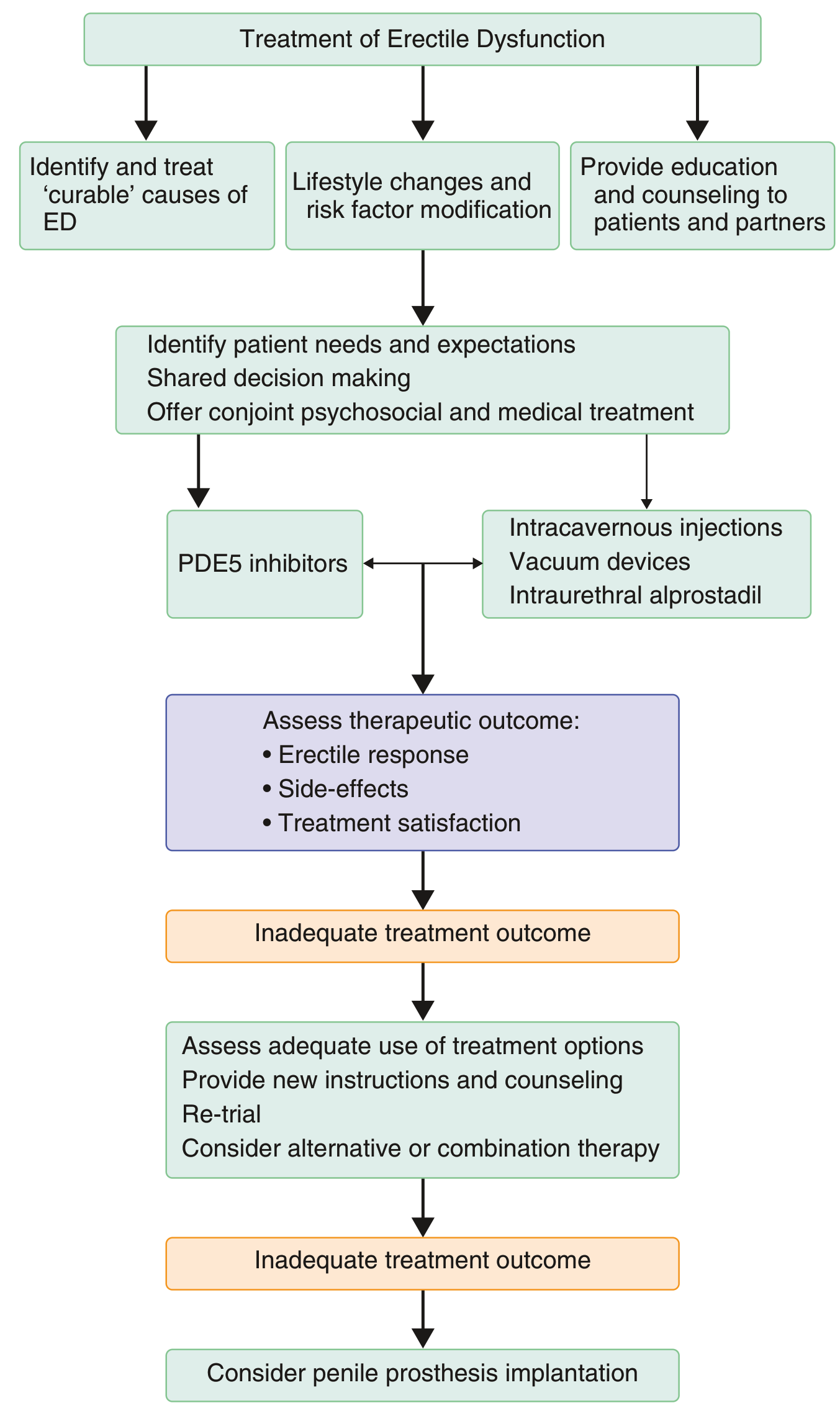
Fig. 216-4. Treatment algorithm for erectile dysfunction. From Goldman-Cecil Medicine.
Physiology Basis of Treatment
Normal erection requires nitric oxide (NO) release from vascular endothelium in the corpora cavernosa arterioles. NO activates soluble guanylyl cyclase (sGC) → cyclic GMP (cGMP) → protein kinase G activation → smooth muscle relaxation → arterial engorgement + venous outflow compression → erection.
PDE5 degrades cGMP - so inhibiting it sustains erection. This is the basis of first-line pharmacotherapy.
Step 1 - Identify and Treat Reversible Causes
Before any pharmacotherapy, address correctable etiologies:
| Cause | Treatment |
|---|---|
| Hypogonadism (testosterone <275 ng/dL + symptoms) | Testosterone replacement (gel, injection, transdermal) |
| Drug-induced ED | Review and substitute if possible |
| Diabetes / metabolic syndrome | Optimize glycemic control, weight loss |
| Cardiovascular risk factors | Treat hypertension, dyslipidemia |
| Psychogenic / relationship issues | Psychosexual counseling |
| Hyperprolactinemia | Dopamine agonist (cabergoline, bromocriptine) |
Drugs commonly causing ED (Goldman-Cecil Medicine):
- Antidepressants: SSRIs, TCAs, MAOIs
- Antihypertensives: beta-blockers, verapamil, clonidine
- Diuretics: thiazides, spironolactone
- Hormonal: corticosteroids, antiandrogens, 5α-reductase inhibitors, GnRH agonists/antagonists
- Cardiac: amiodarone, digoxin
- H2 blockers: cimetidine, ranitidine
Step 2 - Lifestyle Modification
- Weight reduction (obesity is a major modifiable risk factor)
- Exercise - improving cardiovascular fitness directly improves erectile function
- Smoking cessation
- Reduce alcohol consumption
- Patient and partner education and counseling
First-Line Treatment: Oral PDE5 Inhibitors
Mechanism
Competitively inhibit PDE5 at the cGMP hydrolysis site → elevated cGMP → sustained smooth muscle relaxation. They require sexual stimulation to work (they do not cause erection spontaneously).
Available agents (Goodman & Gilman's):
| Drug | Starting Dose | Duration of Action | Dosing |
|---|---|---|---|
| Sildenafil | 50 mg (range 25-100 mg) | 4-6 hours | On-demand, 30-60 min before sex |
| Vardenafil | 10 mg (5-20 mg) | 4-6 hours | On-demand |
| Tadalafil | 10 mg (or 5 mg daily) | Up to 36 hours | On-demand or once daily |
| Avanafil | 100 mg | ~6 hours | On-demand, 15-30 min before sex |
- Overall efficacy: ~60% of men respond
- Response rates are somewhat lower in diabetes, spinal cord injury, post-prostatectomy, and pelvic irradiation
- Daily tadalafil 5 mg (start at 2.5 mg): preferred when intercourse expected >2x/week; also beneficial for LUTS/BPH
Adverse Effects
- Common: headache, flushing, dyspepsia, nasal congestion, dizziness, back pain
- Sildenafil/vardenafil: blue-green tinting of vision (PDE6 inhibition in retina)
- Tadalafil: back pain and myalgia (PDE11 inhibition in muscle)
Key Contraindications
- Nitrates (absolute): combined use causes severe hypotension via cGMP accumulation - absolutely contraindicated
- Alpha-blockers: risk of orthostatic hypotension - use with caution, stagger dosing
- Severe hepatic impairment (metabolized by CYP3A4)
- Recent MI/stroke (relative - assess cardiovascular risk first)
Second-Line Treatments
A. Intraurethral Alprostadil (MUSE)
- Prostaglandin E1 suppository inserted into the urethra
- Starting dose: 125-250 mcg, titrate up to 500-1000 mcg
- Works locally on corpora cavernosa via cAMP-mediated smooth muscle relaxation
- Side effects: urethral burning, hypotension, dizziness
B. Intracavernosal Injections (ICI)
- Self-injected into the cavernosal space with a 27-30 gauge needle
- Agents used:
- Alprostadil (PGE1) alone - first choice for monotherapy
- "Trimix" combination: alprostadil + papaverine + phentolamine - for PDE5 non-responders
- Efficacy: high (~80-90%)
- Side effects:
- Pain at injection site
- Cavernosal fibrosis (resolves after stopping)
- Priapism (prolonged erection >4 hours) - requires urgent treatment
- Fibrosis suggesting early Peyronie disease → stop injections
- Novel: single intracavernosal botulinum neurotoxin injection improves ED in ~40-50% of patients with tunica fibrosis
C. Vacuum Erection Devices (VED)
- Mechanical pump creates negative pressure around the penis → blood drawn into corpora cavernosa
- A constriction ring is placed at base to maintain erection
- Effective, non-pharmacological, safe
- Good option for: elderly patients, anticoagulated patients, those with contraindications to drugs
- Drawback: perceived as unnatural by some couples; cold/numb erection
Third-Line Treatment: Penile Prosthesis
For men who:
- Fail or cannot tolerate all pharmacological and device-based options
- Prefer a permanent solution
Types:
| Type | Description | Pros/Cons |
|---|---|---|
| Semi-rigid (malleable) | Always firm but bendable | Simple, durable; always visibly enlarged |
| Inflatable (2-piece or 3-piece) | Fluid-filled cylinders, pump in scrotum, reservoir in abdomen | Most natural appearance; mechanical failure in 10-20% at 10 years |
Complications:
- Intraoperative: corporal perforation, urethral/bladder/bowel injury
- Postoperative: pain, infection, hematoma
- Long-term: mechanical failure (inflatable), erosion
- With proper patient/partner selection: excellent long-term satisfaction (both partners)
Special Situations
Post-Radical Prostatectomy ED
- Early penile rehabilitation with PDE5 inhibitors (nightly low-dose sildenafil) contributes to nerve recovery and erectile function restoration
Hypogonadism + ED
- Testosterone alone improves libido but not always erection
- Adding testosterone to sildenafil in partial PDE5 responders does not further improve ED
- Testosterone is indicated when serum T < 275 ng/dL with symptoms
Neurogenic ED (spinal cord injury, MS, diabetes)
- PDE5 inhibitors effective but with lower response rates
- ICI often preferred for complete spinal injury
- Viberect (vibratory device) - useful for spinal cord injury patients to promote ejaculation
2025 EAU Guidelines Update (PMID 40340108)
The latest 2025 EAU guidelines emphasize:
- Personalised treatment tailored to invasiveness, tolerability, effectiveness, and patient expectations
- Full counseling about all available modalities
- Decision-making should incorporate the patient's and partner's goals
- Concomitant ED + Peyronie disease → penile prosthesis implantation preferred
Sources: Goldman-Cecil Medicine, 2-Volume Set (ISBN 9780323930345); Goodman & Gilman's The Pharmacological Basis of Therapeutics (ISBN 9781264258079); Smith and Tanagho's General Urology 19e (ISBN 9781259834332); EAU Guidelines 2025 [PMID 40340108]
This is a shared conversation. Sign in to Orris to start your own chat.