
Bloody diarhhoe in pregnancy
Reading File
Finding Sources
Finding Sources
Searching PubMed
"bloody diarrhea" AND pregnancy AND management
Finding Sources
Finding Sources
Searching PubMed
inflammatory bowel disease pregnancy management
Reading File
Reading File
Reading Article
Reading File
Finding Sources
Reading File
Reading File
Reading File
Reading File
Finding Sources
Finding Sources
Reading File
Loading Image
Here is a comprehensive clinical overview of bloody diarrhea in pregnancy, synthesized from authoritative textbooks and current guidelines.
Bloody Diarrhea in Pregnancy
Bloody diarrhea (hematochezia) in a pregnant patient is always a significant clinical finding that requires systematic evaluation. The causes broadly fall into infectious, inflammatory (IBD), and other structural/vascular categories.
Differential Diagnosis
1. Infectious Causes (most common cause acutely)
| Organism | Key Features |
|---|---|
| Shigella | Most common bacterial cause of dysentery; fever, tenesmus, mucus |
| Campylobacter jejuni | Bloody diarrhea + crampy abdominal pain; foodborne |
| Salmonella | Fever, bacteremia possible; nontyphoidal species |
| Enterohemorrhagic E. coli (STEC/O157:H7) | Bloody diarrhea without fever; risk of HUS |
| Clostridioides difficile | History of antibiotics; pseudomembranous colitis; must rule out before starting immunosuppressives |
| Entamoeba histolytica | Travel history; amoebic colitis |
| CMV colitis | In immunocompromised patients |
Antimotility agents (loperamide) should not be used in bloody diarrhea because of risk of prolonged fever and toxic megacolon (especially in C. difficile). - Tintinalli's Emergency Medicine, p. Treatment section
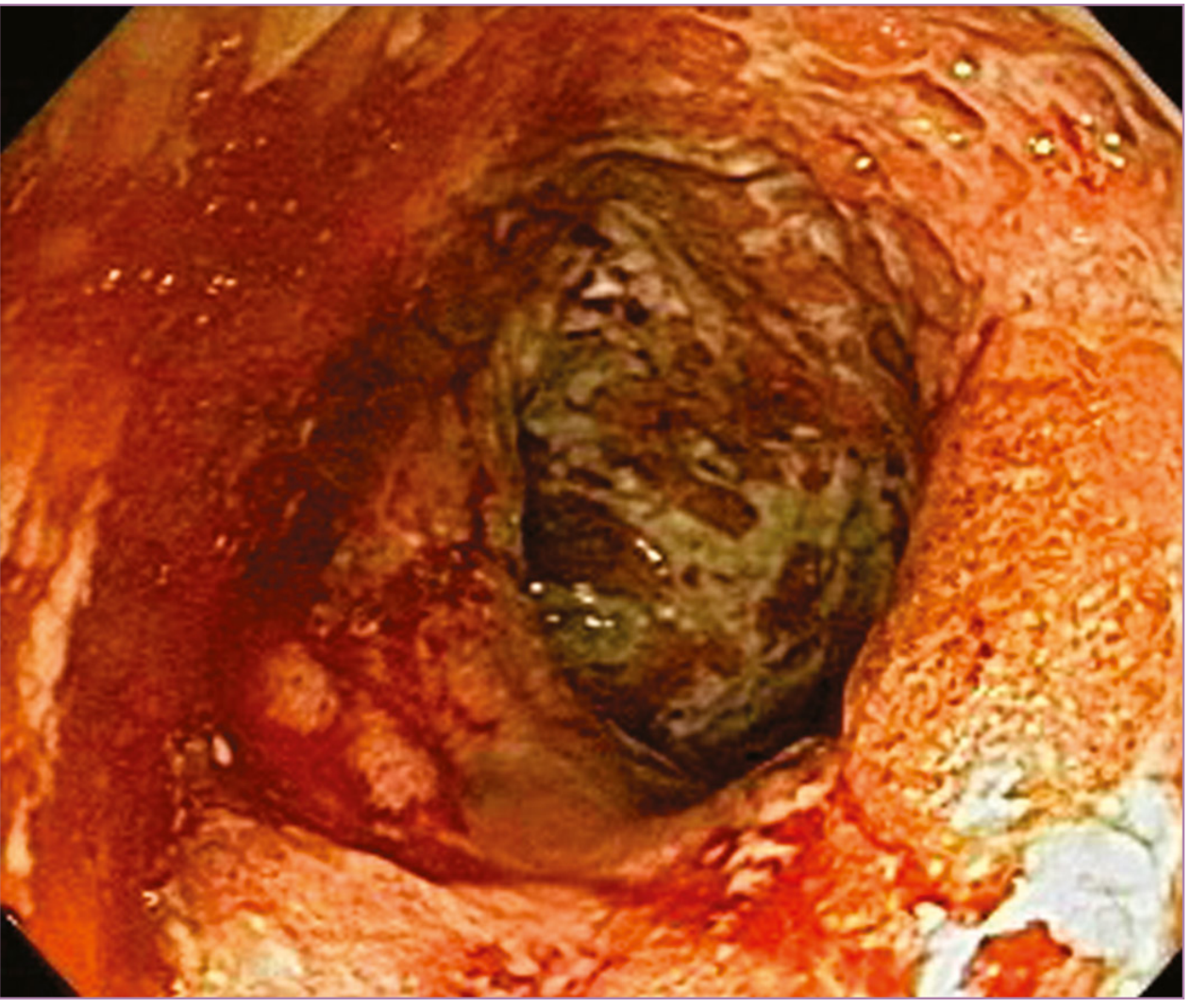
2. Inflammatory Bowel Disease (IBD) Flare
IBD (ulcerative colitis and Crohn disease) predominantly affects women of reproductive age (peak onset before age 30), making pregnancy encounters common.
Key facts:
- Approximately one-third of pregnant patients with active UC or Crohn disease will flare during pregnancy - the same annual risk as in non-pregnant women.
- Active disease at conception tends to remain active; inactive disease tends to remain inactive.
- Disease first presenting in pregnancy is typically diagnosed in the first trimester and is not more severe than in non-pregnant individuals.
- UC patients relapse more often during pregnancy than Crohn disease patients.
Creasy & Resnik's Maternal-Fetal Medicine, p. 1571
3. Other Causes
- Hemorrhoids / anorectal disease - very common in pregnancy due to constipation and increased venous pressure; frank blood on toilet paper
- Ischemic colitis - uncommon but possible
- Colorectal polyp or malignancy - rare but must not be missed
- Preeclampsia / HELLP - can cause hepatic hemorrhage but rarely presents as bloody diarrhea per se
Initial Assessment
History:
- Gestational age
- Duration and character of bleeding (bright red vs. dark/maroon, volume, admixed with stool vs. on top)
- Fever, tenesmus, abdominal cramping
- Recent antibiotic use (C. difficile risk)
- Travel history (tropical infections)
- Known IBD diagnosis
- Dietary history, sick contacts
Examination:
- Vital signs (fever, tachycardia, hypotension = alarm features)
- Abdominal exam for peritonism
- Anorectal examination
Investigations:
- Stool culture, C. difficile PCR/toxin, ova and parasites
- Stool microscopy (white cells = inflammatory; red cells)
- FBC, CRP, albumin, electrolytes, renal function
- Blood cultures if systemically unwell
- Pelvic ultrasound to confirm fetal wellbeing
For a known IBD patient with new diarrhea during pregnancy: always rule out C. difficile infection before starting any new immunosuppressive therapy. - Creasy & Resnik's Maternal-Fetal Medicine, p. 1571
Management
Infectious Diarrhea
- Oral/IV rehydration is the cornerstone
- Avoid antimotility agents in bloody/inflammatory diarrhea
- Antibiotics when indicated:
- Shigella: azithromycin (preferred in pregnancy) or ceftriaxone
- Campylobacter: azithromycin
- C. difficile: oral vancomycin (preferred) or metronidazole (acceptable; low teratogenic risk per safety data)
- STEC O157:H7: antibiotics generally avoided (risk of precipitating HUS)
- Listeria/Salmonella bacteremia: ampicillin
IBD Management in Pregnancy
The goal is to achieve and maintain clinical remission - active disease poses greater risk to the fetus than the medications used to treat it.
Safe medications (low teratogenic risk):
| Drug | Safety in Pregnancy | Notes |
|---|---|---|
| 5-aminosalicylates (mesalamine) | Low risk | First-line for mild-moderate UC |
| Sulfasalazine | Low risk | Supplement folic acid |
| Corticosteroids | Low risk | Use for flares; hypertension/hyperglycemia risk |
| Azathioprine/6-MP | Low risk | Increased preterm birth/IUGR risk; continue if on it |
| Cyclosporine A | Low risk | Salvage for fulminant colitis; increased preterm/IUGR risk |
| Metronidazole | Low risk | Short-course acceptable |
| Anti-TNF biologics (infliximab, adalimumab) | Emerging - low risk | Continue throughout pregnancy per AGA 2024 guidance |
Contraindicated in pregnancy:
- Methotrexate (teratogenic - stop ≥6 months before conception)
- Thalidomide (teratogenic)
- Ozanimod (stop ≥6 months before conception)
Creasy & Resnik's Maternal-Fetal Medicine, Table IBD medications; AGA Clinical Practice Update 2024 [PMID 39140906]
Fulminant Colitis / Severe IBD Flare in Pregnancy
This is a medical emergency:
- IV high-dose corticosteroids
- IV antibiotics (broad spectrum)
- Cyclosporine as salvage therapy
- Biological therapies (anti-TNF)
- Surgical indications are the same as in non-pregnant patients - do not delay
- Bowel surgery carries risk of premature labor, maternal and fetal mortality
- Subtotal colectomy preferred over total colectomy to preserve future fertility
- If fulminant colitis occurs after 28 weeks: consider synchronous cesarean section + subtotal colectomy
Sleisenger & Fordtran's Gastrointestinal and Liver Disease; Creasy & Resnik's
Mode of Delivery
- Cesarean section performed in up to 44% of IBD patients (higher than general population)
- Cesarean delivery is recommended for active perianal disease; individual assessment otherwise
Endoscopy in Pregnancy
Per the 2024 AGA Clinical Practice Update (PMID 39140906):
- Elective endoscopy should be deferred to the postpartum period
- Nonemergent but necessary procedures should ideally be done in the second trimester
- Endoscopy is acceptable if the clinical need (e.g., suspected severe colitis, malignancy) outweighs risk
- Flexible sigmoidoscopy is generally preferred over full colonoscopy in pregnancy when feasible
Fetal Outcomes
- Active IBD is associated with increased risk of preterm birth, low birth weight, and small for gestational age
- No increased risk of congenital anomalies from IBD itself
- Quiescent IBD at conception: pregnancy expected to proceed without increased complications
- Severe/untreated infectious diarrhea risks: dehydration, electrolyte imbalance, fetal compromise
Summary: Red Flags Requiring Urgent Escalation
- High fever + profuse bloody stool = consider severe infectious colitis or IBD flare
- Signs of peritonism = risk of perforation - urgent surgical review
- Hemodynamic instability
- Worsening despite 24-48h of appropriate therapy
- New fetal distress
Key Reference: AGA Clinical Practice Update on Pregnancy-Related Gastrointestinal and Liver Disease (2024), Gastroenterology. PMID 39140906 - Best Practice Advice: "In patients with IBD, clinical remission before conception, during pregnancy, and in the postpartum period is essential for improving outcomes of pregnancy. Biologic agents should be continued throughout pregnancy."
This is a shared conversation. Sign in to Orris to start your own chat.