
Hormone
Reading File
The query "Hormone" is broad and could cover many areas. Let me clarify what you need.
Asking for Preferences
What aspect of hormones are you interested in?
What is hormone
A hormone is a chemical messenger produced by endocrine glands (or specialized cells) that is secreted into the bloodstream and travels to target organs/tissues to regulate specific physiological processes like growth, metabolism, reproduction, and homeostasis.
Searching sources...
Finding Sources
Searching the Web
what is a hormone definition types classification physiology
Finding Sources
Reading File
Reading File
Finding Sources
Reading File
Reading File
Finding Sources
Finding Sources
Reading File
Reading File
Loading Image
Finding Sources
Reading File
Here is a thorough, textbook-grounded explanation of what a hormone is:
What is a Hormone?
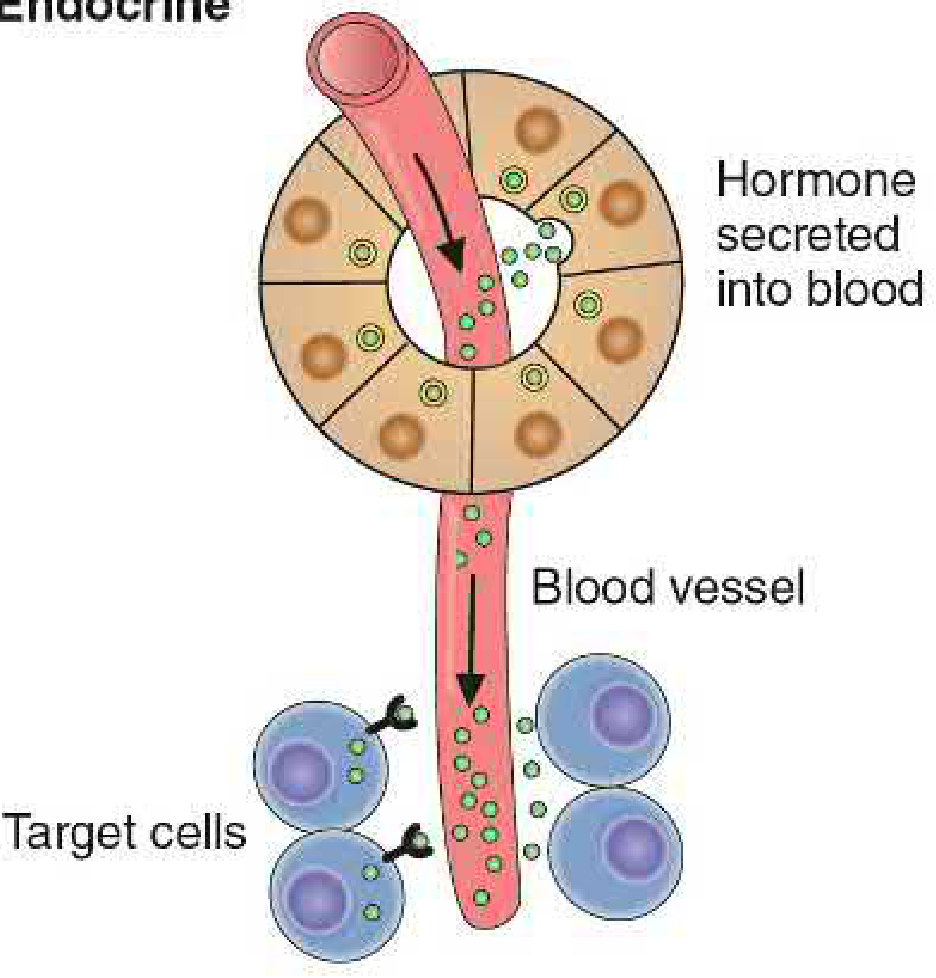
A hormone is a chemical messenger - an organic substance secreted by specialized cells (usually in endocrine glands) that is released into the bloodstream and travels to distant target cells to regulate physiological activities and maintain homeostasis.
"The endocrine system, composed of various glands and the hormones they produce, regulates growth, metabolism, homeostasis, and reproduction. Because hormones circulate and act via receptors in target tissues, they serve to coordinate physiologic responses to external or internal cues."
- Harrison's Principles of Internal Medicine, 22nd Edition
Hormone vs. Other Chemical Messengers
Hormones are a type of endocrine factor - but chemical messengers in general can act in four ways:
| Type | Where it acts | Example |
|---|---|---|
| Endocrine (hormone) | Distant cells via bloodstream | Insulin, cortisol |
| Paracrine | Nearby neighboring cells | Cytokines, neurotransmitters |
| Autocrine | Same cell that secreted it | IL-2 from T cells |
| Juxtacrine | Directly on physically touching cells | Notch signaling |
- Goodman & Gilman's Pharmacological Basis of Therapeutics
- Basic Medical Biochemistry, 6th Ed.
The diagram below illustrates how endocrine hormones are secreted into the blood and reach distant target cells:
Classification of Hormones
Hormones fall into 5 major chemical classes (Harrison's):
| Class | Examples | Receptor Location |
|---|---|---|
| 1. Amino acid derivatives | Dopamine, catecholamines, thyroid hormone (T3/T4) | Cell surface or intracellular |
| 2. Small neuropeptides | GnRH, TRH, somatostatin, vasopressin | Cell surface |
| 3. Large proteins/peptides | Insulin, LH, FSH, PTH | Cell surface |
| 4. Steroid hormones | Cortisol, estrogen, testosterone | Intracellular (nuclear receptors) |
| 5. Vitamin derivatives | Retinoids (Vit A), Vitamin D | Intracellular (nuclear receptors) |
"As a rule, amino acid derivatives and peptide hormones interact with cell-surface membrane receptors. Steroids, thyroid hormones, vitamin D, and retinoids are lipid-soluble and bind to intracellular nuclear receptors."
- Harrison's Principles of Internal Medicine, 22nd Ed.
How Do Hormones Work? (Mechanisms of Action)
Peptide/Protein Hormones (water-soluble)
- Cannot cross the cell membrane
- Bind to cell surface receptors
- Activate second messenger systems inside the cell:
- cAMP pathway (via adenylyl cyclase + G proteins) - e.g., adrenaline, glucagon
- IP3/Ca²+ pathway (via phospholipase C) - e.g., oxytocin, TRH
- Tyrosine kinase pathway - e.g., insulin, IGF-1
G proteins act as "molecular switches": when GTP is bound to the stimulatory α subunit (Gs), adenylyl cyclase is activated, producing cAMP which amplifies the hormonal signal throughout the cell.
Steroid & Thyroid Hormones (lipid-soluble)
- Cross the cell membrane freely
- Bind to intracellular nuclear receptors
- The hormone-receptor complex translocates to the nucleus, binds DNA at specific hormone response elements, and directly regulates gene transcription
- Effects are slower but longer-lasting
"Steroid hormones and thyroid hormones have the same mechanism of action... the hormone-receptor complex translocates to the nucleus, binds to DNA, and activates (or inhibits) transcription of specific genes."
- Costanzo Physiology, 7th Ed.
Key Properties of Hormones
- Specificity - A hormone affects only target cells that have its specific receptor
- Potency - Active in very small (nanomolar/picomolar) concentrations
- Feedback control - Most are regulated by negative feedback loops (e.g., cortisol inhibits CRH and ACTH)
- Pulsatile secretion - Many hormones are secreted in rhythmic pulses (e.g., GnRH every 90-120 minutes)
- Carrier proteins - Many hormones (especially steroids and thyroid hormones) circulate bound to carrier proteins; only the free fraction is biologically active
Major Endocrine Glands and Their Hormones
| Gland | Key Hormones | Function |
|---|---|---|
| Hypothalamus | GnRH, CRH, TRH, somatostatin | Master regulator of pituitary |
| Anterior pituitary | FSH, LH, TSH, ACTH, GH, prolactin | Controls other endocrine glands |
| Posterior pituitary | ADH (vasopressin), oxytocin | Water balance, uterine contraction |
| Thyroid | T3, T4, calcitonin | Metabolism, calcium |
| Adrenal cortex | Cortisol, aldosterone, androgens | Stress, salt/water balance |
| Pancreas | Insulin, glucagon | Blood glucose regulation |
| Gonads | Testosterone, estrogen, progesterone | Reproduction, development |
In summary, a hormone is a chemical signal produced by one organ that travels through the blood to regulate the activity of distant tissues - coordinating everything from metabolism and growth to reproduction and stress responses. - Costanzo Physiology, 7th Ed.; Harrison's Principles of Internal Medicine, 22nd Ed.; Goodman & Gilman's Pharmacological Basis of Therapeutics
This is a shared conversation. Sign in to Orris to start your own chat.