
Physiological consequences of sedentary lifestyle
Reading File
Now let me run parallel searches across the library and PubMed simultaneously.
Finding Sources
Searching PubMed
sedentary behavior physical inactivity physiological consequences
Finding Sources
Good results. Now let me read the most relevant sections from Braunwald's Heart Disease, Harrison's, and Fuster's Heart in parallel.
Reading File
Reading File
Reading File
Searching PubMed
sedentary behavior mortality cardiovascular metabolic
Excellent. Now let me get more detailed content from Fuster's Heart (the dedicated chapter on sedentary lifestyle and CVD) and also search for musculoskeletal, metabolic, and mental health consequences.
Finding Sources
Reading File
Searching Images
sedentary lifestyle physical inactivity cardiovascular metabolic effects diagram
Let me fetch the diagram from Fuster's Heart and get more detailed content on specific physiological mechanisms.
Loading Image
Reading File
Finding Sources
I now have extensive material. Let me get the remaining important sections on metabolic/endocrine, musculoskeletal, and mental health effects.
Reading File
Finding Sources
Finding Sources
I have comprehensive data now. Let me fetch that second muscle tissue diagram image and compile the final answer.
Loading Image
Reading File
I now have all the information needed for a comprehensive, textbook-sourced answer. Let me compile the full response.
Physiological Consequences of a Sedentary Lifestyle
A sedentary lifestyle - defined as any waking behavior consuming ≤1.5 METs while in a sitting, reclining, or lying posture - is now recognized as an independent risk factor for cardiovascular disease, metabolic disorders, and premature death, distinct from simply "not exercising enough." The cascade of consequences spans virtually every organ system.
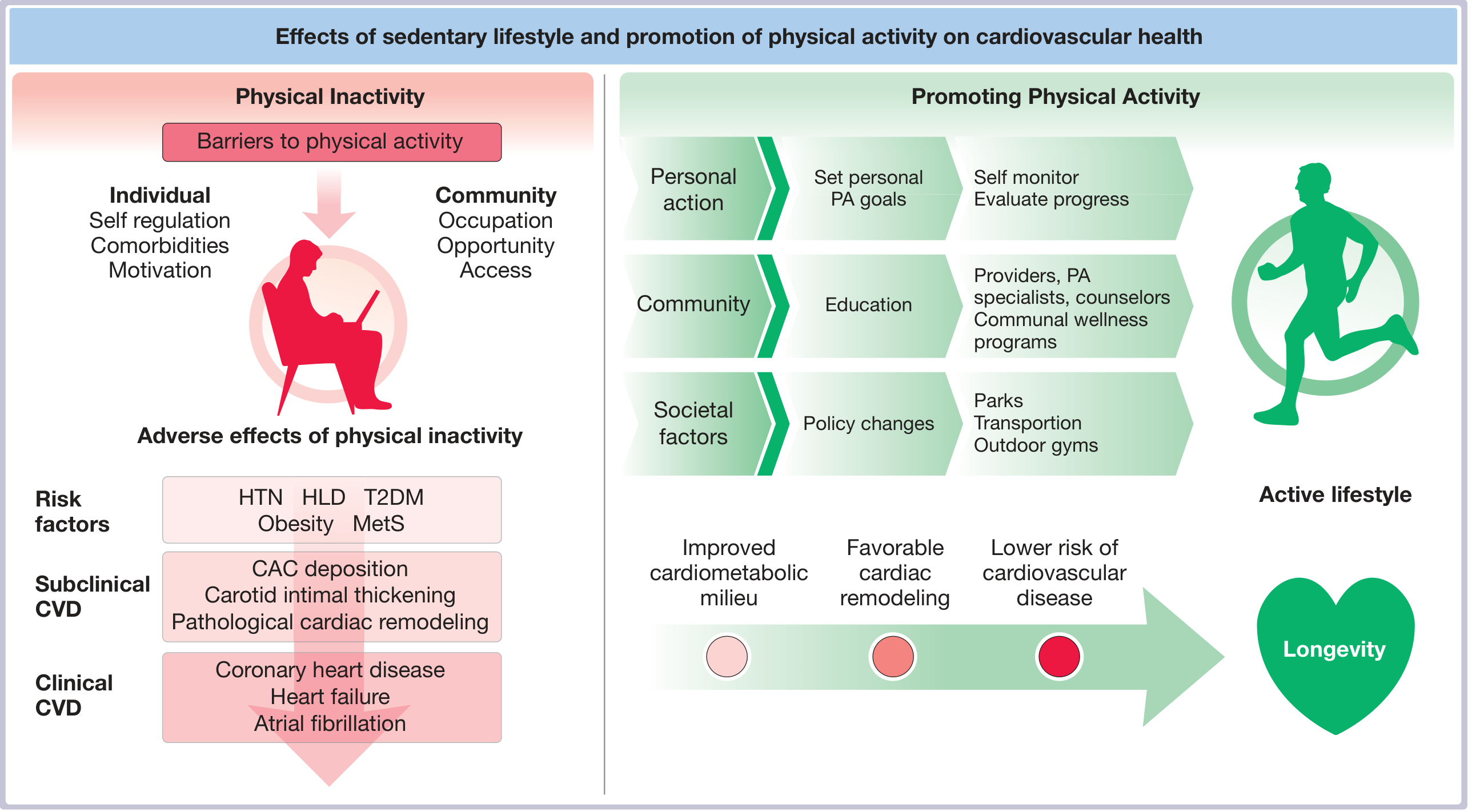
From Fuster and Hurst's The Heart, 15th Edition - Sedentary lifestyle drives CVD risk factors, subclinical CVD (CAC deposition, carotid intimal thickening, pathological cardiac remodeling), and ultimately clinical CVD (coronary heart disease, heart failure, atrial fibrillation).
1. Cardiovascular System
Independent risk factor status: Physical inactivity is an independent, modifiable risk factor for CVD events and mortality. Individuals who participate in no physical activity are at the highest risk. Goldman-Cecil Medicine notes that a number of modifiable causal risk factors for CVD - including physical inactivity - collectively account for the majority of CHD burden.
Hypertension: Multiple prospective cohort studies (Nurses' Health Study II, ACLS, CARDIA) have shown that self-reported PA is inversely associated with incident hypertension. Critically, sedentary behavior (SB) assessed by questionnaire was associated with HTN independent of overall physical activity levels. Interactive SBs such as driving and computer use were specifically associated with incident HTN. Physiologically, aerobic exercise prevents HTN via beneficial alterations in autonomic nervous system regulation and vasoconstriction. - Fuster and Hurst's The Heart, 15th Edition
Endothelial dysfunction: Sedentary individuals show:
- Decreased popliteal flow-mediated dilation
- Increased endothelial cell apoptosis
- NOS uncoupling, reduced NO bioavailability, and increased oxidative stress
- Extracellular matrix remodeling through elastin degradation by MMPs and AGE formation
- Reduced sympathetic baroreflex sensitivity with paradoxically increased sympathetic activation
Lipid derangements: A day of sedentary behavior in animal models resulted in lower triglyceride uptake into skeletal muscle, reduced lipoprotein lipase activity (impairing TG-rich lipoprotein hydrolysis), and decreased HDL-C concentrations.
Subclinical atherosclerosis: Sedentary individuals show greater carotid intimal-medial thickness (cIMT) progression. In a cohort of young individuals with hypertension followed over 6 years, sedentary individuals had significantly greater cIMT progression versus active controls. - Fuster and Hurst's The Heart, 15th Edition
Clinical CVD outcomes: Sedentary lifestyle contributes to:
- Coronary heart disease - accelerated atherosclerosis via endothelial dysfunction, dyslipidemia, and insulin resistance
- Heart failure - pathological cardiac remodeling from AGE accumulation, increased collagen cross-linking, left ventricular stiffness, and β-adrenergic receptor desensitization
- Atrial fibrillation - via autonomic imbalance and structural remodeling
2. Cellular and Molecular Mechanisms
This is one of the most important recent insights: sedentary behavior causes direct cellular damage, not merely indirect harm through risk factors.
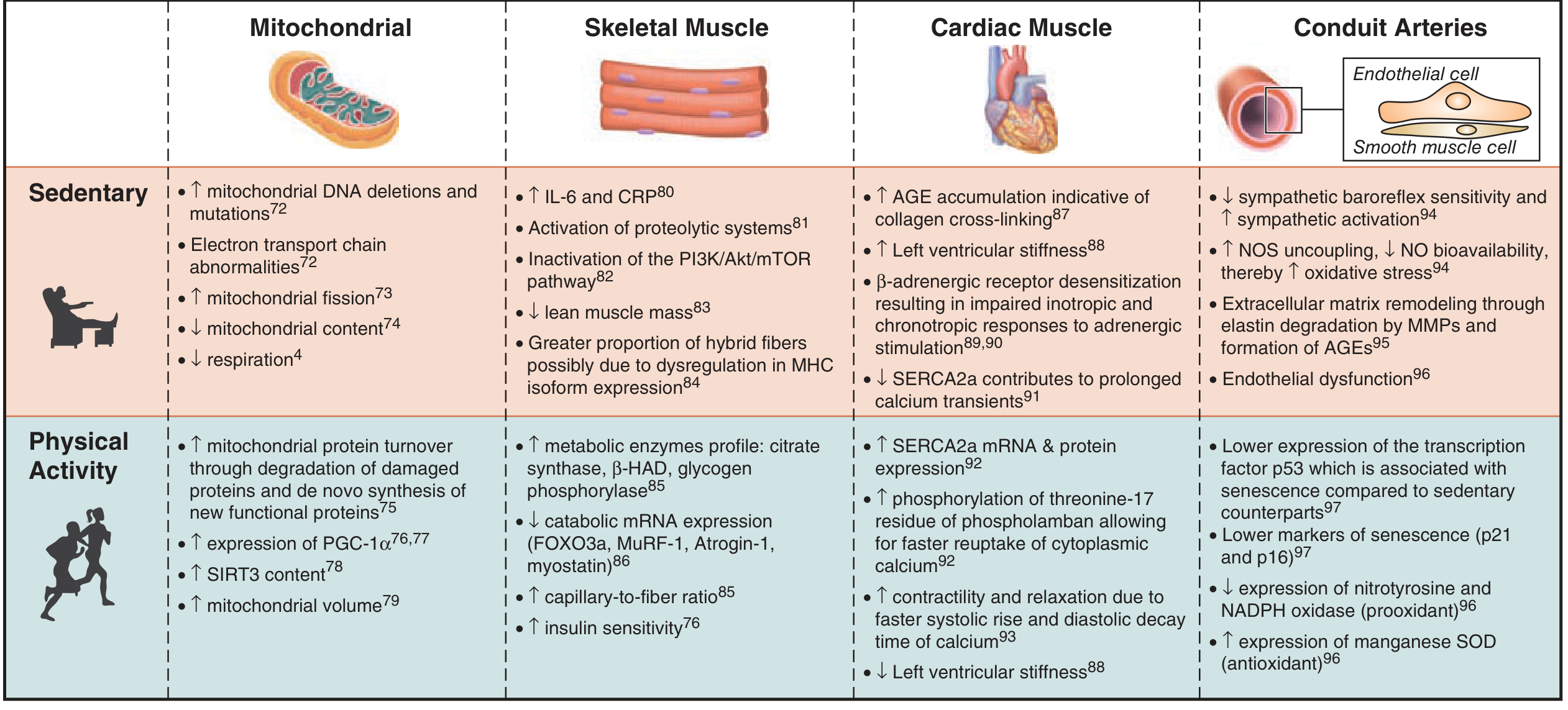
Figure 12-2, Fuster and Hurst's The Heart, 15th Edition - Cellular consequences of sedentary behavior vs. physical activity across mitochondria, skeletal muscle, cardiac muscle, and conduit arteries.
Mitochondria
| Consequence | Mechanism |
|---|---|
| Mitochondrial DNA deletions and mutations | Oxidative damage without repair signaling |
| Electron transport chain abnormalities | Reduced PGC-1α expression |
| Increased mitochondrial fission | Fragmentation of the mitochondrial network |
| Reduced mitochondrial content | Less biogenesis |
| Reduced cellular respiration | Decreased citrate synthase activity |
Sedentary individuals show lower expression of PGC-1α (peroxisome proliferator-activated receptor γ coactivator 1-α), a master regulator of mitochondrial biogenesis, which contributes directly to enhanced oxidative stress.
Skeletal Muscle
- Increased IL-6 and CRP (pro-inflammatory state)
- Activation of proteolytic systems (protein catabolism)
- Inactivation of the PI3K/Akt/mTOR pathway (anabolic signaling failure)
- Reduced lean muscle mass
- Shift toward hybrid/mixed fiber types from dysregulation of myosin heavy chain (MHC) isoform expression
- Reduced insulin sensitivity (due to impaired GLUT-4 translocation)
Cardiac Muscle
- Increased AGE accumulation causing collagen cross-linking
- Left ventricular stiffness
- β-adrenergic receptor desensitization - impaired inotropic and chronotropic responses
- Reduced SERCA2a activity, causing prolonged intracellular calcium transients and impaired diastolic relaxation
3. Metabolic and Endocrine Consequences
Metabolic syndrome: Harrison's 22E directly links sedentary lifestyle to metabolic syndrome components - increased central adiposity, reduced HDL, elevated triglycerides, raised blood pressure, and glucose intolerance in genetically susceptible individuals. Compared with those watching TV/screens <1 h/day, those doing so >4 h/day have a twofold increased risk of metabolic syndrome. - Harrison's Principles of Internal Medicine, 22nd Edition
Type 2 diabetes: Prolonged sedentary behavior causes:
- Impaired postprandial glucose handling (higher glucose and insulin levels vs. active individuals)
- Insulin resistance via defective Akt signaling in adipose and muscle tissue
- Impaired GLUT-4 translocation to skeletal muscle cell membranes
- Ectopic fat storage in non-adipose tissue
Lifestyle modification incorporating PA has been shown to reduce incident type 2 diabetes by 58% (Finnish Diabetes Prevention Study). - Fuster and Hurst's The Heart, 15th Edition
Lipid metabolism: Sedentary behavior directly impairs lipid trafficking. Animal and human models of prolonged inactivity (reducing from >10,000 to <5,000 steps/day) consistently show dyslipidemia through reduced LPL activity and impaired fatty acid oxidation.
Obesity: A sedentary lifestyle - particularly sedentary occupation and inactive recreation - is a primary driver of unhealthy weight gain. Central adiposity feeds forward into insulin resistance, HTN, and dyslipidemia (the metabolic syndrome cluster). - Park's Textbook of Preventive and Social Medicine
4. Musculoskeletal Consequences
- Sarcopenia: Loss of lean muscle mass and strength, accelerated by proteolytic pathway activation (FOXO3a, MuRF-1, Atrogin-1, myostatin upregulation), inactivation of the PI3K/Akt/mTOR anabolic pathway, and reduced capillary-to-fiber ratio
- Reduced bone mineral density: Mechanical loading from physical activity stimulates osteoblast activity via Wolff's law. Without this stimulus, bone remodeling favors resorption, predisposing to osteoporosis
- Deconditioning: Reduced flexibility, joint stability, and postural muscle tone; increased risk of musculoskeletal injury upon return to activity
- Venous stasis: Prolonged sitting impairs calf muscle pump function, promoting deep vein thrombosis and chronic venous insufficiency
5. Respiratory Consequences
- Reduced cardiorespiratory fitness (CRF) - CRF is a strong, independent inverse predictor of CVD mortality
- Decreased maximal oxygen uptake (VO₂ max)
- Reduced respiratory muscle strength
- Predisposition to atelectasis, particularly during illness-related immobility
6. Neurological and Mental Health Consequences
- Depression and anxiety: Physical inactivity is associated with increased rates of depression, anxiety, and suicidal behaviors, particularly in adolescents - Kaplan & Sadock's Comprehensive Textbook of Psychiatry
- Cognitive decline: Regular PA enhances cerebral blood flow, neuroplasticity, and BDNF (brain-derived neurotrophic factor) expression; sedentary behavior deprives the brain of these signals
- Impaired autonomic regulation: Reduced parasympathetic tone and increased sympathetic dominance at rest; lower heart rate variability
7. Cancer Risk
Physical inactivity is an independent risk factor for several malignancies, including colorectal cancer. Sedentary lifestyle increases colorectal cancer risk through obesity, altered insulin/IGF-1 signaling, and reduced GI motility. - Maingot's Abdominal Operations
8. Accelerated Aging
- Vascular senescence: Sedentary individuals show higher expression of senescence markers p21 and p16, and elevated nitrotyrosine and NADPH oxidase (prooxidant). Exercise reduces these markers and increases antioxidant manganese SOD.
- Frailty: Sedentary behavior is a major contributor to frailty, functional decline, and falls in older adults, driven by combined muscle loss, reduced balance, and poor cardiovascular reserve
- Multimorbidity: Sedentary lifestyle is a shared risk factor for multiple co-occurring chronic diseases (CVD, T2DM, osteoarthritis, depression), creating compounding burden - Rheumatology, 2-Volume Set
Summary Table
| System | Key Consequences |
|---|---|
| Cardiovascular | Hypertension, dyslipidemia, endothelial dysfunction, atherosclerosis, CHD, HF, AF |
| Metabolic | Insulin resistance, T2DM, metabolic syndrome, dyslipidemia, central obesity |
| Cellular/Molecular | Mitochondrial dysfunction, oxidative stress, inflammation (IL-6, CRP↑) |
| Musculoskeletal | Sarcopenia, osteoporosis, deconditioning, venous stasis |
| Respiratory | Reduced CRF, decreased VO₂ max |
| Neurological | Depression, anxiety, cognitive decline, autonomic imbalance |
| Oncological | Increased colorectal cancer risk |
| Aging | Accelerated vascular senescence, frailty, multimorbidity |
Recent evidence note: A 2023 systematic review and meta-analysis (PMID 37523952) confirmed that sedentary behavior patterns are significantly associated with increased risk of non-communicable diseases and all-cause mortality. A 2026 Cochrane review (PMID 41810896) confirms that high-intensity interval training reverses cardiometabolic syndrome components in previously sedentary populations, reinforcing the direct causal relationship between inactivity and these pathological states.
Sources: Fuster and Hurst's The Heart (15th Ed.), Harrison's Principles of Internal Medicine (22nd Ed.), Goldman-Cecil Medicine, Robbins & Cotran Pathologic Basis of Disease, Park's Preventive and Social Medicine, Kaplan & Sadock's Comprehensive Textbook of Psychiatry, Braunwald's Heart Disease, Swanson's Family Medicine Review.
Physiological consequences of sedentary lifestyle
Reading File
Searching sources...
Finding Sources
Finding Sources
Searching PubMed
sedentary behavior mortality cardiovascular metabolic
Reading File
Reading File
Finding Sources
Reading File
Finding Sources
Loading Image
Loading Image
Reading File
I now have thorough textbook content from multiple authoritative sources. Here is the complete, well-cited answer.
Physiological Consequences of a Sedentary Lifestyle
A sedentary lifestyle is defined as any waking behavior consuming ≤1.5 METs while sitting, reclining, or lying. It is now established as an independent risk factor for cardiovascular disease, metabolic disorders, and all-cause mortality - separate from simply "not exercising enough." The physiological damage spans virtually every organ system.
Overview Diagram
Fuster and Hurst's The Heart, 15th Edition - Physical inactivity drives CVD risk factors → subclinical CVD (CAC deposition, carotid intimal thickening, pathological cardiac remodeling) → clinical CVD (coronary heart disease, heart failure, atrial fibrillation).
1. Cardiovascular Consequences
A. Independent Risk Factor Status
Physical inactivity is a modifiable, independent causal risk factor for CVD events and mortality. Individuals with no physical activity are at the highest risk. This relationship persists even after adjusting for all other traditional risk factors. - Goldman-Cecil Medicine
B. Hypertension
Multiple large prospective studies (Nurses' Health Study II, CARDIA, ACLS) show an inverse association between physical activity and incident hypertension. Critically, sedentary behavior (SB) is associated with HTN independent of total physical activity levels - interactive SBs like driving and computer use independently predicted incident HTN. The mechanism involves impaired autonomic nervous system regulation and augmented vasoconstriction signaling. - Fuster and Hurst's The Heart, 15th Ed.
C. Dyslipidemia
Even a single day of sedentary behavior in animal models produces:
- Reduced triglyceride uptake into skeletal muscle
- Decreased lipoprotein lipase (LPL) activity - impairing hydrolysis of TG-rich lipoproteins
- Lowered HDL-C concentrations
This directly worsens the lipid profile and accelerates atherogenesis.
D. Subclinical Atherosclerosis
- Carotid intimal-medial thickness (cIMT): Sedentary individuals show greater cIMT progression. A 6-year follow-up study of young hypertensive patients found significantly greater cIMT progression in sedentary vs. active individuals.
- Coronary artery calcium (CAC): Cardiorespiratory fitness (CRF) is inversely associated with incident CAC and CAC progression.
- Endothelial dysfunction: Reducing steps from >10,000 to <5,000/day acutely caused endothelial cell activation, decreased popliteal flow-mediated dilation, and enhanced endothelial cell apoptosis in healthy volunteers. - Fuster and Hurst's The Heart, 15th Ed.
E. Pathological Cardiac Remodeling
Sedentary behavior is linked to:
- Increased left ventricular (LV) stiffness and diastolic dysfunction
- Reduced LV compliance (increased collagen cross-linking from AGE accumulation)
- Impaired LV filling (diastolic dysfunction) - a precursor to heart failure with preserved ejection fraction (HFpEF)
- Increased arterial stiffness compared to active individuals
F. Clinical CVD Outcomes
- Coronary heart disease (CHD) - via accelerated atherosclerosis, endothelial dysfunction, dyslipidemia, insulin resistance
- Heart failure (HF) - via pathological LV remodeling, impaired SERCA2a function, β-adrenergic receptor desensitization
- Atrial fibrillation (AF) - via autonomic imbalance and structural remodeling of the myocardium
2. Cellular and Molecular Mechanisms
This is among the most important mechanistic insights: sedentary behavior causes direct cellular damage, not merely indirect harm through risk factor accumulation.
Figure 12-2, Fuster and Hurst's The Heart, 15th Ed. - Cellular effects of sedentary behavior vs. physical activity across mitochondria, skeletal muscle, cardiac muscle, and conduit arteries.
Mitochondria
| Consequence of Sedentary Behavior | Mechanism |
|---|---|
| Mitochondrial DNA deletions and mutations | Oxidative damage without repair signaling |
| Electron transport chain (ETC) abnormalities | Impaired respiratory complex function |
| Increased mitochondrial fission | Network fragmentation |
| Reduced mitochondrial content | Decreased biogenesis |
| Reduced cellular respiration | Lower citrate synthase activity |
The key driver is reduced expression of PGC-1α (peroxisome proliferator-activated receptor γ coactivator 1-α), the master regulator of mitochondrial biogenesis, leading directly to enhanced oxidative stress.
Skeletal Muscle
- ↑ IL-6 and CRP (systemic pro-inflammatory state)
- Activation of proteolytic systems (muscle catabolism)
- Inactivation of PI3K/Akt/mTOR pathway (failure of anabolic signaling)
- ↓ Lean muscle mass (sarcopenia precursor)
- Shift to hybrid fiber types from dysregulation of myosin heavy chain (MHC) isoform expression
- ↓ Insulin sensitivity - GLUT-4 is impaired at rest without muscle contractions to stimulate its membrane translocation - Textbook of Family Medicine, 9th Ed.
Cardiac Muscle
- ↑ Advanced glycation end-product (AGE) accumulation → collagen cross-linking
- ↑ LV stiffness
- β-adrenergic receptor desensitization → impaired inotropic and chronotropic responses to stress
- ↓ SERCA2a activity → prolonged intracellular Ca²⁺ transients → impaired diastolic relaxation
Conduit Arteries
- ↓ Sympathetic baroreflex sensitivity + ↑ sympathetic activation
- NOS uncoupling → ↓ nitric oxide (NO) bioavailability → ↑ oxidative stress
- Extracellular matrix remodeling via elastin degradation by MMPs and AGE formation
- Endothelial dysfunction and accelerated vascular senescence (↑ p21, p16 expression)
3. Metabolic and Endocrine Consequences
Metabolic Syndrome
A sedentary lifestyle directly promotes all five components of metabolic syndrome:
- Central adiposity
- Hypertriglyceridemia
- Low HDL-C
- Elevated blood pressure
- Impaired fasting glucose / insulin resistance
People who watch TV or use screens >4 hours/day have a twofold increased risk of metabolic syndrome compared to those using screens <1 hour/day. - Harrison's Principles of Internal Medicine, 22nd Ed.
Type 2 Diabetes Mellitus
- Elevated postprandial glucose and insulin levels vs. active individuals
- Insulin resistance through defective Akt/PI3K signaling in adipose and skeletal muscle
- Impaired GLUT-4 translocation in skeletal muscle (GLUT-4 requires muscle contractions for membrane expression)
- Ectopic fat deposition in liver, muscle, and viscera
Lifestyle modification incorporating physical activity reduces incident T2DM by 58% (Finnish Diabetes Prevention Study). - Fuster and Hurst's The Heart, 15th Ed.
Obesity
Sedentary occupations and inactive recreation are primary drivers of unhealthy weight gain and central adiposity, which feed forward into insulin resistance, HTN, and dyslipidemia in a self-amplifying cycle. - Park's Textbook of Preventive and Social Medicine
4. Musculoskeletal Consequences
| Consequence | Mechanism |
|---|---|
| Sarcopenia | PI3K/Akt/mTOR suppression; upregulation of catabolic genes (FOXO3a, MuRF-1, Atrogin-1, myostatin); reduced capillary-to-fiber ratio |
| Osteoporosis | Loss of mechanical loading stimulus for osteoblast activity (Wolff's law); bone remodeling shifts toward resorption |
| Deconditioning | Reduced flexibility, joint stability, and postural muscle tone |
| Venous stasis / DVT | Impaired calf muscle pump → venous pooling in lower limbs → risk of deep vein thrombosis |
| Accelerated sarcopenic obesity | Loss of muscle mass combined with fat gain worsens insulin resistance further |
5. Respiratory and Cardiorespiratory Fitness
- Decreased VO₂ max and maximal oxygen uptake
- Reduced cardiorespiratory fitness (CRF) - itself a strong, independent, inverse predictor of cardiovascular mortality
- Lower respiratory muscle strength and endurance
- Susceptibility to atelectasis during illness-related immobility
6. Neurological and Psychiatric Consequences
- Depression and anxiety: Physical inactivity is associated with high levels of depression, anxiety, and suicidal behaviors, particularly in adolescents. - Kaplan & Sadock's Comprehensive Textbook of Psychiatry
- Cognitive decline: Physical activity promotes cerebral blood flow, neuroplasticity, and BDNF release; sedentary behavior deprives the brain of these trophic signals
- Autonomic dysregulation: Reduced heart rate variability, diminished parasympathetic tone, heightened resting sympathetic activity
7. Oncological Risk
Physical inactivity is an independent risk factor for colorectal cancer - through obesity, elevated insulin and IGF-1 signaling, chronic inflammation, and reduced GI motility. - Maingot's Abdominal Operations
8. Accelerated Aging and Multimorbidity
- Vascular senescence: Sedentary individuals show higher p21 and p16 expression (senescence markers), elevated nitrotyrosine, and increased NADPH oxidase activity (prooxidant)
- Frailty: Combined muscle loss, impaired balance, and poor cardiovascular reserve accelerate the frailty syndrome in older adults
- Multimorbidity: Sedentary lifestyle is a shared upstream risk factor for co-occurring chronic diseases - CVD, T2DM, osteoarthritis, depression, and chronic kidney disease - creating compounding disease burden - Rheumatology, 2-Volume Set (2022)
- Physical inactivity exacerbates age-related pathophysiologic changes, amplifying the health consequences in older populations - Braunwald's Heart Disease, 2-Vol Set
Summary
| System | Key Physiological Consequences |
|---|---|
| Cardiovascular | HTN, dyslipidemia, endothelial dysfunction, atherosclerosis, LV stiffness, CHD, HF, AF |
| Metabolic | Insulin resistance, T2DM, metabolic syndrome, central obesity, ectopic fat |
| Cellular/Molecular | Mitochondrial dysfunction (↓PGC-1α), oxidative stress, systemic inflammation (↑IL-6, CRP) |
| Musculoskeletal | Sarcopenia, osteoporosis, deconditioning, venous stasis, DVT risk |
| Respiratory | ↓ VO₂ max, ↓ CRF, ↓ respiratory muscle strength |
| Neurological/Psychiatric | Depression, anxiety, cognitive decline, autonomic imbalance |
| Oncological | ↑ colorectal cancer risk |
| Aging | Vascular senescence, frailty, multimorbidity amplification |
Recent evidence: A 2023 systematic review and meta-analysis (PMID 37523952) confirmed that sedentary behavior patterns significantly increase risk of non-communicable diseases and all-cause mortality. A 2026 Cochrane review (PMID 41810896) confirms that HIIT reverses cardiometabolic syndrome in previously sedentary populations, reinforcing the direct causal role of inactivity in these pathological states.
Primary sources: Fuster and Hurst's The Heart (15th Ed.), Harrison's Principles of Internal Medicine (22nd Ed.), Goldman-Cecil Medicine, Textbook of Family Medicine (9th Ed.), Park's Preventive and Social Medicine, Kaplan & Sadock's Comprehensive Textbook of Psychiatry, Braunwald's Heart Disease, Maingot's Abdominal Operations, Rheumatology 2-Vol Set (2022).
This is a shared conversation. Sign in to Orris to start your own chat.