
Brachial plexus palsy
Reading File
Now I'll search the medical library and PubMed in parallel for comprehensive coverage.
Finding Sources
Finding Sources
Searching PubMed
"brachial plexus" AND palsy
Good. I found the primary source — Miller's Review of Orthopaedics, block2. Let me read the dedicated section and also the neurology textbook section in parallel.
Reading File
Reading File
Searching Images
brachial plexus anatomy diagram Erb Klumpke palsy
I now have comprehensive content. Let me also quickly check the Schwartz's Surgery section for adult/traumatic brachial plexus details.
Reading File
I now have comprehensive, authoritative content from multiple textbooks. Here is a complete synthesis:
Brachial Plexus Palsy
Anatomy Overview
The brachial plexus arises from nerve roots C5–T1, forming trunks → divisions → cords → terminal branches that supply the entire upper extremity. Injury anywhere along this chain produces characteristic patterns of motor and sensory deficit.
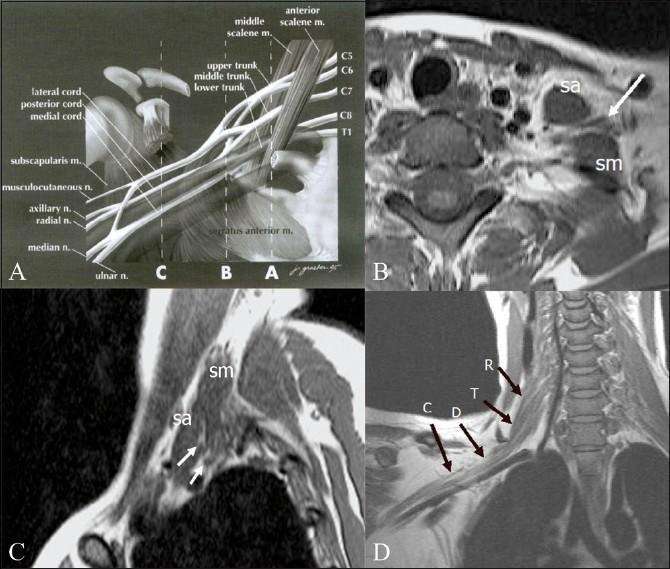
Classification by Level
Three clinically recognized patterns:
| Type | Roots | Deformity | Prognosis |
|---|---|---|---|
| Erb-Duchenne palsy | C5, C6 | "Waiter's tip" — shoulder adducted + internally rotated, elbow extended | Best; most common |
| Klumpke palsy | C8, T1 | "Claw hand" — intrinsic hand muscle weakness; ± Horner syndrome | Poor |
| Total plexus palsy | C5–T1 | Complete arm paralysis | Worst |
Erb's Palsy (C5, C6)
- Most common form (~90% of birth palsies)
- Loss of shoulder abduction/external rotation and elbow flexion
- Arm hangs at side, internally rotated ("waiter's tip" or "bellhop's tip" position)
- Biceps reflex absent; asymmetric Moro reflex
- Hand movements typically spared
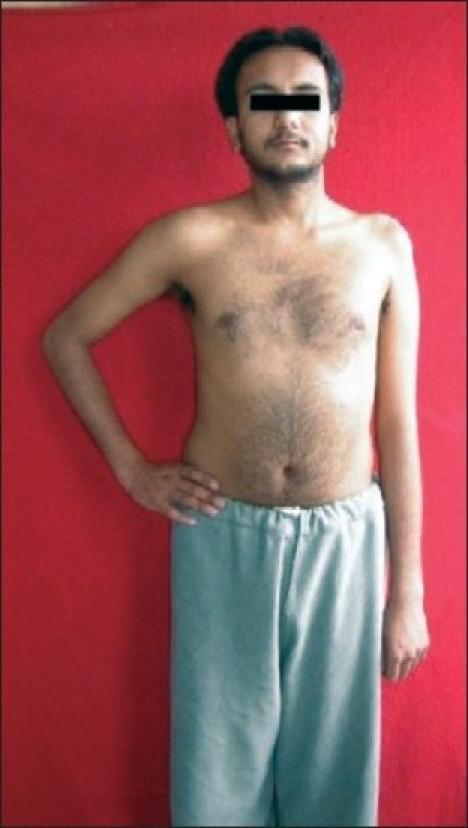
Klumpke's Palsy (C8, T1)
- Rare; results from stretch or compression of lower plexus
- Claw hand deformity; intrinsic hand muscle weakness (resembles ulnar nerve injury)
- Grasp reflex absent
- Associated with Horner syndrome (ptosis, miosis, anhidrosis) from T1 sympathetic fiber involvement
Etiology
Birth (Obstetric) Brachial Plexus Palsy
- Incidence: ~2 per 1,000 live births
- Risk factors: large neonate, shoulder dystocia, forceps/vacuum delivery, breech presentation, prolonged labor
- Mechanism: lateral neck stretch during delivery forces head away from shoulder, stretching the plexus
- May co-occur with: fractured clavicle or humerus, cervical cord injury, facial palsy, diaphragmatic paralysis (C3–C5 injury)
Adult/Traumatic Brachial Plexus Injury
- Motorcycle accidents (high-energy traction/avulsion)
- Glenohumeral joint dislocation
- Fall on outstretched hand (abrupt shoulder girdle movement)
- Penetrating/sharp injury
- Pancoast tumor (apical lung tumor — compressive, lower trunk)
Pathology of Nerve Injury (Sunderland/Seddon)
| Grade | Type | Definition | Recovery |
|---|---|---|---|
| I | Neurapraxia | Temporary failure, no axonal disruption | Hours to months (often 2–4 weeks) |
| II | Axonotmesis | Axon disrupted, endoneurium intact; Wallerian degeneration distally | Possible; axons regenerate at ~1 mm/day |
| III | Neurotmesis | Axons + endoneurium disrupted; epineurium may or may not be intact | Poor without surgery; neuroma formation common |
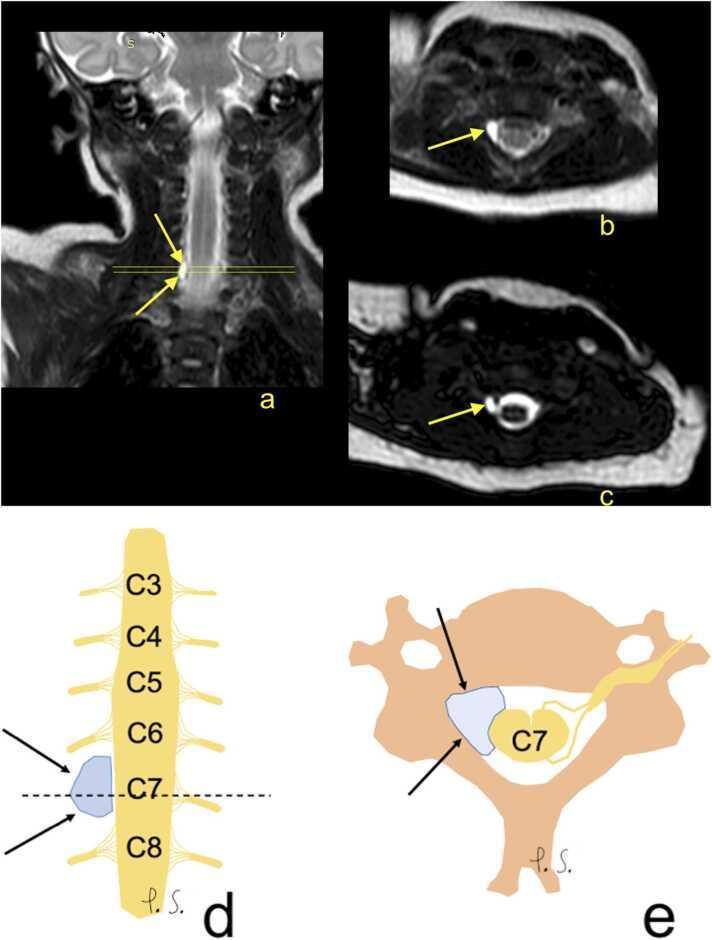
Nerve root avulsion (preganglionic) is the most severe form — radiologically seen as pseudomeningocele on MRI/CT myelography.
Clinical Features
- Shoulder: internal rotation contracture; progressive glenoid hypoplasia in ~70% of children with significant contracture
- Elbow and wrist: flexion contractures
- Posterior subluxation of the humeral head with glenoid erosion — must be actively prevented
- Hand function varies with level of injury
Investigations
- Serial clinical examination is the cornerstone (EMG/NCS technically challenging in neonates)
- EMG/NCS: perform at 3–6 weeks post-injury if deficits persist (before 3 weeks, Wallerian degeneration is incomplete, making results uninformative)
- Axillary lateral radiograph: evaluate humeral head position in glenoid
- CT scan: preferred over MRI for surgical planning of shoulder reconstruction (better bone detail)
- MRI: identifies pseudomeningocele and nerve root avulsion in severe cases
Prognosis
| Factor | Implication |
|---|---|
| Improvement within 2–4 weeks | Full recovery likely |
| Absent biceps function at 3 months | Indication for surgical reconstruction |
| Absent biceps function at 6 months | Poor prognosis |
| Horner syndrome | Poor prognosis |
| Total plexus palsy | Worst prognosis |
-
90% of birth palsy cases eventually resolve without intervention
- ~25% of patients have persistent deficits
Treatment
Conservative (First-line)
- Passive range of motion (ROM) exercises — key to preventing contractures
- Focus on: passive elbow motion, shoulder elevation, abduction, and external rotation
- Occupational + physical therapy at specialized multidisciplinary center by 1 month of age
- Await return of motor function up to 18 months
Surgical Options
Early surgery (nerve-focused):
- Microsurgical nerve grafting — typically using sural nerve as graft (sensory only, minor donor deficit)
- Indicated if no spontaneous recovery by 3 months
- Intraoperative electrical testing: if conduction present → observe; if absent → resect and anastomose
Late surgery (deformity correction):
- Latissimus dorsi and teres major transfer to external rotators of shoulder (L'Episcopo procedure)
- Tendon transfers for elbow flexion — Clark pectoral transfer, Steindler flexorplasty
- Pectoral and subscapularis release for internal rotation contracture + glenoid hypoplasia (< 5 years old)
- Subscapularis tendon release before age 2 → improved active external rotation
- Proximal humerus rotational osteotomy (> 5 years old)
Key Exam Points (High-Yield)
- Erb palsy = C5/C6 = waiter's tip = most common = best prognosis
- Klumpke palsy = C8/T1 = claw hand + Horner syndrome = poor prognosis
- No biceps function at 3 months → consider surgery; at 6 months → poor prognosis
- Horner syndrome = poor prognostic sign
- Glenoid hypoplasia develops in 70% of children with significant internal rotation contracture
- Axon regeneration rate = 1 mm/day; recovery window up to 18 months
- EMG/NCS: wait 3–6 weeks before performing (Wallerian degeneration must be complete)
Sources: Miller's Review of Orthopaedics 9th Ed., p. 260; Bradley & Daroff's Neurology in Clinical Practice, p. 2870; Schwartz's Principles of Surgery 11th Ed., p. 1804
This is a shared conversation. Sign in to Orris to start your own chat.