
Clinical cases of acid base balance biochemistry for MBBS exams
Reading File
Now let me search the medical library for acid-base balance content relevant to MBBS exams.
Finding Sources
Finding Sources
Reading File
Reading File
Finding Sources
Reading File
Reading File
Reading File
Reading File
Reading File
Reading File
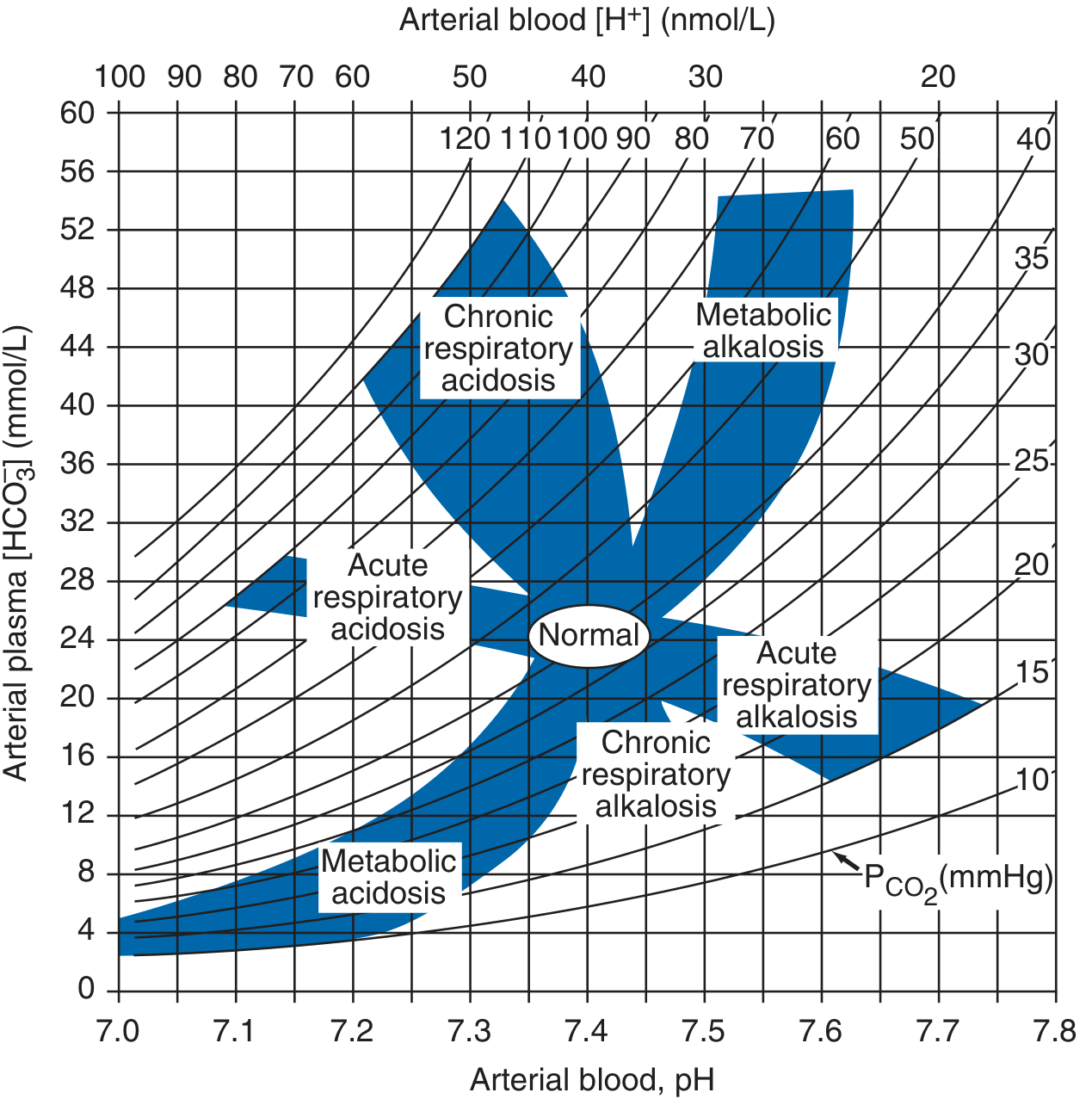
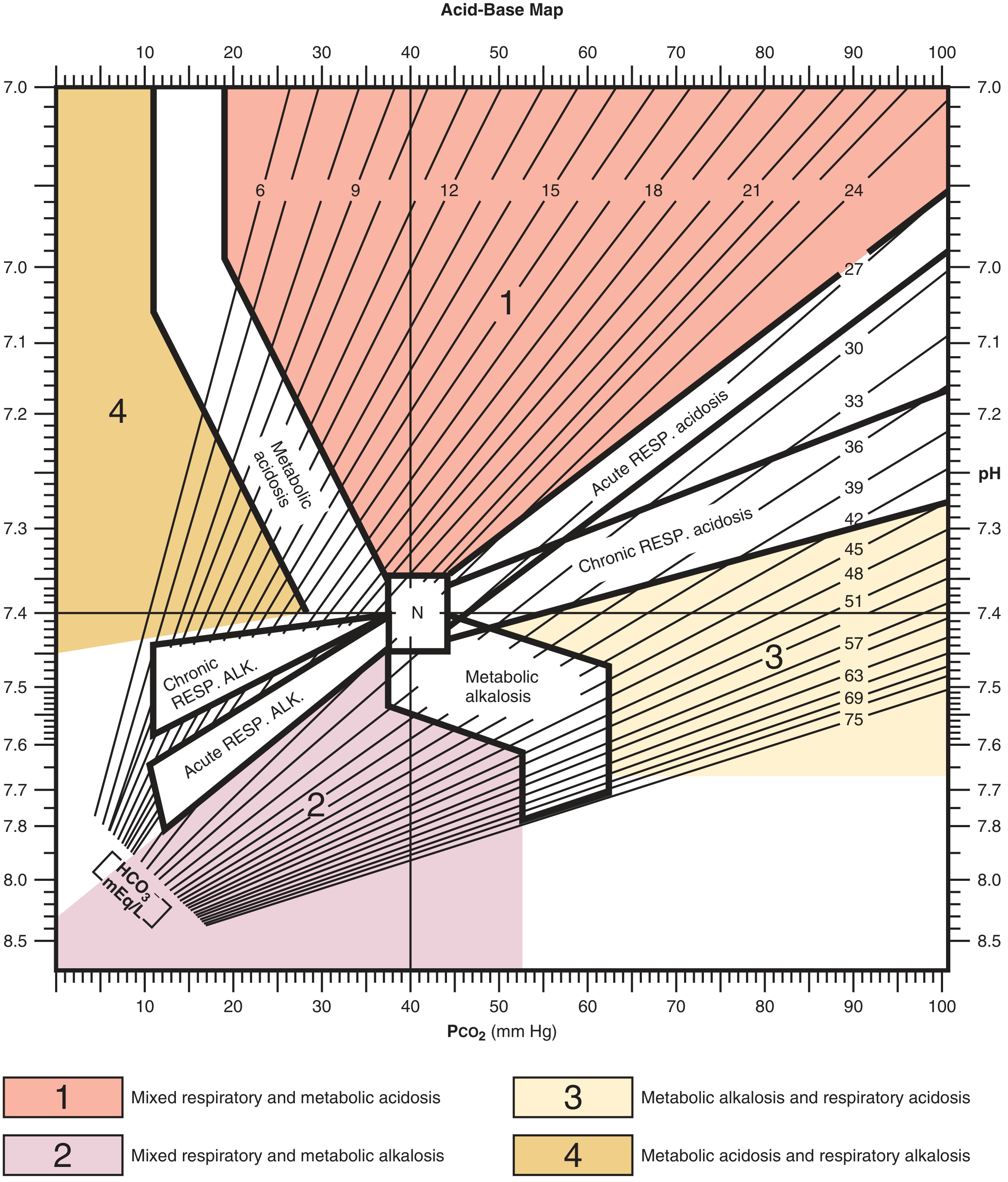
I now have rich material from Harrison's and Roberts & Hedges. Let me also fetch the acid-base nomogram image for visual reference.
Loading Image
Loading Image
I now have all the content needed to write a thorough, exam-focused response. Let me compile everything.
Acid-Base Balance: Clinical Cases for MBBS Biochemistry Exams
Quick Reference: Normal ABG Values
| Parameter | Normal Value |
|---|---|
| pH | 7.35 - 7.45 |
| PaCO2 | 35 - 45 mmHg |
| HCO3- | 22 - 26 mmol/L |
| PaO2 | 80 - 100 mmHg |
| Anion Gap (AG) | 8 - 12 mEq/L |
Anion Gap formula: AG = Na+ - (Cl- + HCO3-)
Step-by-Step Approach to ABG Analysis
(Harrison's Principles of Internal Medicine 22E, Table 58-3)
- Draw ABG and serum electrolytes simultaneously
- Check that the calculated HCO3- (on ABG) matches measured HCO3- (on electrolyte panel) within ±2 mmol/L
- Calculate the Anion Gap; correct for hypoalbuminemia
- Identify high-AG or normal-AG pattern
- Apply the compensation formula (Table below)
- Compare delta values (ΔAG vs ΔHCO3-) to detect mixed disorders
Compensation Formulas (MUST MEMORISE)
| Primary Disorder | Expected Compensation |
|---|---|
| Metabolic acidosis | ΔPaCO2 = 1.3 × ΔHCO3- (Winter's formula: PCO2 = 1.5×HCO3- + 8 ± 2) |
| Metabolic alkalosis | ΔPaCO2 = 0.6 × ΔHCO3- |
| Respiratory acidosis (acute) | HCO3- rises by 1 mmol/L per 10 mmHg ↑ CO2 |
| Respiratory acidosis (chronic) | HCO3- rises by 4 mmol/L per 10 mmHg ↑ CO2 |
| Respiratory alkalosis (acute) | HCO3- falls by 2 mmol/L per 10 mmHg ↓ CO2 |
| Respiratory alkalosis (chronic) | HCO3- falls by 5 mmol/L per 10 mmHg ↓ CO2 |
(Roberts and Hedges' Clinical Procedures in Emergency Medicine)
Acid-Base Nomogram
CLINICAL CASE 1 - Metabolic Acidosis (Non-Anion Gap)
Presentation: A 58-year-old woman has had profuse diarrhea for 1 week.
ABG + Electrolytes:
- Na+: 133 | K+: 2.8 | Cl-: 118
- pH: 7.26 | PaCO2: 13 mmHg | HCO3-: 5 mmol/L
Step-by-step analysis:
Step 1 - pH: 7.26 → Acidosis
Step 2 - Primary process: HCO3- is low (5 mmol/L) and PaCO2 is NOT elevated → Metabolic acidosis
Step 3 - Anion Gap: AG = 133 - (118 + 5) = 10 mEq/L → Normal AG (non-anion gap)
Step 4 - Compensation check (Winter's formula):
- Expected PaCO2 = 1.5 × 5 + 8 = 15.5 mmHg (range: 13.5 - 17.5)
- Actual PaCO2 = 13 mmHg → within predicted range
- ✓ Appropriate respiratory compensation; no mixed disorder
Diagnosis: Simple metabolic acidosis (non-anion gap / hyperchloremic) due to diarrhea (HCO3- loss from GI tract)
Key teaching point: Diarrhea causes direct loss of HCO3-, so Cl- rises to maintain electroneutrality → hyperchloremic, normal-AG acidosis. K+ is also low (co-secreted with HCO3- in stool).
CLINICAL CASE 2 - Respiratory Alkalosis (Acute)
Presentation: A 74-year-old nursing home resident admitted with fever (39°C), hypotension (96/70 mmHg), positive blood cultures for E. coli.
ABG + Electrolytes:
- Na+: 138 | K+: 3.2 | Cl-: 105
- pH: 7.49 | PaCO2: 25 mmHg | HCO3-: 22 mmol/L
Step 1 - pH: 7.49 → Alkalosis
Step 2 - Primary process: PaCO2 is low (25 mmHg), HCO3- is NOT elevated → Respiratory alkalosis
Step 3 - Compensation check:
- PaCO2 drop = 40 - 25 = 15 mmHg
- Expected HCO3- fall (acute) = 2 mmol/L per 10 mmHg drop → 15/10 × 2 = 3 mmol/L
- Expected HCO3- = 25 - 3 = 22 mmol/L
- Actual HCO3- = 22 mmol/L → ✓ Appropriate
Diagnosis: Acute respiratory alkalosis due to sepsis (gram-negative septicemia stimulates the respiratory centre directly via endotoxins and cytokines, causing hyperventilation)
Key teaching point: Sepsis is one of the most common causes of respiratory alkalosis. The HCO3- has not yet had time to fall renally (renal compensation takes 3-5 days), confirming this is acute.
CLINICAL CASE 3 - Metabolic Acidosis with High Anion Gap (DKA)
Presentation: A 22-year-old type 1 diabetic female, vomiting, Kussmaul breathing, fruity breath odour, drowsy.
ABG + Electrolytes:
- Na+: 136 | K+: 5.5 | Cl-: 98
- pH: 7.10 | PaCO2: 18 mmHg | HCO3-: 6 mmol/L
Step 1 - pH: 7.10 → Severe acidosis
Step 2 - Primary process: HCO3- markedly low → Metabolic acidosis
Step 3 - Anion Gap: AG = 136 - (98 + 6) = 32 mEq/L → High AG (normal = 10-12)
Step 4 - Winter's formula:
- Expected PaCO2 = 1.5 × 6 + 8 = 17 mmHg (range: 15-19)
- Actual PaCO2 = 18 mmHg → ✓ Appropriate respiratory compensation (Kussmaul breathing)
Step 5 - Delta-delta ratio (to check for hidden disorders):
- ΔAG = 32 - 10 = 22
- ΔHCO3- = 25 - 6 = 19
- ΔAG / ΔHCO3- ≈ 1.16 → between 1-2, consistent with pure high-AG acidosis
Diagnosis: High-AG metabolic acidosis from diabetic ketoacidosis (acetoacetate + β-hydroxybutyrate accumulate)
High-AG acidosis mnemonics: MUDPILES or KULT
- Ketoacidosis (DKA, AKA, starvation)
- Uremia (chronic kidney failure)
- Lactic acidosis (sepsis, shock, metformin)
- Toxins (methanol, ethylene glycol, salicylates, propylene glycol)
CLINICAL CASE 4 - Mixed Disorder: Metabolic Acidosis + Respiratory Alkalosis
Presentation: 35-year-old found unresponsive, tinnitus, hyperventilation. Suspected aspirin overdose.
ABG + Electrolytes:
- Na+: 140 | K+: 4.0 | Cl-: 106
- pH: 7.39 | PaCO2: 24 mmHg | HCO3-: 14 mmol/L | AG: 20
Step 1 - pH: 7.39 → Near-normal (misleadingly)
Step 2 - AG: AG = 140 - (106 + 14) = 20 → High-AG metabolic acidosis present
Step 3 - Compensation check:
- For pure metabolic acidosis (HCO3- = 14), expected PaCO2 = 1.5 × 14 + 8 = 29 mmHg
- Actual PaCO2 = 24 mmHg → Lower than expected
Diagnosis: Mixed high-AG metabolic acidosis + respiratory alkalosis
Key: The salicylate stimulates the respiratory centre directly → additional hyperventilation beyond what metabolic acidosis alone would produce → pH near normal despite both disorders being present.
(Harrison's 22E - Table 3-2: mixed metabolic acidosis-respiratory alkalosis, etiology: lactic acidosis/sepsis/salicylates)
CLINICAL CASE 5 - Metabolic Alkalosis (Vomiting)
Presentation: A 30-year-old woman with persistent vomiting for 4 days (pyloric stenosis). Muscle cramps, tetany.
ABG + Electrolytes:
- Na+: 138 | K+: 2.8 | Cl-: 82
- pH: 7.58 | PaCO2: 48 mmHg | HCO3-: 42 mmol/L
Step 1 - pH: 7.58 → Alkalosis
Step 2 - Primary process: HCO3- is markedly elevated → Metabolic alkalosis
Step 3 - Compensation check:
- For metabolic alkalosis, expected ΔPaCO2 = 0.6 × ΔHCO3- = 0.6 × (42 - 25) = 10.2 mmHg
- Expected PaCO2 = 40 + 10 = 50 mmHg (range: 48-52)
- Actual PaCO2 = 48 mmHg → ✓ Appropriate hypoventilation
Diagnosis: Metabolic alkalosis due to vomiting (loss of HCl from gastric acid → net gain of HCO3-)
Key teaching points:
- Vomiting = loss of H+ and Cl- → hypochloremic, hypokalemic metabolic alkalosis
- Cl- depletion prevents renal correction (kidney retains HCO3- to accompany Na+ when Cl- is low)
- Tetany/cramps occur because alkalosis causes decreased ionized Ca2+ (Ca2+ binds more to albumin at high pH)
CLINICAL CASE 6 - Respiratory Acidosis (COPD with Compensation)
Presentation: 65-year-old chronic smoker, COPD. Gradually worsening breathlessness, plethoric, drowsy.
ABG + Electrolytes:
- Na+: 140 | K+: 3.5 | Cl-: 88
- pH: 7.35 | PaCO2: 65 mmHg | HCO3-: 35 mmol/L
Step 1 - pH: 7.35 → Low-normal (acidosis compensated)
Step 2 - Primary process: PaCO2 is elevated → Respiratory acidosis
Step 3 - Compensation check:
- PaCO2 rise = 65 - 40 = 25 mmHg
- For chronic respiratory acidosis: HCO3- rises by 4 mmol/L per 10 mmHg ↑ CO2
- Expected ΔHC03- = (25/10) × 4 = 10 mmol/L; expected HCO3- = 25 + 10 = 35 mmol/L
- Actual HCO3- = 35 mmol/L → ✓ Fully compensated chronic respiratory acidosis
Diagnosis: Fully compensated chronic respiratory acidosis (Type 2 respiratory failure in COPD)
Key teaching point: The renal compensation (↑HCO3-) here is complete, which distinguishes chronic from acute respiratory acidosis. The pH is near-normal despite very high CO2.
CLINICAL CASE 7 - Mixed Disorder: Metabolic Alkalosis + Respiratory Acidosis (COPD + Diuretics)
Presentation: 70-year-old with COPD on long-term furosemide for cor pulmonale.
ABG + Electrolytes:
- Na+: 140 | K+: 3.5 | Cl-: 88
- pH: 7.42 | PaCO2: 67 mmHg | HCO3-: 42 mmol/L | AG: 10
Step 1 - pH: 7.42 → Normal, yet both PaCO2 and HCO3- are clearly abnormal. This is a red flag for a mixed disorder.
Step 2 - Primary processes:
- PaCO2 = 67 → Respiratory acidosis
- HCO3- = 42 → Metabolic alkalosis
- Both processes push pH in opposite directions → pH is deceptively normal
Diagnosis: Mixed metabolic alkalosis + respiratory acidosis
(Harrison's 22E - example from Table 3-2: COPD patient on diuretics)
Key teaching point: A normal pH does not rule out acid-base disorder. When PaCO2 and HCO3- move in the same direction (both elevated or both low), always suspect a mixed disorder. Furosemide causes urinary Cl- and K+ loss → contraction alkalosis → metabolic alkalosis superimposed on chronic respiratory acidosis.
CLINICAL CASE 8 - High-AG Metabolic Acidosis (Uremia)
Presentation: 55-year-old with known chronic kidney disease (CKD stage 5), on dialysis missed last 3 sessions, nausea, drowsy.
ABG + Electrolytes:
- Na+: 135 | K+: 6.2 | Cl-: 98
- pH: 7.22 | PaCO2: 22 mmHg | HCO3-: 9 mmol/L | AG: 28
Step 1 - pH: 7.22 → Severe acidosis
Step 2 - Primary process: HCO3- markedly low → Metabolic acidosis
Step 3 - AG: 135 - (98+9) = 28 → High-AG
Step 4 - Compensation (Winter's formula):
- Expected PaCO2 = 1.5 × 9 + 8 = 21.5 mmHg (range: 19.5-23.5)
- Actual PaCO2 = 22 mmHg → ✓ Appropriate
Diagnosis: High-AG metabolic acidosis from uremic acidosis (accumulated phosphate, sulfate, organic acids)
Key teaching point: In uraemia, non-metabolizable anions accumulate. Unlike DKA where ketones can be metabolized back to HCO3-, uremic anions cannot. Hence bicarbonate therapy is appropriate here (aim for HCO3- of 22 mmol/L). Hyperkalemia occurs because acidosis shifts K+ extracellularly.
Summary Table of All Cases
| Case | pH | PaCO2 | HCO3- | AG | Diagnosis | Classic Cause |
|---|---|---|---|---|---|---|
| 1 | ↓ | ↓ (comp.) | ↓↓ | Normal | Metabolic acidosis (non-AG) | Diarrhea |
| 2 | ↑ | ↓↓ | Normal | Normal | Acute respiratory alkalosis | Sepsis |
| 3 | ↓↓ | ↓ (comp.) | ↓↓ | ↑↑ | High-AG metabolic acidosis | DKA |
| 4 | ~Normal | ↓↓ | ↓ | ↑ | Mixed: met. acidosis + resp. alkalosis | Salicylate poisoning |
| 5 | ↑↑ | ↑ (comp.) | ↑↑ | Normal | Metabolic alkalosis | Vomiting (pyloric stenosis) |
| 6 | Low-normal | ↑↑ | ↑ (comp.) | Normal | Compensated chronic resp. acidosis | COPD |
| 7 | Normal | ↑↑ | ↑↑ | Normal | Mixed: met. alkalosis + resp. acidosis | COPD + furosemide |
| 8 | ↓↓ | ↓ (comp.) | ↓↓ | ↑↑ | High-AG metabolic acidosis | Uremia (CKD) |
High-Yield Exam Points
- pH direction tells you the primary disorder - compensation never overcorrects
- Same direction of PaCO2 and HCO3- = mixed disorder (e.g., both high = metabolic alkalosis + respiratory acidosis)
- Normal pH does not mean no disorder - opposite mixed disorders can cancel out the pH
- Winter's formula is key for confirming appropriate compensation in metabolic acidosis
- Anion gap must always be calculated; it often reveals a hidden high-AG acidosis even when total HCO3- looks normal
- Delta-delta ratio (ΔAG/ΔHCO3-) - if >2, a concurrent metabolic alkalosis is hiding; if <1, a concurrent non-AG acidosis is also present
- Causes of High-AG acidosis: MUDPILES (Methanol, Uremia, DKA, Propylene glycol, Iron/Isoniazid, Lactic acidosis, Ethylene glycol, Salicylates)
- Causes of Non-AG acidosis: HARDUPS (Hyperalimentation, Addison's, RTA, Diarrhea, Ureteroenteric fistula, Pancreatic fistula, Saline infusion)
- Respiratory compensation is fast (minutes to hours); renal compensation is slow (3-5 days) - this determines acute vs. chronic status
- Hypokalemia + metabolic alkalosis = vomiting or diuretics; Hyperkalemia + metabolic acidosis = DKA, renal failure, or Addison's disease
Sources: Harrison's Principles of Internal Medicine 22E (2025); Ganong's Review of Medical Physiology 26th Ed.; Roberts and Hedges' Clinical Procedures in Emergency Medicine
This is a shared conversation. Sign in to Orris to start your own chat.