
Weakness+exertion on physical activity+burning sensation in foot
Weakness + Exertion Intolerance + Burning Sensation in Foot
Differential Diagnosis
1. Peripheral Neuropathy ⭐ (Most Common)
| Type | Key Features |
|---|---|
| Diabetic neuropathy | Symmetric polyneuropathy; burning dysesthesias and pain in soles; mild distal motor weakness; impaired position sense; autonomic features (postural hypotension, gastroparesis) |
| Uremic neuropathy | Symmetric sensorimotor; burning paresthesias; in CKD patients |
| Nutritional/B-vitamin deficiency | Burning feet + weakness + hyporeflexia; symmetric; seen with alcoholism, malabsorption, unusual diet |
| Alcoholic neuropathy | Axonal sensorimotor; burning feet; due to thiamine/B12 deficiency |
| Cryptogenic sensory polyneuropathy | Burning pain beginning in feet; distal sensory loss; weakness NOT prominent; diagnosis of exclusion (~50% of cases) |
| CIDP | Proximal + distal weakness; progressive/relapsing; reduced DTRs; immune-mediated |
- Harrison's Principles of Internal Medicine 22E, p. 3638–3639; Textbook of Family Medicine 9e, p. 1247
2. Metabolic Myopathy / Glycogen Storage Disease
- McArdle Disease (GSD type V) — muscle phosphorylase deficiency; exercise intolerance, myalgia, cramps with exercise, "second wind" phenomenon, myoglobinuria with strenuous activity, elevated CK
- Other GSDs — cramps on exertion + progressive weakness; may include rhabdomyolysis
- Fatty acid oxidation (FAO) defects — sustained exercise intolerance (vs. sudden intense exercise in glycogenolysis defects); progressive weakness
An inability to perform sudden intense exercise → problem with glycogenolysis/glycolysis. Inability at sustained levels → FAO defect.
- Bradley and Daroff's Neurology in Clinical Practice, p. 1947; Goldman-Cecil Medicine
3. Peripheral Arterial Disease (Vascular Claudication)
- Exertional leg weakness/cramping relieved by rest
- Claudication of the foot or arch can mimic neuropathic pain
- Associated with risk factors: smoking, hypertension, diabetes, dyslipidemia
- Check ABI (ankle-brachial index); diminished peripheral pulses
- Goldman-Cecil Medicine; Current Surgical Therapy 14e
4. Other Considerations
| Diagnosis | Clue |
|---|---|
| Spinal stenosis / neurogenic claudication | Weakness + burning in legs on walking; relieved by sitting/forward flexion |
| Hypothyroidism | Weakness, fatigue, exercise intolerance; can cause neuropathy |
| Iron deficiency anemia | Weakness, exercise intolerance, dyspnea on exertion |
| Mitochondrial neuropathy | Weakness + sensory neuropathy + systemic features |
| Amyloid polyneuropathy | Autonomic dysfunction without diabetes; painful small-fiber neuropathy |
Diagnostic Approach (Harrison's 7-Question Framework)
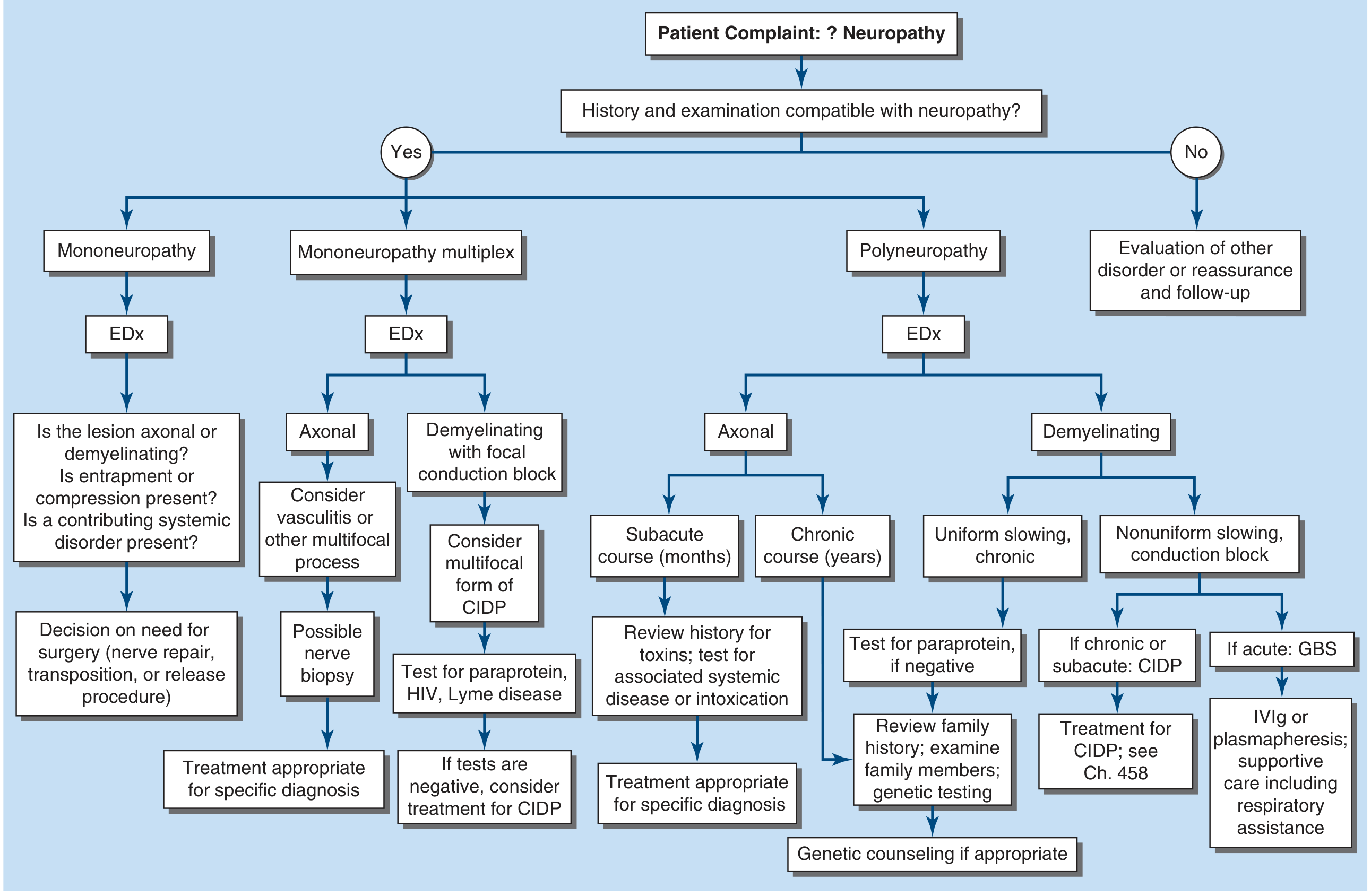
- What systems are involved? — Motor only → think myopathy/motor neuropathy; sensory + motor → polyneuropathy
- Distribution of weakness? — Distal only vs. proximal + distal; symmetric vs. asymmetric
- Nature of sensory involvement? — Burning/temperature loss → small fiber (e.g., diabetes, HIV, amyloid); vibration/proprioception loss → large fiber
- Upper motor neuron signs? — If present, consider CNS pathology
- Temporal evolution? — Acute (GBS), subacute, chronic (diabetes, CIDP, hereditary)
- Hereditary neuropathy? — Family history, lack of sensory symptoms despite signs
- Associated medical conditions? — Diabetes, CKD, cancer, HIV, connective tissue disease, alcohol use, medications
Recommended Workup
| Investigation | Purpose |
|---|---|
| FBS / HbA1c | Diabetes (most common cause) |
| Renal function (BUN, creatinine) | Uremic neuropathy |
| CBC | Anemia |
| Serum B12, folate, thiamine | Nutritional neuropathies |
| TSH | Hypothyroidism |
| Serum protein electrophoresis | Paraprotein/amyloid |
| ABI (ankle-brachial index) | PAD/claudication |
| Nerve conduction study + EMG | Confirms neuropathy; axonal vs. demyelinating; localization |
| CK level | Myopathy (elevated in McArdle disease, inflammatory myopathy) |
| Forearm ischemic exercise test | If GSD/McArdle suspected (lack of lactate rise) |
Key Clinical Pearls
- Burning feet + weakness + symmetric + distal → diabetic or nutritional polyneuropathy until proven otherwise; check HbA1c and B12 first
- Weakness worsening with exercise + cramps + normal sensation → metabolic myopathy (McArdle, FAO defect); check CK and consider forearm exercise test
- Exertional leg pain relieved by rest + risk factors → vascular claudication; check pulses and ABI
- Burning feet + autonomic features without diabetes → consider amyloid neuropathy; serum SPEP/UPEP
Ask me questions and get me a diagnosis based on this
Male 26 yrs
The weakness and exertion intolerance — how does it behave?
Where is the weakness most prominent?
How is the burning sensation in the foot?
Any other sensory symptoms in the feet/legs?
Any of these risk factors present?
Any gait or balance problems?
Any systemic or autonomic symptoms?
How long have these symptoms been present?
Diet and medications?
Any family history of similar neurological symptoms?
Clinical Diagnosis
Primary Diagnosis: Nutritional (B-Vitamin Deficiency) Peripheral Neuropathy
Most likely: Vitamin B12 and/or Thiamine (B1) Deficiency Neuropathy
How the Clues Point Here
| Feature | Significance |
|---|---|
| 26-year-old male | Young → acquired/nutritional cause, not degenerative |
| Distal leg weakness, constant | Length-dependent sensorimotor neuropathy |
| Burning feet, worse at night | Small-fiber neuropathy — classic B12/thiamine pattern |
| Burning pain without numbness | Early/pure small-fiber involvement, large fibers preserved |
| Normal gait, no balance issues | Proprioception (large fiber) still intact |
| Poor/irregular diet | Primary risk factor for B-vitamin deficiency |
| Weight loss / poor appetite | Compounds nutritional deficiency; also a red flag |
| Moderate alcohol use | Even moderate alcohol impairs B-vitamin absorption and metabolism |
| >6 months duration | Chronic course consistent with gradual nutritional depletion |
| No family history | Rules out hereditary neuropathy (CMT, etc.) |
Why This Diagnosis
"Most nutritional neuropathies involve one of the B-complex vitamins. Patients at risk usually have chronic alcoholism, malabsorption syndrome, eating disorder, or unusual diet (food faddist). It presents as a symmetric polyneuropathy with burning in the feet. Weakness, atrophy, and hypoactive reflexes may also occur." — Textbook of Family Medicine 9e, p. 1247
Red Flag to Investigate
- Malabsorption (celiac disease, IBD) → causing the nutritional neuropathy
- Occult malignancy → paraneoplastic neuropathy (less likely but must be excluded)
- HIV → distal sensory neuropathy is one of the commonest neurological complications
Investigations to Order
| Test | Why |
|---|---|
| Serum Vitamin B12 | Most important first test |
| Serum Thiamine (B1) | Dietary deficiency |
| Folate, B6 | Complete B-vitamin screen |
| CBC + peripheral smear | Macrocytic anemia from B12/folate deficiency |
| HbA1c / FBS | Exclude diabetes |
| Anti-tTG IgA + total IgA | Celiac disease (malabsorption) |
| HIV serology | Given age + weight loss |
| LFTs, GGT | Alcohol-related liver disease affecting absorption |
| Nerve conduction study + EMG | Confirm axonal sensorimotor neuropathy |
| Skin punch biopsy (intraepidermal nerve fiber density) | Gold standard for small-fiber neuropathy if NCS normal |
Treatment
- B12 supplementation — IM cyanocobalamin 1000 µg daily × 7 days, then weekly × 4, then monthly (if deficient); oral B12 1000 µg/day if mild
- Thiamine — 100 mg oral daily
- Dietary correction — regular balanced meals; referral to dietitian
- Reduce alcohol — even moderate use compounds B-vitamin depletion
- Neuropathic pain — if burning is distressing: low-dose duloxetine or nortriptyline (first line per Harrison's)
- Treat underlying cause — if celiac confirmed, strict gluten-free diet leads to neuropathy improvement
⚠️ Disclaimer: This is a clinical reasoning exercise to support — not replace — a physician's evaluation. A formal diagnosis requires physical examination, nerve conduction studies, and laboratory confirmation.
Give me a differential diagnosis
Differential Diagnosis
Patient Summary
Ranked Differentials
🥇 1. Nutritional (B-Vitamin Deficiency) Neuropathy
| Why likely | Poor diet + moderate alcohol = reduced B12/thiamine intake AND impaired absorption. Classic presentation: burning feet worse at night, distal weakness, symmetric, chronic course |
| Subtype | Thiamine (B1) deficiency → axonal sensorimotor neuropathy; B12 deficiency → small-fiber burning pain before large-fiber signs appear |
| Supporting | Young age, no family history, acquired risk factors, weight loss (reduced intake) |
| Against | Alcohol use is only moderate, not heavy |
| Key test | Serum B12, thiamine, folate; CBC (macrocytosis) |
🥈 2. HIV-Associated Distal Symmetric Polyneuropathy (DSP)
| Why likely | 26-year-old male + weight loss + burning feet = classic HIV-DSP triad. Occurs in ~30% of AIDS patients. Burning feet with painful paresthesias is the hallmark onset |
| Mechanism | Direct HIV neurotoxicity to dorsal root ganglia + small fibers |
| Supporting | Age, sex, weight loss, burning feet without prominent numbness |
| Against | No other HIV risk factors explicitly stated |
| Key test | HIV serology (ELISA + confirmatory Western blot) |
🥉 3. Celiac Disease / Malabsorption-Associated Neuropathy
| Why likely | Weight loss + poor absorption of nutrients even on a diet → B-vitamin malabsorption. Celiac neuropathy can precede GI symptoms |
| Mechanism | Malabsorption of B12, B1, B6 → neuropathy; direct immune-mediated gluten neuropathy also possible |
| Supporting | Weight loss, poor nutritional status despite eating |
| Against | No GI symptoms reported |
| Key test | Anti-tTG IgA antibodies, total IgA; small bowel biopsy |
4. CIDP (Chronic Inflammatory Demyelinating Polyradiculoneuropathy)
| Why less likely | CIDP typically causes proximal + distal weakness and is predominantly motor; burning pain is not a dominant feature |
| Why still consider | Young adult, chronic (>6 months) course, progressive weakness |
| Key test | Nerve conduction study (demyelinating pattern: slowed conduction velocity, prolonged distal latencies); CSF protein elevated |
5. Early Diabetic Neuropathy / Impaired Glucose Tolerance Neuropathy
| Why consider | Pre-diabetes (impaired glucose tolerance) can cause small-fiber neuropathy before frank diabetes develops; burning feet + distal weakness is the classic pattern |
| Why less likely | 26 years old, no stated family history of diabetes, no polyuria/polydipsia |
| Key test | HbA1c, fasting glucose, 2-hr oral glucose tolerance test |
6. Alcoholic Neuropathy
| Why consider | Alcohol impairs thiamine/B6 absorption even at moderate intake; axonal sensorimotor neuropathy with burning feet |
| Why less likely | Intake is 4–5 times/month — typically requires heavy chronic use; however, combined with poor diet, it amplifies nutritional deficiency |
| Key test | GGT, LFTs, serum thiamine |
7. Hereditary Neuropathy (CMT / Hereditary Small-Fiber Neuropathy)
| Why consider | Young age + chronic course; some hereditary neuropathies (e.g., CMT2, hereditary small-fiber neuropathy with SCN9A/SCN10A mutations) present in young adults |
| Why unlikely | No family history, acquired risk factors fully explain the picture |
| Key test | Genetic panel if all acquired causes excluded |
Summary Table
| Rank | Diagnosis | Probability | Key Distinguishing Test |
|---|---|---|---|
| 1 | Nutritional (B12/Thiamine) Neuropathy | ⭐⭐⭐⭐⭐ High | Serum B12, thiamine, CBC |
| 2 | HIV-Associated DSP | ⭐⭐⭐⭐ Must exclude | HIV serology |
| 3 | Celiac/Malabsorption Neuropathy | ⭐⭐⭐ Moderate | Anti-tTG IgA |
| 4 | CIDP | ⭐⭐ Low-moderate | NCS/EMG |
| 5 | Pre-diabetic Neuropathy | ⭐⭐ Low-moderate | HbA1c, OGTT |
| 6 | Alcoholic Neuropathy | ⭐⭐ Contributing | GGT, LFTs |
| 7 | Hereditary Neuropathy | ⭐ Unlikely | Genetic testing |
Bottom Line
Tell.me how you arrived at this diagnosis
Clinical Reasoning: Step-by-Step
Step 1 — The Opening Triad
- Peripheral neuropathy (sensory + motor nerve disease)
- Metabolic myopathy (muscle energy defect)
- Vascular claudication (ischemia on exercise)
Step 2 — Age & Sex: 26-year-old Male
| Eliminated | Why |
|---|---|
| Type 2 diabetic neuropathy | Rare at 26 without obesity/family history |
| Degenerative spine disease | Uncommon this young |
| Peripheral arterial disease | Rare under 40 without risk factors |
Step 3 — "Weakness is constant, present even at rest"
Step 4 — "Weakness in legs/feet only (distal)"
- Distal-only weakness = length-dependent process — the longest nerves (to the feet) are affected first
- This is the anatomical fingerprint of a polyneuropathy
- Proximal weakness would have pointed to myopathy or CIDP
Step 5 — "Burning worse at night"
- Small fibers (Aδ and C fibers) carry pain and temperature
- When these fibers are damaged, they generate spontaneous pain signals — most prominent at night when there's no competing sensory input
- Large fibers (carrying vibration, proprioception) were not implicated yet
Step 6 — "No numbness, only burning pain"
| Fiber Type | Sensation Carried | Status in this Patient |
|---|---|---|
| Large myelinated (Aβ) | Touch, vibration, proprioception → numbness when damaged | Intact |
| Small myelinated (Aδ) | Sharp pain, temperature → burning when damaged | Affected |
| Unmyelinated (C) | Dull/burning pain → burning when damaged | Affected |
Step 7 — "Normal gait, no balance problems"
Step 8 — "Weight loss / poor appetite"
- Nutritional deficiency — reduced food intake → B12, thiamine, folate depletion → neuropathy
- Systemic illness driving the neuropathy — HIV, malabsorption (celiac), occult malignancy
Step 9 — "Symptoms >6 months"
- Rules out acute/subacute inflammatory neuropathies (GBS: days–4 weeks)
- Consistent with gradual nutritional depletion over months
- Chronic course also compatible with HIV-DSP and celiac neuropathy
- Too slow for GBS, too fast for hereditary (which is usually lifelong/very slowly progressive)
Step 10 — "Poor/irregular diet"
| Factor | Effect |
|---|---|
| Poor/irregular diet | Reduced B12, thiamine, B6 intake |
| Moderate alcohol | Impairs thiamine absorption in gut; increases B-vitamin utilization |
| Weight loss/poor appetite | Further reduces intake |
Step 11 — "No family history of neurological disease"
The Reasoning Chain — Visual Summary
Opening triad
      ↓
Age 26M → Eliminates PAD, DM2, degenerative
      ↓
Constant weakness → Eliminates metabolic myopathy, claudication
      ↓
Distal legs only → Points to length-dependent polyneuropathy
      ↓
Burning worse at night → Small-fiber neuropathy confirmed
      ↓
No numbness → Large fibers intact = pure small-fiber pattern
      ↓
Normal gait → Confirms large fibers spared
      ↓
Weight loss → Red flag: nutritional deficiency OR systemic illness
      ↓
Duration >6 months → Chronic acquired process
      ↓
Poor diet + moderate alcohol → Nutritional B-vitamin deficiency mechanism
      ↓
No family history → Hereditary causes excluded
      ↓
PRIMARY DIAGNOSIS: Nutritional (B12/Thiamine) Neuropathy
MUST EXCLUDE: HIV-DSP, Celiac/Malabsorption
Why Not the Others?
| Diagnosis | Eliminated Because |
|---|---|
| McArdle / metabolic myopathy | Weakness is constant, not exercise-induced |
| Vascular claudication | Constant weakness, young age, no vascular risk factors |
| GBS | >6 months duration; GBS is acute (days–4 weeks) |
| CMT / hereditary neuropathy | No family history; clear acquired risk factors |
| Diabetic neuropathy | Age 26, no diabetes history or risk factors stated |
| CIDP | Typically proximal + distal weakness; burning pain not dominant; demyelinating on NCS |
But patient have proteinuria
🚨 Proteinuria Changes Everything
How the Diagnosis Shifts
| Before proteinuria | After proteinuria |
|---|---|
| Nutritional neuropathy (primary) | Still possible, but now a consequence of something bigger |
| HIV — must exclude | Now even more urgent to exclude |
| Celiac disease | More likely (malabsorption → proteinuria from nutritional losses) |
| Uremic neuropathy | Now actively enters the differential |
| Amyloidosis | Jumps to top 2 |
Revised Differential Diagnosis
🥇 1. Amyloidosis (AL or Hereditary ATTR) — Now Top Suspect
| Symptom | Amyloidosis Explanation |
|---|---|
| Burning feet worse at night | Painful dysesthesia — amyloid deposits along peripheral nerves; pain and temperature lost first (small fibers) |
| Distal weakness | Progressive axonal polyneuropathy |
| No numbness (yet) | Vibration/touch lost later — small fibers affected first |
| Proteinuria | Renal amyloidosis → glomerular amyloid deposits → proteinuria is the hallmark renal manifestation |
| Weight loss / poor appetite | Systemic amyloid burden; GI involvement |
| Chronic >6 months | Chronic progressive course |
"The neuropathy begins with painful dysesthesias in the legs and follows a chronic progressive course. Pain and temperature sensation are lost before light touch or vibratory sensation... Renal amyloidosis usually manifests as proteinuria and renal failure." — Bradley and Daroff's Neurology, p. 2683
"Patients with glomerular kidney involvement generally have proteinuria... [AL amyloidosis features include] significant proteinuria, neuropathy, periorbital purpura, and macroglossia." — Harrison's Principles of Internal Medicine 22E
🥈 2. Diabetic Nephropathy + Diabetic Neuropathy — Must Re-examine
- Microalbuminuria/proteinuria is often the first detected sign of diabetic nephropathy
- Weight loss fits T1DM (insulin deficiency → catabolism)
🥉 3. Uremic Neuropathy (CKD-Associated)
"The neuropathy takes the form of a painless, progressive, symmetrical sensorimotor paralysis of the legs. In some patients, the syndrome begins with burning dysesthesias of the feet, worse at night." — Adams and Victor's Principles of Neurology
- CKD → accumulation of uremic toxins (middle molecules, methyl guanidine) → axonal degeneration
- Burning feet + distal weakness + worsening at night = matches exactly
- Neuropathy improves after renal transplantation (confirms causal link)
4. HIV Nephropathy (HIVAN) + HIV Neuropathy
- HIV-associated nephropathy (HIVAN) → heavy proteinuria, nephrotic syndrome
- Distal symmetric polyneuropathy → burning feet
5. Nutritional Neuropathy — Demoted but Not Eliminated
- Either the kidneys are diseased (causing both protein loss and neuropathy), or
- A systemic illness is causing both
Updated Diagnostic Priority
| Priority | Diagnosis | Unifying Feature |
|---|---|---|
| 1 | Amyloidosis (AL/ATTR) | Neuropathy + proteinuria + weight loss in same disease |
| 2 | Diabetes (T1/T2) — nephropathy + neuropathy | Most common cause of both together |
| 3 | HIV — HIVAN + DSP | Both renal and nerve involvement known |
| 4 | Uremic neuropathy from CKD | Proteinuria → CKD → uremic neuropathy |
| 5 | Nutritional neuropathy | Secondary to systemic illness |
Immediate Investigations (Revised)
| Test | Looking For |
|---|---|
| Serum + urine protein electrophoresis (SPEP/UPEP) | Monoclonal light chains → AL amyloidosis |
| Serum free light chains (κ/λ ratio) | Most sensitive for AL amyloid |
| HbA1c + fasting glucose + C-peptide | Diabetes (T1/T2) |
| HIV serology | HIVAN + HIV neuropathy |
| Serum creatinine, BUN, eGFR | Degree of renal failure |
| 24-hour urine protein / spot urine ACR | Quantify proteinuria |
| Abdominal fat pad aspiration (Congo red stain) | Amyloid diagnosis — ~80% yield |
| Echocardiogram | Amyloid cardiomyopathy |
| Nerve conduction study + EMG | Confirm axonal neuropathy pattern |
| Sural nerve + muscle biopsy | Gold standard for amyloid neuropathy (>90% yield) |
Bottom Line
But patient have proteinuria
How significant is the proteinuria?
Any other urinary findings?
Is there hypertension or leg edema?
Any of these additional features?
🔴 Revised Primary Diagnosis: Fabry Disease
Why This Fits Perfectly
The Complete Clinical Match
| This Patient | Fabry Disease |
|---|---|
| Male, 26 years old | X-linked disorder — males affected more severely; onset in late childhood to early adult life |
| Burning feet, worse at night | "Burning or lancinating pain in the hands and feet often develops in males in late childhood or early adult life" — Harrison's 22E |
| No numbness (small fiber only) | Fabry neuropathy is a pure small-fiber neuropathy — pain/temperature affected, large fibers spared initially |
| Distal leg weakness | Neuropathy + premature vascular disease affect limb function |
| Moderate proteinuria (2+) + frothy urine | Ceramide accumulation in podocytes and renal tubular cells → glomerular damage → proteinuria |
| Hypertension | "Premature atherosclerosis — hypertension, renal failure, cardiac disease, and stroke" — classic Fabry vascular complications |
| Weight loss | Systemic disease burden; GI involvement (Fabry affects autonomic GI nerves) |
| No skin rash reported | Angiokeratomas (around umbilicus, scrotum, inguinal region) — may be subtle or not yet looked for |
"Burning or lancinating pain in the hands and feet often develops in males in late childhood or early adult life. The neuropathy is usually overshadowed by complications arising from premature atherosclerosis — hypertension, renal failure, cardiac disease, and stroke — that often lead to death by the fifth decade." — Harrison's Principles of Internal Medicine 22E, p. 3645
"Fabry disease is an X-linked disease caused by mutations in the alpha-galactosidase gene GLA, leading to accumulation of globotriaosylceramide (GL3) in blood vessels and tissues, including podocytes... causing proteinuria and kidney disease." — Brenner and Rector's The Kidney
The Mechanism — One Enzyme, Everything Explained
Deficiency of α-galactosidase A
            ↓
Accumulation of GL3 (globotriaosylceramide) in:
    ├── Small nerve fibers → Burning feet (small-fiber neuropathy)
    ├── Renal podocytes/endothelium → Proteinuria, hypertension
    ├── Vascular smooth muscle → Premature hypertension, atherosclerosis
    ├── GI autonomic nerves → Weight loss, poor appetite
    └── Cardiac muscle → Cardiomyopathy (future risk)
What Was Previously Missed — And Why Proteinuria Changed It
| Before proteinuria | Thinking |
|---|---|
| Burning feet + weakness + poor diet | Nutritional neuropathy (B12/thiamine) |
| Weight loss | Nutritional depletion |
| After proteinuria + hypertension | Thinking |
|---|---|
| Burning feet + proteinuria + HTN in young male | Fabry disease — X-linked lysosomal storage disorder |
| No edema despite proteinuria | GL3 nephropathy — early/moderate stage, not yet nephrotic |
| No skin rash mentioned | Angiokeratomas may be subtle — need to actively look |
Confirm the Diagnosis
| Test | Expected Finding |
|---|---|
| Plasma α-galactosidase A activity (leukocytes) | Severely reduced or absent — diagnostic in males |
| Plasma/urine GL3 (globotriaosylceramide) | Elevated |
| GLA gene sequencing | Pathogenic mutation confirmed |
| Renal biopsy (EM) | Zebra bodies / myelin figures in podocytes |
| Skin biopsy | GL3 deposits in sweat glands and vessels |
| Echocardiogram | LVH, Fabry cardiomyopathy screening |
| Ophthalmology | Cornea verticillata (whorled opacities) — pathognomonic |
Do Not Miss on Examination
- 🔴 Angiokeratomas — dark red/purple spots around umbilicus, groin, scrotum, buttocks (may be very subtle)
- 👁️ Cornea verticillata — whorled corneal opacities on slit-lamp (present in >70% of males, pathognomonic)
- 🫀 LVH on ECG/echo — hypertrophic cardiomyopathy from GL3 cardiac deposition
- 🧠 Early stroke risk — cerebrovascular events can occur in the 30s–40s
Treatment
- Agalsidase alfa (Replagal) or Agalsidase beta (Fabrazyme) — IV infusions every 2 weeks
- Clears GL3 deposits from kidney, heart, and nerves
- Slows renal and cardiac progression significantly
- Earlier treatment = better outcomes; this patient is at the ideal age to start
- Pain: carbamazepine or gabapentin for neuropathic pain
- Renal: ACE inhibitor/ARB for proteinuria and BP control
- Cardiac monitoring annually
- Genetic counseling (X-linked — mother is carrier, sisters at 50% risk)
Bottom Line
- Burning feet in a young male (classic Fabry neuropathy)
- Proteinuria + hypertension (Fabry nephropathy)
- Weight loss (GI autonomic involvement)
- No numbness (pure small-fiber involvement — hallmark of Fabry)
Try again
Generate a clinical summary document of this case for reference