
Patient presents with swellings on their feet which seems to progressively extended to their thighs and then w Hips
Reading File
This is a classic presentation of ascending edema - swelling starting in the feet and progressing upward to the thighs and hips. The key differential is pitting vs non-pitting edema, and the pattern points toward several important causes.
Searching sources...
Finding Sources
Finding Sources
Searching PubMed
"peripheral edema" AND "lower extremity" AND diagnosis
Finding Sources
Finding Sources
Reading File
Finding Sources
Reading File
Reading File
Reading File
Searching Images
pitting edema lower limbs legs ascending
Now I have excellent material from two major textbooks. Let me also fetch the diagnostic flowchart image that was referenced.
Loading Image
Loading Image
Excellent - I now have comprehensive information from Harrison's and Symptom to Diagnosis, plus the diagnostic flowchart. Here is the full clinical answer:
Ascending Bilateral Lower Limb Edema: Clinical Approach
Understanding the Pattern
Swelling that starts at the feet and progressively ascends to the thighs and hips is bilateral ascending pitting edema - a classic presentation that strongly points toward a systemic cause rather than a local one. As summarized in Symptom to Diagnosis (4th Ed.):
"The first step in such patients is always to look for systemic causes. While the history and physical are often not sensitive or specific enough to make a diagnosis, they are a good starting point for organizing the differential."
Pathophysiology
The edema results from one or more of these four mechanisms:
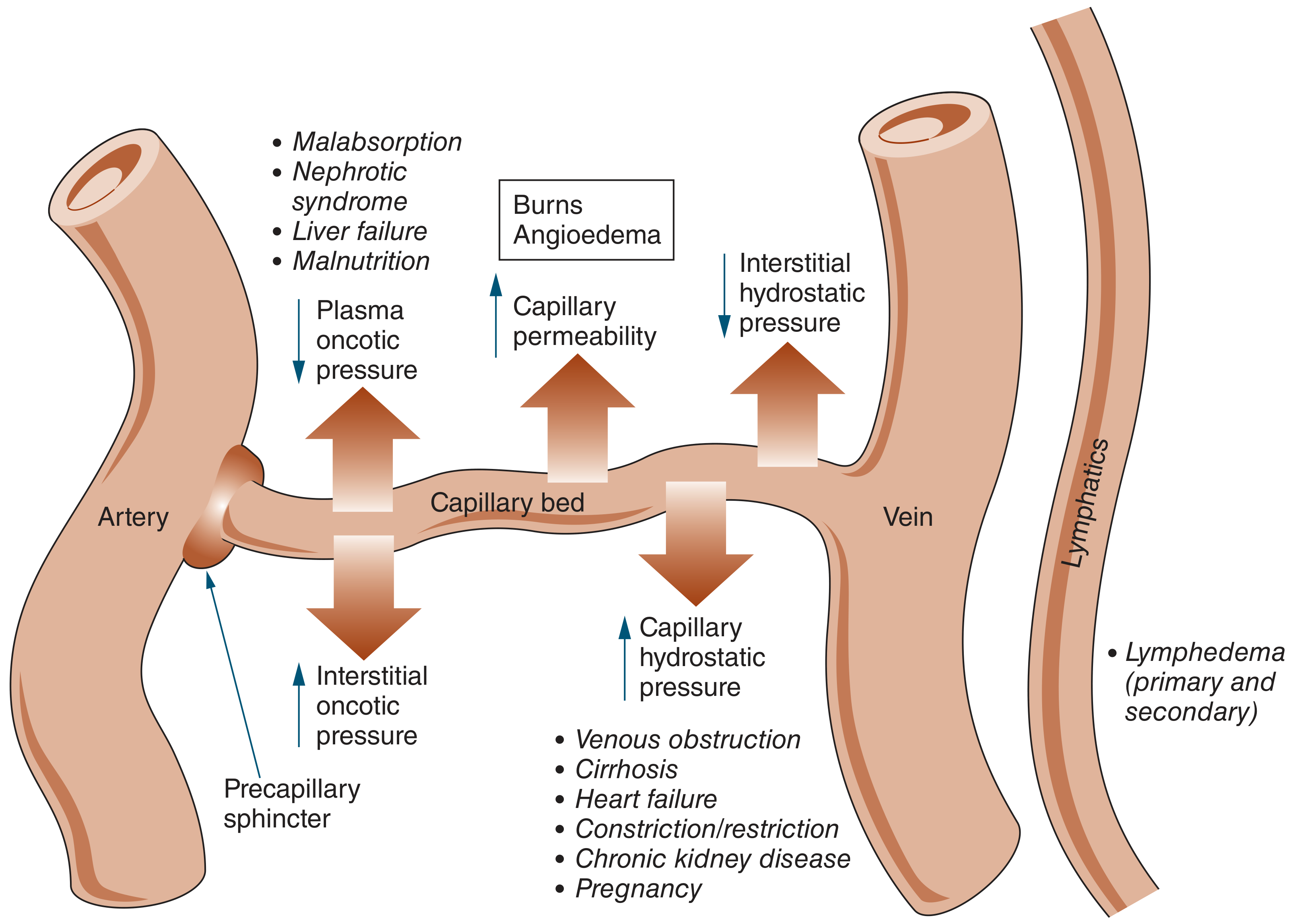
Figure: Pathophysiology of edema. Adapted from Cho S, Atwood JE, Am J Med 2002 - from Symptom to Diagnosis, 4th Ed.
- Increased capillary hydrostatic pressure - heart failure, venous obstruction, cirrhosis
- Decreased plasma oncotic pressure - hypoalbuminemia from nephrotic syndrome, liver failure, malnutrition, malabsorption
- Increased capillary permeability - inflammation, sepsis, burns
- Lymphatic obstruction - primary or secondary lymphedema
Differential Diagnosis
The key differentiator is bilateral vs unilateral. This patient has bilateral ascending edema, so the framework is:
Systemic Causes (Most Important to Rule Out First)
| Category | Specific Diagnoses | Key Clues |
|---|---|---|
| Cardiac | Heart failure (HFrEF or HFpEF), Constrictive pericarditis, Pulmonary hypertension | Elevated JVP, orthopnea, PND, S3 gallop, crackles |
| Hepatic | Cirrhosis | Low JVP, ascites, spider angiomata, jaundice, splenomegaly, hepatitis risk factors |
| Renal | Nephrotic syndrome, Chronic kidney disease | Periorbital edema, frothy urine, hypertension, uremia symptoms |
| Hematologic | Severe anemia | Pallor, fatigue, tachycardia |
| GI/Nutritional | Malabsorption, malnutrition, refeeding edema | Low albumin, weight loss, GI symptoms |
| Endocrine | Myxedema (hypothyroidism) | Non-pitting edema, dry skin, bradycardia, weight gain |
Note: Hypothyroidism causes non-pitting myxedema - so if the edema pits on finger pressure, hypothyroidism is less likely.
Venous/Lymphatic Causes
| Diagnosis | Features |
|---|---|
| Chronic venous insufficiency | Varicosities, stasis dermatitis, hyperpigmentation, lipodermatosclerosis; edema may extend to thighs in severe cases |
| Lymphedema | Non-pitting, progressive, "woody" texture; Stemmer's sign positive |
| Inferior vena cava (IVC) obstruction/compression | Bilateral leg edema extending to hips/abdomen, collateral veins on abdomen |
| Pelvic mass/malignancy | Can compress iliac veins or cause ascites driving up IVC pressure |
Medication Causes (Common and Reversible)
- Calcium channel blockers (especially dihydropyridines - amlodipine, nifedipine)
- Thiazolidinediones (pioglitazone, rosiglitazone)
- Direct vasodilators (hydralazine, minoxidil)
- NSAIDs
- Corticosteroids, estrogens, testosterone
- Beta-blockers
- MAO inhibitors
Key Clinical Questions to Ask
- Is the edema pitting (systemic/venous) or non-pitting (lymphedema, myxedema)?
- Any shortness of breath, orthopnea, or waking at night to breathe? (heart failure)
- Any frothy urine or known kidney disease? (nephrotic syndrome)
- Any jaundice, alcohol use, or abdominal swelling/ascites? (cirrhosis)
- What medications is the patient taking?
- Duration - acute onset suggests DVT or acute illness; chronic suggests systemic disease or venous insufficiency
- Is there abdominal/pelvic pain or bloating? (malignancy, IVC compression)
- Any varicose veins or skin changes on the legs?
Diagnostic Workup
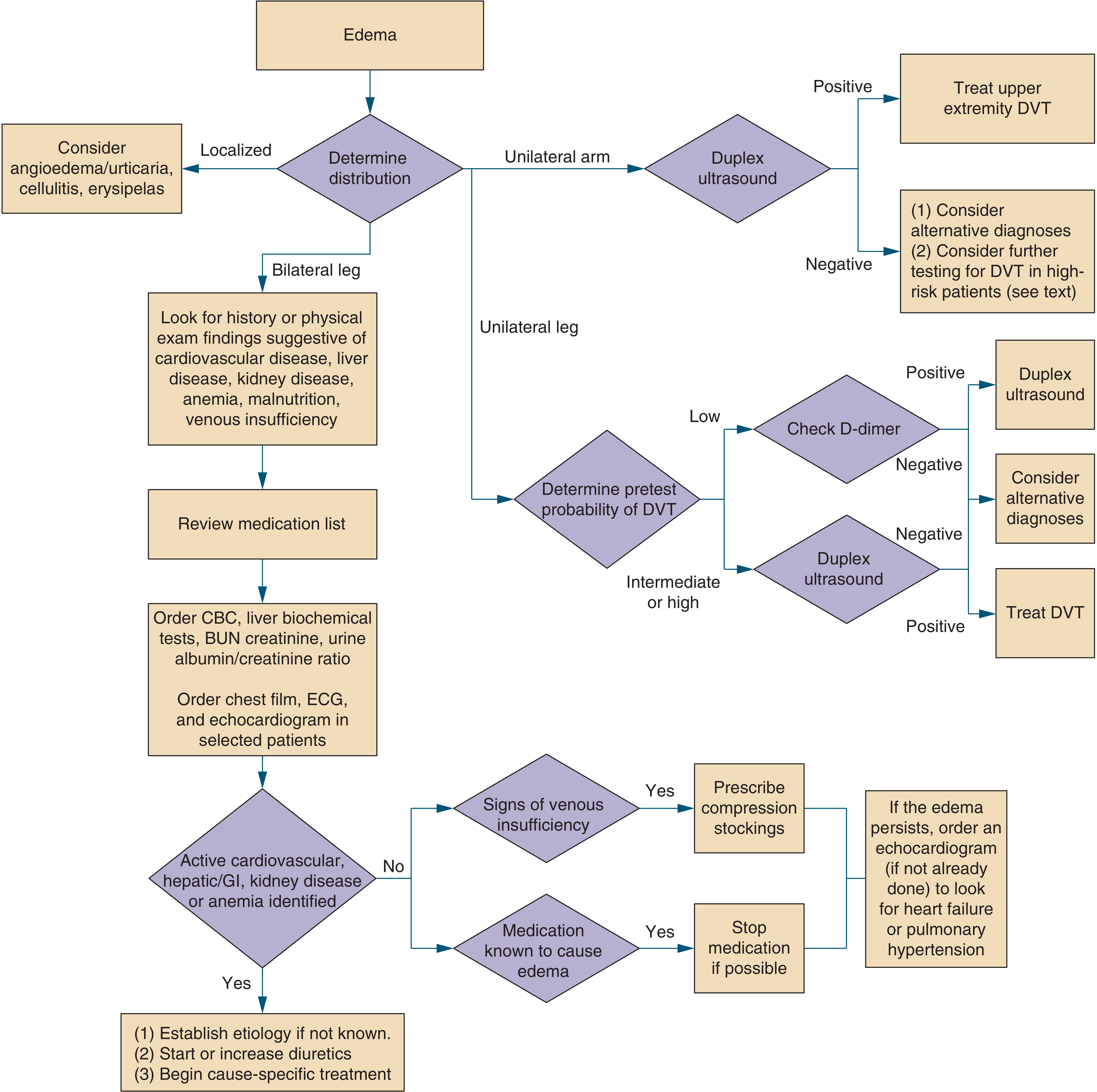
Figure 17-2: Diagnostic approach to edema - Symptom to Diagnosis, 4th Ed.
First-line investigations for bilateral leg edema:
Blood:
- CBC (anemia)
- Liver function tests (LFTs), bilirubin, albumin (hepatic disease)
- BUN/creatinine (renal function)
- Urine albumin/creatinine ratio or dipstick (nephrotic syndrome)
- BNP/NT-proBNP (heart failure)
- TSH (hypothyroidism)
- Serum albumin
Urine:
- Urinalysis - proteinuria suggests nephrotic syndrome
Cardiac:
- ECG
- Chest X-ray (cardiomegaly, pleural effusions)
- Echocardiogram (in selected patients)
Vascular/Imaging:
- Doppler ultrasound if venous insufficiency or DVT is suspected
- Abdominal/pelvic ultrasound if IVC obstruction or pelvic mass is suspected
The Ascending Pattern: A Special Note
The fact that edema has progressively extended from feet → thighs → hips raises specific concerns:
- Severe or decompensated systemic disease (heart failure, nephrotic syndrome, cirrhosis) - fluid accumulates distally first due to gravity, and worsens as disease progresses
- Inferior vena cava (IVC) obstruction or compression - tumor, thrombosis, or external compression (e.g., pelvic/abdominal mass) can impede venous return from both legs, causing bilateral edema that can extend very high
- Severe chronic venous insufficiency - Harrison's notes edema "may be confined to the ankles, extend above the ankles to the knees, or involve the thighs in severe cases"
- Lymphedema - lymphedema can involve the entire lower limb including groin and genitalia in advanced cases
Always ask if there is any genital swelling (scrotal or labial edema) - this points even more strongly toward IVC obstruction, severe heart failure, nephrotic syndrome, or pelvic malignancy.
Summary
The most likely causes, in approximate order of priority for this presentation:
- Heart failure (most common systemic cause)
- Hepatic cirrhosis (especially with abdominal symptoms)
- Nephrotic syndrome / CKD
- Medication-induced (review drug history first)
- Chronic venous insufficiency (with severe extension)
- IVC obstruction / pelvic malignancy (if edema is truly up to hips with no other cause)
- Symptom to Diagnosis: An Evidence Based Guide, 4th Ed., Chapter 17
- Harrison's Principles of Internal Medicine, 22nd Ed., Chapter 293
This is a shared conversation. Sign in to Orris to start your own chat.