
Images of molluscum contagiosum infection at penile shaft
Reading File
Molluscum contagiosum on the penile shaft presents as pearly, flesh-colored, dome-shaped papules with a central umbilication - a classic visual finding. Let me retrieve textbook images and clinical details.
Searching sources...
Finding Sources
Finding Sources
The best source for clinical images will be Andrews' Diseases of the Skin (dermatology textbook). Let me read the detailed section there along with the Campbell-Walsh Urology section.
Reading File
Reading File
I found several images. Let me also read more of the Andrews' dermatology section for additional images, and simultaneously fetch the key images already identified.
Reading File
Finding Sources
I now have excellent clinical content and image URLs. Let me fetch the key images from Andrews' Diseases of the Skin and also look for additional images in the continued section.
Loading Image
Reading File
Let me fetch more images from the section, including the genital/sexually-transmitted presentation images.
Reading File
Now let me fetch the remaining images from the Andrews' section that I found earlier:
Loading Image
Loading Image
I now have excellent clinical images and comprehensive textbook content. Here is the full illustrated answer:
Molluscum Contagiosum - Penile Shaft Infection
Clinical Images
Fig. 19.32 - Classic Molluscum Contagiosum Lesions
(Andrews' Diseases of the Skin - Courtesy Steven Binnick, MD)
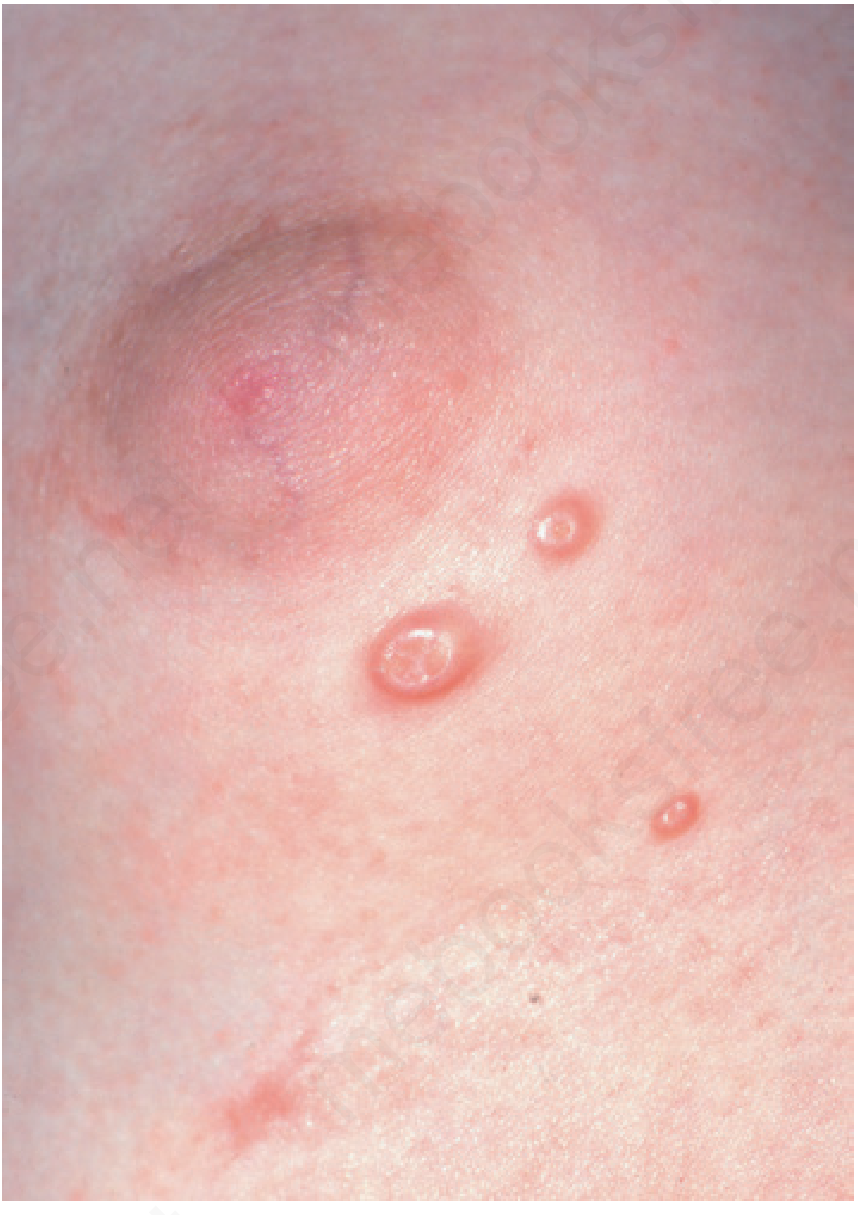
This close-up shows the hallmark morphology: pearly, dome-shaped papules with a central umbilication (pit). The larger lesion shows surrounding erythema/inflammation - a stage sometimes called the "BOTE sign" (Beginning Of The End), signaling impending spontaneous resolution.
Fig. 19.34 - Multiple Molluscum Lesions on the Extremity (showing the characteristic distribution pattern)
(Andrews' Diseases of the Skin)
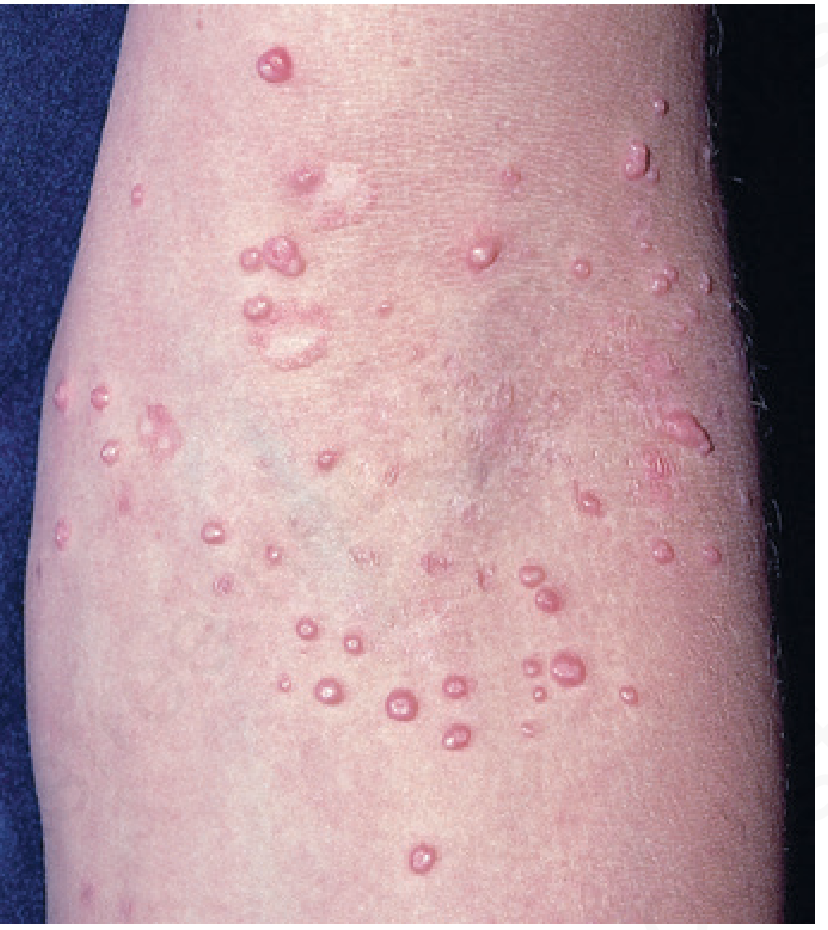
This image demonstrates the typical cluster pattern of multiple lesions seen in sexually transmitted molluscum - small, smooth-surfaced, firm, dome-shaped pink papules, many showing the characteristic central dimple/umbilication.
Fig. 19.33 - Extensive Molluscum (HIV/immunosuppressed patient)
(Andrews' Diseases of the Skin - Courtesy Shyam Verma, MBBS, DVD)
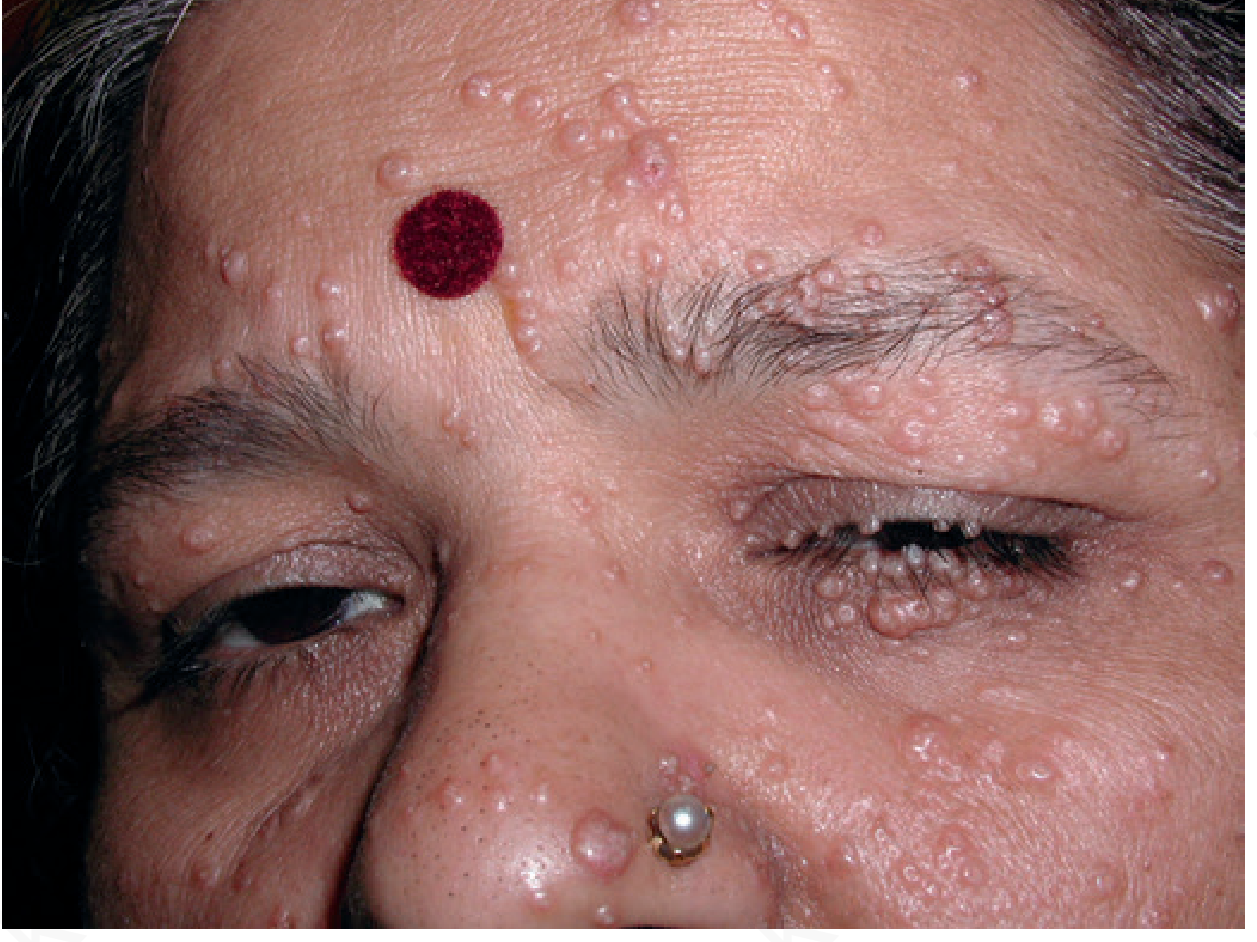
This demonstrates the severe, widespread presentation seen with HIV/immunosuppression - hundreds of confluent papules. On the penile shaft, even immunocompetent STI presentations rarely reach this density, but HIV patients may show extensive genital involvement.
Clinical Features - Penile Shaft Specifics
Morphology of each lesion (from Andrews' Diseases of the Skin, p.453-455 and Campbell-Walsh Wein Urology, p.2687):
- Smooth-surfaced, firm, dome-shaped pearly papule, 2-5 mm diameter
- Central umbilication (central pit/dimple) - pathognomonic feature
- Usually flesh-colored to pink; may become erythematous when inflamed
- Patients typically present with 1-30 lesions; usually asymptomatic
Distribution in sexually transmitted cases:
- Lower abdomen, upper thighs, perineum, penile shaft (most common male genital site)
- Pubic hair removal (shaving/waxing) is a risk factor for acquisition and spread
- Mucosal involvement is very uncommon
Causative virus: Molluscum contagiosum virus (MCV), a poxvirus - MCV-1 is most common in immunocompetent adults; MCV-2 predominates in HIV infection (60% of cases)
Key Differential Diagnoses
| Condition | Distinguishing Feature |
|---|---|
| Condyloma acuminata (HPV warts) | Cauliflower/verrucous surface, no umbilication |
| Pearly penile papules | Symmetrical row along corona, not umbilicated |
| Fordyce spots | Sebaceous glands, yellowish, on glans/shaft |
| Cryptococcosis | Umbilicated papules but in systemically ill patients |
| Keratoacanthoma | Single, rapidly growing, keratin-filled crater |
Diagnosis
Predominantly clinical based on characteristic morphology. Confirmatory test: express the white caseous core of a lesion, smear between two slides, stain with Wright/Giemsa - reveals pathognomonic Henderson-Patterson (molluscum) bodies (large intracytoplasmic inclusions).
Management of Genital Molluscum
Immunocompetent patients - spontaneous resolution in 6-12 months is expected. Treatment options per Campbell-Walsh Wein Urology:
- Physical destruction: Cryotherapy or curettage (most effective for genital lesions)
- Topical agents: 0.5% podophyllotoxin, 5% imiquimod (neither has strong RCT evidence for genital MC specifically), trichloroacetic acid (TCA)
- Counseling: Avoid shaving/waxing while active; do not share towels/bedding; advise sexual partners
HIV/immunosuppressed patients: Initiating or optimizing ART (HAART) is the primary intervention - CD4 count inversely correlates with lesion burden, and lesions often regress 6-8 months after starting ART.
Sources: Andrews' Diseases of the Skin, 13e, pp. 453-455 | Campbell-Walsh Wein Urology, p. 2687-2693
Treatment for molluscum contagiosum lesion of penile shaft
Treatment for genital molluscum contagiosum includes physical destruction (cryotherapy, curettage) and topical agents (podophyllotoxin, imiquimod). Spontaneous resolution occurs in 6-12 months in immunocompetent patients. Let me pull the full evidence-based guidance from authoritative sources.
Searching sources...
Finding Sources
Searching PubMed
molluscum contagiosum treatment genitalia
Finding Sources
Searching PubMed
molluscum contagiosum treatment
Excellent - found a network meta-analysis (PMID 37199262) and a systematic review on topical treatments (PMID 34920817). Let me pull all sources in parallel now.
Reading File
Reading File
Reading Article
PMID: 37199262
Reading Article
PMID: 34920817
Excellent data gathered. Let me now get the full treatment text from Andrews' (the critical genital adult section) and the Pfenninger procedures text.
Reading File
Reading File
Reading Article
PMID: 37945366
I now have comprehensive, evidence-based data from multiple authoritative textbooks and recent systematic reviews. Here is the complete treatment guide:
Treatment of Molluscum Contagiosum - Penile Shaft
First Decision: To Treat or Observe?
Expectant management (watchful waiting) is a valid option for immunocompetent adults. Lesions spontaneously resolve in 6-12 months (individual lesions last 2-4 months; total infection course 12-18 months) with no sequelae. However, treating genital lesions is usually preferred to:
- Prevent autoinoculation and further spread
- Reduce sexual transmission to partners
- Address patient preference for faster resolution
Treatment Options - Evidence Ranked
Tier 1: Physical/Destructive Methods (First-Line for Genital MC)
1. Cryotherapy (Liquid Nitrogen)
- Preferred first-line for adult genital molluscum per Andrews' Diseases of the Skin
- Liquid nitrogen brief freeze of several seconds per lesion (30 sec-1 min with nitrous oxide probes); fine-tipped probes avoid freezing normal skin
- Repeat every 2-3 weeks if needed
- Network meta-analysis (25 RCTs, n=2,123) ranked cryotherapy second overall for complete clearance: OR 16.81 (95% CI 4.13-68.54) vs placebo (Chao et al., 2023 JDDG)
- Caution: Use with care in patients with darker skin tones - risk of post-inflammatory dyspigmentation
- Light cryotherapy also diagnostically useful - highlights the central umbilication
2. Curettage
- Highly effective; often combined with or alternating with cryotherapy
- Requires topical/local anesthesia (EMLA 1 hour prior); small disposable sharp dermal curette
- Andrews': "removal by cryotherapy or curettage is very effective" for adult genital MC
- Penile skin is very thin - keep procedure superficial
Tier 2: Topical Chemical Agents
3. Podophyllotoxin 0.5% (patient-applied)
- OR 10.24 (95% CI 3.36-31.21) for complete clearance vs placebo - ranked 3rd in network meta-analysis
- Applied by patient twice daily for 3 days, repeated weekly for up to 4-6 weeks
- Contraindicated in pregnancy
- Note: Andrews' cautions that "neither imiquimod nor podophyllotoxin has been demonstrated to be effective" specifically for genital MC in controlled trials - clinical practice varies from meta-analysis results
4. Potassium Hydroxide (KOH) 10%
- OR 10.02 (95% CI 4.64-21.64) - ranked 4th overall
- Applied topically once or twice daily until lesions resolve
- Mechanism: keratolytic disruption of molluscum bodies
- Generally well-tolerated; local irritation possible
5. Cantharidin (YCANTH, 0.7% topical solution)
- FDA-approved (2023) for MC in adults and children ≥2 years - newest approved agent
- Applied in-office every 21 days for up to 4 treatments
- Phase III RCTs (CAMP-1 & CAMP-2): complete clearance in 46-54% of treated patients vs 13-18% vehicle control (Gupta et al., 2023 - PMID 37945366)
- Mechanism: activates serine proteases → blistering → shedding of infected cells
- Caution on penile/perineal skin: Andrews' recommends avoiding cantharidin at the perineum due to risk of exuberant blistering on thin, sensitive skin. Apply with a wooden-tip cotton swab only to the lesion itself; wash off after 1-6 hours.
6. Trichloroacetic Acid (TCA, 3.5%-100%)
- Applied in-office to individual lesions
- Particularly useful in immunosuppressed patients
- Medium-depth peels (>35%) used for widespread lesions
7. Imiquimod 5% cream
- Commonly prescribed but evidence is weak
- Two large RCTs showed no benefit over placebo; Andrews' states clearly: "No controlled trials have confirmed the efficacy of imiquimod"
- Systematic review (Phan et al. 2021 - PMID 34920817) confirms "varying degrees of efficacy" - cannot be recommended as first-line
- Still used in some guidelines given safety profile and immune-modulating rationale
Tier 3: Other Reported Agents
| Agent | Evidence | Notes |
|---|---|---|
| Ingenol mebutate | OR 117.42 - highest in NMA but safety concerns now reported | Not recommended due to risk; removed from market in EU |
| Pulse dye laser / PDL | Case series level evidence | Useful for resistant cases |
| 5-fluorouracil (5-FU) topical | Used in HIV patients with widespread disease | Daily to point of skin erosion |
| Cidofovir 1-3% topical | Case reports/series in AIDS patients | Dramatic responses described |
| KOH 10% solution | Good RCT data | Keratolytic; twice daily self-application |
| Tretinoin cream | Some benefit for face; mild irritant → immune activation | Applied with toothpick to individual lesions |
| Hydrogen peroxide 1% cream | Limited evidence | Well-tolerated |
| Povidone-iodine | Case series |
Special Situations
HIV / Immunosuppressed Patients
- Start/optimize ART (HAART) first - most important intervention
- CD4 count inversely correlates with lesion burden; lesions resolve 6-8 months after ART initiation
- For few lesions: curettage or core removal
- For many/confluent lesions: TCA peels, daily 5-FU, topical cidofovir 1-3%
- Cryotherapy effective but risk dyspigmentation
Penile Shaft-Specific Cautions
- Penile skin is very thin - any procedure must be kept superficial to avoid scarring
- Avoid cantharidin + podophyllin mixtures on genital skin (unnecessarily caustic)
- EMLA (lidocaine/prilocaine) cream under occlusion 1 hour before curettage/cryotherapy improves tolerability - note risk of systemic toxicity with large surface area application
Prevention of Spread
- Avoid shaving/waxing the genital area while lesions are active (facilitates autoinoculation)
- Do not share towels, bed linen, or clothing with active lesions
- Advise sexual partners; screen for other STIs
- Condom use reduces (but does not eliminate) transmission
Summary: Practical Approach for Penile Shaft MC
Immunocompetent adult, few lesions (1-20):
→ Cryotherapy (LN₂) OR curettage = first-line
→ If patient prefers self-treatment: podophyllotoxin 0.5% or KOH 10%
→ In-office option: cantharidin 0.7% (YCANTH) - avoid heavy application on penile skin

Many lesions or treatment-resistant:
→ Combination: cryotherapy + podophyllotoxin
→ Refer dermatology; exclude HIV

HIV/immunosuppressed:
→ Optimize ART first
→ Curettage or TCA for individual lesions
Sources: Andrews' Diseases of the Skin, 13e, pp. 453-455 | Pfenninger & Fowler's Procedures for Primary Care, 3e | Campbell-Walsh Wein Urology | Chao et al., JDDG 2023 - Network Meta-Analysis, PMID 37199262 | Phan et al., Clin Dermatol 2021 - Systematic Review, PMID 34920817 | Gupta et al., Skinmed 2023 - Cantharidin Phase III RCT, PMID 37945366
Use of podophyllotoxin
Podophyllotoxin (0.5% solution or 0.15% cream) is a plant-derived antimitotic used topically for genital warts (condyloma acuminata) and molluscum contagiosum. It is applied twice daily for 3 consecutive days per week, repeated for up to 4 cycles. Let me get the full pharmacology and clinical details from authoritative sources.
Searching sources...
Finding Sources
Searching PubMed
podophyllotoxin genital warts molluscum contagiosum
Reading File
Reading File
Reading File
Searching PubMed
podophyllotoxin condyloma acuminata treatment
Good data. Let me now pull the full podophyllin/podophyllotoxin section from Dermatology 5e and also get the RCT abstract comparing it with imiquimod, plus search for more clinical detail on anogenital warts treatment.
Reading File
Finding Sources
Reading Article
PMID: 32975189
Let me get the Campbell-Walsh Urology treatment section and also search for more detailed podophyllotoxin paragraphs in the dermatology textbooks.
Finding Sources
Finding Sources
Reading File
Reading File
I now have comprehensive data from multiple authoritative sources. Here is the complete, evidence-based guide:
Podophyllotoxin (Podofilox) - Complete Clinical Guide
What Is It?
Podophyllotoxin (trade names: Condylox, Warticon, Wartec) is the purified, standardized active constituent of podophyllin resin, extracted from the May apple plant (Podophyllum peltatum / P. emodi). It is available as:
| Formulation | Concentration | Route |
|---|---|---|
| Solution (podofilox) | 0.5% | Patient self-applied |
| Gel (podofilox) | 0.5% | Patient self-applied |
| Cream (Warticon) | 0.15% | Patient self-applied |
| Podophyllin resin (crude extract) | 10-25% | Physician-applied only |
The purified 0.5% forms are preferred over the crude resin because they lack the mutagenic impurities (α/β-peltatin, dehydropodophyllotoxin) found in podophyllin, are stable and standardized in concentration, and can be safely self-applied at home.
Mechanism of Action
Podophyllotoxin is an antimitotic agent. It binds reversibly to tubulin - the microtubule protein of the mitotic spindle - and prevents normal assembly of the spindle, arresting epidermal mitosis in metaphase. This selectively destroys rapidly dividing infected keratinocytes. Podophyllin derivatives etoposide/teniposide (chemotherapy agents) also inhibit topoisomerase II, but this is not the mechanism of topical podophyllotoxin.
Indications
Primary licensed indication:
- External genital warts (condyloma acuminata) - HPV-6 and HPV-11
- Penile shaft, vulvar, perianal external warts
- Andrews' Dermatology explicitly recommends it for genital warts
Off-label use:
- Molluscum contagiosum (penile shaft, genital region) - ranked 3rd for complete clearance in the 2023 network meta-analysis of 25 RCTs (OR 10.24, 95% CI 3.36-31.21 vs placebo; Chao et al., JDDG 2023)
NOT indicated for:
- Cervical, vaginal, urethral meatal, or intra-anal warts (mucous membrane lesions - risk of excessive absorption)
- Warts with hair growth
- Bleeding warts, moles, or birthmarks
- Pregnancy (see below)
How to Use - Dosing Regimen
Standard Patient Self-Application Regimen (0.5% solution/gel):
Cycle structure:
- Apply twice daily (morning and evening) for 3 consecutive days
- Then 4 drug-free days (rest period)
- This constitutes one treatment cycle
- Repeat for up to 4 cycles (= 4 weeks total active treatment) until no visible wart tissue remains
Application technique:
- Wash and dry the area thoroughly
- Apply with the supplied applicator or a cotton swab only to the wart tissue - avoid surrounding healthy skin
- Allow to dry before contact with clothing/partner
- For penile warts: most men require less than 70 µL per application - at this dose, podofilox is NOT routinely detectable in serum (from Katzung's Basic & Clinical Pharmacology, 16e)
- Optionally apply petrolatum (Vaseline) to surrounding healthy skin first to reduce irritation
Clearance rates (condyloma acuminata):
- Podophyllin resin 10-25%: 30-60%
- Podophyllotoxin 0.5%: 45-75% (superior to crude podophyllin)
Comparison with Imiquimod
The HIPvac factorial RCT (n=503, 22 sexual health clinics; Gilson et al., Health Technol Assess 2020, PMID 32975189) directly compared 5% imiquimod vs 0.15% podophyllotoxin cream for anogenital warts:
- No statistically significant difference in combined primary outcome (wart clearance at week 16 + wart-free at week 48)
- Adjusted OR for imiquimod vs podophyllotoxin = 0.81 (95% CI 0.54-1.23)
- Both agents performed comparably; podophyllotoxin had a shorter required treatment duration
This supports either agent as a valid first-line topical option, with choice guided by patient preference, convenience, and tolerability.
Adverse Effects
Local (common):
- Burning, erythema, pain at application site - most common
- Skin erosion / ulceration if over-applied or applied to surrounding healthy skin
- Inflammation, itching
- The irritant reaction is variable between patients - test with 30-40 min exposure first, then extend to 1-4 hours on subsequent applications based on tolerance
Systemic toxicity (with podophyllin resin - rare with purified podofilox at correct doses):
- Nausea, vomiting
- Altered sensorium, confusion
- Peripheral neuropathy, diminished tendon reflexes
- Muscle weakness, ataxia
- Coma, death (with large-dose podophyllin misuse)
- At the standard ≤70 µL/application podofilox dose, serum levels are undetectable - systemic effects are not a practical concern
Contraindications
| Contraindication | Reason |
|---|---|
| Pregnancy | Cytotoxic to fetus; podophyllin resin clearly teratogenic. Podophyllotoxin studies in pregnancy did not show increased adverse fetal outcomes, but it remains contraindicated by convention |
| Mucosal surfaces (vagina, cervix, meatus, rectum) | Excessive absorption; not approved |
| Large surface area application | Risk of systemic absorption |
| Bleeding or friable warts | Increased absorption |
| Moles, birthmarks, hair-bearing warts | Not indicated |
Important Notes for Penile Shaft Use
- The penile skin is thin - keep applications superficial and strictly confined to lesion tissue
- Protect surrounding healthy penile skin with petrolatum before applying
- Do not use cantharidin + podophyllin combinations on genital skin (unnecessarily caustic per Andrews')
- CDC guidance: Podophyllin resin (crude) is no longer recommended for external genital warts due to systemic toxicity risk; purified podophyllotoxin 0.5% is the preferred formulation
- For molluscum contagiosum specifically: Andrews' Diseases of the Skin notes "neither imiquimod nor podophyllotoxin has been demonstrated to be effective" in dedicated genital MC trials, despite network meta-analysis data - cryotherapy/curettage remain preferred for genital MC
Podophyllotoxin vs Podophyllin - Key Differences
| Feature | Podophyllin Resin (crude) | Podophyllotoxin (podofilox) |
|---|---|---|
| Concentration | 10-25% | 0.5% (solution/gel); 0.15% (cream) |
| Standardization | Variable | Standardized |
| Mutagens present | Yes (peltatin, etc.) | No |
| Application | Physician-applied only | Patient self-applied |
| Wash-off required | Yes (30 min-4 hrs) | No |
| Systemic toxicity risk | Higher | Very low at standard dose |
| CDC-recommended | No (dropped) | Yes |
| Clearance rate | 30-60% | 45-75% |
Sources: Dermatology 2-Volume Set, 5e (Bolognia), pp. 4778-4793 | Katzung's Basic & Clinical Pharmacology, 16e, pp. 1824-1835 | Andrews' Diseases of the Skin, 13e | Gilson et al., HIPvac RCT, PMID 32975189 | Chao et al., Network Meta-Analysis, PMID 37199262
This is a shared conversation. Sign in to Orris to start your own chat.