
Pituitary hypothalamic system Pharmacology
Reading File
Now let me search the medical library for pituitary-hypothalamic system pharmacology content in parallel.
Finding Sources
Finding Sources
Finding Sources
Finding Sources
Finding Sources
Finding Sources
Finding Sources
Finding Sources
Lippincott Pharmacology has the most relevant content. Let me read that section and also the Goodman & Gilman / Katzung TOC for the pituitary-hypothalamic chapter.
Finding Sources
Finding Sources
Excellent! Now I have clear file paths. Let me read the key sections from both Lippincott and Goodman & Gilman simultaneously.
Reading File
Reading File
Reading File
Reading File
Excellent content. Let me continue reading the Lippincott section and Goodman & Gilman for more drug details.
Reading File
Reading File
Loading Image
Loading Image
Reading File
Reading File
Reading File
I now have comprehensive content from both Lippincott Pharmacology and Goodman & Gilman. Let me compile the full, well-structured answer.
Pituitary-Hypothalamic System - Pharmacology
Overview and Anatomy of the Axis
The pituitary gland ("master gland") is controlled by the hypothalamus via releasing and inhibiting hormones that travel through the hypophyseal portal system to the anterior lobe. The posterior lobe hormones bypass this system entirely - they are synthesized in the hypothalamus and transported directly to the posterior pituitary.
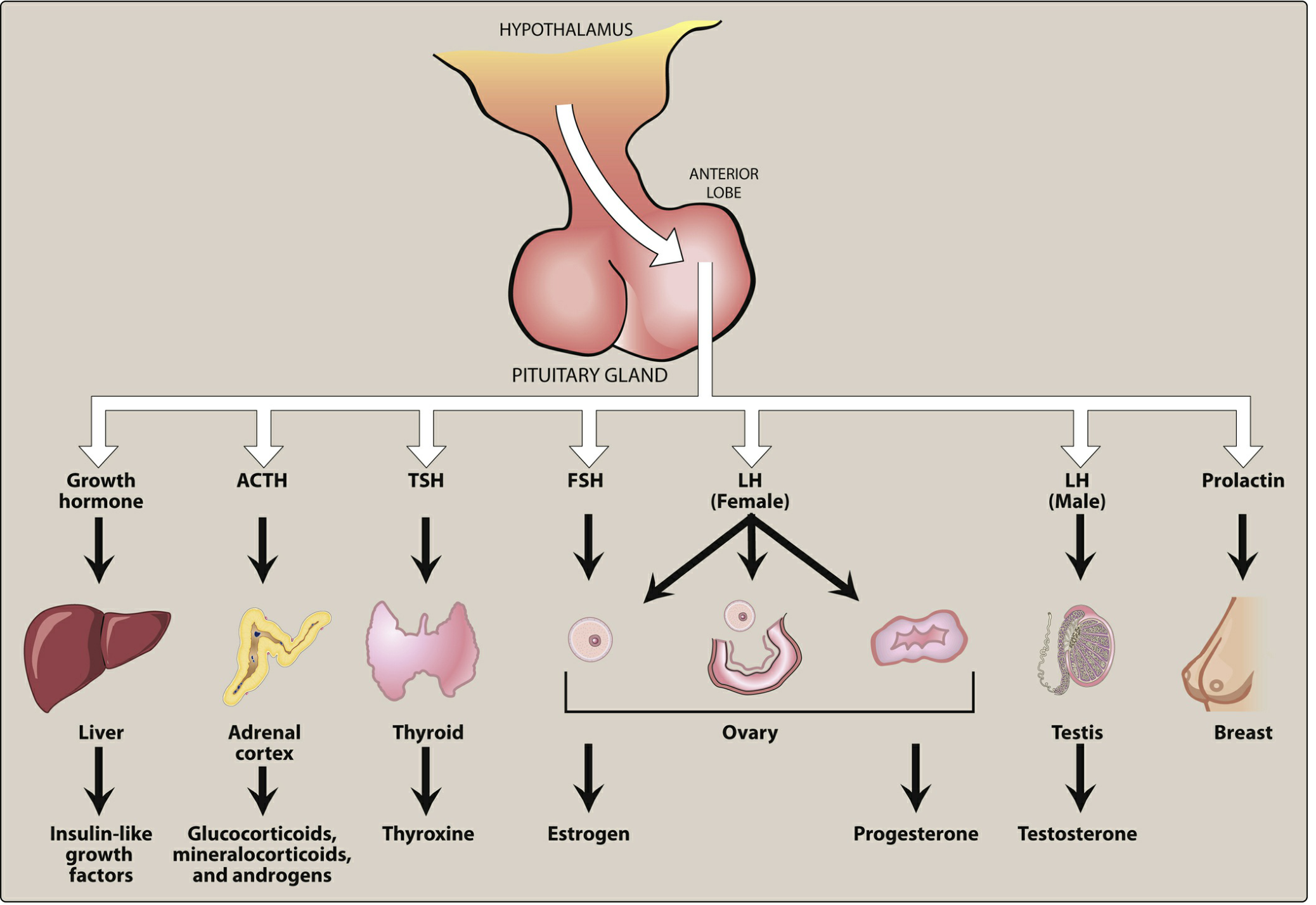
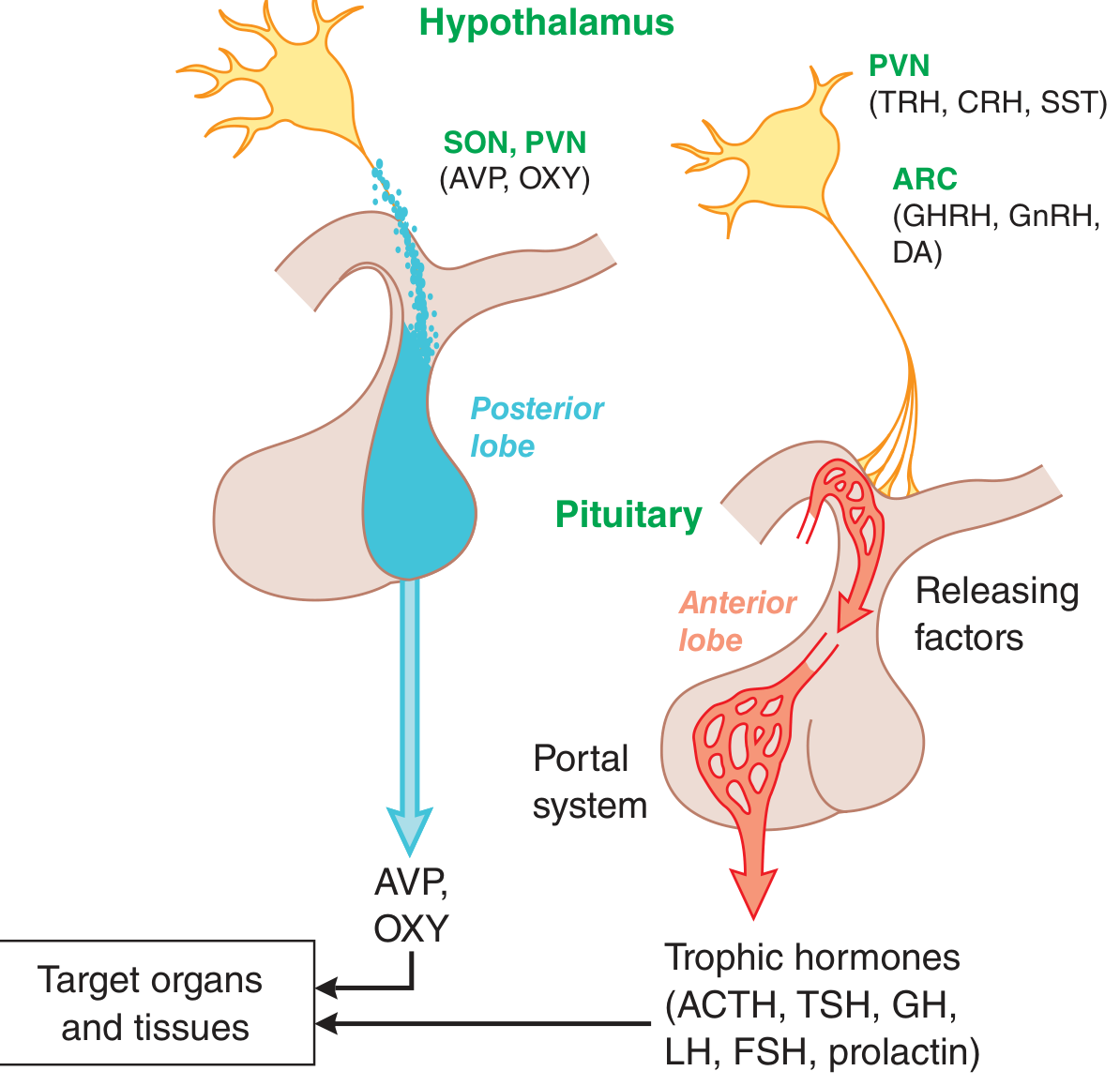
Hypothalamic Hormones and Their Pituitary Effects
| Hypothalamic Hormone | Effect on Pituitary | Target Hormone(s) |
|---|---|---|
| Growth hormone-releasing hormone (GHRH) | ↑ Growth hormone | IGF-1 |
| Somatostatin (SST) | ↓ Growth hormone, ↓ TSH | - |
| Dopamine (DA) | ↓ Prolactin | - |
| Corticotropin-releasing hormone (CRH) | ↑ ACTH | Cortisol |
| Thyrotropin-releasing hormone (TRH) | ↑ TSH, ↑ Prolactin | Thyroid hormone |
| Gonadotropin-releasing hormone (GnRH) | ↑ FSH, ↑ LH | Estrogen, Progesterone, Testosterone |
(Goodman & Gilman, Table 46-1)
Pituitary hormones fall into three structural families:
- POMC-derived: ACTH, α-MSH
- Somatotropic: GH, prolactin
- Glycoprotein: TSH, FSH, LH
I. ANTERIOR PITUITARY HORMONES
A. Adrenocorticotropic Hormone (ACTH / Corticotropin)
Physiology: CRH stimulates synthesis of proopiomelanocortin (POMC) in the pituitary; ACTH is the post-translational product. Release is pulsatile with a diurnal rhythm (peak in early morning). Negative feedback: cortisol suppresses ACTH release.
Mechanism of action: ACTH binds to receptors on the adrenal cortex surface, activating G protein-coupled processes that stimulate the rate-limiting step: cholesterol → pregnenolone, ultimately producing glucocorticoids, mineralocorticoids, and adrenal androgens.
Therapeutic uses:
- Primarily a diagnostic tool to differentiate primary adrenal insufficiency (Addison disease - adrenal atrophy) from secondary adrenal insufficiency (inadequate pituitary ACTH)
- Cosyntropin (synthetic human ACTH) is the preferred preparation
- CRH is used diagnostically to distinguish Cushing syndrome from ectopic ACTH-producing tumors
- Also used for: infantile spasms, multiple sclerosis, resistant epilepsy
Adverse effects: Short-term diagnostic use is well tolerated. Long-term: hypertension, peripheral edema, hypokalemia, emotional disturbances, bone loss, increased infection risk (similar to glucocorticoids).
B. Growth Hormone (GH / Somatotropin)
Physiology: Released by anterior pituitary in response to GHRH; inhibited by somatostatin. Released in a pulsatile manner, with highest levels during sleep. GH decreases with age.
Mechanism of action:
- Direct effects at target tissues
- Indirect effects via somatomedins - mainly IGF-1 (insulin-like growth factor 1), released from the liver
- In acromegaly (excess GH from pituitary tumor), IGF-1 levels are consistently elevated
Drug: Somatropin (recombinant human GH)
- Route: subcutaneous or IM injection
- Bioavailability: ~70%; plasma t1/2 ~20 min, but biological t1/2 is longer; once-daily dosing is sufficient
Therapeutic uses:
- GH deficiency in children (pituitary dwarfism)
- Short stature from: Turner syndrome, Noonan syndrome, Prader-Willi syndrome, chronic renal insufficiency, small for gestational age, idiopathic short stature
- GH deficiency in adults (after surgery, trauma, or radiation)
- HIV-associated wasting/cachexia
- Short-bowel syndrome (malabsorption)
Contraindications:
- Closed epiphyses in pediatric patients
- Active malignancy
- Proliferative or severe nonproliferative diabetic retinopathy
- Prader-Willi syndrome with severe obesity or respiratory impairment (risk of sudden death)
- Acute critical illness (post-surgery, trauma, respiratory failure)
Adverse effects: Pain at injection site, edema, arthralgias, myalgias, nausea, increased diabetes risk, carpal tunnel syndrome.
(Lippincott Pharmacology, p. 769-770; Goodman & Gilman)
C. Somatostatin (Growth Hormone-Inhibiting Hormone)
Physiology: A small polypeptide originally isolated from the hypothalamus; also found in neurons throughout the body, intestine, stomach, and pancreas. Inhibits GH, TSH, insulin, glucagon, and gastrin.
Synthetic analogs (long-acting):
| Drug | Half-life | Administration |
|---|---|---|
| Octreotide | Much longer than native somatostatin | IV infusion or SC; depot formulation every 4 weeks |
| Lanreotide | Similar to octreotide | Depot formulation every 4 weeks |
Therapeutic uses:
- Acromegaly (excess GH) - first-line medical management
- Severe diarrhea/flushing in carcinoid tumors (and other neuroendocrine tumors)
- Bleeding esophageal varices (octreotide IV infusion)
Adverse effects: Bradycardia, diarrhea, abdominal pain, flatulence, nausea, steatorrhea. Long-term use: delayed gallbladder emptying → asymptomatic cholesterol gallstones.
D. Gonadotropin-Releasing Hormone (GnRH) Analogs
Key concept: Pulsatile GnRH secretion stimulates FSH and LH release. Continuous (non-pulsatile) GnRH causes downregulation of GnRH receptors → suppresses gonadotropins → reduces gonadal steroids.
GnRH Agonists (paradoxically suppress after initial stimulation):
- Leuprolide (leuprorelin), Goserelin, Buserelin, Histrelin
- Initial "flare" effect: temporary rise in LH, FSH, and sex steroids before suppression
Uses of GnRH agonists:
- Prostate cancer (suppresses testosterone)
- Endometriosis (suppresses estrogen)
- Precocious puberty
- Prevention of premature LH surge in infertility protocols
GnRH Antagonists (immediate suppression, no flare):
- Cetrorelix, Ganirelix (injectable, used in infertility)
- Elagolix (oral) - for endometriosis; does not completely suppress pituitary function
Adverse effects:
- Women: hot flashes, sweating, diminished libido, depression, ovarian cysts; contraindicated in pregnancy
- Men: initial bone pain from testosterone surge; hot flashes, edema, gynecomastia, diminished libido
E. Gonadotropins
FSH analogs:
- Follitropin alfa/beta (recombinant FSH) - stimulates ovarian follicular growth and maturation
- Urofollitropin (purified urinary FSH)
- Used in: infertility protocols (ovarian stimulation, controlled hyperstimulation)
LH + FSH combinations:
- Menotropins (hMG) - urinary-derived mix of FSH + LH; used in infertility
- Chorionic gonadotropin (hCG) - acts like LH; triggers ovulation; also used in cryptorchidism and hypogonadism in males
- Lutropin alfa (recombinant LH)
F. Prolactin
Physiology:
- Stimulated by TRH
- Tonically inhibited by dopamine (tuberoinfundibular DA pathway - hypothalamus to anterior pituitary)
- Neuroleptics/antipsychotics block D2 receptors → increased prolactin (hyperprolactinemia)
Treatment of hyperprolactinemia (prolactinoma):
- Dopamine agonists are first-line: Bromocriptine and Cabergoline
- Cabergoline is preferred (longer half-life, better tolerated, more effective)
- Both also used for pituitary microadenomas
- Bromocriptine additionally indicated for type 2 diabetes (Cycloset formulation)
G. TSH (Thyrotropin)
Physiology: Regulated by TRH from hypothalamus; suppressed by thyroid hormones (T3/T4) via negative feedback.
Drug: Recombinant human TSH (thyrotropin alfa / Thyrogen) - used diagnostically and to stimulate radioactive iodine uptake in thyroid cancer follow-up.
Thyroid pharmacology (related to hypothalamic-pituitary-thyroid axis):
- Hypothyroidism: Levothyroxine (T4), liothyronine (T3)
- Hyperthyroidism:
- Thioamides: Methimazole (preferred), PTU (first trimester of pregnancy); inhibit iodination and coupling of iodotyrosines
- PTU also blocks peripheral T4 → T3 conversion
- Iodide: "Wolff-Chaikoff effect" - inhibits thyroid hormone release; used in thyroid storm and pre-surgery
- Radioactive iodine (131I): ablation; most patients develop hypothyroidism afterward
- β-blockers (propranolol, metoprolol, atenolol): manage sympathetic symptoms in hyperthyroidism/thyroid storm
II. POSTERIOR PITUITARY HORMONES
These hormones are synthesized in the supraoptic and paraventricular nuclei of the hypothalamus, transported down axons, and stored/released from the posterior pituitary. They are NOT controlled by hypothalamic releasing hormones but by physiologic signals (osmolarity, parturition).
A. Oxytocin
Physiology: Produced during labor, breastfeeding, and positive social contact. Causes milk ejection by contracting myoepithelial cells around mammary alveoli.
Therapeutic uses:
- Stimulate uterine contractions and induce labor
- Manage postpartum hemorrhage
Adverse effects: Hypertension, uterine rupture, water retention, fetal death (rare). Less antidiuretic and pressor activity than vasopressin.
B. Vasopressin (ADH - Antidiuretic Hormone)
Physiology: Differs from oxytocin by only 2 amino acids. Has both antidiuretic (V2 receptor) and vasopressor (V1 receptor) effects.
Receptors:
- V2 receptor (kidney collecting tubules): ↑ water permeability (aquaporin-2 insertion) → water reabsorption
- V1 receptor (liver, vascular smooth muscle): vasoconstriction
Therapeutic uses:
- Diabetes insipidus (main use)
- Septic shock (vasopressor)
- Bleeding esophageal varices
Toxicity: Water intoxication, hyponatremia, abdominal pain, tremor, vertigo.
C. Desmopressin (DDAVP)
- Synthetic analog of vasopressin
- Minimal V1 activity → largely free of pressor effects
- Selective V2 agonist
Uses:
- Diabetes insipidus (preferred over vasopressin)
- Nocturnal enuresis (bedwetting)
- Von Willebrand disease and mild hemophilia A (stimulates release of vWF and factor VIII)
Summary Drug Table
| Drug | Class | Key Use |
|---|---|---|
| Cosyntropin | Synthetic ACTH | Diagnosis of adrenal insufficiency |
| Somatropin | Recombinant GH | GH deficiency, short stature, HIV cachexia |
| Octreotide | Somatostatin analog | Acromegaly, carcinoid, esophageal varices |
| Lanreotide | Somatostatin analog | Acromegaly |
| Leuprolide | GnRH agonist | Prostate cancer, endometriosis, precocious puberty |
| Goserelin | GnRH agonist | Prostate cancer, endometriosis |
| Cetrorelix / Ganirelix | GnRH antagonist | Infertility protocols (no flare) |
| Bromocriptine | Dopamine agonist | Hyperprolactinemia, prolactinoma |
| Cabergoline | Dopamine agonist | Hyperprolactinemia, prolactinoma (preferred) |
| Follitropin | Recombinant FSH | Infertility (ovarian stimulation) |
| hCG | LH-like | Infertility, cryptorchidism |
| Oxytocin | Posterior pituitary | Induction of labor |
| Vasopressin | Posterior pituitary | Diabetes insipidus, septic shock, varices |
| Desmopressin | V2 agonist (no V1) | Diabetes insipidus, enuresis, vWD, hemophilia A |
| Levothyroxine | Thyroid hormone | Hypothyroidism |
| Methimazole | Thioamide | Hyperthyroidism (preferred) |
| PTU | Thioamide | Hyperthyroidism (1st trimester of pregnancy) |
Sources:
- Lippincott Illustrated Reviews: Pharmacology, Chapter 23 (pp. 766-788)
- Goodman & Gilman's The Pharmacological Basis of Therapeutics, Chapter 46
Will you give the same result from KD Tripati
Let me search the library for KD Tripathi's pharmacology textbook.
Finding Sources
Finding Sources
Finding Sources
Unfortunately, KD Tripathi's "Essentials of Medical Pharmacology" is not available in the medical textbook library. The pharmacology books currently in the library are:
- Goodman & Gilman's The Pharmacological Basis of Therapeutics
- Katzung's Basic and Clinical Pharmacology, 16th Edition
- Lippincott Illustrated Reviews: Pharmacology
KD Tripathi is a very popular Indian pharmacology textbook (widely used for MBBS and PG entrance exams in India), but it is not part of this library's collection.
What I can offer instead:
- The answer I already gave you is sourced primarily from Lippincott Pharmacology and Goodman & Gilman - both are highly authoritative and cover the same topics as KD Tripathi, often in more detail.
- The core content on the pituitary-hypothalamic system (GnRH analogs, somatostatin analogs, dopamine agonists, posterior pituitary hormones, etc.) is the same across all standard pharmacology textbooks including KD Tripathi - the classification, mechanisms, and clinical uses do not differ significantly.
- If you want, I can present the same content in KD Tripathi's style - which is known for its concise classification tables, bulleted drug profiles, and exam-oriented summaries.
Would you like me to reformat the previous answer in KD Tripathi's typical exam-friendly style using the available textbooks as the source?
Reformat this in KD Tripathi's concise, table-based style
Here is the full topic reformatted in KD Tripathi's style — concise, exam-oriented, with classification boxes, drug profiles, and high-yield notes.
PITUITARY-HYPOTHALAMIC SYSTEM PHARMACOLOGY
KD Tripathi Style
OVERVIEW
The hypothalamus controls the anterior pituitary via releasing/inhibiting hormones carried through the hypophyseal portal system. The posterior pituitary hormones (vasopressin, oxytocin) are synthesized in hypothalamic nuclei and released directly — not via portal blood.
CLASSIFICATION OF DRUGS
A. Anterior Pituitary Hormones & Analogs
| Group | Drugs |
|---|---|
| 1. Corticotropins | Corticotropin (ACTH), Cosyntropin, CRH (corticorelin) |
| 2. Growth hormone & analogs | Somatropin (rGH), Somatrem |
| 3. Somatostatin analogs | Octreotide, Lanreotide, Pasireotide |
| 4. GH receptor antagonist | Pegvisomant |
| 5. GnRH agonists | Leuprolide, Goserelin, Buserelin, Nafarelin, Histrelin, Triptorelin |
| 6. GnRH antagonists | Cetrorelix, Ganirelix, Degarelix, Elagolix (oral) |
| 7. Gonadotropins | FSH: Follitropin α/β, Urofollitropin; LH+FSH: Menotropin (hMG); hCG; Lutropin α |
| 8. Dopamine agonists (anti-prolactin) | Bromocriptine, Cabergoline |
| 9. Thyroid axis drugs | See thyroid pharmacology |
B. Posterior Pituitary Hormones & Analogs
| Group | Drugs |
|---|---|
| 1. Vasopressin & analogs | Vasopressin, Desmopressin (DDAVP), Terlipressin |
| 2. Vasopressin antagonists (Vaptans) | Tolvaptan, Conivaptan, Lixivaptan |
| 3. Oxytocin & analogs | Oxytocin, Carbetocin |
| 4. Oxytocin antagonist | Atosiban (tocolytic) |
SECTION I: HYPOTHALAMIC REGULATORY HORMONES
| Hypothalamic Hormone | Pituitary Effect | Peripheral Target |
|---|---|---|
| GHRH | ↑ GH | IGF-1 (liver) |
| Somatostatin (SST) | ↓ GH, ↓ TSH | - |
| Dopamine (DA) | ↓ Prolactin | - |
| CRH | ↑ ACTH | Cortisol |
| TRH | ↑ TSH, ↑ Prolactin | Thyroid hormones |
| GnRH (pulsatile) | ↑ FSH + LH | Estrogen / Testosterone |
| GnRH (continuous) | ↓ FSH + LH (receptor downregulation) | ↓ Sex steroids |
High-Yield: All anterior pituitary peptide hormones are given parenterally (destroyed by GI proteases). Exception: oral GnRH antagonists (elagolix).
SECTION II: DRUG PROFILES
1. CORTICOTROPIN (ACTH)
| Feature | Detail |
|---|---|
| Source | Extracted from animal pituitary / recombinant |
| Preferred preparation | Cosyntropin (synthetic, 24-AA fragment) |
| Mechanism | Binds adrenal cortex receptors → G-protein → cholesterol → pregnenolone → steroids |
| Rhythm | Pulsatile; diurnal (peak = early morning; trough = late evening) |
| Negative feedback | Cortisol suppresses ACTH release |
Uses:
- Diagnosis of adrenal insufficiency (primary vs. secondary)
- CRH: distinguish Cushing syndrome (pituitary) from ectopic ACTH
- Infantile spasms, MS, resistant epilepsy
Adverse effects: Hypertension, edema, hypokalemia, osteoporosis, infection risk (same as glucocorticoids with prolonged use)
2. GROWTH HORMONE - SOMATROPIN
| Feature | Detail |
|---|---|
| Source | Recombinant DNA technology |
| Route | SC / IM injection |
| Bioavailability | ~70% (SC) |
| Plasma t½ | ~20 min; biological t½ much longer → once daily dosing |
| Mediator | IGF-1 (somatomedin C) from liver |
Uses:
| Indication | Notes |
|---|---|
| GH deficiency in children (pituitary dwarfism) | Dose: 25-50 µg/kg/day SC |
| Turner, Noonan, Prader-Willi syndrome | Higher doses (50-67 µg/kg/day) |
| Chronic renal insufficiency, SGA | - |
| Idiopathic short stature (>2.25 SD below mean) | - |
| GH-deficient adults | Dose: 150-300 µg/day |
| HIV-associated wasting/cachexia | FDA approved |
| Short-bowel syndrome | GH stimulates GI epithelial adaptation |
Contraindications:
- Closed epiphyses
- Active malignancy
- Proliferative diabetic retinopathy
- Prader-Willi + severe obesity/respiratory impairment (sudden death risk)
- Acute critical illness
Adverse effects: Edema, arthralgias, myalgias, carpal tunnel syndrome, insulin resistance, injection site pain
⚠️ High-Yield: In acromegaly, IGF-1 levels are consistently high (used to monitor, not just GH).
3. SOMATOSTATIN ANALOGS
| Drug | Route | Dose Interval | Special Use |
|---|---|---|---|
| Octreotide | SC / IV; depot IM | Every 4 weeks (depot) | Esophageal varices (IV infusion) |
| Lanreotide | Deep SC depot | Every 4 weeks | Acromegaly |
| Pasireotide | SC / IM | Twice daily / monthly | Cushing disease (pituitary ACTH tumor) |
Mechanism: Bind somatostatin receptors (SSTRs) → inhibit GH, TSH, insulin, glucagon, gastrin secretion
Uses:
- Acromegaly (first-line medical therapy)
- Carcinoid tumors - severe diarrhea/flushing
- VIPoma, glucagonoma (other neuroendocrine tumors)
- Bleeding esophageal varices (octreotide IV)
- TSH-secreting pituitary adenoma
Adverse effects:
| ADR | Mechanism |
|---|---|
| Gallstones (asymptomatic) | Delayed gallbladder emptying |
| Steatorrhea, diarrhea | ↓ pancreatic enzymes |
| Bradycardia | Cardiac somatostatin receptors |
| Hyperglycemia (pasireotide) | Inhibits insulin more than glucagon |
4. GnRH AGONISTS
Paradox: Continuous use → receptor downregulation → chemical castration
| Drug | Route | Duration |
|---|---|---|
| Leuprolide | SC / IM depot | Monthly / 3-monthly / 6-monthly |
| Goserelin | SC implant | Monthly / 3-monthly |
| Triptorelin | IM | Monthly / 3-monthly |
| Buserelin | SC / intranasal | Daily |
| Nafarelin | Intranasal | Twice daily |
| Histrelin | SC implant | Yearly |
Uses:
| Indication | Mechanism |
|---|---|
| Prostate cancer | ↓ Testosterone (medical orchidectomy) |
| Endometriosis | ↓ Estrogen → atrophy of ectopic endometrium |
| Uterine fibroids | ↓ Estrogen → shrink fibroids |
| Precocious puberty | Suppresses premature gonadotropin surge |
| Infertility (prevent premature LH surge) | Controls ovarian stimulation timing |
| Breast cancer (premenopausal) | Ovarian suppression |
Adverse effects:
- Women: hot flashes, sweating, ↓ libido, depression, ovarian cysts; contraindicated in pregnancy
- Men: initial testosterone flare → bone pain (give antiandrogen cover for 1st 2 weeks), hot flashes, gynecomastia, ↓ libido, osteoporosis
⚠️ Flare phenomenon: GnRH agonists initially raise LH/FSH/testosterone before suppression. Cover with flutamide/bicalutamide in prostate cancer for first 2 weeks.
5. GnRH ANTAGONISTS
Advantage over agonists: Immediate suppression — no flare, no antiandrogen cover needed
| Drug | Route | Use |
|---|---|---|
| Cetrorelix | SC | Infertility - prevent LH surge |
| Ganirelix | SC | Infertility - prevent LH surge |
| Degarelix | SC | Prostate cancer |
| Elagolix | Oral | Endometriosis |
| Relugolix | Oral | Prostate cancer |
6. GONADOTROPINS
| Drug | Composition | Use |
|---|---|---|
| Follitropin α/β | Recombinant FSH | Infertility - ovarian stimulation |
| Urofollitropin | Purified urinary FSH | Infertility |
| Menotropin (hMG) | FSH + LH (urinary) | Infertility |
| hCG (Chorionic gonadotropin) | LH-like glycoprotein | Trigger ovulation; cryptorchidism; hypogonadism (male) |
| Lutropin alfa | Recombinant LH | Infertility (with FSH) |
| Choriogonadotropin alfa | Recombinant hCG | Trigger ovulation |
High-Yield: hCG mimics LH → triggers final oocyte maturation and ovulation in infertility protocols.
7. PROLACTIN & DOPAMINE AGONISTS
Physiology of prolactin control:
TRH → ↑ Prolactin
Dopamine (tuberoinfundibular pathway) → ↓ Prolactin (tonic inhibition)
Antipsychotics (D2 blockers) → ↑ Prolactin (hyperprolactinemia)
| Drug | Receptor | t½ | Advantage |
|---|---|---|---|
| Bromocriptine | D2 agonist | 3-6 hr | Also for type 2 DM (Cycloset), Parkinson's |
| Cabergoline | D2 agonist | 65 hr | Preferred - once/twice weekly, better tolerated |
Uses:
- Hyperprolactinemia (both drugs)
- Prolactinoma (pituitary microadenoma/macroadenoma)
- Type 2 diabetes (bromocriptine)
- Parkinson disease (bromocriptine)
- Acromegaly (adjunct)
Adverse effects: Nausea, vomiting, postural hypotension, headache; long-term cabergoline → cardiac valve fibrosis (echocardiography monitoring required)
SECTION III: POSTERIOR PITUITARY HORMONES
8. VASOPRESSIN (ADH) AND ANALOGS
Physiology:
- Synthesized in supraoptic (SON) + paraventricular (PVN) nuclei of hypothalamus
- Stored and released from posterior pituitary
- Released by: ↑ plasma osmolarity, ↓ blood volume, pain, stress
Receptors:
| Receptor | Location | Effect |
|---|---|---|
| V1 (V1a) | Vascular smooth muscle, liver, platelets | Vasoconstriction, glycogenolysis |
| V2 | Renal collecting tubules | ↑ Water reabsorption (via AQP-2) |
| V1b (V3) | Anterior pituitary | ↑ ACTH release |
| Drug | V1 Activity | V2 Activity | Key Feature |
|---|---|---|---|
| Vasopressin | ++ | ++ | Both pressor + antidiuretic |
| Desmopressin (DDAVP) | Minimal | +++ | Selective V2, no pressor effect |
| Terlipressin | +++ | + | Prodrug of vasopressin; longer acting |
Uses of Vasopressin:
| Use | Receptor |
|---|---|
| Diabetes insipidus (central) | V2 |
| Septic shock (vasopressor) | V1 |
| Bleeding esophageal varices | V1 (splanchnic vasoconstriction) |
| Cardiac arrest (ALS protocol) | V1 |
Uses of Desmopressin:
| Use | Mechanism |
|---|---|
| Central diabetes insipidus (drug of choice) | V2 → ↑ AQP-2 → water retention |
| Nocturnal enuresis | V2 → concentrated urine |
| Mild hemophilia A | V2 → ↑ factor VIII release from endothelium |
| Von Willebrand disease (type 1) | V2 → ↑ vWF release |
Route: Intranasal, oral, SC, IV
Adverse effects of vasopressin: Water intoxication, hyponatremia, abdominal cramps, tremor, angina (V1-mediated coronary spasm)
9. VASOPRESSIN ANTAGONISTS (VAPTANS)
| Drug | Receptor Blocked | Route | Use |
|---|---|---|---|
| Tolvaptan | V2 | Oral | SIADH, hyponatremia, ADPKD |
| Conivaptan | V1a + V2 | IV | Euvolemic / hypervolemic hyponatremia |
| Lixivaptan | V2 | Oral | ADPKD |
Mechanism: Block V2 receptor → aquaresis (free water excretion without sodium loss) → correct hyponatremia
⚠️ Risk: Too-rapid correction of hyponatremia → osmotic demyelination syndrome (ODS). Correct Na⁺ by ≤10-12 mEq/L/day.
10. OXYTOCIN
| Feature | Detail |
|---|---|
| Synthesis | PVN of hypothalamus |
| Route | IV infusion, IM, intranasal |
| t½ | 3-5 min (IV) |
| Receptor | Oxytocin receptor (Gq → IP3 → ↑ Ca²⁺) |
Uses:
| Indication | Notes |
|---|---|
| Induction of labor | IV infusion; dose titrated |
| Augmentation of labor | Uterine inertia |
| Postpartum hemorrhage | 10 IU IM / IV after delivery |
| Milk ejection (intranasal) | Promotes let-down reflex |
Adverse effects: Uterine hyperstimulation → fetal distress, uterine rupture; water retention (antidiuretic effect at high doses) → hyponatremia; hypotension (IV bolus)
⚠️ Never give as IV bolus - causes severe hypotension. Always as slow IV infusion.
Oxytocin antagonist:
- Atosiban - competitive oxytocin receptor antagonist; used as tocolytic (prevent premature labor)
QUICK REVISION: HIGH-YIELD EXAM POINTS
| Point | Fact |
|---|---|
| Preferred preparation of ACTH for diagnosis | Cosyntropin |
| Drug to distinguish Cushing syndrome from ectopic ACTH | CRH (corticorelin) |
| GH mediator responsible for growth | IGF-1 (somatomedin C) |
| Marker monitored in acromegaly | IGF-1 (not GH alone) |
| Somatostatin analog for esophageal varices | Octreotide (IV) |
| Long-acting somatostatin with worst hyperglycemia | Pasireotide |
| GnRH agonist flare coverage drug | Flutamide / Bicalutamide |
| GnRH antagonist with no flare | Degarelix, Cetrorelix, Ganirelix |
| Dopamine agonist preferred for prolactinoma | Cabergoline |
| Cabergoline long-term risk | Cardiac valve fibrosis |
| V2 selective ADH analog (no pressor) | Desmopressin |
| Drug for central DI in pregnancy | Desmopressin (safe) |
| Desmopressin mechanism in hemophilia A | ↑ factor VIII + vWF from endothelium |
| Vaptan mechanism | Aquaresis (free water loss without Na⁺) |
| Risk of rapid Na⁺ correction (vaptans) | Osmotic demyelination syndrome |
| Oxytocin route - never | IV bolus (causes hypotension) |
| Tocolytic oxytocin antagonist | Atosiban |
| PTU preferred over methimazole when | First trimester of pregnancy |
| Methimazole preferred because | Once daily, fewer ADRs, less hepatotoxicity |
Sources: Lippincott Illustrated Reviews: Pharmacology; Goodman & Gilman's Pharmacological Basis of Therapeutics; Katzung's Basic and Clinical Pharmacology - presented in KD Tripathi exam-style format
This is a shared conversation. Sign in to Orris to start your own chat.