
Hıhı.
हिंदी में बोलो।
Captain McNeely. Captain McNeely, jam berapa sekarang waktu?
ये तुम कौन सी language बोल रहे हो?
क्या तुम मेरी... बीएससी nursing में help कर सकते हो।
- Anatomy & Physiology - शरीर की बनावट और काम
- Pharmacology - दवाइयाँ, doses, mechanisms
- Medical-Surgical Nursing - बीमारियाँ और उनकी nursing care
- Pathology - रोगों के कारण और प्रभाव
- Microbiology - bacteria, virus, infections
- Obstetrics & Gynecology - प्रसूति और स्त्री रोग
- Pediatric Nursing - बच्चों की देखभाल
- Community Health Nursing
- Mental Health Nursing
- Nutrition & Biochemistry
- Exam preparation - MCQs, short notes, long answers
अतुल, पैथोजेनेटिक्स पढ़ा सकते हो ना मुझे। हाँ।
- Pathology - रोगों का अध्ययन
- Pathophysiology - रोगों में शरीर की क्रियाओं में बदलाव
- Genetics - आनुवंशिकता
ChatGPT और तुम्हारे में क्या difference है?
| Feature | Orris | ChatGPT |
|---|---|---|
| बनाया किसने | अलग company | OpenAI |
| Medical Knowledge | मेरे पास dedicated medical textbook library है जिससे मैं accurate clinical answers देता हूँ | General knowledge |
| Sources | Real textbooks से cite करता हूँ | Training data से |
| Specialization | Medical/Nursing जैसे topics में ज़्यादा accurate | General purpose |
मुझे Down syndrome समझाओ।
Down syndrome trisomy 21 clinical features
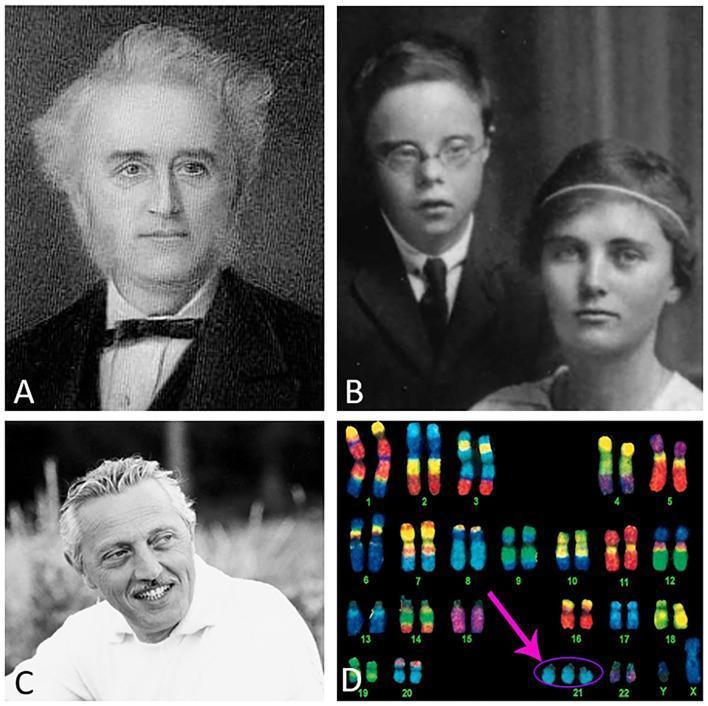
A composite figure illustrating the historical and genetic context of Down syndrome (Trisomy 21). Panel A shows a portrait of John Langdon Down, who first described the clinical features. Panel B is a black-and-white clinical photograph of two individuals; the male exhibits characteristic dysmorphic facial features of Down syndrome, including upslanting palpebral fissures, epicanthic folds, and a flattened nasal bridge. Panel C depicts Dr. Jérôme Lejeune, the geneticist who identified the chromosomal basis of the condition. Panel D shows a spectral karyotype (SKY) or multicolor fluorescence in situ hybridization (m-FISH) arrangement. All autosomal pairs are numbered 1 through 22, along with X and Y sex chromosomes. A pink arrow highlights the genetic hallmark of the disorder: three copies of chromosome 21 (Trisomy 21) instead of the typical homologous pair. This educational graphic links clinical phenotype with its underlying cytogenetic pathology, suitable for medical genetics and pediatrics curricula.
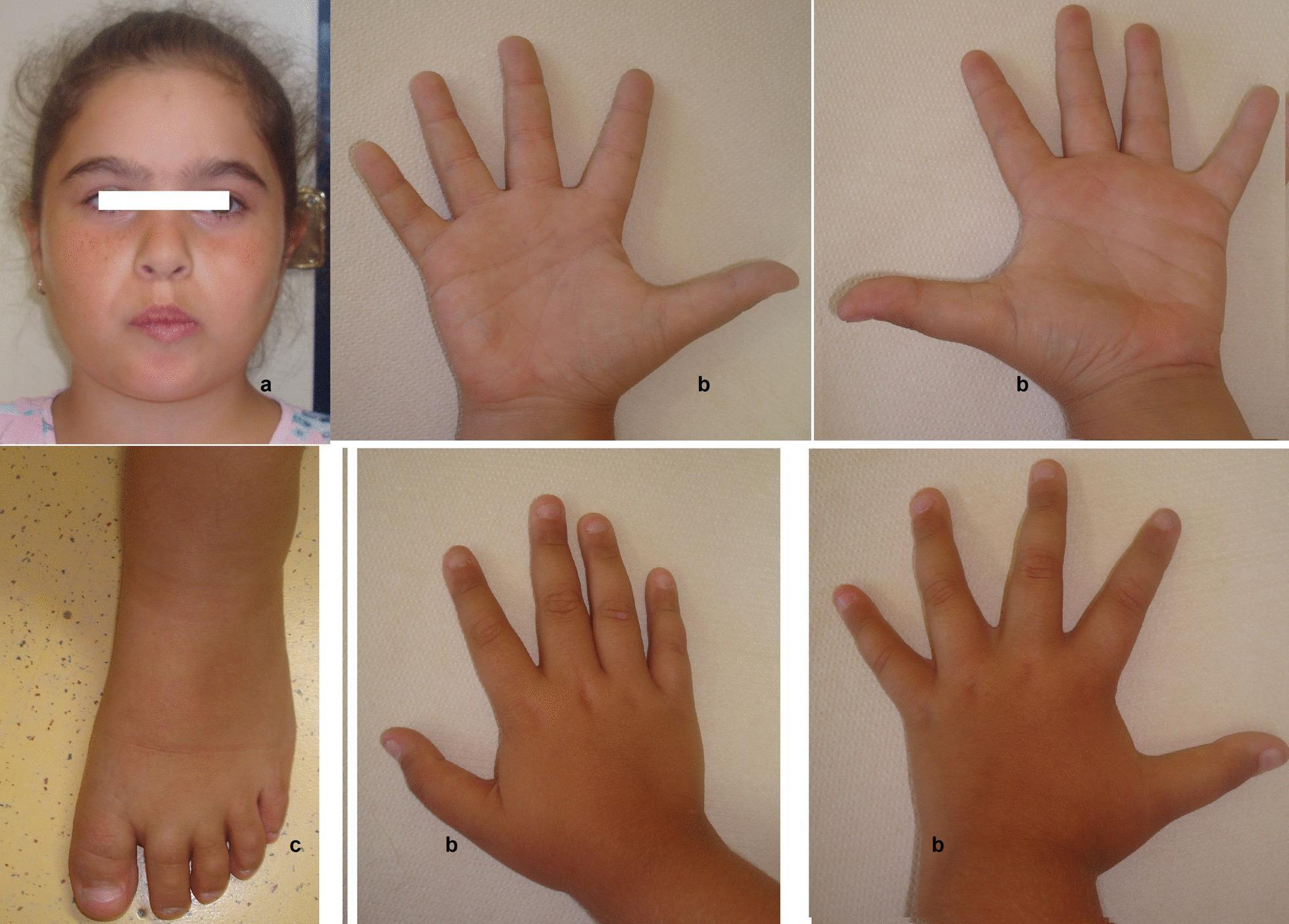
This composite of clinical photographs illustrates the external phenotypic features of a 9-year-old female patient with a partial trisomy 21 (PT21). Panel (a) shows a frontal view of the face; notable observations include a lack of characteristic Down syndrome (DS) craniofacial features, such as upslanting palpebral fissures, epicanthal folds, or a flattened nasal bridge. Panels (b) provide multiple views of the hands (palmar and dorsal surfaces), showing five digits on each hand with normal proportions, typical skin creases, and no evidence of clinodactyly or a transverse palmar crease (simian crease). Panel (c) displays the dorsal view of the left foot, demonstrating five toes with normal morphology and healthy nail plates. The primary educational focus of this visual is to demonstrate that certain chromosomal duplications involving chromosome 21 (specifically those excluding the Highly Relevant Down Syndrome Critical Region or HR-DSCR) may present without the classical 'Down syndrome' recognizable phenotype, despite genetic partial trisomy.
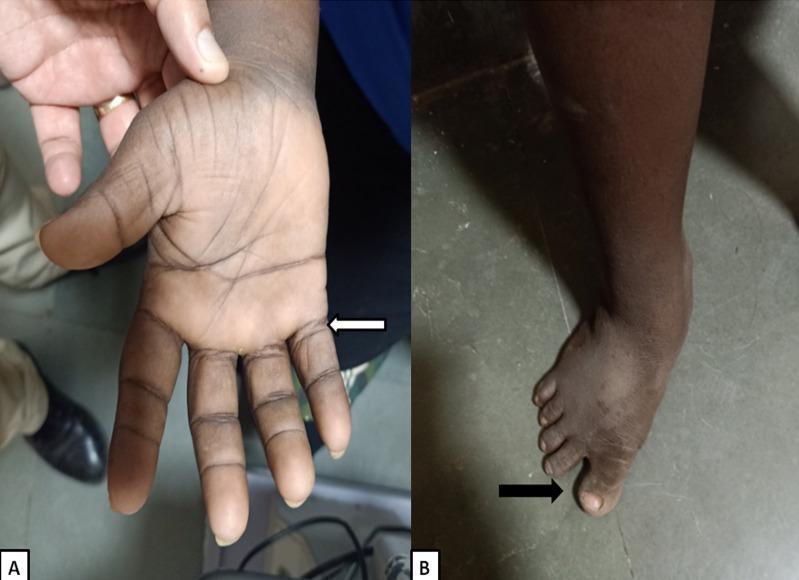
Clinical photographs showing characteristic dysmorphic features associated with Trisomy 21 (Down syndrome). Panel A illustrates the palmar aspect of the left hand, highlighting a short and broad hand morphology, a single transverse palmar crease (simian crease), and clinodactyly (incurving) of the shortened fifth finger. Panel B shows the patient's foot from a dorsal view, demonstrating a prominent 'sandal gap' deformity, which is a widened space between the first (hallux) and second toes. These physical findings are classic phenotypic markers used in the clinical diagnosis of genetic trisomy. The images serve as educational visual aids for identifying common musculoskeletal and dermatoglyphic manifestations of chromosomal abnormalities during a physical examination.
🧬 Down Syndrome (डाउन सिंड्रोम)
1. यह क्या है?
- Incidence: 1 in 700 live births
- 30 साल से अधिक उम्र की माँ में risk तेज़ी से बढ़ता है
2. Chromosomal Types (3 प्रकार)
| Type | % | Details |
|---|---|---|
| Trisomy 21 (Standard) | ~95% | Meiotic nondisjunction - chromosome 21 की extra copy। ~90% cases में maternal meiosis में error |
| Mosaic Down Syndrome | ~2% | कुछ cells normal, कुछ में Trisomy 21। Phenotype मिलाजुला होता है |
| Robertsonian Translocation | ~4% | 46 chromosomes होते हैं लेकिन chr 21 का extra material chr 14 या 22 से जुड़ा होता है |
Nondisjunction = मतलब जब meiosis के दौरान chromosomes ठीक से अलग नहीं होते।
3. Clinical Features (पहचान के लक्षण)
चेहरे के लक्षण:
- Flat nasal bridge (चपटी नाक)
- Upslanting palpebral fissures (आँखें ऊपर की ओर तिरछी)
- Epicanthal folds (आँखों के कोने पर fold)
- Small, low-set ears
- छोटी जीभ जो बाहर निकली रहती है
हाथ-पैर:
- Short, broad hands
- Single transverse palmar crease (Simian crease) - हथेली पर एक ही लकीर
- Fifth finger clinodactyly (छोटी उंगली मुड़ी हुई)
- Sandal gap - पैर की पहली और दूसरी उंगली के बीच बड़ा gap
अन्य:
- Hypotonia (जन्म के समय माँसपेशियाँ ढीली) - अक्सर सबसे पहला लक्षण
- Short stature, brachycephaly (गोल सिर)
- Short neck, loose skin

4. Associated Conditions (साथ में होने वाली समस्याएँ)
| System | Problem |
|---|---|
| Heart | Congenital heart disease (~50% cases में) |
| GI | Duodenal atresia, tracheoesophageal fistula |
| Brain | Intellectual disability (moderate से mild) |
| Blood | Leukemia का risk 15 गुना ज़्यादा |
| Brain (later) | Alzheimer's disease - लगभग सभी DS patients में, सामान्य उम्र से कई दशक पहले |
| GI | Duodenal atresia बहुत common |
5. Prenatal Screening (जन्म से पहले पता लगाना)
First Trimester (12-13 weeks):
- Nuchal Translucency (गर्दन के पीछे fluid) - 64-70% detection
- PAPP-A (कम होता है - 0.48 MoM) + free β-hCG (बढ़ा होता है - 1.98 MoM)
- दोनों मिलाकर: 82-87% detection rate
Second Trimester - Triple Screen (15-20 weeks):
- AFP ↓ (कम)
- hCG ↑ (ज़्यादा)
- uE3 (unconjugated estriol) ↓ (कम)
- Inhibin A जोड़ने पर = Quadruple Screen (81% detection)
Diagnostic Tests:
- CVS (Chorionic Villous Sampling)
- Amniocentesis
- Cell-free fetal DNA (non-invasive, maternal blood से)
6. Genetics Counselling Point
- Standard Trisomy 21: Sporadic event, recurrence risk कम
- Robertsonian Translocation: Parents का karyotype check करना ज़रूरी - अगर parent carrier है तो next pregnancy में भी risk रहता है
Nursing Points (Exam के लिए याद रखें ✍️)
- Hypotonia = first sign in newborn
- Simian crease = single transverse palmar crease
- Chromosome number = 47 (Trisomy 21)
- Most common cause = nondisjunction in maternal meiosis I
- Heart defect = 50% patients में
- Leukemia risk = 15x बढ़ा हुआ
- Alzheimer's = almost all patients में early onset
Karyotype vs Phenotype में क्या difference है?
karyotype chromosomes diagram normal human
🔬 Karyotype vs Phenotype vs Genotype
एक Simple Analogy से शुरू करते हैं 🏠
एक घर की कल्पना करो:
- Karyotype = घर का blueprint (नक्शा) - chromosomes की arrangement
- Genotype = blueprint में लिखे सारे instructions (genes)
- Phenotype = असल में बना हुआ घर - जो बाहर से दिखता है
1. 🧬 Karyotype (कैरियोटाइप)
- Normal human karyotype = 46 chromosomes (23 pairs)
- Male = 46, XY
- Female = 46, XX
- Down Syndrome = 47, XX/XY +21 (एक extra chromosome 21)
Karyotype सिर्फ chromosomes की बात करता है - genes की नहीं।
2. 🧪 Genotype (जीनोटाइप)
- Genotype में dominant और recessive दोनों genes शामिल हैं
- उदाहरण: Aa (heterozygous) या AA (homozygous dominant) या aa (homozygous recessive)
- Genotype बाहर से नहीं दिखता - DNA testing से पता चलता है
3. 👁️ Phenotype (फिनोटाइप)
- आँखों का रंग, height, skin color
- Down Syndrome में: flat nasal bridge, simian crease, intellectual disability
- Phenotype = Genotype + Environment का result
Side-by-Side Comparison Table
| Feature | Karyotype | Genotype | Phenotype |
|---|---|---|---|
| क्या है? | Chromosomes का set | DNA में genes | बाहर दिखने वाले लक्षण |
| कैसे देखें? | Microscopy (karyotyping) | DNA sequencing | Clinical examination |
| Normal example | 46, XY | Aa, BB, Cc... | Brown eyes, tall |
| DS example | 47, XY +21 | Extra chr 21 genes | Flat face, hypotonia |
| बदल सकता है? | नहीं (fixed at birth) | नहीं (fixed) | हाँ (environment से) |
Karyotype ≠ Phenotype - Real Examples
Example 1: Mosaic Down Syndrome
- Karyotype: कुछ cells में 47 chromosomes, कुछ में 46
- Phenotype: लक्षण हल्के होते हैं - typical Down Syndrome से कम
- Lesson: Same disorder, different karyotype → different phenotype
Example 2: Robertsonian Translocation Down Syndrome
- Karyotype: 46 chromosomes (normal count!) - लेकिन chr 21 का material chr 14 से जुड़ा
- Phenotype: Full Down Syndrome के लक्षण
- Lesson: Normal chromosome count हो सकती है, फिर भी abnormal phenotype!
Example 3: Turner Syndrome (46, X r(X))
- Karyotype: 46, X + ring chromosome X
- Phenotype: Turner syndrome के typical features
- जैसा Thompson & Thompson Genetics textbook बताता है - ring chromosome X → Turner syndrome phenotype
Nursing Exam के लिए Key Points ✍️
- Karyotype = chromosomes की संख्या और structure
- Genotype = actual genes (DNA level)
- Phenotype = जो दिखता है = Genotype + Environment
- Same karyotype → different phenotype हो सकता है (mosaic DS)
- Abnormal phenotype के बावजूद karyotype "normal count" हो सकती है (Robertsonian translocation)
- Karyotype test करने की method = Karyotyping / Chromosomal analysis