
please share a diagram showing mechanism of action of Avlayah
Avlayah drug mechanism of action
tividenofusp alfa Hunter syndrome MPS II mechanism of action enzyme replacement therapy blood brain barrier
tividenofusp alfa Avlayah mechanism of action IDS enzyme BBB transferrin receptor diagram
Medical mechanism of action diagram for Avlayah (tividenofusp alfa) for Hunter syndrome (MPS II). The diagram shows: 1) IV infusion of the drug into the bloodstream. 2) The drug structure: IDS enzyme fused to an Fc fragment that binds transferrin receptor (TfR1). 3) At the blood-brain barrier: the Fc binds TfR1 on brain endothelial cells, triggering receptor-mediated transcytosis, transporting the enzyme across the BBB into the CNS. 4) In peripheral tissues and CNS neurons/glial cells: the drug is internalized via mannose-6-phosphate receptor (M6PR) on cell surfaces, trafficked into lysosomes. 5) Inside the lysosome: IDS enzyme cleaves accumulated heparan sulfate and dermatan sulfate (glycosaminoglycans/GAGs), breaking down toxic substrate. 6) Result: reduction of GAG accumulation in both peripheral organs and the brain, alleviating neurological and somatic symptoms of Hunter syndrome. Clean scientific illustration style with labeled arrows and compartments (bloodstream, BBB endothelium, CNS, lysosome).
what cause MDR Hiv?
Causes of Multidrug-Resistant (MDR) HIV
1. Error-Prone Reverse Transcriptase (The Core Driver)
2. Pre-existing Resistant Variants (Before Treatment Begins)
3. Sequential or Inadequate Monotherapy
- Resistance to some protease inhibitors requires only a single mutation — resistance emerges within days of starting monotherapy
- Resistance to some RT inhibitors also develops rapidly with monotherapy
- Resistance to zidovudine (AZT) takes months, as it requires 3–4 mutations in RT simultaneously
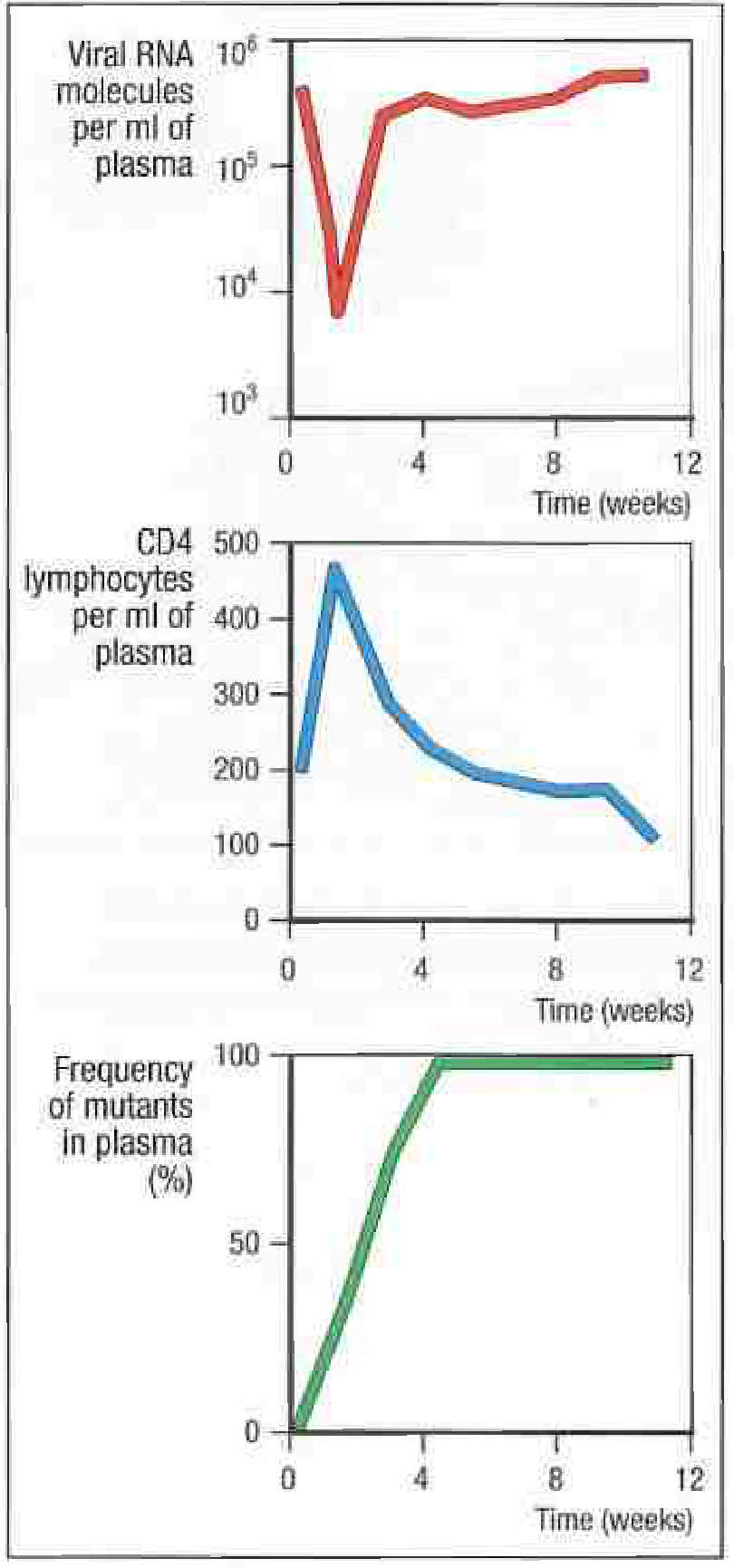
4. Poor Adherence to ART
5. Transmitted (Primary) Resistance
6. Accumulation of Resistance Mutations Across Drug Classes
| Drug Class | Key Resistance Mutations |
|---|---|
| NRTIs (e.g., AZT, 3TC) | M184V, K65R, thymidine analog mutations (TAMs) |
| NNRTIs (e.g., efavirenz) | K103N, Y181C (single mutation often sufficient) |
| Protease Inhibitors | Multiple active-site mutations (accumulate stepwise) |
| Integrase Inhibitors | N155H, Q148H/R/K, G140S |
Why HAART/cART Prevents MDR
"It is more difficult for HIV to develop resistance to multiple drugs with multiple target enzymes. Multidrug-resistant HIV strains are likely to be much weaker than the parent strains." — Medical Microbiology, 9e
Summary of Causes
| Cause | Mechanism |
|---|---|
| Error-prone RT (no proofreading) | High baseline mutation rate |
| Massive viral replication | 10⁹–10¹⁰ virions/day → quasi-species swarm |
| Pre-existing resistant variants | Selected under drug pressure |
| Monotherapy / inadequate regimens | Single-target drugs easily overcome |
| Poor adherence | Subtherapeutic levels allow replication + selection |
| Transmitted resistance | Acquired from a partner with MDR HIV |
| Sequential regimen changes | Accumulation of multi-class resistance mutations |
why NRTI are prone to resistance?