
The patient is a 58-year-old male with a 10-year history of Type 2 diabetes (on Metformin 1000mg twice daily), hypertension (on Amlodipine 5mg), and recently started experiencing chest tightness, mild shortness of breath on exertion, occasional dizziness, and swelling in both ankles over the past 3 weeks. His last HbAlc was 8.2%, BP today is 148/92 mmHg, and my fasting blood sugar this morning was 210 mg/dL. He also smoke half a pack a day and have a family history of heart disease. What could be going on, and what should I do?
"heart failure" AND "type 2 diabetes" AND "SGLT2"
Clinical Assessment: 58-Year-Old Male with Diabetes, Hypertension, and New Cardiopulmonary Symptoms
Disclaimer: This is clinical educational content based on authoritative medical textbooks and current evidence. It is not a substitute for direct patient evaluation, full history/physical, and clinical judgment.
What Is Likely Going On
The Leading Differentials (in order of urgency)
1. Heart Failure (Most Probable Primary Diagnosis)
- Hypertension is the single greatest population-attributable risk factor for heart failure. Even modest increases in blood pressure confer disproportionate risk over decades.
- Type 2 Diabetes (10 years duration) doubles the risk of heart failure independently. Heart failure is twice as common in people with diabetes and is related to diabetes duration and hypertension. It can present as HFpEF, HFmEF, or HFrEF. Some patients develop "diabetic cardiomyopathy" - reduced left ventricular function without any CHD or hypertension as a separate mechanism.
- Coronary artery disease (CAD) accounts for nearly 70% of heart failure cases in developed countries, and this patient's CAD risk is very high (see below).
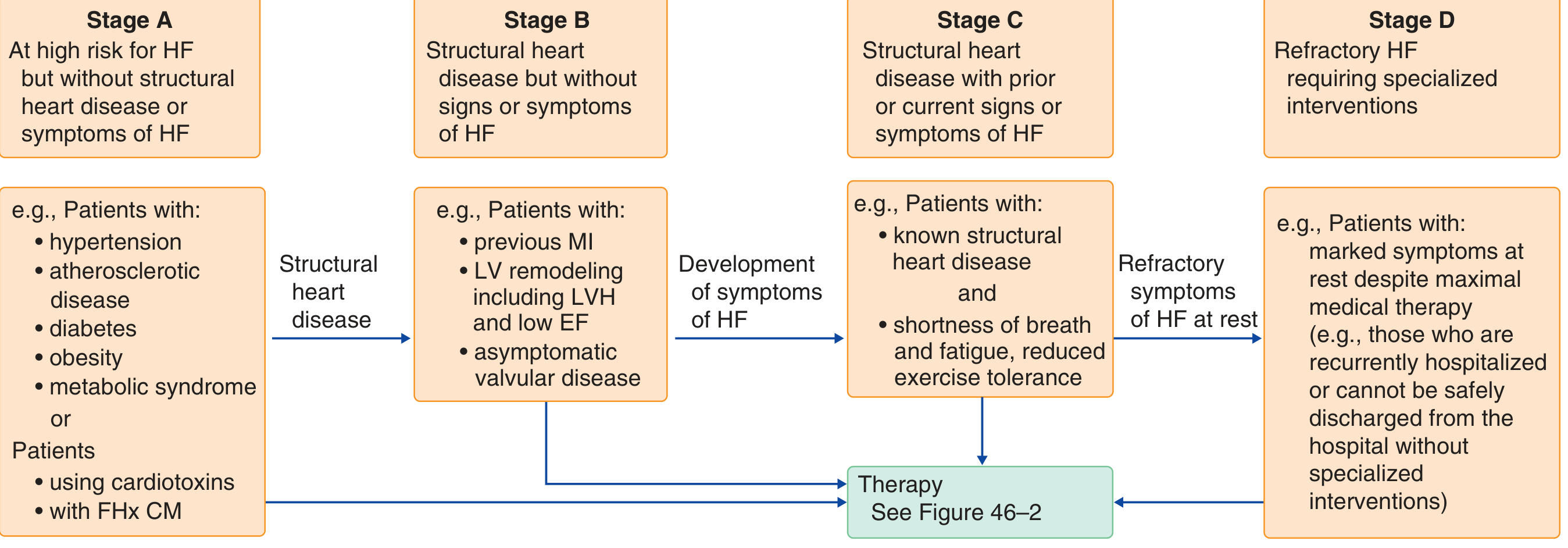
2. Acute Coronary Syndrome / Ischemic Heart Disease (Must Rule Out Urgently)
- "Silent ischemia" is common in diabetes. Harrison's explicitly notes that the absence of chest pain is common in individuals with diabetes, and atypical symptoms of cardiac ischemia should prompt a thorough cardiac evaluation.
- The combination of Type 2 DM + hypertension + smoking + family history of heart disease places this patient in the highest-risk category for CAD. Some studies show that type 2 DM patients without a prior MI have equivalent coronary event risk to non-diabetic individuals who have already had an MI.
- The dizziness could represent low cardiac output or arrhythmia secondary to ischemia.
3. Poorly Controlled Hypertension Contributing to Target Organ Damage
4. Poorly Controlled Diabetes with Cardiovascular Consequences
- Atherosclerosis and CAD
- Endothelial dysfunction
- Cardiomyopathy
- Renal injury (which further worsens hypertension and fluid retention)
What Should Be Done: Immediate Steps
Urgent Workup (Do Today / Same Day)
| Investigation | Rationale |
|---|---|
| 12-lead ECG | Screen for ischemia, LVH, arrhythmia |
| Chest X-ray | Look for cardiomegaly, pulmonary edema, pleural effusion |
| Cardiac biomarkers (Troponin I or T, BNP/NT-proBNP) | Rule out ACS; BNP confirms/grades heart failure |
| Basic metabolic panel (electrolytes, BUN, creatinine, eGFR) | Assess renal function before starting/adjusting meds |
| CBC | Anemia can exacerbate dyspnea and worsen cardiac output |
| Fasting lipid panel | Assess CV risk; likely dyslipidemia is present |
| HbA1c (already known: 8.2%) | Confirm and track glycemic control |
| Urinalysis + spot urine albumin/creatinine | Detect diabetic nephropathy - also a strong CV risk marker |
Imaging and Functional Assessment
- Echocardiogram - the most important next test. It will distinguish HFrEF vs HFpEF, detect wall motion abnormalities suggesting ischemia, quantify LVH, and guide drug therapy selection.
- Stress testing / myocardial perfusion imaging - appropriate given symptoms suggestive of cardiac ischemia in a diabetic patient, once ACS is ruled out acutely.
Management Priorities
1. Cardiovascular/Heart Failure Treatment
- ACE inhibitor or ARB (or sacubitril/valsartan, the ARNI) - reduce afterload, mortality benefit
- Beta-blocker - carvedilol, bisoprolol, or metoprolol succinate. Note: beta-blockers are not contraindicated in diabetes with heart failure - they provide positive benefit. Goldman-Cecil Medicine, p. 491
- Mineralocorticoid receptor antagonist (MRA) - spironolactone or eplerenone
- SGLT2 inhibitor - this is the most important pharmacological upgrade for this specific patient (see below)
2. The SGLT2 Inhibitor - A Critical Addition
"Treatment with an SGLT2 inhibitor is recommended for all patients with symptomatic heart failure and a reduced ejection fraction, irrespective of diabetes status." - Goldman-Cecil Medicine, p. 484
"In patients who have heart failure and type 2 diabetes, the SGLT2 inhibitors are the preferred antidiabetic agents." - Goldman-Cecil Medicine, p. 491
- Improve heart failure outcomes (reduce hospitalizations and mortality)
- Lower blood glucose and HbA1c
- Reduce BP modestly and slow CKD progression
3. Blood Pressure Control
- Add an ACE inhibitor or ARB (which also addresses heart failure)
- Target BP <130/80 mmHg in a diabetic patient with established CVD risk
- Consider up-titrating or adding a diuretic (which will also help with edema)
4. Diabetes Optimization
- SGLT2 inhibitor as above (replaces or supplements Metformin)
- Consider a GLP-1 receptor agonist (e.g., semaglutide, liraglutide) - GLP-1 RAs do not increase heart failure risk and have proven ASCVD benefit in high-risk type 2 DM patients
- Avoid: Thiazolidinediones (cause fluid retention, worsen HF), saxagliptin (increases HF risk), DPP-4 inhibitors (not recommended in HF)
5. Smoking Cessation - High Priority
6. Lifestyle Modifications
- Low-sodium diet (<2g/day) to manage fluid retention
- Fluid restriction if clinically indicated
- Daily weights to monitor fluid status
- Regular, appropriately dosed physical activity once stabilized
- Weight management
Red Flags Requiring Emergency Escalation
- Troponin elevation or ischemic ECG changes
- Acute pulmonary edema (severe dyspnea at rest, hypoxia)
- BP >180/110 or hypertensive emergency
- Syncope or pre-syncope
- New onset atrial fibrillation
Summary
follow up with prescription, flashcards and diagrams
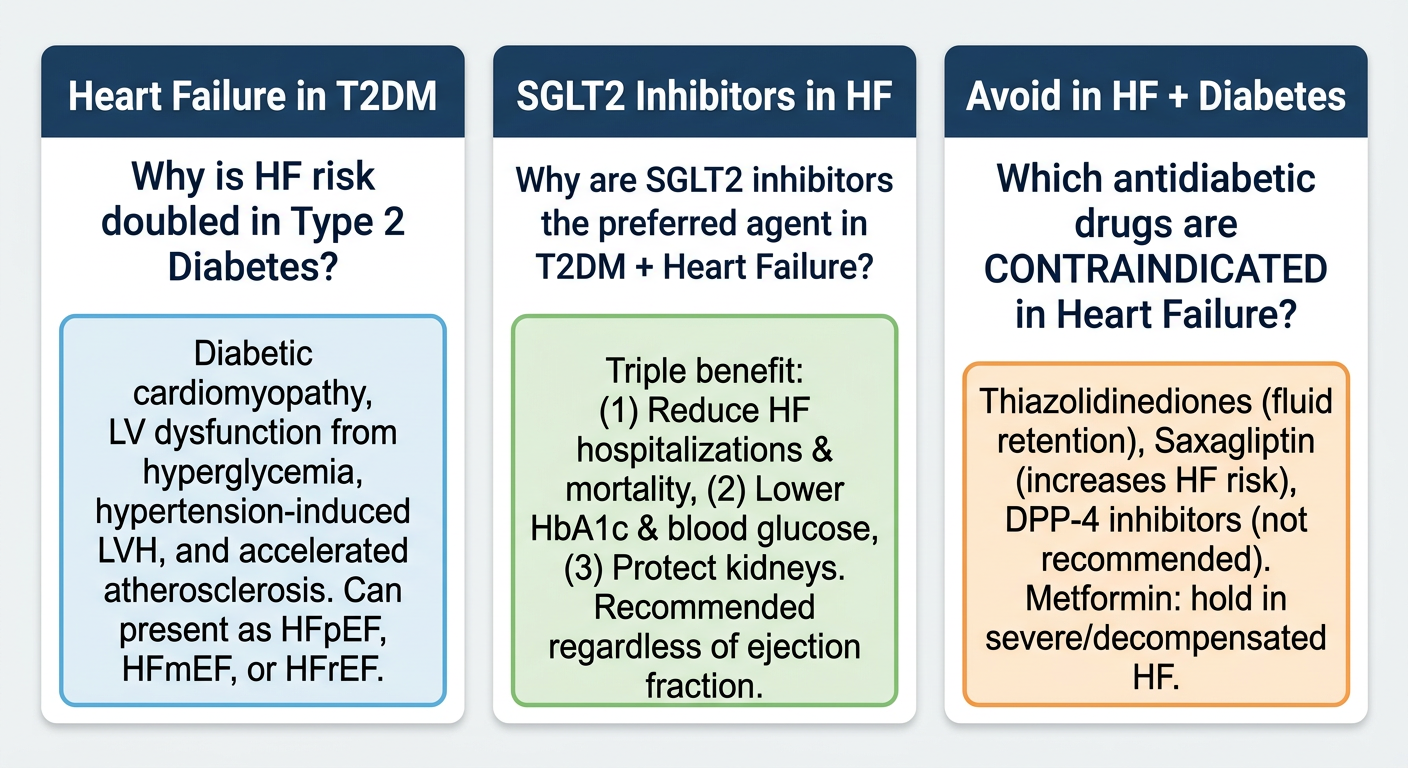
Medical flashcard set with dark blue and white design. Flashcard 1 titled "Heart Failure in T2DM" - Question: "Why is HF risk doubled in Type 2 Diabetes?" Answer: "Diabetic cardiomyopathy, LV dysfunction from hyperglycemia, hypertension-induced LVH, and accelerated atherosclerosis. Can present as HFpEF, HFmEF, or HFrEF." Flashcard 2 titled "SGLT2 Inhibitors in HF" - Question: "Why are SGLT2 inhibitors the preferred agent in T2DM + Heart Failure?" Answer: "Triple benefit: (1) Reduce HF hospitalizations & mortality, (2) Lower HbA1c & blood glucose, (3) Protect kidneys. Recommended regardless of ejection fraction." Flashcard 3 titled "Avoid in HF + Diabetes" - Question: "Which antidiabetic drugs are CONTRAINDICATED in Heart Failure?" Answer: "Thiazolidinediones (fluid retention), Saxagliptin (increases HF risk), DPP-4 inhibitors (not recommended). Metformin: hold in severe/decompensated HF." Clean medical education style, large readable text, color-coded answer boxes.
Clinical pathophysiology diagram showing how Type 2 Diabetes, Hypertension, and Smoking converge to cause Heart Failure and Coronary Artery Disease in a 58-year-old male. Show three upstream boxes: "Type 2 Diabetes (10 years, HbA1c 8.2%)" leading to "Endothelial dysfunction, Diabetic cardiomyopathy, LV dysfunction"; "Hypertension (BP 148/92, uncontrolled)" leading to "LV hypertrophy, Diastolic dysfunction, HFpEF"; "Smoking (0.5 ppd) + Family Hx CAD" leading to "Atherosclerosis, Coronary artery disease, Myocardial ischemia". All three arrows converge into a central box "HEART FAILURE" with sub-labels HFpEF / HFrEF. Below that box, show clinical symptoms: "Chest tightness, Exertional dyspnea, Bilateral ankle edema, Dizziness". Clean medical diagram style with color-coded boxes, arrows, professional white background.
Clinical management flowchart for a 58-year-old male with Type 2 Diabetes + Hypertension + new Heart Failure symptoms. Professional medical flowchart on white background. Top box: "Patient Presentation: Chest tightness, Exertional dyspnea, Bilateral ankle edema, Dizziness | BP 148/92 | HbA1c 8.2% | FBS 210 mg/dL". Arrow down to decision diamond: "URGENT: Rule out ACS - ECG + Troponin + BNP/NT-proBNP". Two branches: LEFT branch (red) "Troponin POSITIVE / Ischemic ECG" -> "EMERGENCY: ER Transfer, Cardiology consult, Consider PCI/CABG". RIGHT branch (green) "Troponin NEGATIVE, BNP elevated" -> "Confirm Heart Failure". From Confirm HF box, arrow down to "Echocardiogram" -> two sub-branches: "HFrEF (<40%)" and "HFpEF (>50%)". Both merge into "Medical Management" box listing: "1. SGLT2 Inhibitor (Empagliflozin 10mg OD), 2. ACE inhibitor/ARNI (Ramipril 5mg OD), 3. Beta-blocker (Carvedilol 3.125mg BD), 4. Loop diuretic (Furosemide 20-40mg OD), 5. Optimize BP + Glycemia, 6. Smoking cessation". Bottom box: "Follow-up in 2 weeks: Weight, BP, renal function, symptoms". Color-coded, clear arrows, readable font.
ls /home/daytona/workspace/ 2>/dev/null || echo "workspace empty or missing"
mkdir -p /home/daytona/workspace/cardiac-rx && cat > /home/daytona/workspace/cardiac-rx/prescription.js << 'EOF' const { Document, Packer, Paragraph, TextRun, Table, TableRow, TableCell, AlignmentType, HeadingLevel, BorderStyle, WidthType, ShadingType, VerticalAlign, PageNumber, Header, Footer } = require('docx'); const fs = require('fs'); const borderThin = { top: { style: BorderStyle.SINGLE, size: 4, color: "2563EB" }, bottom: { style: BorderStyle.SINGLE, size: 4, color: "2563EB" }, left: { style: BorderStyle.SINGLE, size: 4, color: "2563EB" }, right: { style: BorderStyle.SINGLE, size: 4, color: "2563EB" }, }; const noBorder = { top: { style: BorderStyle.NONE, size: 0 }, bottom: { style: BorderStyle.NONE, size: 0 }, left: { style: BorderStyle.NONE, size: 0 }, right: { style: BorderStyle.NONE, size: 0 }, }; function heading(text, size = 28, color = "1E3A5F", bold = true) { return new Paragraph({ children: [new TextRun({ text, size, color, bold })], spacing: { before: 200, after: 100 } }); } function label(text) { return new TextRun({ text, bold: true, size: 20, color: "374151" }); } function val(text) { return new TextRun({ text, size: 20, color: "111827" }); } function spacer() { return new Paragraph({ children: [new TextRun("")], spacing: { before: 80, after: 80 } }); } function rxRow(drug, dose, route, freq, duration, notes) { return new TableRow({ children: [ new TableCell({ children: [new Paragraph({ children: [new TextRun({ text: drug, bold: true, size: 20 })] })], borders: borderThin, verticalAlign: VerticalAlign.CENTER }), new TableCell({ children: [new Paragraph({ children: [new TextRun({ text: dose, size: 20 })] })], borders: borderThin, verticalAlign: VerticalAlign.CENTER }), new TableCell({ children: [new Paragraph({ children: [new TextRun({ text: route, size: 20 })] })], borders: borderThin, verticalAlign: VerticalAlign.CENTER }), new TableCell({ children: [new Paragraph({ children: [new TextRun({ text: freq, size: 20 })] })], borders: borderThin, verticalAlign: VerticalAlign.CENTER }), new TableCell({ children: [new Paragraph({ children: [new TextRun({ text: duration, size: 20 })] })], borders: borderThin, verticalAlign: VerticalAlign.CENTER }), new TableCell({ children: [new Paragraph({ children: [new TextRun({ text: notes, size: 18, italics: true, color: "6B7280" })] })], borders: borderThin, verticalAlign: VerticalAlign.CENTER }), ] }); } const doc = new Document({ sections: [{ properties: {}, headers: { default: new Header({ children: [ new Paragraph({ children: [ new TextRun({ text: "Dr. Jane Smith, MD | Cardiology & Internal Medicine", bold: true, size: 22, color: "1E3A5F" }), ], alignment: AlignmentType.LEFT, border: { bottom: { style: BorderStyle.SINGLE, size: 6, color: "2563EB" } }, spacing: { after: 100 } }), new Paragraph({ children: [ new TextRun({ text: "City General Hospital, 12 Medical Lane | Tel: +1-555-0100 | License: MED-2025-XYZ", size: 18, color: "6B7280" }), ], spacing: { after: 200 } }) ] }) }, footers: { default: new Footer({ children: [ new Paragraph({ children: [ new TextRun({ text: "⚠ SAMPLE PRESCRIPTION — FOR EDUCATIONAL PURPOSES ONLY. Not valid for dispensing.", bold: true, size: 16, color: "DC2626" }), ], alignment: AlignmentType.CENTER, border: { top: { style: BorderStyle.SINGLE, size: 4, color: "DC2626" } }, }) ] }) }, children: [ // Title new Paragraph({ children: [new TextRun({ text: "MEDICAL PRESCRIPTION", bold: true, size: 36, color: "1E3A5F" })], alignment: AlignmentType.CENTER, spacing: { before: 300, after: 200 } }), // Patient Info Table new Table({ width: { size: 100, type: WidthType.PERCENTAGE }, rows: [ new TableRow({ children: [ new TableCell({ children: [ new Paragraph({ children: [label("Patient Name: "), val("Mr. [Patient Name]")] }), new Paragraph({ children: [label("Age / Sex: "), val("58 years / Male")] }), new Paragraph({ children: [label("Date: "), val("July 06, 2026")] }), ], borders: borderThin, shading: { type: ShadingType.CLEAR, fill: "EFF6FF" }, margins: { top: 100, bottom: 100, left: 120, right: 120 } }), new TableCell({ children: [ new Paragraph({ children: [label("BP Today: "), val("148/92 mmHg")] }), new Paragraph({ children: [label("HbA1c: "), val("8.2%")] }), new Paragraph({ children: [label("FBS: "), val("210 mg/dL")] }), ], borders: borderThin, shading: { type: ShadingType.CLEAR, fill: "EFF6FF" }, margins: { top: 100, bottom: 100, left: 120, right: 120 } }), new TableCell({ children: [ new Paragraph({ children: [label("Diagnosis: "), val("Suspected HF + T2DM + HTN")] }), new Paragraph({ children: [label("Allergies: "), val("NKDA")] }), new Paragraph({ children: [label("Weight: "), val("___ kg")] }), ], borders: borderThin, shading: { type: ShadingType.CLEAR, fill: "EFF6FF" }, margins: { top: 100, bottom: 100, left: 120, right: 120 } }), ] }) ] }), spacer(), // Rx Symbol new Paragraph({ children: [new TextRun({ text: "℞", bold: true, size: 52, color: "2563EB" })], spacing: { before: 100, after: 100 } }), // Rx Table Header new Table({ width: { size: 100, type: WidthType.PERCENTAGE }, rows: [ // Header row new TableRow({ tableHeader: true, children: ["Drug Name", "Dose", "Route", "Frequency", "Duration", "Notes / Monitoring"].map(h => new TableCell({ children: [new Paragraph({ children: [new TextRun({ text: h, bold: true, size: 20, color: "FFFFFF" })], alignment: AlignmentType.CENTER })], shading: { type: ShadingType.CLEAR, fill: "1E3A5F" }, borders: borderThin, margins: { top: 80, bottom: 80, left: 80, right: 80 } }) ) }), rxRow("Empagliflozin (Jardiance)", "10 mg", "Oral", "Once daily (morning)", "Ongoing", "Monitor eGFR, glucose; hold if eGFR <20"), rxRow("Ramipril", "2.5 mg\n(titrate to 5-10mg)", "Oral", "Once daily", "Ongoing", "Monitor K+, creatinine, BP. Avoid if K+ >5.5"), rxRow("Carvedilol", "3.125 mg\n(titrate slowly)", "Oral", "Twice daily with food", "Ongoing", "Titrate every 2 wks. Monitor HR, BP"), rxRow("Furosemide", "20-40 mg", "Oral", "Once daily (morning)", "Review at 2 wks", "Monitor electrolytes, renal function, daily wt."), rxRow("Atorvastatin", "40 mg", "Oral", "Once at night", "Ongoing", "Lipid panel at 6-8 wks. High-intensity statin"), rxRow("Amlodipine", "5 mg (continue)", "Oral", "Once daily", "Ongoing", "May uptitrate to 10mg if BP not at goal"), rxRow("Metformin (HOLD)", "1000 mg — ON HOLD", "Oral", "HOLD pending echo + eGFR review", "Reassess", "Resume only if eGFR >30, no decompensation"), rxRow("Aspirin (if CAD confirmed)", "75-100 mg", "Oral", "Once daily with food", "Pending cardiology", "Only if ACS/CAD confirmed on workup"), ] }), spacer(), // Investigations ordered heading("Investigations Ordered", 24, "1E3A5F"), new Table({ width: { size: 100, type: WidthType.PERCENTAGE }, rows: [ new TableRow({ children: [ new TableCell({ children: [ new Paragraph({ children: [new TextRun({ text: "URGENT (Same Day)", bold: true, size: 20, color: "DC2626" })] }), new Paragraph({ children: [new TextRun({ text: "• 12-lead ECG", size: 19 })] }), new Paragraph({ children: [new TextRun({ text: "• Troponin I/T (serial x2)", size: 19 })] }), new Paragraph({ children: [new TextRun({ text: "• BNP or NT-proBNP", size: 19 })] }), new Paragraph({ children: [new TextRun({ text: "• Chest X-ray (PA)", size: 19 })] }), ], borders: borderThin, shading: { type: ShadingType.CLEAR, fill: "FEF2F2" }, margins: { top: 100, bottom: 100, left: 120, right: 120 } }), new TableCell({ children: [ new Paragraph({ children: [new TextRun({ text: "Within 1 Week", bold: true, size: 20, color: "D97706" })] }), new Paragraph({ children: [new TextRun({ text: "• 2D Echocardiogram (urgent)", size: 19 })] }), new Paragraph({ children: [new TextRun({ text: "• Fasting lipid profile", size: 19 })] }), new Paragraph({ children: [new TextRun({ text: "• Urine albumin/creatinine ratio", size: 19 })] }), new Paragraph({ children: [new TextRun({ text: "• eGFR, electrolytes, LFT, TFT", size: 19 })] }), ], borders: borderThin, shading: { type: ShadingType.CLEAR, fill: "FFFBEB" }, margins: { top: 100, bottom: 100, left: 120, right: 120 } }), new TableCell({ children: [ new Paragraph({ children: [new TextRun({ text: "Referrals", bold: true, size: 20, color: "059669" })] }), new Paragraph({ children: [new TextRun({ text: "• Cardiology (urgent)", size: 19 })] }), new Paragraph({ children: [new TextRun({ text: "• Endocrinology (diabetes review)", size: 19 })] }), new Paragraph({ children: [new TextRun({ text: "• Smoking cessation counseling", size: 19 })] }), new Paragraph({ children: [new TextRun({ text: "• Dietitian / lifestyle counseling", size: 19 })] }), ], borders: borderThin, shading: { type: ShadingType.CLEAR, fill: "ECFDF5" }, margins: { top: 100, bottom: 100, left: 120, right: 120 } }), ] }) ] }), spacer(), // Advice heading("Patient Advice & Lifestyle Instructions", 24, "1E3A5F"), new Paragraph({ children: [new TextRun({ text: "1. Sodium restriction: <2g/day (avoid processed foods, canned goods, table salt)", size: 19 })], bullet: { level: 0 } }), new Paragraph({ children: [new TextRun({ text: "2. Daily morning weight: report >2kg gain in 24h or >3kg in 1 week to clinic immediately", size: 19 })], bullet: { level: 0 } }), new Paragraph({ children: [new TextRun({ text: "3. Fluid restriction: ~1.5-2 litres/day if fluid-overloaded (clinician to confirm)", size: 19 })], bullet: { level: 0 } }), new Paragraph({ children: [new TextRun({ text: "4. STOP SMOKING — smoking cessation is a medical priority. NRT/Varenicline prescribed separately", size: 19 })], bullet: { level: 0 } }), new Paragraph({ children: [new TextRun({ text: "5. Graduated physical activity — gentle walking as tolerated; avoid strenuous exertion until echo results", size: 19 })], bullet: { level: 0 } }), new Paragraph({ children: [new TextRun({ text: "6. Monitor blood glucose at home; keep log for next visit", size: 19 })], bullet: { level: 0 } }), new Paragraph({ children: [new TextRun({ text: "7. Return to ER immediately if: worsening breathlessness at rest, chest pain, severe dizziness/fainting", size: 19 })], bullet: { level: 0 } }), spacer(), // Follow up new Paragraph({ children: [ new TextRun({ text: "Follow-Up Appointment: ", bold: true, size: 20, color: "1E3A5F" }), new TextRun({ text: "2 weeks from today (July 20, 2026) — review symptoms, BP, renal function, echo results, glucose diary", size: 20 }), ], shading: { type: ShadingType.CLEAR, fill: "EFF6FF" }, spacing: { before: 200, after: 200 } }), spacer(), // Signature new Paragraph({ children: [new TextRun({ text: "Prescriber Signature: _____________________________ Date: July 06, 2026", size: 20, color: "374151" })], spacing: { before: 400 } }), new Paragraph({ children: [new TextRun({ text: "Dr. Jane Smith, MD | Reg. No: MED-2025-XYZ", size: 19, italics: true, color: "6B7280" })], }), spacer(), // Disclaimer new Paragraph({ children: [new TextRun({ text: "⚠ EDUCATIONAL SAMPLE ONLY: This prescription is a clinical education document. Drug doses, indications, and regimens must be verified by a licensed clinician before use in any real patient. Always confirm patient allergies, organ function, and drug interactions.", bold: true, size: 17, color: "DC2626" })], alignment: AlignmentType.CENTER, spacing: { before: 200 } }), ] }] }); Packer.toBuffer(doc).then(buffer => { fs.writeFileSync("/home/daytona/workspace/cardiac-rx/Sample_Prescription_CardiacDiabetes.docx", buffer); console.log("Prescription written successfully."); }); EOF node /home/daytona/workspace/cardiac-rx/prescription.js
python /home/daytona/skills/docx/scripts/office/validate.py /home/daytona/workspace/cardiac-rx/Sample_Prescription_CardiacDiabetes.docx
python3 -c "import zipfile; z = zipfile.ZipFile('/home/daytona/workspace/cardiac-rx/Sample_Prescription_CardiacDiabetes.docx'); print('Valid ZIP, files:', z.namelist()[:6])"
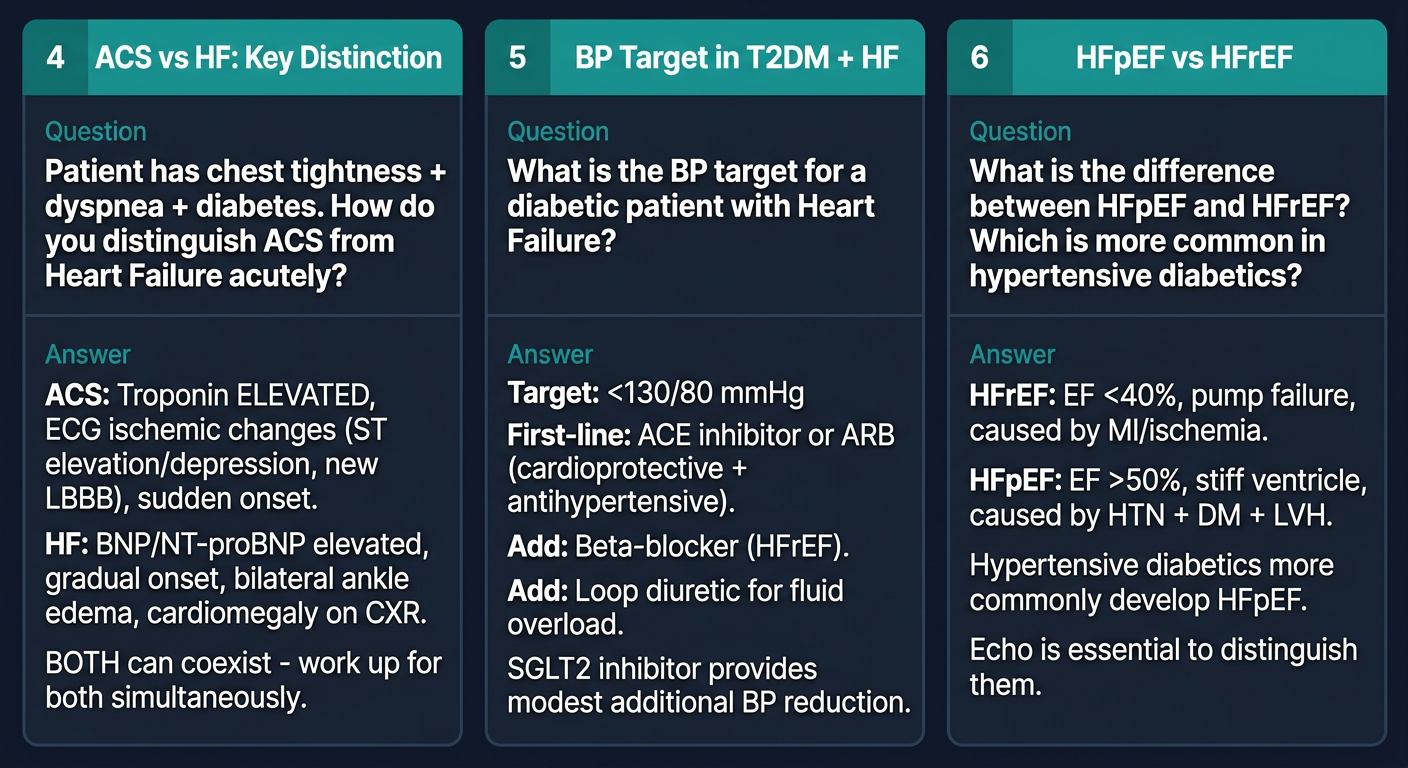
Set of 3 medical flashcards with a clean teal and white design on a dark navy background. Flashcard 4 - "ACS vs HF: Key Distinction": Question side: "Patient has chest tightness + dyspnea + diabetes. How do you distinguish ACS from Heart Failure acutely?" Answer side: "ACS: Troponin ELEVATED, ECG ischemic changes (ST elevation/depression, new LBBB), sudden onset. HF: BNP/NT-proBNP elevated, gradual onset, bilateral ankle edema, cardiomegaly on CXR. BOTH can coexist - work up for both simultaneously." Flashcard 5 - "BP Target in T2DM + HF": Question side: "What is the BP target for a diabetic patient with Heart Failure?" Answer side: "Target: <130/80 mmHg. First-line: ACE inhibitor or ARB (cardioprotective + antihypertensive). Add: Beta-blocker (HFrEF). Add: Loop diuretic for fluid overload. SGLT2 inhibitor provides modest additional BP reduction." Flashcard 6 - "HFpEF vs HFrEF": Question side: "What is the difference between HFpEF and HFrEF? Which is more common in hypertensive diabetics?" Answer side: "HFrEF: EF <40%, pump failure, caused by MI/ischemia. HFpEF: EF >50%, stiff ventricle, caused by HTN + DM + LVH. Hypertensive diabetics more commonly develop HFpEF. Echo is essential to distinguish them." Bold questions, clear answers, teal header bars, numbered cards.
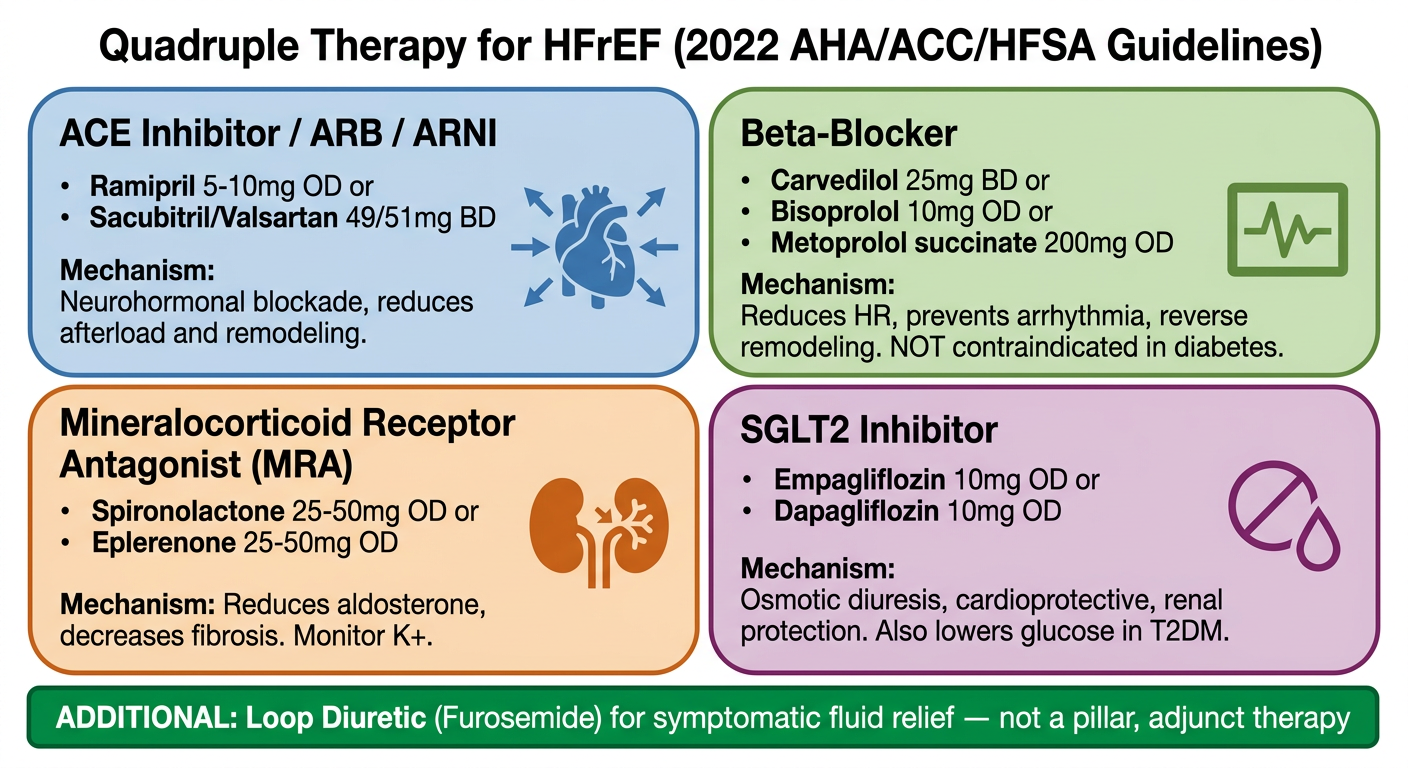
Medical education diagram showing the Four Pillars of Heart Failure Treatment in 2025/2026 guidelines. Clean infographic style on white background. Center title: "Quadruple Therapy for HFrEF (2022 AHA/ACC/HFSA Guidelines)". Four large colored quadrant boxes arranged in a 2x2 grid: TOP LEFT (Blue): "ACE Inhibitor / ARB / ARNI" - Ramipril 5-10mg OD or Sacubitril/Valsartan 49/51mg BD. Mechanism: Neurohormonal blockade, reduces afterload and remodeling. Symbol: heart with arrows. TOP RIGHT (Green): "Beta-Blocker" - Carvedilol 25mg BD or Bisoprolol 10mg OD or Metoprolol succinate 200mg OD. Mechanism: Reduces HR, prevents arrhythmia, reverse remodeling. NOT contraindicated in diabetes. Symbol: heartbeat wave. BOTTOM LEFT (Orange): "Mineralocorticoid Receptor Antagonist (MRA)" - Spironolactone 25-50mg OD or Eplerenone 25-50mg OD. Mechanism: Reduces aldosterone, decreases fibrosis. Monitor K+. Symbol: kidney icon. BOTTOM RIGHT (Purple): "SGLT2 Inhibitor" - Empagliflozin 10mg OD or Dapagliflozin 10mg OD. Mechanism: Osmotic diuresis, cardioprotective, renal protection. Also lowers glucose in T2DM. Symbol: pill icon. Below all 4 boxes: green banner "ADDITIONAL: Loop Diuretic (Furosemide) for symptomatic fluid relief — not a pillar, adjunct therapy". Professional, clean, readable.
Prescription
Sample Prescription CardiacDiabetes
Word Document · DOCX
- Patient vitals header (BP 148/92, HbA1c 8.2%, FBS 210)
- Full drug table with dose, route, frequency, duration, and monitoring notes for all 8 drugs
- Investigations ordered (urgent same-day, within-1-week, and referrals)
- Patient advice and lifestyle instructions
- Follow-up date (2 weeks)
- Educational disclaimer prominently displayed
Prescription Summary (Quick Reference)
| Drug | Dose | Frequency | Key Note |
|---|---|---|---|
| Empagliflozin (SGLT2i) | 10 mg | Once daily | Preferred antidiabetic in HF; monitor eGFR |
| Ramipril (ACEi) | 2.5 mg (titrate to 5-10 mg) | Once daily | Monitor K+, creatinine, BP |
| Carvedilol (beta-blocker) | 3.125 mg (titrate) | Twice daily with food | Safe in diabetes; titrate every 2 weeks |
| Furosemide (loop diuretic) | 20-40 mg | Once daily (morning) | Adjunct for edema; monitor electrolytes |
| Atorvastatin | 40 mg | Once at night | High-intensity statin; lipid panel at 6-8 wks |
| Amlodipine (continue) | 5 mg | Once daily | May uptitrate to 10mg if BP not at goal |
| Metformin (HOLD) | 1000mg - ON HOLD | Reassess | Hold pending echo + eGFR review |
| Aspirin (if CAD confirmed) | 75-100 mg | Once daily | Only after cardiology confirms CAD/ACS |
Smoking cessation: Initiate Varenicline 0.5mg OD for 3 days, then 0.5mg BD for 4 days, then 1mg BD for 12 weeks (or NRT patch if preferred).
Diagrams
Diagram 1 - Pathophysiology: How the Risk Factors Converge
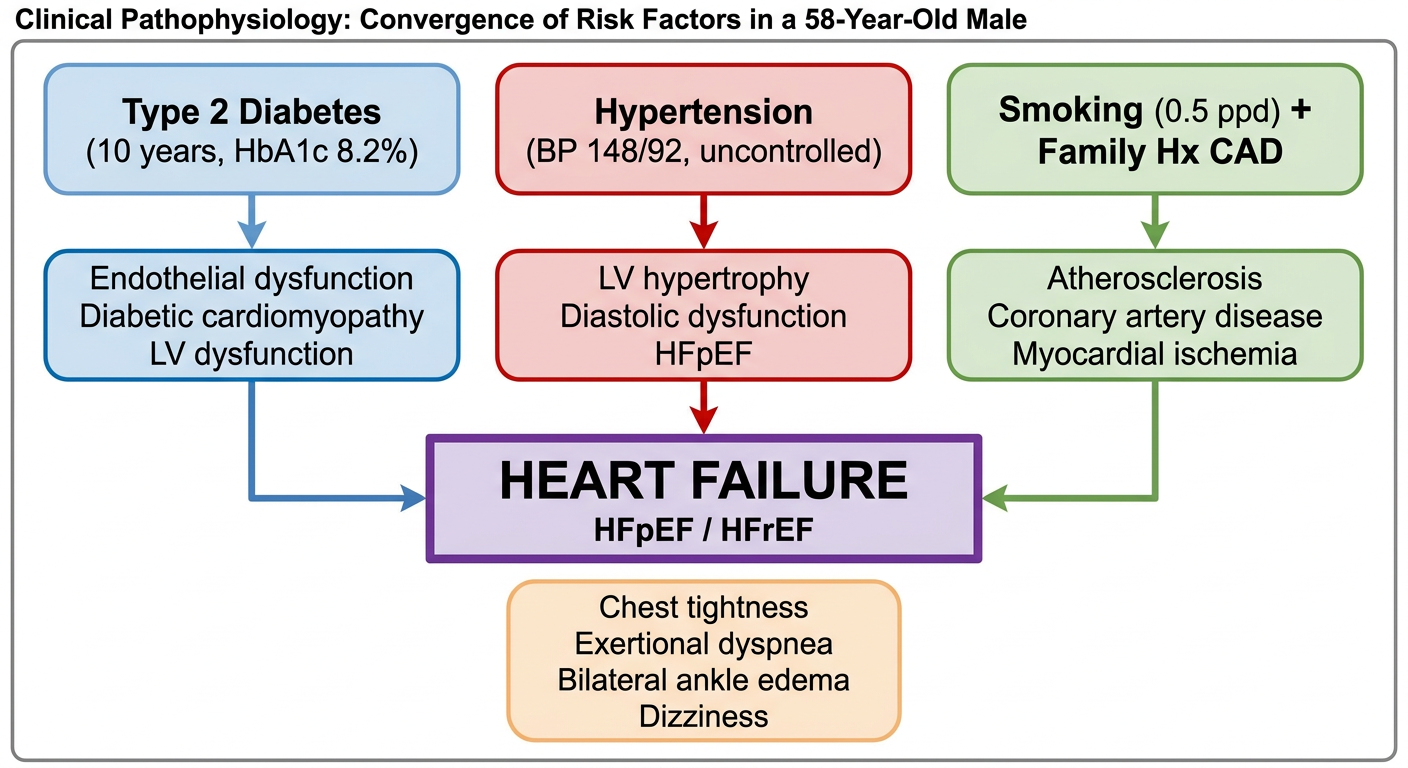
Diagram 2 - Clinical Management Flowchart
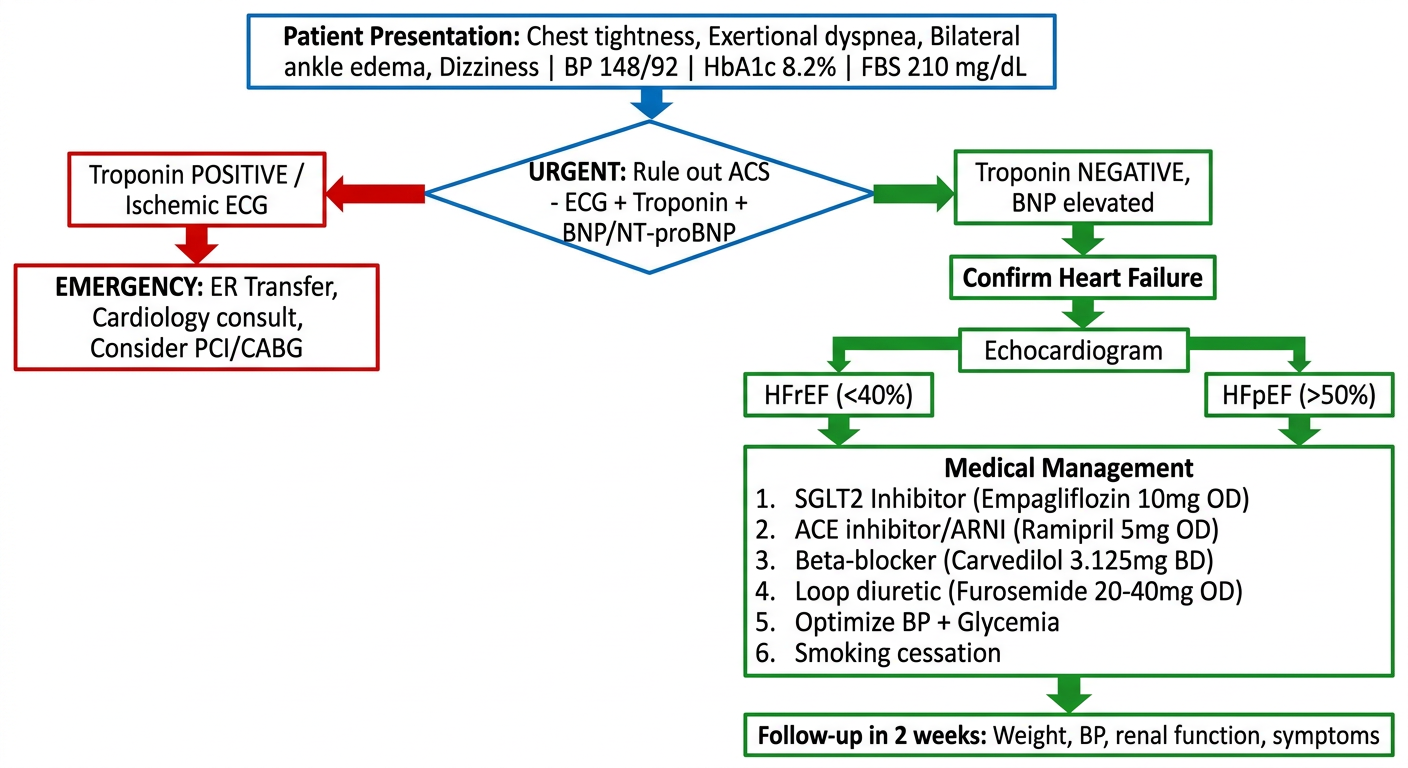
Diagram 3 - Quadruple Therapy for Heart Failure (2022 AHA/ACC/HFSA)
Flashcards
Flashcards 1-3: HF in Diabetes, SGLT2 Benefits, Drugs to Avoid
Flashcards 4-6: ACS vs HF, BP Targets, HFpEF vs HFrEF
Reminder: The prescription is a sample educational document only and is not valid for dispensing. All drug choices, doses, and regimens must be verified by the treating clinician based on the patient's full workup (echo, eGFR, electrolytes, troponin, BNP) before initiating any therapy.
generate line diagram
create a hand drawn infographic diagram which i can easily replicate with pen and paper
Hand-drawn sketch style infographic diagram on plain white paper background, drawn with black pen/pencil, easy to replicate by hand. Shows the complete clinical picture for a 58-year-old male patient with T2DM + Hypertension + Heart Failure. Layout: Top to bottom flow, simple boxes and arrows. TOP SECTION - "THE PATIENT" - a simple stick figure in center, with 3 boxes branching outward labeled with hand-written style text: Left box: "TYPE 2 DIABETES (10 yrs) HbA1c 8.2% FBS 210" Right box: "HYPERTENSION BP 148/92 on Amlodipine" Far left box: "SMOKING 0.5 ppd + Family Hx CAD" Arrow pointing DOWN from stick figure labeled "leads to" MIDDLE SECTION - "SYMPTOMS (3 weeks)" - a sketched rectangle divided into 4 small boxes: Box 1: simple lung drawing "Breathless on exertion" Box 2: simple chest drawing "Chest tightness" Box 3: simple foot drawing "Ankle swelling (both)" Box 4: spinning head icon "Dizziness" Arrow pointing DOWN labeled "think of" LOWER MIDDLE - Two boxes side by side connected with "OR / AND": Left box with question mark: "HEART FAILURE? (HFpEF or HFrEF)" Right box with lightning bolt: "ACS / CAD? (rule out FIRST!)" Arrow pointing DOWN labeled "do these now" BOTTOM SECTION - "URGENT TESTS" - simple numbered list in a box: 1. ECG 2. Troponin x2 3. BNP 4. Chest X-ray 5. Echo (within 1 week) Arrow pointing RIGHT from tests to "TREATMENT" box containing simple list: - SGLT2i (Empagliflozin) - ACEi (Ramipril) - Beta-blocker (Carvedilol) - Diuretic (Furosemide) - Statin (Atorvastatin) - HOLD Metformin Small hand-drawn star next to SGLT2i labeled "best drug for DM+HF" Overall style: rough pencil sketch, hand-lettered text, simple geometric shapes (rectangles, circles, arrows), cross-hatching for shading, no color - pure black and white sketch on white paper. Looks like a medical student's notebook diagram.
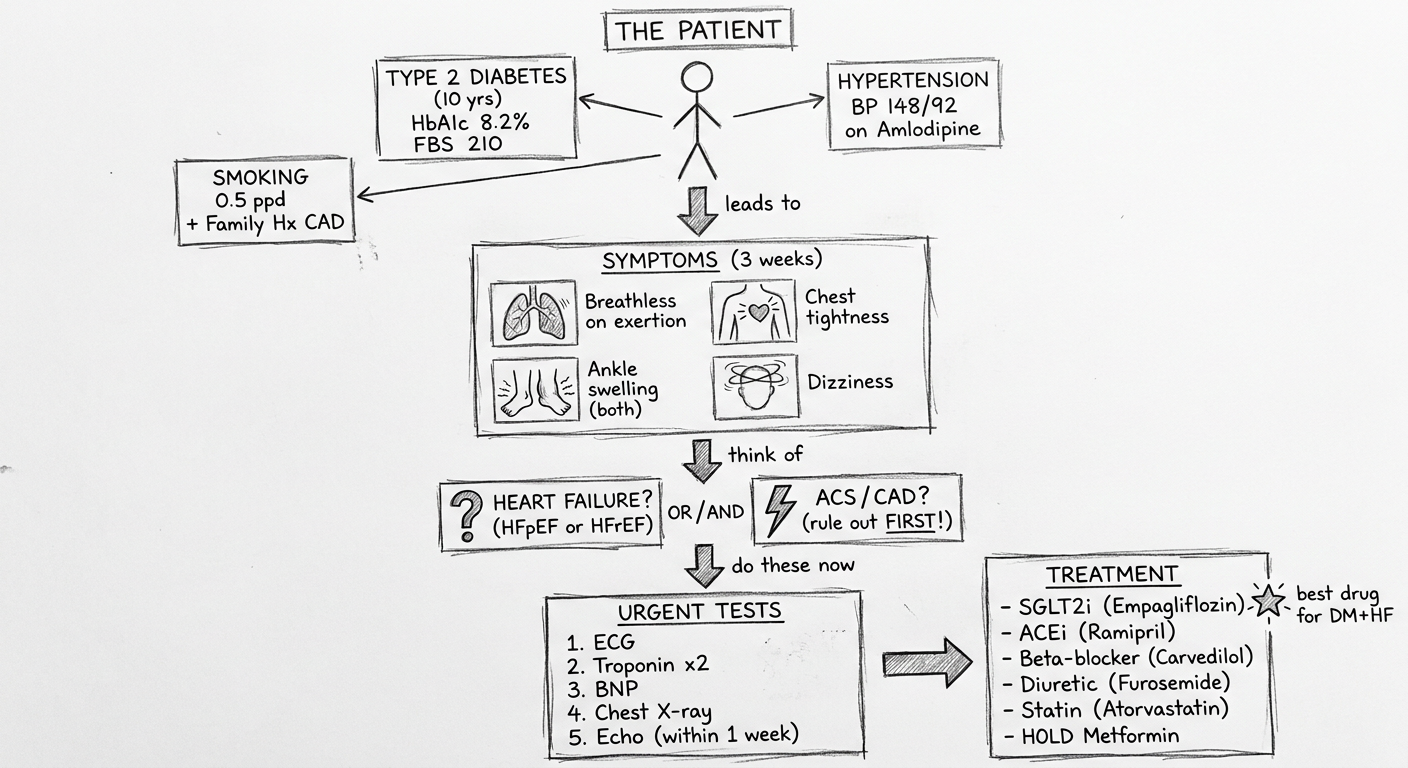
How to Replicate with Pen and Paper
- Top center - draw a stick figure labeled "The Patient (58M)"
- Branch 3 boxes outward from the figure - Diabetes / Hypertension / Smoking+FHx
- Draw a downward arrow → "Symptoms box" - divide into 4 small cells (lung, chest, foot, head icons)
- Draw another arrow → "Two side-by-side boxes" - Heart Failure? and ACS? - connect them with "OR/AND"
- Arrow down → "Urgent Tests" - numbered list 1-5 in a rectangle
- Arrow right → "Treatment" box - bullet list of 5 drugs with a star next to SGLT2i