
Nephrotic syndrome
Reading File
Now let me search the medical library comprehensively for nephrotic syndrome:
Finding Sources
Searching PubMed
"nephrotic syndrome" management
Now let me read the most relevant textbook sections in parallel:
Reading File
Reading File
Finding Sources
Reading File
Reading File
Finding Sources
Reading File
Reading File
Loading Image
Reading File
Loading Image
I now have comprehensive information. Let me compile the full, detailed response.
Nephrotic Syndrome
Definition
Nephrotic syndrome is defined as proteinuria >3.5 g/24 hours in adults, with serum albumin <3.5 g/dL, accompanied by hyperlipidemia and clinically apparent edema. A spot urine protein:creatinine ratio correlates with the 24-hour collection and can substitute for it in practice.
The unifying pathological mechanism is impairment of glomerular charge and size selectivity - normally maintained by the glomerular basement membrane (GBM), endothelial cells, and podocytes - resulting in massive protein loss into the urine.
- National Kidneys Foundation Primer on Kidney Diseases, 8e, p. 189
Etiology and Classification
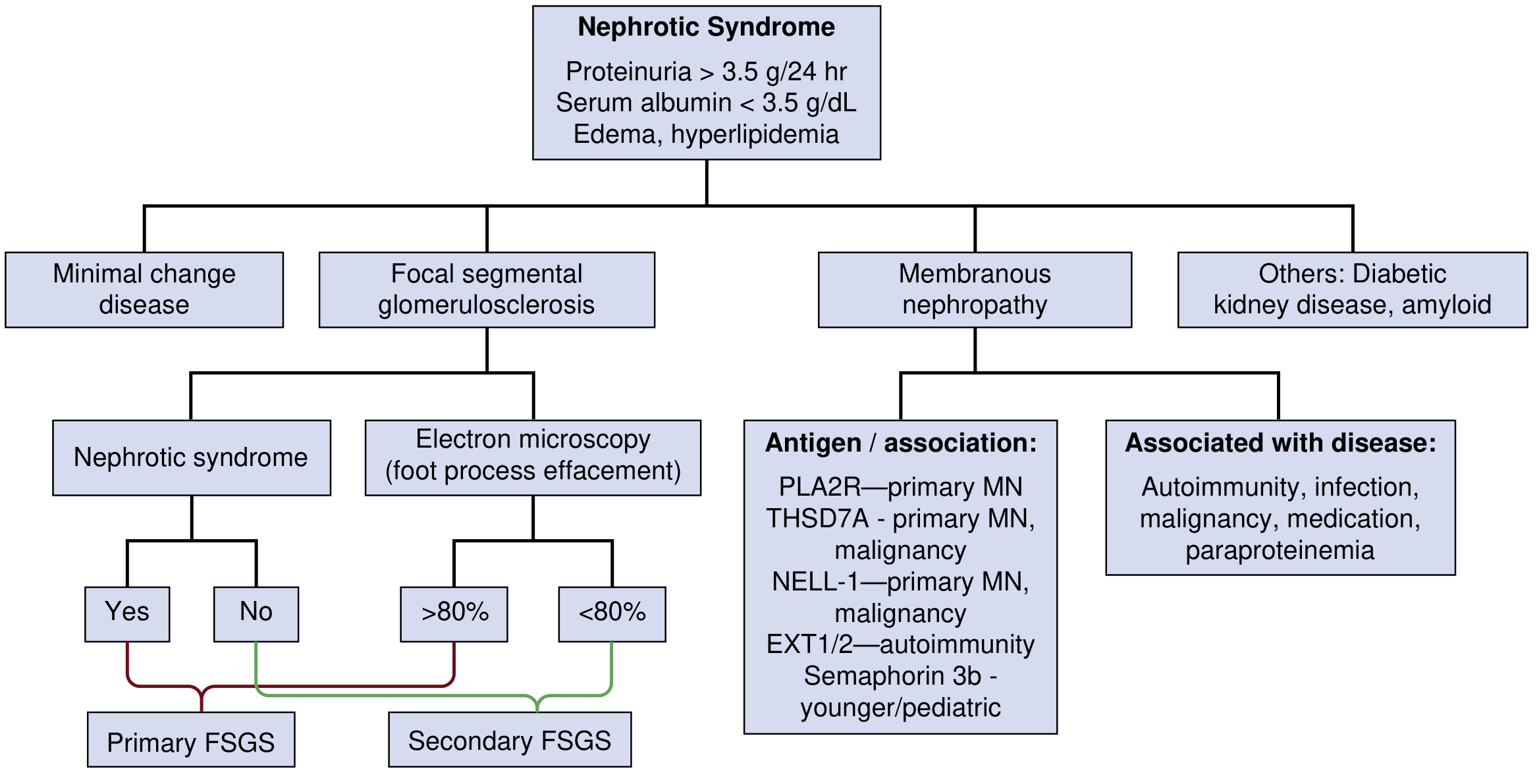
Fig. 16.1 - Most common etiologies of nephrotic syndrome (NKF Primer on Kidney Diseases, 8e)
Primary (Glomerular) Causes
| Disease | Epidemiology | Key Features |
|---|---|---|
| Minimal Change Disease (MCD) | ~15% of adult NS; 70-90% of pediatric NS | Normal light microscopy; diffuse foot process effacement on EM |
| Focal Segmental Glomerulosclerosis (FSGS) | ~25% of adult NS; most common in African descent | Focal/segmental scarring; podocyte injury |
| Membranous Nephropathy (MN) | Most common cause of adult NS in whites; 4th-5th decade; M:F = 2:1 | Subepithelial immune deposits; anti-PLA2R antibodies in ~70% primary MN |
Secondary Causes
- Metabolic: Diabetic kidney disease (most common secondary cause globally), amyloidosis
- Autoimmune: Lupus nephritis (SLE), Henoch-Schonlein purpura
- Infections: Hepatitis B/C (associated with MN), HIV (collapsing FSGS), parvovirus B19
- Drugs: NSAIDs, heroin, pamidronate, interferon, gold salts
- Malignancy: Solid tumors (associated with MN), Hodgkin lymphoma (associated with MCD)
- Genetic: Mutations in podocyte genes - NPHS1 (nephrin), NPHS2 (podocin), ACTN4, APOL1
NKF Primer, pp. 189-192; Tietz Textbook of Laboratory Medicine, 7th Ed.
Pathophysiology
The glomerular filtration barrier has three components: the fenestrated endothelium, the GBM, and podocyte foot processes connected by slit diaphragms. In nephrotic syndrome, damage primarily targets the podocytes, leading to:
- Loss of charge selectivity - the GBM normally carries a net negative charge repelling albumin (also negatively charged). This is disrupted in NS.
- Foot process effacement - the hallmark on electron microscopy across all causes of primary NS.
- Massive proteinuria leading to all downstream consequences.
Edema mechanisms - two models:
- Underfill: Protein loss → hypoalbuminemia → reduced plasma oncotic pressure → fluid shifts to interstitium → low effective circulating volume → RAAS activation → sodium retention. Seen classically in MCD.
- Overfill: Primary renal sodium and water retention (independent of oncotic pressure) with expanded plasma volume and suppressed RAAS. Seen in most other causes.
Brenner and Rector's The Kidney, 2-Vol Set, p. 2277
Clinical Features
Symptoms: Peripheral edema (often anasarca), foamy urine, fatigue, dyspnea
Signs: Hypertension, generalized dependent pitting edema, ascites, pleural effusions. Less common: Muehrcke's lines (white transverse bands on nails due to hypoalbuminemia), eruptive xanthomata, xanthelasma.
Laboratory:
- Proteinuria >3.5 g/24 hr (or spot protein:creatinine ratio >3.5)
- Serum albumin <2.5-3.5 g/dL
- Hyperlipidemia (total cholesterol usually >180 mg/dL; elevated LDL, triglycerides)
- Lipiduria (oval fat bodies, "Maltese cross" under polarized light)
- Bland urinary sediment (minimal hematuria, unlike nephritic syndrome)
Frameworks for Internal Medicine; Tietz Laboratory Medicine, 7th Ed.
Complications
1. Hypercoagulability (10-40% develop thromboembolic events)
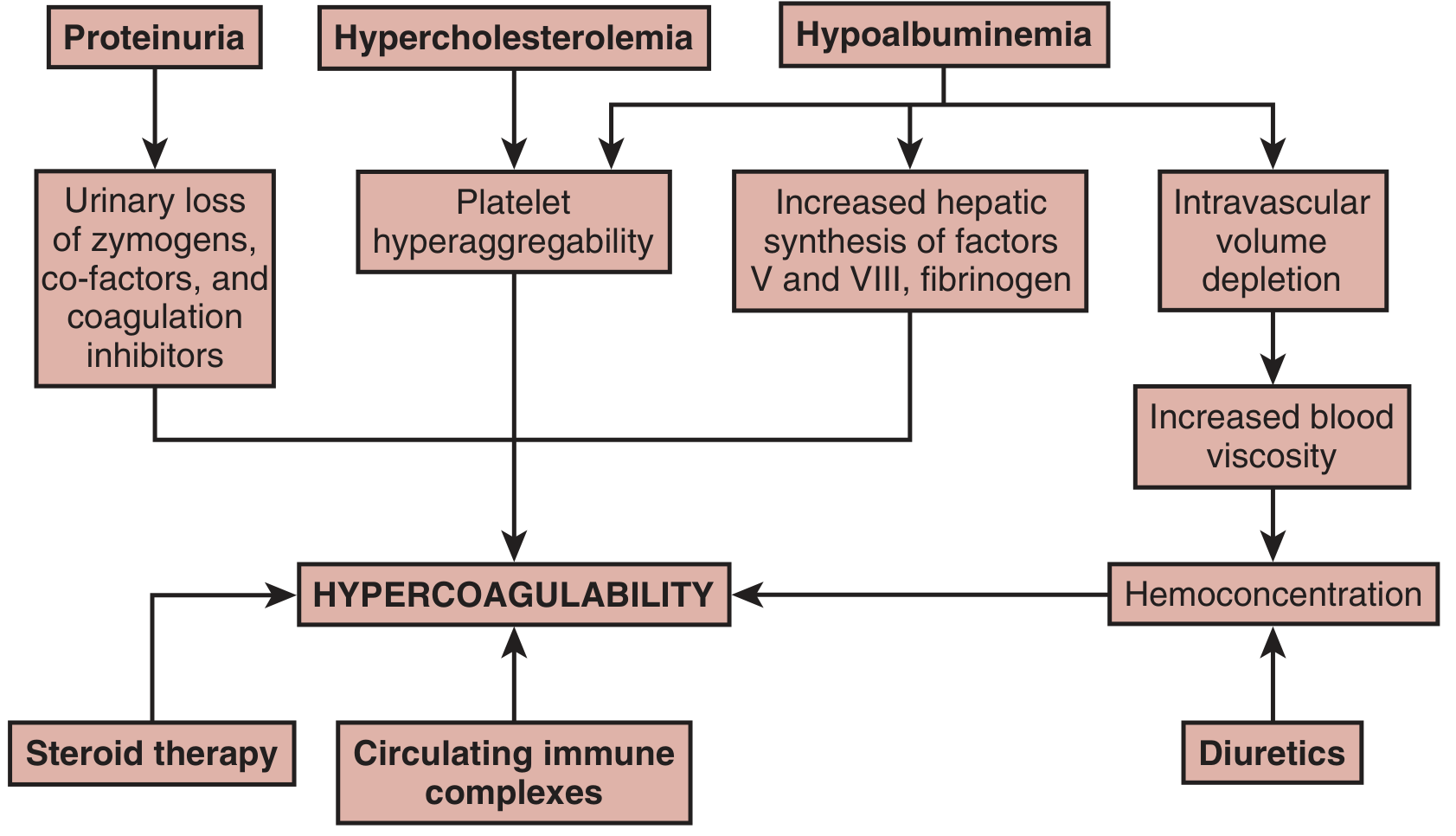
Mechanisms of hypercoagulability in nephrotic syndrome (Brenner & Rector's The Kidney)
- Urinary loss of anticoagulant proteins: antithrombin III, protein C, protein S, plasminogen
- Increased hepatic synthesis of procoagulant proteins: fibrinogen, factors V and VIII
- Platelet hyperaggregability from hypercholesterolemia
- Hemoconcentration from intravascular volume depletion
- Steroid therapy and circulating immune complexes compound the risk
Renal vein thrombosis is the most classic complication, especially with severe proteinuria (>10 g/24 hr) and severe hypoalbuminemia (<2 g/dL). Risk is highest in membranous nephropathy and amyloidosis. DVT and pulmonary embolism also occur.
2. Infection
- Loss of IgG (small molecule), reduced complement activity, and diminished T-cell function → susceptibility to encapsulated organisms (Streptococcus pneumoniae), cellulitis, and spontaneous bacterial peritonitis.
3. Acute Kidney Injury
- Low effective circulating volume
- Acute tubular necrosis (especially MCD in patients >50 years)
- NSAIDs causing acute interstitial nephritis in MCD
- Renal vein thrombosis
- Crescentic GN superimposed on existing disease
4. Nutritional/Metabolic Deficiencies from protein loss
| Protein Lost | Consequence |
|---|---|
| Transferrin | Iron deficiency anemia |
| Vitamin D-binding protein | Vitamin D deficiency, hypocalcemia |
| IgG, complement | Immunodeficiency |
| Thyroxine-binding globulin | Low total T4 (free T4 normal) |
| Albumin-bound drugs | Altered drug pharmacokinetics |
Diagnosis
Approach in adults: Kidney biopsy is almost always indicated in adults, as the underlying cause determines management. Exceptions: known diabetic nephropathy with classic clinical picture, or typical MCD presentation (bland sediment, rapid response to steroids in a young patient).
Evaluation:
- 24-hour urine protein OR spot urine protein:creatinine ratio
- Serum albumin, lipid panel, renal function (BUN, creatinine, eGFR)
- Urinalysis with microscopy
- Serology: ANA, anti-dsDNA (SLE), ANCA, complement C3/C4, anti-PLA2R (membranous nephropathy), hepatitis B/C serology, HIV, serum/urine protein electrophoresis
- Kidney biopsy with light microscopy (LM), immunofluorescence (IF), and electron microscopy (EM)
Specific Diseases
Minimal Change Disease (MCD)
- LM: Normal
- IF: Negative
- EM: Diffuse foot process effacement (>90%)
- Treatment: Corticosteroids (high response rate in children; variable in adults). Anti-CD20 agents (rituximab) show promise in steroid-resistant or frequently relapsing disease.
- In children: Often treated empirically without biopsy.
FSGS
- LM: Focal (some glomeruli) and segmental (part of glomerulus) sclerosis
- EM: Foot process effacement - >80% effacement favors primary FSGS; <80% favors secondary
- Primary FSGS: Corticosteroids, calcineurin inhibitors (tacrolimus/cyclosporine), mycophenolate mofetil. High risk of recurrence post-transplant.
- Secondary FSGS: Treat underlying cause; antiproteinuric therapy; avoid immunosuppression.
- Collapsing FSGS: Strongly associated with HIV and COVID-19; aggressive course.
- APOL1 risk alleles: Associated with high-risk FSGS in African ancestry patients.
Membranous Nephropathy (MN)
- LM: Thickened GBM with "spike and dome" pattern on silver stain
- IF: Granular IgG and C3 along GBM
- EM: Subepithelial electron-dense deposits
- Natural history: "Rule of thirds" - 1/3 spontaneous complete remission, 1/3 partial remission, 1/3 progress to ESKD
- Markers: Anti-PLA2R antibody (~70% primary MN) - useful for diagnosis and monitoring
- Treatment: Reserved for persistent NS or declining GFR. Options include calcineurin inhibitors, cyclophosphamide + corticosteroids (Ponticelli regimen), rituximab (increasingly preferred).
Management
Non-Specific (All Causes)
| Strategy | Details |
|---|---|
| Diet | Low-salt diet; protein restriction 0.8-1 g/kg/day |
| RAAS blockade | ACE inhibitor or ARB - reduces proteinuria, edema, dyslipidemia, and progression |
| Diuretics | Loop diuretics for edema. Note: hypoalbuminemia reduces furosemide protein binding, enlarging its volume of distribution and requiring higher doses |
| Statins | For hyperlipidemia-associated cardiovascular risk |
| Anticoagulation | For those at high thromboembolic risk (especially MN with albumin <2.5 g/dL) |
| Vaccinations | Pneumococcal and other vaccines due to infection risk |
Diuretic Resistance
A more logical approach is to reduce proteinuria first (with ACE inhibitor/ARB), then add loop diuretics. Volume-expanded (overfill) vs. volume-contracted (underfill) states should be distinguished, as diuretics alone are safe for overfill but can worsen underfill edema.
Brenner and Rector's The Kidney, p. 2277; NKF Primer, p. 190
Nephrotic vs. Nephritic - Quick Comparison
| Feature | Nephrotic | Nephritic |
|---|---|---|
| Proteinuria | >3.5 g/day | Sub-nephrotic (<3.5 g/day) |
| Hematuria | Minimal/absent | Prominent (RBC casts) |
| Edema | Marked (oncotic) | Mild-moderate (volume) |
| BP | Variable | Hypertension |
| Mechanism | Permeability defect (podocytes) | Inflammatory (GN) |
| GFR | Usually preserved initially | Often reduced |
Recent Evidence (2024-2026)
- A 2025 Cochrane systematic review examined interventions for idiopathic steroid-resistant nephrotic syndrome in children (PMID: 40337980), reflecting ongoing challenges in this population.
- A 2026 meta-analysis examined rituximab-induced hypogammaglobulinemia in childhood NS (PMID: 41843217) - a clinically important adverse effect to monitor when using anti-CD20 therapy.
- A 2024 systematic review documented NS associated with solid malignancies (PMID: 38965515), reinforcing the need to screen adult-onset NS for occult malignancy, especially in MN.
This is a shared conversation. Sign in to Orris to start your own chat.