

56e5167b-97dd-4123-9afd-a3d7a3757ceb.jpeg
Diagnosis
analyse_media
Reading File
Finding Sources
Finding Sources
Reading File
Reading File
Reading File
Loading Image
Diagnosis: Recurrent Aphthous Stomatitis (RAS) - Herpetiform Type
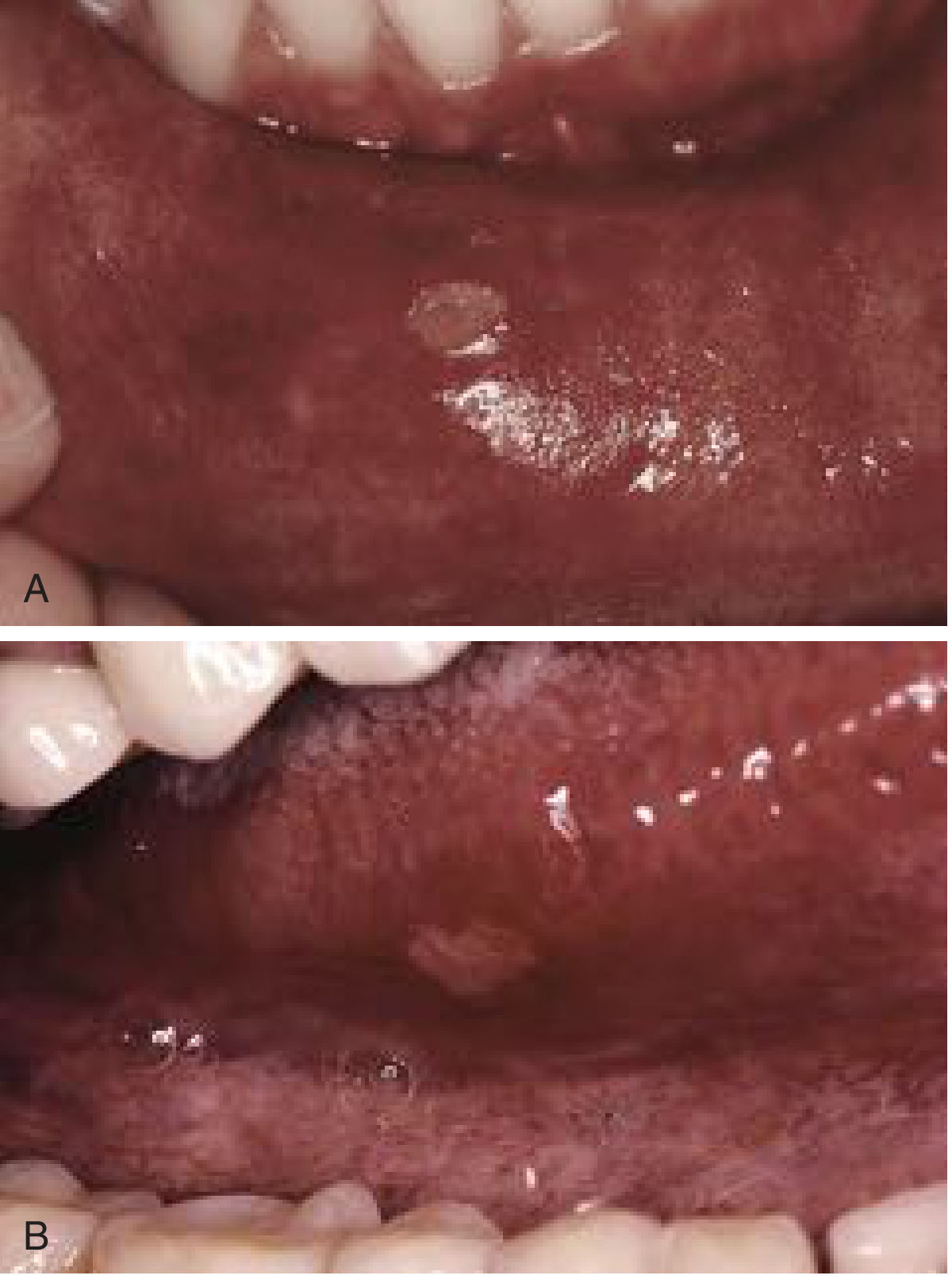
The image shows multiple small (1-3 mm), clustered, shallow ulcers on the labial mucosa (inner lower lip), each with a yellowish-white fibrinous pseudomembrane and a surrounding erythematous halo. This presentation is a near-textbook match for the findings described in Cummings Otolaryngology:
"Herpetiform-type aphthous ulcers... present as multiple pinhead-sized to 2-mm shallow craterform ulcers with a widespread distribution."
Here is the textbook reference image for comparison:
Clinical Classification
| Feature | This Case |
|---|---|
| Type | Herpetiform or multiple minor aphthous ulcers |
| Size | ~1-3 mm (pinpoint to small) |
| Location | Labial mucosa (non-keratinized) - classic site |
| Number | Multiple, clustered |
| Appearance | Yellowish-white pseudomembrane + red halo |
Key Distinguishing Points
- NOT herpes simplex - HSV in immunocompetent hosts only involves keratinized mucosa (hard palate, attached gingiva), not the labial mucosa. There is also no vesicular phase with aphthous ulcers.
- NOT traumatic ulcer - traumatic lesions have less peripheral erythema and more ragged edges.
- NOT major aphthae (Sutton disease) - those are >1 cm, deeper, and typically in the posterior oral cavity.
Common Trigger Factors (Cummings Otolaryngology)
- Psychologic stress
- Minor local trauma (lip bite)
- NSAIDs, beta-blockers
- Foods: chocolate, tomatoes, nuts
- Nutritional deficiencies (B12, folate, iron)
- Menstrual cycle changes
When to Investigate Further
Consider workup for an underlying systemic disease if ulcers are:
- Persistent (>2 weeks without healing)
- Recurrent and severe (complex aphthosis: 3+ ulcers nearly constantly)
- Associated with: genital ulcers + uveitis (Behcet's disease), diarrhea/GI symptoms (Crohn's, celiac disease), fever + adenitis (PFAPA syndrome), or HIV risk factors
Management
| Approach | Details |
|---|---|
| Topical anesthetics | Benzocaine gel for pain relief |
| Topical corticosteroids | Triamcinolone acetonide 0.1% in orabase - reduces duration and severity |
| Antiseptic mouthwash | Chlorhexidine 0.2% - may reduce episode frequency |
| Avoid triggers | Spicy/acidic foods, SLS-containing toothpaste |
| Salt water rinses | Warm saline gargles for comfort |
| If deficiency suspected | Check CBC, B12, folate, iron/ferritin; supplement accordingly |
Typical minor/herpetiform aphthae heal spontaneously in 7-14 days without scarring. If this patient has recurring episodes, a referral to an oral medicine specialist or dental surgeon is appropriate.
Disclaimer: This is an AI-assisted clinical impression based on visual analysis. A formal diagnosis requires in-person clinical examination by a qualified healthcare professional.
This is a shared conversation. Sign in to Orris to start your own chat.