
Abg interpretation and treatment plan
Please provide the ABG values you'd like interpreted.
ABG Interpretation and Treatment Plan
Normal Values (Reference)
| Parameter | Normal Value | Range |
|---|---|---|
| pH | 7.40 | 7.35 - 7.45 |
| PaCO2 | 40 mmHg | 38 - 42 mmHg |
| PaO2 | 100 mmHg | 75 - 100 mmHg |
| HCO3- | 24 mEq/L | 22 - 26 mEq/L |
| Base Excess | 0 | -4 to +4 |
Step-by-Step ABG Interpretation
Step 1 - Evaluate the pH
- < 7.35 = Acidemia
- > 7.45 = Alkalemia
- 7.35 - 7.45 = Normal (may still have a compensated disorder)
Step 2 - Evaluate PaCO2 (Respiratory Component)
- In respiratory disorders, PaCO2 changes opposite to pH:
- PaCO2 high + pH low = Respiratory acidosis
- PaCO2 low + pH high = Respiratory alkalosis
- In metabolic disorders, PaCO2 changes same direction as pH (compensation)
Step 3 - Evaluate HCO3- (Metabolic Component)
- HCO3- < 22 = Metabolic acidosis
- HCO3- > 26 = Metabolic alkalosis
Step 4 - Evaluate Base Excess (BE)
- BE is the amount of base needed to titrate 1 L of blood to pH 7.4 at 37°C
- > +4 = Metabolic alkalosis
- < -4 (base deficit) = Metabolic acidosis
Step 5 - Assess Oxygenation (PaO2)
- PaO2 < 75 mmHg = Hypoxemia
- Do not overlook this - hypoxemia may drive or accompany an acid-base disorder
Checking for Adequate Compensation
| Primary Disorder | Compensation Formula |
|---|---|
| Metabolic acidosis | PaCO2 = 1.5 × [HCO3-] + 8 ± 2 (Winter's Formula) |
| Metabolic alkalosis | PaCO2 = 0.7 × [HCO3-] + 20 ± 5 |
| Acute respiratory acidosis | ↑ HCO3- = ΔPaCO2 / 10 |
| Chronic respiratory acidosis | ↑ HCO3- = 4 × (ΔPaCO2 / 10) |
| Acute respiratory alkalosis | ↓ HCO3- = 2 × (ΔPaCO2 / 10) |
| Chronic respiratory alkalosis | ↓ HCO3- = 4 × (ΔPaCO2 / 10) |
- HCO3- + 15 should approximately equal the last two digits of pH × 100
- Expected PaCO2 ≈ HCO3- + 15 (for HCO3- > 10)
- For HCO3- < 10: expected PaCO2 ≈ 15 mmHg (± 2)
Metabolic Acidosis
Calculate the Anion Gap (AG)
- Normal AG: 9 - 15 mmol/L (threshold of 15 used clinically)
Wide Anion Gap Metabolic Acidosis - MUDPILES mnemonic
| Letter | Cause |
|---|---|
| M | Methanol, muscle injury (rhabdomyolysis), metformin |
| U | Uremia (renal failure) |
| D | Diabetic ketoacidosis (DKA), alcoholic or starvation ketoacidosis |
| P | Propylene glycol, paraldehyde |
| I | Isoniazid, iron |
| L | Lactic acidosis |
| E | Ethanol, ethylene glycol |
| S | Salicylates, short gut |
Normal Anion Gap Metabolic Acidosis (Hyperchloremic)
Delta Gap (for wide AG acidosis)
- Delta AG = measured AG - 15
- Delta HCO3- = 24 - measured HCO3-
- If Delta AG ≈ Delta HCO3- → pure wide AG metabolic acidosis
- If Delta AG > Delta HCO3- → concurrent metabolic alkalosis
- If Delta AG < Delta HCO3- → concurrent normal AG acidosis
Treatment
- Treat the underlying cause (DKA: insulin + fluids; lactic acidosis: improve perfusion; renal failure: dialysis)
- For diarrhea/GI losses: correct fluid and electrolytes, address source
- Sodium bicarbonate: generally reserved for severe acidosis (pH < 7.1 or HCO3- < 5) or non-anion-gap acidosis; avoid if respiratory compensation is in play without ventilatory support
Metabolic Alkalosis
- Vomiting / NG suctioning (hypochloremic, hypokalemic metabolic alkalosis)
- Diuretic use
- Hypovolemia (renal HCO3- retention)
- Treat underlying cause
- For chloride-responsive (chloride loss from vomiting/NG): give normal saline (Cl- replacement) + potassium supplementation
- Stop diuretics if causative
- Judicious fluid resuscitation for hypovolemic patients
Respiratory Acidosis
- CNS depression (sedatives, opioids, stroke, TBI)
- Neuromuscular disease (myasthenia gravis, Guillain-Barré, hypophosphatemia)
- Airway obstruction (COPD, asthma, foreign body)
- Severe pneumonia, pulmonary edema, ARDS
- Improve ventilation: supplemental O2, non-invasive positive pressure ventilation (BiPAP/CPAP), or intubation/mechanical ventilation if severe
- For COPD: target SpO2 88-92% to avoid abolishing hypoxic drive
- Reverse contributing factors: naloxone for opioid overdose, flumazenil for benzo overdose
- Do not overcorrect in chronic respiratory acidosis - normalizing PaCO2 too quickly causes metabolic alkalosis (post-hypercapnic alkalosis)
Respiratory Alkalosis
- Anxiety/hyperventilation syndrome
- Pain, fever, sepsis
- Pregnancy (progesterone-driven)
- Hypoxemia (compensatory hyperventilation)
- Salicylate toxicity (early stage), hepatic encephalopathy, CNS disease
- Treat underlying cause
- Anxiety-driven: rebreathing, reassurance, anxiolytics
- If on mechanical ventilation: reduce respiratory rate or tidal volume
- Correct hypoxemia if present
Mixed Disorders - Key Clues
| Pattern | Think of |
|---|---|
| pH normal, PaCO2 high, HCO3- high | Chronic respiratory acidosis with full metabolic compensation |
| pH very abnormal despite "normal" PaCO2 and HCO3- | Mixed opposing disorders canceling each other |
| Compensation exceeds predicted range | Second primary disorder present |
| AG metabolic acidosis + high HCO3- | Concurrent metabolic alkalosis (Delta gap > Delta HCO3-) |
Quick Bedside Algorithm
pH < 7.35 → Acidemia
  ├── PaCO2 > 45 → Respiratory acidosis
  │     └── Is HCO3- appropriately elevated? If not → Mixed
  └── HCO3- < 22 → Metabolic acidosis
        └── Calculate AG → Wide vs. Normal AG
              └── Check compensation with Winter's Formula

pH > 7.45 → Alkalemia
  ├── PaCO2 < 35 → Respiratory alkalosis
  │     └── Is HCO3- appropriately low? If not → Mixed
  └── HCO3- > 26 → Metabolic alkalosis
        └── Chloride-responsive vs. chloride-resistant
VBG vs. ABG Note
- VBG pH is ~0.03 lower than ABG pH
- VBG PCO2 is ~5-9 mmHg higher than PaCO2
- PvCO2 < 45 mmHg has ~100% NPV for ruling out significant hypercapnia
- VBG + SpO2 (pulse oximetry) covers most patients; reserve ABG for complex cases or severe respiratory illness
Generate a clinical decision tree poster for ABG interpretation
Clinical decision tree poster for ABG (Arterial Blood Gas) interpretation. Medical reference poster with a clean, professional design on a dark navy blue background with white and colored text. Title at top: "ABG INTERPRETATION - Clinical Decision Tree" in bold white. The decision tree flows top to bottom: START BOX (yellow): "Obtain ABG Values: pH | PaCO2 | HCO3- | PaO2 | BE" STEP 1 - pH Assessment (large central node, white box): "STEP 1: Evaluate pH" Branch LEFT (red box): "pH < 7.35 → ACIDEMIA" Branch RIGHT (blue box): "pH > 7.45 → ALKALEMIA" Branch CENTER (green box): "pH 7.35–7.45 → NORMAL (may be compensated)" From ACIDEMIA box, two branches: - Left branch (orange): "PaCO2 > 45 mmHg → RESPIRATORY ACIDOSIS" with sub-box: "Causes: Hypoventilation, COPD, Sedatives, Airway obstruction | Rx: Improve ventilation, BiPAP/intubation, treat cause" - Right branch (red): "HCO3- < 22 mEq/L → METABOLIC ACIDOSIS" with sub-box showing two paths: -- "AG = Na-(Cl+HCO3) > 15 → HIGH AG: MUDPILES (Methanol, Uremia, DKA, Propylene glycol, INH/Iron, Lactic acidosis, EtOH/Ethylene glycol, Salicylates)" -- "AG normal → NORMAL AG: Diarrhea, RTA, Saline excess" -- "Winter's Formula: Expected PaCO2 = 1.5×HCO3 + 8 ±2" From ALKALEMIA box, two branches: - Left branch (light blue): "PaCO2 < 35 mmHg → RESPIRATORY ALKALOSIS" with sub-box: "Causes: Anxiety, Pain, Sepsis, Hypoxemia, Pregnancy | Rx: Treat cause, reduce RR if ventilated" - Right branch (teal): "HCO3- > 26 mEq/L → METABOLIC ALKALOSIS" with sub-box: "Causes: Vomiting, NG suction, Diuretics | Rx: NS + KCl if Cl-responsive" COMPENSATION CHECK box (purple, bottom center): "STEP 4: Check Compensation" Table with 4 rows: "Met Acidosis: PaCO2 = 1.5×HCO3+8±2 Met Alkalosis: PaCO2 = 0.7×HCO3+20±5 Acute Resp Acidosis: ΔHCO3 = ΔPaCO2/10 Chronic Resp Acidosis: ΔHCO3 = 4×ΔPaCO2/10" "If compensation OUTSIDE expected range → MIXED DISORDER" OXYGENATION box (bottom, green): "STEP 5: PaO2 | Normal: 75–100 mmHg | <75 = Hypoxemia → supplement O2" Normal values reference bar at very bottom: "NORMAL: pH 7.35–7.45 | PaCO2 38–42 | HCO3 22–26 | BE ±4 | PaO2 75–100" Clean arrows connecting all boxes. Color-coded branches. Medical poster style suitable for ICU/ED wall display.
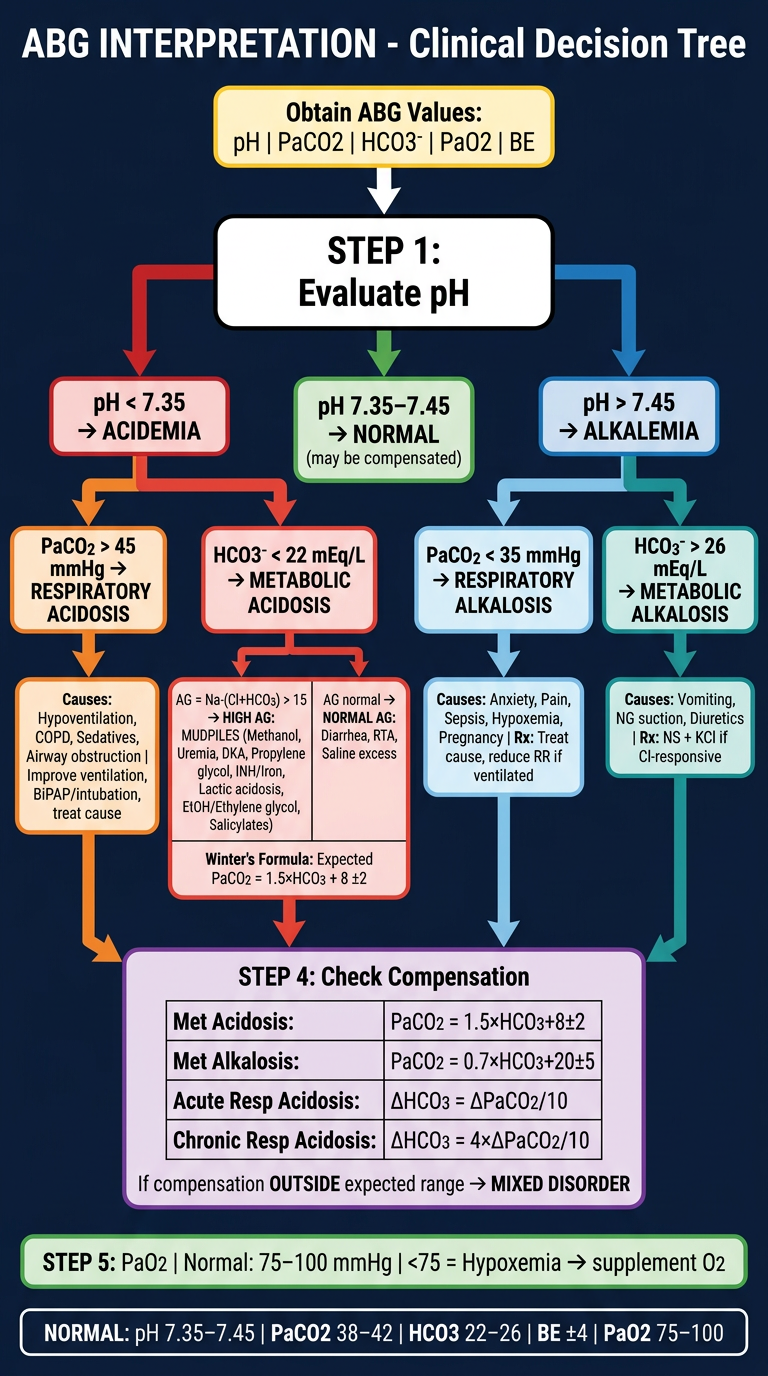
- Step 1 - pH assessment with clear acidemia/alkalemia/normal branching
- Step 2 - Respiratory vs. metabolic classification for both acidosis and alkalosis
- Step 3 - Anion gap calculation with the MUDPILES mnemonic for high-AG metabolic acidosis
- Step 4 - Compensation formulas (Winter's formula + all 6 respiratory compensation rules) with a mixed disorder flag
- Step 5 - Oxygenation assessment (PaO2)
- Reference bar at the bottom with all normal values