
Fixed Drug Eruption
Reading File
Finding Sources
Finding Sources
Searching Images
fixed drug eruption clinical photograph sharply demarcated dusky erythematous patch
Searching PubMed
"fixed drug eruption"
Searching the Web
Fixed drug eruption DermNet clinical features treatment
Reading File
Finding Sources
Finding Sources
Reading Web Page
https://pmc.ncbi.nlm.nih.gov/articles/PMC4161682
Fixed drug eruption (FDE)
A fixed drug eruption is a medication-related skin reaction that characteristically returns to the same spot each time the triggering drug is taken.
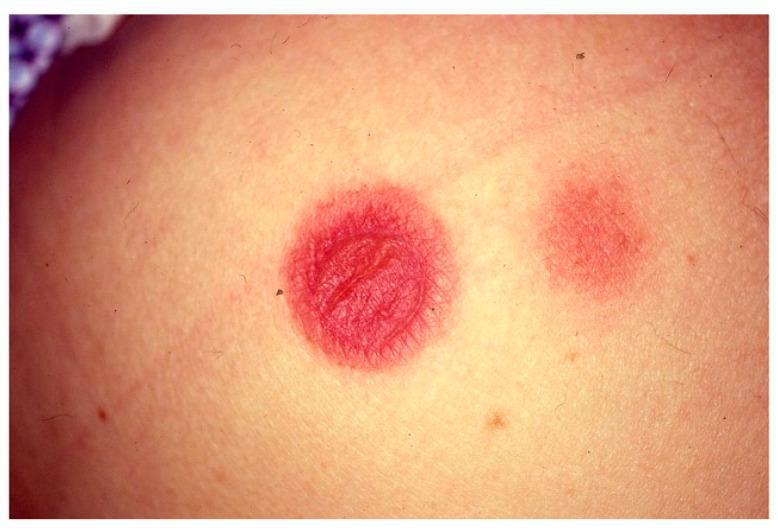
Typical features
- One or a few round or oval, sharply defined red, violaceous, or dusky-brown patches or plaques
- May itch, burn, sting, or form a central blister/erosion
- Common sites: lips, face, hands, feet, genital area, and oral mucosa
- First episode: often begins days to 1-2 weeks after starting a medicine
- Re-exposure: often recurs within 24 hours, in the exact prior location
- Resolves over days but often leaves brown-grey post-inflammatory hyperpigmentation.
Dermatology 2-Volume Set, 5e, Fixed drug eruption section.
Common culprit medicines
Examples include:
- NSAIDs: ibuprofen, naproxen, diclofenac
- Paracetamol/acetaminophen
- Antibiotics, especially trimethoprim-sulfamethoxazole, tetracyclines, and metronidazole
- Pseudoephedrine
- Some anticonvulsants and other drugs
The precise culprit has to be established from the timing of every prescription, over-the-counter medicine, supplement, and intermittent medication. NSAIDs and acetaminophen have been prominent causes in observational data, as summarized in this clinical series.
Diagnosis
Diagnosis is mainly clinical:
- Typical lesion appearance
- Clear timing after a medication
- Recurrence at exactly the same site after taking that medicine again
A dermatologist may consider a lesional patch test after recovery. Do not deliberately re-take a suspected medicine to test this yourself, because the reaction can recur more extensively or become blistering.
Treatment
- Stop and avoid the suspected culprit drug, unless a clinician says it is essential and provides an alternative plan.
- Mild localized episodes may be treated with a topical corticosteroid and, if itchy, an antihistamine.
- Photograph the rash and record the drug name, dose, and time taken.
- Ask a clinician or pharmacist to document the suspected reaction in your medication/allergy record.
Get urgent medical care now if
- Blisters, skin peeling, or a rapidly spreading rash
- Painful mouth, eye, or genital sores
- Fever, facial swelling, feeling very unwell
- Widespread lesions or extensive skin detachment
These can indicate generalized bullous FDE or another severe cutaneous drug reaction that may resemble Stevens-Johnson syndrome/toxic epidermal necrolysis and needs urgent assessment.
This is a shared conversation. Sign in to Orris to start your own chat.