These are the same 16 questions from the previous conversation — I already have all the textbook content extracted. Here are the complete detailed answers from Park's Textbook of Preventive and Social Medicine:
SHORT NOTES - Park's Textbook of Preventive & Social Medicine
1. MALNUTRITION (4 marks)
Definition: Malnutrition is like an iceberg - most people in developing countries live under the burden of malnutrition. It results from an imbalance between the body's needs and the intake of nutrients (either excess or deficiency).
Vulnerable groups: Pregnant women, nursing mothers, and children are particularly vulnerable.
Adverse effects of maternal malnutrition:
- Maternal depletion
- Low birth weight
- Anaemia
- Toxemias of pregnancy
- Postpartum haemorrhage
- High maternal and child mortality/morbidity
Critical periods:
- Intrauterine period - very important nutritionally; adequate birth weight = lower mortality even in poor conditions
- Weaning period - severe malnutrition coincides with the age of weaning
Types of malnutrition (Undernutrition):
| Type | Index Used | Definition |
|---|
| Underweight | Weight-for-Age (WFA) | WFA Z-score < -2SD from WHO median |
| Stunting | Height-for-Age (HFA) | Reflects chronic/cumulative undernutrition |
| Wasting | Weight-for-Height (WFH) | Reflects acute/current undernutrition |
| SAM | WFH < -3SD OR MUAC <115 mm | Severe Acute Malnutrition |
Ecology (Causes):
- Inadequate food intake - "food gap" (primary cause; replaced old concept of "protein gap")
- Infections (diarrhoea, measles, respiratory infections, intestinal worms)
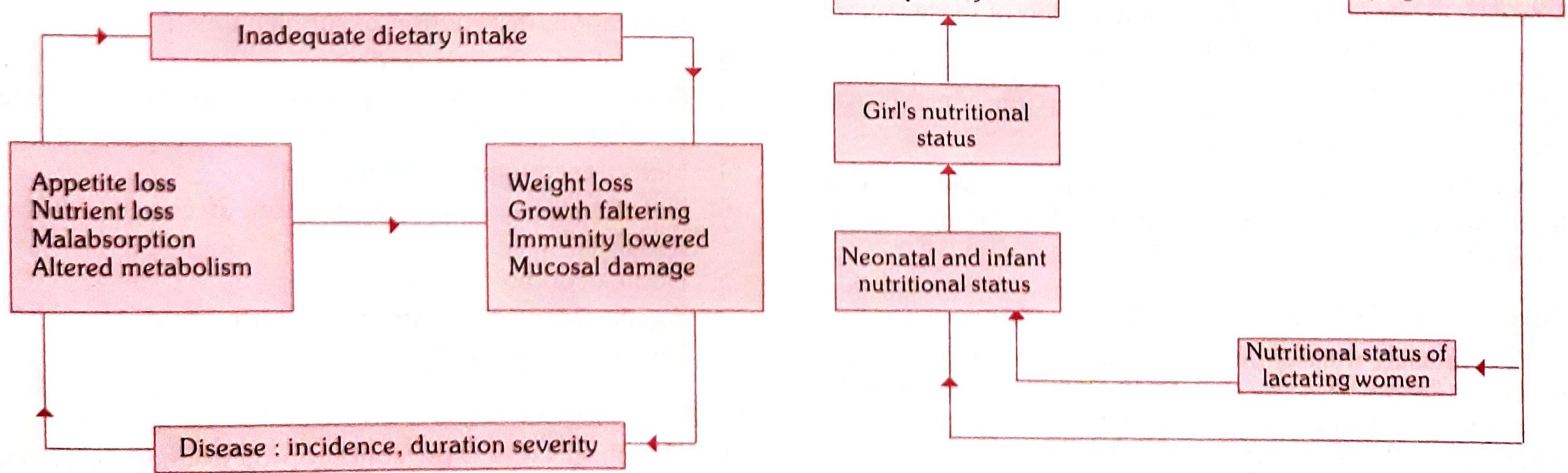
- Malnutrition and infection form a vicious cycle - each perpetuates the other
- Poor environmental conditions, large family size, poor maternal health, failure of lactation, premature termination of breastfeeding, adverse cultural practices
India statistics (NFHS-4):
- 35.7% children underweight
- 38.4% stunted
- 21% wasted
- 18.5% low birth weight
Interventions:
- Direct: Supplementary feeding, iron/folic acid distribution, food fortification, nutrition education
- Indirect: Immunization, environmental sanitation, clean water, family planning, primary health care
2. IRON DEFICIENCY ANAEMIA (4 marks)
Iron in the body: Adult body contains 3-4 g iron; 60-70% as haemoglobin iron (circulating), 1-1.5 g as storage iron. Each gram of Hb contains 3.34 mg iron.
Functions of iron:
- Haemoglobin formation (oxygen transport - central function)
- Brain development and function
- Regulation of body temperature
- Muscle activity (myoglobin)
- Catecholamine metabolism
- Component of cytochromes, catalase, enzyme systems
- Immune function (T-cells, antibody production)
Sources:
- Haem-iron (better absorbed): Liver, meat, poultry, fish
- Non-haem iron (poor bioavailability): Cereals, green leafy vegetables, legumes, nuts, oilseeds, jaggery, dried fruits
- Inhibitors of absorption: Phytates (bran), phosphates (egg yolk), tannin (tea), oxalates - all prevalent in Indian vegetarian diet
Absorption:
- Absorbed from duodenum and upper small intestine in ferrous state
- Promoted by: Ascorbic acid, haem-iron foods
- Iron absorption from Indian diet < 5%
- Stored as plasma ferritin in liver, spleen, bone marrow, kidney
Iron losses: ~1 mg/day in adults; ~12.5 mg per 28-day cycle in menstruating women
Three Stages of Iron Deficiency:
- Stage 1: Decreased iron storage - no other detectable abnormalities
- Stage 2 (Latent IDA): Iron stores exhausted, anaemia not yet present. Serum ferritin falls; transferrin saturation falls from 30% to <15%. Most widely prevalent stage in India.
- Stage 3 (Overt IDA): Decreased circulating Hb due to impaired Hb synthesis - frank anaemia
WHO Cut-offs for Diagnosis of Anaemia:
| Group | Hb (g/dl) |
|---|
| Adult males | < 13 |
| Adult females (non-pregnant) | < 12 |
| Pregnant women | < 11 |
| Children 6 months - 6 years | < 11 |
| Children 6-14 years | < 12 |
Lab evaluation:
- Serum ferritin (reflects storage)
- Serum transferrin saturation (normal >16%, normal value 30%)
- Haemoglobin estimation
Consequences of IDA:
- Impaired cell-mediated immunity
- Reduced resistance to infection
- Increased morbidity/mortality
- Diminished work performance
3. NUTRITIONAL ASSESSMENT (3 marks)
Definition: The nutritional status of an individual is the result of many interrelated factors - influenced by adequacy of food intake (quantity and quality) and physical health. The purpose of nutritional assessment is to develop a health care programme that meets the needs defined by that assessment.
Objective of nutritional survey: Obtain precise information on prevalence and geographic distribution of nutritional problems; identify individuals/populations "at risk."
Methods of Nutritional Assessment (covering all stages of natural history of nutritional disease):
1. Clinical Examination
- Signs and symptoms of nutritional deficiency in skin, hair, eyes, tongue, gums, nails
- Simple, inexpensive, most widely used
2. Anthropometry
- Measurement of body dimensions
- Indices: Weight-for-Age (WFA), Height-for-Age (HFA), Weight-for-Height (WFH)
- Mid-upper arm circumference (MUAC)
- BMI = Weight(kg)/Height(m)²
- Inexpensive, non-invasive, widely applicable
3. Biochemical Evaluation
- Blood tests: Hb, serum ferritin, transferrin saturation, serum albumin, serum vitamins
- Urine tests
- Detects sub-clinical deficiencies (prepathogenic stage)
4. Functional Assessment
- Assesses functional consequences - work capacity, immune function, cognitive development
- Anaemia → reduced work capacity; iron deficiency → impaired cognition
5. Assessment of Dietary Intake
- 24-hour dietary recall
- Diet history/food frequency questionnaire
- Weighment method
- Identifies food consumption patterns
6. Vital Statistics
- Mortality rates, morbidity data linked to nutritional status
- Infant mortality rate as proxy for nutritional status
7. Ecological Studies
- Assessment of agricultural production, food supply, socioeconomic factors, cultural practices
4. NUTRITIONAL ANAEMIA (3 marks)
Definition (WHO): "A condition in which the haemoglobin content of blood is lower than normal as a result of a deficiency of one or more essential nutrients, regardless of the cause of such deficiency."
Most common cause: Iron deficiency (by far); less frequently folate or Vitamin B12 deficiency.
Magnitude of problem:
World: Highest prevalence in developing countries; affects nearly two-thirds of pregnant and half of non-pregnant women in developing countries.
India:
- Most widespread micronutrient deficiency affecting all age groups
- 72.7% urban and 81.2% rural children under 3 years are anaemic
- 53.1% women anaemic (NFHS-4)
- 53.7% in urban; 54.3% in rural areas
- Children 6-59 months: 58.4% anaemic
- Bihar highest (87.6%); Nagaland lowest (44.3%)
- 19% of maternal deaths attributed to anaemia
Risk factors:
- Poor dietary intake with low bioavailability (predominantly vegetarian Indian diet)
- Menstruation (women lose 12.5 mg iron per cycle)
- Malaria and hookworm infestation
- Rapid successive pregnancies
- IUD use (increases menstrual blood loss by 35-146%)
Detrimental effects:
- Pregnancy: Increases risk of maternal and foetal mortality/morbidity, abortions, premature births, postpartum haemorrhage, low birth weight
- Infection: Iron deficiency impairs cellular immunity and increases susceptibility to infection
- Work capacity: Even mild anaemia causes significant reduction in maximal work capacity and productivity
National Nutritional Anaemia Prophylaxis Programme (NNAPP):
- Beneficiaries: Pregnant women, lactating mothers, children under 12 years
- Eligibility: Hb between 10-12 g/dl
- Dose for pregnant/lactating women: 100 mg elemental iron + 0.5 mg folic acid daily
- For children (1-5 years): 20 mg iron + 0.1 mg folic acid
- For children (6-10 years): 30 mg iron + 0.25 mg folic acid
- Severe anaemia (Hb < 10 g/dl): High dose iron or blood transfusion
5. BALANCED DIET (3 marks)
Definition: "A balanced diet is defined as one which contains a variety of foods in such quantities and proportions that the need for energy, amino acids, vitamins, minerals, fats, carbohydrate and other nutrients is adequately met for maintaining health, vitality and general well-being, and also makes a small provision for extra nutrients to withstand short duration of leanness."
Principles of constructing a balanced diet:
- Protein should be met first - amounts to 10-15% of daily energy intake
- Fat requirement - limited to 15-30% of daily energy intake
- Carbohydrates rich in natural fibre should constitute the remaining food energy
- Requirements for micronutrients (vitamins and minerals) must be met
RDA for Indians - 2020 (ICMR) Key values:
| Nutrient | Sedentary Man | Sedentary Woman | Pregnant |
|---|
| Protein | 54 g/day | 46 g/day | +23 g |
| Iron | 19 mg/day | 29 mg/day | 27 mg/day |
| Calcium | 1000 mg/day | 1000 mg/day | 1200 mg/day |
| Vit C | 80 mg/day | 65 mg/day | 80 mg |
| Vit A | 1000 μg/day | 840 μg/day | 1000 μg |
Food groups in a balanced diet:
- Cereals and millets
- Pulses and legumes (protein source)
- Milk and milk products
- Meat, fish, eggs
- Fruits and vegetables (vitamins, minerals, fibre)
- Fats and oils (in limited amounts)
- Sugar (limited)
Significance: Balanced diet has become an accepted means to safeguard a population from nutritional deficiencies.
6. GROWTH CHART (2 marks)
Definition: The growth or "road-to-health" chart (first designed by David Morley, later modified by WHO) is a visible display of the child's physical growth and development, designed primarily for longitudinal follow-up (growth monitoring) so that changes over time can be interpreted.
Key principle: Weight is the most sensitive measure of growth - any deviation from normal can be detected easily. A child can lose weight but not height.
WHO Child Growth Standards, 2006:
- Developed through the Multicentre Growth Reference Study (MGRS) undertaken 1997-2003
- Conducted in 6 countries: Brazil, Ghana, India, Norway, Oman, USA
- 9,440 healthy breastfed infants and young children (0-60 months)
- Generated percentile and Z-score curves for: length/height-for-age, weight-for-age, weight-for-length/height, BMI-for-age
- India adopted WHO 2006 standards in 2009
Mother and Child Protection (MCP) Card:
- Combines the growth chart with information on immunization, nutrition, health
- Used by health workers at field level
Uses of Growth Chart:
- Monitoring growth of individual child longitudinally
- Early detection of growth faltering (PEM)
- Tool for nutrition education for mothers
- Assessment of effectiveness of nutrition interventions
- Identifying children at risk
- Assessment of community nutritional status
- Used by Anganwadi workers and field health workers
Arm circumference (MUAC) as additional tool:
-
13.5 cm = satisfactory nutritional status
- 12.5-13.5 cm = mild to moderate malnutrition
- <12.5 cm = severe malnutrition
- Cannot be used before age 1 year; barely varies between 1-5 years
7. SALT FORTIFICATION WITH TRACE ELEMENTS (2 marks)
Food Fortification (WHO definition): "The process whereby nutrients are added to foods (in relatively small quantities) to maintain or improve the quality of the diet of a group, a community, or a population."
Salt as a vehicle - rationale: Salt is consumed universally, daily, in consistent amounts across all socioeconomic groups - making it an ideal fortification vehicle.
Types of Salt Fortification:
(a) Iodized Salt:
- Used for combating endemic goitre and Iodine Deficiency Disorders (IDD)
- Potassium iodate added to salt
- Universal Iodization of Salt (UIS) policy in India
- Effective and widely implemented
(b) Iron Fortification of Salt:
- Addresses widespread iron deficiency anaemia
- NIN (National Institute of Nutrition), Hyderabad has developed technology for this
(c) Twin Fortification of Salt (TFS):
- Addition of both iodine AND iron to salt simultaneously
- Technology developed; highly effective for dual deficiency
Criteria for a food vehicle suitable for fortification:
- Consumed consistently as part of the regular daily diet by the target population
- Amount of nutrient added must provide effective supplement for low consumers without hazardous excess for high consumers
- Addition of nutrient must NOT cause noticeable change in taste, smell, appearance, or consistency
- Cost of fortification must not raise the price beyond the reach of the needy population
Other fortification programmes: Fluoridation of water (dental caries prevention); Vanaspati and milk fortified with Vitamins A and D.
Surveillance: An adequate system of surveillance and control is indispensable for effectiveness. Food fortification is a long-term measure for mitigating specific nutritional problems.
8. FOOD TOXINS (2 marks)
Classification of food-borne toxicants:
A. Food-borne intoxications (Food Toxicants):
1. Naturally occurring toxins:
- Lathyrism - BOAA (Beta Oxalyl Amino Alanine) in Lathyrus sativus
- Endemic ascites - Pyrrolizidine alkaloids
2. Bacterial toxins:
- Botulism (Clostridium botulinum)
- Staphylococcal poisoning
3. Fungal toxins (Mycotoxins):
(a) Aflatoxins:
- Produced by Aspergillus flavus and A. parasiticus
- Infest: groundnut, maize, parboiled rice, sorghum, wheat, cotton seed, tapioca
- Occurs under conditions of improper storage
- Aflatoxin B1 and G1 = most potent hepatotoxins and carcinogens
(b) Ergot:
- Produced by Claviceps purpurea fungus on rye and other cereals
- Causes ergotism: vasoconstriction → gangrene, convulsions
(c) Fusarium toxins
4. Chemical poisoning:
- Heavy metals: mercury (fish), cadmium (shellfish), lead (canned food)
- Pesticide residues (DDT, BHC)
- Petroleum derivatives and solvents (e.g., Tricresyl phosphate/TCP)
- Migrant chemicals from packaging materials
- Asbestos
B. Food-borne infections (different from toxins):
- Bacterial (typhoid, salmonellosis, botulism, E. coli diarrhoea)
- Viral (hepatitis A and E, Norovirus)
- Parasitic (Taeniasis, Ascariasis, Amoebiasis)
Regulation: In India, the Prevention of Food Adulteration Act and Fruit Products Order govern food additives. At international level, FAO/WHO Codex Alimentarius Commission sets standards.
9. ROLE OF DIET AND LIPOPROTEIN IN CHD (2 marks)
The Triangular Relationship:
WHO Expert Committee (1982) established a well-defined triangular relationship between habitual diet, blood cholesterol levels, and CHD. Plasma cholesterol has the highest statistical significance with CHD incidence among all risk factors.
Lipoproteins:
| Lipoprotein | Role in CHD |
|---|
| LDL | Delivers cholesterol to body cells; atherogenic - excess causes atherosclerosis |
| VLDL | Dominated by triglyceride content |
| HDL | Protective - higher levels = more protection against CHD |
| Chylomicrons | Transport dietary fat |
- Most serum cholesterol (~50%) is in LDL
- A low HDL/LDL ratio favours atheroma development → CHD
Role of Fatty Acids:
- Saturated fatty acids (C12, C14, C16): Raise plasma cholesterol; high intake → increased CHD risk. Sources: Animal fats, coconut oil
- Polyunsaturated fatty acids (PUFA) (linoleic, arachidonic acid): Lower plasma cholesterol by reducing VLDL synthesis; also inhibit platelet aggregation → prevent thrombus formation
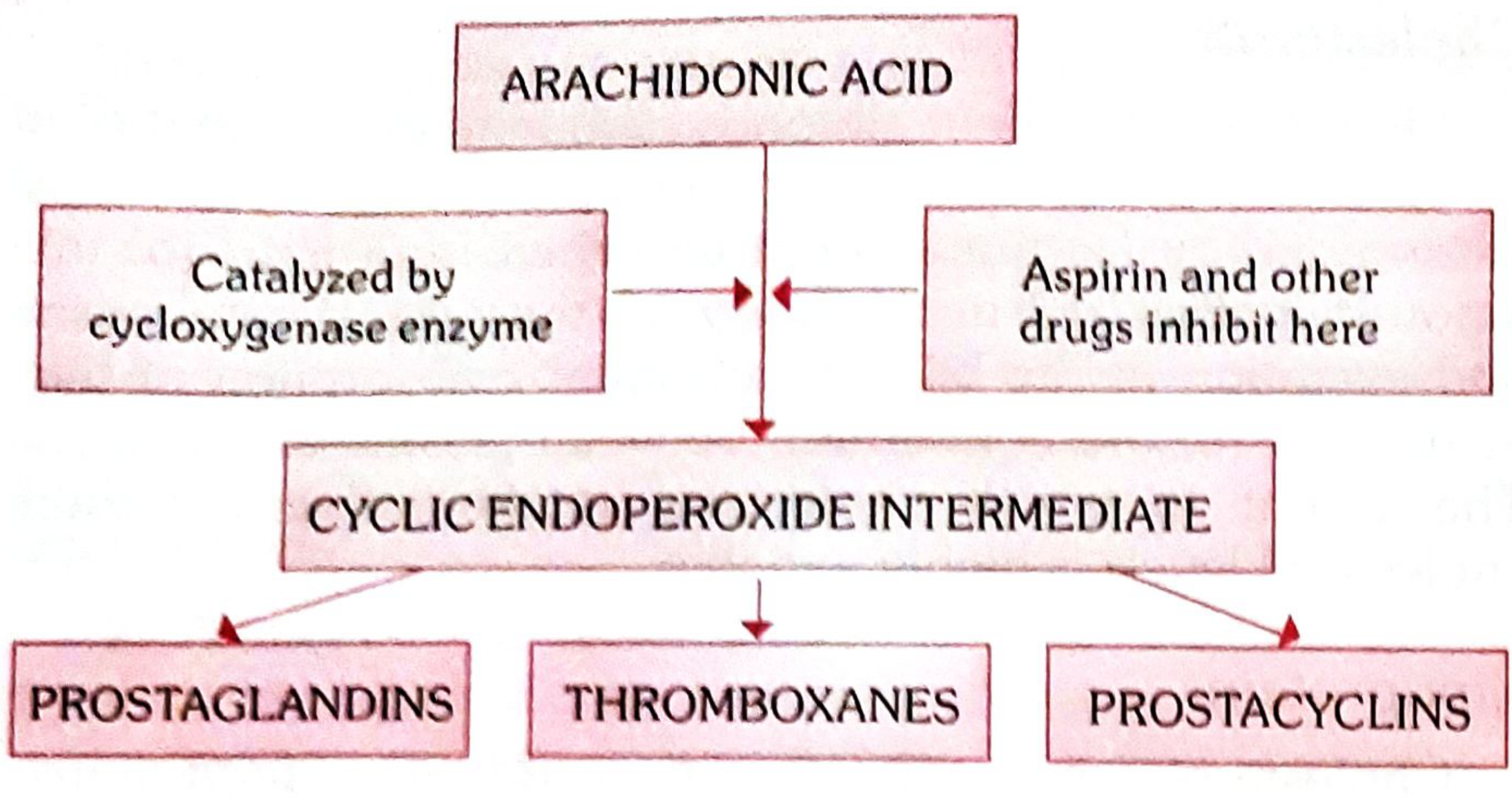
Prostacyclin - Thromboxane mechanism:
- Arachidonic acid metabolizes in vascular endothelium to form:
- Prostacyclin → inhibits platelet aggregation + relaxes coronary vessels (protective)
- Thromboxane → induces platelet aggregation + vasoconstriction (harmful)
- Linoleic acid (precursor of arachidonic acid) is the body's best protection against CHD
Dietary recommendations to prevent CHD:
- Fat calories: < 30% of total calories
- Replace saturated fats with PUFA
- Reduce dietary cholesterol
- Increase fibre intake
10. ICDS PROGRAMME (2 marks)
Full form: Integrated Child Development Services
Started: 1975, under the National Policy for Children
Objective: Integrated delivery of health, nutrition, and education services to young children and women.
Beneficiaries:
- Preschool children below 6 years
- Adolescent girls 11-18 years
- Pregnant and lactating mothers
Services provided (6 services):
- Supplementary nutrition
- Immunization
- Health check-up
- Referral services
- Nutrition and health education
- Non-formal pre-school education
Key nutrition components:
- Supplementary nutrition
- Vitamin A prophylaxis
- Iron and folic acid distribution
Structure:
- Anganwadi Worker (AWW): Village-level worker; covers population of 400-800 (mini anganwadi: 150-400)
- Mukhyasevika: Supervises Anganwadis
- CDPO (Child Development Project Officer): Field-level supervision
- Network of Mahila Mandals supports AWWs
Coverage: 7067 blocks (as per text); universal coverage goal across all states and UTs.
Nutritional supplement provided: 300 kcal and 10 g protein per child per day (through Balwadis and Anganwadis).
11. IRON REQUIREMENT IN PREGNANCY (2 marks)
Why higher iron requirement in pregnancy:
- Rapid expansion of red cell mass
- Foetal iron requirements
- Blood loss during delivery
- Iron absorption increases during pregnancy to meet demands
- But despite increased absorption, dietary supply is often insufficient
Iron requirements (ICMR RDA 2020):
- Pregnant women: 27 mg/day
- Non-pregnant women: 29 mg/day
- Lactating women: 21 mg/day
The problem:
- Iron absorption from habitual Indian diet <5% (bioavailability poor due to vegetarian diet)
- Women already enter pregnancy with low iron stores
- Close successive pregnancies deplete iron stores further
National Nutritional Anaemia Prophylaxis Programme (NNAPP):
Eligibility: Hb between 10-12 g/dl
Dosage for pregnant women:
- 100 mg elemental iron + 0.5 mg folic acid tablet - taken daily for 100 days (from second trimester)
- Administered by ANM/ASHA
For severe anaemia (Hb < 10 g/dl): High dose iron therapy or blood transfusion required.
Folate requirement: Also increases in pregnancy (megaloblastic anaemia risk); RDA = 500 μg/day in pregnancy (vs 300 μg normally).
Consequences of iron deficiency in pregnancy:
- Increased maternal mortality (19% maternal deaths in India attributed to anaemia)
- Abortions, premature births
- Postpartum haemorrhage
- Low birth weight
- Impaired neonatal iron stores
12. ENDEMIC FLUOROSIS (2 marks)
Cause: Drinking water containing excessive fluorine (>3-5 mg/L) leads to endemic fluorosis.
Endemic areas in India: Andhra Pradesh (Nellore, Nalgonda, Prakasam districts), Punjab, Haryana, Karnataka, Kerala, Tamil Nadu.
Three forms of Toxic Manifestation:
(a) Dental Fluorosis:
- Occurs when excess fluoride is ingested during tooth calcification (first 7 years of life)
- Characterized by "mottling" of dental enamel (reported at levels >1.5 mg/L)
- Early sign: Teeth lose shiny appearance → chalk-white patches develop
- Later: White patches turn yellow, then brown/black
- Severe cases: Loss of enamel gives corroded appearance
- Mottling best seen on upper jaw incisors
- Confined almost entirely to permanent teeth
(b) Skeletal Fluorosis:
- Associated with lifetime daily intake of 3.0-6.0 mg/L or more
- Heavy fluoride deposition in skeleton
- At >10 mg/L: Crippling fluorosis
- Leads to permanent disability
(c) Genu Valgum:
- Newer form - characterized by genu valgum (knock-knees) and osteoporosis of lower limbs
- Reported in Andhra Pradesh and Tamil Nadu
- Seen among people whose staple is sorghum (jowar) - sorghum promotes higher fluoride retention
Interventions:
- Change water source to one with lower fluoride (0.5-0.8 mg/L) - surface water has less fluoride than ground water
- Nalgonda technique for defluoridation: Developed by National Environmental Engineering Research Institute, Nagpur - involves addition of lime and alum, followed by flocculation, sedimentation, filtration
- Do NOT prescribe fluoride supplements in endemic areas
- Fluoride toothpaste not recommended for children under 6 years in endemic fluorosis areas
13. MID-DAY MEAL PROGRAMME (1 mark)
Also known as: School Lunch Programme
Started: 1961 throughout India
Objective: Attract more children for school admission and retain them to improve literacy; also improve nutritional status of school children.
Principles of formulating mid-day meals:
- Should be a supplement (not substitute) to the home diet
- Should supply at least 1/3 of total energy requirement and 1/2 of protein need
- Cost should be reasonably low
- Preparation should be simple (no complicated cooking)
- Locally available foods should be used as far as possible
- Food must appeal to the children's taste
Mid-Day Meal Scheme (MDMS), 1995:
- Cooked meal providing: 300 kcal and 8-12 g protein per child
- 250 feeding days per year
- Centrally sponsored scheme
Benefits:
- Improves school enrolment and attendance
- Reduces dropout rates
- Improves nutritional status
- Encourages social equity (children of all communities eat together)
14. EPIDEMIC DROPSY (1 mark)
Cause: Contamination of mustard oil with argemone oil (extracted from Argemone mexicana - prickly poppy plant).
History: Cause identified in 1926 by Sarkar. Toxic alkaloid sanguinarine isolated by Mukherji et al. (1941) from argemone oil.
Mechanism: Sanguinarine interferes with oxidation of pyruvic acid → pyruvate accumulates in blood.
Clinical features:
- Sudden, non-inflammatory, bilateral swelling of legs (dropsy)
- Often associated with diarrhoea
- Dyspnoea, cardiac failure
- Glaucoma (some patients)
- Occurs at all ages EXCEPT breastfed infants
- Mortality: 5-50%
Contamination pattern:
- Seeds of Argemone mexicana closely resemble mustard seeds
- Plant grows wild in India with prickly leaves and bright yellow flowers
- Crops harvested together in March when both mature simultaneously
- Also occurs through deliberate adulteration by unscrupulous dealers
Detection of argemone oil:
- Nitric acid test: Addition of nitric acid → brown to orange-red colour; positive when argemone oil >0.25%
- Paper chromatography: Most sensitive - detects argemone oil up to 0.0001% in all edible oils
Prevention:
- Remove argemone weeds from oil-seed crops at source
- Strict enforcement of the Prevention of Food Adulteration Act
15. LATHYRISM (1 mark)
Definition: A paralyzing disease of humans (neurolathyrism) caused by consuming the pulse Lathyrus sativus (Khesari dhal) in large quantities.
Toxin: Beta Oxalyl Amino Alanine (BOAA) - water-soluble, present in Lathyrus sativus seeds. To overcome the blood-brain barrier, the pulse must be eaten in large amounts over 2+ months.
The pulse: Known as "Khesari dhal" / Teora dhal / Lak dhal. Triangular shape, grey colour. Cheaper than other pulses - eaten mostly by poor agricultural labourers. Diets containing >30% of this dhal over 2-6 months cause neurolathyrism.
Endemic areas: Madhya Pradesh (Rewa, Satna districts), Uttar Pradesh, Bihar, Orissa. Also reported in Spain and Algeria.
Stages of the disease (mainly affects young men 15-45 years):
| Stage | Features |
|---|
| (a) Latent | Apparently healthy; abnormal gait on physical stress; complete remission if pulse withdrawn |
| (b) No-stick | Walks with short jerky steps without aid |
| (c) One-stick | Crossed gait, walks on toes, muscular stiffness |
| (d) Two-stick | Needs two sticks to walk |
| (e) Creeper | Cannot walk; crawls on all fours |
Interventions:
- Legislative: Banning cultivation and sale of Khesari dhal (banned in several states)
- Steeping/soaking method: Soak lathyrus in hot water and discard water - removes water-soluble BOAA toxin
- Vitamin C supplementation (protective role)
- Dietary diversification - not relying solely on Khesari dhal
- Socio-economic development - the ultimate solution (poverty drives consumption)
16. PROTEIN ENERGY MALNUTRITION (1 mark)
Definition: PEM is a major health and nutrition problem occurring particularly in young children in the first years of life, characterized by low birth weight, poor growth, and high mortality (30% of under-5 deaths in India).
Cause: Primarily "food gap" - inadequate intake of both protein AND energy, compounded by infections (diarrhoea, measles, respiratory infections, worms).
Two Clinical Forms:
| Feature | Kwashiorkor | Marasmus |
|---|
| Cause | Low protein/energy ratio diet | Inadequate intake of BOTH protein and energy |
| Oedema | Present (hallmark) | Absent/minimal |
| Wasting | Present | Severe cachexia |
| Liver | Enlarged + steatosis | Usually normal |
| Serum albumin | Low (hypoalbuminaemia) | Non-normal |
| Skin/hair | Depigmentation | Usually no change |
| Subcutaneous fat | May be retained | Severely depleted |
India - Nutritional marasmus is more common than kwashiorkor.
Early detection:
- Growth chart (first indicator = underweight-for-age)
- MUAC: >13.5 cm = normal; 12.5-13.5 cm = mild-moderate PEM; <12.5 cm = severe PEM
SAM criteria: WFH Z-score < -3SD OR MUAC <115 mm OR nutritional oedema. Children with SAM are 9 times more likely to die than well-nourished children.
Prevention (FAO/WHO framework):
- Health promotion - breastfeeding, weaning foods, nutrition education, family planning
- Specific protection - protein and energy-rich foods, immunization, food fortification
- Early diagnosis and treatment - growth monitoring, deworming, ORS for diarrhoea
- Rehabilitation - nutritional rehabilitation services, hospital treatment, follow-up
All answers sourced from Park's Textbook of Preventive and Social Medicine