
General virology along with Corona virus Rabies virus
Reading File
Searching across general virology, coronavirus, and rabies in parallel now.
search_medical_text
general virology virus structure classification replication
Harrison's Principles of Internal Medicine, Twenty First Edition
Page 5478
search_medical_text
coronavirus SARS-CoV-2 pathogenesis clinical features diagnosis treatment
Surviving Sepsis Campaign: Guidelines on the Management of Critically Ill Adults with Coronavirus Disease
Page 26
search_medical_image
coronavirus structure rabies virus diagram virology
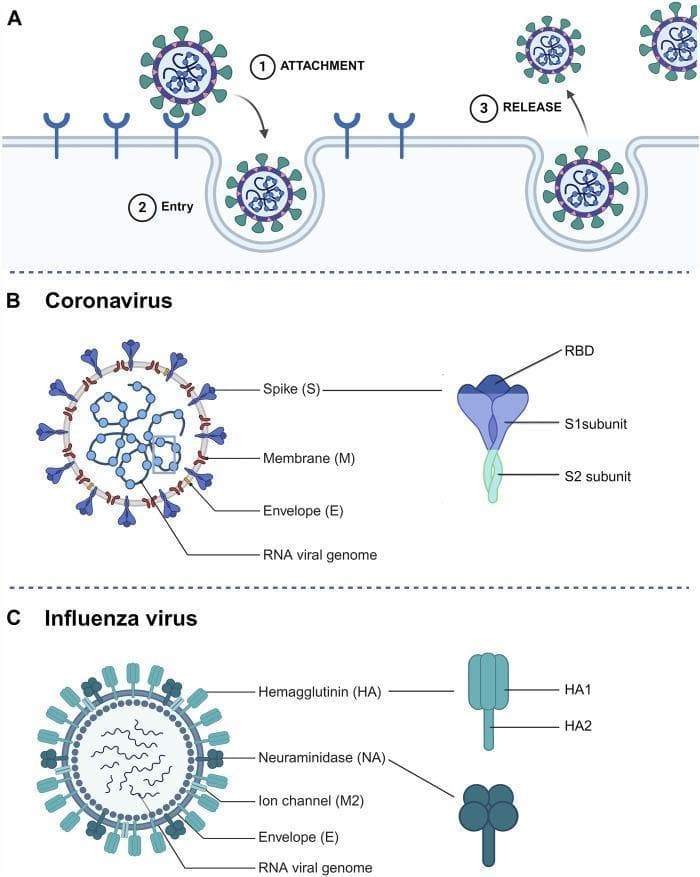
Hugging Face pmc clinical VQA raw
Page 0
GradeResponse
GradeResponse
GradeResponse
search_medical_text
rabies virus pathogenesis clinical features diagnosis treatment prevention
General Virology + Coronavirus + Rabies Virus (high-yield summary)
1) General virology
What is a virus?
An obligate intracellular infectious agent containing either DNA or RNA, surrounded by a protein capsid, sometimes with a lipid envelope.
An obligate intracellular infectious agent containing either DNA or RNA, surrounded by a protein capsid, sometimes with a lipid envelope.
Core classification principles
According to Harrison’s Principles of Internal Medicine (p. 5478), viruses are classified by:
According to Harrison’s Principles of Internal Medicine (p. 5478), viruses are classified by:
- Genome type: DNA vs RNA, single-stranded vs double-stranded, positive vs negative sense
- Capsid symmetry: icosahedral, helical, complex
- Envelope: present vs absent
- Replication strategy and tissue tropism
(Source: Harrison’s, p. 5478)
Basic replication cycle
- Attachment to host receptor
- Entry (fusion/endocytosis/injection)
- Uncoating
- Genome replication + protein synthesis
- Assembly
- Release (lysis or budding)
High-yield concepts
- Enveloped viruses: fragile in environment, spread via droplets/fluids, inactivated by detergents
- Non-enveloped viruses: more stable on surfaces, often fecal-oral spread
- Viral diseases can result from direct cytopathic effect and/or host immune injury
2) Coronavirus (focus: SARS-CoV-2, plus family basics)
Virology
- Enveloped, positive-sense single-stranded RNA virus
- Structural proteins include:
- S (spike): receptor binding and cell entry
- M (membrane)
- E (envelope)
- N (nucleocapsid)
- Spike S1/S2 regions are key for receptor interaction and fusion
Image (structure/lifecycle context):
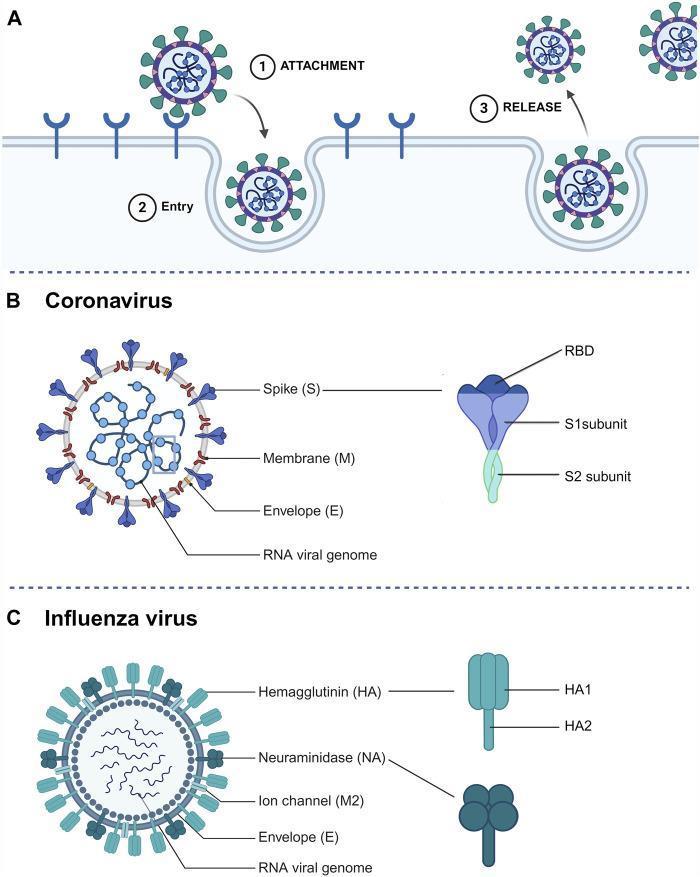
(Source image dataset: Hugging Face PMC clinical VQA raw)
(Source image dataset: Hugging Face PMC clinical VQA raw)
Clinical disease (COVID-19)
- Range: asymptomatic to critical illness
- Common features: fever, cough, dyspnea, fatigue, myalgia, anosmia (variant-dependent)
- Severe disease: viral pneumonia, hypoxemic respiratory failure, ARDS, thromboinflammatory complications
Diagnosis
- Nucleic acid amplification tests (RT-PCR/NAAT) are central in diagnosis
(Referenced in Surviving Sepsis Campaign COVID guideline references, p. 26)
Management (severity-based)
- Mild: supportive care, risk stratification
- Moderate/severe: oxygen strategy, anti-inflammatory and antiviral treatment per current protocols
- Critical: ICU-level organ support, thrombosis prevention, evidence-based sepsis/ARDS care pathways
(Sepsis-COVID guideline reference list shown on p. 26)
3) Rabies virus
Virology
- Family: Rhabdoviridae, genus Lyssavirus
- Bullet-shaped, enveloped, negative-sense ssRNA virus
Pathogenesis
- Inoculation via saliva (animal bite/scratch, rarely mucosal exposure)
- Local replication in muscle
- Entry into peripheral nerves (nicotinic acetylcholine receptor and others implicated)
- Retrograde axonal transport to CNS
- Encephalitis, then centrifugal spread (including salivary glands)
Clinical phases
- Incubation: usually 1-3 months (variable)
- Prodrome: fever, malaise, paresthesia/pain at bite site (classic clue)
- Acute neurologic phase:
- Furious rabies: agitation, hydrophobia, aerophobia, autonomic instability
- Paralytic rabies: ascending weakness/flaccid paralysis
- Coma and death if untreated before symptom onset
Diagnosis
- Clinical suspicion + exposure history is critical
- Confirmatory tests may include RT-PCR from saliva, skin biopsy immunofluorescence, CSF/serology (context dependent)
Treatment
- Once symptomatic, disease is almost always fatal; care is largely supportive
Prevention (key exam and clinical point)
- Immediate wound washing (soap/water, copious irrigation)
- Post-exposure prophylaxis (PEP) for unvaccinated:
- Rabies vaccine series
- Rabies immune globulin infiltrated around wound + remaining dose IM
- Previously vaccinated: vaccine boosters only (no RIG)
- Pre-exposure prophylaxis for high-risk groups (veterinarians, lab workers, certain travelers)
Quick comparison table
| Feature | Coronavirus (SARS-CoV-2) | Rabies virus |
|---|---|---|
| Genome | +ssRNA | -ssRNA |
| Envelope | Present | Present |
| Main transmission | Respiratory route | Animal saliva via bite/exposure |
| Primary target | Respiratory epithelium/systemic effects | Nervous system (neurotropic) |
| Hallmark severe disease | Viral pneumonia/ARDS | Fatal encephalitis |
| Prevention | Vaccination, public health measures | Wound care + PEP + vaccination |
If you want, I can convert this into a 1-page exam note (MBBS-style) with mnemonics and likely viva questions.
This is a shared conversation. Sign in to Orris to start your own chat.