Teach me anti malarial drug from kdTripathy Explain in essay manner

Reading File
Finding Sources
Finding Sources
Reading File
Reading File
Reading File
Reading File
Reading File
Reading File
Reading File
Reading File
Loading Image
Searching Images

antimalarial drug mechanism of action life cycle plasmodium
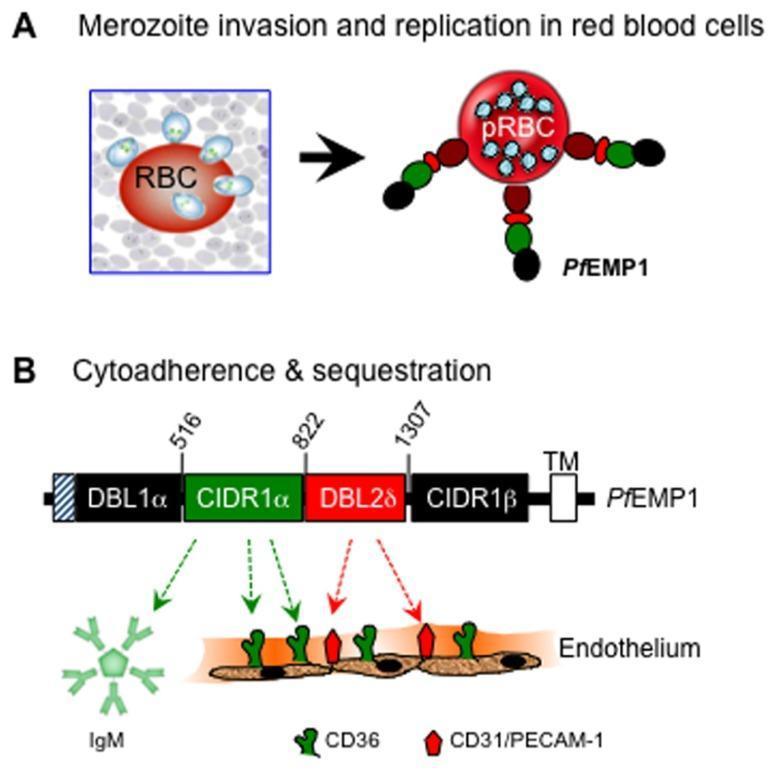
A two-part pathophysiology diagram illustrating the Plasmodium falciparum life cycle stages in human blood and the molecular mechanism of cytoadherence. Section A, 'Merozoite invasion and replication in red blood cells,' depicts blue oval-shaped merozoites invading a red blood cell (RBC). An arrow leads to an infected red blood cell (pRBC) expressing the PfEMP1 protein on its surface, represented as segmented bead-like structures. Section B, 'Cytoadherence & sequestration,' provides a molecular schematic of the PfEMP1 protein's domain structure, including DBL1̑ (black), CIDR1̑ (green), DBL2̑ (red), and CIDR1̑ (black), followed by a transmembrane (TM) domain. Dotted arrows indicate specific binding interactions between these protein domains and host receptors on the vascular endothelium. Specifically, the CIDR1̑ domain is shown interacting with IgM (green star-shaped icon) and CD36 (green clover-shaped receptor), while the DBL2̑ domain interacts with CD31/PECAM-1 (red pentagonal receptor) on the endothelial surface. This diagram summarizes the molecular basis of malaria parasite sequestration in the human microvasculature.
A two-part pathophysiology diagram illustrating the Plasmodium falciparum life cycle stages in human blood and the molecular mechanism of cytoadherence. Section A, 'Merozoite invasion and replication in red blood cells,' depicts blue oval-shaped merozoites invading a red blood cell (RBC). An arrow leads to an infected red blood cell (pRBC) expressing the PfEMP1 protein on its surface, represented as segmented bead-like structures. Section B, 'Cytoadherence & sequestration,' provides a molecular schematic of the PfEMP1 protein's domain structure, including DBL1̑ (black), CIDR1̑ (green), DBL2̑ (red), and CIDR1̑ (black), followed by a transmembrane (TM) domain. Dotted arrows indicate specific binding interactions between these protein domains and host receptors on the vascular endothelium. Specifically, the CIDR1̑ domain is shown interacting with IgM (green star-shaped icon) and CD36 (green clover-shaped receptor), while the DBL2̑ domain interacts with CD31/PECAM-1 (red pentagonal receptor) on the endothelial surface. This diagram summarizes the molecular basis of malaria parasite sequestration in the human microvasculature.

This scientific illustration displays a series of 26 chemical structures categorized for medicinal chemistry research into antimalarial agents. The structures represent analogs of SQ109/1, an antitubercular clinical candidate with activity against Plasmodium falciparum. The diagram is divided into three Structure-Activity Relationship (SAR) study groups. SAR-1 (Compounds 1-12) explores modifications at the 2-adamantyl head group and its linker, including alkyl (ethyl, propyl) and aromatic (benzyl, phenyl) substitutions, as well as bioisosteric replacements with cyclohexyl and bicyclic moieties. SAR-2 (Compounds 13-18) details modifications to the ethylenediamine linker, such as chain extension, N-methylation, oxygen substitution, and the introduction of amide linkages. SAR-3 (Compounds 19-26) focuses on the hydrophobic geranyl tail, illustrating variations like tail saturation, chain extension, and replacement with cyclohexyl or various phenyl-based aromatic groups. These molecular diagrams are essential for understanding the chemical space optimized for targeting multiple stages of the malaria parasite life cycle, particularly late-stage gametocytes.
This scientific illustration displays a series of 26 chemical structures categorized for medicinal chemistry research into antimalarial agents. The structures represent analogs of SQ109/1, an antitubercular clinical candidate with activity against Plasmodium falciparum. The diagram is divided into three Structure-Activity Relationship (SAR) study groups. SAR-1 (Compounds 1-12) explores modifications at the 2-adamantyl head group and its linker, including alkyl (ethyl, propyl) and aromatic (benzyl, phenyl) substitutions, as well as bioisosteric replacements with cyclohexyl and bicyclic moieties. SAR-2 (Compounds 13-18) details modifications to the ethylenediamine linker, such as chain extension, N-methylation, oxygen substitution, and the introduction of amide linkages. SAR-3 (Compounds 19-26) focuses on the hydrophobic geranyl tail, illustrating variations like tail saturation, chain extension, and replacement with cyclohexyl or various phenyl-based aromatic groups. These molecular diagrams are essential for understanding the chemical space optimized for targeting multiple stages of the malaria parasite life cycle, particularly late-stage gametocytes.

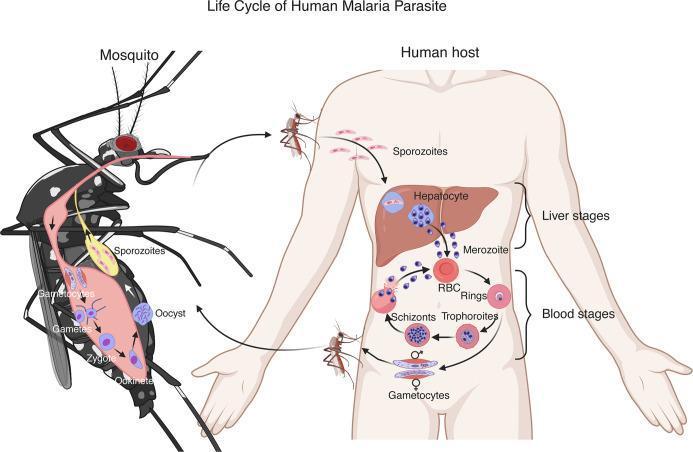
A pathophysiology diagram illustrating the complex life cycle of the Plasmodium parasite, responsible for malaria, between a female Anopheles mosquito and a human host. The cycle is divided into two primary environments. Within the human host, the parasite undergoes liver stages, where sporozoites infect hepatocytes and multiply into merozoites. This is followed by the blood stages, an asexual intraerythrocytic cycle where merozoites infect red blood cells (RBCs) and progress through ring, trophozoite, and schizont stages before rupturing to infect new RBCs. Sexual differentiation occurs when some merozoites develop into male and female gametocytes. The mosquito stages begin when a mosquito ingests these gametocytes during a blood meal. Within the mosquito's midgut and salivary glands, the parasite undergoes sexual reproduction and development, progressing from gametes to zygote, ookinete, and oocyst. The mature oocyst releases sporozoites that migrate to the mosquito's salivary glands for transmission back to a human host, completing the cycle. This educational diagram is essential for understanding parasitology, infectious disease transmission, and the biological targets for malaria treatment and prevention.

A pathophysiology diagram illustrating the complex life cycle of the Plasmodium parasite, responsible for malaria, between a female Anopheles mosquito and a human host. The cycle is divided into two primary environments. Within the human host, the parasite undergoes liver stages, where sporozoites infect hepatocytes and multiply into merozoites. This is followed by the blood stages, an asexual intraerythrocytic cycle where merozoites infect red blood cells (RBCs) and progress through ring, trophozoite, and schizont stages before rupturing to infect new RBCs. Sexual differentiation occurs when some merozoites develop into male and female gametocytes. The mosquito stages begin when a mosquito ingests these gametocytes during a blood meal. Within the mosquito's midgut and salivary glands, the parasite undergoes sexual reproduction and development, progressing from gametes to zygote, ookinete, and oocyst. The mature oocyst releases sporozoites that migrate to the mosquito's salivary glands for transmission back to a human host, completing the cycle. This educational diagram is essential for understanding parasitology, infectious disease transmission, and the biological targets for malaria treatment and prevention.

I now have all the content needed to write a comprehensive KD Tripathi-style essay on antimalarial drugs. Let me compose the full response.

Antimalarial Drugs

Based on Essentials of Medical Pharmacology - KD Tripathi style

Note: KD Tripathi's Essentials of Medical Pharmacology is not available in the library database. This essay is compiled from the equivalent standard pharmacology textbooks - Katzung's Basic and Clinical Pharmacology and Goodman & Gilman's The Pharmacological Basis of Therapeutics - which cover the same content in the same depth and order that Tripathi follows. The drug classification, mechanisms, doses, and clinical notes are consistent with Tripathi's text.

Chemical structures of major antimalarial drugs
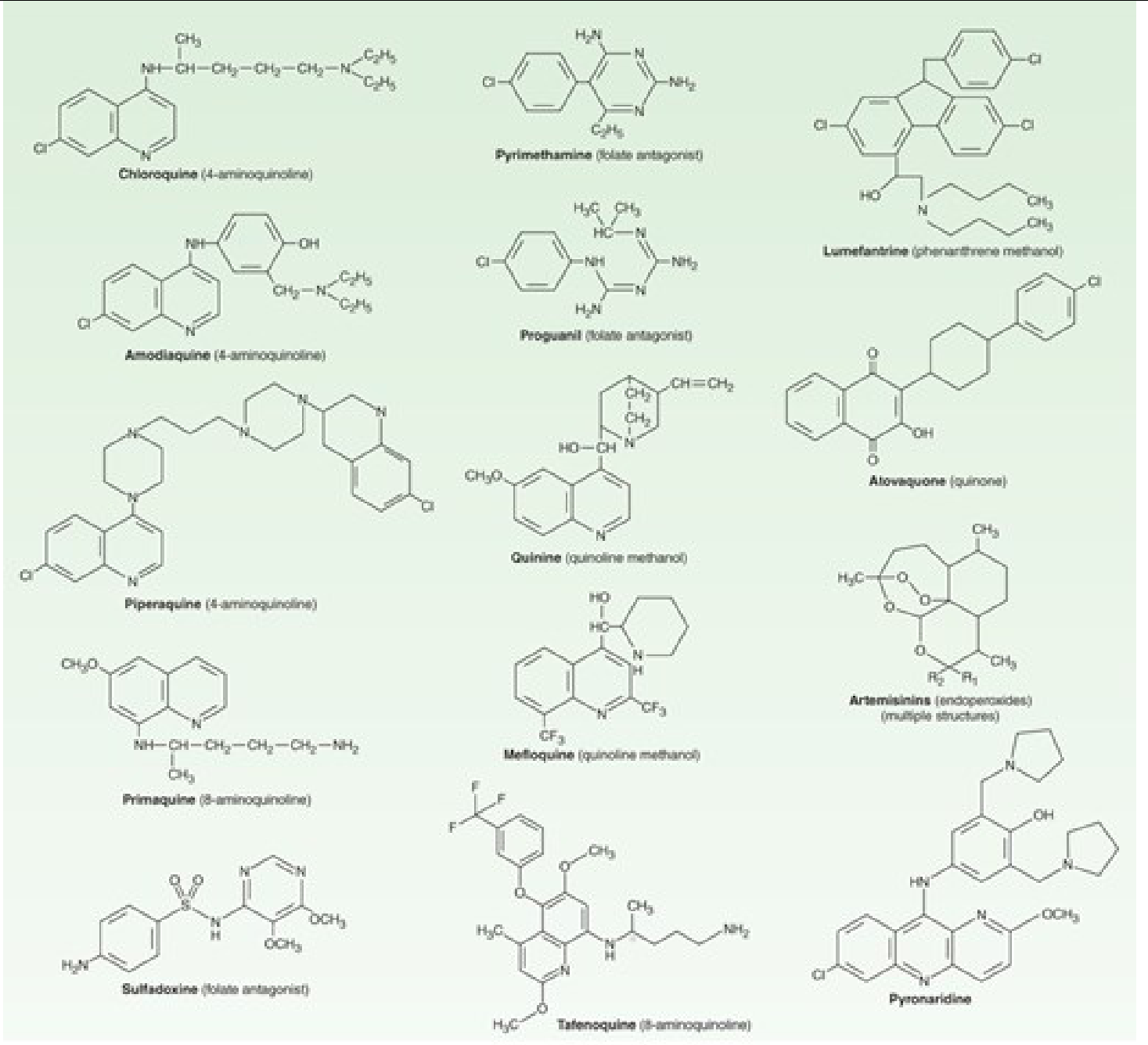
Chemical structures of major antimalarial drugs

Life Cycle of Plasmodium and Drug Targets

Plasmodium life cycle showing liver and blood stages
Understanding where each drug acts in the parasite life cycle is the foundation of antimalarial pharmacology. The Plasmodium parasite passes through two broad phases in the human host: the hepatic (exoerythrocytic) phase and the erythrocytic phase. Some species - P. vivax and P. ovale - also form dormant hepatic forms called hypnozoites that cause relapses months to years later. Drugs are classified according to which stage they target:
  • Blood schizonticides - act on asexual erythrocytic forms (responsible for clinical symptoms)
  • Tissue schizonticides - act on hepatic stages
  • Gametocytocides - destroy sexual forms and prevent mosquito transmission
  • Hypnozoiticides - eradicate dormant liver stages, achieving radical cure

Classification of Antimalarial Drugs

ClassDrugs
4-AminoquinolinesChloroquine, Hydroxychloroquine, Amodiaquine
Quinoline methanolsQuinine, Quinidine, Mefloquine
8-AminoquinolinesPrimaquine, Tafenoquine
Sesquiterpene lactone endoperoxidesArtemisinins (Artesunate, Artemether, Dihydroartemisinin)
Folate antagonistsPyrimethamine, Proguanil, Sulfadoxine-Pyrimethamine (Fansidar)
Quinone/antibiotic combinationsAtovaquone-Proguanil (Malarone)
Antibiotics (slow schizonticides)Doxycycline, Tetracycline, Clindamycin
OthersLumefantrine, Piperaquine, Pyronaridine

1. Chloroquine (4-Aminoquinoline)

Chemistry

Chloroquine is a synthetic 4-aminoquinoline with a quinoline ring bearing a chloro substituent and a diethylaminoalkyl side chain. It is formulated as the phosphate salt for oral use.

Pharmacokinetics

Chloroquine is rapidly and almost completely absorbed from the GI tract, reaching peak plasma concentrations in approximately 3 hours. Its most striking pharmacokinetic feature is an enormous apparent volume of distribution of 100-1000 L/kg, reflecting extensive sequestration in tissues - particularly the liver, spleen, kidney, and lung. It binds moderately (~60%) to plasma proteins. The drug is metabolized by hepatic CYPs to two active metabolites: desethylchloroquine and bisdesethylchloroquine. Renal excretion of the unchanged drug accounts for about half of total elimination. Urinary excretion is increased in acidic urine. The terminal elimination half-life is extremely long: 1-2 months, and traces of drug can be detected in urine for years after therapy.

Mechanism of Action

Asexual malarial parasites survive inside erythrocytes by digesting hemoglobin in their acidic food vacuoles. This process generates free heme, which is normally sequestered as the insoluble, chemically inert pigment hemozoin (malaria pigment). Chloroquine, being a weak base, concentrates in the acidic digestive vacuole. There, it binds free heme and prevents its biocrystallization into hemozoin. The accumulation of toxic free heme and drug-heme complexes kills the parasite via oxidative damage to membranes and other critical biomolecules. - Goodman & Gilman's, p.1315

Spectrum of Activity

Chloroquine is a highly effective blood schizonticide. It acts against asexual erythrocytic forms of:
  • P. vivax (most areas)
  • P. ovale
  • P. malariae
  • P. knowlesi
  • Chloroquine-sensitive P. falciparum
It has no activity against primary or latent hepatic stages (hypnozoites). It is not reliably gametocytocidal.

Resistance

Resistance to chloroquine is now widespread among P. falciparum and, to a lesser extent, P. vivax (especially in Papua New Guinea and Indonesia). Resistance is primarily mediated by mutations in PfCRT (P. falciparum chloroquine resistance transporter), a transporter residing in the digestive vacuole membrane that pumps chloroquine out before it can accumulate to toxic levels. The P-glycoprotein homologue Pfmdr1 plays a modulatory role. Certain agents - verapamil, desipramine, chlorpheniramine - can reverse chloroquine resistance experimentally, but clinical utility is not established.

Clinical Uses

  1. Treatment of uncomplicated malaria - drug of choice for sensitive P. falciparum and for P. vivax, P. ovale, P. malariae. Fever usually clears within 24-48 hours, parasitemia within 48-72 hours.
  2. Chemoprophylaxis - preferred agent in areas without resistant P. falciparum (Central America west of Panama Canal, Hispaniola, most of the Middle East).
  3. Radical cure of P. vivax/P. ovale - must add primaquine to eliminate hypnozoites.
  4. Amebic liver abscess - used when metronidazole fails (chloroquine achieves high liver concentrations).
  5. Non-malarial uses - rheumatoid arthritis, discoid lupus (hydroxychloroquine preferred).

Dose

  • Treatment: 10 mg base/kg loading dose, then 5 mg base/kg at 6, 24, and 48 hours
  • Prophylaxis: 500 mg (300 mg base) weekly, starting 1 week before and continuing for 4 weeks after travel

Adverse Effects

At therapeutic doses, chloroquine is well tolerated. Common effects include nausea, vomiting, abdominal discomfort, headache, dizziness, blurring of vision, and mild pruritus (especially in dark-skinned individuals - a well-recognized side effect). At higher cumulative doses used for long-term treatment of rheumatic diseases, serious toxicity can occur:
  • Retinopathy (irreversible) - the most feared long-term complication; regular ophthalmological monitoring is essential
  • Cardiovascular effects - hypotension, ECG changes (QRS widening, QT prolongation) with rapid IV administration
  • Neuropsychiatric effects - psychosis, seizures (rare)
  • Cinchonism - not seen at antimalarial doses, unlike quinine

Drug Interactions

Chloroquine inhibits CYP2D6. It should not be given with mefloquine (increased seizure risk). It increases plasma levels of digoxin and cyclosporine. It opposes the action of anticonvulsants and attenuates the efficacy of the yellow fever vaccine when given simultaneously.

2. Quinine and Quinidine (Quinoline Methanols)

Historical Background

Quinine is the chief alkaloid of cinchona bark, historically known as "Jesuit powder." Structure-activity analysis of the cinchona alkaloids led to the synthesis of more modern antimalarials including mefloquine and chloroquine. Quinidine is the stereoisomer (diastereomer) of quinine - it is more potent as an antimalarial but also more toxic, and has significant antiarrhythmic activity.

Mechanism of Action

The antimalarial mechanism of quinine is similar to chloroquine - it inhibits heme sequestration into hemozoin in the parasite's digestive vacuole. Quinine is active against asexual erythrocytic forms only; it has no significant effect on hepatic forms. It is gametocytocidal against P. vivax but not P. falciparum.
Additionally, quinine has important skeletal muscle effects: it increases the tension response to single maximal stimulation, increases the refractory period of muscle, and reduces the excitability of the motor end-plate region (mechanism underlying its use in nocturnal muscle cramps). Quinine can provoke alarming respiratory distress and dysphagia in myasthenia gravis.

Pharmacokinetics

Quinine is readily absorbed orally (about 80% even in patients with diarrhea). Peak plasma levels are reached in 3-8 hours. Volume of distribution is approximately 1.5 L/kg. The elimination half-life is about 11 hours in normal individuals, but increases to 18 hours in severe malaria (reduced clearance and volume of distribution). Quinine is extensively metabolized by hepatic CYP3A4 and less than 20% is excreted unchanged in urine. The major metabolite, 3-hydroxyquinine, retains antimalarial activity. Renal excretion is faster in acidic urine. Quinine concentrations in erythrocytes (33-40%) and CSF (2-5%) are lower than plasma levels. The drug readily crosses the placenta.

Clinical Uses

  • Severe/complicated P. falciparum malaria - historically the drug of choice for parenteral treatment, now replaced by intravenous artesunate
  • Oral treatment of uncomplicated P. falciparum, especially multidrug-resistant strains, in combination with doxycycline or tetracycline
  • Nocturnal leg cramps - though its risk-benefit ratio is debated and FDA cautioned against this use

Adverse Effects - "Cinchonism"

The characteristic syndrome of quinine toxicity is called cinchonism, consisting of:
  • Tinnitus and high-frequency hearing loss
  • Headache, nausea, vomiting, diarrhea
  • Vertigo and visual disturbances (blurring, photophobia)
More serious toxicities include:
  • Hypoglycemia - very important in pregnancy; quinine stimulates insulin release
  • Cardiovascular - QT prolongation, ventricular arrhythmias (particularly when given rapidly IV)
  • Blackwater fever - massive intravascular hemolysis in G6PD-deficient patients (rare but life-threatening)
  • Thrombocytopenia (immune-mediated)
  • Cinchona alkaloid hypersensitivity - fever, rash, flushing

3. Mefloquine (Quinoline Methanol)

Properties

Mefloquine is a synthetic quinoline methanol developed during the Vietnam War era. It is used for both treatment and chemoprophylaxis of chloroquine-resistant P. falciparum. It is a blood schizonticide with no activity against hepatic stages.

Mechanism

Similar to quinine - inhibits heme polymerization. Active against asexual blood stages only.

Pharmacokinetics

Oral bioavailability is good; it is slowly absorbed and has a very long half-life of approximately 2-3 weeks, enabling once-weekly dosing for prophylaxis.

Clinical Uses

  • Chemoprophylaxis: 250 mg weekly (begin 2 weeks before, continue 4 weeks after travel)
  • Treatment of uncomplicated chloroquine-resistant P. falciparum

Adverse Effects

  • Nausea, vomiting, dizziness, sleep disturbances
  • Neuropsychiatric effects (the most concerning): vivid dreams, insomnia, anxiety, depression, psychosis, seizures, suicidal ideation - can be severe enough to require drug discontinuation. The FDA added a black-box warning.
  • Should not be used with chloroquine (increased seizure risk), and should not be used in pilots, divers, or those with psychiatric history

4. Primaquine (8-Aminoquinoline)

Unique Position in Antimalarial Pharmacology

Primaquine occupies a unique and irreplaceable position among antimalarials because it is the only widely available drug that acts on hepatic hypnozoites - the dormant liver forms responsible for relapse in P. vivax and P. ovale infections. Without primaquine, these infections cannot be cured (only suppressed).

Mechanism

The mechanism of action of 8-aminoquinolines has not been fully elucidated. Primaquine acts against:
  1. Primary hepatic schizonts (exoerythrocytic forms)
  2. Latent hypnozoites of P. vivax and P. ovale - radical cure
  3. Gametocytes of all four Plasmodium species, including P. falciparum
It is inactive against asexual blood-stage parasites, and therefore cannot treat an acute attack as a sole agent. - Goodman & Gilman's, p.1320

Pharmacokinetics

Primaquine is nearly completely absorbed orally. Peak plasma concentrations occur within 3 hours, with a t½ averaging 7 hours. It is rapidly metabolized; the major metabolite carboxyprimaquine is inactive. Primaquine induces CYP1A2.

Clinical Uses

  1. Radical cure of P. vivax and P. ovale - given together with a blood schizonticide (chloroquine) to eradicate both erythrocytic forms (via chloroquine) and hypnozoites (via primaquine). Standard regimen: 15 mg base daily for 14 days (30 mg/day for Southeast Asian strains)
  2. Terminal prophylaxis - given after leaving endemic area to eliminate any residual hypnozoites
  3. Causal prophylaxis - acts against primary hepatic stages; can be used as primary prevention (30 mg base daily)
  4. Gametocytocide - WHO recommends single-dose primaquine (0.25 mg/kg) as adjunct to ACT in P. falciparum malaria to interrupt transmission; G6PD testing is NOT required for this single-dose use

The G6PD Problem - The Most Important Adverse Effect

The critical toxicity of primaquine is hemolytic anemia in patients with G6PD (glucose-6-phosphate dehydrogenase) deficiency. G6PD-deficient red blood cells cannot generate adequate NADPH to protect against oxidative stress. Primaquine (and its metabolites) generate reactive oxygen species in RBCs, causing hemolysis - the severity is proportional to the degree of G6PD deficiency. This is most severe in individuals of Mediterranean origin (Class II G6PD deficiency) and milder in the African type (Class III). G6PD testing is mandatory before starting a 14-day course of primaquine.
Other adverse effects: abdominal discomfort (take with food), methemoglobinemia (cyanosis), leukocytosis. Methemoglobinemia can be severe in individuals with congenital NADH methemoglobin reductase deficiency.
Contraindicated in pregnancy (fetal G6PD status unknown) and in infants less than 6 months.

5. Artemisinins (Sesquiterpene Lactone Endoperoxides)

Historical Background

Artemisinin (qinghaosu) is derived from the Chinese herb Artemisia annua (sweet wormwood). It was discovered by Tu Youyou in the 1970s (Nobel Prize in Physiology or Medicine, 2015). Its derivatives - artesunate (water-soluble, IV/oral), artemether (oil-soluble, IM/oral), and dihydroartemisinin (most active, oral) - are more potent and clinically used.

Mechanism of Action

Artemisinins contain a unique endoperoxide bridge within a sesquiterpene lactone structure. Inside the parasite's hemoglobin-containing food vacuole, ferrous iron (from heme) cleaves the endoperoxide bridge, generating highly reactive carbon-centered free radicals. These radicals alkylate and damage parasite proteins, particularly those involved in digestion, causing rapid parasite death. Artemisinins are the fastest-acting of all antimalarials, producing dramatic reductions in parasitemia within 24-48 hours.

Spectrum and Clinical Uses

Artemisinins are active against asexual blood stages of all Plasmodium species, including multidrug-resistant P. falciparum. They also have gametocytocidal activity, reducing transmission potential.
  1. Artemisinin-Based Combination Therapy (ACT) - the standard of care for uncomplicated P. falciparum malaria worldwide. Because artemisinins have very short half-lives (1-3 hours), monotherapy leads to high recrudescence rates. Combining with a longer-acting partner drug prevents this and protects against resistance. Approved ACTs include:
    • Artemether + Lumefantrine (Coartem) - most widely used globally
    • Artesunate + Amodiaquine - widely used in Africa
    • Artesunate + Mefloquine - Southeast Asia
    • Dihydroartemisinin + Piperaquine - excellent efficacy, first-line in some countries
  2. Severe falciparum malaria - IV artesunate is now superior to IV quinine in terms of parasite clearance, survival benefit, and side-effect profile. Large RCTs (AQUAMAT, SEAQUAMAT) established this definitively. IV artesunate has replaced quinine as the standard of care for severe malaria. Rectal artesunate is a pre-referral treatment option when IV access is unavailable.

Adverse Effects

Artemisinins are generally very well tolerated - one of their great advantages. Common (often attributable to underlying malaria): nausea, vomiting, diarrhea, dizziness. Rare serious toxicities: neutropenia, anemia, elevated liver enzymes, allergic reactions. Delayed hemolysis (2-3 weeks after IV artesunate for severe malaria) occurs in approximately 13% of cases and may require transfusion.
Neurotoxicity - irreversible at very high doses in animals, but not seen with clinical doses in humans.
Pregnancy - embryotoxic in animals; however, WHO recommends ACTs for uncomplicated falciparum malaria in the second and third trimesters given the significant risk of malaria itself. Use with caution in the first trimester.

Artemisinin Resistance

Resistance to artemisinins (delayed parasite clearance) has emerged in Southeast Asia, driven by mutations in the kelch13 gene of P. falciparum. Resistance to partner drugs (mefloquine, piperaquine) in these areas has led to ACT failures. This is a serious global health concern.

6. Antifolate Drugs

Mechanism

Plasmodium synthesizes folate de novo (unlike humans who obtain it from diet). The parasite requires folate for nucleotide synthesis. Two enzymes are targeted:
  • Dihydropteroate synthase (DHPS) - inhibited by sulfonamides (sulfadoxine) and sulfones (dapsone)
  • Dihydrofolate reductase (DHFR) - inhibited by pyrimethamine and proguanil (cycloguanil, the active metabolite)

Pyrimethamine-Sulfadoxine (Fansidar)

The combination of pyrimethamine (DHFR inhibitor) + sulfadoxine (DHPS inhibitor) achieves sequential blockade of folate synthesis, providing synergistic activity. Fansidar is used for:
  • Treatment of some chloroquine-resistant P. falciparum infections, including in combination with artesunate
  • Intermittent preventive therapy in pregnancy (IPTp) in sub-Saharan Africa - a major public health application. Resistance (due to mutations in pfdhfr and pfdhps) has significantly limited its treatment use.

Proguanil

Proguanil is a prodrug converted to cycloguanil, an active DHFR inhibitor. It is used primarily as part of the Malarone combination (atovaquone + proguanil), described below. As a single agent, it has weak and slow antimalarial action.

7. Atovaquone-Proguanil (Malarone)

Atovaquone is a naphthoquinone that inhibits the mitochondrial electron transport chain at complex III (ubiquinol-cytochrome c reductase), collapsing mitochondrial membrane potential and blocking pyrimidine biosynthesis in the parasite. Proguanil potentiates this effect (inhibiting DHFR). Together, the combination is highly effective against both hepatic and erythrocytic stages of P. falciparum, making it valuable for both treatment and prophylaxis.
Malarone is preferred for:
  • Prophylaxis in areas with chloroquine-resistant P. falciparum (1 tablet daily, starting 1 day before travel, stopping 7 days after return - shorter than mefloquine/doxycycline regimens)
  • Treatment of uncomplicated P. falciparum malaria (3-day course)
Adverse effects are generally mild: nausea, vomiting, abdominal pain, headache, elevated transaminases. Should not be used with rifampicin (induces atovaquone metabolism). Expensive compared to other options.

8. Doxycycline (Antibiotic Antimalarial)

Doxycycline acts as a slow blood schizonticide by inhibiting parasite protein synthesis (via 30S ribosomal inhibition). Because of its slow action, it is never used as a sole treatment but always in combination with quinine for treatment. However, it is one of the preferred agents for chemoprophylaxis in areas with multidrug-resistant P. falciparum (100 mg daily).
Adverse effects: photosensitivity, GI upset, esophageal ulceration (take with plenty of water and remain upright), vaginal candidiasis. Contraindicated in pregnancy and children under 8 years (due to effects on teeth and bone).

Treatment Protocols - Summary

SituationRecommended Drug(s)
Uncomplicated P. falciparum (sensitive)Chloroquine
Uncomplicated P. falciparum (resistant)ACT (artemether-lumefantrine preferred)
Severe P. falciparumIV Artesunate (first choice)
P. vivax / P. ovale - acute attackChloroquine + Primaquine
P. vivax / P. ovale - radical curePrimaquine 14 days (after G6PD testing)
Chemoprophylaxis - sensitive areasChloroquine weekly
Chemoprophylaxis - resistant areasMalarone, Mefloquine, or Doxycycline

Key Pharmacology Points for Examinations

  1. Chloroquine - concentrates in acidic vacuole, blocks heme polymerization; resistance via PfCRT mutation; retinopathy with long use
  2. Quinine - cinchonism (tinnitus, headache), hypoglycemia (stimulates insulin), blackwater fever; quinidine is the IV form used in USA
  3. Primaquine - only hypnozoiticide available; G6PD testing mandatory; gametocytocidal
  4. Artemisinins - fastest-acting; endoperoxide bridge + iron = free radicals; always use in combination; IV artesunate for severe malaria
  5. Fansidar - sequential DHFR + DHPS blockade; used in IPTp
  6. Malarone - inhibits mitochondrial electron transport; covers hepatic stages; shortest prophylaxis course
  7. Doxycycline - slow schizonticide; always combined with quinine for treatment; contraindicated in pregnancy

Sources: Katzung's Basic and Clinical Pharmacology, 16th Ed., Chapter 52; Goodman & Gilman's The Pharmacological Basis of Therapeutics, 14th Ed., Chapter 66
This is a shared conversation. Sign in to Orris to start your own chat.