
Give me the epidemiology for brief psychotic disorder
"brief psychotic disorder" AND epidemiology
Epidemiology of Brief Psychotic Disorder
Prevalence and Incidence
- In a sample of over 1,000 patients with nonorganic psychotic or major affective disorder hospitalized in Germany, individuals with brief psychotic disorder comprised only 2.5% of cases.
- In the Suffolk County, New York first-admission cohort, the proportion was similarly low.
- A first-episode psychosis study from Nottingham, England estimated the incidence of diagnostically stable acute and transient psychotic disorder (which substantially overlaps with brief psychotic disorder) at 1.36 per 100,000 (0.74/100,000 for men; 1.99/100,000 for women).
Sex Differences
Age of Onset
- The disorder most commonly affects younger patients in their 20s and 30s.
- In developing countries, the age of onset tends to be in the mid-20s.
- In industrialized countries, onset tends to occur in the mid-20s to 30s, and may be somewhat older.
Geographic and Socioeconomic Variation
- Developing countries show substantially higher incidence than industrialized countries. Acute psychoses of this type comprised 35% of all first-contact nonaffective psychoses in developing countries, compared to only 6% in industrialized countries (from WHO-sponsored international studies in the 1980s-1990s).
- The disorder is seen more frequently in patients from low socioeconomic classes.
- There is higher prevalence among people who have experienced disasters or major cultural changes, including immigrants.
- A high prevalence of acute psychotic episodes with a benign course has historically been reported in Africa, the Caribbean islands, and India.
Premorbid Personality and Risk Factors
- The disorder is common in patients with pre-existing personality disorders.
- Persons who have experienced major psychosocial stressors are at greater risk.
- DSM-5 recognizes a specifier "with marked stressors" (equivalent to the older term "brief reactive psychosis") and "without marked stressors."
Contrast with Schizophrenia
- Female predominance (vs. slight male predominance in schizophrenia)
- Younger onset, often stress-precipitated
- Higher prevalence in developing vs. industrialized nations
- Full remission with return to premorbid functioning
Summary Table
| Feature | Brief Psychotic Disorder |
|---|---|
| Prevalence | Uncommon; ~2.5% of hospitalized psychosis patients |
| Incidence (industrialized) | ~1.36/100,000 |
| Sex | Women > Men |
| Age of onset | 20s-30s (younger in developing countries) |
| Developing vs. industrialized | 35% vs. 6% of first-contact nonaffective psychoses |
| Risk factors | Low SES, immigration, psychosocial stress, personality disorder |
- Kaplan and Sadock's Synopsis of Psychiatry, p. 1057-1058
- Kaplan & Sadock's Comprehensive Textbook of Psychiatry, pp. 4875 (Epidemiology section)
Short it
Brief Psychotic Disorder - Epidemiology
- Prevalence: Uncommon; exact figures unknown. Only ~2.5% of hospitalized psychosis patients.
- Incidence: ~1.36/100,000 in industrialized countries.
- Sex: More common in women than men (opposite of schizophrenia).
- Age: Typically 20s-30s; earlier onset in developing countries.
- Geography: Far more common in developing countries (35% of first-contact nonaffective psychoses) vs. industrialized (6%).
- Risk factors: Low socioeconomic status, immigration, major psychosocial stressors, pre-existing personality disorders.
Give clinical features for this topic
Clinical Features of Brief Psychotic Disorder
Core Symptoms (at least 1 required)
- Delusions
- Hallucinations
- Disorganized speech (incoherence, derailment)
- Grossly disorganized or catatonic behavior
Note: Negative symptoms are NOT included (unlike schizophrenia).
Onset and Course
- Sudden/abrupt onset - symptoms appear without a prodrome
- Duration: ≥1 day but <1 month
- Full remission with return to premorbid functioning
Additional Early Features
- Labile (rapidly shifting) mood
- Confusion and impaired attention
- Emotional volatility
- Strange or bizarre behavior
- Screaming or muteness
- Impaired memory of recent events
Important Note
DSM-5 Specifiers
| Specifier | Meaning |
|---|---|
| With marked stressors | Follows significant psychosocial stress (formerly "brief reactive psychosis") |
| Without marked stressors | No identifiable precipitant |
| With peripartum onset | Onset during pregnancy or within 4 weeks postpartum |
| With catatonia | Catatonic features present |
Short it
Clinical Features - Brief Psychotic Disorder
Short and give like to attach in presentation
mkdir -p /tmp/workspace/brief-psychotic && cat << 'EOF' > /tmp/workspace/brief-psychotic/make_slide.py from pptx import Presentation from pptx.util import Inches, Pt from pptx.dml.color import RGBColor from pptx.enum.text import PP_ALIGN, MSO_ANCHOR from pptx.util import Emu import copy prs = Presentation() prs.slide_width = Inches(13.333) prs.slide_height = Inches(7.5) blank = prs.slide_layouts[6] slide = prs.slides.add_slide(blank) # Background - deep navy from pptx.oxml.ns import qn from lxml import etree bg = slide.background fill = bg.fill fill.solid() fill.fore_color.rgb = RGBColor(0x0D, 0x1B, 0x3E) # Title bar title_box = slide.shapes.add_shape( 1, Inches(0), Inches(0), Inches(13.333), Inches(1.1) ) title_box.fill.solid() title_box.fill.fore_color.rgb = RGBColor(0x1A, 0x6B, 0xC4) title_box.line.fill.background() tb = slide.shapes.add_textbox(Inches(0.3), Inches(0.1), Inches(12.5), Inches(0.9)) tf = tb.text_frame tf.margin_top = 0; tf.margin_bottom = 0 p = tf.paragraphs[0] p.alignment = PP_ALIGN.LEFT run = p.add_run() run.text = "Brief Psychotic Disorder — Clinical Features" run.font.size = Pt(30) run.font.bold = True run.font.color.rgb = RGBColor(0xFF, 0xFF, 0xFF) run.font.name = "Calibri" # Helper to add a section box def add_section(slide, x, y, w, h, title, items, title_color, accent_color): # Card background card = slide.shapes.add_shape(1, Inches(x), Inches(y), Inches(w), Inches(h)) card.fill.solid() card.fill.fore_color.rgb = RGBColor(0x14, 0x2B, 0x55) card.line.color.rgb = accent_color card.line.width = Pt(1.5) # Accent top bar bar = slide.shapes.add_shape(1, Inches(x), Inches(y), Inches(w), Inches(0.08)) bar.fill.solid() bar.fill.fore_color.rgb = accent_color bar.line.fill.background() # Title tb = slide.shapes.add_textbox(Inches(x+0.12), Inches(y+0.1), Inches(w-0.2), Inches(0.4)) tf = tb.text_frame; tf.margin_top=0; tf.margin_bottom=0 p = tf.paragraphs[0] run = p.add_run(); run.text = title run.font.bold = True; run.font.size = Pt(14) run.font.color.rgb = title_color; run.font.name = "Calibri" # Items tb2 = slide.shapes.add_textbox(Inches(x+0.12), Inches(y+0.52), Inches(w-0.2), Inches(h-0.65)) tf2 = tb2.text_frame; tf2.word_wrap = True tf2.margin_top=0; tf2.margin_bottom=0 for i, item in enumerate(items): p2 = tf2.paragraphs[0] if i == 0 else tf2.add_paragraph() p2.space_before = Pt(3) run2 = p2.add_run() run2.text = f"• {item}" run2.font.size = Pt(12.5) run2.font.color.rgb = RGBColor(0xD8, 0xE8, 0xFF) run2.font.name = "Calibri" BLUE = RGBColor(0x29, 0x9D, 0xFF) GREEN = RGBColor(0x2E, 0xCC, 0x71) AMBER = RGBColor(0xF3, 0x9C, 0x12) RED = RGBColor(0xE7, 0x4C, 0x3C) add_section(slide, 0.3, 1.25, 4.0, 2.7, "Core Symptoms (≥1 required)", ["Delusions", "Hallucinations", "Disorganized speech", "Disorganized / catatonic behavior", "Negative symptoms ABSENT"], BLUE, BLUE) add_section(slide, 4.6, 1.25, 4.0, 2.7, "Onset & Course", ["Abrupt onset — no prodrome", "Duration: 1 day to <1 month", "Full remission with return to baseline", "Labile mood & confusion prominent early"], GREEN, GREEN) add_section(slide, 8.9, 1.25, 4.1, 2.7, "Early / Associated Features", ["Emotional volatility", "Bizarre behavior", "Screaming or muteness", "Impaired recent memory", "Can mimic delirium ⚠️"], AMBER, AMBER) add_section(slide, 0.3, 4.2, 12.7, 2.9, "DSM-5 Specifiers", ["With marked stressors (= former 'brief reactive psychosis')", "Without marked stressors", "With peripartum onset (during pregnancy or ≤4 weeks postpartum)", "With catatonia"], RED, RED) # Source tb3 = slide.shapes.add_textbox(Inches(0.3), Inches(7.2), Inches(12), Inches(0.3)) tf3 = tb3.text_frame; tf3.margin_top=0 p3 = tf3.paragraphs[0] r3 = p3.add_run() r3.text = "Source: Kaplan & Sadock's Synopsis of Psychiatry" r3.font.size = Pt(9); r3.font.italic = True r3.font.color.rgb = RGBColor(0x88, 0xAA, 0xCC) prs.save("/tmp/workspace/brief-psychotic/BriefPsychoticDisorder_ClinicalFeatures.pptx") print("Saved.") EOF python /tmp/workspace/brief-psychotic/make_slide.py
BriefPsychoticDisorder ClinicalFeatures
Presentation · PPTX
- Blue - Core Symptoms
- Green - Onset & Course
- Amber - Early/Associated Features
- Red - DSM-5 Specifiers
Give me suitable picture or emoji for early \associated features
| Feature | Emoji |
|---|---|
| Emotional volatility | 🌪️ or 😤 |
| Bizarre behavior | 🤪 |
| Screaming or muteness | 😱 / 🤐 |
| Impaired recent memory | 🧠❌ |
| Can mimic delirium | ⚠️ |
- 🌪️ - captures the sudden, chaotic, unpredictable nature
- or 🧩 - suggests fragmented/disorganized mental state
Only pics
acute psychosis emotional distress bizarre behavior
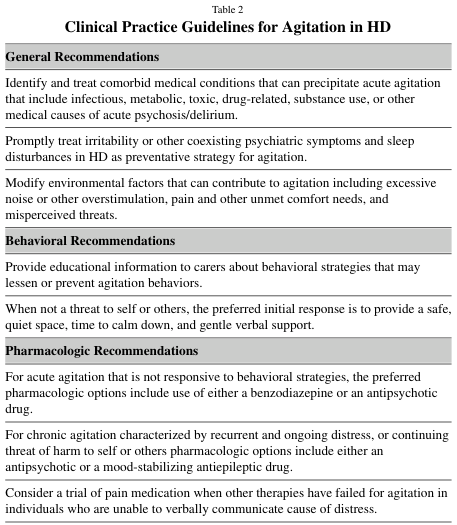
<table> <tr> <td colspan="1"><b>General Recommendations</b></td> </tr> <tr> <td>Identify and treat comorbid medical conditions that can precipitate acute agitation that include infectious, metabolic, toxic, drug-related, substance use, or other medical causes of acute psychosis/delirium.</td> </tr> <tr> <td>Promptly treat irritability or other coexisting psychiatric symptoms and sleep disturbances in HD as preventative strategy for agitation.</td> </tr> <tr> <td>Modify environmental factors that can contribute to agitation including excessive noise or other overstimulation, pain and other unmet comfort needs, and misperceived threats.</td> </tr> <tr> <td colspan="1"><b>Behavioral Recommendations</b></td> </tr> <tr> <td>Provide educational information to carers about behavioral strategies that may lessen or prevent agitation behaviors.</td> </tr> <tr> <td>When not a threat to self or others, the preferred initial response is to provide a safe, quiet space, time to calm down, and gentle verbal support.</td> </tr> <tr> <td colspan="1"><b>Pharmacologic Recommendations</b></td> </tr> <tr> <td>For acute agitation that is not responsive to behavioral strategies, the preferred pharmacologic options include use of either a benzodiazepine or an antipsychotic drug.</td> </tr> <tr> <td>For chronic agitation characterized by recurrent and ongoing distress, or continuing threat of harm to self or others pharmacologic options include either an antipsychotic or a mood-stabilizing antiepileptic drug.</td> </tr> <tr> <td>Consider a trial of pain medication when other therapies have failed for agitation in individuals who are unable to verbally communicate cause of distress.</td> </tr> </table>
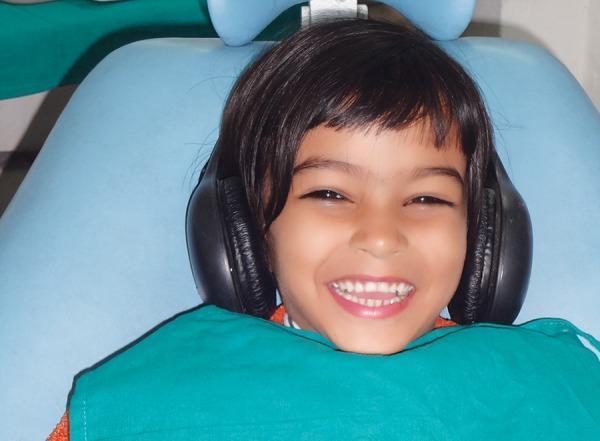
This clinical photograph illustrates a non-pharmacological behavior management technique used in pediatric dentistry. A young pediatric patient is shown in a dental chair, wearing large, over-the-ear black noise-canceling headphones. The patient displays a wide, smiling expression with visible upper and lower dentition and slightly squinted eyes, suggesting a positive emotional state and reduced anxiety. The child is draped with a green patient bib and positioned against the blue headrest of the dental unit. This image demonstrates the clinical application of 'audio analgesia' or music distraction to mitigate dental fear and distress during procedures such as tooth extractions. The target audience for this content includes dental students and pediatric practitioners exploring distraction therapy and its impact on physiological parameters like pulse rate and oxygen saturation during clinical interventions.
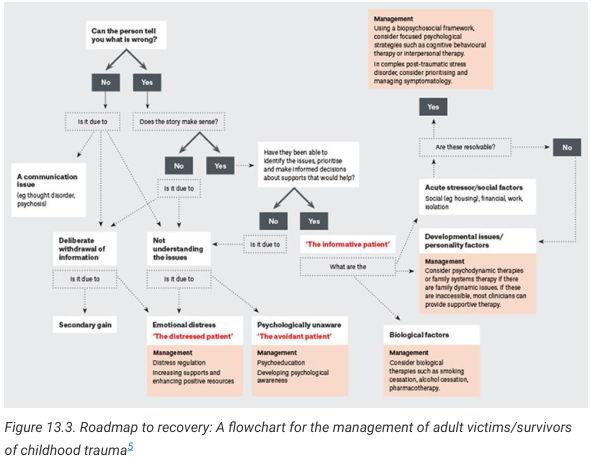
Summary : This flowchart provides a structured roadmap for clinicians to manage adult victims/survivors of childhood trauma, guiding through assessment and intervention based on the patient's ability to articulate their issues, understanding of their situation, and underlying factors. flowchart: # Nodes : • Start (rectangle): "Can the person tell you what is wrong?" • Decision (diamond): "No" / "Yes" • Decision (diamond): "Is it due to a communication issue (e.g. thought disorder, psychosis)?" • Decision (diamond): "Is it due to deliberate withdrawal of information?" • Decision (diamond): "Is it due to secondary gain?" • Decision (diamond): "Is it due to not understanding the issues?" • Decision (diamond): "Is it due to emotional distress?" • Node (rectangle): "Emotional distress 'The distressed patient'" • Node (rectangle): "Management: Distress regulation, increasing supports and enhancing positive resources" • Decision (diamond): "Is it due to being psychologically unaware?" • Node (rectangle): "Psychologically unaware 'The avoidant patient'" • Node (rectangle): "Management: Psychoeducation, developing psychological awareness" • Decision (diamond): "Does the story make sense?" • Decision (diamond): "Have they been able to identify the issues, prioritise and make informed decisions about supports that would help?" • Node (rectangle): "'The informative patient'" • Node (rectangle): "Management: Using a biopsychosocial framework, consider focused psychological strategies such as cognitive behavioural therapy or interpersonal therapy. In complex post-traumatic stress disorder, consider monitoring and managing symptomatology." • Decision (diamond): "Are these resolvable?" • Node (rectangle): "Acute stressor/social factors: Social (e.g. housing), financial, work, isolation" • Node (rectangle): "Developmental issues/personality factors" • Node (rectangle): "Management: Consider psychodynamic therapies or family systems therapy if there are family dynamic issues. If these are inaccessible, most clinicians can provide supportive therapy." • Node (rectangle): "Biological factors" • Node (rectangle): "Management: Consider biological therapies such as smoking cessation, alcohol cessation, pharmacotherapy." # Connectors : • Arrows direct the flow from the initial question to subsequent decision points and management nodes. • Branches split at each decision diamond, leading to different pathways based on "Yes" or "No" answers. • Dotted lines indicate alternative or less direct pathways (e.g., secondary gain, deliberate withdrawal). • Solid lines connect main decision points and management recommendations. # Layout : • The flowchart is organized from top to bottom, starting with the initial assessment of the patient's ability to articulate their problem. • The left side addresses communication and understanding issues, leading to specific management strategies for distressed or avoidant patients. • The right side follows patients who can articulate their issues, further assessing their ability to make informed decisions and identifying resolvable factors, with management tailored to acute stressors, developmental/personality issues, or biological factors. • Management recommendations are highlighted in orange boxes. # Analysis : • The flowchart systematically guides clinicians through a decision-making process, ensuring that interventions are tailored to the patient's specific presentation and underlying issues. • It distinguishes between patients who are distressed, avoidant, or informative, and provides targeted management strategies for each. • The chart emphasizes the importance of identifying and addressing communication barriers, emotional distress, psychological awareness, and external/social/biological factors in recovery from childhood trauma. • The structure supports a biopsychosocial approach, integrating psychological, social, and biological interventions as appropriate.
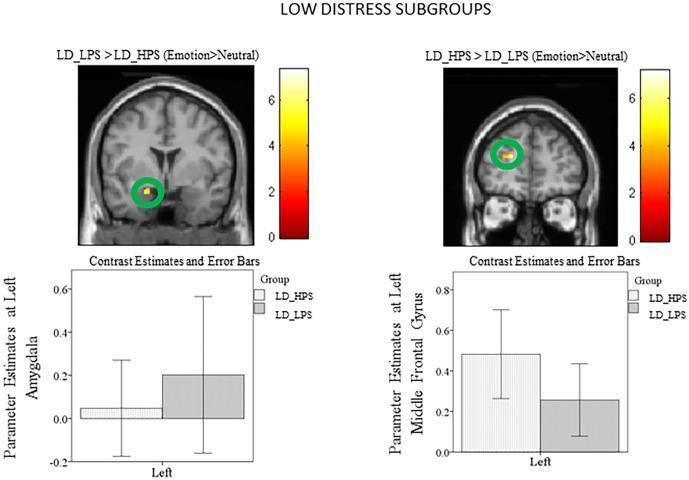
This medical visual consists of two sets of statistical parametric maps (SPM) and corresponding bar graphs illustrating neural activation patterns in low distress (LD) subgroups during emotional processing. The imaging utilizes functional MRI (fMRI) data overlaid on structural brain templates. The left panel shows the LD_LPS > LD_HPS (Emotion > Neutral) comparison, highlighting a localized cluster of activation in the left amygdala (circled in green), with an accompanying bar graph showing higher contrast estimates for the LPS group. The right panel demonstrates the reverse comparison, LD_HPS > LD_LPS, revealing significant activation in the left middle frontal gyrus (circled in green), with the corresponding bar graph indicating higher estimates for the HPS group. Activation intensity is indicated by a color-coded heat scale ranging from 0 to 6. This infographic serves as an educational tool for neuroscientific research into limbic and frontal lobe engagement during auditory emotional stimuli, specifically within the context of psychological distress variables.
free medical illustration acute psychosis emotional volatility clinical presentation image


More pics
psychiatric mental health acute psychosis confused disoriented patient illustration free image
emotional volatility bizarre behavior memory loss mental disorder medical presentation image





- #1 - matches the "mimics delirium" warning perfectly
- #3 - best visual for emotional volatility + chaotic thoughts
More in girls pics
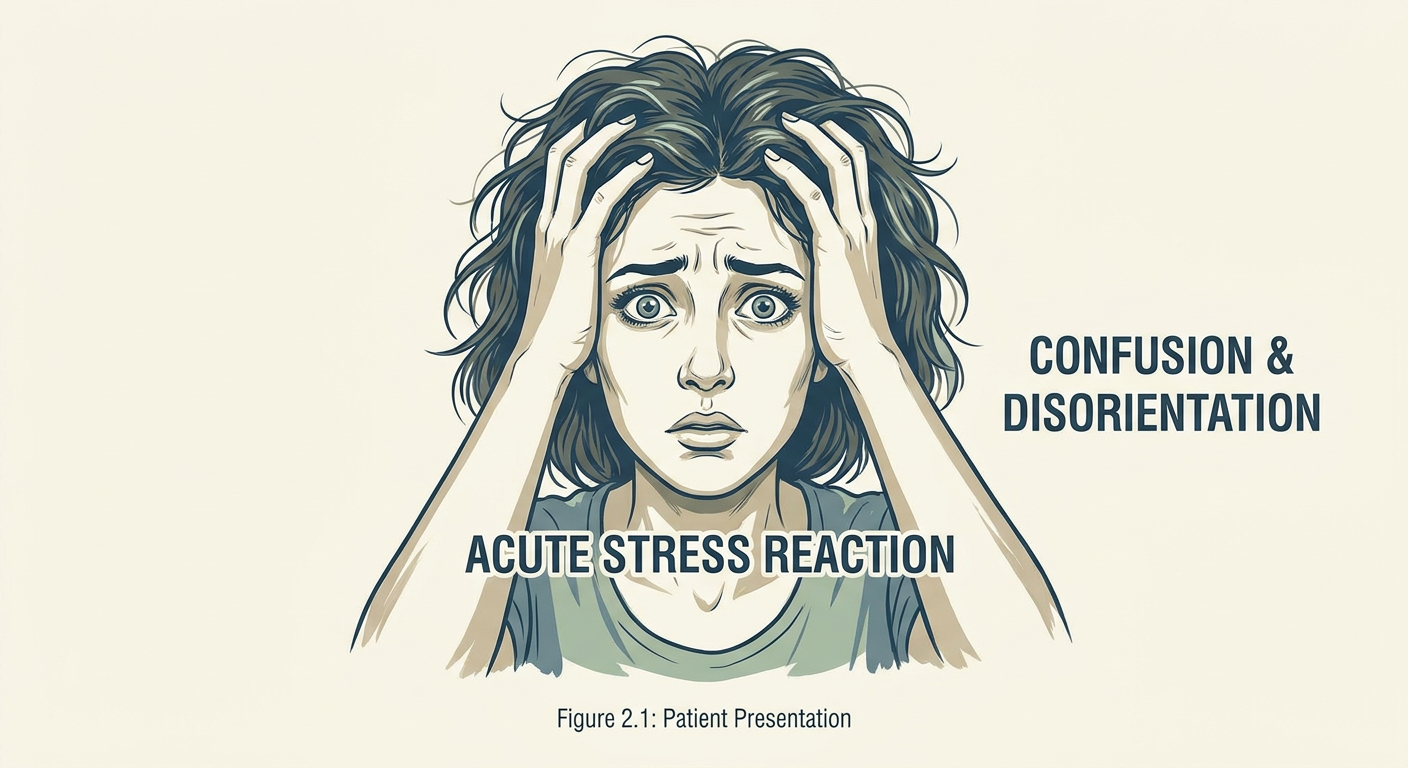
A young woman with wide frightened eyes, disheveled hair, showing emotional distress and confusion, hands on head, looking disoriented and overwhelmed, medical illustration style, clean background, suitable for psychiatry presentation
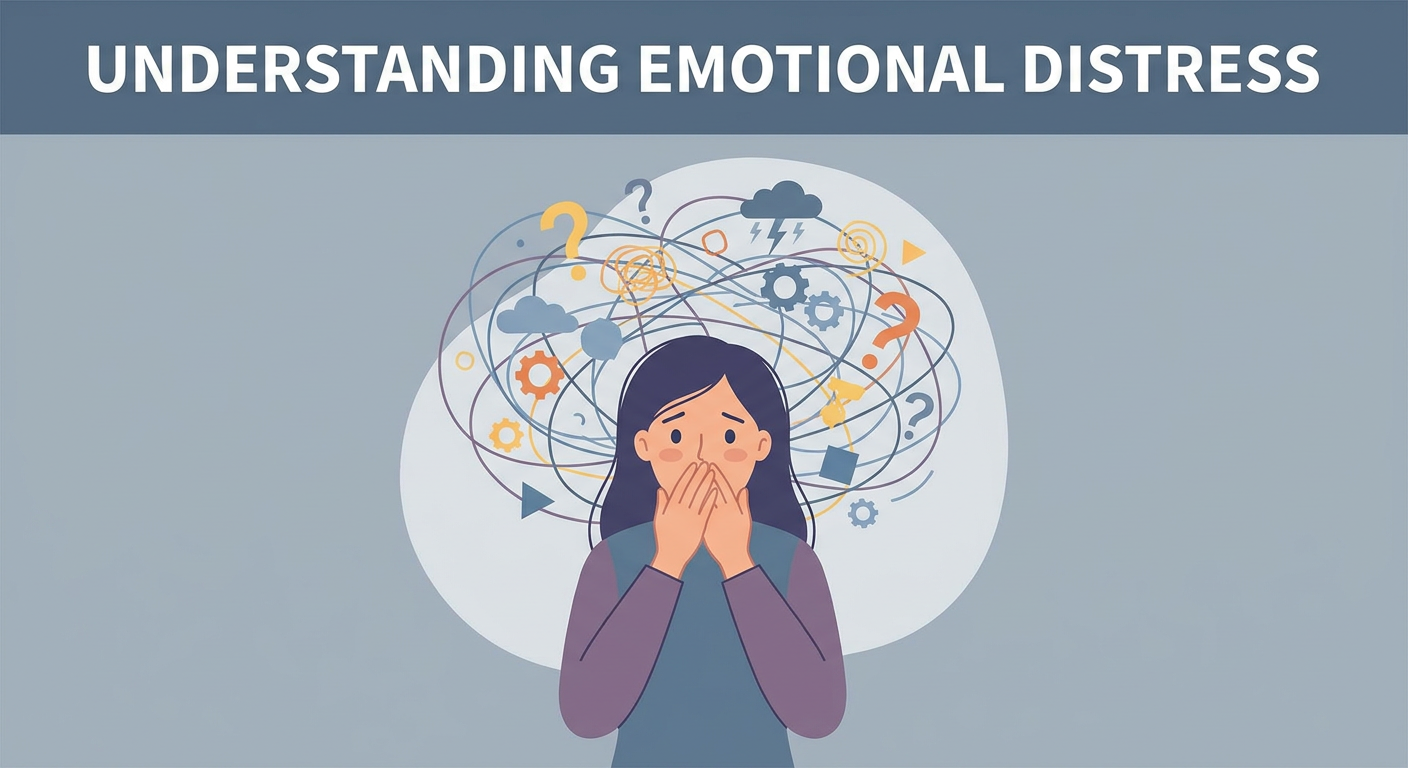
A young woman screaming with hands covering mouth, showing emotional volatility and bizarre distressed behavior, abstract swirling thoughts around her head, medical psychology illustration, flat vector art style
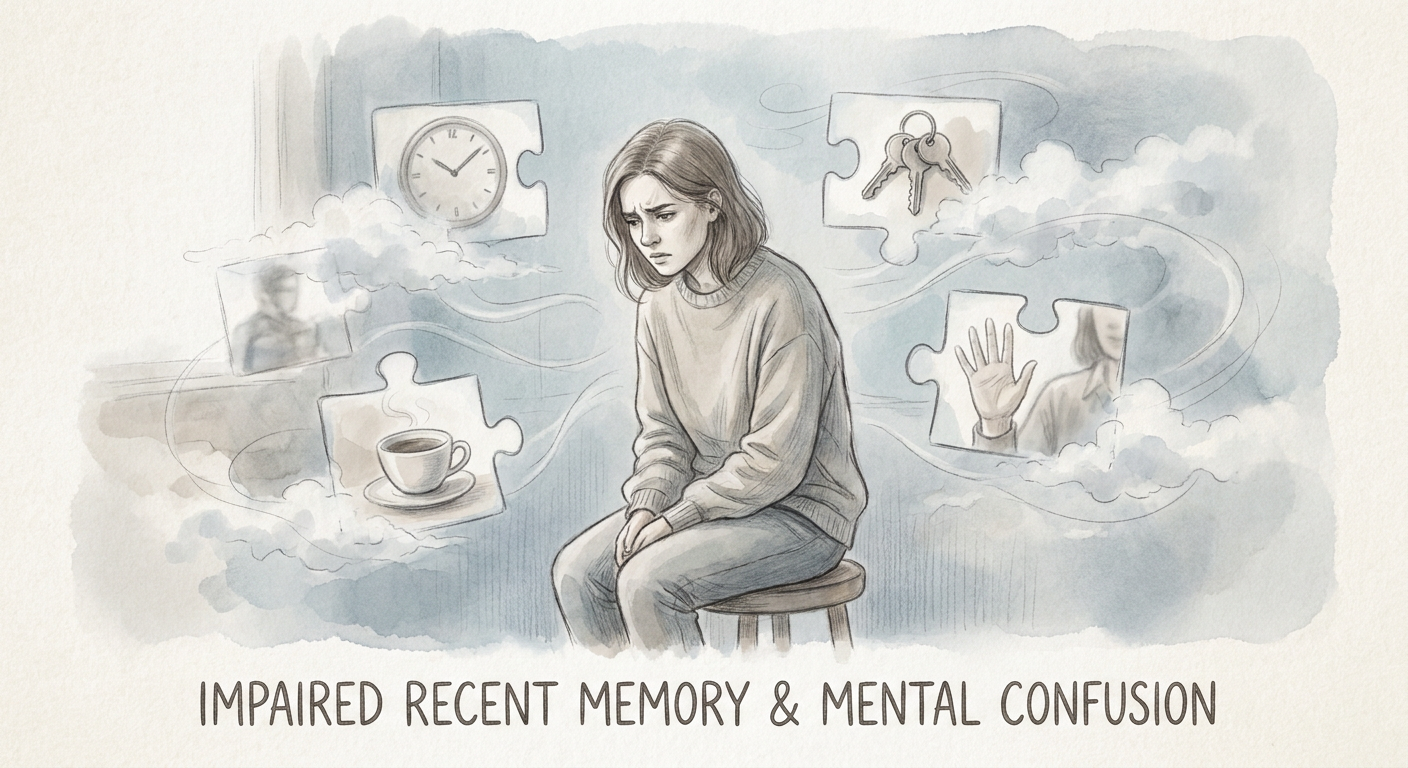
A girl sitting alone looking confused and withdrawn, surrounded by fragmented memory images fading away, representing impaired recent memory and mental confusion, soft clinical illustration style
Give 3 rd pics in blue theme
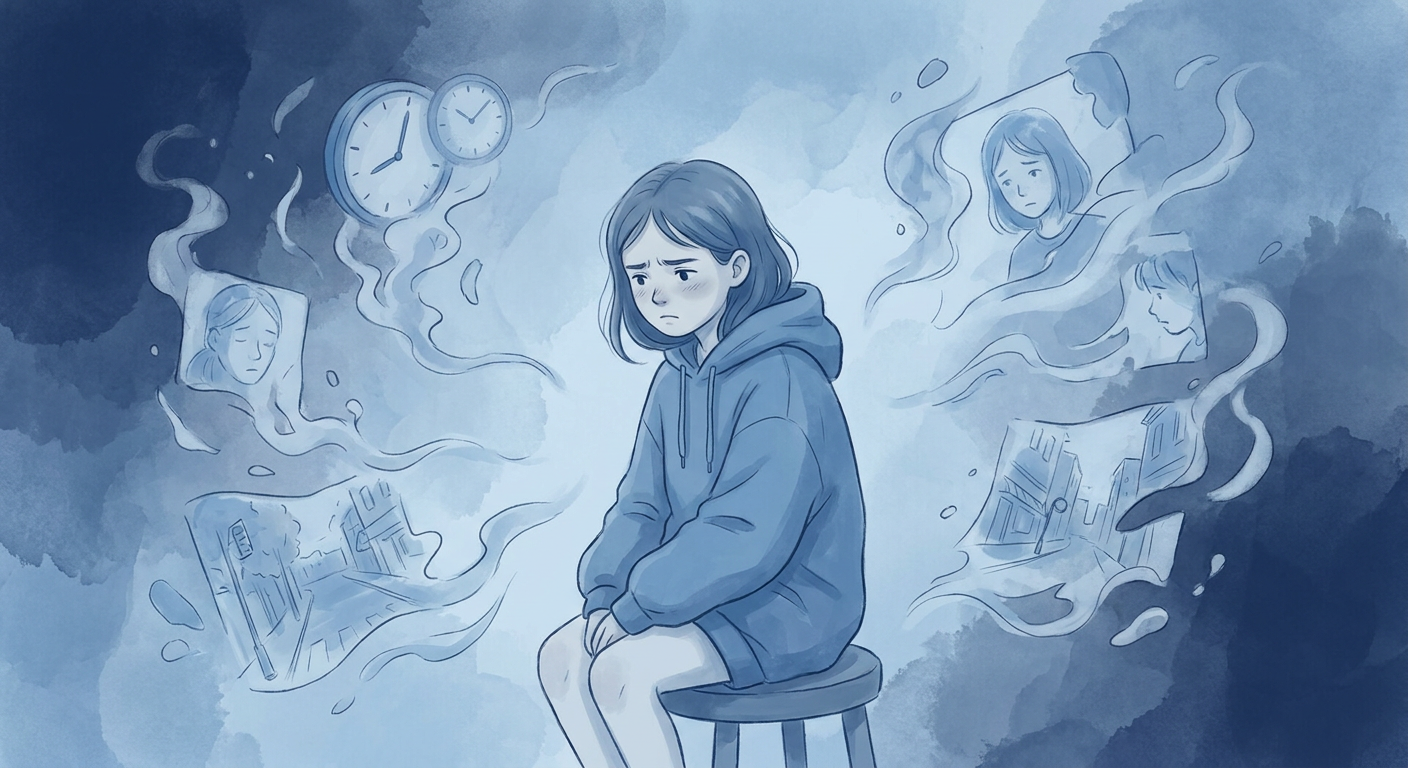
A girl sitting alone looking confused and withdrawn, surrounded by fragmented memory images fading away, representing impaired recent memory and mental confusion, soft clinical illustration style, blue color theme throughout, shades of navy and light blue background
DSM 5 tr criteria for bpd
Which BPD do you mean?
DSM-5-TR Criteria for Brief Psychotic Disorder
A. Presence of ≥1 of the following symptoms:
| # | Symptom |
|---|---|
| 1 | Delusions |
| 2 | Hallucinations |
| 3 | Disorganized speech (e.g., incoherence, derailment) |
| 4 | Grossly disorganized or catatonic behavior |
⚠️ At least one of symptoms 1, 2, or 3 must be present (symptom 4 alone is not sufficient)
B. Duration
- Episode lasts ≥1 day but <1 month
- Followed by full return to premorbid level of functioning
C. Exclusions - Not better explained by:
- Another mental disorder (e.g., major depressive disorder, schizophrenia)
- Substance use or medication effect
- Another medical condition
- A culturally sanctioned response/behavior
Specifiers
| Specifier | Detail |
|---|---|
| With marked stressor(s) | Follows events markedly stressful to almost anyone (e.g., trauma, war, immigration, surgery) |
| Without marked stressor(s) | No identifiable precipitant |
| With peripartum onset | During pregnancy or within 4 weeks postpartum |
| With catatonia | Additional code 293.89 (F06.1) |
| Severity specifier | Optional 5-point rating scale for current symptom severity |
Note: "Emotional turmoil" and "confusion" are NOT formal criteria but are noted in the DSM-5-TR text as typical features.
Shortly
DSM-5-TR Criteria — Brief Psychotic Disorder
- Delusions
- Hallucinations
- Disorganized speech
- Disorganized / catatonic behavior
Make a presentation slide on DSM-5-TR criteria
cat << 'EOF' > /tmp/workspace/brief-psychotic/dsm5_slide.py from pptx import Presentation from pptx.util import Inches, Pt from pptx.dml.color import RGBColor from pptx.enum.text import PP_ALIGN, MSO_ANCHOR prs = Presentation() prs.slide_width = Inches(13.333) prs.slide_height = Inches(7.5) slide = prs.slides.add_slide(prs.slide_layouts[6]) # Background fill = slide.background.fill fill.solid() fill.fore_color.rgb = RGBColor(0x0D, 0x1B, 0x3E) # Title bar bar = slide.shapes.add_shape(1, Inches(0), Inches(0), Inches(13.333), Inches(1.1)) bar.fill.solid(); bar.fill.fore_color.rgb = RGBColor(0x1A, 0x6B, 0xC4) bar.line.fill.background() tb = slide.shapes.add_textbox(Inches(0.3), Inches(0.12), Inches(12.5), Inches(0.85)) tf = tb.text_frame; tf.margin_top=0; tf.margin_bottom=0 p = tf.paragraphs[0]; p.alignment = PP_ALIGN.LEFT r = p.add_run() r.text = "DSM-5-TR Criteria — Brief Psychotic Disorder" r.font.size = Pt(28); r.font.bold = True r.font.color.rgb = RGBColor(0xFF,0xFF,0xFF); r.font.name = "Calibri" # ── Helper ────────────────────────────────────────────────── def card(slide, x, y, w, h, title, items, accent): bg = slide.shapes.add_shape(1, Inches(x), Inches(y), Inches(w), Inches(h)) bg.fill.solid(); bg.fill.fore_color.rgb = RGBColor(0x14,0x2B,0x55) bg.line.color.rgb = accent; bg.line.width = Pt(1.5) stripe = slide.shapes.add_shape(1, Inches(x), Inches(y), Inches(w), Inches(0.07)) stripe.fill.solid(); stripe.fill.fore_color.rgb = accent stripe.line.fill.background() th = slide.shapes.add_textbox(Inches(x+0.12), Inches(y+0.1), Inches(w-0.2), Inches(0.38)) tf = th.text_frame; tf.margin_top=0; tf.margin_bottom=0 r = tf.paragraphs[0].add_run() r.text = title; r.font.bold=True; r.font.size=Pt(13.5) r.font.color.rgb = accent; r.font.name="Calibri" tb2 = slide.shapes.add_textbox(Inches(x+0.12), Inches(y+0.5), Inches(w-0.2), Inches(h-0.62)) tf2 = tb2.text_frame; tf2.word_wrap=True tf2.margin_top=0; tf2.margin_bottom=0 for i, item in enumerate(items): p2 = tf2.paragraphs[0] if i==0 else tf2.add_paragraph() p2.space_before = Pt(4) run = p2.add_run(); run.text = f"• {item}" run.font.size=Pt(12.5); run.font.name="Calibri" run.font.color.rgb = RGBColor(0xD8,0xE8,0xFF) BLUE = RGBColor(0x29,0x9D,0xFF) GREEN = RGBColor(0x2E,0xCC,0x71) AMBER = RGBColor(0xF3,0x9C,0x12) RED = RGBColor(0xE7,0x4C,0x3C) PURPLE= RGBColor(0xAB,0x7D,0xFF) # Criterion A (left tall card) card(slide, 0.3, 1.25, 4.5, 4.3, "Criterion A — ≥1 Symptom Required", ["Delusions", "Hallucinations", "Disorganized speech (incoherence / derailment)", "Disorganized or catatonic behavior", "⚠ At least one of symptoms 1, 2 or 3\n must be present"], BLUE) # Criterion B card(slide, 5.05, 1.25, 3.9, 2.0, "Criterion B — Duration", ["≥ 1 day and < 1 month", "Full return to premorbid functioning"], GREEN) # Criterion C card(slide, 5.05, 3.45, 3.9, 2.1, "Criterion C — Exclusions", ["Not due to substance / medication", "Not due to medical condition", "Not another mental disorder", "Not a culturally sanctioned response"], RED) # Specifiers card(slide, 9.2, 1.25, 3.85, 4.3, "Specifiers", ["With marked stressor(s)", "Without marked stressor(s)", "With peripartum onset\n (pregnancy / ≤4 wks postpartum)", "With catatonia", "Severity rating (0–4 scale)"], PURPLE) # Footer ft = slide.shapes.add_textbox(Inches(0.3), Inches(7.22), Inches(12), Inches(0.25)) tf = ft.text_frame; tf.margin_top=0 r = tf.paragraphs[0].add_run() r.text = "Source: Kaplan & Sadock's Comprehensive Textbook of Psychiatry" r.font.size=Pt(9); r.font.italic=True r.font.color.rgb=RGBColor(0x88,0xAA,0xCC) prs.save("/tmp/workspace/brief-psychotic/DSM5TR_BriefPsychoticDisorder.pptx") print("Done.") EOF python /tmp/workspace/brief-psychotic/dsm5_slide.py
DSM5TR BriefPsychoticDisorder
Presentation · PPTX
- Blue - Criterion A (symptoms)
- Green - Criterion B (duration)
- Red - Criterion C (exclusions)
- Purple - Specifiers
Pharmacological and non Pharmacological management for bod
Management of Brief Psychotic Disorder
🔵 Pharmacological
| Agent | Role |
|---|---|
| Antipsychotics (first-line) | Haloperidol, risperidone, olanzapine, quetiapine - to control delusions, hallucinations, disorganized behavior |
| Benzodiazepines | Adjunct for acute agitation, anxiety, insomnia (e.g., lorazepam) |
| Mood stabilizers | If significant mood symptoms are present |
- Drug treatment is always indicated
- Use lowest effective dose - episode is self-limiting (<1 month)
- Antipsychotic may be tapered/stopped after full remission
- No clear evidence favoring one antipsychotic over another for this specific disorder
🟢 Non-Pharmacological
- Often necessary for: safety, diagnostic workup, medication stabilization, preventing harm to self/others
- Supportive psychotherapy - establishing therapeutic alliance
- Combined psychotherapy + pharmacotherapy > either alone
- Address precipitating stressors (especially in "with marked stressors" subtype)
- Patient and family education about the disorder, triggers, relapse signs
- Reassurance - full recovery is expected
- Identify and reduce psychosocial stressors
- Crisis intervention techniques
- Rehabilitative support post-episode
- Address social issues (immigration, trauma, low SES) if present as precipitants
⚠️ Special Considerations
- Always rule out organic causes (delirium, substance intoxication, medical illness) before treating
- Monitor for recurrence - some patients relapse; reassess diagnosis if symptoms persist beyond 1 month
- Peripartum onset: balance antipsychotic safety with breastfeeding/pregnancy considerations
Short it
Management — Brief Psychotic Disorder
💊 Pharmacological
- Antipsychotics (first-line) — haloperidol, risperidone, olanzapine
- Benzodiazepines — for agitation/anxiety (lorazepam)
- Taper/stop after full remission (self-limiting disorder)
🧠 Non-Pharmacological
- Hospitalization — if unsafe or needs workup
- Supportive psychotherapy — therapeutic alliance, address stressors
- Psychoeducation — patient & family, reassure full recovery expected
- Stress management — crisis intervention, reduce precipitants
- Social support — post-episode rehabilitation