
Complete information of breast milk ( especially colostrum) benefits for mom and baby
colostrum breast milk benefits infant mother
colostrum breast milk benefits for mother and baby comprehensive overview 2024
https://my.clevelandclinic.org/health/body/22434-colostrum
colostrum breast milk composition benefits newborn
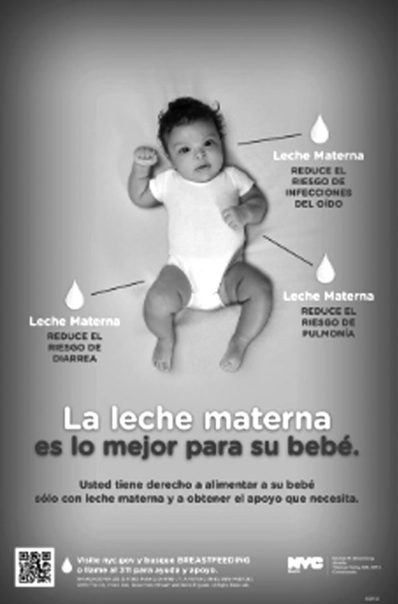
Summary : This is a public health promotional poster advocating breastfeeding, highlighting the health benefits of breast milk for infants, with supporting text and official branding. photo: Scene Overview : • Main subject: An infant lying on a light background, wearing a white onesie. • Perspective: Overhead view, centered composition. • Colour palette: Grayscale (black and white). • Lighting: Even, soft, no harsh shadows. • On-image text: Multiple Spanish-language health messages and official logos. Technical Details : • No scale bar or magnification. • Three labeled droplet icons point to the infant, each with a health benefit: • "Leche Materna REDUCE EL RIESGO DE DIARREA" • "Leche Materna REDUCE EL RIESGO DE INFECCIONES DEL OÍDO" • "Leche Materna REDUCE EL RIESGO DE PULMONÍA" • Central bold text: "La leche materna es lo mejor para su bebé." • Additional text: "Usted tiene derecho a alimentar a su bebé sólo con leche materna y a obtener el apoyo que necesita." • QR code and website link at the bottom for more information. • NYC Health Department logo and contact details in the lower right. Spatial Relationships : • The infant is centrally placed, with health benefit icons and text radiating outward. • Main message is directly below the infant, occupying the lower third of the poster. • Official branding and QR code are at the bottom edge. Analysis : • The poster visually and textually emphasizes the health advantages of breastfeeding, specifically reducing risks of diarrhea, ear infections, and pneumonia. • The layout is designed to draw attention to the infant and the associated health benefits, reinforcing the message that breast milk is the optimal choice for babies. • Official branding and contact information provide credibility and resources for further support.
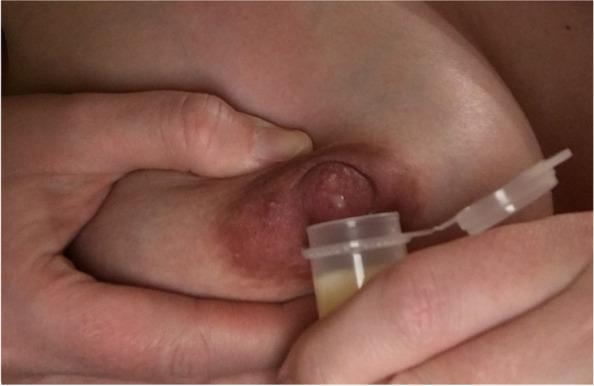
A close-up clinical photograph demonstrating the Marmet technique for hand-expressing antenatal milk or colostrum. The image shows a person's hands positioned on a lactating breast. One hand supports the breast tissue, with the thumb and index finger placed approximately 2-3 cm behind the nipple at the edge of the areola, applying rhythmic compression to the underlying milk ducts. The areola appears physiologically hyperpigmented and slightly engorged, typical of late pregnancy or the early postpartum period. A small, clear, flip-top collection vial is held directly beneath the nipple to capture the expressed fluid. The vial contains a small volume of yellowish, viscous fluid, characteristic of colostrum. This visual serves as an educational guide for lactation support, specifically teaching manual expression and collection techniques for individuals in the late third trimester (antenatal milk expression) or early postpartum phase.
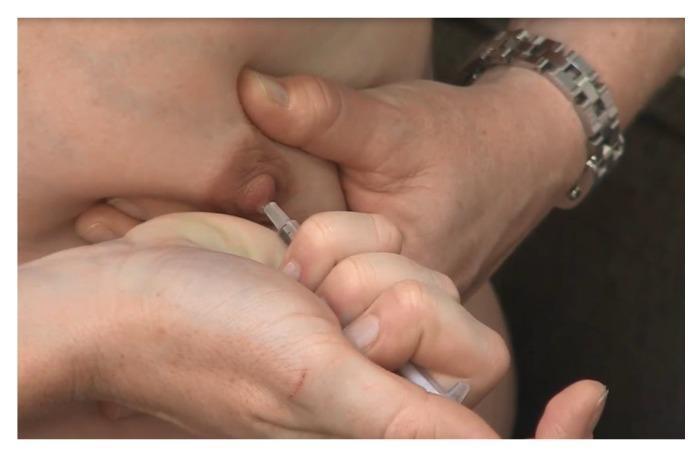
This clinical photograph captures a close-up procedural demonstration of Antenatal Colostrum Expression (ACE). The image illustrates the 'C-hold' hand technique, where the breast tissue is compressed between the thumb and fingers, positioned approximately 2-3 cm behind the nipple at the edge of the areola. A second hand is shown holding a small oral syringe directly at the nipple tip to collect the expressed droplets of colostrum. The procedural focus is on the manual stimulation and compression of the lactiferous sinuses to facilitate milk removal. This visual serves as an educational tool for lactation consultants and expectant mothers, highlighting the correct hand placement and the use of a syringe for hygienic colostrum harvesting and storage during late pregnancy. The setting is likely an antenatal clinic or educational session designed to improve breastfeeding confidence and knowledge.
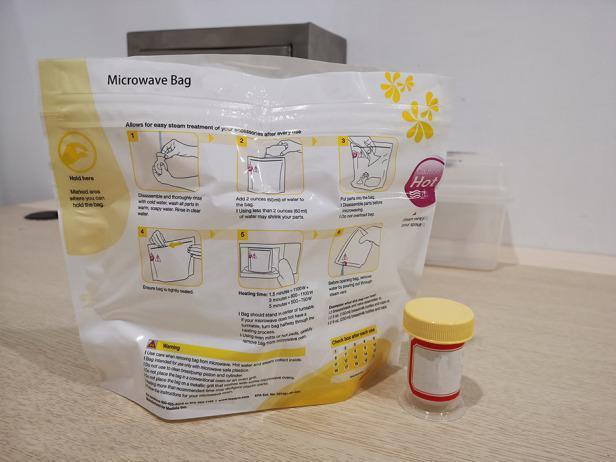
This clinical photograph displays a medical-grade disinfection system used for neonatal care accessories, specifically for the steam sterilization of breast milk collection equipment. The image features a specialized microwave steam sterilization bag alongside a sterile collection cup. The bag is a flexible, translucent white pouch with yellow instructional graphics and a 'Hold here' safety zone. It displays a six-step illustrated guide for cleaning, adding water (60ml), and microwave heating times based on wattage. A tracking grid at the bottom is included to monitor the bag's 20-use lifecycle. Next to the bag is a cylindrical, transparent collection cup with a yellow screw-top lid and a red-bordered label for patient identification. This visual represents standard protocols for infection control in a Neonatal Intensive Care Unit (NICU) or home care setting, demonstrating the process of ensuring the microbiological safety of colostrum and breast milk storage containers through rapid steam treatment.
breastfeeding maternal health benefits cancer cardiovascular
Breast Milk & Colostrum: Complete Benefits for Mother and Baby
What is Colostrum?
- Normal production: 1-4 teaspoons (5-20 mL) per day - which is exactly right, since a newborn's stomach is roughly the size of a marble
- After 2-5 days, colostrum transitions to transitional milk (a mix of colostrum and mature milk)
- By 2-4 weeks, full mature milk is produced
Stages of Breast Milk
| Stage | Timing | Key Features |
|---|---|---|
| Colostrum | 0-5 days postpartum | High protein, IgA, vitamins A/E/K, minerals; low fat and carbs |
| Transitional Milk | Days 5-14 | Increasing fat, lactose, calories; still contains some colostrum |
| Mature Milk | 2+ weeks | ~87% water, balanced fats, proteins, carbs; immune factors continue |
The Science Behind Colostrum
"The initial secretion in the first days after birth is called colostrum. This premilk is an alkaline secretion with a higher protein, vitamin A, sodium, and chloride content than milk and a lower lipid, carbohydrate, and potassium content. Considerable amounts of antibodies are contained in colostrum, and these provide the newborn with passive immunity to many antigens. The antibodies are produced by plasma cells in the stroma of the breast and are carried across the glandular cells in a manner similar to secretory immunoglobulin A (IgA) in the salivary glands and intestine."
"After birth, there is a sudden loss of placental hormones, which, combined with continued high levels of prolactin, is the principal trigger for lactation. The actual expulsion of milk is caused by the contraction of myoepithelial cells in response to the pituitary-derived peptide oxytocin. Stimulation of the nipple is the physiologic signal for continued prolactin secretion and acute oxytocin release."
COLOSTRUM BENEFITS FOR THE BABY
1. Immune System - The Primary Shield
- Secretory IgA (sIgA): The dominant antibody - coats and lines the baby's immature gut wall, blocking harmful pathogens, bacteria, and viruses from entering the bloodstream
- Lactoferrin: Iron-binding protein with antibacterial and antiviral properties
- Lysozyme: Enzyme that destroys bacterial cell walls
- White blood cells (leukocytes): Live immune cells - macrophages, neutrophils, lymphocytes - that actively fight infection
- Oligosaccharides: Promote growth of beneficial gut bacteria (prebiotics)
2. Gut Development and Protection
- Seals and matures the "leaky" newborn gut lining, preventing foreign proteins from crossing into the bloodstream
- Promotes growth of Lactobacillus bifidus (beneficial gut bacteria)
- Acts as a natural laxative - helps expel meconium (first poop), clearing bilirubin and reducing jaundice risk
- Contains growth factors (EGF - epidermal growth factor) that stimulate the maturation of intestinal cells
3. Rich Concentrated Nutrition
- High protein: Essential amino acids in concentrated form
- Vitamin A: Supports vision development, skin integrity, and immune function - colostrum has 10x the vitamin A of mature milk
- Vitamin E: Antioxidant protection
- Vitamin K: Supports blood clotting
- Zinc: Supports immunity and wound healing
- Magnesium: Supports heart and bone development
- Copper: Supports neurological development
4. Brain Development
- Long-chain polyunsaturated fatty acids (LCPUFAs) like DHA (docosahexaenoic acid): Essential for brain and retinal development
- These are present throughout breast milk and support neural connectivity
5. Reduced Disease Risk (Short and Long Term)
- Diarrheal illness and gastroenteritis
- Respiratory tract infections
- Ear infections (otitis media)
- Pneumonia
- Urinary tract infections
- Necrotizing enterocolitis (NEC) - especially in preterm infants
- Sudden Infant Death Syndrome (SIDS)
- Type 1 and Type 2 diabetes (long term)
- Obesity (long term)
- Allergic conditions including asthma and eczema
6. Preterm Infant Benefits
- Better immune outcomes than those who do not
- Reduced NICU complications
- Lower risk of sepsis and NEC
7. Feeding Skill Development
- Colostrum flows slowly from the breast, which is ideal for a newborn learning the coordinated skill of sucking, swallowing, AND breathing simultaneously
- Small volumes prevent choking and overfeeding
COLOSTRUM & BREAST MILK BENEFITS FOR THE MOTHER
1. Uterine Involution
- Breastfeeding triggers oxytocin release, which causes the uterus to contract back to its pre-pregnancy size faster
- This reduces postpartum bleeding (lochia) and lowers the risk of postpartum hemorrhage
2. Hormonal Contraception Effect
- Exclusive breastfeeding suppresses ovulation via elevated prolactin (Lactational Amenorrhea Method - LAM)
- Provides ~98% contraceptive effectiveness for up to 6 months when breastfeeding exclusively and periods have not resumed
3. Reduced Risk of Certain Cancers
- Breast cancer: Each year of breastfeeding reduces risk by approximately 4%; cumulative effect is significant
- Ovarian cancer: Breastfeeding is independently associated with reduced ovarian cancer risk
- The mechanism involves prolonged suppression of ovulation and estrogen levels
4. Reduced Type 2 Diabetes Risk
- Breastfeeding improves maternal insulin sensitivity
- Women who breastfeed have lower long-term risk of developing type 2 diabetes, especially after gestational diabetes
5. Cardiovascular and Metabolic Benefits
- Faster loss of pregnancy weight (breastfeeding burns ~300-500 extra calories/day)
- Lower risk of hypertension
- Improved lipid profiles
6. Bone Health
- Calcium mobilization during lactation is followed by increased bone density after weaning, potentially reducing long-term osteoporosis risk
7. Psychological and Emotional Benefits
- Oxytocin released during feeding promotes bonding and attachment between mother and baby
- Reduced rates of postpartum depression
- Sense of empowerment and confidence in the breastfeeding mother
8. Practical and Economic Benefits
- Always available, at the right temperature
- No preparation required
- Significantly reduces healthcare costs (fewer infant illnesses)
COLOSTRUM vs. MATURE MILK: Key Composition Differences
| Component | Colostrum | Mature Milk |
|---|---|---|
| Protein | Very high (~10g/100mL) | Lower (~1g/100mL) |
| Fat | Low | High |
| Carbohydrates (lactose) | Low | High |
| Secretory IgA | Very high | Present but lower |
| Vitamin A | 10x higher | Lower |
| Sodium/Chloride | High | Lower |
| Caloric density | ~67 kcal/100mL | ~65-70 kcal/100mL |
| Volume | Small (1-4 tsp/day) | Large (750-1000 mL/day) |
When to Initiate Breastfeeding
- Within 30-60 minutes of birth is the WHO recommendation
- Early initiation ensures the baby gets colostrum and establishes milk supply
- Hand expression is often more effective than a pump in the first hours
- Even a few drops of colostrum are highly valuable - no volume is too small
Summary
Give this benefits in simple language to make patients understand
🤱 Breast Milk & First Milk (Colostrum) — Easy Guide for Moms
What is Colostrum? (First Milk)
💡 Don't worry if it looks like only a few drops — that is completely normal! Your baby's stomach is only the size of a marble at birth, so even a few drops are MORE than enough.
🍼 HOW THIS MILK HELPS YOUR BABY
1. It Protects Your Baby From Getting Sick
- Diarrhea and stomach infections
- Chest infections and pneumonia
- Ear infections
- Fever and common infections
Think of it as giving your baby their first natural vaccination — right from your breast!
2. It Coats Your Baby's Tummy
3. It Helps Your Baby Pass Their First Poop
- Clears the bowels
- Reduces the chance of jaundice (yellow skin in newborns)
4. It is Packed With Vitamins and Nutrients
| What's in it | What it does for your baby |
|---|---|
| Vitamin A | Good eyesight, healthy skin |
| Vitamin E | Protects cells in the body |
| Zinc | Builds immunity |
| Protein | Growth and strength |
| Magnesium | Strong bones and heart |
5. It Helps Your Baby's Brain Grow
Babies who are breastfed tend to do better in learning and development.
6. It Lowers Risk of Serious Diseases Later in Life
- Diabetes (sugar disease)
- Obesity (excess weight)
- Asthma and allergies
- Sudden infant death (cot death)
7. It Teaches Your Baby to Feed
👩 HOW BREASTFEEDING HELPS YOU (THE MOTHER)
1. Your Uterus (Womb) Shrinks Back Faster
- Less bleeding after delivery
- Faster recovery
2. Natural Family Planning
3. Reduces Your Risk of Breast Cancer
4. Reduces Your Risk of Ovarian Cancer
5. Helps You Lose Pregnancy Weight
6. Prevents Diabetes (Sugar Disease)
7. Makes You Feel Calm and Happy
- Creates a deep bond between you and your baby
- Helps reduce stress and anxiety
- Lowers the chance of postnatal depression (feeling very low after delivery)
8. It Saves Money and Time
- Always ready — no heating, no mixing, no buying formula
- Saves hospital visits because your baby gets sick less often
⏰ When Should You Start?
Start breastfeeding within 30 minutes of delivery — even before you are cleaned up or shifted to the ward.
🔑 Key Messages to Remember
| For Your Baby | For You |
|---|---|
| First vaccine against infections | Womb shrinks faster |
| Coats and protects the tummy | Less bleeding after birth |
| Clears first poop, prevents jaundice | Lower cancer risk |
| Best food for brain growth | Helps lose weight naturally |
| Protects against diabetes and obesity later | Builds emotional bond |
| Reduces risk of sudden infant death | Saves money |
💬 Common Worries - Answered Simply
Remember: Every drop of breast milk you give your baby is a gift that protects them for life. There is no substitute for it in nature.