
Thyrotoxicosis
Reading File
Now let me search the medical library for thyrotoxicosis content in parallel.
Finding Sources
Finding Sources
Searching PubMed
thyrotoxicosis management
Good results. Now let me read the most comprehensive sources in parallel - Frameworks for Internal Medicine, Goldman-Cecil Medicine, and Bailey & Love.
Reading File
Reading File
Reading File
Excellent content. Let me now read more from the Frameworks for Internal Medicine (which has detailed diagnostic and management content) and the Cummings Otolaryngology source (causes and pathophysiology).
Reading File
Reading File
I have comprehensive content. Let me fetch the key images and read a bit more from Frameworks on diagnosis and management.
Reading File
Loading Image
Loading Image
Let me fetch the diagnostic flowchart and thyroid scan images, and read the management section.
Loading Image
Reading File
Let me read the treatment/management section.
Reading File
I now have comprehensive content from multiple authoritative textbooks. Let me compile the full answer.
Thyrotoxicosis
Definition
Thyrotoxicosis is a clinicopathologic and biochemical syndrome resulting from exposure to excessive concentrations of thyroid hormones (T3, T4, or both), causing a state of hypermetabolism and hyperactivity. It is not synonymous with hyperthyroidism - hyperthyroidism specifically means excess hormone synthesis by the thyroid, while thyrotoxicosis encompasses any cause of excess thyroid hormone, including destructive thyroiditis or exogenous ingestion. - Tietz Textbook of Laboratory Medicine, 7th Ed
In 2-4% of patients, thyrotoxicosis is due to elevated T3 alone with normal T4 - termed T3 toxicosis. - Textbook of Family Medicine 9e
Epidemiology
- Affects approximately 1 in 2000 persons per year in industrialized countries
- ~10 times more common in women than in men
- Overt thyrotoxicosis prevalence: 0.5-1 per 1000 (US); 10-40 per 1000 (Europe)
- Rates are higher in older individuals and women
- More common in persons of northern European extraction; rare in Black individuals
- Frameworks for Internal Medicine; Cummings Otolaryngology
Causes / Etiology
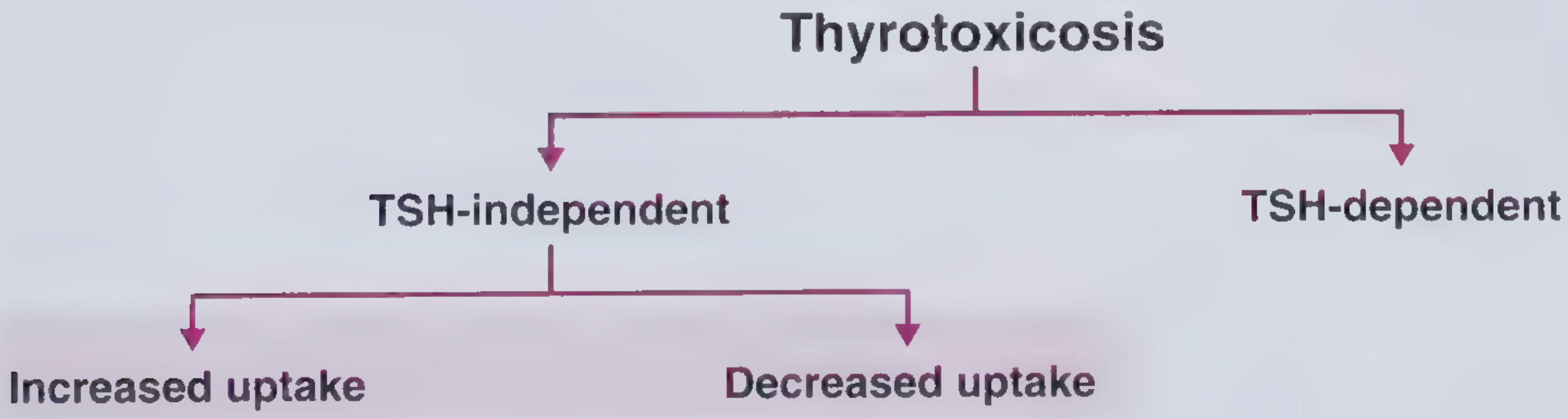
Overt Classification:
TSH-independent (most common) - suppressed TSH:
| Increased Radioactive Iodine Uptake (RAIU) | Decreased RAIU |
|---|---|
| Graves' disease (60-85% of all cases) | Thyroiditis (subacute/silent/postpartum) |
| Toxic multinodular goiter (10-30%) | Exogenous thyroid hormone ingestion |
| Toxic adenoma (2-20%) | Jod-Basedow phenomenon (iodine exposure) |
| - | Extraglandular thyroid hormone production (struma ovarii, metastatic follicular thyroid cancer) |
TSH-dependent (rare) - normal or elevated TSH:
- TSH-secreting pituitary adenoma (0.5-3% of pituitary tumors)
- Resistance to thyroid hormone (impaired receptor sensitivity)
Pathophysiology: thyrotoxicosis results from:
- Increased synthesis and release (Graves', toxic nodule) - driven by TSH receptor-stimulating antibodies, autonomous function
- Destructive release of stored hormone (thyroiditis)
- Exogenous ingestion (factitia)
- Ectopic production
- Cummings Otolaryngology; Frameworks for Internal Medicine
Clinical Features
Symptoms
Heat intolerance, sweating, nervousness, irritability, anxiety, fatigue, poor concentration, palpitations, dyspnea, hyperdefecation, nausea/vomiting, menstrual irregularities, diplopia, eye discomfort. - Frameworks for Internal Medicine
Signs
- Cardiovascular: tachycardia, systolic hypertension, wide pulse pressure, decreased peripheral resistance, increased blood volume
- Neurologic/muscular: tremor of extremities, hyperreflexia, proximal muscle weakness (pelvic and shoulder girdle)
- Dermatologic: warm and moist skin, weight loss
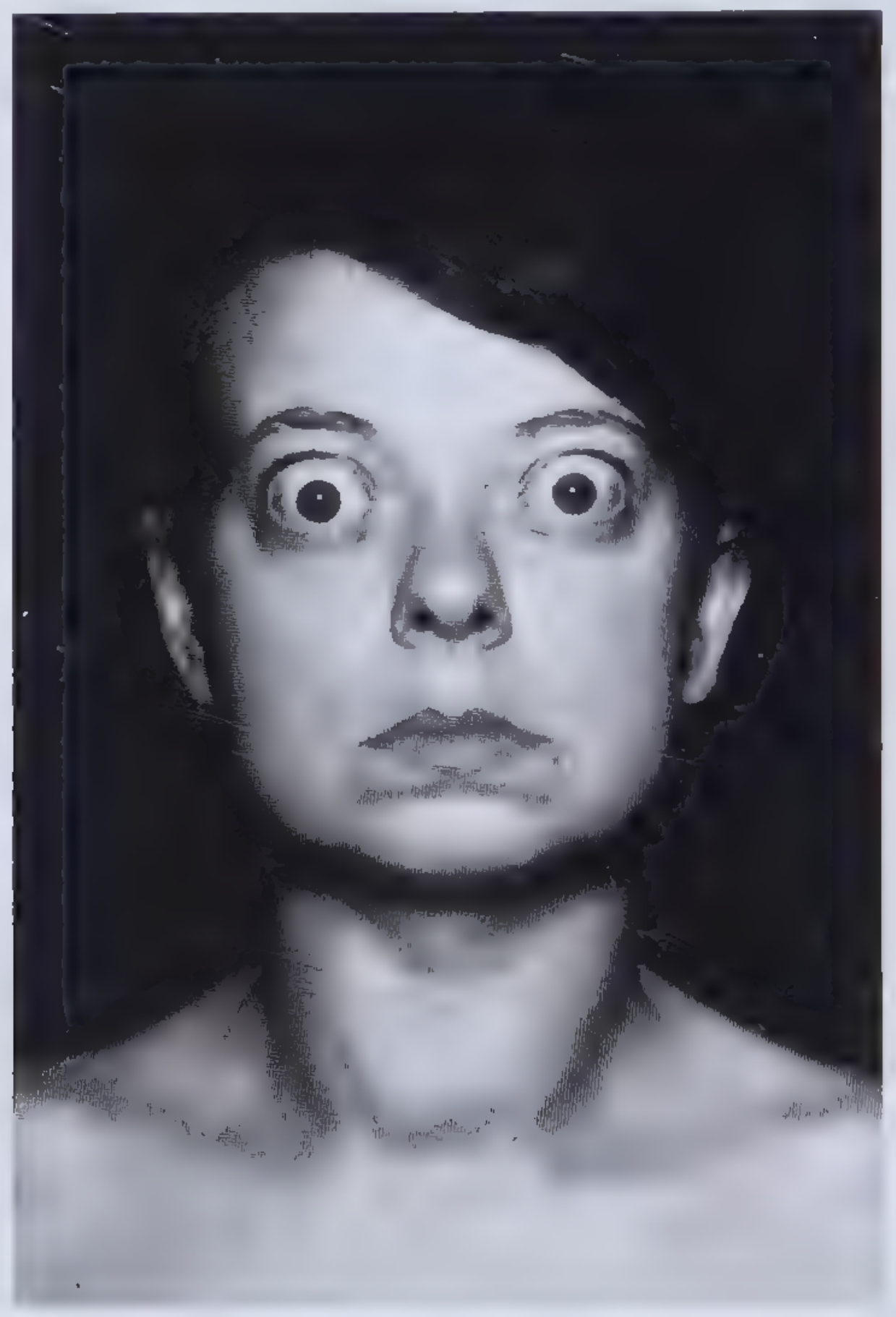
- Eye: exophthalmos (proptosis), eyelid retraction and lag, periorbital edema, ophthalmoplegia
- Thyroid: goiter (with or without bruit), tachypnea
Age-related variation
- Younger patients: hyperadrenergic manifestations dominate - anxiety, restlessness, tremor, tachycardia, hyperphagia, sweating
- Older patients: age-related beta-receptor desensitization blunts adrenergic symptoms. Presentation is more cardiovascular - cardiovascular dysfunction, dyspnea, weight loss, proximal muscle weakness. Atrial fibrillation is more common in the elderly (5-15%). "Apathetic thyrotoxicosis" (apathy, lethargy, pseudodementia, weight loss, depressed mood) can mimic depression or dementia. - Textbook of Family Medicine 9e
Key cardiovascular effects (all ages)
- Decreased peripheral resistance
- Increased blood volume and fluid retention (via aldosterone activation)
- Atrial flutter, PSVT, PVBs - rare but possible
- Ischemic CHF in patients with preexisting CAD
Hypercalcemia
Mild hypercalcemia (<12 mg/dL) occurs in ~20% of thyrotoxicosis cases due to increased bone turnover. Responds to beta-blockers and resolves when euthyroid state is restored. - Goldman-Cecil Medicine
Life-Threatening Complication: Thyroid Storm
Thyroid storm (thyrotoxic crisis) is a severe, life-threatening form of thyrotoxicosis with extreme hypermetabolic manifestations:
- Extreme tachycardia, high fever, profuse perspiration
- Diarrhea, anxiety, seizure, delirium, coma
- Often precipitated by: discontinuation of antithyroid drugs, infection, trauma, stress, or pregnancy
- Thyroid hormone levels are comparable to compensated thyrotoxicosis - the distinction is entirely clinical
- Up to 25% mortality
- Frameworks for Internal Medicine
Diagnosis
Step 1 - First-line test: Serum TSH (most sensitive screening test)
Step 2 - Confirm: Elevated serum free T4 (and/or T3)
The TSH level guides classification:
| TSH | Interpretation |
|---|---|
| Low (suppressed) | TSH-independent thyrotoxicosis |
| Normal or elevated | TSH-dependent process |
Note: In thyroid hormone excess, normal negative feedback should suppress TSH; therefore a "normal" TSH in the context of elevated thyroid hormones is "inappropriately normal" and indicates a TSH-dependent process.
Confounders of thyroid function tests: pregnancy, acute non-thyroidal illness, medications (glucocorticoids), recovery from thyrotoxicosis.
Special patterns:
- Subclinical hyperthyroidism: Low TSH + normal free T4/T3. Risk of AF is increased. Progression risk rises when TSH < 0.1 mIU/L.
- T3 toxicosis: Normal free T4 + suppressed TSH + elevated T3. Common in toxic adenoma and recurrent Graves'.
Step 3 - For TSH-independent thyrotoxicosis: Radioactive Iodine Uptake (RAIU) test
- Increased uptake → true hyperthyroidism (Graves', toxic nodule) → proceed to thyroid scintigraphy to distinguish diffuse (Graves') from focal (toxic adenoma/TMNG)
- Decreased uptake → thyrotoxicosis without hyperthyroidism (thyroiditis, exogenous, Jod-Basedow)
Thyrotoxicosis factitia (surreptitious thyroid hormone ingestion): diagnosed by undetectable serum thyroglobulin levels (or elevated fecal thyroxine if thyroglobulin antibodies interfere with the assay).
- Frameworks for Internal Medicine; Cummings Otolaryngology
Management
1. Symptomatic Relief (all causes)
Beta-blockers (propranolol, atenolol) are first-line for immediate symptom control - reduce tachycardia, tremor, anxiety, and also help with mild hypercalcemia. Should not be delayed pending further workup.
2. Antithyroid Drugs (Thionamides)
- Methimazole (preferred) or propylthiouracil (PTU) (preferred in pregnancy first trimester, thyroid storm)
- Inhibit thyroid hormone synthesis
- PTU additionally blocks peripheral conversion of T4 to T3
- Used in Graves' disease - remission is possible (~30-50%); not curative for toxic nodules/TMNG
3. Radioactive Iodine (RAI) Ablation
- Definitive treatment for Graves', TMNG, toxic adenoma when antithyroid drugs are contraindicated or fail
- Contraindicated in pregnancy; leads to permanent hypothyroidism in most patients
4. Surgery (Thyroidectomy)
- Large goiters, compressive symptoms, malignancy concern, failed RAI/antithyroid drugs
- Also definitive; permanent hypothyroidism follows
Special clinical points:
- Acute onset thyrotoxicosis is almost always thyroiditis - treat supportively (NSAIDs/steroids), not with antithyroid drugs (no synthesis to block)
- A thyrotoxic patient with goiter or ophthalmopathy has Graves' disease until proven otherwise - check TSH-receptor antibodies (TRAb/TSI)
- If thyroid is not palpable in a thyrotoxic patient: consider painless thyroiditis, unsuspected Graves', or exogenous thyroxine
- CHF from thyrotoxicosis resolves with antithyroid treatment; do not mistake it for primary cardiac disease
- Toxic TMNG and toxic adenoma are best treated with RAI or surgery - antithyroid drugs alone are unlikely to achieve remission
- Textbook of Family Medicine 9e; Cummings Otolaryngology
Key Points Summary
| Feature | Detail |
|---|---|
| Definition | Excess thyroid hormone effect, not necessarily excess synthesis |
| Most common cause | Graves' disease (60-85%) |
| Life-threatening complication | Thyroid storm (up to 25% mortality) |
| First diagnostic test | TSH (then free T4) |
| Differentiator of etiology | RAIU scan (increased vs. decreased uptake) |
| Immediate treatment | Beta-blockers for symptoms |
| Definititive Rx (Graves') | RAI ablation or surgery |
| Dangerous in elderly | "Apathetic thyrotoxicosis" - easy to miss |
| Rare cause (TSH-dependent) | TSH-secreting pituitary adenoma |
Recent evidence note: A 2024 systematic review on perioperative thyrotoxicosis management (PMID 39722810) addresses scenarios where standard therapy is contraindicated or fails - relevant for surgical planning. A 2026 systematic review links COVID-19 infection with autoimmune thyroid diseases including thyrotoxicosis (PMID 42354220).
This is a shared conversation. Sign in to Orris to start your own chat.