
Overdose of aceclofenac & paracetamol
I'll check the medical library skill first before answering this clinical question.
Reading File
Now let me search the medical library in parallel for both drugs' overdose information.
Finding Sources
Finding Sources
Finding Sources
Good results. Now let me read the detailed textbook sections on paracetamol poisoning and NSAID overdose in parallel.
Reading File
Reading File
Reading File
Excellent content retrieved. Let me now fetch the paracetamol metabolism diagram and get the NSAID treatment flowchart image too.
Loading Image
Loading Image
Reading File
I now have comprehensive information from multiple authoritative sources. Let me compile the full answer.
Overdose of Aceclofenac & Paracetamol
These two drugs are commonly combined in a single tablet (e.g., Aceclo-P, Hifenac-P). When taken in overdose together, each drug contributes its own distinct toxidrome - but the combination creates additive GI, renal, and hepatic stress.
Part 1: Paracetamol (Acetaminophen) Overdose
Mechanism of Toxicity
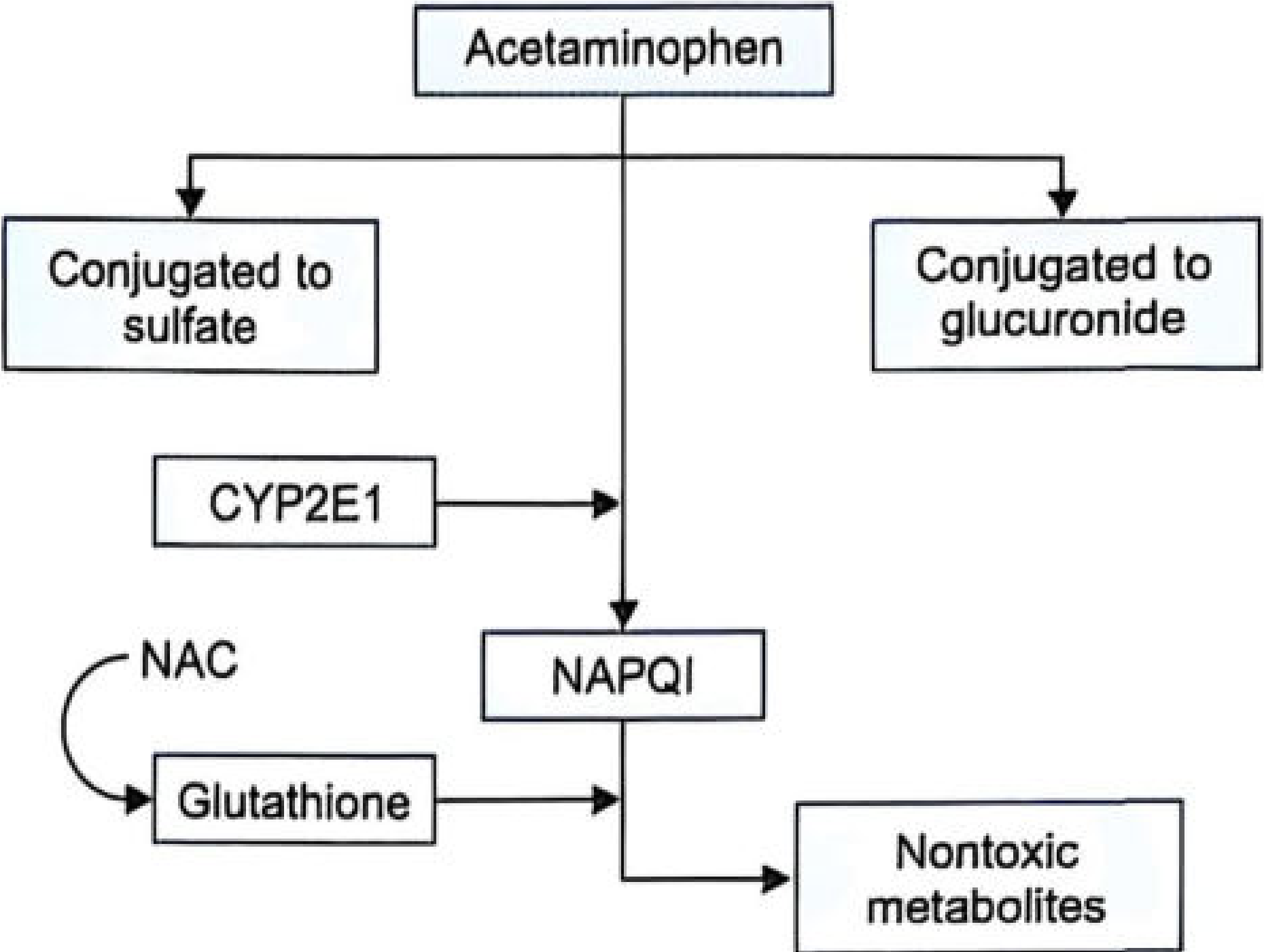
Under normal dosing, ~90% of paracetamol is conjugated with glucuronide and sulfate to form non-toxic metabolites. The remaining ~10% is oxidized via CYP2E1 to the highly reactive metabolite NAPQI (N-acetyl-p-benzoquinone imine), which is normally neutralized by hepatic glutathione.
In overdose, glutathione stores are exhausted. Unbound NAPQI covalently binds liver cell proteins - especially in the centrilobular region - triggering oxidative stress and hepatocyte necrosis.
Fatal Dose
Ingestion of 20 tablets of 500 mg (i.e., 10 g) is considered potentially fatal within 3-5 days (Parikh's Forensic Medicine & Toxicology).
Clinical Stages
| Stage | Timeframe | Features |
|---|---|---|
| Stage I | 0-24 hours | Nausea, vomiting, anorexia, malaise, diaphoresis. Often deceptively mild. LFTs usually normal. |
| Stage II | 24-72 hours | Right upper quadrant pain, rising AST/ALT and bilirubin, prolonged PT, possible renal involvement |
| Stage III | 72-96 hours | Peak hepatotoxicity: jaundice, coagulopathy, hypoglycemia, hepatic encephalopathy, renal failure, metabolic acidosis, possible multi-organ failure |
| Stage IV | 4-14 days | Gradual recovery if patient survives; complete liver regeneration is possible |
Important: A patient may appear well 12 hours after ingestion but die of acute hepatic failure up to 5 days later. All suspected cases must be admitted.
Postmortem Findings
Centrilobular hepatic necrosis, acute tubular necrosis, myocardial damage, cerebral edema.
Management of Paracetamol Overdose
1. Gastric Lavage - Consider if patient presents within 1 hour of ingestion.
2. Activated Charcoal - Administer within 1-2 hours of ingestion to limit absorption. Note: activated charcoal can reduce efficacy of oral NAC if given simultaneously.
3. N-Acetylcysteine (NAC) - the antidote - Most effective when given within 8-10 hours of overdose. It replenishes glutathione.
| Route | Regimen |
|---|---|
| Oral NAC | Loading: 140 mg/kg, then 70 mg/kg every 4 hours for up to 17 more doses (total 72 hours). Dilute to ~5% in juice/water. |
| IV NAC (preferred if vomiting) | 150 mg/kg over 1 hour, then 50 mg/kg over 4 hours, then 100 mg/kg over 16 hours (21-hour FDA protocol) |
| Methionine (oral, if NAC unavailable) | 10 g over 12 hours; oral glutathione precursor |
4. Rumack-Matthew Nomogram - Plot serum paracetamol level vs. time since ingestion to guide NAC therapy decisions.
5. Supportive care for hepatic failure:
- Hypoglycemia: IV dextrose
- Metabolic acidosis: IV bicarbonate
- Coagulopathy: Vitamin K1, fresh frozen plasma/whole blood
- Fluid management: Do not exceed 2.5 L/day IV (paracetamol can cause fluid retention)
6. Hemodialysis - In severe overdose with extremely high paracetamol levels or metabolic complications.
7. Liver Transplantation - Indicated when:
- Severe metabolic acidosis persists
- Prothrombin time > 100 seconds
- Serum creatinine > 300 μmol/L
Part 2: Aceclofenac (NSAID) Overdose
Aceclofenac is a phenylacetic acid derivative NSAID (pro-drug of diclofenac). Overdose toxicity follows the general NSAID overdose pattern.
Mechanism of Toxicity
- Inhibition of COX-1 and COX-2 reduces prostaglandin synthesis
- Loss of prostaglandin-mediated cytoprotection of gastric mucosa leads to GI erosions/bleeding
- Reduced renal prostaglandins cause vasoconstriction, ischemia, acute tubular necrosis
- Electrolyte imbalances can induce cardiac dysrhythmias
Clinical Features of NSAID Overdose
| System | Features |
|---|---|
| Initial (within 4 h) | Abdominal pain, nausea, vomiting |
| CNS | Headache, diplopia, nystagmus, altered mental status, coma (severe overdose) |
| Cardiovascular | Hypotension, bradycardia, ventricular tachycardia/fibrillation (in massive ingestion) |
| Renal | Acute kidney injury |
| Metabolic | Metabolic acidosis (massive overdose) |
| Dermatologic | Rash, urticaria, angioedema; rarely Stevens-Johnson syndrome/TEN |
- Symptomatic overdose occurs after ingestion of >100 mg/kg (for ibuprofen-class NSAIDs)
- Life-threatening toxicity (apnea, coma, acidosis) occurs after >400 mg/kg
- Most NSAID overdoses are asymptomatic or self-limited - there is no specific antidote
Management (NSAID Overdose Flowchart)
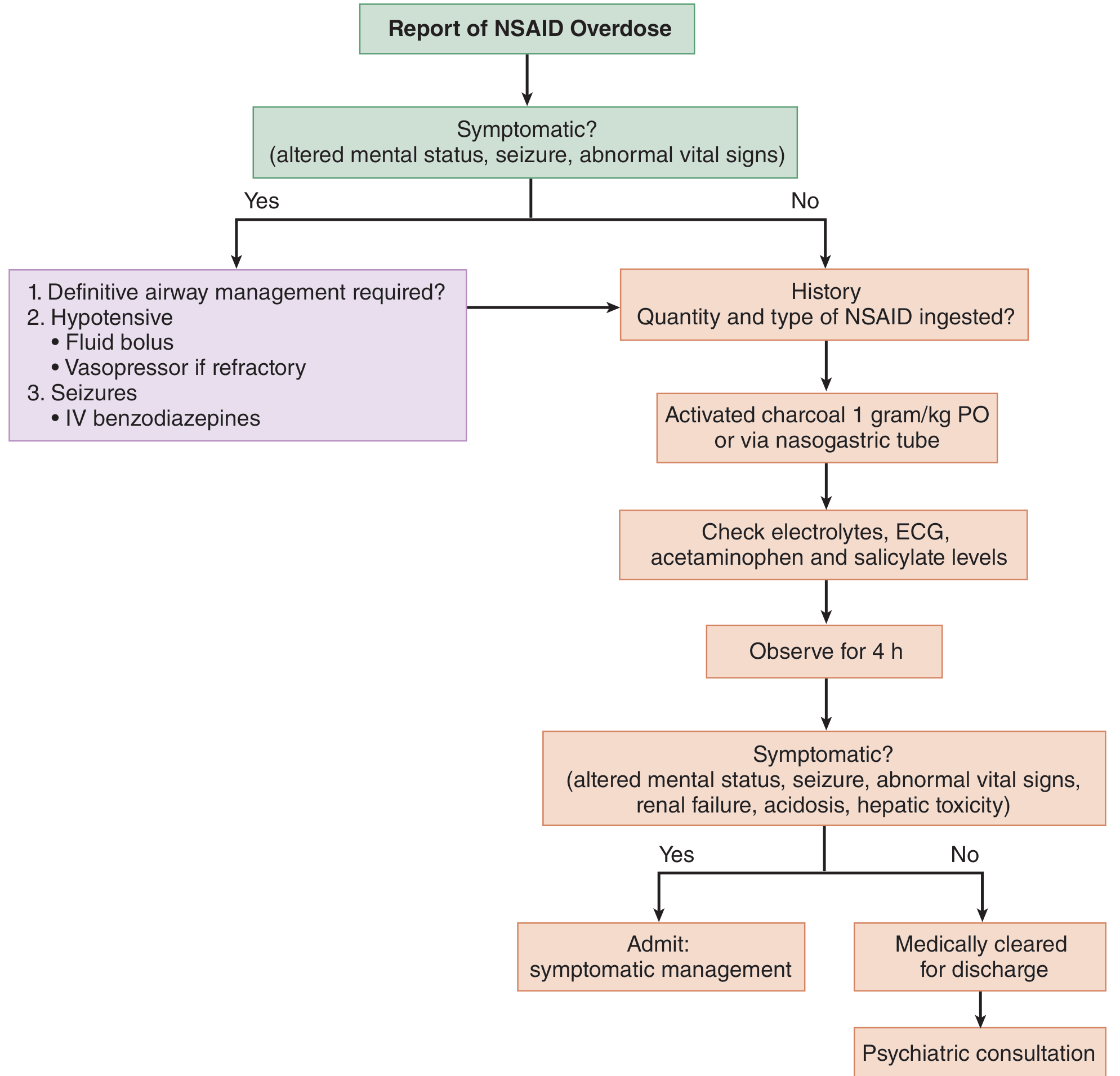
If symptomatic (altered mental status, seizure, abnormal vitals):
- Airway - Definitive airway management if required
- Hypotension - IV fluid bolus; vasopressors if refractory
- Seizures - IV benzodiazepines
If asymptomatic:
- Activated charcoal - 1 g/kg PO or via NG tube
- Labs - Electrolytes, ECG, acetaminophen and salicylate levels
- Observe for 4 hours
- If still asymptomatic at 4 hours - medically cleared for discharge + psychiatric consultation
Part 3: Combined Overdose (Aceclofenac + Paracetamol)
The combination compounds organ injury:
| Organ | Paracetamol contribution | Aceclofenac contribution |
|---|---|---|
| Liver | Centrilobular necrosis (NAPQI) | Hepatotoxicity (rare but possible) |
| Kidney | Acute tubular necrosis | Renal prostaglandin inhibition, AKI |
| GI Tract | Nausea/vomiting | Mucosal erosion, GI bleed |
| Coagulation | Coagulopathy (liver failure) | Platelet dysfunction (COX-1 inhibition) |
Key Management Points
- Admit all patients regardless of apparent initial well-being
- Treat as paracetamol overdose first - start NAC as soon as possible (within 8-10 hours is optimal)
- Obtain serum paracetamol level and plot on the Rumack-Matthew nomogram
- Monitor: LFTs, PT/INR, serum creatinine, electrolytes, blood glucose, ECG
- Activated charcoal (within 1-2 hours) for gastric decontamination
- Supportive care for both GI and hepatorenal complications
- Psychiatric evaluation for intentional self-harm cases
Sources: The Essentials of Forensic Medicine and Toxicology, 36th ed. | Parikh's Textbook of Medical Jurisprudence, Forensic Medicine and Toxicology | Tintinalli's Emergency Medicine, 9th ed. | Rosen's Emergency Medicine | Washington Manual of Medical Therapeutics
This is a shared conversation. Sign in to Orris to start your own chat.