
Types of tympanic membrane perforation
Reading File
Finding Sources
Finding Sources
Searching the Web
types of tympanic membrane perforation classification
Reading File
Reading File
Reading File
The Tintinalli and Lee sections give useful context but not a full classification breakdown. Let me search for more detailed classification content and look for images.
Finding Sources
Finding Sources
Searching Images
tympanic membrane perforation types otoscopy
Reading File
Finding Sources
The file at offset 2668 had the key text. Let me read that section more carefully:
Reading File
Finding Sources
I now have sufficient content from authoritative sources. Let me also fetch the key clinical images:
Loading Image
Loading Image
I now have comprehensive information to provide a thorough answer. Here is a complete overview of the types of tympanic membrane (TM) perforation:
Types of Tympanic Membrane Perforation
Anatomy Reminder
The TM is divided into two main parts:
- Pars tensa — the large lower portion, attached to the bony EAC via the tympanic annular ligament
- Pars flaccida (Shrapnell's membrane) — the smaller, less rigid superior portion above the notch of Rivinus
Classification by Location
1. Central Perforation
- Located entirely within the pars tensa, with an intact annular rim of TM surrounding the defect
- Does not involve the annulus (the fibrocartilaginous ring)
- Most commonly results from acute otitis media or trauma
- Considered "safe" — lower risk of cholesteatoma
- Subdivided by quadrant: anterior, posterior, inferior, or subtotal/total
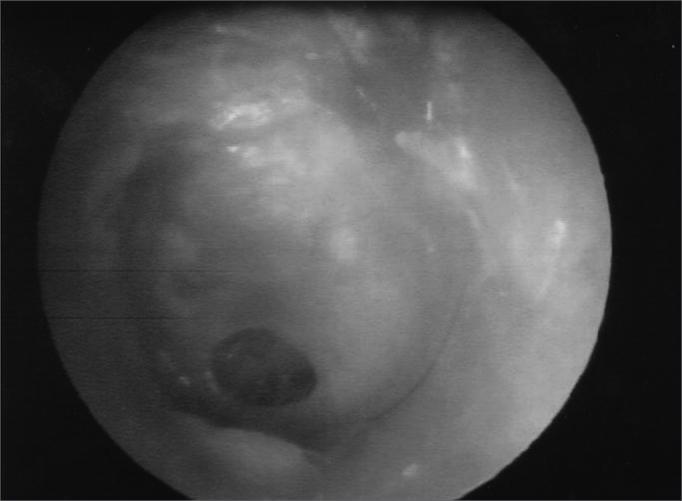
2. Marginal Perforation
- Reaches the annulus (involves the edge of the TM)
- Most commonly found in the posterosuperior quadrant
- Considered "unsafe" — significantly higher risk of cholesteatoma formation due to ingrowth of squamous epithelium from the canal
- Requires urgent ENT referral
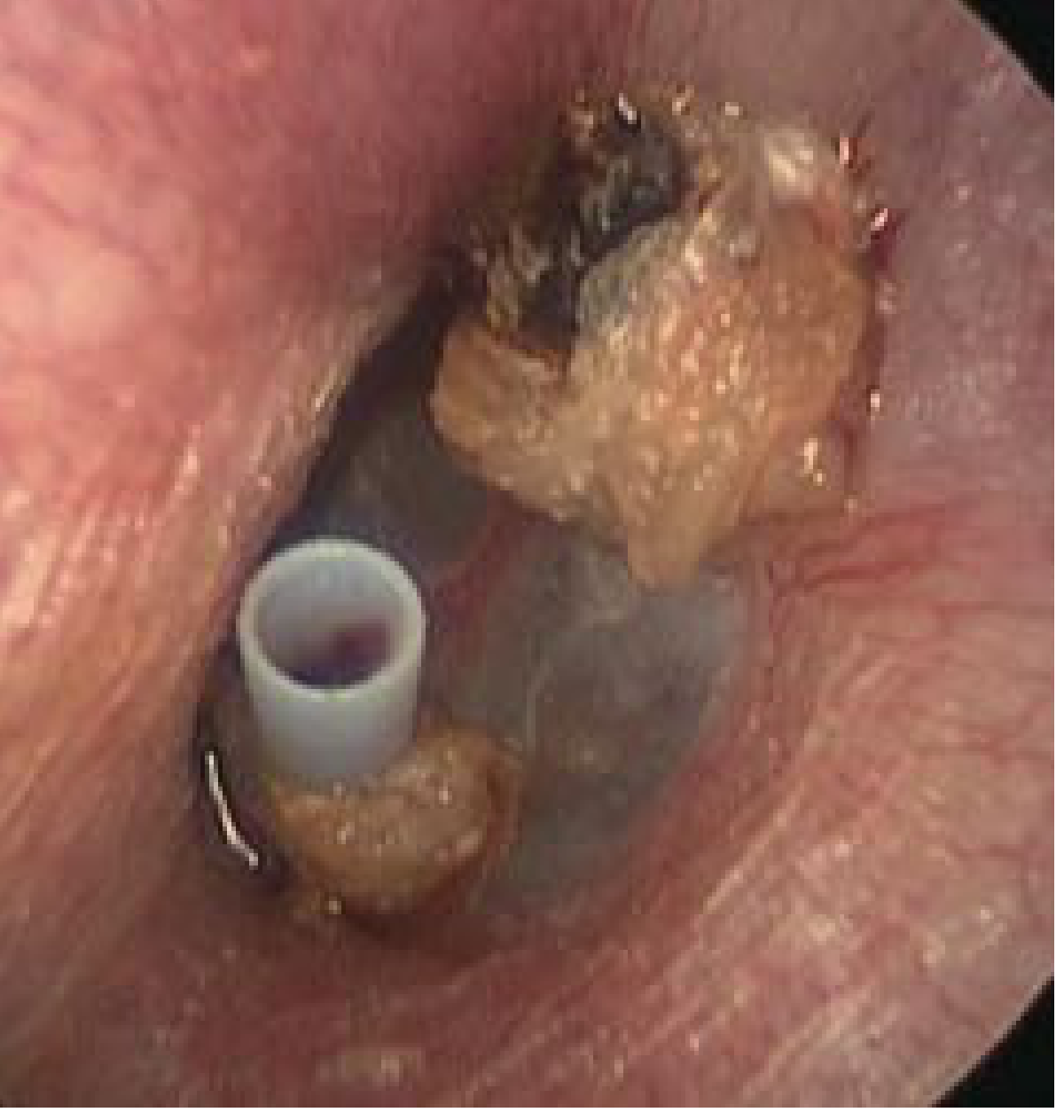
3. Attic (Pars Flaccida) Perforation
- Involves the pars flaccida in the superior/attic region
- Classic site for primary acquired cholesteatoma
- Often presents as a retraction pocket filled with keratin debris
Classification by Etiology
| Type | Cause | Typical Location |
|---|---|---|
| Infective | Acute otitis media (spontaneous rupture), chronic suppurative OM | Central (AOM); Marginal/attic (CSOM) |
| Traumatic | Blunt force, slap to ear, foreign body, cotton bud, blast | Pars tensa — anteroinferior |
| Barotrauma | Rapid pressure change (diving, aviation, explosions) | Pars tensa |
| Acoustic trauma | Loud blast/noise | Pars tensa |
| Iatrogenic | Post-myringotomy, suctioning, irrigation | Pars tensa |
| Lightning strike | Rare | Variable |
Traumatic perforations almost always occur in the pars tensa (the largest, thinnest area), typically anteriorly or inferiorly. — Tintinalli's Emergency Medicine
Classification by Duration
| Type | Definition | Typical Outcome |
|---|---|---|
| Acute | < 3 months | Most heal spontaneously (~90% for AOM-related) |
| Chronic | > 3 months, fails to heal | Requires surgical repair (myringoplasty/tympanoplasty) |
The "Safe" vs "Unsafe" Distinction (Clinically Critical)
| Feature | Safe | Unsafe |
|---|---|---|
| Location | Central (pars tensa, away from annulus) | Marginal or attic (pars flaccida / involves annulus) |
| Discharge | Mucopurulent, profuse | Scanty, foul-smelling, often blood-stained |
| Cholesteatoma | Absent | Present (or high risk) |
| Complications | Rare, less severe | Common, potentially serious (intracranial extension) |
| Urgency | Elective surgery | Urgent surgical exploration |
Classification by Size
- Small: < 25% of TM surface
- Medium: 25–50%
- Large: > 50%
- Subtotal: Near-total, with a small annular rim remaining
- Total: Complete destruction of the TM
Key Clinical Points
- Spontaneous rupture in AOM occurs in ~5% of cases; Nontypeable H. influenzae is the most common pathogen in children; heals in ~90% without intervention (K.J. Lee's Essential Otolaryngology)
- Perforations in the posterosuperior quadrant or after penetrating trauma carry greater risk of ossicular chain damage and warrant ENT referral within 24 hours (Tintinalli's)
- Marginal perforations involving the annulus are more likely to result in retained debris and cholesteatoma (Cummings Otolaryngology Head and Neck Surgery)
- Water precautions apply to all perforations until healed
Sources: Cummings Otolaryngology Head and Neck Surgery; K.J. Lee's Essential Otolaryngology; Tintinalli's Emergency Medicine
Classification of types of perforation
Based on the previous discussion, this is about tympanic membrane perforation classification — let me pull detailed textbook content on the formal classification systems.
Finding Sources
Finding Sources
Searching the Web
tympanic membrane perforation classification types central marginal attic ENT
Finding Sources
Finding Sources
Finding Sources
Finding Sources
Finding Sources
Searching Images
classification tympanic membrane perforation central marginal attic diagram
Loading Image
Loading Image
Here is a comprehensive, structured classification of tympanic membrane perforations:
Classification of Tympanic Membrane Perforation
I. By Location (Most Clinically Important)
A. Central Perforation
- Situated entirely within the pars tensa
- Annular rim is intact — the perforation does not reach the bony annulus
- The handle of the malleus may still be visible
- Associated with tubotympanic (safe) disease
- Sub-classified by quadrant:
- Anteroinferior — most common in traumatic perforation (slap, barotrauma)
- Posteroinferior — common in infective (AOM)
- Posterosuperior — risk of ossicular chain damage; urgent ENT referral required
- Kidney-shaped / reniform — horseshoe shape around malleus handle
B. Marginal Perforation
- Reaches the annulus — no intact rim at one or more edges
- Most commonly posterosuperior quadrant
- Associated with atticoantral (unsafe) disease
- High risk of cholesteatoma formation — squamous epithelium migrates through the annular gap
- Pockets and perforations marginal in location are more likely to result in retained debris and cholesteatoma — Cummings Otolaryngology
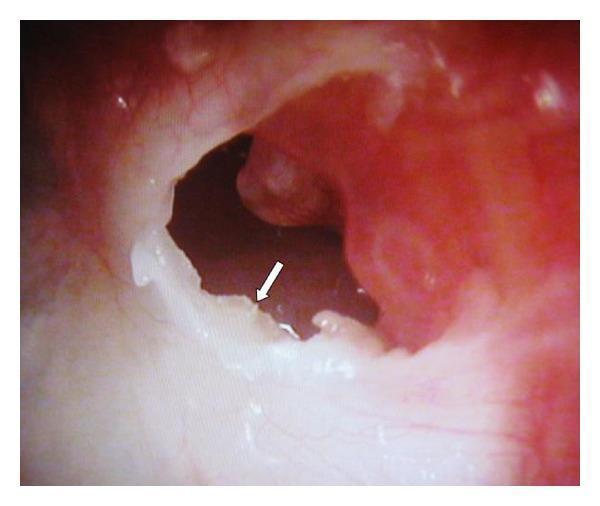
C. Attic (Pars Flaccida) Perforation
- Located in the pars flaccida (Shrapnell's membrane), superior to the notch of Rivinus
- Result of a retraction pocket that deepens into a primary acquired cholesteatoma
- Often appears as a crust or keratin debris plugging a superior defect
- Also called "attic perforation" — the most dangerous type
- Classified as unsafe / atticoantral disease
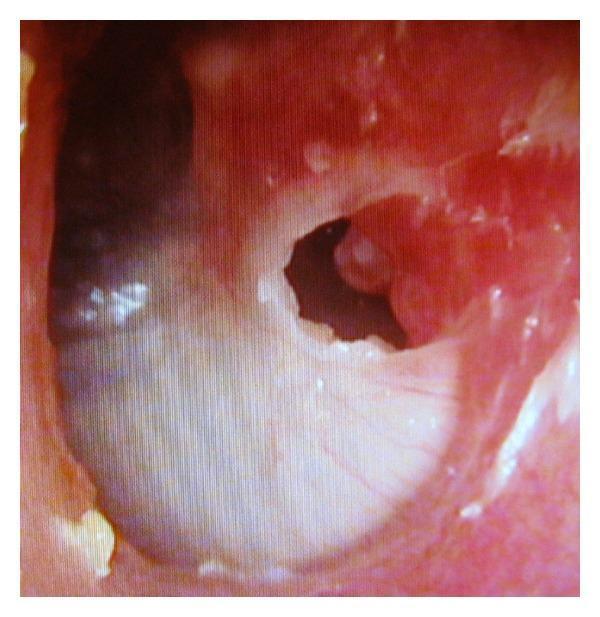
II. Safe vs. Unsafe — The Clinical Dichotomy
| Feature | Safe (Tubotympanic) | Unsafe (Atticoantral) |
|---|---|---|
| Location | Central pars tensa | Marginal / attic (pars flaccida) |
| Cholesteatoma | Absent | Present or likely |
| Discharge | Profuse, mucopurulent, odourless | Scanty, foul-smelling, blood-tinged |
| Hearing loss | Mild–moderate conductive | Can be severe; mixed if labyrinthine erosion |
| Complications | Rare | Common (facial nerve palsy, intracranial spread, labyrinthitis) |
| Urgency | Elective tympanoplasty | Urgent/early surgical exploration |
III. By Size
| Grade | Extent of TM Involved |
|---|---|
| Small | < 25% |
| Medium | 25–50% |
| Large | 50–75% |
| Subtotal | > 75%, with a rim of TM remaining |
| Total | Complete absence of TM |
IV. By Aetiology
| Type | Mechanism | Typical Location |
|---|---|---|
| Infective | AOM (spontaneous rupture), CSOM | Central (AOM); marginal/attic (CSOM) |
| Traumatic | Slap, cotton bud, foreign body | Pars tensa, anteroinferior |
| Barotrauma | Diving, aviation, blast | Pars tensa |
| Acoustic trauma | Explosions, gunshot | Pars tensa |
| Iatrogenic | Post-myringotomy, syringing | Pars tensa |
Traumatic perforations almost always occur in the pars tensa, typically anteriorly or inferiorly — Tintinalli's Emergency Medicine
V. By Duration
| Type | Duration | Outcome |
|---|---|---|
| Acute | < 3 months | ~90% heal spontaneously (especially post-AOM) |
| Chronic | > 3 months | Requires surgical repair |
VI. By Disease Type (ENT Classification)
| Type | Disease | Perforation | Cholesteatoma |
|---|---|---|---|
| Tubotympanic (mucosal) | CSOM — safe | Central | No |
| Atticoantral (squamosal) | CSOM — unsafe | Marginal / attic | Yes |
This tubotympanic vs. atticoantral distinction is the most operationally important classification in ENT practice — it directly determines urgency of surgical intervention and risk of life-threatening complications.
Sources: Cummings Otolaryngology Head and Neck Surgery; K.J. Lee's Essential Otolaryngology; Tintinalli's Emergency Medicine
Define small, medium, large, subtotal, total perforation
Finding Sources
Finding Sources
Searching the Web
tympanic membrane perforation size classification small medium large subtotal total definition percentage quadrant
Finding Sources
Finding Sources
Finding Sources
Finding Sources
Finding Sources
Searching PubMed
tympanic membrane perforation size classification grading
You've run out of free credits. Sign up for a free account to continue using Orris.
This is a shared conversation. Sign in to Orris to start your own chat.