
Tell me all about analgesic used in basic opd bases commonly n how which work at wht severity
Reading File
Now let me search the medical library for comprehensive analgesic content.
Finding Sources
Finding Sources
Finding Sources
Finding Sources
Finding Sources
Good finds. Now let me read the most relevant sections in parallel.
Reading File
Reading File
Reading File
Finding Sources
Reading File
Finding Sources
Finding Sources
Reading File
Reading File
Reading File
Loading Image
I now have rich, authoritative content from multiple textbooks. Let me compile the full answer.
Analgesics Used in Basic OPD Practice: What They Are, How They Work, and When to Use Them
The WHO Analgesic Ladder - The Framework
The World Health Organization developed the analgesic ladder as the cornerstone of pain management. It guides drug selection based on pain severity (mild, moderate, severe), not a "try everything weak first" approach.
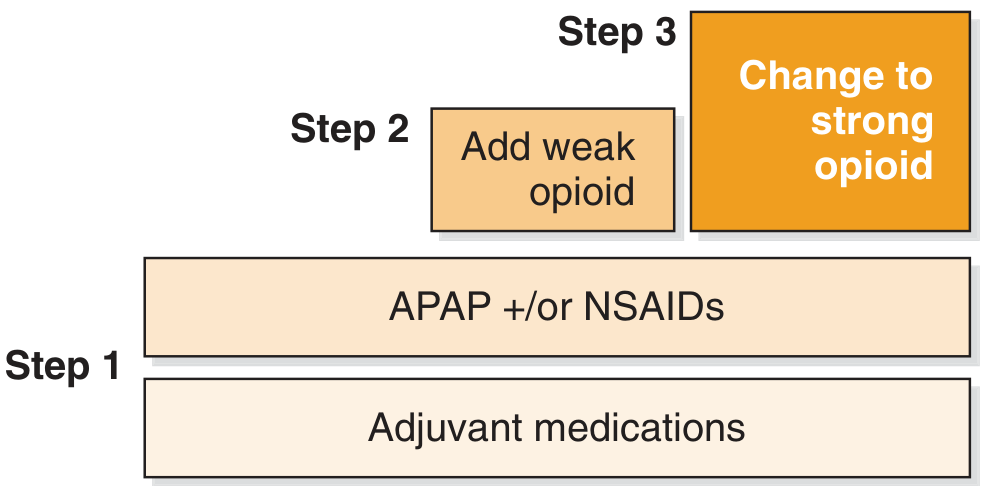
| Step | Pain Severity | Drug Class | Examples |
|---|---|---|---|
| Step 1 | Mild (NRS 1-3) | Non-opioids + adjuvants | Paracetamol, NSAIDs, Aspirin |
| Step 2 | Moderate (NRS 4-6) | Weak opioids + non-opioids + adjuvants | Tramadol, Codeine, Hydrocodone |
| Step 3 | Severe (NRS 7-10) | Strong opioids + non-opioids + adjuvants | Morphine, Oxycodone, Hydromorphone |
Adjuvants (e.g. tricyclic antidepressants, anticonvulsants) can be added at any step.
STEP 1 - Mild Pain (NRS 1-3)
1. Paracetamol (Acetaminophen / APAP)
The #1 first-line OPD analgesic.
Mechanism:
- Inhibits prostaglandin synthesis in the CNS, producing antipyretic and analgesic effects
- Has minimal peripheral COX inhibition (peripherally inactivated), so it has weak anti-inflammatory activity
- Does NOT affect platelet function or cause GI bleeding
- Is NOT classified as an NSAID
Uses in OPD: Headache, fever, mild musculoskeletal pain, post-procedure pain, toothache, pain in children (drug of choice for viral illness in kids - avoids Reye syndrome risk)
Dose: 500-1000 mg every 4-6 hours; max 4 g/day (3 g/day in liver disease)
Key side effect: Hepatotoxicity in overdose - NAPQI (toxic metabolite) accumulates when glutathione is depleted, causing hepatic necrosis. Antidote = N-acetylcysteine.
Avoid in: Severe hepatic impairment, alcoholism, chronic malnutrition.
2. NSAIDs (Non-Steroidal Anti-Inflammatory Drugs)
This is the most commonly used drug class for mild-to-moderate OPD pain.
Mechanism:
NSAIDs inhibit cyclooxygenase (COX-1 and/or COX-2), which blocks prostaglandin synthesis:
- Analgesic effect: PGE2 sensitizes nerve endings to bradykinin and histamine. By reducing PGE2, pain sensation drops. COX-2 inhibition is primarily responsible for analgesia.
- Anti-inflammatory effect: Reduced prostaglandin formation dampens inflammation
- Antipyretic effect: Blocks PGE2 synthesis in the anterior hypothalamus, resetting the thermostat to normal
Common OPD NSAIDs:
| Drug | Notes |
|---|---|
| Ibuprofen | Most commonly used; 400-600 mg TDS with food; good safety profile |
| Diclofenac | Commonly used in musculoskeletal pain; available as tablet, injection, gel |
| Naproxen | Longer acting (twice daily); good for dysmenorrhea, arthritis |
| Aspirin | Analgesic at low-moderate dose; anti-inflammatory at high dose; antiplatelet at 75-100 mg |
| Ketorolac | One exception - effective for severe pain (renal/biliary colic); short-term use only |
| Celecoxib | COX-2 selective; less GI side effects; for patients at GI risk |
| Mefenamic acid | Widely used for dysmenorrhea |
Uses in OPD: Headache, dysmenorrhea, arthralgia, myalgia, dental pain, soft tissue injuries, osteoarthritis, gout
No single NSAID has superior analgesic efficacy over another - they are considered equivalent.
Key side effects:
- GI: Gastric irritation, peptic ulcer (COX-1 inhibition reduces protective gastric mucus)
- Renal: Reduced renal blood flow, fluid retention
- Cardiovascular: Increased risk of MI and stroke (except aspirin)
- Platelet: Reduced aggregation, increased bleeding time
- Aspirin in children < 19 years with viral infections - risk of Reye syndrome (avoid it)
Protect the stomach: Co-prescribe a PPI (omeprazole) if long-term NSAIDs are needed.
STEP 2 - Moderate Pain (NRS 4-6)
3. Tramadol (Weak Opioid - Most Common OPD Opioid)
Mechanism (dual mechanism):
- Acts on mu-opioid receptors (partial agonism) - spinal and supraspinal analgesia
- Inhibits norepinephrine and serotonin reuptake - modulates descending pain pathways
Uses in OPD: Post-procedure pain, moderate musculoskeletal pain, neuropathic pain component, cancer pain (step 2)
Dose: 50-100 mg every 4-8 hours; max 400 mg/day
Key side effects: Nausea, vomiting, dizziness, constipation, risk of seizures (especially with SSRIs - serotonin syndrome risk), dependence with long-term use
Advantage: Less respiratory depression than pure opioids; available orally in OPD setting
4. Codeine
Mechanism: Prodrug - converted to morphine by CYP2D6 in the liver; activates mu-opioid receptors
Uses: Mild-moderate pain, cough suppression
Note: ~10% of people are "poor metabolizers" (CYP2D6 deficiency) and get no analgesia; ~1-2% are "ultra-rapid metabolizers" and can have toxicity
STEP 3 - Severe Pain (NRS 7-10)
Typically not initiated in a basic OPD - these require controlled prescriptions and close monitoring.
5. Opioids (Strong) - Morphine, Oxycodone, Hydromorphone, Fentanyl, Pethidine
Mechanism:
- Activate mu-opioid receptors (OP3)
- Subtype I (supraspinal): Peripheral analgesia, euphoria, prolactin release
- Subtype II (spinal): Spinal analgesia, respiratory depression, dependence, GI dysmotility, miosis
- Also act on kappa (K) receptors:
- K1: Spinal analgesia and miosis
- K2: Psychotomimesis and dysphoria
- K3: Supraspinal analgesia
Classification:
- Natural: Morphine, Codeine
- Semisynthetic: Heroin, Hydrocodone, Oxymorphone, Hydromorphone
- Synthetic: Tramadol, Fentanyl, Pethidine, Methadone
Duration of action:
- Minutes-to-hours: Fentanyl, Alfentanil, Sufentanil
- 2-4 hours: Pethidine, Pentazocine
- 4-8 hours: Morphine, Codeine
- 8+ hours: Methadone, Buprenorphine
Adverse effects: Respiratory depression, nausea, vomiting, miosis, hypotension, urinary retention, constipation, pruritus, dependence
Drug interactions: Enhanced CNS depression with alcohol, barbiturates, phenothiazines, tricyclic antidepressants
Adjuvant Analgesics (Added at Any Step)
These drugs are not primary analgesics but enhance pain relief, especially for neuropathic pain:
| Drug Class | Examples | Used For |
|---|---|---|
| Anticonvulsants | Gabapentin, Pregabalin | Neuropathic pain, nerve compression |
| Tricyclic antidepressants | Amitriptyline | Neuropathic/chronic pain |
| SNRIs | Duloxetine | Diabetic neuropathy, fibromyalgia |
| Topical agents | Lidocaine gel, Diclofenac gel | Local musculoskeletal, post-herpetic neuralgia |
| Muscle relaxants | Cyclobenzaprine, Baclofen | Muscle spasm component of pain |
Quick Summary: Which Drug at Which Severity?
NRS 1-3 (Mild):     Paracetamol 500-1000 mg ± Ibuprofen 400 mg
NRS 4-6 (Moderate): Tramadol 50-100 mg ± Paracetamol ± NSAID
NRS 7-10 (Severe):  Morphine/Oxycodone (hospital/specialist level)
                     + Ketorolac IV/IM (severe colic in ED)
Neuropathic pain:   Add Pregabalin/Amitriptyline at any step
Key OPD Prescribing Principles (WHO "5 Rights")
- By mouth - oral route preferred when feasible
- By the clock - regular scheduled dosing (not just "as needed") for continuous relief
- By the ladder - match drug to pain severity
- For the individual - titrate to each patient
- Attention to detail - reassess regularly, watch for adverse effects
Sources: Lippincott Illustrated Reviews: Pharmacology; Cummings Otolaryngology Head & Neck Surgery; Tintinalli's Emergency Medicine; Forensic Medicine and Toxicology 36th ed.
This is a shared conversation. Sign in to Orris to start your own chat.