
All cranial nerves and the foramina where they pass from also tell name of bones of which foramen is part of
Reading File
Searching for comprehensive cranial nerve and foramina information now.
search_medical_text
cranial nerves foramina skull passage bones
Harrison's Principles of Internal Medicine, Twenty First Edition
Page 12490
search_medical_image
cranial nerves foramina skull base diagram
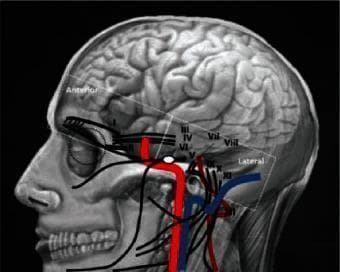
Hugging Face pmc clinical VQA raw
Page 0
GradeResponse
GradeResponse
Here is a comprehensive table of all 12 cranial nerves, their exit foramina, and the bones that form each foramen:
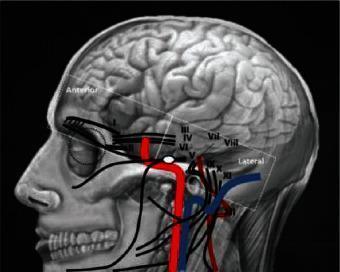
All 12 Cranial Nerves — Foramina & Bones
| CN | Name | Foramen / Opening | Bones Forming the Foramen |
|---|---|---|---|
| I | Olfactory | Cribriform plate foramina (multiple small holes) | Ethmoid bone (cribriform plate) |
| II | Optic | Optic canal | Sphenoid bone (lesser wing / body) |
| III | Oculomotor | Superior orbital fissure | Sphenoid bone (greater wing + lesser wing) |
| IV | Trochlear | Superior orbital fissure | Sphenoid bone (greater wing + lesser wing) |
| V₁ | Trigeminal – Ophthalmic | Superior orbital fissure | Sphenoid bone (greater wing + lesser wing) |
| V₂ | Trigeminal – Maxillary | Foramen rotundum | Sphenoid bone (greater wing / body) |
| V₃ | Trigeminal – Mandibular | Foramen ovale | Sphenoid bone (greater wing) |
| VI | Abducens | Superior orbital fissure | Sphenoid bone (greater wing + lesser wing) |
| VII | Facial | Internal acoustic meatus → Stylomastoid foramen | Internal acoustic meatus: Temporal bone (petrous part); Stylomastoid foramen: Temporal bone (between mastoid & styloid processes) |
| VIII | Vestibulocochlear | Internal acoustic meatus | Temporal bone (petrous part) |
| IX | Glossopharyngeal | Jugular foramen | Temporal bone (petrous part) + Occipital bone |
| X | Vagus | Jugular foramen | Temporal bone (petrous part) + Occipital bone |
| XI | Accessory (Spinal) | Jugular foramen (exits); spinal root enters via Foramen magnum | Jugular foramen: Temporal bone + Occipital bone; Foramen magnum: Occipital bone |
| XII | Hypoglossal | Hypoglossal canal | Occipital bone |
Key Foramina — Summary by Location
Superior Orbital Fissure
- CN III, IV, V₁, VI all pass through here
- Formed entirely by the sphenoid bone (gap between greater and lesser wings)
Optic Canal
- CN II only
- Formed by the lesser wing and body of the sphenoid bone
Foramen Rotundum
- CN V₂ (maxillary nerve)
- Entirely within the greater wing of the sphenoid
Foramen Ovale
- CN V₃ (mandibular nerve); also lesser petrosal nerve and accessory meningeal artery
- Entirely within the greater wing of the sphenoid
Foramen Spinosum (no cranial nerve, but nearby)
- Middle meningeal artery — sphenoid bone
Cribriform Plate
- Multiple tiny foramina for CN I (olfactory nerve filaments)
- Part of the ethmoid bone
Internal Acoustic Meatus (IAM)
- CN VII + CN VIII
- Petrous part of the temporal bone
Stylomastoid Foramen
- CN VII exits the skull here after traversing the facial canal
- Temporal bone (between the base of the styloid process and the mastoid process)
Jugular Foramen
- CN IX, X, XI (+ internal jugular vein, inferior petrosal sinus)
- Posterior border: Occipital bone
- Anterior border: Petrous part of temporal bone
Hypoglossal Canal
- CN XII
- Occipital bone (anterolateral to foramen magnum)
Foramen Magnum
- CN XI (spinal root ascends through it), brainstem/spinal cord junction, vertebral arteries
- Occipital bone
Mnemonic for Foramina at a Glance
| Foramen | Mnemonic Nerve(s) |
|---|---|
| Cribriform plate | I — "I smell" |
| Optic canal | II — "I see" |
| Superior orbital fissure | III, IV, V₁, VI — "3, 4, 5-one, 6 through the fissure" |
| Foramen rotundum | V₂ — "Rotund cheek (maxilla)" |
| Foramen ovale | V₃ — "Oval jaw (mandible)" |
| IAM → Stylomastoid | VII, VIII — "Facial + hearing, same meatus" |
| Jugular foramen | IX, X, XI — "9-10-11 jugular" |
| Hypoglossal canal | XII — "Hypo = XII" |
Key Bones Involved (Summary)
| Bone | Cranial Nerves Passing Through Its Foramina |
|---|---|
| Ethmoid | CN I |
| Sphenoid | CN II, III, IV, V₁, V₂, V₃, VI |
| Temporal | CN VII, VIII, IX, X, XI |
| Occipital | CN IX, X, XI, XII |
Note: CN IX, X, XI pass through the jugular foramen, which is a joint foramen between the temporal and occipital bones, so both bones share credit for those nerves.
This is a shared conversation. Sign in to Orris to start your own chat.