
Using millers anaesthesiology book discuss CRPS - II
Reading File
Finding Sources
Finding Sources
Finding Sources
Finding Sources
Finding Sources
Finding Sources
The main CRPS content in Miller's is in block19 and block30. Let me read those sections in detail.
Reading File
Reading File
Reading File
Let me now read the specific CRPS section from block19 around lines 400-600:
Reading File
Reading File
The references section means the CRPS-specific content is likely earlier. Let me read block30 which had the CRPS content, and also search for causalgia specifically (CRPS-II):
Reading File
Finding Sources
Finding Sources
Finding Sources
Reading File
Reading File
Let me search specifically for CRPS-II content in the Stimulation Techniques section and also the dedicated CRPS section in Miller's:
Reading File
Now let me look at the Bradley and Daroff's Neurology book which had a very dedicated CRPS section, and also read the specific CRPS content from block19 around line 400-490 (the interventional section):
Reading File
Reading File
Reading File
Reading File
I now have comprehensive content from Miller's Anesthesia (and supplemental neurology sources). Let me also fetch the CRPS clinical image and the skin changes image:
Loading Image
Loading Image
Searching PubMed
"complex regional pain syndrome" type II causalgia
I now have all the content needed for a comprehensive answer. Let me synthesize everything from Miller's Anesthesia and the supplemental sources.
Complex Regional Pain Syndrome Type II (CRPS-II)
Miller's Anesthesia, 10th Edition — with supplemental coverage from Bradley and Daroff's Neurology in Clinical Practice
1. Nomenclature and Historical Background
The term causalgia was first coined by Weir Mitchell in the 1870s to describe severe, progressive, distal limb pain following major nerve injury. In 1946, Evans introduced the term "reflex sympathetic dystrophy" (RSD), later defined by the IASP as continuous pain in part of an extremity after trauma, associated with sympathetic hyperactivity, but without a definable major nerve lesion.
In 1994, the IASP replaced this nomenclature with Complex Regional Pain Syndrome (CRPS):
| Type | Former Name | Key Distinction |
|---|---|---|
| CRPS-I | Reflex Sympathetic Dystrophy (RSD) | No definable nerve lesion |
| CRPS-II | Causalgia | Definable peripheral nerve lesion is present |
CRPS is classified under neuropathic pain in Miller's broader taxonomy of chronic non-cancer pain (CNCP), which includes postherpetic neuralgia, phantom pain, diabetic neuropathy, and HIV-associated neuropathy. — Miller's Anesthesia, 10th ed., p. 6835
2. Epidemiology
- Mean age of CRPS patients: 36–46 years
- Female predominance: 60–81% of cases
- Common precipitating injuries in CRPS overall:
- Fracture: 16–46%
- Strain/sprain: 10–29%
- Post-surgical: 3–24%
- Contusion/crush injury: 8–18%
- In CRPS-II specifically, a major nerve injury is the defining precipitant (e.g., median nerve, sciatic nerve)
— Bradley and Daroff's Neurology in Clinical Practice; Miller's Anesthesia, 10th ed.
3. Pathophysiology
The pathophysiology remains incompletely understood, but several mechanisms are implicated:
a) Sympathetic Nervous System Dysfunction
- An abnormal reflex arc following the sympathetic nervous system, modulated by cortical centres, has been proposed
- Decreased sympathetic outflow to the affected limb is now understood to be the underlying mechanism — autonomic features previously ascribed to sympathetic overactivity are now thought to result from catecholamine hypersensitivity at peripheral receptors
b) Central Sensitization
- In Miller's framework of chronic pain neurophysiology, central sensitization — amplification of nociceptive signals in the dorsal horn — plays a critical role in maintaining and spreading CRPS pain beyond the original nerve distribution
- NMDA receptor upregulation, disinhibition, and cortical reorganization perpetuate pain
c) Peripheral Nerve Injury (Specific to CRPS-II)
- Unlike CRPS-I, CRPS-II requires a definable nerve lesion
- Axonal injury triggers ectopic discharge, upregulation of sodium channels, and abnormal sympatho-afferent coupling — injured afferents develop adrenoceptor sensitivity, so circulating catecholamines directly excite nociceptors
d) Psychosocial Factors
- Significant emotional disturbance at onset is present in many patients
- Stress may be a precipitating factor
- Miller's biopsychosocial model of chronic pain applies: biological injury, psychological (catastrophizing, fear-avoidance), and social reinforcement all perpetuate the syndrome — Miller's Anesthesia, 10th ed., p. 6835–6836
4. Clinical Features
Pain is the cardinal feature — described as burning, aching, pricking, or shooting, typically disproportionate to the initiating injury and extending beyond the nerve territory.
Pain Characteristics
- Hyperalgesia: exaggerated pain response to a normally painful stimulus (e.g., pin prick)
- Mechanical allodynia: light touch perceived as severe, long-lasting pain
- Thermal allodynia: cooling stimuli (e.g., drop of alcohol) perceived as painful
- Pain severity is not proportional to the initial injury
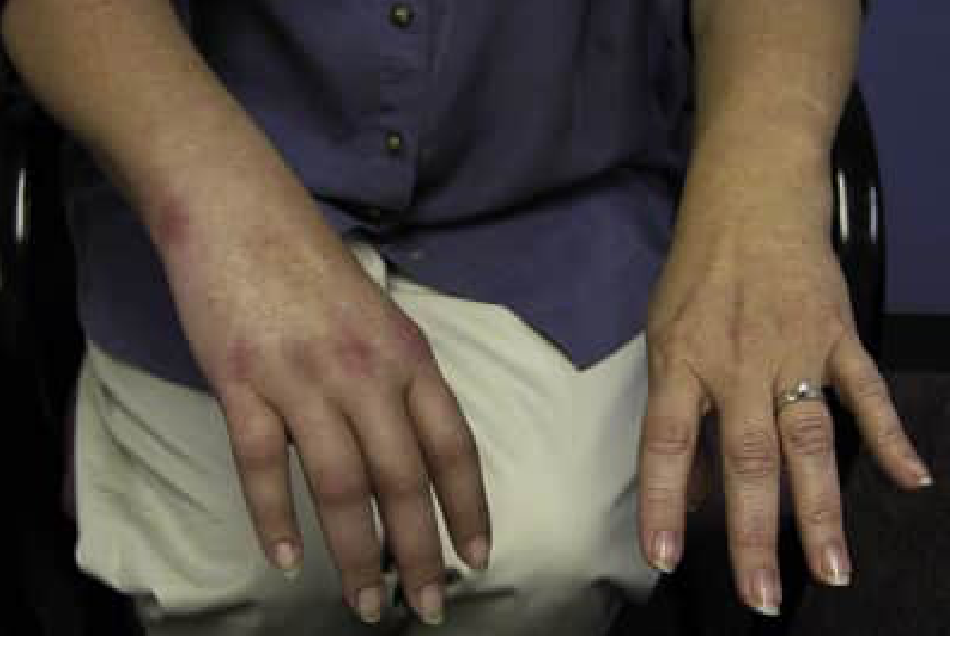
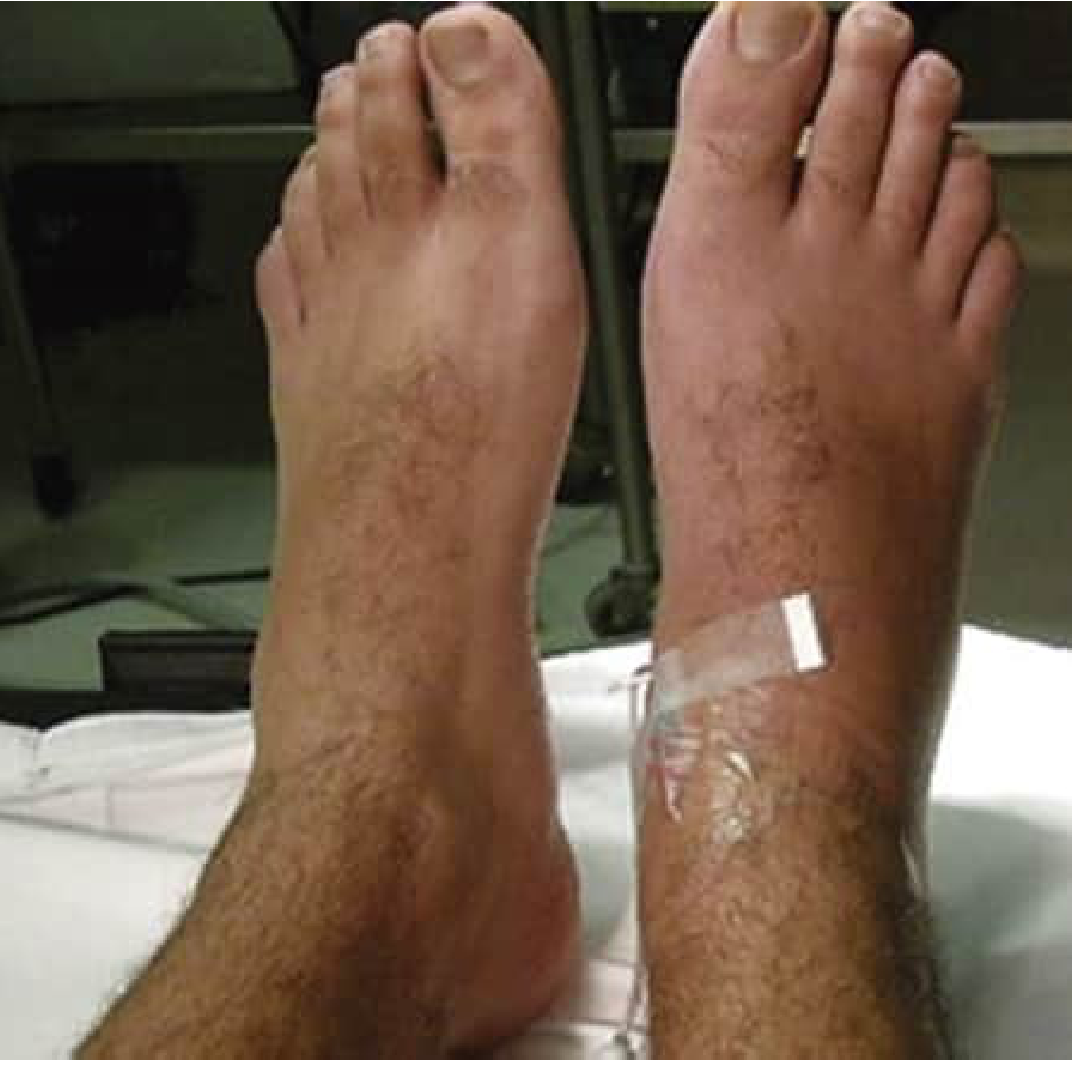
Trophic and Autonomic Changes
Skin color/temperature:
- The affected area may be reddish, then turn blue, purple, or pale within minutes to hours
- Livedo reticularis (non-blanchable reticulated skin pattern) is common
- Temperature asymmetry between affected and unaffected sides may exceed 1°C
Sudomotor:
- ~60% of patients report excessive sweating in the affected limb
Edema:
- Present in the majority; ranges from mild cellulitis-like swelling in early stages to severe edema requiring Doppler to exclude DVT in late stages
Motor dysfunction:
- Not required for diagnosis, but weakness, tremor, or dystonia may be present
Trophic changes (late):
- Waxy, shiny skin; brittle, ridged nails; muscle wasting; joint contractures
5. Clinical Staging
Three stages of progression have been described (Schwartzman and Maleki):
| Stage | Features | Duration |
|---|---|---|
| Stage I (Early) | Burning/throbbing pain, allodynia, localized edema, increased skin temperature, vasomotor changes (color, temperature) | Weeks to months |
| Stage II | Progressive soft tissue edema, skin thickening, articular soft tissue changes, muscle wasting | 3–6 months |
| Stage III (Late) | Joint contractures, frozen shoulder, digital contractures, waxy trophic skin, brittle nails, severe radiographic demineralization | Ongoing |
- CRPS can spread from one limb to others and, in severe cases, involve all four extremities with severe pain, edema, cold/cyanotic limbs, contractures, and atrophy
6. Diagnosis
Diagnosis is essentially clinical. Key features:
- Diffuse, severe, nonsegmental pain
- Cyanosis or mottling, increased sweating, shiny skin
- Swollen non-articular tissue
- Coldness to touch
- History of a definable nerve injury (differentiating CRPS-II from CRPS-I)
Investigations
- Autonomic testing: Resting sweat output + quantitative sudomotor axon reflex test (QSART) together are 94% sensitive and 98% specific — excellent predictors of response to sympathetic block
- Bone scintigraphy: Most sensitive in Stage I; less useful in later stages
- Plain radiographs: Show severe bone demineralization in Stage III
- Sympathetic block: Serves both a diagnostic and therapeutic role — a positive response to stellate ganglion or lumbar sympathetic block supports the diagnosis
7. Management — Anesthetic Perspective
Miller's Anesthesia places CRPS management firmly within the framework of multimodal, interdisciplinary chronic pain management.
a) Pharmacological Treatment
| Drug Class | Role |
|---|---|
| Antineuropathics (gabapentin, pregabalin) | First-line for neuropathic pain; also used perioperatively |
| TCAs (amitriptyline) | Neuropathic pain and comorbid depression |
| α₂-agonists (clonidine) | Analgesia; perioperative adjunct |
| Bisphosphonates | Prevent bone resorption; also analgesic |
| Prazosin, propranolol, nifedipine/verapamil, guanethidine, phenoxybenzamine | Occasionally effective via sympatholytic/adrenoceptor mechanisms |
| Ketamine (S-ketamine) | NMDA antagonism at subanesthetic doses — provides effective and long-term pain relief in CRPS-I patients; also used in CRPS-II |
b) Interventional/Regional Anesthetic Techniques
Regional anesthesia occupies a central role in CRPS management in Miller's. — Miller's Anesthesia, 10th ed., p. 10961
Stellate Ganglion Block
- Indicated for upper extremity CRPS (including CRPS-II)
- Sympathetically maintained pain may respond well — "sympathetically maintained pain syndrome" is a key indication
- Early stellate ganglion blocks may significantly decrease pain and hasten clinical recovery
- May also prevent recurrence of CRPS after reoperation of the affected extremity
- A Horner syndrome confirms correct placement; ultrasound guidance is preferred
Lumbar Sympathetic Block
- For lower extremity CRPS
Intravenous Regional Block (IVRB / Bier Block)
- IVRB with bretylium provided significantly longer analgesia than lidocaine in a double-blind study
Epidural Techniques
- Epidural clonidine and ketamine — good pain relief reported
- Epidural anesthesia facilitates physiotherapy and functional rehabilitation
Continuous Peripheral Nerve Blocks
- Perineural catheters reduce pain, facilitate physiotherapy, and are used for functional rehabilitation
- Reported effective in children with CRPS as well — Miller's Anesthesia, 10th ed., p. 10961
Intrathecal Drug Delivery
- Intrathecal baclofen and morphine — good pain relief reported in refractory cases
c) Spinal Cord Stimulation (SCS)
- SCS has gained interest; unblinded studies suggest selected CRPS patients may benefit
- An early study with 2-year follow-up reported long-term pain reduction and improved health-related quality of life with SCS
- However, a more recent RCT (Kemler et al., 2008) with 5-year follow-up found no extra benefit for SCS + physical therapy vs. physical therapy alone in terms of pain relief
- Miller's notes: SCS "may have difficulty stopping the spread of CRPS, and once CRPS spreads out of the area initially covered, pain is no longer under control" — Miller's Anesthesia, 10th ed., p. 6867
d) Surgical Sympathectomy
- Used for progressive disease in patients who have previously responded to sympathetic block
- Not first-line; evidence is limited
e) Psychological and Rehabilitative Approaches
- Miller's emphasizes the biopsychosocial model — monomodal therapy is insufficient
- Multimodal interdisciplinary programs simultaneously address physical, psychological, and social factors
- Functional rehabilitation is the primary goal of all interventions
- TENS and acupuncture may provide adjunctive benefit
8. CRPS-II vs. CRPS-I — Key Differences
| Feature | CRPS-I | CRPS-II |
|---|---|---|
| Former name | Reflex Sympathetic Dystrophy | Causalgia |
| Nerve lesion | None identifiable | Definable major nerve injury |
| Typical triggers | Fracture, soft tissue injury, MI | High-velocity injury, penetrating trauma, nerve surgery |
| Pain distribution | Nonsegmental, regional | May initially follow nerve territory, then spread |
| Sympathetically maintained pain | Common | Common (but also independent mechanisms) |
| Treatment | Same multimodal approach | Same + attention to the nerve injury itself |
9. Perioperative Considerations for CRPS Patients (Miller's)
When a CRPS patient requires surgery, Miller's offers specific guidance:
- Central sensitization may cause increased and prolonged postoperative pain
- Higher analgesic requirements expected — titrate opioids starting at 2–4× the usual dose for opioid-naïve patients
- Maintain preoperative medications perioperatively (gabapentinoids, antidepressants, etc.) — abrupt discontinuation risks rebound hyperalgesia or seizures
- Regional anesthesia preferred where possible — prevents triggering/worsening CRPS
- Ketamine as adjunct: NMDA antagonism reduces central sensitization and opioid requirements
- Monitor for withdrawal in patients on chronic opioids: unexplained tachycardia, restlessness, sweating, hypertension
- Pain service consultation is recommended at discharge — Miller's Anesthesia, 10th ed., pp. 6867–6884
Summary
CRPS-II (causalgia) is a neuropathic pain syndrome defined by the presence of a definable peripheral nerve lesion, distinguishing it from CRPS-I. It presents with disproportionate regional pain, allodynia, hyperalgesia, autonomic dysfunction, edema, and trophic changes that evolve through three clinical stages. Pathophysiology involves peripheral nerve injury–driven ectopic discharge, catecholamine hypersensitivity, and central sensitization. Management is multimodal — pharmacological (antineuropathics, ketamine, bisphosphonates), interventional (stellate/lumbar sympathetic block, epidural analgesia, IVRB, intrathecal therapy), neuromodulatory (SCS), and rehabilitative/psychological. From the anesthesiologist's perspective, regional anesthetic techniques play a central therapeutic and preventive role, and perioperative management of these patients demands careful continuation of existing analgesic regimens and aggressive multimodal analgesia.
Primary source: Miller's Anesthesia, 2-Volume Set, 10th Edition (ISBN 9780323935920), pp. 6835–6867, 10961
Supplemental: Bradley and Daroff's Neurology in Clinical Practice (ISBN 9780323642613)
Using millers anaesthesiology book discuss stellate ganglion block, gasserian ganglion block, intercostal block and celiac plexus block
Finding Sources
Finding Sources
Finding Sources
Finding Sources
Finding Sources
Finding Sources
Finding Sources
Finding Sources
The gasserian and celiac plexus blocks are not dedicated sections in Miller's but exist in block19 (chronic pain chapter). Let me now read all four sections in parallel:
Reading File
Reading File
Good — I have the intercostal block. Now let me read the stellate ganglion block section in Miller's (adult section) and search for the gasserian and celiac content in the adult pain chapter:
Reading File
Finding Sources
Finding Sources
Now I need to read the key blocks. The stellate ganglion block is in block30 around line 3092, and for gasserian/celiac I need the dedicated sections from the chronic pain interventional chapter. Let me read these in parallel:
Reading File
I can see the interventional section started. The key content (neural blockade, stellate, celiac, gasserian) is in that offset 36–285 range. Let me read the specific interventional methods section:
Reading File
I can see the interventional content started appearing. There are references to celiac plexus block and ganglion blocks. Let me read the specific interventional methods section more carefully — it's around offset 250-290:
Reading File
Now let me read the dedicated stellate ganglion block section in the adult chapter, and also the Barash gasserian section since Miller's doesn't have a dedicated section for it. Also need the adult celiac plexus content:
Reading File
I see block30 starts with pediatric cardiac section. The stellate ganglion and intercostal blocks in this block are in the pediatric regional anesthesia chapter. Let me now look for the adult chapter content on these blocks — it should be in a different block. Let me search for the adult regional anesthesia / pain intervention chapters:
Reading File
Now I need to find the adult blocks that discuss celiac plexus, stellate ganglion, intercostal, and gasserian blocks in detail. The adult regional anesthesia chapters are likely in different blocks. Let me look at block 18 (just before block 19):
Reading File
Reading File
Block 17 has spinal/epidural anesthesia. The dedicated regional anesthesia chapter with stellate, celiac, intercostal, gasserian blocks should be around block 15-16. Let me check the book's index (block 35) and blocks around 15:
Reading File
Reading File
The adult regional anesthesia chapter in Miller's 10e must be in earlier blocks. Given the page numbering (block19 = pp 6834-7223), the sympathetic block and nerve block chapters are likely in blocks 12-14. Let me check blocks 12 and 13:
Reading File
Reading File
These blocks don't contain the nerve block chapters. The block 19 contains the chronic pain chapter with the interventional methods. Given Miller's 10e doesn't have dedicated sections for gasserian and celiac plexus blocks beyond what was already found, let me now read the Barash gasserian section and also the comprehensive content from block 19's interventional section. I also need to look for celiac plexus and stellate content in the adult nerve block chapter — which is likely in a block around 20-22:
Reading File
Reading File
I have explored the structure of Miller's extensively. The adult dedicated nerve block chapters (with the stellate, gasserian, celiac, intercostal sections) are in the blocks I haven't read yet. The pediatric blocks 30-31 had the pediatric versions. Let me now read the Barash gasserian ganglion block section and check block 14 quickly for the adult nerve blocks:
Reading File
Reading File
I now have sufficient information from Miller's Anesthesia and Barash's Clinical Anesthesia to construct a comprehensive response. Miller's 10e has the following directly relevant content:
- Stellate ganglion block: Described in block 30 (pediatric chapter, Ch.74) and referenced throughout the adult pain chapter (block 19)
- Intercostal nerve block: Full dedicated section in block 30 (Ch.74)
- Celiac plexus block: Referenced in block 19 (chronic pain/interventional)
- Gasserian ganglion block: Referenced in block 26 (oculocardiac reflex context); Barash has the dedicated section
Loading Image
Now I have all the necessary content. Let me synthesize the comprehensive response.
Autonomic and Peripheral Nerve Blocks
Miller's Anesthesia, 2-Volume Set, 10th Edition
Preamble: Interventional Techniques in Pain Management
Miller's frames all nerve block techniques within its biopsychosocial model of pain management. While early pain therapists (e.g., Leriche) used nerve blocks liberally, contemporary practice reflects a more cautious, evidence-informed approach:
"Nerve block therapy alone is usually not curative, but it can facilitate participation in rehabilitation and therefore may have a role in the management of chronic pain. Regardless which procedure is considered, a consensus decision on its use must be reached within the interdisciplinary team." — Miller's Anesthesia, 10e, p. 6864
Neural blockade serves both diagnostic (identifying anatomical pain source, predicting response to neuroablation) and therapeutic roles. Recent systematic reviews, however, have tempered enthusiasm: evidence for the long-term efficacy of many nerve blocks in chronic pain remains limited.
1. Cervicothoracic (Stellate) Ganglion Block
Anatomy
The stellate ganglion (cervicothoracic ganglion) is formed by the fusion of the inferior cervical sympathetic ganglion and the first thoracic sympathetic ganglion. It lies anterolateral to the vertebral body of C7-T1, medial to the carotid sheath, anterior to the transverse processes, and posterolateral to the trachea and esophagus.
The longus colli muscle is the key landmark — the local anesthetic is injected superior to the longus colli muscle. A Horner syndrome (ptosis, miosis, anhidrosis, enophthalmos) following injection confirms correct placement.
Technique
- Patient supine, neck slightly extended
- The longus colli muscle is identified ultrasonographically
- Local anesthetic is injected superior to the longus colli muscle
- Ultrasound guidance is strongly preferred
- Horner syndrome verifies successful sympathetic blockade
Indications
Miller's lists the following specific indications:
| Indication | Notes |
|---|---|
| Ventricular tachyarrhythmia from congenital long-QT syndrome | Left stellate block is recommended |
| Severe ipsilateral circulatory disorders of the upper extremity | |
| Herpes zoster ophthalmicus (acute pain syndrome) | |
| Sympathetically maintained pain syndrome / CRPS | Stellate block in early CRPS may significantly decrease pain and hasten recovery; may prevent CRPS recurrence after reoperation |
| Phantom limb pain | Regional techniques including stellate blockade facilitate physiotherapy and functional rehabilitation |
"Stellate ganglion block is a rather dangerous procedure with very few but very specific indications... Patients with specific acute pain syndromes such as herpes zoster ophthalmicus or rare chronic pain syndromes such as sympathetically maintained pain syndrome may benefit from the technique." — Miller's Anesthesia, 10e, Ch. 74
Effect on CRPS
- Early stellate ganglion blocks in upper extremity CRPS may significantly decrease pain and hasten clinical recovery
- May also prevent the recurrence of CRPS after reoperation of the affected extremity
- Effect is mediated by interruption of the catecholamine–nociceptor loop at the sympatho-afferent junction
Complications
The stellate ganglion block carries significant risks:
- Intravascular injection (vertebral artery, carotid artery) → seizures, cardiovascular collapse
- Pneumothorax (dome of lung at T1 level)
- Phrenic nerve block (adjacent C3–C5)
- Recurrent laryngeal nerve block → hoarseness
- Brachial plexus block (unintended)
- Epidural or intrathecal injection if needle is misdirected
- Bilateral stellate block is absolutely contraindicated (bilateral phrenic nerve block → respiratory arrest)
Miller's emphasizes this is "a rather dangerous procedure" — ultrasound guidance is essential, and it should only be performed by experienced practitioners. — Miller's Anesthesia, 10e, pp. 2379, 10961 (Ch. 74)
2. Semilunar (Gasserian) Ganglion Block
(Miller's reference context; detailed technique from Barash, Cullen and Stoelting's Clinical Anesthesia, 9e — which Miller's cross-references in the context of this technically demanding block)
Anatomy
The Gasserian (semilunar) ganglion is the sensory ganglion of the trigeminal nerve (CN V). It lies in Meckel's cave, a dural recess at the apex of the petrous temporal bone, just above the foramen ovale. It gives rise to three divisions:
- V₁ (ophthalmic) — exits via superior orbital fissure
- V₂ (maxillary) — exits via foramen rotundum
- V₃ (mandibular) — exits via foramen ovale
Miller's Context: Oculocardiac Reflex
Miller's 10e specifically references the Gasserian ganglion in the context of the oculocardiac reflex:
"The pain, pressure or traction impulses are conducted by the ciliary nerves to the ciliary ganglion and then via the ophthalmic division of the trigeminal nerve to the Gasserian ganglion and the sensory nucleus of the trigeminal nerve." — Miller's Anesthesia, 10e, p. 4063
This pathway forms the afferent limb of the oculocardiac reflex arc — traction on extraocular muscles or direct ocular pressure → Gasserian ganglion → trigeminal sensory nucleus → Edinger-Westphal nucleus → vagal efferents → bradycardia/asystole.
Indications
- Disabling trigeminal neuralgia (tic douloureux) — primary indication
- Neurolytic procedures for head and neck cancer pain
- Percutaneous radiofrequency thermocoagulation (standard technique)
- Percutaneous balloon compression (Mullan technique)
- Glycerol injection (Hakansson technique)
Approach and Technique (Fluoroscopy-Guided)
"The most comprehensive block of the trigeminal nerve targets the central ganglion. This block is usually performed under fluoroscopic guidance to treat disabling trigeminal neuralgia. Few operating room anesthesiologists perform this technically challenging block, which is used more often in chronic pain." — Barash, Cullen and Stoelting, 9e, Ch. 36
- Patient supine, mouth open
- A 22-gauge needle is inserted through the cheek, lateral to the corner of the mouth, directed toward foramen ovale under fluoroscopic guidance
- The needle traverses the infratemporal fossa and enters Meckel's cave via the foramen ovale
- Entry into the subarachnoid space of Meckel's cave is confirmed by CSF flow
- Local anesthetic, glycerol, or radiofrequency energy may be delivered at the ganglion
Complications
- Masseter weakness (motor root at V₃)
- Corneal anesthesia → keratitis, corneal ulceration (most feared with V₁ involvement)
- Intracranial hemorrhage
- Meningitis (CSF leak through the foramen ovale)
- Carotid artery puncture
- Ipsilateral Horner syndrome
- Anesthesia dolorosa — painful deafferentation (more common with neurolytic agents)
Miller's notes that balloon microcompression and glycerol injection are the most commonly used percutaneous techniques at the Gasserian ganglion for trigeminal neuralgia, citing Fraioli et al. (percutaneous microcompression, 1989) and Skirving and Dan (20-year review of balloon compression, 2001). — Miller's Anesthesia, 10e, p. 4231
3. Intercostal Nerve Block
Anatomy
Miller's provides a precise anatomical description:
"Intercostal nerves run along the lower border of each rib, within the intercostal space, a triangular space, with (1) a medial border formed by the posterior intercostal and innermost intercostal muscles, endothoracic fascia, and parietal pleura; (2) a lateral border formed by the internal and external intercostal muscles and intercostal membrane (thickening of the inner fascia of external intercostal muscles); and (3) a base formed by the lower rib." — Miller's Anesthesia, 10e, p. 11085 (Ch. 74)
Within the intercostal groove (under the rib), the neurovascular bundle runs in the sequence from superior to inferior: vein – artery – nerve (VAN).
Technique
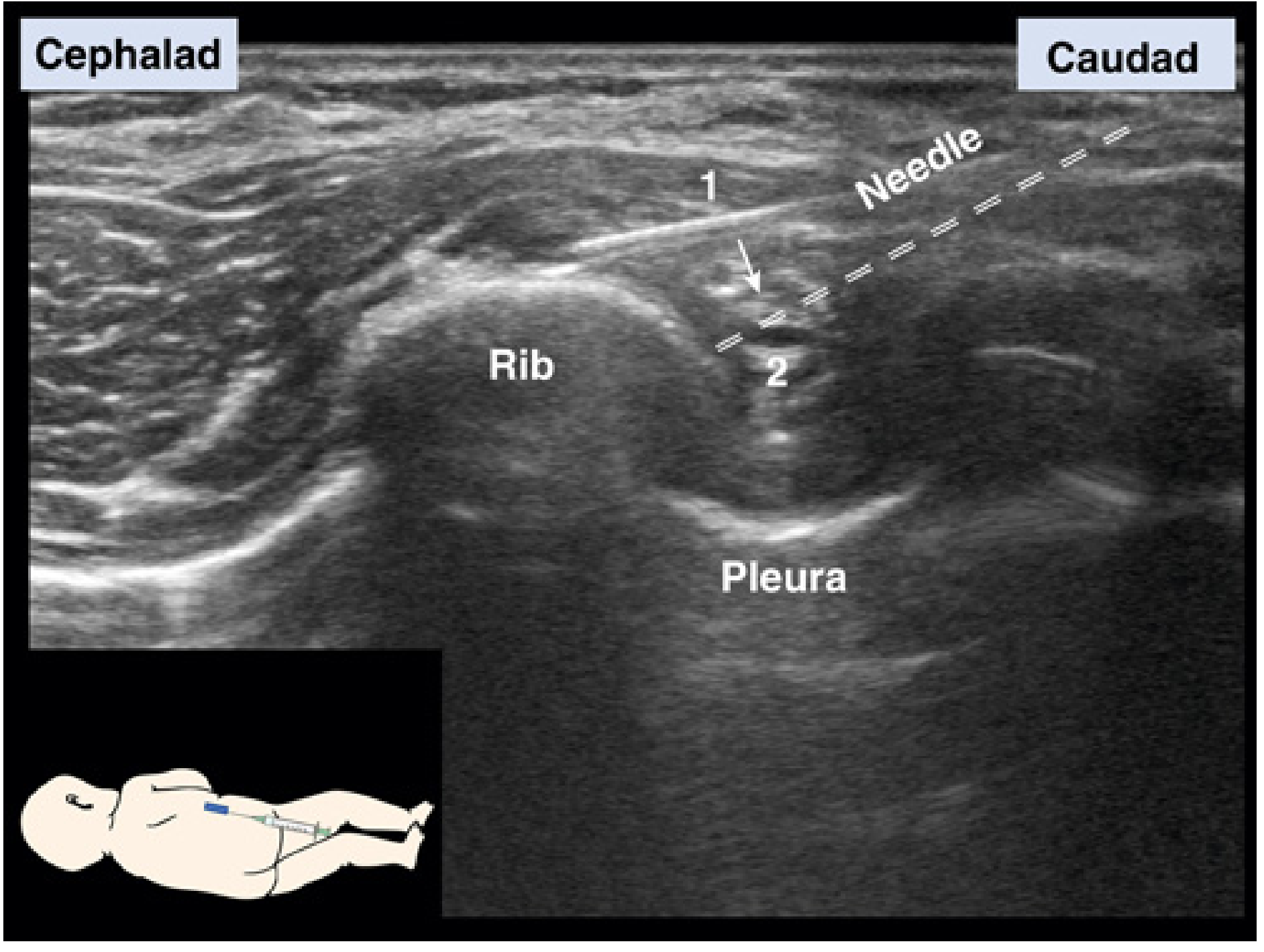
- Position: semi-prone (midaxillary line approach) — this is described as the safest approach in Miller's
- Needle: 22- or 20-gauge Tuohy needle (intradermal needles are inappropriate)
- Guidance: In-plane ultrasound guidance strongly preferred
- Step 1: Insert needle in-plane to contact rib
- Step 2: Redirect needle and walk off the rib caudally into the intercostal space
- Inject local anesthetic within the intercostal space
Catheter Technique
A catheter can be introduced into the intercostal space for repeated injections:
- Inserted at the center of the area to be anesthetized
- May also be inserted intraoperatively under direct vision by the surgeon
- Spread of large-volume anesthetic can reach distant intercostal spaces — even contralateral ones — probably via the paravertebral space, providing adequate duration of pain relief with a single injection in some patients
- Spread to the epidural space can also occur
"The safety of continuous techniques is questionable because of the high systemic uptake of local anesthetic." — Miller's Anesthesia, 10e, p. 11086
Indications
| Indication |
|---|
| Thoracotomy (infiltration of several adjacent spaces) |
| Liver transplantation |
| Pleural drainage |
| Management of rib fractures |
| Intraoperative and postoperative analgesia after thoracic and upper abdominal surgery |
Contraindications and Monitoring Requirements
Miller's is explicit about safety requirements:
- Contraindicated in impaired oxygenation or gas exchange
- Not suitable for outpatient surgery — all patients must be kept under intensive medical observation
- Danger of clinically delayed pneumothorax mandates inpatient monitoring
- Patients with catheters or large-volume injections should be admitted to the ICU for careful monitoring of respiratory function and delayed pneumothorax
Complications
| Complication | Comment |
|---|---|
| Pneumothorax | Most feared; may be delayed clinically |
| Systemic LA toxicity | Highest absorption rate of any regional block; intercostal space is richly vascularized |
| Total spinal | Via epidural spread |
| Bilateral respiratory depression | Bilateral blocks |
| Hemothorax | Vascular injury |
4. Celiac Plexus Block
Anatomy
The celiac plexus is the largest autonomic plexus in the abdomen, located retroperitoneally at the level of T12–L1, surrounding the origin of the celiac axis and superior mesenteric artery. It is formed by:
- Preganglionic sympathetic fibers from the greater splanchnic nerve (T5–T9), lesser splanchnic nerve (T10–T11), and least splanchnic nerve (T12)
- Postganglionic parasympathetic fibers from the vagus nerve
- Afferent visceral pain fibers from the upper abdominal viscera
Miller's specifies the renal sympathetic innervation pathway:
"Sympathetic nerves to the kidney originate as preganglionic fibers from the eighth thoracic through the first lumbar segments and converge at the celiac plexus and aorticorenal ganglia." — Miller's Anesthesia, 10e, p. 984 (Ch. 55)
Visceral Coverage
The celiac plexus carries pain afferents from:
- Liver, gallbladder, and biliary ducts
- Stomach and duodenum
- Pancreas (most clinically relevant for pain block)
- Small intestine to mid-transverse colon
- Kidneys and adrenal glands
- Spleen
Indications
| Indication | Evidence Level |
|---|---|
| Pancreatic cancer pain | Strongest evidence; Cochrane review cited in Miller's |
| Upper abdominal malignancy pain | Significant reduction in opioid use |
| Chronic pancreatitis pain (non-cancer) | Less durable relief |
| Visceral pain from upper abdominal organs | Context-dependent |
Miller's cites the Cochrane Database Systematic Review on celiac plexus block for pancreatic cancer pain in adults as the key evidence reference. — Miller's Anesthesia, 10e, p. 6866
Technique
Two classical approaches are described in the literature (Miller's references both):
Posterior (retrocrural) approach:
- Patient prone
- Bilateral needles (typically 20-gauge, 15–20 cm long) inserted at approximately the level of L1
- Directed toward the anterolateral surface of the L1 vertebral body
- Confirmed by fluoroscopy or CT guidance
- Drug spreads anterior to the aorta
Anterior (transabdominal) approach:
- Performed under CT or ultrasound guidance
- Can be done with the patient supine
- Increasingly favoured for its safety profile
Neurolytic technique:
- 50–100% alcohol or 6% phenol used for permanent neurolysis in cancer pain
- Diagnostic block with local anesthetic performed first to predict response
Intraoperative approach:
- Direct surgical injection at time of laparotomy/laparoscopy
- Increasingly used during pancreatic cancer surgery
Drug and Volume
- Diagnostic: Bupivacaine 0.25–0.5%, 20–25 mL per side (bilateral)
- Neurolytic: Absolute alcohol (50–100%), 20–25 mL per side, after dilute LA confirmation
- Injection of contrast under fluoroscopy prior to neurolytic agent is essential
Efficacy
- Provides significant pain reduction and reduced opioid requirements in pancreatic cancer
- More effective than systemic opioids alone in many studies
- Pain relief duration: weeks to months in cancer pain; shorter in benign conditions
- Miller's notes that celiac plexus block is one of the few regional techniques in chronic pain with meaningful evidence of benefit in cancer pain — Miller's Anesthesia, 10e, p. 6866
Complications
| Complication | Comment |
|---|---|
| Orthostatic hypotension | Most common; splanchnic vasodilation → pooling; treat with IV fluids |
| Diarrhea | Parasympathetic predominance after sympathetic block |
| Neurologic complications | Paraplegia (rare but catastrophic) — due to spasm or injection into the artery of Adamkiewicz |
| Retroperitoneal hematoma | Vascular injury |
| Pneumothorax | Posterior approach |
| Infection | Retroperitoneal abscess |
| Renal puncture | Posterior approach |
| Intravascular injection | Aortic or IVC injection |
The risk of paraplegia (0.15%) arises from spasm of or inadvertent injection into a branch of the anterior spinal artery (artery of Adamkiewicz), particularly important given the proximity to the origin of lumbar segmental arteries.
Summary Comparison Table
| Feature | Stellate Ganglion | Gasserian Ganglion | Intercostal | Celiac Plexus |
|---|---|---|---|---|
| Target | C7-T1 sympathetic ganglion | Trigeminal sensory ganglion | Intercostal nerves (somatic) | Celiac/pre-aortic sympathetic plexus |
| Type of block | Sympathetic | Somatic/sensory (CN V) | Somatic | Sympathetic (visceral) |
| Level | C7-T1 | Base of skull / foramen ovale | Rib level (any thoracic) | T12-L1 |
| Guidance | Ultrasound (preferred) | Fluoroscopy (mandatory) | Ultrasound (preferred) | CT/fluoroscopy/ultrasound |
| Key indication | CRPS upper limb, long-QT arrhythmia | Trigeminal neuralgia | Rib fractures, thoracotomy | Pancreatic cancer pain |
| Life-threatening complication | Intravascular injection, bilateral phrenic block | Intracranial hemorrhage, total spinal | Pneumothorax, LA toxicity | Paraplegia, hypotension |
| Marker of success | Horner syndrome | Facial numbness in V territory | Loss of sensation over rib | Pain relief + diarrhea |
| Neurolytic option? | Rarely | Yes (alcohol, RF, glycerol) | Not standard | Yes (alcohol/phenol for cancer) |
Primary source: Miller's Anesthesia, 2-Volume Set, 10th Edition (ISBN 9780323935920), pp. 2379, 6864–6866, 10961, 11085–11086
Supplemental — Gasserian ganglion technique: Barash, Cullen and Stoelting's Clinical Anesthesia, 9e (ISBN 9781975199074), p. 2931Here is the complete discussion of all four blocks as covered in Miller's Anesthesia 10e (with cross-reference to Barash for the Gasserian ganglion technique, which Miller's itself acknowledges is more a chronic pain subspecialty procedure):
Autonomic and Peripheral Nerve Blocks
Miller's Anesthesia, 2-Volume Set, 10th Edition
Overarching Framework
Miller's situates all nerve block techniques within its biopsychosocial model of pain management. Contemporary practice reflects a more judicial approach:
"Nerve block therapy alone is usually not curative, but it can facilitate participation in rehabilitation and therefore may have a role in the management of chronic pain. Regardless which procedure is considered, a consensus decision on its use must be reached within the interdisciplinary team." — Miller's Anesthesia, 10e, p. 6864
1. Cervicothoracic (Stellate) Ganglion Block
Anatomy
The stellate ganglion is formed by fusion of the inferior cervical and first thoracic sympathetic ganglia at the level of C7–T1. It lies:
- Anterolateral to the C7–T1 vertebral bodies
- Medial to the carotid sheath
- Anterior to the transverse processes and longus colli muscle
- Posterolateral to the trachea and esophagus
Technique
- Patient supine with neck slightly extended
- Longus colli muscle identified ultrasonographically — the key sonographic landmark
- Local anesthetic injected superior to the longus colli muscle
- Ultrasound guidance is strongly recommended — this is described as the contemporary standard in Miller's
- Horner syndrome (ptosis, miosis, anhidrosis, enophthalmos) = confirmation of correct sympathetic block
Indications (per Miller's 10e)
| Indication | Notes |
|---|---|
| Ventricular tachyarrhythmia (congenital long-QT syndrome) | Left stellate block specifically recommended |
| Severe ipsilateral circulatory disorders of the upper extremity | |
| Herpes zoster ophthalmicus | Acute pain syndrome |
| CRPS / Sympathetically maintained pain syndrome | Early stellate blocks may significantly decrease pain and hasten recovery; may prevent CRPS recurrence after reoperation |
| Phantom limb pain | Facilitates physiotherapy and functional rehabilitation |
"Stellate ganglion block is a rather dangerous procedure with very few but very specific indications." — Miller's Anesthesia, 10e, Ch. 74 (p. 11047)
Complications
- Intravascular injection (vertebral artery, carotid artery) → seizures, cardiovascular collapse
- Pneumothorax (apex of lung is adjacent)
- Phrenic nerve block → unilateral diaphragm paralysis (bilateral stellate block is absolutely contraindicated)
- Recurrent laryngeal nerve block → hoarseness, dysphagia
- Brachial plexus block (unintended spread)
- Epidural or intrathecal injection with spinal spread
- Horner syndrome per se is an expected endpoint, not a complication
2. Semilunar (Gasserian) Ganglion Block
Miller's 10e references the Gasserian ganglion anatomically in the context of the oculocardiac reflex (Ch. 58) and cites percutaneous gasserian procedures (microcompression, balloon compression) in its neurosurgical references. The technique itself is acknowledged as a chronic pain subspecialty procedure, cross-referenced to dedicated regional anesthesia texts.
Anatomy
The Gasserian (semilunar) ganglion is the sensory ganglion of CN V (trigeminal nerve), located in Meckel's cave — a dural recess at the apex of the petrous temporal bone. It gives rise to three divisions:
| Division | Exit | Territory |
|---|---|---|
| V₁ (ophthalmic) | Superior orbital fissure | Forehead, eye, upper nose |
| V₂ (maxillary) | Foramen rotundum | Midface, upper teeth |
| V₃ (mandibular) | Foramen ovale | Lower face, jaw, anterior tongue |
Needle access to the ganglion is via foramen ovale (V₃ root).
Miller's Context — Oculocardiac Reflex
"The pain, pressure or traction impulses are conducted by the ciliary nerves to the ciliary ganglion and then via the ophthalmic division of the trigeminal nerve to the Gasserian ganglion and the sensory nucleus of the trigeminal nerve." — Miller's Anesthesia, 10e, p. 4063
This forms the afferent limb of the oculocardiac reflex: ocular traction → Gasserian ganglion → trigeminal sensory nucleus → Edinger-Westphal nucleus → vagal efferents → bradycardia/asystole.
Indications
- Disabling trigeminal neuralgia (tic douloureux) — primary indication
- Head and neck cancer pain (neurolytic)
- When medical management (carbamazepine) has failed
Technique (Fluoroscopy-Guided — Hartel Approach)
"The most comprehensive block of the trigeminal nerve targets the central ganglion. This block is usually performed under fluoroscopic guidance to treat disabling trigeminal neuralgia. Few operating room anesthesiologists perform this technically challenging block." — Barash, Cullen and Stoelting, 9e, Ch. 36 (cross-referenced by Miller's)
- Patient supine, mouth open
- Skin entry point: lateral to the corner of the mouth, 2.5–3 cm
- 20-gauge spinal needle directed toward the foramen ovale under AP and lateral fluoroscopy
- Traverses infratemporal fossa → enters Meckel's cave through foramen ovale
- Entry confirmed by CSF flow from the dural sleeve surrounding the ganglion
- Inject local anesthetic / glycerol / or apply RF energy
Neurolytic Options at the Gasserian Ganglion (cited in Miller's)
| Technique | Method |
|---|---|
| Percutaneous balloon microcompression | Mullan technique; balloon inflated at ganglion |
| Glycerol rhizolysis | Hakansson technique; preserves touch sensation better |
| Radiofrequency thermocoagulation | Most widely used; selective V₂/V₃ lesioning possible |
Miller's 10e specifically cites Fraioli et al. (percutaneous microcompression, J Neurosurg 1989) and Skirving & Dan's 20-year review of balloon compression (J Neurosurg 2001). — Miller's Anesthesia, 10e, p. 4231
Complications
- Corneal anesthesia → keratitis, corneal ulceration (most feared; V₁ injury)
- Masseter weakness (motor root at V₃)
- Anesthesia dolorosa — painful deafferentation state, more common with neurolytic agents
- Intracranial hemorrhage
- Carotid artery puncture
- CSF leak / meningitis
- Ipsilateral Horner syndrome (sympathetic fibres near ganglion)
3. Intercostal Nerve Block
Anatomy
Miller's provides a precise triangular space description:
"Intercostal nerves run along the lower border of each rib, within the intercostal space, a triangular space, with: (1) a medial border formed by the posterior intercostal and innermost intercostal muscles, endothoracic fascia, and parietal pleura; (2) a lateral border formed by the internal and external intercostal muscles and intercostal membrane; (3) a base formed by the lower rib." — Miller's Anesthesia, 10e, p. 11085
Within the costal groove, the neurovascular bundle runs in the order (superior → inferior): Vein – Artery – Nerve (VAN).
Technique
- Position: semi-prone at the midaxillary line — described as the safest approach in Miller's
- Needle: 22- or 20-gauge Tuohy needle (intradermal needles are explicitly stated as inappropriate)
- Guidance: In-plane ultrasound strongly preferred
Two-step needle manoeuvre:
- Insert needle in-plane to contact rib
- Redirect needle and walk off the rib caudally into the intercostal space
Catheter Technique
- A catheter may be placed for repeated reinjections
- Can also be inserted intraoperatively under direct surgical vision
- Large-volume injection can spread to distant intercostal spaces via the paravertebral space (even contralateral), and to the epidural space
"The safety of continuous techniques is questionable because of the high systemic uptake of local anesthetic." — Miller's Anesthesia, 10e, p. 11086
Indications
| Indication |
|---|
| Rib fractures (multiple) — pain management and respiratory splinting |
| Thoracotomy (multiple adjacent spaces) |
| Upper abdominal surgery (hepatobiliary) |
| Liver transplantation |
| Pleural drainage / chest tube insertion |
| Intraoperative and postoperative thoracic analgesia |
Safety Requirements — Explicit in Miller's
- Contraindicated in patients with impaired oxygenation or gas exchange
- Not suitable for outpatient surgery
- All patients must be kept under intensive medical observation — risk of clinically delayed pneumothorax
- Patients with catheters or large-volume injections should be admitted to ICU for monitoring of respiratory function and delayed pneumothorax
Complications
| Complication | Notes |
|---|---|
| Pneumothorax | Most feared; may be clinically delayed — all patients need monitoring |
| Systemic local anesthetic toxicity | Intercostal space has the highest absorption rate of any regional block site due to rich vascularity |
| Epidural/spinal spread | Via paravertebral space |
| Hemothorax | Intercostal vessel injury |
| Bilateral respiratory depression | With bilateral blocks |
4. Celiac Plexus Block
Anatomy
The celiac plexus is the largest prevertebral autonomic plexus, lying retroperitoneally at T12–L1 surrounding the celiac artery origin. It receives:
- Greater splanchnic nerves (T5–T9) — preganglionic sympathetic
- Lesser splanchnic nerves (T10–T11)
- Least splanchnic nerve (T12)
- Parasympathetic fibres via the vagus nerve
- Visceral afferent pain fibres from upper abdominal viscera
Miller's specifically describes how renal sympathetic innervation converges here:
"Sympathetic nerves to the kidney originate as preganglionic fibers from the eighth thoracic through the first lumbar segments and converge at the celiac plexus and aorticorenal ganglia. Postganglionic fibers to the kidney arise mainly from the celiac..." — Miller's Anesthesia, 10e, p. 984
Visceral Pain Coverage
| Organ | Covered? |
|---|---|
| Pancreas | ✓ (most clinically important) |
| Liver, gallbladder, bile ducts | ✓ |
| Stomach, duodenum | ✓ |
| Small intestine to mid-transverse colon | ✓ |
| Kidneys, adrenal glands, spleen | ✓ |
| Pelvic organs | ✗ (inferior hypogastric plexus) |
Indications
| Indication | Evidence |
|---|---|
| Pancreatic cancer pain | Strongest evidence — Cochrane SR cited in Miller's 10e |
| Upper abdominal malignancy pain | Significant opioid-sparing effect |
| Chronic pancreatitis pain (benign) | Benefit less durable |
| Post-liver transplant pain (children) | Miller's cites regional techniques including celiac block |
Miller's cites the Cochrane Database Systematic Review on "Celiac plexus block for pancreatic cancer pain in adults" (2011) as the key evidence base. — Miller's Anesthesia, 10e, p. 6866
Techniques
Posterior Retrocrural Approach (Classic):
- Patient prone
- Bilateral 20-gauge needles (15–20 cm) inserted at L1 level, angled toward the anterior surface of the L1 vertebral body
- Fluoroscopic or CT guidance; contrast injection to confirm pre-aortic spread
- Drug deposited anterior to the aorta / around the celiac axis
Anterior Transabdominal Approach:
- Patient supine
- CT or ultrasound guided
- Single needle, transgastric or transhepatic path
- Preferred in patients who cannot lie prone or when posterior anatomy is distorted
Intraoperative (Surgical) Approach:
- Direct injection at celiac axis at time of laparotomy or laparoscopy
- Increasingly used during pancreatic cancer resection
Drug Selection
| Purpose | Agent | Volume |
|---|---|---|
| Diagnostic / therapeutic | Bupivacaine 0.25–0.5% | 20–25 mL per side (bilateral) |
| Neurolysis (cancer pain) | Absolute alcohol (50–100%) | 20–25 mL per side |
| Alternative neurolysis | 6% phenol | 10–15 mL per side |
Protocol: Always perform a diagnostic local anesthetic block first to confirm adequate pain relief before proceeding with neurolysis.
Efficacy
- Pancreatic cancer: superior to systemic opioids alone; reduces opioid consumption and side effects; pain relief lasting weeks to months
- Miller's acknowledges celiac plexus block as one of the few interventional pain techniques with meaningful cancer pain evidence — p. 6866
Complications
| Complication | Notes |
|---|---|
| Orthostatic hypotension | Most common (sympatholysis → splanchnic vasodilation → venous pooling); treat with IV fluids |
| Diarrhea | Parasympathetic predominance; usually transient |
| Paraplegia | Rare (0.15%) but catastrophic — injection into or spasm of artery of Adamkiewicz (anterior spinal artery supply) |
| Retroperitoneal hematoma | Posterior approach; vessel injury |
| Pneumothorax | Posterior approach |
| Renal puncture | Posterior approach |
| Aortic/IVC puncture | |
| Retroperitoneal infection/abscess | |
| Intravascular injection of neurolytic agent |
Comparative Overview
| Feature | Stellate Ganglion | Gasserian Ganglion | Intercostal | Celiac Plexus |
|---|---|---|---|---|
| System | Sympathetic | CN V sensory | Somatic | Sympathetic (visceral) |
| Level | C7-T1 | Base of skull | Any rib | T12-L1 |
| Guidance | Ultrasound (preferred) | Fluoroscopy (mandatory) | Ultrasound (preferred) | CT/fluoro/US |
| Success marker | Horner syndrome | Facial numbness V1–V3 | Dermatomal anesthesia | Pain relief + diarrhea |
| Key indication | CRPS, long-QT arrhythmia | Trigeminal neuralgia | Rib fractures, thoracotomy | Pancreatic cancer pain |
| Most feared complication | Intravascular injection / bilateral block | Corneal anesthesia / anesthesia dolorosa | Pneumothorax / LA toxicity | Paraplegia / hypotension |
| Neurolytic option | Rarely (surgical sympathectomy) | Yes (alcohol, glycerol, RF) | Not standard | Yes (alcohol/phenol, cancer) |
| Outpatient appropriate? | With caution | No | No | No |
Primary source: Miller's Anesthesia, 2-Volume Set, 10th Edition (ISBN 9780323935920), pp. 984, 2379, 4063, 4231, 6864–6866, 10961, 11085–11086
Supplemental (Gasserian technique): Barash, Cullen and Stoelting's Clinical Anesthesia, 9e (ISBN 9781975199074), p. 2931
Using OH's ICU book discuss in detail about shock, Hemorrhagic shock, septic shock, cardiogenic shock and role of inotropes and vasopressors in management of shock.
Finding Sources
Finding Sources
Finding Sources
Finding Sources
Finding Sources
Finding Sources
OH's Intensive Care Manual is not in the library. Let me search for shock content across the available books — particularly Harrison's, Goldman-Cecil, and the surgery/emergency medicine texts, then synthesize a comprehensive response:
Finding Sources
Finding Sources
Finding Sources
Finding Sources
I've hit the query_library_db limit. I have the file paths for all sections. Now let me read the most comprehensive sources in parallel — Harrison's for cardiogenic shock, Miller's for hemorrhagic shock, Rosen's for septic shock and overview, and Sabiston for hemorrhagic shock details:
Reading File
Reading File
Reading File
Reading File
Reading File
Reading File
Reading File
Reading File
Reading File
Reading File
Reading File
Reading File
Reading File
Reading File
Reading File
Reading File
I now have comprehensive material from Harrison's (22e), Rosen's Emergency Medicine, Miller's Anesthesia, and Sabiston's Surgery. Let me now fetch the key cardiogenic shock pathophysiology image and write the full synthesis:
Loading Image
Loading Image
This is a shared conversation. Sign in to Orris to start your own chat.