
General medicine topic Surgical infection
Reading File
Now let me search the medical library for surgical infection content in parallel.
Finding Sources
Finding Sources
Excellent - Bailey and Love's has dedicated sections. Let me read the main surgical infection content from Bailey & Love's and also search for more specific topics in parallel.
Reading File
Finding Sources
Finding Sources
Let me now read the core surgical infection sections from Bailey & Love's in parallel:
Reading File
Reading File
Reading File
Reading File
Reading File
Reading File
Now I have comprehensive content. Let me also fetch the key images and look for the wound classification content:
Finding Sources
Loading Image
Reading File
Loading Image
I now have comprehensive content to write a thorough answer on surgical infection. Let me compile this into a well-structured response.
Surgical Infection - Complete Overview
Source: Bailey and Love's Short Practice of Surgery, 28th Edition
1. Historical Background
Surgical infections have been documented for 4000-5000 years. Key milestones:
- Hippocrates: Used wine and vinegar to irrigate infected wounds - recognised that pus needed to be drained
- Galen: Named suppuration "pus bonum et laudabile" (good and praiseworthy pus) as it signalled localisation of infection
- Koch's Postulates (19th century): Established the scientific basis for infective disease
Koch's Postulates (Summary box 5.1):
-
The organism must be found in every case
-
It must be isolatable from the host and grown in culture
-
It must reproduce the disease when injected into a healthy host
-
It must be recovered from the experimentally infected host
-
Semmelweis: Reduced puerperal sepsis from >10% to <2% by handwashing between cases
-
Pasteur: Germ theory - microorganisms responsible for infection
-
Lister: Pioneered antiseptic surgery using carbolic acid spray
2. Microbiology of Surgical Infection
Gram-Positive Organisms
Streptococci (form chains, Gram +ve):
- Streptococcus pyogenes (Group A, β-haemolytic) - most pathogenic; causes cellulitis and tissue destruction via streptolysin, streptokinase, streptodornase
- Streptococcus faecalis (Lancefield Group D, enterococcus) - acts in synergy with other organisms
- Peptostreptococcus - anaerobic streptococcus
- All streptococci remain sensitive to penicillin and erythromycin; cephalosporins as alternative in penicillin allergy
Staphylococci (form clumps, Gram +ve):
- Staphylococcus aureus - most important pathogen; found in nasopharynx of up to 15% of the population; causes suppuration and implant infections
- MRSA (Methicillin-resistant S. aureus): Asymptomatic nasal carriage; managed by pre-admission screening in elective surgery; "search and destroy" methods used in northern Europe
- Staphylococcus epidermidis - coagulase-negative; causes prosthetic and line infections
Clostridia (Gram +ve anaerobes):
- Clostridium perfringens - gas gangrene; produces collagenase, hyaluronidase, phospholipase (lecithinase) causing myonecrosis
- Clostridium tetani - tetanus; produces tetanospasmin (neurotoxin); prevention by immunisation and wound toilet
- Clostridium difficile (C. diff) - antibiotic-associated colitis; produces toxins A and B; risk increased after broad-spectrum antibiotics (especially clindamycin, ampicillin, cephalosporins)
Gram-Negative Organisms
- Coliforms (E. coli, Klebsiella, Proteus) - bowel flora; common in abdominal surgical infections
- Pseudomonas aeruginosa - particularly in burns and wound infections; resistant to many antibiotics
- Bacteroides fragilis - most common anaerobe; bowel operations; sensitive to metronidazole
- Haemophilus influenzae - respiratory tract infections
3. Wound Classification (CDC/NNIS)
First introduced in 1964 by the US National Research Council; adapted by CDC:
| Class | Type | Description |
|---|---|---|
| I | Clean | Uninfected; no inflammation; GI/respiratory/GU tracts NOT entered; primarily closed |
| II | Clean-contaminated | GI, respiratory, GU tracts entered under controlled conditions without unusual contamination; no infection, no major break in technique |
| III | Contaminated | Open/fresh accidental wounds; major break in sterile technique; gross GI spillage; acute non-purulent inflammation |
| IV | Dirty | Old traumatic wounds with devitalised tissue; existing clinical infection or perforated viscera |
NNIS Risk Score (predicts SSI risk; scored 0-3, one point each for):
- Contaminated or dirty wound
- ASA score ≥3
- Operative time > 75th percentile for that procedure
4. Factors Determining Wound Infection (Summary box 5.4)
- Host response (immune competence)
- Virulence and inoculum of the infecting organism
- Vascularity and health of tissue (local ischaemia, systemic shock)
- Presence of dead or foreign tissue
- Presence of antibiotics during the "decisive period"
The Decisive Period
There is a 4-hour window after bacterial contamination before infection becomes established. Prophylactic antibiotics must achieve tissue levels above the MIC90 for expected pathogens during this period - after it, preventive strategies become ineffective.
Risk Factors for Wound Infection (Summary box 5.5)
- Malnutrition (obesity or weight loss)
- Metabolic disease (diabetes, uraemia, jaundice)
- Immunosuppression (cancer, AIDS, steroids, chemo/radiotherapy)
- Gut colonisation and translocation
- Poor perfusion (systemic shock, local ischaemia)
- Foreign body material
- Poor surgical technique (devitalised tissue, dead space, haematoma)
5. Host Defence Mechanisms
Natural defences that can be compromised by surgery:
- Mechanical: Intact skin and mucosal barriers
- Chemical: Gastric acid, bile salts, enzymes
- Humoral: Immunoglobulins, complement, opsonins, interferons
- Cellular: Phagocytes, macrophages, polymorphs, killer lymphocytes
6. Presentation of Surgical Infection
Major SSI
- Significant quantity of pus (spontaneous discharge or requiring secondary drainage procedure)
- Patient systemically unwell: tachycardia, pyrexia, raised WCC
- Delayed discharge from hospital
Minor SSI
- Small discharge of pus or infected serous fluid
- Not associated with systemic signs or delayed discharge
- Often resolves without antibiotics
Abscess
- Classical signs of Celsus: calor (heat), rubor (redness), dolor (pain), tumor (swelling), plus functio laesa (loss of function)
- Pus = dead/dying neutrophils succumbed to bacterial toxins
- Predominantly caused by Staphylococcus aureus
- Treatment: Incision and Drainage (I&D) - "ubi pus, ibi evacua" (where there is pus, evacuate it)
- Antibiotics alone are ineffective for an established abscess
Cellulitis
- Diffuse spreading infection of dermis and subcutaneous tissue
- Caused by β-haemolytic Streptococcus (Group A) - spreads via lymphatics and tissue planes
- Red, hot, tender skin without discrete margin
- Treatment: Penicillin (or erythromycin/cephalosporin); mark borders to monitor spread; elevation
7. Specific Surgical Infections
Necrotising Fasciitis (Synergistic Spreading Gangrene)
A rare but life-threatening deep fascial infection caused by a mixed polymicrobial flora acting synergistically:
- Coliforms, staphylococci, Bacteroides, anaerobic streptococci, peptostreptococci
- Aerobic bacteria destroy living tissue → anaerobic bacteria thrive
Named variants:
- Meleney's synergistic gangrene - abdominal wall
- Fournier's gangrene - scrotal/perineal
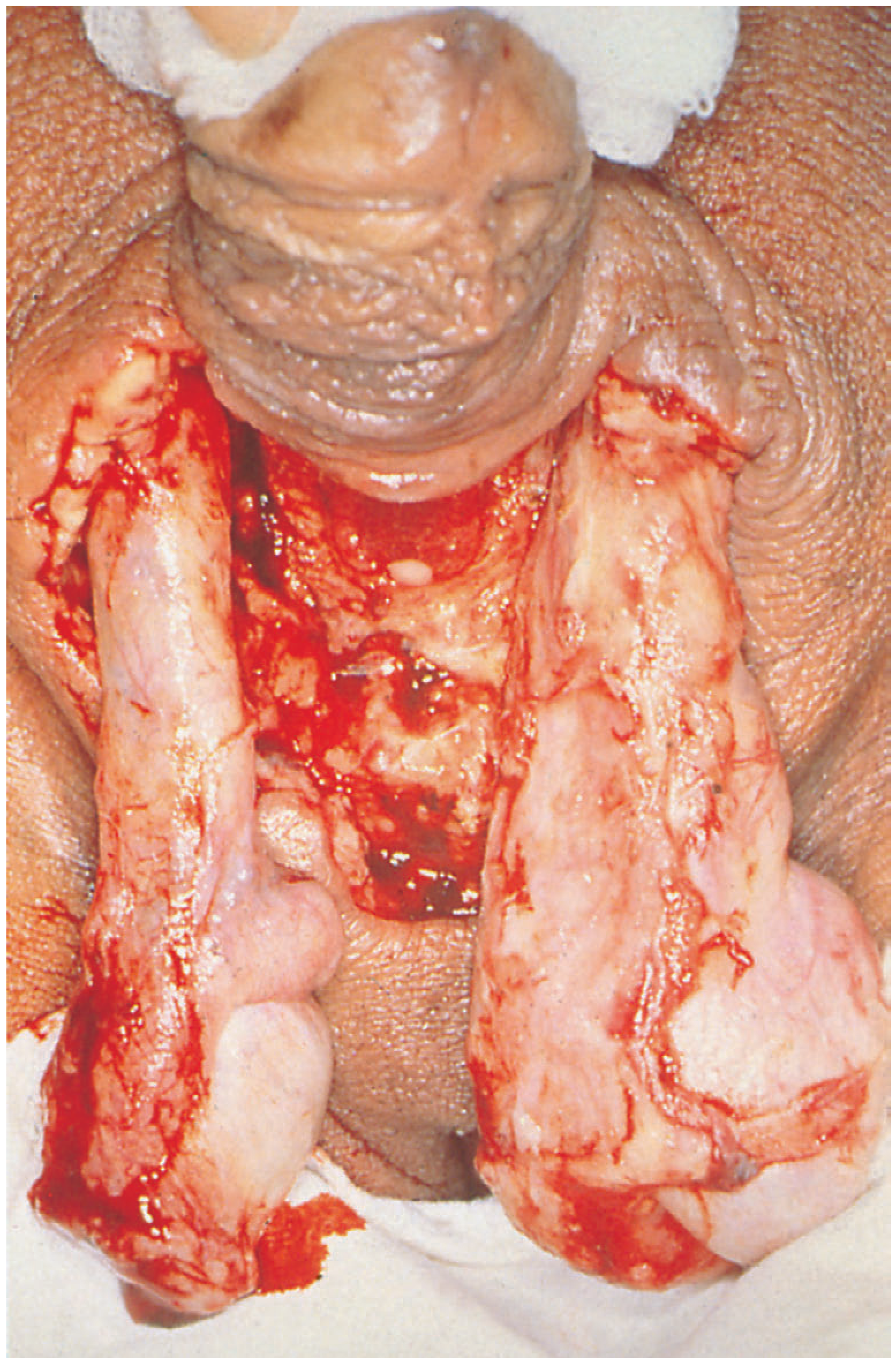
Clinical features:
- Severe wound pain
- Spreading inflammation with crepitus (gas in tissues) and odour
- Usually in immunocompromised patients (especially diabetics)
Diagnosis - The Finger Test:
- Infiltrate area with local anaesthetic
- Make 2-cm incision down to deep fascia
- Lack of bleeding = positive sign
- "Dishwater-coloured fluid" from wound = positive sign
- Gentle probing at deep fascia level - if tissues dissect with minimal resistance = positive
- Tissue biopsies for frozen section: characteristic findings - obliterative vasculitis, acute inflammation, subcutaneous necrosis
Treatment (surgical emergency):
- Broad-spectrum antibiotics + aggressive circulatory support
- Wide excision and laying open of all affected areas (debridement may be very extensive)
- Survivors may need large skin grafting
8. Systemic Infection
Bacteraemia
- Uncommon after superficial SSI (drains through wound)
- Common after deep space SSI (anastomotic breakdown)
- Often transient after instrumentation through infected bile or urine
- Dangerous in patients with implanted prostheses (haematogenous seeding)
- Causative organisms: aerobic Gram-negative bacilli, S. aureus, fungi
SIRS, Sepsis, and Septic Shock
(Table 5.1 definitions)
SIRS - presence of 2 out of 3 of the following:
- Hyperthermia (>38°C) or hypothermia (<36°C)
- Tachycardia (>90/min) or tachypnoea (>20/min)
- WCC >12 × 10⁹/L or <4 × 10⁹/L
Sepsis = SIRS + documented source of infection
Severe Sepsis = Sepsis + evidence of organ failure:
- Respiratory: ARDS
- Cardiovascular: Septic shock (↓ cardiac output + ↓ peripheral vascular resistance)
- Renal failure
Pathophysiology of SIRS:
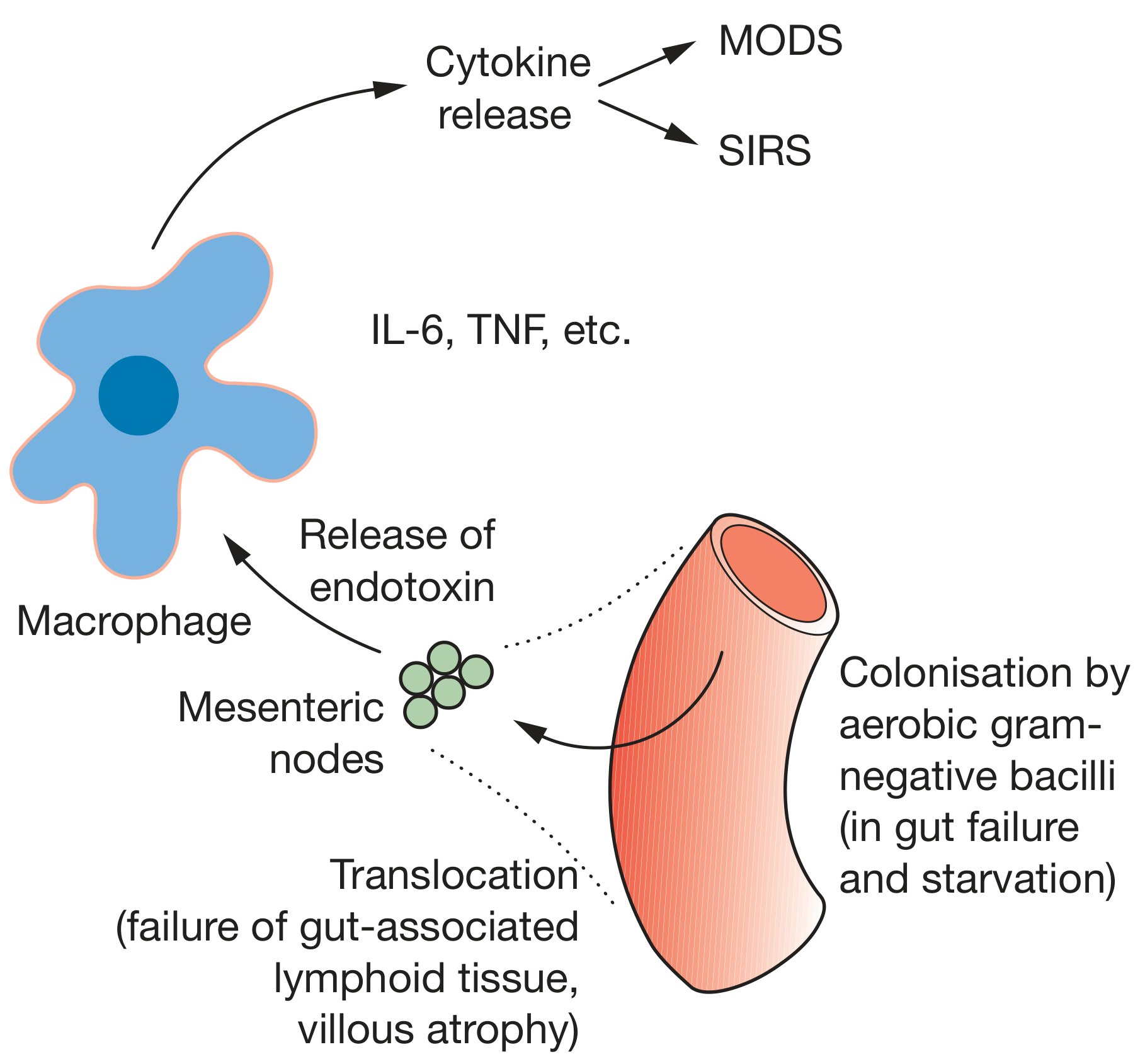 Gut failure → bacterial colonisation → endotoxin release → macrophage activation → cytokine release (IL-6, TNF) → SIRS/MODS
In gut failure and starvation, aerobic Gram-negative bacilli (mainly E. coli) colonise the gut. Bacterial translocation occurs through failed gut-associated lymphoid tissue (GALT) and villous atrophy → endotoxin (LPS from Gram-negative cell walls) reaches mesenteric nodes → macrophage activation → cytokine storm (TNF, IL-1, IL-6) → SIRS → Multi-Organ Dysfunction Syndrome (MODS)
Surviving Sepsis Campaign ("Sepsis Six" bundle)
- Give high-flow oxygen
- Take blood cultures
- Give IV antibiotics
- Start IV fluid resuscitation
- Check serum lactate and haemoglobin
- Measure urine output (insert catheter)
9. Antibiotic Prophylaxis
- Indicated for clean-contaminated and contaminated surgery
- Given to cover the "decisive period" (4 hours)
- Should be given 30 minutes before incision (IV at induction)
- Routine prophylaxis in clean, non-prosthetic surgery is of limited value and encourages resistant strains
- For prosthetic surgery (joint replacements, vascular grafts), prophylaxis is mandatory
Common prophylactic regimens:
- GI surgery: Cefuroxime + metronidazole
- Orthopaedic implant surgery: Cefuroxime or flucloxacillin
- Biliary surgery: Cefuroxime
10. Hospital-Acquired Infections (HAI)
Four main groups:
- Respiratory infections (incl. ventilator-associated pneumonia)
- Urinary tract infections (catheter-related)
- Bacteraemia (indwelling vascular catheter-related)
- Surgical Site Infections (SSI)
Prevention of HAI:
- Strict hand hygiene (Semmelweis principle)
- Aseptic technique
- Minimise indwelling catheters and their duration
- Regular replacement of IV cannulae
- MRSA screening pre-operatively for elective surgery
11. Universal Precautions (Bloodborne Viruses: HIV, Hepatitis B/C)
Applicable when operating on known or suspected infected patients:
- Full face mask or protective spectacles
- Fully waterproof disposable gowns and drapes
- Boots (not clogs) - prevent sharp injuries
- Double gloving (larger inner glove for comfort)
- Minimal essential personnel in theatre
- Respect for sharps - pass in a kidney dish only
- Slow, meticulous technique to minimise bleeding
Post-exposure (needle-stick injury):
- Wash under running water immediately
- Report the incident
- Occupational health advice + consider post-exposure prophylaxis (PEP)
- HIV and hepatitis testing; consider non-operative specialty if high-risk exposure
Key Summary Points for Exam
| Concept | Key Fact |
|---|---|
| Most common SSI organism | Staphylococcus aureus |
| Pus evacuation principle | "Ubi pus, ibi evacua" |
| Decisive period | Up to 4 hours |
| Necrotising fasciitis diagnosis | Finger test (lack of bleeding + minimal tissue resistance) |
| Fournier's gangrene | Scrotal necrotising fasciitis |
| Meleney's gangrene | Abdominal wall necrotising fasciitis |
| SIRS criteria | 2/3: temperature abnormality, tachycardia/tachypnoea, WCC abnormality |
| Sepsis definition | SIRS + documented infection source |
| MRSA decolonisation | Mupirocin nasal ointment + chlorhexidine washes |
| C. difficile treatment | Stop precipitating antibiotic; metronidazole or vancomycin (oral) |
| Gut translocation leads to | SIRS and MODS via endotoxin/cytokine release |
Bailey and Love's Short Practice of Surgery, 28th Edition, Chapter 5 - Surgical Infection
This is a shared conversation. Sign in to Orris to start your own chat.