Hi

Hi there! How can I help you today?

Explain me parkosnsesom

Reading File
Finding Sources
Searching PubMed

"Parkinsonism" AND "review"

Reading File
Reading File
Finding Sources
Reading File
Finding Sources
Reading File
Reading File
Loading Image
Here is a complete explanation of Parkinsonism:

Parkinsonism

What Is It?

Parkinsonism is a clinical syndrome (a collection of signs and symptoms), NOT a single disease. It describes a combination of motor features caused by dysfunction of the basal ganglia, primarily from dopamine loss. The most common cause is Parkinson's Disease (PD), but many other conditions can produce the same picture.
The core features form the acronym TRAP:
FeatureDescription
TremorResting "pill-rolling" tremor, typically 4-6 Hz, reduces with movement
Rigidity"Lead-pipe" or "cogwheel" stiffness of muscles
Akinesia/BradykinesiaSlowness and poverty of movement
Postural instabilityLoss of balance reflexes, tendency to fall
Two additional cardinal features are:
  • Flexed posture - stooped, forward-bent stance
  • Freezing - sudden motor blocks, especially when initiating movement or turning

Pathology - What Goes Wrong in the Brain

The hallmark of Parkinson's Disease (the most common cause) is:
  1. Degeneration of dopaminergic neurons in the substantia nigra pars compacta (SNc) - the dark-pigmented area of the midbrain. Motor symptoms appear once >40% of these neurons are lost.
  2. Reduced striatal dopamine - dopamine normally facilitates smooth, coordinated movement via the nigrostriatal pathway.
  3. Lewy bodies - abnormal protein clumps of alpha-synuclein that accumulate inside neurons and are the pathological hallmark.
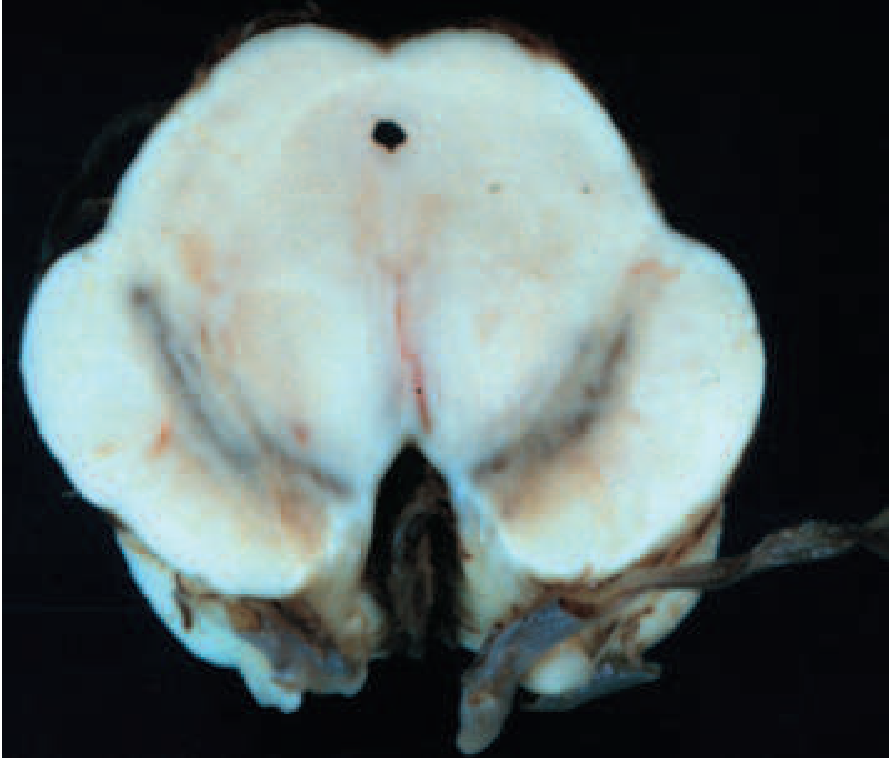
The image below shows a midbrain cross-section from a PD patient - notice the pale substantia nigra (normally dark/pigmented) due to loss of dopaminergic neurons:
Midbrain cross-section in Parkinson's Disease showing depigmented substantia nigra
Normal midbrain has a darkly pigmented substantia nigra; in PD, this pigmentation is lost due to neuronal death.
Beyond dopamine, Lewy pathology can also spread to affect:
  • Cholinergic neurons (nucleus basalis of Meynert) - causing dementia
  • Norepinephrine neurons (locus coeruleus)
  • Serotonin neurons (raphe nuclei)
  • Peripheral autonomic nervous system - causing non-motor features

Causes of Parkinsonism

Parkinsonism (the syndrome) can be caused by many things:

1. Primary/Idiopathic

  • Parkinson's Disease (PD) - most common; cause often unknown
  • Genetic mutations: SNCA, LRRK2, PINK1, Parkin (PARK2) genes

2. "Parkinsonism-Plus" (Atypical Parkinsonism)

These overlap with PD but have extra features:
ConditionKey Extra Features
Progressive Supranuclear Palsy (PSP)Gaze palsy, early falls, dementia
Multiple System Atrophy (MSA)Dysautonomia, ataxia
Corticobasal Syndrome (CBS)Limb apraxia, alien limb
Dementia with Lewy Bodies (DLB)Early dementia, hallucinations

3. Secondary Parkinsonism

  • Drug-induced - antipsychotics (D2 receptor blockade), metoclopramide, reserpine (most common reversible cause)
  • Vascular - multi-infarct disease ("lower-body parkinsonism")
  • Toxins - MPTP, manganese, carbon monoxide
  • Post-encephalitic
  • Trauma - pugilistic encephalopathy (boxers)
  • Structural - normal pressure hydrocephalus, brain tumors

Motor Features in Detail

Early Signs (often missed)

  • Reduced arm swing while walking
  • Facial masking (reduced expression, misread as depression)
  • Micrographia (small handwriting)
  • Soft voice (hypophonia)
  • Painful/frozen shoulder

Classic Signs

  • Shuffling gait with short steps
  • Difficulty initiating movement (freezing)
  • Stooped forward posture
  • Reduced eye blinking
  • Drooling

Late Signs

  • Severe postural instability - frequent falls
  • Dysphagia
  • Dysarthria

Non-Motor Features

These are very common and can precede motor symptoms by years:
  • Anosmia (loss of smell) - often one of the earliest signs
  • REM sleep behavior disorder (RBD) - acting out dreams
  • Autonomic dysfunction - orthostatic hypotension, constipation, urinary problems, sexual dysfunction
  • Depression and anxiety
  • Cognitive impairment/dementia (later stages)
  • Pain and sensory disturbances

Diagnosis

There is no definitive blood test or scan. Diagnosis is clinical, based on:
  • Presence of TRAP features
  • Response to levodopa (supports PD diagnosis)
  • Exclusion of secondary causes
  • Dopamine imaging (DaTscan) to confirm dopamine neuron loss

Treatment

Dopaminergic Therapies (main approach)

  • Levodopa + Carbidopa - gold standard; carbidopa prevents peripheral conversion
  • Dopamine agonists (pramipexole, ropinirole) - used especially in younger patients
  • MAO-B inhibitors (selegiline, rasagiline) - slow dopamine breakdown
  • COMT inhibitors (entacapone) - extend levodopa effect
  • Amantadine - treats both parkinsonism and dyskinesias

Non-Dopaminergic / Symptomatic

  • Anticholinergics (benztropine, trihexyphenidyl) - useful for tremor, but cause confusion in elderly
  • Deep Brain Stimulation (DBS) - surgical option for advanced PD

Drug-Induced Parkinsonism

  • Stop or reduce the offending drug (antipsychotic, metoclopramide)
  • Symptoms are often reversible

Key Differential Points

FeaturePDDrug-InducedMSAPSP
TremorYes (rest)YesMild/absentAbsent
L-dopa responseGoodVariablePoorPoor
SymmetryAsymmetricOften symmetricSymmetricSymmetric
Autonomic featuresMildNoProminentMild
DementiaLateNoMildYes

Sources:
  • Harrison's Principles of Internal Medicine, 22nd Ed., Chapter 446 - Parkinson's Disease and Related Disorders
  • Bradley and Daroff's Neurology in Clinical Practice - Chapter 24: Parkinsonism
  • Katzung's Basic and Clinical Pharmacology, 16th Ed. - Pathogenesis of PD
  • Recent review: Drug-induced parkinsonism: diagnosis and treatment (Conn & Jankovic, 2024)

Can i give me my anfo to help u while giving me amswers

Absolutely! You can share your information (info) with me and I'll use it to give you more personalized and relevant answers.
You can tell me things like:
  • Who you are - e.g., medical student, nurse, doctor, patient, curious learner
  • Your level - beginner, intermediate, advanced/professional
  • Your field or specialty - e.g., neurology, pharmacy, general medicine
  • Your purpose - studying for an exam, clinical practice, personal health question
  • Your preferences - do you want simple explanations or detailed clinical depth?
Just share whatever feels relevant, and I'll tailor my answers accordingly! ๐Ÿ˜Š

My personal answer instructions are: 1. Language Style: Use simple English words that are easy to understand. Write full sentences like a human, not short phrases. Keep explanation at GNM 2nd year level. 2. Writing Format (Exam Style): Always follow proper nursing headings: Introduction, Definition, Causes (5 points only), Types/Stages (if applicable), Symptoms (5 points only), dignostic evaluvation , Management (Medical, Pharmacological, Nursing, Pre-operative care (if needed), Post-operative care (if needed)), Health Education, Conclusion. 3. Point Writing Style: Each point should have a Heading + full sentence explanation. 4. Medical Terms Rule: Always use medical terms with meaning in brackets. 5. Image Rule: Give images in every section. Images should help in understanding (diagram, clinical picture, etc.). 6. Video Rule: Give 1 YouTube video at the end for better understanding. 7. Content Style: Use scientific and correct information. Make answers suitable for writing in exams. Avoid wrong or incomplete points. 8. Structure Preference: Write point-wise (not paragraph) except Introduction & Definition. Keep answers clear, neat, and easy to revise

Your personal answer instructions have been saved! โœ…
Here is a summary of how I will write every answer for you from now on:

๐Ÿ“‹ Your Answer Format - Confirmed

SettingYour Preference
LanguageSimple English, full sentences, GNM 2nd year level
FormatExam-style with proper nursing headings
HeadingsIntroduction โ†’ Definition โ†’ Causes โ†’ Types/Stages โ†’ Symptoms โ†’ Diagnostic Evaluation โ†’ Management โ†’ Health Education โ†’ Conclusion
Point StyleHeading + full sentence explanation
Medical TermsAlways with meaning in brackets
ImagesIn every section
Video1 YouTube video at the end
ContentScientific, correct, exam-ready
StructurePoint-wise (except Intro & Definition)

Every answer I give you from now on will follow this format automatically. You don't need to remind me each time.
Just ask your next question and I'll answer it in your style! ๐Ÿ˜Š

Ccf

Reading File
Finding Sources
Searching the Web

congestive cardiac failure CCF nursing management symptoms diagnosis

Reading File
Finding Sources
Finding Sources
Finding Sources
Finding Sources
Reading File
Finding Sources
Finding Sources
Finding Sources
Loading Image
Reading File
Searching the Web

CCF congestive cardiac failure nursing health education YouTube video explanation

I now have all the information needed. Let me write your complete exam-style answer.

Congestive Cardiac Failure (CCF)


1. Introduction

Congestive Cardiac Failure (CCF) is one of the most important and common conditions seen in medical and surgical wards. It is a serious condition in which the heart is not able to pump blood properly to meet the body's needs. As a result, blood and fluid start to collect (congest) in different parts of the body such as the lungs, legs, and liver. It is a chronic (long-lasting) and progressive (gradually worsening) condition that affects millions of people worldwide. As nurses, we play a very important role in early identification, proper care, patient education, and preventing complications in CCF patients.
Diagram showing how heart failure causes fluid buildup in the body

2. Definition

Congestive Cardiac Failure (CCF) is defined as a clinical syndrome (group of symptoms) in which the heart is unable to pump sufficient blood to meet the metabolic (energy) needs of the body, causing fluid accumulation (congestion) in the lungs, legs, and other body organs. It is also called Congestive Heart Failure (CHF) or simply Heart Failure (HF).
"Heart failure is a complex clinical syndrome that results from structural or functional impairment of ventricular filling or ejection of blood."
  • Braunwald's Heart Disease, Textbook of Cardiovascular Medicine

3. Causes

(5 Main Causes)
1. Coronary Artery Disease (CAD) Coronary Artery Disease is the most common cause of CCF. In this condition, the arteries (blood vessels) that supply blood to the heart muscle become narrowed or blocked due to fat deposits (atherosclerosis). This reduces blood flow to the heart muscle, weakens it, and leads to heart failure.
2. Hypertension (High Blood Pressure) When blood pressure remains high for a long time, the heart has to work harder to pump blood against high resistance. Over time, this extra work load causes the heart muscle to become thickened and weakened, eventually leading to failure.
3. Valvular Heart Disease Diseases of the heart valves (such as mitral stenosis or aortic regurgitation) either block the flow of blood or allow blood to leak backwards. Both conditions increase the workload on the heart and over time lead to CCF.
4. Cardiomyopathy (Disease of the Heart Muscle) Cardiomyopathy means disease of the heart muscle (myocardium). The heart muscle becomes enlarged, thick, or rigid and is not able to pump blood effectively. It can be caused by alcohol, infections, or genetic factors.
5. Myocardial Infarction (Heart Attack) In a myocardial infarction (MI), part of the heart muscle dies because blood supply is suddenly cut off. This dead muscle can no longer contract, which reduces the pumping ability of the heart and leads to heart failure.
Common causes of heart failure diagram

4. Types / Classification

A. Based on Side of the Heart Affected

1. Left-Sided Heart Failure In left-sided failure, the left ventricle (the main pumping chamber) fails to pump blood to the body. Blood backs up into the lungs, causing pulmonary congestion (fluid in the lungs). The patient experiences breathlessness and cough.
2. Right-Sided Heart Failure In right-sided failure, the right ventricle fails to pump blood to the lungs. Blood backs up into the body, causing swelling in legs (pedal edema), enlarged liver (hepatomegaly), and distended neck veins (JVD - Jugular Venous Distension).
3. Biventricular (Both Sides) Failure Both sides of the heart fail together. The patient shows signs of both left and right heart failure.

B. NYHA Functional Classification (New York Heart Association)

This classification grades the severity of heart failure based on how much physical activity the patient can do:
NYHA ClassDescription
Class INo symptoms during ordinary activity
Class IISlight limitation - symptoms with ordinary activity
Class IIIMarked limitation - symptoms with less than ordinary activity
Class IVSymptoms at rest - unable to do any activity

C. Based on Pumping Function

TypeMeaning
Systolic (HFrEF)Heart cannot squeeze (contract) properly - Ejection Fraction (EF) is low
Diastolic (HFpEF)Heart cannot relax and fill properly - EF is preserved (normal)

5. Signs and Symptoms

(5 Main Symptoms)
1. Dyspnea (Difficulty in Breathing) Dyspnea is the most common and earliest symptom of CCF. The patient feels shortness of breath especially on exertion (doing activity). As the disease worsens, breathlessness can occur even at rest. Fluid builds up in the lungs making it hard to breathe.
2. Orthopnea (Breathlessness on Lying Flat) Orthopnea means the patient is unable to breathe comfortably when lying down and needs to sit upright or use extra pillows to sleep. This happens because fluid redistributes from the legs into the lungs when lying flat.
3. Pedal Edema (Swelling of Feet and Legs) Pedal edema means swelling of the feet, ankles, and legs due to accumulation of fluid in the tissues. It is a sign of right-sided heart failure where blood backs up into the body's veins and fluid leaks into the tissues.
4. Fatigue and Weakness The patient feels extremely tired and weak even without much activity. This happens because the failing heart cannot pump enough oxygenated blood to the muscles and organs of the body, leading to reduced energy.
5. Paroxysmal Nocturnal Dyspnea - PND (Sudden Breathlessness at Night) PND is when the patient suddenly wakes up at night gasping for breath. It occurs because when lying flat during sleep, extra fluid from the legs and body shifts into the blood circulation and overloads the lungs, causing sudden suffocation.
Other symptoms include: cough (especially at night), jugular venous distension (JVD), weight gain, reduced urine output (oliguria), and cold extremities.
Signs and symptoms of congestive heart failure - diagram showing left vs right heart failure symptoms

6. Diagnostic Evaluation

1. Complete Medical History and Physical Examination The nurse and doctor take a full history of symptoms like breathlessness, swelling, fatigue, and past heart problems. On examination, signs like pedal edema, elevated jugular venous pressure (JVP), lung crackles (rales), and S3 gallop sound (extra abnormal heart sound) are checked.
2. Chest X-Ray (CXR) A chest X-ray is taken to look for enlargement of the heart (cardiomegaly) and fluid in the lungs (pulmonary edema - appearing as cloudy white areas on X-ray). It is a simple and important first investigation.
3. Electrocardiogram (ECG) ECG records the electrical activity of the heart. It helps identify the cause of heart failure such as previous myocardial infarction (MI), arrhythmias (irregular heart rhythms), or left ventricular hypertrophy (enlarged heart muscle).
4. Echocardiogram (Echo / 2D Echo) An echocardiogram uses sound waves (ultrasound) to create a moving picture of the heart. It measures the ejection fraction (EF) - the percentage of blood pumped out with each beat. EF less than 40% confirms systolic heart failure. It also shows valve problems and wall motion abnormalities.
5. BNP / NT-proBNP (Brain Natriuretic Peptide) Blood Test BNP is a hormone released by the heart when it is under stress or overstretched. Elevated BNP levels in blood confirm heart failure and indicate its severity. It is a very specific diagnostic marker for CCF.
6. Other Tests:
  • Blood tests: Complete Blood Count (CBC), kidney function tests (serum creatinine, urea), liver function tests, electrolytes (sodium, potassium)
  • Coronary Angiography: To check for blocked coronary arteries
  • Cardiac MRI: For detailed heart structure assessment

7. Management

A. Medical Management

1. Rest and Position The patient is advised to rest adequately to reduce the workload on the heart. The patient is kept in a semi-Fowler's position (head of bed raised 30-45 degrees) or upright position to ease breathing and reduce pulmonary congestion.
2. Oxygen Therapy Supplemental oxygen is given to maintain oxygen saturation (SpO2) above 94%. This helps relieve dyspnea, improves oxygenation of body tissues, and reduces the work of breathing.
3. Dietary Modification Sodium (salt) restriction to less than 2 grams per day is recommended to prevent fluid retention. Fluid intake may also be restricted (usually 1.5 to 2 liters per day) to prevent overloading the heart.
4. Daily Weight Monitoring The patient is weighed every morning before breakfast. A weight gain of more than 1-2 kg in 2-3 days indicates fluid retention and worsening heart failure, requiring immediate medical review.
5. Monitoring Intake and Output Strict recording of all fluid taken in (IV fluids, oral intake) and urine output is done. Reduced urine output (oliguria) indicates worsening cardiac function and kidney involvement.

B. Pharmacological Management

1. Diuretics (Water Pills)
  • Example: Furosemide (Lasix)
  • Diuretics increase urine output, removing excess fluid from the body and reducing congestion in the lungs and legs. They give quick relief from breathlessness and edema.
2. ACE Inhibitors (Angiotensin Converting Enzyme Inhibitors)
  • Example: Enalapril, Ramipril
  • ACE inhibitors relax and widen blood vessels, reducing the workload on the heart. They also prevent further damage to the heart muscle and reduce mortality (death) in CCF patients.
3. Beta-Blockers
  • Example: Carvedilol, Metoprolol
  • Beta-blockers reduce the heart rate and blood pressure, decreasing the heart's workload. They improve the heart's pumping function over time and reduce the risk of sudden cardiac death.
4. Digoxin (Cardiac Glycoside)
  • Digoxin strengthens the contractions of the heart muscle (positive inotropic effect), helping the heart pump more effectively. It is also used to control the heart rate in patients with atrial fibrillation (irregular heartbeat).
5. Aldosterone Antagonists (Spironolactone)
  • Spironolactone is a potassium-sparing diuretic that also reduces fluid retention. It prevents harmful changes in the heart muscle (cardiac remodeling) and is used in moderate to severe CCF.
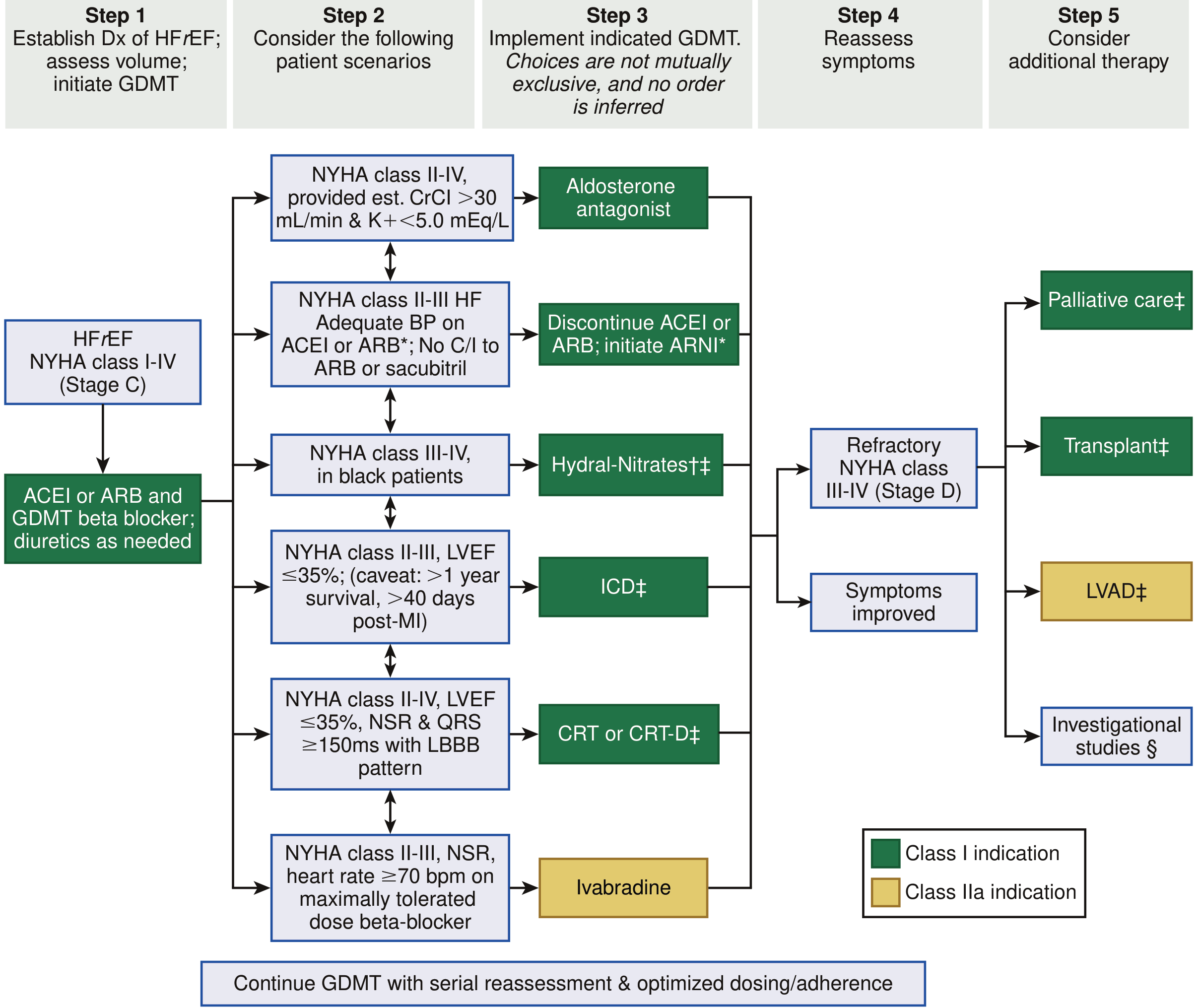
Heart failure treatment algorithm showing NYHA class-based drug therapy
Treatment algorithm for Heart Failure - Braunwald's Heart Disease

C. Nursing Management

1. Assess and Monitor Vital Signs Regularly The nurse monitors blood pressure, pulse rate, respiratory rate, temperature, and oxygen saturation (SpO2) at regular intervals. Any abnormal changes are reported immediately to the doctor, as they may indicate worsening of cardiac function.
2. Monitor Fluid Balance (Intake and Output - I/O Chart) The nurse maintains a strict intake and output chart. All oral and intravenous fluid intake is recorded. Urine output is measured every hour in serious cases. This helps detect fluid overload or kidney failure early.
3. Administer Medications as Prescribed and Monitor Side Effects Medications like diuretics, ACE inhibitors, digoxin, and beta-blockers are given on time. The nurse monitors for side effects such as hypokalemia (low potassium - due to diuretics), hypotension (low blood pressure - due to ACE inhibitors), and bradycardia (slow heart rate - due to digoxin/beta-blockers).
4. Provide Comfort and Positioning The nurse positions the patient in a semi-Fowler's or high Fowler's position to ease breathing. Pillows are used to support the arms and legs. Good oral hygiene, skin care, and prevention of pressure ulcers (bedsores) are done regularly.
5. Provide Emotional Support and Reduce Anxiety CCF patients are often very anxious and frightened due to breathlessness. The nurse reassures the patient with calm communication, explains all procedures, and ensures a quiet environment. Reducing anxiety also reduces the oxygen demand of the heart.

D. Surgical Management (Advanced Cases)

In patients who do not respond to medical treatment (Stage D / refractory CCF), the following surgical options may be considered:
1. Cardiac Resynchronization Therapy (CRT) CRT is a special pacemaker device implanted in the chest. It sends electrical impulses to both sides of the heart to make them beat together (in synchrony), improving pumping function.
2. Implantable Cardioverter-Defibrillator (ICD) An ICD is a device that monitors the heart rhythm and automatically delivers an electric shock if a life-threatening arrhythmia (ventricular fibrillation) is detected, preventing sudden cardiac death.
3. Heart Transplantation In end-stage CCF where all other treatments have failed, a heart transplant (replacing the diseased heart with a healthy donor heart) may be performed. It is the definitive treatment for end-stage heart failure.

8. Health Education

1. Follow Low-Salt Diet Teach the patient to restrict salt (sodium) intake to less than 2 grams per day. Excess salt causes the body to retain water, worsening fluid overload and breathlessness. Advise avoiding pickles, chips, canned foods, and adding extra salt to food.
2. Take Medications Regularly and Never Skip Educate the patient to take all heart medications exactly as prescribed by the doctor. Stopping medications suddenly, especially digoxin or beta-blockers, can cause serious complications. Advise carrying a medication card.
3. Monitor Weight Daily at Home Teach the patient to weigh themselves every morning after waking up and before eating. If weight increases by more than 1-2 kg in 2 days, the patient should contact the doctor immediately as it may indicate fluid accumulation.
4. Avoid Smoking and Alcohol Smoking damages blood vessels, raises blood pressure, and worsens heart disease. Alcohol weakens the heart muscle (causes cardiomyopathy). The patient should completely stop both smoking and alcohol consumption.
5. Recognize Warning Signs and Seek Help Early Teach the patient to immediately go to the hospital if they notice: sudden increase in breathlessness, worsening leg swelling, chest pain, palpitations (fast or irregular heartbeat), or feeling faint or confused. Early treatment prevents hospitalization and life-threatening complications.

9. Conclusion

Congestive Cardiac Failure is a serious and life-threatening condition in which the heart fails to meet the body's needs. It affects the quality of life of millions of patients worldwide. As nurses, understanding the causes, symptoms, and management of CCF helps us provide safe, effective, and compassionate care. Proper drug administration, monitoring of fluid balance, patient positioning, and health education are the cornerstones of nursing care in CCF. With early detection, proper management, and lifestyle changes, the quality of life of CCF patients can be significantly improved.

๐Ÿ“น Watch This Video for Better Understanding

Congestive Heart Failure (CHF) for Nursing & NCLEX - covers all key concepts clearly

Sources: Braunwald's Heart Disease (Textbook of Cardiovascular Medicine) | Fuster and Hurst's The Heart, 15th Edition | Harrison's Principles of Internal Medicine 22nd Ed. | Goodman & Gilman's Pharmacological Basis of Therapeutics

Can you make it short?This question is only 5 marks

Sure! Here is the short 5-mark version of CCF, following your format but kept brief and exam-ready.

Congestive Cardiac Failure (CCF)


Introduction & Definition

Congestive Cardiac Failure (CCF) is a condition in which the heart is unable to pump enough blood to meet the body's needs. As a result, fluid accumulates (collects) in the lungs, legs, and other body parts. It is also called Heart Failure (HF) or Congestive Heart Failure (CHF).
Heart failure diagram

Causes (5 Points)

1. Coronary Artery Disease (CAD): Blockage in the arteries that supply blood to the heart muscle weakens the heart and leads to failure.
2. Hypertension (High Blood Pressure): Long-term high BP makes the heart work harder, eventually causing it to weaken and fail.
3. Myocardial Infarction (Heart Attack): Death of heart muscle tissue after a heart attack reduces the heart's pumping ability.
4. Valvular Heart Disease: Damaged heart valves cause blood to leak or get blocked, increasing the workload on the heart.
5. Cardiomyopathy (Disease of Heart Muscle): The heart muscle becomes weak or stiff due to infection, alcohol, or genetic causes.

Symptoms (5 Points)

1. Dyspnea (Breathlessness): The patient feels difficulty breathing, especially during activity or at rest in severe cases.
2. Pedal Edema (Swelling of Feet and Legs): Fluid collects in the feet and ankles due to poor circulation, causing visible swelling.
3. Orthopnea (Breathlessness on Lying Flat): The patient cannot breathe comfortably when lying down and needs extra pillows to sleep.
4. Fatigue and Weakness: The patient feels constantly tired because the heart is not supplying enough oxygenated blood to the body.
5. Paroxysmal Nocturnal Dyspnea - PND: The patient suddenly wakes up at night gasping for breath due to fluid shifting into the lungs.

Management (Brief)

Medical:
  • Semi-Fowler's position to ease breathing
  • Oxygen therapy to maintain SpO2 above 94%
  • Sodium and fluid restriction in diet
Pharmacological:
  • Diuretics (Furosemide) - removes extra fluid
  • ACE Inhibitors (Enalapril) - reduces heart workload
  • Digoxin - strengthens heart contractions
Nursing:
  • Monitor vital signs and oxygen saturation
  • Maintain strict Intake-Output (I/O) chart
  • Daily weight monitoring - report gain of more than 1 kg

Health Education (2 Key Points)

1. Low Salt Diet: Advise patient to restrict salt to less than 2 grams per day to prevent fluid retention.
2. Take Medications Regularly: Never skip heart medications; sudden stopping can cause serious complications.

Conclusion

CCF is a serious cardiac condition requiring early detection and proper nursing care. With correct medications, fluid management, and health education, the patient's quality of life can be greatly improved.

๐Ÿ“น Video for Better Understanding

This is a shared conversation. Sign in to Orris to start your own chat.