
Insulin, metformin and oral hypoglycemic agent pharmacology in details
Reading File
Finding Sources
Finding Sources
Finding Sources
The best pharmacology source is Katzung's. Let me read the antidiabetic drugs section there, along with the Goldman-Cecil and key insulin sections.
Reading File
Finding Sources
Reading File
Katzung block 8 has insulin preparations and secretion — the primary pharmacology source. Let me read comprehensively.
Reading File
Reading File
Excellent content. Let me continue reading Katzung (insulin receptor, mechanism, and OHA drugs) and Lippincott (OHA section).
Reading File
Reading File
Good data flowing in. Let me now read the Katzung insulin receptor/mechanism section and continue from Lippincott on DPP4i, GLP-1, SGLT2i, and metformin in Katzung.
Reading File
Reading File
Now let me get Katzung's detailed OHA sections (metformin, sulfonylureas, DPP4i, GLP-1, SGLT2i) and fetch the key diagrams.
Reading File
Loading Image
Loading Image
Excellent. I now have rich content from Katzung's block 8. Let me also fetch the insulin receptor diagram and get the Lippincott metformin/sulfonylurea sections I missed.
Reading File
Reading File
I now have extensive content from Katzung and Lippincott. Let me update the todos and now compose the comprehensive answer.Here is a comprehensive, textbook-grounded pharmacology review of insulin, metformin, and all major oral hypoglycemic agents.
Antidiabetic Drug Pharmacology
PART 1 — INSULIN
1. Physiology of Insulin Secretion
Insulin is synthesised in pancreatic β-cells and released at a low basal rate plus a much higher stimulated rate in response to:
- Stimulants: Glucose (via GLUT2 uptake and ATP-mediated K⁺ channel closure), mannose, amino acids (leucine, arginine), fatty acids (high concentrations), GLP-1, GIP, glucagon, cholecystokinin, β-adrenergic activity.
- Inhibitors: Somatostatin, insulin itself, islet amyloid polypeptide (amylin), leptin; α-adrenergic sympathetic activity; diazoxide, phenytoin, vinblastine, verapamil.
Cellular mechanism of glucose-stimulated secretion:
- Glucose enters β-cell via GLUT2 → metabolised → ↑ATP
- ↑ATP closes ATP-sensitive K⁺ channels → membrane depolarisation
- Depolarisation opens voltage-gated Ca²⁺ channels → ↑intracellular Ca²⁺
- Ca²⁺ triggers exocytosis of preformed insulin granules
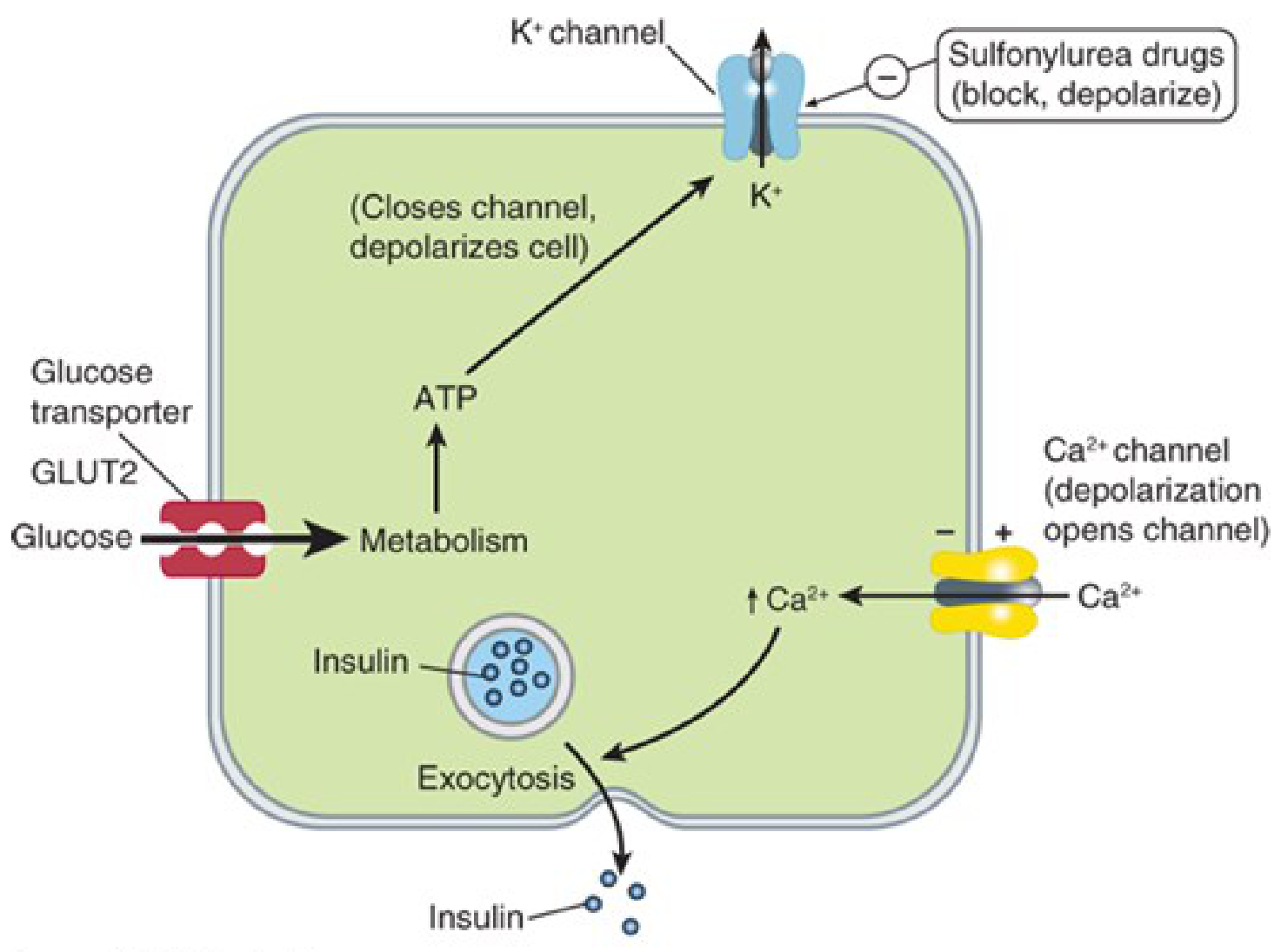
Fig. Mechanism of insulin secretion from the pancreatic β-cell. Sulfonylurea drugs block the ATP-K⁺ channel directly, bypassing the glucose sensing step.
(Katzung's Basic & Clinical Pharmacology, 16th ed.)
2. Insulin Receptor & Intracellular Signaling
The full insulin receptor is a tetrameric glycoprotein consisting of two extracellular α-subunits (ligand binding) and two transmembrane β-subunits (intrinsic tyrosine kinase). When insulin binds α-subunits:
- Conformational change → mutual phosphorylation of tyrosine residues on β-subunits
- Activated receptor phosphorylates insulin receptor substrates (IRS-1, IRS-2)
- IRS activates PI-3-kinase → PKB/Akt pathway → translocation of GLUT4 to cell membrane in muscle and adipose → glucose uptake
- Parallel MAPK pathway (via Grb2 → Ras → ERK) mediates mitogenic/growth effects
Key GLUT transporters:
| Transporter | Main Tissues | Function |
|---|---|---|
| GLUT1 | All tissues, RBCs, brain | Basal uptake |
| GLUT2 | β-cells, liver, kidney, gut | Glucose sensing (high Km ~15–20 mmol/L) |
| GLUT3 | Brain, placenta | Low Km, neuronal uptake |
| GLUT4 | Muscle, adipose | Insulin-regulated uptake |
3. Metabolic Actions of Insulin
| Tissue | Key Actions |
|---|---|
| Liver | ↑Glycogenesis, ↓glycogenolysis, ↓gluconeogenesis; ↑lipogenesis, ↓lipolysis; ↑protein synthesis |
| Skeletal Muscle | ↑GLUT4 → glucose uptake; ↑glycogenesis; ↑protein synthesis; ↓proteolysis |
| Adipose | ↑GLUT4 → glucose uptake; ↑lipogenesis via LPL; ↓lipolysis (inhibits HSL) |
| Potassium | Drives K⁺ intracellularly (activates Na⁺/K⁺-ATPase) — clinically useful in hyperkalemia |
4. Insulin Preparations
Normal fasting serum insulin: 5–15 μU/mL (30–90 pmol/L); peak postprandial: 60–90 μU/mL.
Plasma half-life: 3–5 minutes. Clearance: liver 60% (endogenous), kidney 35–40%; reversed for exogenous SC insulin (kidney ~60%).
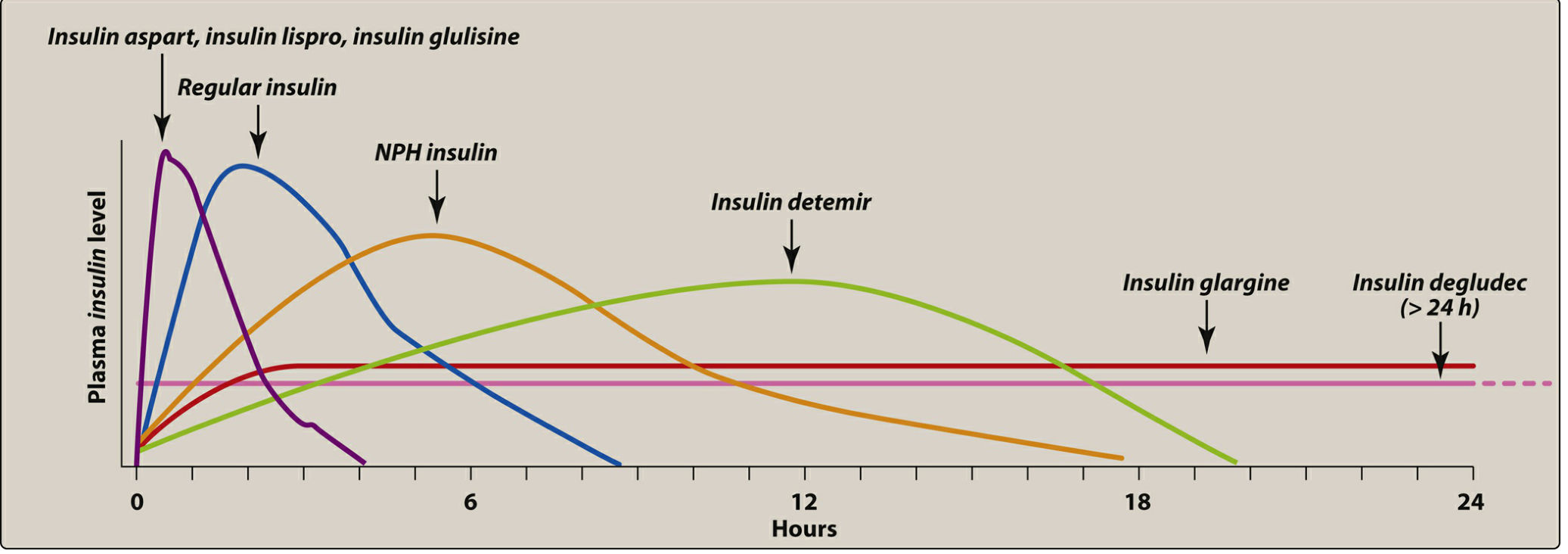
Fig. Comparative pharmacokinetics of insulin preparations. NPH = neutral protamine Hagedorn.
(Lippincott Illustrated Reviews: Pharmacology)
A. Rapid-Acting Insulins (Insulin Analogs)
| Agent | Onset | Peak | Duration |
|---|---|---|---|
| Insulin lispro | 15–30 min | 30–90 min | 3–5 h |
| Insulin aspart | 10–20 min | 30–90 min | 3–5 h |
| Insulin glulisine | 10–20 min | 30–90 min | 3–5 h |
| Inhaled insulin | ~12–15 min | 10–20 min | 2–3 h |
Produced by amino acid sequence modifications (e.g., lispro: B28 Pro ↔ B29 Lys swap) → prevents hexamer aggregation → monomer/dimer absorption → rapid peak. Given 15 min before meals or within 15–20 min of starting a meal.
B. Short-Acting (Regular) Insulin
- Onset: 30 min; Peak: 50–120 min; Duration: 5–8 h
- Given 30 min before meals; suitable for IV infusion (DKA, surgery)
- U-500 concentrated regular insulin has intermediate-acting kinetics
C. Intermediate-Acting Insulin
- NPH (neutral protamine Hagedorn / isophane insulin): Formed by adding zinc + protamine to regular insulin → delays absorption. Onset 2–4 h, peak 4–10 h, duration ~16–18 h. SC only, never IV. Used as basal insulin.
D. Long-Acting Insulins (Basal Analogs)
| Agent | Mechanism | Duration |
|---|---|---|
| Insulin glargine | pH-dependent precipitation at injection site; low isoelectric point → precipitate → slow dissolution | ~24 h, peakless |
| Insulin detemir | Fatty acid chain → albumin binding → prolonged action | ~18–24 h |
| Insulin degludec | Forms multi-hexameric depots → very slow release | >24–42 h (once daily or 3×/week) |
Long-acting insulins provide steady-state basal coverage and are the backbone of basal-bolus regimens.
5. Adverse Effects of Insulin
- Hypoglycemia — most common; risk ↑ with missed meals, exercise, renal failure
- Weight gain — anabolic effect, fluid retention
- Hypokalemia — K⁺ shift into cells
- Lipodystrophy — lipoatrophy or lipohypertrophy at injection sites (rotate sites)
- Insulin allergy (rare with modern human insulin)
- Somogyi effect — rebound hyperglycemia after nocturnal hypoglycemia
PART 2 — METFORMIN (Biguanide)
Mechanism of Action
Metformin is the first-line oral agent for type 2 diabetes. It is an insulin sensitizer — it does not stimulate insulin secretion.
Primary mechanisms:
- Inhibition of hepatic gluconeogenesis (most important) — reduces hepatic glucose output by ~30%. Activates AMP-activated protein kinase (AMPK), which inhibits PEPCK and G6Pase expression.
- Inhibits mitochondrial Complex I → increases AMP:ATP ratio → activates AMPK
- Increases peripheral glucose uptake in muscle (modest)
- Slows intestinal glucose absorption
- Decreases plasma free fatty acids → reduces substrate for gluconeogenesis
Net result: ↓ fasting glucose, ↓ HbA1c by 1–2% with no weight gain (weight neutral to mild weight loss) and no intrinsic hypoglycemia risk (does not stimulate insulin).
Pharmacokinetics
| Parameter | Details |
|---|---|
| Bioavailability | ~50–60% (oral) |
| Protein binding | Negligible |
| Metabolism | Not metabolised — excreted unchanged by kidneys |
| Half-life | ~6 hours (plasma); 17 h (blood, due to RBC accumulation) |
| Dosing | 500–2550 mg/day in divided doses with meals (extended-release available) |
Clinical Benefits Beyond Glycemia
- Cardiovascular protection: UKPDS showed ↓ macrovascular events in obese T2DM
- Weight neutral/mild weight loss
- No hypoglycemia
- Lipid benefits: modest ↓ LDL, triglycerides
- Potential benefit in PCOS (improves ovulation)
Adverse Effects
- GI side effects (most common — nausea, diarrhea, metallic taste) — dose-related, improved with food or extended-release formulation
- Lactic acidosis (rare but serious, ~3 per 100,000 patient-years) — risk ↑ in renal failure (eGFR <30 contraindicated; caution if 30–45), hepatic failure, alcoholism, heart failure, IV contrast administration
- Vitamin B12 deficiency — impairs ileal absorption; monitor B12 levels with long-term use
Contraindications
- eGFR <30 mL/min/1.73m² (hold if eGFR 30–45)
- Active hepatic disease, alcoholism
- Sepsis/hemodynamic instability
- Hold 24–48 h prior to IV contrast administration
PART 3 — OTHER ORAL HYPOGLYCEMIC AGENTS
A. Sulfonylureas — Insulin Secretagogues
Mechanism
Bind to the 140-kDa sulfonylurea receptor (SUR1) on β-cells → block ATP-sensitive K⁺ channels → cell depolarisation → opens voltage-gated Ca²⁺ channels → Ca²⁺ influx → insulin exocytosis. Glucose-independent — works even at low glucose → risk of hypoglycemia.
Generations
| Generation | Drugs | Notes |
|---|---|---|
| 1st | Tolbutamide, chlorpropamide, tolazamide, acetohexamide | Lower potency; chlorpropamide causes SIADH, disulfiram-like reaction |
| 2nd | Glibenclamide (glyburide), glipizide, gliclazide | Higher receptor affinity, lower doses needed |
| 3rd | Glimepiride | Once daily; least hypoglycemia among SUs; cardioprotective SUR isoform selectivity |
Pharmacokinetics
- Well absorbed orally; highly protein-bound (albumin)
- Metabolised in liver; metabolites excreted by kidney (avoid in renal failure — especially glyburide, which has active metabolites)
- Glipizide preferred in renal impairment (hepatic metabolism, inactive metabolites)
Clinical Use
- HbA1c reduction: 1–2%
- Add-on or monotherapy in T2DM
Adverse Effects
- Hypoglycemia — primary risk, especially glyburide (long-acting active metabolite); risk ↑ in elderly, renal failure, skipped meals
- Weight gain (↑insulin → anabolic)
- Rare: cholestatic jaundice, agranulocytosis, thrombocytopenia (<0.1%)
- Chlorpropamide: SIADH, disulfiram-like reaction with alcohol
B. Meglitinides (Glinides) — Short-Acting Secretagogues
Drugs: Repaglinide, nateglinide
- Same mechanism as sulfonylureas (close K⁺-ATP channels on β-cells) but bind to a different site with rapid onset and short duration
- Mimic early-phase prandial insulin release → control postprandial hyperglycemia
- Taken before each meal (3×/day); omit dose if meal skipped
- Lower hypoglycemia risk than SUs; do not combine with sulfonylureas
- Repaglinide: metabolised by CYP3A4 + CYP2C8 → fecal excretion (usable in renal failure)
- Nateglinide: metabolised by CYP2C9 + CYP3A4 → urinary excretion
C. Thiazolidinediones (TZDs / Glitazones) — Insulin Sensitizers
Drugs: Pioglitazone, rosiglitazone
Mechanism
Agonists at PPARγ (peroxisome proliferator-activated receptor gamma) — a nuclear transcription factor. Activate genes involved in:
- Lipid partitioning (fatty acids stored in adipose rather than liver/muscle)
- ↑ adiponectin → ↑ insulin sensitivity in liver and muscle
- ↑GLUT4 expression
- Do not stimulate insulin secretion; require endogenous insulin to act
Pharmacokinetics
- Well absorbed orally; extensively albumin-bound
- Metabolised by CYP2C8 (both agents)
- Pioglitazone: active metabolites; excreted in bile/feces → no dose adjustment in renal failure
- Rosiglitazone: metabolites in urine
Clinical Effects
- HbA1c reduction: 0.5–1.5%
- Pioglitazone: ↓ triglycerides, ↑ HDL; reduces risk of MACE in patients with prior macrovascular disease
Adverse Effects
- Weight gain (↑ subcutaneous fat + fluid retention) — can worsen heart failure
- Edema — contraindicated in symptomatic heart failure (NYHA class 3–4)
- Osteopenia/fractures — especially in women (PPARγ promotes adipocyte over osteoblast differentiation)
- Bladder cancer risk with pioglitazone (long-term, high-dose)
- Rosiglitazone: boxed warning for ↑ risk of myocardial infarction (restricted in many countries)
- Liver toxicity (monitor LFTs; troglitazone, a previous TZD, was withdrawn for fatal hepatotoxicity)
D. Alpha-Glucosidase Inhibitors
Drugs: Acarbose, miglitol, voglibose
Mechanism
Competitively inhibit intestinal brush-border α-glucosidases (maltase, sucrase, glucoamylase) and pancreatic α-amylase → slow digestion of complex carbohydrates → blunt postprandial glucose spike.
- No systemic absorption (acarbose acts locally in gut)
- No hypoglycemia as monotherapy; HbA1c reduction: 0.5–1%
- Taken with the first bite of each meal
Adverse Effects
- GI: flatulence, bloating, diarrhea (undigested carbs fermented by colonic bacteria) — very common; limits use
- If hypoglycemia occurs (from concomitant SU/insulin), treat with pure glucose (dextrose) — sucrose will not be absorbed due to enzyme inhibition
E. DPP-4 Inhibitors (Gliptins)
Drugs: Sitagliptin, saxagliptin, linagliptin, alogliptin, vildagliptin
Mechanism
Inhibit dipeptidyl peptidase-4 (DPP-4), the enzyme that rapidly degrades GLP-1 and GIP (incretin hormones, half-life ~2 min). By preventing DPP-4 cleavage:
- ↑ active GLP-1 and GIP levels (~2-fold)
- Stimulate insulin secretion only when glucose is high (glucose-dependent) → low hypoglycemia risk
- ↓ glucagon secretion (GLP-1 effect)
Pharmacokinetics
| Drug | Half-life | Elimination | Renal dose adj? |
|---|---|---|---|
| Sitagliptin | ~12 h | Renal (80%) | Yes (eGFR <45) |
| Saxagliptin | 2.5 h | CYP3A4/5 → renal | Yes |
| Linagliptin | ~100 h | Biliary/fecal | No (safe in CKD) |
| Alogliptin | ~21 h | Renal | Yes |
Clinical Effects
- HbA1c reduction: 0.5–1.0%
- Weight neutral
- Well tolerated
Adverse Effects
- Nasopharyngitis, upper respiratory infections (mild)
- Pancreatitis (rare but reported)
- Saxagliptin/alogliptin: ↑ hospitalization for heart failure (SAVOR-TIMI, EXAMINE trials) — avoid in decompensated heart failure
- Possible arthralgia (FDA warning)
F. GLP-1 Receptor Agonists (Incretin Mimetics)
Drugs:
- Short-acting (BID/daily): Exenatide (BID), liraglutide (daily)
- Long-acting (weekly): Exenatide XR, dulaglutide, semaglutide
- Oral: Semaglutide (Rybelsus)
- Dual GIP/GLP-1 agonist: Tirzepatide (weekly SC)
Mechanism
Synthetic peptide agonists at GLP-1 receptors (GPCRs → ↑cAMP). Effects:
- ↑ insulin secretion — glucose-dependent (only when BG elevated)
- ↓ glucagon secretion
- Slows gastric emptying → blunts postprandial glucose
- ↓ appetite / promotes satiety (central hypothalamic action)
- ↓ hepatic glucose output
Clinical Benefits
- HbA1c reduction: 1–2%
- Significant weight loss (2–5 kg, more with semaglutide/tirzepatide)
- Cardiovascular protection (LEADER trial — liraglutide; SUSTAIN-6, PIONEER-6 — semaglutide): ↓ MACE (MI, stroke, CV death) in T2DM with CVD — liraglutide and semaglutide are approved to reduce CV mortality
- Tirzepatide: HbA1c reduction 1.9–2.6%; weight loss 6–13 kg
Pharmacokinetics
- All are peptides → require SC injection (except oral semaglutide)
- Not metabolised by CYP enzymes
- Exenatide: renally cleared (avoid if eGFR <30); liraglutide, dulaglutide, semaglutide: degraded by DPP-4/endopeptidases
Adverse Effects
- Nausea, vomiting, diarrhea — most common (dose-dependent, transient)
- Reduced appetite
- Pancreatitis (rare)
- Thyroid C-cell tumors (animal data; GLP-1R on thyroid) — contraindicated in MEN2, medullary thyroid carcinoma
- Injection site reactions
G. SGLT2 Inhibitors (Gliflozins)
Drugs: Empagliflozin, dapagliflozin, canagliflozin, ertugliflozin
Mechanism
Inhibit sodium-glucose cotransporter-2 (SGLT2) in the proximal renal tubule (S1/S2 segments), which reabsorbs ~90% of filtered glucose. By blocking SGLT2:
- ↑ urinary glucose excretion (~70–100 g/day)
- ↓ plasma glucose regardless of insulin levels (insulin-independent)
- Glycosuric osmotic diuresis → ↓ blood pressure, ↓ body weight
- Natriuresis → ↓ preload, ↓ afterload (heart failure benefit)
- Inhibit NHE (Na⁺/H⁺ exchanger) in the heart → cardiorenal protection
Clinical Benefits
- HbA1c reduction: 0.5–1.0%
- Weight loss: ~2–3 kg
- BP reduction: 3–5 mmHg systolic
- Heart failure: Empagliflozin (HFrEF + HFpEF) and dapagliflozin (HFrEF) reduce hospitalisations and CV death — class effect independent of diabetes
- CKD protection: Slow progression of diabetic nephropathy (↓ intraglomerular pressure via tubuloglomerular feedback)
- CV outcomes: EMPA-REG OUTCOME (empagliflozin), CANVAS (canagliflozin), DECLARE-TIMI (dapagliflozin) all showed ↓ MACE
Pharmacokinetics
| Drug | Notes |
|---|---|
| Empagliflozin | Metabolised by UGT1A3/UGT2B7; renal excretion; hold if eGFR <20–30 |
| Dapagliflozin | UGT1A9; now approved for HF/CKD at lower eGFR thresholds |
| Canagliflozin | ↑ risk of lower limb amputation (CANVAS trial) |
| Ertugliflozin | Least studied CV/renal data |
Adverse Effects
- Genital mycotic infections (most common — due to glycosuria → fungal overgrowth): candidal vulvovaginitis, balanitis
- UTIs (variable across agents)
- DKA — including euglycemic DKA (glucose may be normal while ketones high) — risk ↑ with low carb diet, prolonged fasting, surgery → hold 3–4 days before elective surgery
- Fournier's gangrene (rare — FDA warning)
- Polyuria/dehydration/hypotension — especially with diuretics/elderly
- Canagliflozin: ↑ risk of amputations and fractures
- Do not use for type 1 DM (off-label only with extreme caution)
- Efficacy reduced at eGFR <30 (less glucose filtered)
H. Other Agents
| Drug | Class | Mechanism | Notes |
|---|---|---|---|
| Pramlintide | Amylin analog | Slows gastric emptying, ↓ postprandial glucagon, ↑ satiety | SC injection with meals; adjunct to insulin; causes nausea |
| Colesevelam | Bile acid sequestrant | Sequesters bile acids → ↓ hepatic glucose production via FXR signaling | Modest HbA1c ↓0.5%; ↑ triglycerides; constipation |
| Bromocriptine | Dopamine agonist | Resets circadian rhythm of central dopamine/serotonin → ↓ hepatic glucose output | Nausea, orthostatic hypotension |
| Acarbose | α-glucosidase inhibitor | See above | — |
PART 4 — COMPARATIVE SUMMARY
| Drug Class | HbA1c ↓ | Hypoglycemia | Weight | CV Benefit | Key Concern |
|---|---|---|---|---|---|
| Insulin | Variable (unlimited) | Yes | ↑ | Neutral | Hypoglycemia, weight ↑ |
| Metformin | 1–2% | No | Neutral/↓ | ↑ (UKPDS) | Lactic acidosis (rare), GI, B12 ↓ |
| Sulfonylureas | 1–2% | Yes (high) | ↑ | Neutral | Hypoglycemia, weight ↑ |
| Meglitinides | 0.5–1% | Low | ↑ | Neutral | Cost, 3×/day dosing |
| TZDs | 0.5–1.5% | No | ↑ (fat+fluid) | Pioglitazone ↓ MACE | Heart failure, fractures, bladder Ca |
| α-GI | 0.5–1% | No (mono) | Neutral | Acarbose ↓ events | GI flatulence |
| DPP-4i | 0.5–1% | Low | Neutral | Saxagliptin: ↑HF | Pancreatitis; nasopharyngitis |
| GLP-1 RA | 1–2% | Low | ↓↓ | ↓ MACE (lira, sema) | GI nausea, thyroid risk |
| SGLT2i | 0.5–1% | No | ↓ | ↓ HF, ↓ CKD, ↓ MACE | Genital mycosis, euDKA, UTI |
| Tirzepatide | 1.9–2.6% | Low | ↓↓↓ | Under study | GI, pancreatitis |
PART 5 — TREATMENT ALGORITHM (Type 2 DM)
- First line: Metformin (if tolerated and eGFR ≥30)
- CVD or high CV risk: Add GLP-1 RA (liraglutide, semaglutide) or SGLT2i (empagliflozin, dapagliflozin)
- Heart failure (HFrEF or HFpEF): SGLT2i preferred
- CKD: SGLT2i + GLP-1 RA (independent of glucose control)
- Obesity/weight loss priority: GLP-1 RA or tirzepatide
- Cost constraints: Sulfonylurea or TZD
- Insulin when oral agents insufficient: start basal insulin → add prandial insulin → basal-bolus regimen
Sources: Katzung's Basic & Clinical Pharmacology, 16th ed. | Lippincott Illustrated Reviews: Pharmacology, 8th ed. | Katzung Block 8 (Chapter 41 — Antidiabetic Drugs)This covers the full pharmacology of insulin, metformin, and all major oral hypoglycemic drug classes. Here's a quick orientation to each section:
What's covered above:
PART 1 — Insulin
- β-cell physiology and GLUT2/ATP-K⁺ channel/Ca²⁺ mechanism of secretion (with diagram)
- Insulin receptor structure → IRS → PI-3K/Akt/GLUT4 signaling
- Metabolic actions in liver, muscle, and adipose
- All four categories of insulin preparations (rapid, short, intermediate, long-acting) with onset/peak/duration table and pharmacokinetic diagram
- Adverse effects (hypoglycemia, weight gain, hypokalemia, lipodystrophy)
PART 2 — Metformin
- AMPK activation via Complex I inhibition → ↓ hepatic gluconeogenesis
- No weight gain, no intrinsic hypoglycemia
- Key contraindication: eGFR <30, IV contrast
- GI side effects, lactic acidosis, B12 deficiency
PART 3 — All Oral Antidiabetics
- Sulfonylureas (1st/2nd/3rd gen): SUR1 blockade mechanism, hypoglycemia risk, renal dosing
- Meglitinides: rapid prandial secretagogues
- TZDs: PPARγ agonism, heart failure/fracture/bladder cancer risks
- α-Glucosidase inhibitors: postprandial blunting, flatulence
- DPP-4 inhibitors: incretin-based, weight neutral, linagliptin safe in CKD
- GLP-1 receptor agonists: CV mortality reduction, weight loss, GI SE, thyroid C-cell warning
- SGLT2 inhibitors: insulin-independent glycosuria, heart failure/CKD protection, euDKA risk
PART 4 — Comparative table (HbA1c reduction, hypoglycemia, weight, CV benefit, key risks)
PART 5 — Modern treatment algorithm (ADA/ACC-aligned preferred sequencing)
This is a shared conversation. Sign in to Orris to start your own chat.