
Connectivities symptoms, medication and explain use of cyclosporine ophthalmic emulsion
Reading File
Now let me search the medical library in parallel for connective tissue disease symptoms, medications, and cyclosporine ophthalmic emulsion.
Finding Sources
Finding Sources
Finding Sources
Good results. Now let me read the key sections in parallel - connective tissue disease content and cyclosporine ophthalmic content.
Reading File
Reading File
Finding Sources
I mean conjunctivitis. symptoms, medication and explain use of cyclosporine ophthalmic emulsion
Finding Sources
Finding Sources
Finding Sources
Reading File
Reading File
Finding Sources
Reading File
Finding Sources
Finding Sources
Reading File
Reading File
Finding Sources
Finding Sources
Reading File
Finding Sources
Searching the Web
cyclosporine ophthalmic emulsion Restasis mechanism of action conjunctivitis dry eye
Reading File
Loading Image
I now have comprehensive information. Let me compile the full answer.
Conjunctivitis: Symptoms, Medications, and Cyclosporine Ophthalmic Emulsion
What is Conjunctivitis?
Conjunctivitis is inflammation of the conjunctiva - the mucous membrane covering the inner eyelid surface and the globe of the eye up to the corneal junction. It is the most common type of eye infection, with viral and bacterial causes being the most frequent. - Tietz Textbook of Laboratory Medicine, 7th Ed.
Types and Symptoms
1. Viral Conjunctivitis ("Pink Eye")
The most common form in adults. Typically caused by adenoviruses (highly contagious), HSV, VZV, or less commonly influenza, EBV, measles.
Symptoms:
- Copious watery discharge
- Conjunctival redness (erythema)
- Unilateral onset, often spreads to both eyes
- Fever, rhinorrhea, pharyngitis may accompany
- Enlarged preauricular lymph nodes
- Numerous lymphoid follicles on palpebral conjunctiva
- Symptoms usually resolve spontaneously within 2 weeks (some adenovirus serotypes can cause epidemic keratoconjunctivitis lasting weeks to months)
2. Bacterial Conjunctivitis
Common organisms: S. aureus, S. pneumoniae, H. influenzae, Moraxella catarrhalis. Neisseria gonorrhoeae and Chlamydia trachomatis cause more severe disease.
Symptoms:
- Purulent (opaque, yellowish-green) discharge containing white cells
- Conjunctival papillae (help differentiate from viral)
- Grittiness and redness
- Unilateral or bilateral presentation
- Hyperacute bacterial conjunctivitis (N. gonorrhoeae): copious thick discharge, requires urgent treatment
- Chlamydial conjunctivitis: mucopurulent discharge, redness; repeated infection can lead to trachoma and blindness
3. Allergic Conjunctivitis
Symptoms:
- Intense itching (cardinal feature)
- Bilateral redness
- Watery or clear discharge
- Vernal conjunctivitis: itching worse in spring/summer; cobblestone papillae under the upper lid; often associated with hay fever, eczema, or asthma
- Giant papillary conjunctivitis: large papillae under upper lid in contact lens wearers (allergy to sterilizing solutions/lens proteins)
4. Keratoconjunctivitis Sicca (Dry Eye / Chronic Inflammatory Conjunctivitis)
Symptoms:
-
Foreign body sensation
-
Dryness and burning, worsening over time
-
Paradoxical tearing (reflex lacrimal stimulation)
-
Lack of corneal and conjunctival luster with punctate erosions
-
Stringy, rope-like discharge (excess mucin production compensating for aqueous deficit)
-
Common in women during the fifth decade; associated with rheumatoid arthritis, SLE, and Sjogren syndrome
-
Textbook of Family Medicine 9e, Bailey and Love's Surgery 28th Ed., Histology - Text and Atlas
Medications by Type
Viral Conjunctivitis
- No antimicrobial therapy needed - self-limited (resolves in 3 weeks; up to 1 month in severe cases)
- Artificial tears - lubricate and relieve symptoms
- Cool compresses - supportive
- Topical corticosteroids - for severe inflammation (pseudomembranes, bleeding) with ophthalmology evaluation
- Erythromycin 0.5% ointment (2-3x/day) if diagnostic uncertainty exists
- Keep children out of school until symptoms resolve (3-5 days; contagious up to 10-14 days)
Bacterial Conjunctivitis
Mostly self-limited (1-2 weeks without treatment), but topical antibiotics shorten resolution time.
| Antibiotic | Notes |
|---|---|
| Tobramycin | Highest evidence level |
| Ciprofloxacin | Highest evidence level; good for Pseudomonas (contact lens wearers) |
| Moxifloxacin | Highest evidence level |
| Ofloxacin | Highest evidence level |
| Azithromycin | Highest evidence level |
| Trimethoprim/Polymyxin B | Good first-line choice; preferred in children |
| Erythromycin 0.5% ointment | Preferred in young children |
Avoid: Gentamicin and neomycin (toxicity).
- N. gonorrhoeae: Ceftriaxone 1 g IM once + saline irrigation + empirical chlamydia treatment
- Chlamydia: Doxycycline 100 mg orally BID x 7 days (preferred), OR azithromycin 1 g orally once
- Neonatal (ophthalmia neonatorum): Ceftriaxone 25-50 mg/kg IM/IV + topical erythromycin or polymyxin B-bacitracin + saline washes
Allergic Conjunctivitis
- Avoid the offending allergen (first step)
- Cool compresses
- Topical antihistamines/mast cell stabilizers (e.g., olopatadine, ketotifen)
- Topical NSAIDs - for mild-moderate cases
- Avoid preservative-containing drops (may worsen symptoms)
- Vernal conjunctivitis: topical corticosteroids short-term; mast cell stabilizers for maintenance
Keratoconjunctivitis Sicca (Dry Eye)
-
Artificial tears and lubricating ointments (first-line)
-
Punctal occlusion (surgical) for moderate-severe cases
-
Cyclosporine 0.05% ophthalmic emulsion (Restasis) - when other treatments are insufficient
-
Rosen's Emergency Medicine, The Harriet Lane Handbook 23rd Ed., Histology A Text and Atlas
Cyclosporine Ophthalmic Emulsion (Restasis / Cequa) - Detailed Explanation
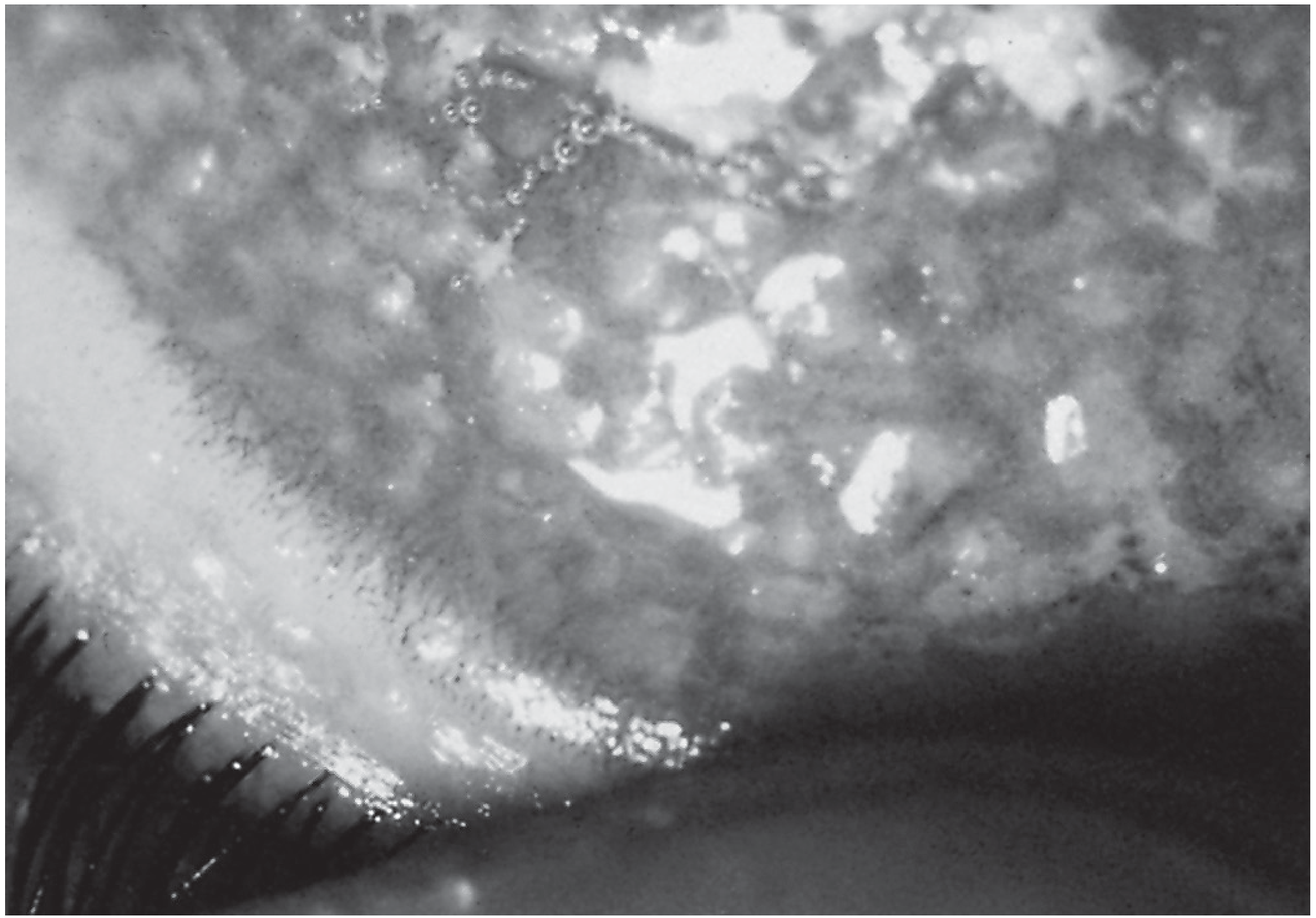
What It Is
Cyclosporine ophthalmic emulsion is a topical immunomodulatory agent formulated as:
- Restasis: 0.05% cyclosporine in an oil-in-water emulsion
- Cequa: 0.09% cyclosporine in a nanomicellar formulation (higher corneal penetration)
Both are available in preservative-free single-use vials (droperettes), dosed as 1 drop in each eye twice daily. - Goodman & Gilman's Pharmacological Basis of Therapeutics
Indication
FDA-approved for chronic dry eye disease (keratoconjunctivitis sicca) with reduced tear production due to ocular surface inflammation. It is also used in ocular rosacea and as an adjunct in allergic eyelid/conjunctival disease when topical medications fail. - Andrews' Diseases of the Skin, Dermatology 2-Volume Set 5e
Mechanism of Action
Chronic dry eye involves a self-reinforcing inflammatory cycle:
- Ocular surface inflammation activates T-lymphocytes
- Activated T-cells infiltrate the lacrimal glands and conjunctiva
- T-cells secrete pro-inflammatory cytokines (IL-2, IFN-gamma, etc.)
- Cytokines suppress lacrimal gland function → reduced tear production
- Reduced tears → more surface damage → more inflammation (the cycle repeats)
Cyclosporine breaks this cycle by:
- Binding to cyclophilin (an intracellular protein) inside T-cells
- The cyclosporine-cyclophilin complex inhibits calcineurin, a phosphatase enzyme
- Calcineurin inhibition prevents NFAT (Nuclear Factor of Activated T-cells) from entering the nucleus
- This blocks IL-2 gene transcription and suppresses T-cell activation at the G0-G1 transition stage
- Pro-inflammatory cytokine secretion within the conjunctiva and accessory lacrimal glands is suppressed
- Over time, lacrimal gland function recovers and natural tear production gradually increases
Importantly, at the 0.05% topical dose, cyclosporine acts locally only - it does NOT suppress systemic immune function or T-cell proliferation elsewhere in the body. - AbbVie/Restasis Product Monograph, Greenwich Eye / Cleveland Clinic
Clinical Use
- Applied twice daily (approximately 12 hours apart)
- Onset is slow - meaningful improvement typically seen at 3-6 months of consistent use
- Can be used long-term as a chronic management strategy
- Do not use while wearing contact lenses (remove lenses; can reinsert 15 min after instillation)
- If using artificial tears concurrently, space them at least 15 minutes apart
Side Effects
- Burning/stinging on instillation (most common, usually transient)
- Eye redness shortly after use
- Watery eyes or mild discharge
- Foreign body sensation
- Temporary blurred vision (clears within minutes)
- Serious allergic reactions: rare
When NOT to Use
- Active ocular infection (contraindicated - it is immunosuppressive topically)
- Known hypersensitivity to cyclosporine
- Patients currently using topical anti-inflammatory drops or tear duct plugs may have reduced response per clinical trials
Key Takeaway
Unlike artificial tears which provide temporary surface moisture, cyclosporine ophthalmic emulsion treats the underlying inflammatory cause of tear deficiency rather than just replacing tears. It is the first FDA-approved prescription treatment for this purpose and remains a cornerstone of managing moderate-to-severe chronic dry eye. - Textbook of Family Medicine 9e, Goodman & Gilman's
So cyclosporine ophthalmic emulsion is commonly used to help conjunctivitis. And In simple
To clarify and simplify:
Is Cyclosporine Ophthalmic Emulsion "Commonly Used" for Conjunctivitis?
Not exactly. It depends on the type:
| Type of Conjunctivitis | Used? |
|---|---|
| Viral (pink eye) | ❌ No |
| Bacterial | ❌ No |
| Allergic | Sometimes, as a secondary option |
| Chronic dry eye / inflammatory | ✅ Yes - this is its main use |
Cyclosporine eye drops are specifically used for chronic dry eye disease (also called keratoconjunctivitis sicca) - a condition where inflammation has damaged the eye's ability to produce tears. It is not a standard treatment for the common types of conjunctivitis (viral or bacterial).
How It Works - In Simple Terms
Think of your eye like a water faucet:
- In dry eye disease, your immune system (T-cells) is attacking your tear glands, turning the faucet down
- Cyclosporine eye drops calm down those attacking immune cells
- With less inflammation, the tear glands can work properly again
- Your eye gradually starts producing more of its own natural tears
It does not just add moisture like artificial tears - it fixes the reason your eye stopped making enough tears in the first place.
Bottom line: Cyclosporine eye drops treat the inflammation behind dry eye, not the typical "pink eye" most people think of when they hear conjunctivitis. It takes 3-6 months of twice-daily use to see full benefit, and it works locally in the eye without affecting the rest of your immune system.
How to heal conjunctivitis
Here is a straightforward guide on how to heal conjunctivitis, based on the type:
How to Heal Conjunctivitis
1. Viral Conjunctivitis (Most Common)
The honest truth: there is no cure - your body heals it on its own in 1-3 weeks.
What you can do to feel better:
- Cool or warm compresses on the eye - soothes irritation
- Artificial tears - keeps the eye moist and comfortable
- Do NOT rub your eyes - spreads the infection
- Wash hands frequently
- Do not share towels, pillows, or washcloths
- Stay home from school/work until discharge stops
2. Bacterial Conjunctivitis
Also often heals on its own in 1-2 weeks, but antibiotic drops speed up recovery.
- Antibiotic eye drops or ointment (prescribed by a doctor):
- Tobramycin, ciprofloxacin, moxifloxacin, or trimethoprim/polymyxin B
- Use for at least 1 week as directed
- Clean discharge from the eye gently with a clean, damp cloth (wipe from inner corner outward)
- Do not wear contact lenses until fully healed
See a doctor urgently if you have very thick green/yellow discharge - this could be Neisseria gonorrhoeae which needs immediate treatment.
3. Allergic Conjunctivitis
Remove the trigger first, then treat symptoms:
- Avoid the allergen (pollen, pet dander, dust) if possible
- Cold compresses - reduce swelling and itching
- Antihistamine eye drops (olopatadine, ketotifen) - relieve itching fast
- Oral antihistamines (cetirizine, loratadine) - if nasal allergies also present
- Do not rub the eyes - worsens the allergic reaction
4. Dry Eye / Chronic Conjunctivitis
- Artificial tears throughout the day
- Cyclosporine 0.05% eye drops (Restasis) if prescribed - treats the underlying inflammation
- Avoid screens for long periods, use a humidifier, stay hydrated
General Rules for ALL Types
| Do | Don't |
|---|---|
| Wash hands often | Touch or rub your eyes |
| Use clean cloths/tissues once only | Share towels or makeup |
| Remove contact lenses | Wear contacts until healed |
| See a doctor if it gets worse | Self-prescribe steroid drops |
When to See a Doctor Immediately
- Vision changes or blurring
- Severe eye pain
- Very thick, heavy discharge
- Symptoms not improving after 7-10 days
- Newborn with eye discharge (always urgent)
- Symptoms in a contact lens wearer
Most cases of conjunctivitis are mild and resolve fully with proper care. The key is identifying the type - because viral needs rest, bacterial needs antibiotics, and allergic needs antihistamines.
This is a shared conversation. Sign in to Orris to start your own chat.