
he came with c/o sudden onset swelling of face ,arms and hands shivering + all over the body since today morning had his meals in the morning no alcohol consumption or smoking
Clinical Assessment
- Sudden onset swelling of face, arms, and hands
- Shivering (rigors) all over the body - since this morning
- Had morning meals (possible food trigger)
- No alcohol, no smoking
Most Likely Diagnosis: Anaphylaxis / Allergic Reaction with Angioedema
Why this fits:
| Feature | Significance |
|---|---|
| Sudden onset after meals | Food allergen trigger (peanuts, shellfish, eggs, soy, milk are most common) |
| Facial swelling | Angioedema - deep dermal/subcutaneous edema in highly distensible tissue |
| Arm + hand swelling | Peripheral angioedema - classic distribution |
| Rigors/shivering | Systemic mast cell/basophil activation; can also indicate early sepsis if fever present |
| No alcohol | Alcohol can sometimes be a cofactor in allergic reactions - its absence is noted |
Differential Diagnoses to Consider
- Anaphylaxis (food-triggered) - Most likely. Rigors + angioedema post-meal.
- Hereditary Angioedema (HAE) - Autosomal dominant C1 esterase inhibitor deficiency. Attacks of swelling (face, hands, arms) WITHOUT urticaria or pruritus. Triggered by minor stress. Ask: family history? recurrent attacks? abdominal pain episodes?
- ACE inhibitor-induced angioedema - Ask about any antihypertensive medications. 0.1-0.7% incidence. NOT responsive to antihistamines/epinephrine.
- Sepsis with early distributive phase - Rigors are a hallmark of bacteremia/septicemia. The facial swelling is less typical here - but must rule out.
- Drug reaction - Any new medication? NSAIDs taken with morning meal?
Immediate Assessment Priorities
CRITICAL - Airway First
Angioedema of the tongue, lips, and face carries risk of airway obstruction - which can develop rapidly and unpredictably. (Tintinalli's)
- Any throat tightness, stridor, hoarseness, difficulty swallowing?
- Tongue or lip swelling?
- Breathing difficulty?
- Blood pressure (hypotension = anaphylaxis)
- Rash, urticaria, pruritus?
- SpO2
History to Elicit
| Question | Reason |
|---|---|
| What exactly did he eat? | Identify food allergen |
| Any previous similar episodes? | HAE or recurrent allergy |
| Any medications taken today or recently? | ACE inhibitors, NSAIDs, antibiotics |
| Family history of swelling episodes? | HAE (autosomal dominant) |
| Any insect bite/sting recently? | Hymenoptera venom anaphylaxis |
| Fever present? | Sepsis vs. allergic reaction |
| Abdominal pain, nausea, vomiting? | Anaphylaxis GI involvement / HAE abdominal crisis |
| Pruritus / urticaria? | Allergic (histamine-mediated) vs. bradykinin-mediated (HAE, ACE-i) |
Emergency Management (if anaphylaxis confirmed)
1st Line - Epinephrine (MANDATORY if anaphylaxis)
- Epinephrine 0.3-0.5 mg IM (anterolateral thigh, 1:1000 concentration)
- Repeat every 5-15 min as needed
- Do NOT delay for antihistamines or steroids
Supportive
- IV access - large bore, normal saline bolus if hypotensive
- Oxygen - high flow if SpO2 decreased
- Antihistamines - H1 (diphenhydramine 25-50 mg IV/IM) + H2 (ranitidine 50 mg IV)
- Corticosteroids - Hydrocortisone 200 mg IV or Methylprednisolone 1-2 mg/kg IV (reduces biphasic reaction risk)
- Monitor for biphasic anaphylaxis (recurrence 1-72 hours later)
- Observe for minimum 4-6 hours after reaction
If HAE suspected (no urticaria, no pruritus, family history, no response to above):
- C1 esterase inhibitor concentrate (Berinert 20 U/kg IV)
- Icatibant 30 mg SC (bradykinin-2 receptor antagonist)
- Note: Antihistamines, epinephrine, and corticosteroids have minimal effect on HAE
Red Flags - Call for Immediate Escalation
- Stridor / voice change / throat tightness - prepare for intubation
- SpO2 < 94%
- Hypotension (SBP < 90 mmHg)
- Loss of consciousness
- Rapidly worsening swelling
Search for latest anaphylaxis treatment guidelines and protocols
anaphylaxis treatment guidelines management
anaphylaxis treatment guidelines 2024 2025 WAO AAAAI epinephrine protocol
PMID: 41117568
PMID: 42335666
https://pmc.ncbi.nlm.nih.gov/articles/PMC12402951
anaphylaxis epinephrine first-line treatment protocol
anaphylaxis epinephrine adrenaline management 2024
WAO anaphylaxis guidelines 2024 2025 diagnosis criteria management steps
PMID: 39880313
PMID: 38866583
https://phoenixchildrens.org/sites/default/files/2025-11/ana…
Anaphylaxis Treatment Guidelines & Protocols (2024-2026)
1. Updated Diagnostic Criteria (GA²LEN 2024 Consensus)
"Anaphylaxis is a serious allergic (hypersensitivity) reaction that can progress rapidly and may cause death."
| Criterion | Features |
|---|---|
| Criterion 1 | Acute onset involving skin/mucosal tissue (hives, flushing, lip/tongue/uvula swelling) AND at least one of: respiratory compromise, reduced BP/end-organ dysfunction, severe GI symptoms |
| Criterion 2 | Acute onset of hypotension, bronchospasm, or laryngeal involvement after exposure to a known or likely allergen - even without skin signs |
Key update: Skin involvement is no longer required to diagnose anaphylaxis. Cardiovascular or respiratory symptoms alone after allergen exposure are sufficient.
2. Severity Grading (WAO 2024 Updated System)
| Grade | Features |
|---|---|
| Grade 1 (Mild) | Cutaneous/mucosal only - no systemic signs |
| Grade 2 (Moderate) | Systemic symptoms but no life-threatening involvement |
| Grade 3 (Severe) | Life-threatening cardiovascular or respiratory compromise |
| Grade 4 (Arrest) | Cardiac or respiratory arrest |
Epinephrine should be given regardless of grade - grading mainly guides monitoring intensity and adjunct therapies.
3. Treatment Protocol - Step by Step
STEP 1: Call for Help / Activate Emergency Response
- Lay patient flat (Trendelenburg / supine with legs elevated)
- If breathing difficulties: semi-recumbent position
- Pregnant patients: left lateral tilt
- Do NOT stand a hypotensive patient upright - associated with increased mortality
STEP 2: EPINEPHRINE (Adrenaline) - THE ONLY FIRST-LINE DRUG
| Patient | Dose | Concentration |
|---|---|---|
| Adults / Children >50 kg | 0.5 mg (0.5 mL) IM | 1:1000 (1 mg/mL) |
| Children 20-50 kg | 0.3 mg (0.3 mL) IM | 1:1000 |
| Children 7.5-20 kg | 0.15 mg IM | 1:1000 |
| Children <7.5 kg | 0.01 mg/kg IM | 1:1000 |
- Repeat every 5-15 minutes if no response - up to 3 doses IM
- IV epinephrine only in refractory/severe cases with cardiovascular monitoring in place (higher risk of arrhythmias - use IV only in ICU/resus settings)
- New 2024-2025: Intranasal epinephrine spray (neffy®) has been approved and shows pharmacokinetics equivalent to IM injection - useful when IM access is difficult, especially in community settings
⚠️ Antihistamines and corticosteroids are adjuncts only - NOT first-line. Giving them before epinephrine causes dangerous delays and is associated with deaths.
STEP 3: Positioning & IV Access
- Establish large-bore IV access
- IV crystalloid bolus (normal saline): 10-20 mL/kg rapidly if hypotensive
- Continuous monitoring: SpO2, ECG, BP every 5 minutes
STEP 4: Oxygen
- High-flow oxygen (10-15 L/min via face mask) if SpO2 <90% or respiratory distress
- Nebulized albuterol (salbutamol) for bronchospasm not resolving after epinephrine
STEP 5: Adjunct Medications (after epinephrine)
| Drug | Dose | Role |
|---|---|---|
| H1 antihistamine (diphenhydramine/cetirizine) | 25-50 mg IV/IM (adults) | Relieves urticaria/pruritus only - NOT life-saving |
| H2 antihistamine (ranitidine/famotidine) | 50 mg IV | Adjunct for urticaria |
| Corticosteroids (hydrocortisone/methylprednisolone) | Hydrocortisone 200 mg IV or Methylprednisolone 1-2 mg/kg IV | Reduce risk of biphasic/prolonged reaction - NOT proven to prevent it |
| Glucagon | 1-2 mg IV over 5 min (then infusion) | For patients on beta-blockers who don't respond to epinephrine |
| Vasopressors (norepinephrine, vasopressin) | Per ICU protocol | Refractory anaphylaxis with persistent hypotension |
STEP 6: Refractory Anaphylaxis (2024 Review - Pouessel et al., Clin Exp Allergy)
- IV epinephrine infusion: 0.1-1 mcg/kg/min (in monitored setting)
- Aggressive IV fluid resuscitation - up to 4-5L may be needed
- Second-line vasopressors: norepinephrine (preferred), vasopressin, dopamine
- Methylene blue: suggested in refractory vasodilatory shock
- Extracorporeal life support (ECLS/ECMO): rescue therapy in cardiac arrest from anaphylaxis
- Genetic factors to investigate: platelet activating factor-acetylhydrolase deficiency, hereditary alpha-tryptasemia, mastocytosis
4. Airway Management
- Stridor, hoarseness, or voice change = immediate preparation for advanced airway
- Nebulized racemic epinephrine for upper airway edema
- Early intubation if impending obstruction - delay is dangerous as edema progresses rapidly
- Consider surgical airway (cricothyrotomy) if intubation fails in severe laryngeal edema
5. Observation Period
| Situation | Observation |
|---|---|
| Mild reaction, single epinephrine dose, responds fully | Minimum 4 hours |
| Moderate-severe, 2+ epinephrine doses | 6-12 hours minimum |
| History of biphasic reactions, severe presentation | Admit overnight (12-24 hours) |
| Asthma + anaphylaxis, cardiovascular involvement | ICU admission |
6. Discharge & Long-Term Management
- Epinephrine autoinjector prescription (2 devices - one for immediate use, one as backup)
- Written anaphylaxis action plan
- Allergen avoidance counseling (identify and label known trigger)
- Allergy/immunology referral for trigger workup
- Serum tryptase at follow-up (to rule out mastocytosis in severe/recurrent cases)
- For insect venom anaphylaxis: consider venom immunotherapy (highly effective for long-term prevention)
- Consider omalizumab for refractory/recurrent idiopathic anaphylaxis (EAACI 2025)
7. Special Note: ACE Inhibitor-Induced Angioedema
- Epinephrine, antihistamines, and steroids are largely ineffective
- Use: Icatibant 30 mg SC (bradykinin-2 receptor antagonist) or C1 esterase inhibitor concentrate 1000 U IV
Key Sources
- GA²LEN 2024 Consensus Report - Dribin et al., JACI 2025 [PMID: 39880313]
- Refractory Anaphylaxis Guidelines Overview - Pouessel et al., Clin Exp Allergy 2024 [PMID: 38866583]
- ERC First Aid Guidelines 2025 - Djärv et al., Resuscitation 2025 [PMID: 41117568]
- SFAR/SFA Perioperative Hypersensitivity Guidelines 2025 [PMID: 42335666]
- WAO White Book on Allergy 2026
- Recent Epidemiology & Management Review - PMC 2025
ALLERGIC REACTION CASE WITH REDNESS
Where is the redness located? · What other symptoms are present along with the redness? · What is the suspected trigger or clinical context?
Allergic Reaction with Redness + Angioedema
Face/Neck + Arms/Hands | Unknown Trigger
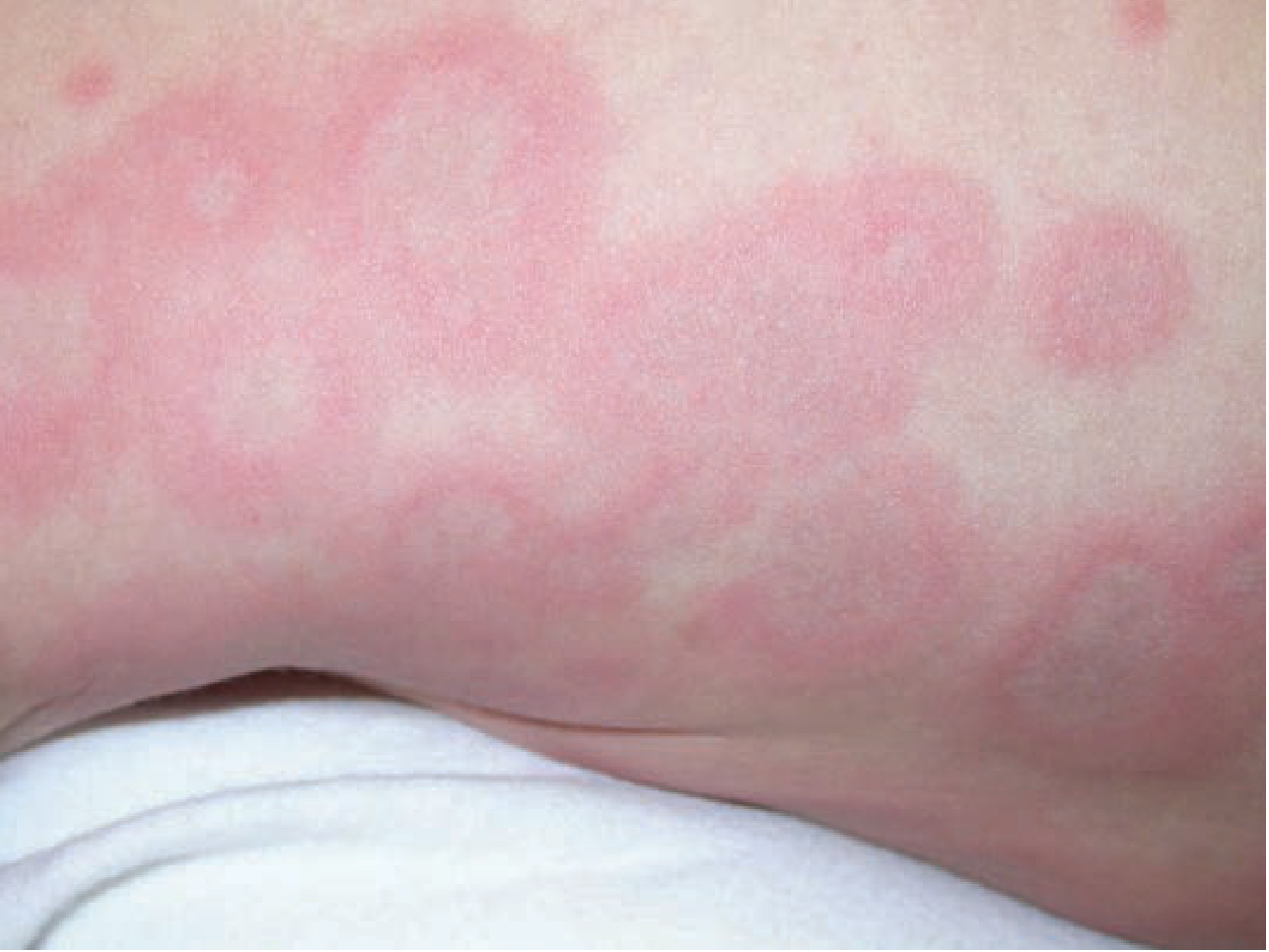
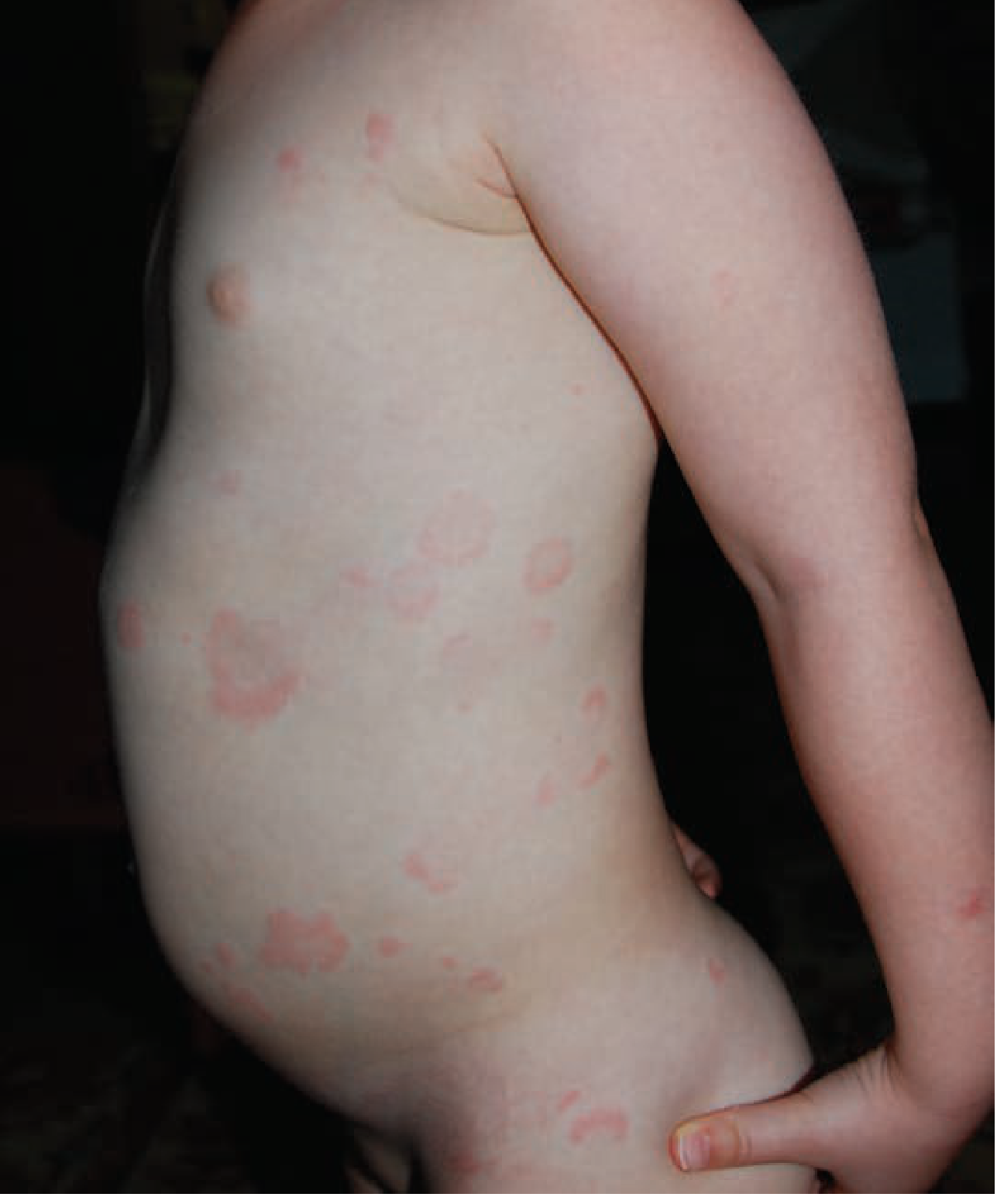
What You Are Seeing - Urticaria with Angioedema
Pathophysiology
Trigger (food/drug/unknown)
         ↓
IgE on mast cells/basophils cross-linked
         ↓
Degranulation → Histamine, leukotrienes, prostaglandins
         ↓
H1 receptor activation on cutaneous vessels
         ↓
Vasodilation → ERYTHEMA (redness/flushing)
Vascular leak in superficial dermis → WHEALS (urticaria)
Vascular leak in deep dermis/subcut → ANGIOEDEMA (swelling)
Clinical Picture in This Patient
| Feature | Interpretation |
|---|---|
| Redness - face/neck | Flushing/erythema from histamine - vasodilation |
| Redness - arms/hands | Peripheral cutaneous involvement - systemic histamine release |
| Swelling (angioedema) | Deep dermal/subcutaneous vascular leak |
| Combined urticaria + angioedema | Histaminergic (allergic) - IgE-mediated pattern |
| Unknown trigger | Idiopathic - most common category in adults |
FIRST - Assess for Anaphylaxis (MANDATORY)
| Question | Sign | Action if Present |
|---|---|---|
| Throat tightness/stridor? | Laryngeal angioedema | EPINEPHRINE IMMEDIATELY |
| Breathing difficulty/wheeze? | Bronchospasm | Epinephrine + Salbutamol |
| Hypotension/dizziness? | Distributive shock | Epinephrine + IV fluids |
| Tongue/lip swelling? | Airway risk | Prepare for intubation |
If ANY of the above are present → treat as anaphylaxis (see previous protocol). Epinephrine first, everything else second.
Management: Allergic Reaction WITHOUT Anaphylaxis Features
Step 1: H1 Antihistamines (FIRST LINE)
| Drug | Dose | Route | Notes |
|---|---|---|---|
| Cetirizine (preferred) | 10-20 mg | PO/IV | 2nd generation - non-sedating, fast onset |
| Loratadine | 10-20 mg | PO | Non-sedating |
| Fexofenadine | 180 mg | PO | Non-sedating |
| Diphenhydramine | 25-50 mg | PO/IV/IM | 1st gen - sedating, useful for severe/acute itch |
| Hydroxyzine | 25-50 mg | PO/IM | 1st gen - sedating, nighttime use |
Up to 4x the standard dose of 2nd generation antihistamines may be used for poorly controlled reactions (Rosen's EM).
Step 2: H2 Antihistamines (ADD-ON)
- Ranitidine 50 mg IV or Famotidine 20 mg IV - 15% of dermal histamine receptors are H2; adding H2 blockade improves response
- Do NOT use as monotherapy
Step 3: Corticosteroids (for moderate-severe or widespread redness/angioedema)
- Prednisone 40-60 mg PO daily for 5-7 days
- Hydrocortisone 200 mg IV if unable to take oral
- Role: reduce prolonged/recurrent reactions; do NOT give before antihistamines
- Note: A double-blind RCT showed no additional benefit of prednisone over levocetirizine alone in acute urticaria ≤24 hrs - use clinical judgment
Step 4: Epinephrine (for severe urticaria/angioedema even without full anaphylaxis)
- 0.3-0.5 mg IM (anterolateral thigh) if symptoms are rapid/severe or worsening
- Do not withhold if there is any concern about progression
Causes to Consider (for Unknown Trigger Workup)
| Category | Examples |
|---|---|
| Foods | Peanut, shellfish, tree nuts, egg, milk, soy, wheat |
| Drugs | Penicillin/beta-lactams, NSAIDs, aspirin, radiocontrast, opioids |
| Infections | Viral (most common cause in children), bacterial |
| Physical | Cold, pressure, heat, exercise, sunlight |
| Insect sting | Hymenoptera (bee, wasp) |
| Latex | Contact urticaria - healthcare workers, surgical gloves |
| Alpha-gal syndrome | Delayed urticaria 3-6 hrs after red meat - tick bite sensitization |
| Idiopathic | Up to 60% of adult cases - no trigger found |
Key Differentials for Redness + Swelling
| Condition | Distinguishing Feature |
|---|---|
| Urticaria + angioedema (this case) | Pruritic, transient wheals <24 hrs, erythematous |
| Hereditary angioedema | NO urticaria/itch, recurrent, family history, no response to antihistamines |
| Contact dermatitis | Fixed location, follows contact pattern, scaling possible |
| Erythema multiforme | NOT pruritic or transient - target lesions, mucosal involvement |
| Cellulitis | Warm, tender, non-pruritic, fever, unilateral |
| Angio-oedema from ACE inhibitor | No urticaria, bradykinin-mediated, ACE-i history |
Disposition
| Scenario | Action |
|---|---|
| Mild - urticaria + minor swelling, no airway/BP involvement | Antihistamines PO, observe 1-2 hrs, discharge with follow-up |
| Moderate - widespread redness, significant angioedema | IV antihistamines + steroids, observe 4-6 hrs |
| Severe - facial/tongue/laryngeal swelling | Epinephrine IM + hospital admission, airway monitoring |
| Any anaphylaxis feature | Minimum 4-hour observation post-epinephrine |
- Avoid suspected trigger
- Prescribe oral antihistamines (cetirizine 10 mg BD x 5-7 days)
- Consider short steroid course if angioedema present
- Allergy referral for trigger identification (skin prick test / specific IgE)
- Prescribe epinephrine autoinjector if reaction was severe or trigger unclear