
Role of molecular markers in cervical cancer screening, detailed overview using tables if required. Use latest evidences, guidelines.
"cervical cancer" AND "molecular markers" AND screening
molecular markers cervical cancer screening 2024 2025 guidelines p16 Ki-67 HPV biomarkers
"cervical cancer" AND "p16" AND "Ki67" AND screening
"HPV" AND "biomarkers" AND "cervical" AND "triage"
https://pmc.ncbi.nlm.nih.gov/articles/PMC12731993
PMID: 40931128
PMID: 37533074
PMID: 41229153
PMID: 38446575
PMID: 40722838
"cervical cancer" AND "HPV E6 E7 mRNA" AND screening
https://contraceptivetechnology.org/new-and-updated-guidelin…
"circulating tumor DNA" OR "ctDNA" AND "cervical cancer" AND screening
Molecular Markers in Cervical Cancer Screening: A Detailed Overview
1. The Biological Rationale
- Robbins, Cotran & Kumar Pathologic Basis of Disease, p. 926
2. Cervical Cytology (Papanicolaou Smear) - The Historical Foundation
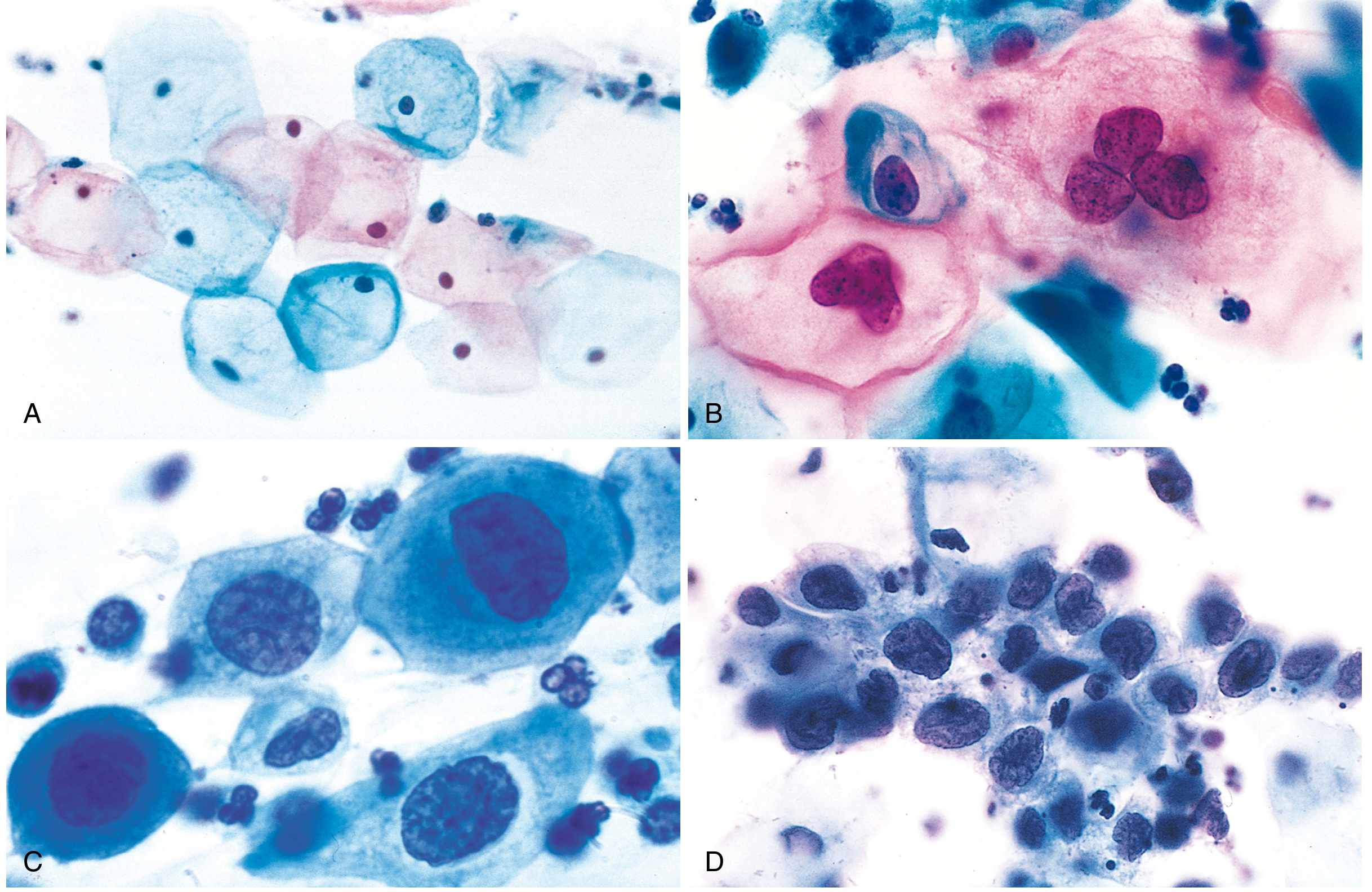
3. Primary HPV Molecular Testing
3.1 FDA-Approved Assays
| Assay | Molecular Target | Technology | Typing Capability | FDA Indications |
|---|---|---|---|---|
| Hybrid Capture 2 (HC2) | DNA (genomic) | DNA:RNA hybridization | None | ASC-US triage, Co-test |
| Cervista HPV HR | DNA | Invader technology | HPV 16/18 reflex | ASC-US triage, Co-test |
| Cobas HPV (Roche) | L1 DNA | PCR TaqMan | HPV 16/18 separate | ASC-US triage, Co-test, Primary screening |
| APTIMA HPV (Hologic) | E6/E7 mRNA | TMA | HPV 16/18/45 reflex | ASC-US triage, Co-test |
3.2 HPV DNA vs. HPV mRNA Testing
| Parameter | HPV DNA Testing | HPV E6/E7 mRNA Testing (APTIMA) |
|---|---|---|
| Mechanism | Detects viral genome (latent + active infection) | Detects transcriptional activity (oncogenic transformation) |
| Sensitivity for CIN2+ | ~96% | ~87-91% |
| Specificity for CIN2+ | Lower (detects transient infections) | Higher (active oncogenic expression) |
| Clinical utility | Primary screening, co-testing | Triage of HPV+/ASC-US results |
| Key advantage | Very high NPV | Fewer false positives; reflects active disease |
4. p16^INK4a and p16/Ki-67 Dual Stain - The Most Validated Biomarker
4.1 Mechanism
4.2 Clinical Performance (PALMS Study - Key Validation Data)
| Metric | p16/Ki-67 Dual Stain | Cytology |
|---|---|---|
| Sensitivity for CIN2+ | 86.7% | 68.5% |
| Specificity for CIN2+ | 95.2% | 95.4% |
| p-value (sensitivity) | p < 0.001 (DS superior) | - |
| p-value (specificity) | p = 0.15 (not significant) | - |
4.3 ASCCP 2024 Recommendations for p16/Ki-67 Dual Stain
| HPV Result | DS Result | HPV Genotype | Recommended Action |
|---|---|---|---|
| HPV positive | DS positive | Any genotype | Immediate colposcopy |
| HPV positive | DS negative | HPV 16 or 18 | Immediate colposcopy (genotype overrides DS) |
| HPV positive | DS negative | Other hrHPV | 1-year follow-up with HPV-based testing |
| Co-test positive | DS positive | Any | Immediate colposcopy |
| Co-test positive | DS negative | + High-grade cytology (ASC-H/HSIL) | Immediate colposcopy |
5. HPV Extended Genotyping
- HPV 16 accounts for ~50-60% of all cervical cancers
- HPV 18 accounts for ~10-15%
- Together they represent the highest-risk genotypes
6. DNA Methylation Markers
6.1 Mechanism
6.2 Key Methylation Targets
| Gene/Panel | Expression Change in CIN/Cancer | Notes |
|---|---|---|
| FAM19A4/miR124-2 | Methylated (silenced) | Most studied; strong correlation with CIN3+; validated in GynTect® assay |
| CADM1 | Methylated | Cell adhesion molecule; early epigenetic event |
| MAL | Methylated | Detected in CIN2+ lesions |
| PAX1 | Methylated | High AUC (0.89) for cervical cancer; sensitivity 87%, specificity 75% (meta-analysis, PMID 41229153) |
| ZNF582 | Methylated | Correlated with lesion severity; co-expression with p16/Ki-67 |
| CDKN2A (p16) | Paradoxically overexpressed | Used as IHC marker (see above) |
6.3 Pooled Performance (Systematic Review, PMID 37533074, n = 23 studies)
| Endpoint | Pooled Sensitivity | Pooled Specificity | PPV | NPV |
|---|---|---|---|---|
| CIN2+ detection | 0.68 (95% CI: 0.63-0.72) | 0.75 (95% CI: 0.71-0.80) | 51.4% | 85.7% |
| CIN3+ detection | 0.78 (95% CI: 0.74-0.82) | 0.74 (95% CI: 0.69-0.78) | 39.2% | 93.8% |
7. Serum and Circulating Tumor Markers
7.1 Squamous Cell Carcinoma Antigen (SCC-Ag)
- A serine protease inhibitor overexpressed in squamous cell carcinoma of the cervix
- Not used for primary screening (low sensitivity for early disease)
- Established role in monitoring treatment response and recurrence surveillance
- Emerging data: optimal cutoffs in combination with HPV metrics, methylation markers, and ctDNA improve early recurrence detection and personalize follow-up (PMC12731993, 2025)
7.2 Circulating Tumor DNA (ctDNA) / HPV-ctDNA
- HPV circulating tumor DNA (HPV-ctDNA): fragments of HPV DNA shed from tumor cells into circulation
- Host-gene aberrations: copy number variations, somatic mutations in PI3K pathway, KRAS, TP53
| Application | Evidence Status | Key Data |
|---|---|---|
| Primary screening | Experimental | Insufficient sensitivity in precancer; blood-based HPV-ctDNA detectable mainly in invasive cancers |
| Residual disease after chemoradiation | Validated (multicenter, PMID 37972346) | High accuracy for detecting residual cervical cancer post-CRT |
| Recurrence monitoring | Promising | Earlier detection than imaging |
| Triage of HPV-positive women | Investigational | Not yet clinically implemented |
7.3 Other Tumor Markers
| Marker | Role | Notes |
|---|---|---|
| CEA | Non-specific; not useful for screening | Elevated in advanced adenocarcinoma |
| CA-125 | Adenocarcinoma of cervix | Not specific; more relevant in endometrial/ovarian disease |
| CYFRA 21-1 | Squamous cell type | Promising prognostic marker; not a screening tool |
8. Emerging and Investigational Markers
| Marker Category | Examples | Mechanism | Stage |
|---|---|---|---|
| microRNA panels | miR-21, miR-155, miR-218 | Post-transcriptional regulation altered by HPV | Investigational |
| Long non-coding RNA (lncRNA) | HOTAIR, MALAT1 | Chromatin remodeling, oncogenic signaling | Preclinical/early clinical |
| MCM2 (Mini-Chromosome Maintenance) | MCM2 IHC | DNA replication licensing; marks proliferating cells | Studied alongside p16/Ki-67 |
| ProExC (MCM2 + TOP2A) | ProExC assay | Cell cycle deregulation | Used in some cytology labs |
| Proteomics / multi-analyte panels | SCC-Ag + methylation + ctDNA | Composite risk scores | Early validation |
| HPV viral load | Quantitative hrHPV | Higher load correlates with lesion severity | Not yet clinically standardized |
9. Current Screening Algorithms - How Markers Are Integrated
USPSTF 2024 Draft Recommendation (USA)
| Age Group | Preferred Strategy | Acceptable Alternatives |
|---|---|---|
| 21-29 years | Cytology alone every 3 years | None |
| 30-65 years | Primary hrHPV testing every 5 years (clinician OR patient-collected) | Co-testing (HPV + cytology) every 5 years; cytology alone every 3 years |
| >65 years | Discontinue if adequate negative history | - |
ASCCP Triage Algorithm (2024-2025)
Primary HPV Test
      |
      ├── HPV Negative → Routine screening interval (5 years if primary HPV)
      │
      └── HPV Positive
              |
              ├── HPV 16 or 18 → COLPOSCOPY (regardless of other results)
              │
              └── Other hrHPV
                      |
                      ├── Option A: Reflex Cytology
                      │     ├── NILM → 1-year retest
                      │     └── ASC-US+ → Colposcopy
                      │
                      ├── Option B: p16/Ki-67 Dual Stain
                      │     ├── DS+ → Colposcopy
                      │     └── DS- → 1-year HPV-based retest
                      │
                      └── Option C: Extended Genotyping (HPV 31/33/45/52/58)
                            ├── High-risk genotype → Colposcopy
                            └── Lower-risk genotype → Surveillance
Italian Multisocietal Guideline 2025 (GRADE-Based)
- Risk-based thresholds defined using CIN3+ as surrogate cancer risk marker
- Conditional recommendation (GRADE): Combination of morphological markers (cytology or p16/Ki-67) combined with extended HPV genotyping was the only strategy with a positive recommendation versus cytology alone
- Three-tier management: immediate colposcopy / 1-year retest / 3-year retest - driven by CIN3+ risk probability
10. Comparative Summary of Molecular Markers
| Marker | Clinical Role | Sensitivity (CIN2+/3+) | Specificity | Stage of Validation | Guideline Status |
|---|---|---|---|---|---|
| HPV DNA (primary) | Screening | ~96% | Moderate | Routine clinical use | USPSTF preferred (30-65) |
| HPV E6/E7 mRNA | Triage / primary | ~87-91% | Higher than DNA | FDA-approved (APTIMA) | ASC-US triage, co-test |
| p16^INK4a IHC | Histopathology adjunct | High | High | Routine histology | Standard pathology practice |
| p16/Ki-67 Dual Stain | Triage of HPV+ | 86.7% (vs 68.5% cytology) | 95.2% | FDA-approved (CINtec PLUS) | ASCCP 2024 guideline |
| DNA methylation (FAM19A4/miR124-2) | Triage of HPV+ | 68-78% | 74-75% | Validated (GynTect® assay) | European guidelines; not yet US guideline |
| PAX1 methylation | Triage / risk stratification | 87% | 75% | Meta-analysis validated | Research/Asian populations |
| HPV genotyping (16/18 vs others) | Risk stratification | Reflex | High | FDA-approved | ASCCP 2024/2025 |
| SCC-Ag | Monitoring / prognosis | Low for early disease | Moderate | Routine clinical use | Not for primary screening |
| ctDNA / HPV-ctDNA | Post-treatment monitoring | Moderate (invasive only) | High | Early clinical validation | Not recommended for screening |
| microRNA / lncRNA | Screening / prognosis | Investigational | Investigational | Preclinical/early trials | Not in guidelines |
11. Special Considerations
Self-Sampling (ASCCP April 2025)
- Self-collected vaginal samples for hrHPV testing formally endorsed in clinical settings
- Performance equivalent to clinician-collected for HPV DNA detection
- Greatly improves access; molecular markers (DS, methylation) compatible with self-collected LBC samples
Low-Resource Settings
- p16^INK4a single-stain IHC on conventional smears offers a cost-effective alternative to dual stain
- HPV DNA testing with visual triage (VIA + p16) being evaluated by WHO for low-income countries
- GeneXpert (point-of-care HPV testing) increasingly deployed
HPV-Independent Cervical Cancer
- Approximately 5% of cervical cancers are hrHPV-negative
- Driven by KRAS mutations, ERBB2 amplification, or chromosomal instability
- Standard HPV-based screening will miss these; no established molecular screening strategy yet
- Represents an important gap recognized in 2024-2025 literature
Key Takeaways
- Primary hrHPV testing is now the preferred first-line molecular screening strategy for women aged 30-65 (USPSTF 2024 preferred; primary HPV testing every 5 years).
- p16/Ki-67 dual stain is the most clinically validated triage biomarker for HPV-positive women, now with formal ASCCP 2024 recommendations. It reduces unnecessary colposcopies while maintaining sensitivity.
- Extended HPV genotyping enables precise risk stratification - HPV 16 or 18 warrants immediate colposcopy regardless of other results.
- DNA methylation markers (especially FAM19A4/miR124-2 and PAX1) show excellent NPV for CIN3+, making them ideal to rule out high-grade disease and avoid overtreatment. Italian 2025 guidelines give conditional GRADE recommendation for combined biomarker + genotyping strategy.
- ctDNA and liquid biopsy approaches remain investigational for screening but are validated for post-treatment monitoring.
- The overarching goal is a risk-stratified, individualized approach - not universal colposcopy referral for HPV positivity.
- Robbins, Cotran & Kumar Pathologic Basis of Disease (cervical screening and cytology), p. 926
- Berek & Novak's Gynecology (HPV assays table, screening guidelines), p. 846-848
- Clarke MA et al., JLGTD 2024 (ASCCP p16/Ki-67 DS recommendations) - PMID 38446575
- Gori S et al., Br J Cancer 2025 (Italian multisocietal GRADE guideline) - PMID 40931128
- Salta S et al., Clin Epigenetics 2023 (DNA methylation meta-analysis) - PMID 37533074
- Yin M et al., Ann Med 2025 (PAX1 methylation meta-analysis) - PMID 41229153
- Gisca T et al., Diagnostics 2025 (Integrating biomarkers narrative review) - PMID 41464230
- USPSTF Draft Recommendation 2024 - Primary HPV screening
Efficacy of prophylactic hpv vaccine in cervical cancer. Provide detailed overview using tables. Using latest evidences and guidelines
"HPV vaccine" AND "cervical cancer" AND efficacy
"HPV vaccination" AND "cervical cancer" AND "real world" OR "population effectiveness"
HPV vaccine efficacy cervical cancer 2024 2025 WHO ACIP guidelines gardasil cervarix nonavalent
PMID: 41276263
PMID: 40485552
PMID: 37529935
https://www.who.int/news-room/fact-sheets/detail/cervical-ca…
"single dose" AND "HPV vaccine" AND efficacy
"nonavalent HPV vaccine" AND "cervical cancer" AND "real world"
https://www.asccp.org/asccp-statement-on-hpv-vaccination-10-…
PMID: 38180991
PMID: 41337735
PMID: 36178094
"HPV vaccine" AND "cervical cancer" AND "herd immunity" OR "elimination"
PMID: 41021257
PMID: 40919695
"HPV vaccination" AND "cervical cancer" AND "Scotland" OR "Sweden" OR "England" population impact
ESCUDDO trial single dose HPV vaccine NEJM 2025 results nonavalent bivalent
Efficacy of Prophylactic HPV Vaccines in Cervical Cancer Prevention
Background and Disease Burden
1. Licensed HPV Vaccines - Comparative Overview
| Feature | Bivalent (Cervarix) | Quadrivalent (Gardasil 4) | Nonavalent (Gardasil 9) | Cecolin (bivalent) |
|---|---|---|---|---|
| Manufacturer | GSK | Merck | Merck | Innovax (China) |
| HPV types covered | 16, 18 | 6, 11, 16, 18 | 6, 11, 16, 18, 31, 33, 45, 52, 58 | 16, 18 |
| Cervical cancer protection | ~70% of cases | ~70% of cases | ~90% of cases | ~70% of cases |
| Adjuvant | AS04 (aluminium hydroxide + MPL) | Aluminium hydroxyphosphate | Aluminium hydroxyphosphate | Aluminium hydroxide |
| Warts protection | No | Yes (6, 11) | Yes (6, 11) | No |
| WHO Prequalification | Yes | Yes | Yes | Yes |
| FDA approval | No (not US-licensed) | Yes | Yes (2014) | No (not US-licensed) |
| Standard dosing | 2 doses (9-14y); 3 doses (15+) | 2 doses (9-14y); 3 doses (15+) | 2 doses (9-14y); 3 doses (15+) | 2 doses (9-14y); 3 doses (15+) |
| Cross-protection | Strong (HPV 31, 33, 45) | Moderate | Targeted | Moderate |
2. Efficacy Data from Clinical Trials
2.1 Cochrane Network Meta-Analysis 2025 (Highest Level of Evidence)
| Age Group | Outcome | Vaccine Comparison | Risk Ratio (95% CI) | Certainty |
|---|---|---|---|---|
| 15-25 years | CIN2+ (any HPV type, 6-year follow-up) | HPV vaccine vs. control | RR 0.70 (0.56-0.88) | Moderate |
| 15-25 years | CIN2+ (vaccine-matched HPV types) | HPV vaccine vs. control | RR 0.40 (0.30-0.54) | Moderate |
| 15-25 years | VIN/VaIN (vaccine-matched HPV) | Gardasil/Gardasil-9 | RR 0.21 (NMA, slight reduction) | Moderate |
| >25 years | CIN2+ (Cervarix or Gardasil vs. control) | - | Little to no difference | Moderate |
2.2 Pivotal Trial Data by Vaccine Type
| Vaccine | Trial | Population | Efficacy Against CIN2+ (HPV 16/18) | Duration of Follow-up |
|---|---|---|---|---|
| Cervarix | PATRICIA, CVT | 15-25 years, HPV-naive | 92.9-98.1% | 4-6 years |
| Cervarix | PATRICIA | All women (irrespective of HPV status) | ~30% (intention-to-treat) | 4 years |
| Gardasil 4 | FUTURE I/II | 16-26 years, HPV-naive | 97-100% for CIN 2/3 (HPV 16/18) | 3-4 years |
| Gardasil 9 | V503 | 16-26 years | 96.7% for CIN 2/3 (HPV 16/18/31/33/45/52/58) | 3-4 years |
| Cecolin | Phase III China | 18-45 years | 100% for CIN2+ (HPV 16/18) | 3 years |
2.3 Efficacy in Older Women (>25 years)
3. Age at Vaccination - Critical Efficacy Modifier
| Age Group at Vaccination | Effectiveness Range Against HPV-related Disease | Key Observation |
|---|---|---|
| 9-14 years (primary target) | 74% to 93% | Highest effectiveness; pre-sexual debut, HPV-naive |
| 15-18 years | 12% to 90% | Wide variation; some prior exposure possible |
| 19-25 years | Lower; more variable | Decreasing likelihood of HPV-naive status |
| >26 years | Minimal population benefit | Shared decision-making only (ACIP, ASCCP) |
4. Dosing Schedules - The Single-Dose Revolution
4.1 ESCUDDO Trial - Landmark NEJM 2025 Publication
- Design: 20,330 girls aged 12-16, Costa Rica; 1:1:1:1 randomization (1 or 2 doses of bivalent or nonavalent vaccine)
- Primary endpoint: Persistent HPV 16 or 18 infection, months 12-60
- Non-inferiority margin: 1.25 infections per 100 participants
| Comparison | Rate Difference (infections/100) | 95% CI | P-value (non-inferiority) |
|---|---|---|---|
| 1 dose vs 2 doses bivalent | -0.13 | -0.45 to 0.15 | P < 0.001 |
| 1 dose vs 2 doses nonavalent | +0.21 | -0.09 to 0.51 | P < 0.001 |
| Vaccine effectiveness (all 4 groups) | ≥97% | - | - |
4.2 Meta-Analysis of Single-Dose Effectiveness (Setiawan et al., PLoS One 2024, PMID 38180991) - 902,368 vaccinated women:
- Single-dose shown to provide immunogenic protection for at least 8 years
- Effectiveness on par with 2 or 3-dose schedules for HPV 16, 18, hrHPV infections, HSIL, CIN2/3
- Further long-term data needed to confirm durability beyond 10 years
4.3 Current Dose Schedules by Guideline Body
| Age Group | WHO (2022-2025) | ACIP / US (Current) | Notes |
|---|---|---|---|
| 9-14 years | 1 or 2 doses (either is acceptable) | 2 doses (6-12 months apart) | ESCUDDO supports 1 dose; US revision under discussion |
| 15-26 years (immunocompetent) | 2 doses | 2-3 doses | 3 doses if initiated at ≥15 years |
| Immunocompromised / HIV | 2-3 doses | 3 doses | Insufficient single-dose efficacy data in this population |
| >26 years | Not routinely recommended | Shared clinical decision-making | Smaller potential benefit |
5. Real-World Population-Level Effectiveness and Herd Protection
5.1 17-Year Post-Introduction Data (DeSieghardt et al., JAMA Pediatrics 2025, PMID 41021257)
| HPV Vaccine Group | Vaccinated Women: HPV Positivity | Reduction (Vaccinated) | Herd Protection (Unvaccinated) |
|---|---|---|---|
| 2vHPV types | 27.7% → 0.4% | 98.4% relative reduction | 25.8% → 7.3% (71.6% reduction) |
| 4vHPV types | 35.4% → 2.1% | 94.2% relative reduction | 25.3% → 6.1% (75.8% reduction) |
| 9vHPV types | 48.6% → 11.8% | 75.7% relative reduction | 42.7% → 31.1% (27.2% reduction) |
5.2 Quadrivalent HPV Vaccine Real-World Systematic Review (Wang et al., Expert Rev Vaccines 2022, PMID 36178094) - 138 publications, 14 years follow-up:
- Countries with high vaccination coverage showed significant reductions in:
- HPV 6, 11, 16, 18 infection rates
- Anogenital wart incidence
- CIN 2/3 rates
- Invasive cervical cancer incidence (observed in long-running national programs)
5.3 Country-Level Cervical Cancer Impact
| Country | Program Start | Coverage | Observed Impact |
|---|---|---|---|
| Scotland | 2008 | ~85-90% | Near-elimination of cervical cancer in vaccinated cohort (Lancet 2021) |
| Australia | 2007 | ~80%+ | ~77% reduction in high-grade CIN in 18-24 year olds by 2015 |
| Sweden | 2007 | High | Significant CIN2+ reductions; HPV 16/18 near-elimination in young women |
| England | 2008 | ~80% | 87% reduction in cervical cancer in cohort vaccinated at 12-13 years (NEJM 2021) |
| USA | 2006 | Moderate | 94% HPV 4v-type reduction in vaccinated women over 17 years (JAMA Peds 2025) |
6. Efficacy Against Pre-Cancerous Lesions (Surrogate Endpoints for Cancer)
| Lesion | Vaccine Type | Efficacy in HPV-Naive (Per Protocol) | Efficacy (All-comers, ITT) |
|---|---|---|---|
| CIN 1 (HPV 16/18) | All | ~90-95% | Lower |
| CIN 2+ (HPV 16/18) | Bivalent | 92-98% | ~33-47% |
| CIN 2+ (HPV 16/18) | Quadrivalent | 97-100% | ~17-45% |
| CIN 2+ (all HPV types) | Nonavalent | 96.7% | ~45-55% |
| CIN 3+ (HPV 16/18) | Bivalent | >93% | ~45% |
| AIS (adenocarcinoma in situ) | Quadrivalent/Nonavalent | 100% (small numbers) | Variable |
7. Adjuvant HPV Vaccination Post-Conisation (New Evidence 2025)
- Women who received HPV vaccination around the time of conisation for CIN2/3 showed reduction in:
- Recurrent CIN 2+ (RR favoring vaccination)
- Persistent HPV infection post-procedure
- ASCCP (Dec 2025) formally recommends: "Adjuvant HPV vaccination be offered at time of treatment for histologic HSIL (CIN2/3), AIS, and other HPV-related precancers, for previously unvaccinated individuals"
8. Immunogenicity and Duration of Protection
| Parameter | Finding |
|---|---|
| Seroconversion rate | >99% in adolescents for all vaccine types after 2-3 doses |
| Antibody titers | 10-100x higher than natural infection for all vaccines |
| Duration (clinical data) | Protection confirmed to ≥12-14 years in longest follow-up trials |
| Memory response | Long-lived B-cell memory demonstrated; anamnestic response to natural HPV exposure |
| Need for booster | No booster currently recommended; immune memory expected to be lifelong |
| Immunogenicity, single dose | Robust; 10-year follow-up data available (Joshi et al., Vaccine 2023, PMID 36446654) |
Immune Response by Age - Adolescent Advantage
| Age at Vaccination | Antibody Titer (relative to 15-26 year olds) | Clinical Significance |
|---|---|---|
| 9-11 years | ~2-fold higher | Best time to vaccinate |
| 12-14 years | ~1.5-2x higher | Within primary target window |
| 15-26 years | Reference standard | Efficacy well-established |
| 27-45 years | Similar to 15-26 | Smaller population benefit |
9. Special Populations
| Population | Recommendation | Evidence |
|---|---|---|
| HIV-positive women | 3 doses; start as early as age 9 | 6x higher cervical cancer risk; reduced but meaningful vaccine response |
| Other immunocompromised | 3 doses (transplant, autoimmune on immunosuppressants) | Attenuated immune response; still beneficial |
| Previously vaccinated with 2vHPV/4vHPV | Can receive 9vHPV (up to age 45) | To extend coverage to HPV 31/33/45/52/58 |
| Pregnant women | Not recommended; defer to postpartum | Safety not established; series can be completed post-delivery |
| Males | Recommended (ACIP) for ages 9-26; shared decision 27-45 | Reduces genital warts, anal cancer, oropharyngeal cancer; herd immunity |
| Post-treatment (HSIL/CIN) | Adjuvant vaccination recommended (ASCCP 2025) | Reduces recurrence risk |
10. Safety Profile
| Adverse Event | Frequency | Notes |
|---|---|---|
| Injection site pain, redness, swelling | Very common (>10%) | Self-limiting, days |
| Headache, fatigue | Common (~5%) | Mild, transient |
| Syncope | Rare; related to injection, not vaccine per se | Observe 15 min post-vaccination |
| Anaphylaxis | Very rare (~1/million doses) | Manage with standard protocols |
| Serious vaccine-related adverse events | 0.03% in ESCUDDO trial | No safety signals identified |
| Autoimmune diseases | No causal link established | Multiple large post-marketing studies confirm safety |
| Fertility impact | None | Extensively studied; no evidence of impact |
11. Current Guideline Recommendations Summary
| Organization | Routine Target Age | Catch-Up Age | Doses | Notes |
|---|---|---|---|---|
| WHO (2025) | 9-14 years (girls priority) | Up to 20-25 years | 1 or 2 doses | 1 dose acceptable; 2-3 doses for immunocompromised; boys optional |
| ACIP / CDC (USA, current) | 11-12 years (can start at 9) | 13-26 years routine; 27-45 shared decision | 2 doses (<15y); 3 doses (≥15y) | 1-dose revision under development (Jan 2026 HHS announcement) |
| ASCCP (Dec 2025) | Supports ACIP recommendations | Same as ACIP | Same as ACIP | + Adjuvant vaccination at time of HSIL/CIN treatment |
| ACOG | 11-12 years | Through age 26 routinely | Per ACIP schedule | Gender-neutral recommended |
| European guidelines | 9-14 years | Up to 26+ (country-specific) | 1 or 2 doses | Variable by country; gender-neutral in many |
12. WHO 90-70-90 Elimination Strategy
| Target | Goal | Current Status (2025) |
|---|---|---|
| 90% of girls fully vaccinated by age 15 | Global HPV vaccination coverage | ~67 countries on 1-dose schedule; many LMICs scaling up |
| 70% of women screened at ages 35 and 45 | Screening coverage | Major gap in LMICs |
| 90% of women with pre-cancer/cancer treated | Treatment access | Major gap in LMICs |
13. Limitations and Remaining Evidence Gaps
| Gap | Details |
|---|---|
| Long-term single-dose durability | ESCUDDO follow-up is 5 years; data beyond 10 years needed |
| Single-dose data in males | ACIP working group (April 2025) explicitly flagged: no single-dose efficacy data in males |
| Single-dose non-cervical protection | Insufficient data for throat, anal, genital warts with 1 dose |
| Single-dose in immunocompromised | Evidence insufficient; 3 doses still recommended |
| Boys: lower antibody levels, 1 dose | Flagged by ACIP working group; potentially concerning |
| 9vHPV herd immunity | Still developing; smaller herd effect in population data (newer vaccine) |
| RCT cancer endpoint | No completed RCTs with invasive cervical cancer as primary endpoint (follow-up too short) |
Key Takeaways
-
Prophylactic HPV vaccines have near-perfect efficacy (92-100%) against vaccine-type HPV-associated CIN2+ in HPV-naive adolescents, representing the strongest cancer prevention tool available for any malignancy.
-
Vaccination at ages 9-14 years yields the highest effectiveness (74-93%) and antibody titers, with clear declining benefit as age increases.
-
The ESCUDDO trial (NEJM Dec 2025) definitively established that one dose is non-inferior to two doses for both bivalent and nonavalent vaccines in girls 12-16 years, with ≥97% effectiveness - the most impactful recent development in HPV vaccine strategy.
-
17 years of real-world US data (JAMA Pediatrics 2025) show up to 98.4% reduction in vaccine-type HPV in vaccinated women, with substantial herd protection (71-76% reduction in unvaccinated women for 2v and 4v types).
-
ASCCP (Dec 2025) now recommends adjuvant HPV vaccination at the time of HSIL/CIN treatment for previously unvaccinated individuals - a new evidence-based indication.
-
WHO's single-dose recommendation (2022-present), now validated by ESCUDDO, has the potential to dramatically expand coverage in LMICs and move toward the WHO 90-70-90 elimination targets.
- Bergman H et al., Cochrane NMA 2025 - HPV vaccination for cervical cancer and other HPV diseases (PMID 41276263)
- Kreimer AR et al., NEJM 2025 - ESCUDDO trial: Noninferiority of 1 dose to 2 doses (PMID 41337735)
- Harper DM et al., Hum Vaccin Immunother 2025 - Systematic review of HPV vaccine impact (PMID 40485552)
- DeSieghardt A et al., JAMA Pediatrics 2025 - Population-level effectiveness, 17 years (PMID 41021257)
- Ellingson MK et al., Hum Vaccin Immunother 2023 - Effectiveness by age at vaccination (PMID 37529935)
- Setiawan D et al., PLoS One 2024 - Single-dose meta-analysis, 902,368 women (PMID 38180991)
- Kapp P et al., Cochrane 2025 - HPV vaccination in women with conisation (PMID 40919695)
- ASCCP Statement on HPV Vaccination, Dec 2025
- WHO Cervical Cancer Fact Sheet 2025